
Reviewed · MIYAJIMA TOURS
Beautiful Hiroshima, Peace Park and Miyajima Island
The most moving part of this private Hiroshima tour is its personal connection to the city’s atomic-bomb story. Miyu worked for 12 years in Hiroshima’s Hibakusha Support Division, so you get more than a standard walk past monuments. You get careful context about survivors, radiation, and the city’s long rebuilding.
I like the pairing of the Peace Memorial Museum with Miyajima’s forested beauty, and I like the small-group format for up to eight people. The main consideration is cost: $424.71 per group is sensible for a full private day, but you must add transportation, lunch, and several modest entry fees.
In This Review
- Key points to know before booking
- Why this Hiroshima day works so well
- Atomic Bomb Dome: Hiroshima’s hard first look
- Peace Memorial Park and its monuments
- One hour inside the Peace Memorial Museum
- Miyajima and the floating torii
- Daishoin and the lantern-lit cave
- Senjokaku Pavilion and Hokoku-jinja
- Omotesando Street: oysters, lemons, and souvenirs
- What the $424.71 group price really covers
- Who should choose this private Hiroshima experience
- Should you book it?
- FAQ
- How long does the Hiroshima and Miyajima tour last?
- Is this a private tour?
- Who is the guide?
- Is lunch included?
- Are transportation costs included?
- What entrance fees must I pay?
- Can I cancel for a full refund?
Key points to know before booking
- Miyu brings professional experience with Hibakusha support: Her 12 years in Hiroshima’s local government give the Peace Park visit unusual depth.
- The day joins two very different Hiroshima experiences: You move from the sober Atomic Bomb Dome and museum to Miyajima’s shrine, deer, temples, and sea views.
- It is a private tour for your group only: Up to eight people can share the guide fee, which improves the value for families and friends.
- The Peace Memorial Museum gets a full hour: That is enough time for a serious visit, though you may want longer if you read every display carefully.
- Miyajima includes more than the famous torii: Daishoin, Senjokaku Pavilion, and Omotesando Shopping Street add religious, cultural, and food stops.
- Budget beyond the advertised price: Museum admission is ¥200 per person, Itsukushima Shrine is ¥300, Hokoku Shrine is ¥100, and transportation and lunch are extra.
Why this Hiroshima day works so well
This is not a tour built around a single photo stop. It gives you a morning of reflection in Hiroshima, followed by an afternoon on Miyajima, one of Japan’s best-known scenic sites. The contrast matters. You first confront what happened to ordinary people in 1945, then see the natural beauty and living culture that make Hiroshima more than a place of remembrance.
The guide’s background is the strongest reason to consider this experience. Miyu spent 12 years as a local government official in the division supporting Hibakusha, the survivors of the atomic bombing, and still interacts with them. That does not turn the visit into a lecture. It means you can ask informed questions about daily life before the bombing, survival, radiation, and reconstruction.
The one review available gives Miyu specific praise for being attentive and having excellent local history knowledge. It also notes that the booking group became the first guests of the tour, a small detail that suggests a personal and developing experience rather than a large, fixed operation. You should expect a guide who takes your group seriously.
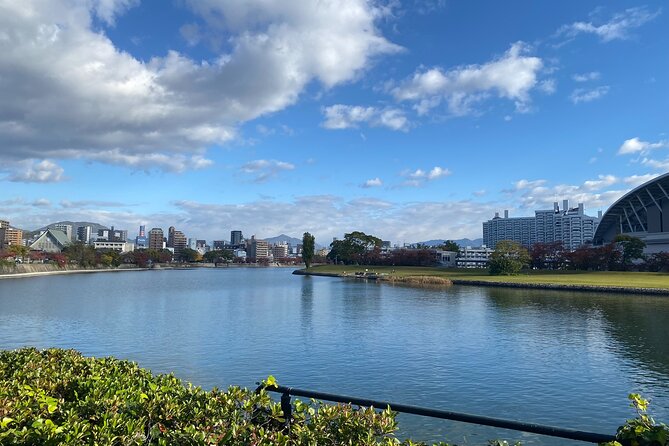
The schedule begins at 8:00 am and lasts about eight hours. That is a full day, but the plan is sensibly divided into short visits. You will want comfortable shoes and enough energy for walking around Peace Park, museum galleries, Miyajima’s streets, temple grounds, and shrine areas.
A few more Hiroshima tours and experiences worth a look
Atomic Bomb Dome: Hiroshima’s hard first look
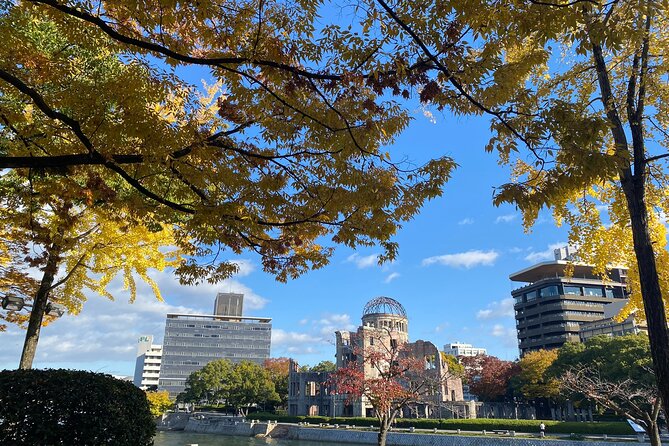
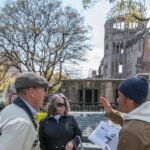
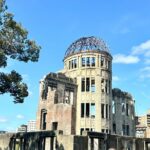
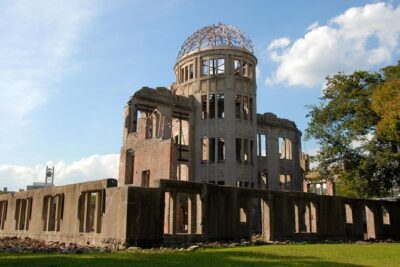
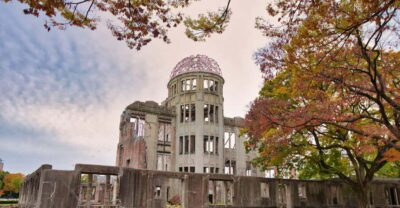
The Atomic Bomb Dome is the natural starting point for a Hiroshima visit. This World Heritage Site survived the blast and heat rays of the atomic bomb, although the surrounding city was destroyed. Its damaged frame gives the history a physical scale that photographs cannot quite provide.
The planned visit is 15 minutes, with no admission fee. That is enough time to look at the structure, hear why it survived, and take in its position near the river. It is not enough for a long, slow discussion, so the guide’s explanation matters here.
I like that this stop comes before the museum. You first see the city’s most recognizable reminder of destruction, then move toward the personal stories inside the museum. The sequence helps you understand that the bombing was not only a military event or a date in a textbook. It happened in a working city filled with people who expected ordinary futures.
The dome is viewed from outside. Do not expect an interior visit or a long architectural tour. Its value is its directness: a damaged building left in place as a warning and a call for peace.
Peace Memorial Park and its monuments
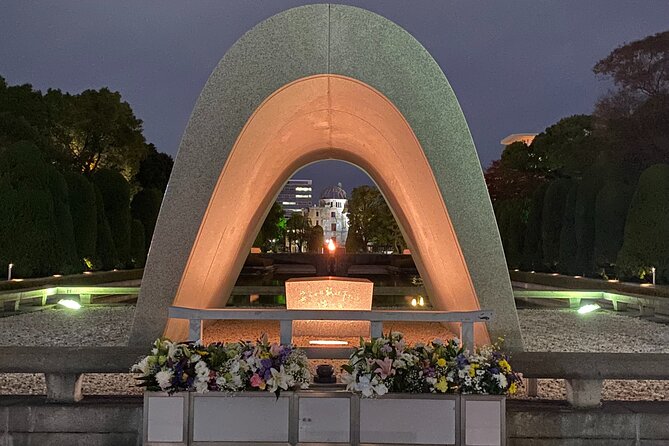
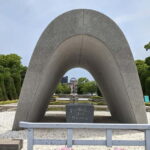
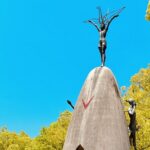
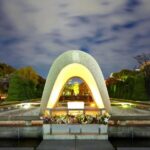
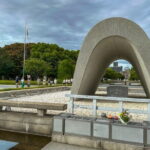
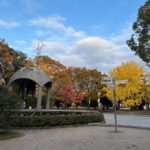
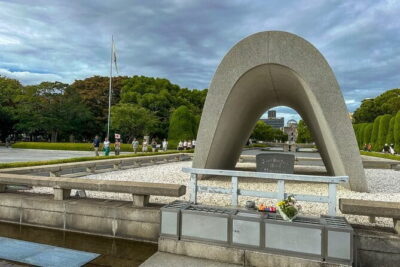
The 30-minute walk through Peace Memorial Park focuses on several monuments, including the Cenotaph for the A-bomb Victims, the Children’s Peace Monument, and the A-bomb Memorial Mound. Each marker carries a different part of Hiroshima’s memory.
The Cenotaph is tied to the names of those who died. The Children’s Peace Monument recalls the young people affected by the bombing and the hope for a world without nuclear weapons. The A-bomb Memorial Mound connects the broad citywide tragedy to the many victims whose remains were gathered and could not be identified.
You will not simply be left to read plaques on your own. The tour is designed around the stories connected to these places, which is where Miyu’s work with Hibakusha support becomes especially useful. Ask questions if you want to understand how survivors rebuilt their lives or how Hiroshima remembers people who had no marked grave.
Thirty minutes is a brisk visit. It works well as an introduction before the museum, but you may feel the pressure of the clock if you stop often for photographs or want to sit quietly at each monument. The setting is peaceful, yet the subject is heavy. Give yourself room to listen and think rather than treating the park as a checklist.
One hour inside the Peace Memorial Museum
The Peace Memorial Museum is the central educational stop, with one hour included in the plan and admission included in the tour arrangement. The separate entrance charge is ¥200 per person, so you should budget for that small payment.
The museum explains what happened to Hiroshima on the day of the bombing, what happened to people in the city, the effects of the atomic bomb and radiation, and the process of reconstruction. That combination is important. You are not only learning about the weapon. You are learning about bodies, families, homes, work, illness, loss, and the difficult work of rebuilding a city.
Miyu’s background gives this portion more weight than a simple audio-style overview. She can explain the survivor experience and the health effects of radiation in a way tied to Hiroshima’s continuing support work. Her contact with Hibakusha also gives the subject a human focus, though the exact amount of discussion will depend on your questions and the group’s pace.
One hour is a reasonable minimum. It lets you see the main exhibits, but it may not satisfy you if you read every panel closely. If you have already visited the museum, you may appreciate the guide’s help in focusing on themes you missed before. If this is your first visit, prepare for difficult material and plan a quiet break afterward if needed.
Miyajima and the floating torii
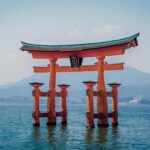
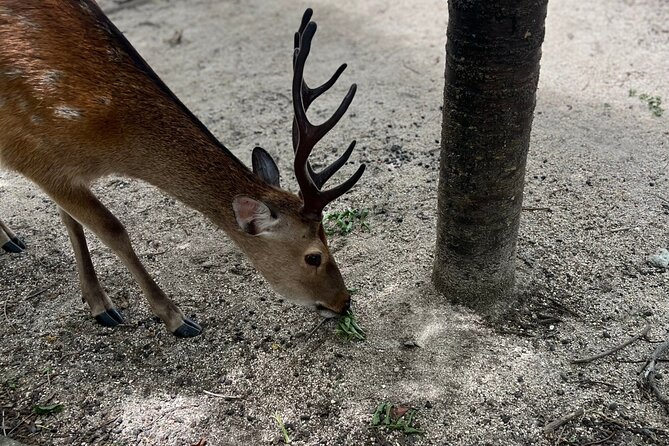
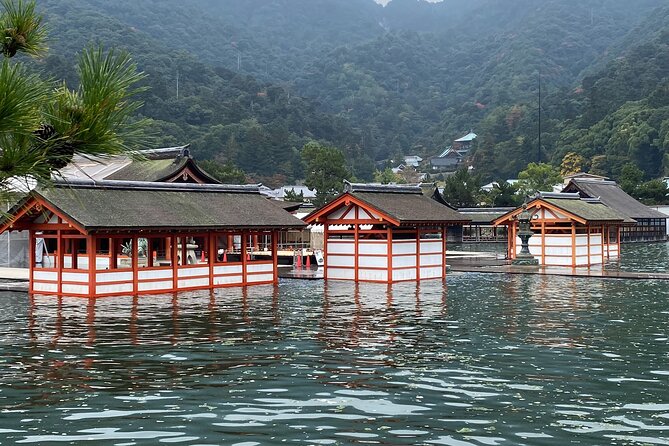
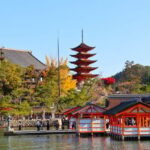
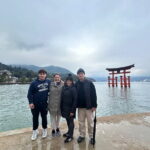
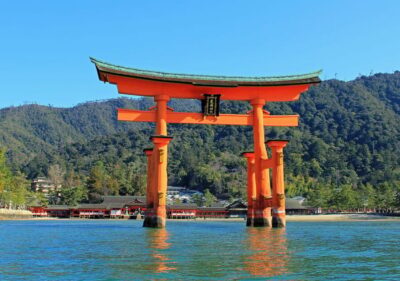
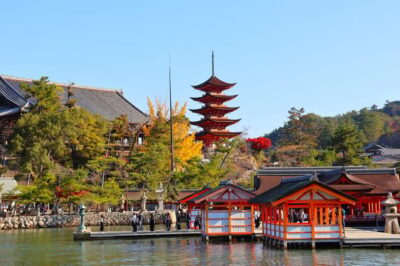
The Miyajima portion changes the mood without erasing what you have learned earlier. The island is known for the contrast between deep green forest, blue sea, and the vermilion Itsukushima Shrine and Otorii, or Grand Gate. Deer appear along the streets, adding a light and memorable touch to the walk.
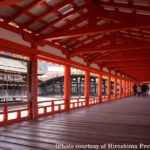
The Itsukushima Shrine area receives about 40 minutes. Its entry fee is not included and costs ¥300 per person. The Otorii is one of the most familiar sights in Japan, but the view depends on conditions and the tide. The tour information describes it as floating on the sea, yet you should not assume that the water level will look identical in every photograph.
This stop is valuable because Miyajima is not just a scenic backdrop. The shrine’s red structures, the sea, and the wooded hills create a visual contrast with the sober architecture of Peace Park. You get a sense of the wider Hiroshima region, including its religious traditions and natural setting.
Forty minutes is enough for a focused visit, but it is not a leisurely exploration of every shrine building or island trail. You will need to stay aware of the schedule, especially if you pause for photographs. The admission fee is modest, but it is one of several costs that make the final price higher than the guide fee alone.
A few more Hiroshima tours and experiences worth a look
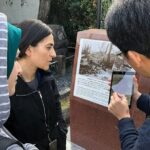

Daishoin and the lantern-lit cave
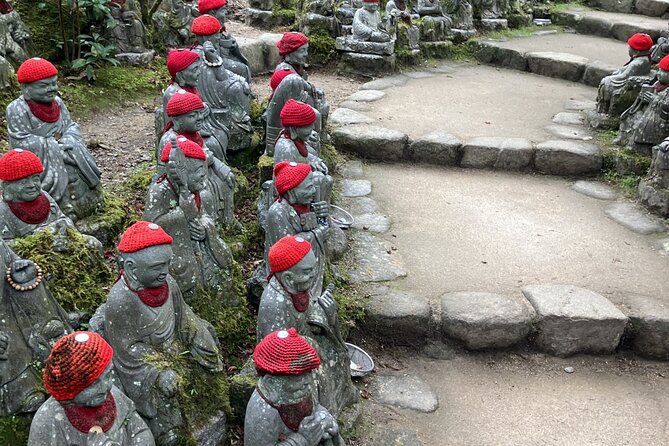
Daishoin offers a quieter and more unusual side of Miyajima. The stop lasts about 40 minutes and includes Buddhist and stone statues, along with the Henjokutsu Cave, where hanging lanterns create a strong photo setting.
I like this addition because it keeps the Miyajima visit from becoming only a shrine-and-shopping outing. The statues give you details to notice at a slower pace, while the cave adds atmosphere without requiring a long hike or a separate admission charge. Daishoin admission is free.
You might find this the most visually surprising part of the island visit. It has a different feel from the large shrine grounds and the busy shopping street. The tour does not promise an extensive religious lesson, but the guide can help you understand what you are seeing and why the site belongs in the day.
The 40-minute limit should be comfortable for the stated stops. If you are especially interested in Buddhist sculpture or photography, you may wish you had extra time. Still, the visit is a good use of the schedule because it offers something distinct from Itsukushima Shrine.
Senjokaku Pavilion and Hokoku-jinja
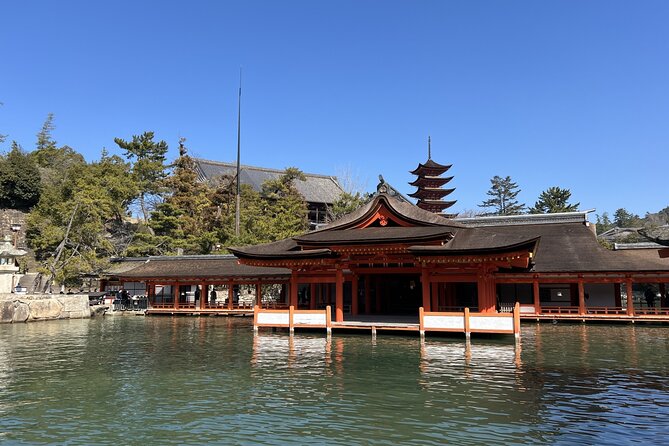
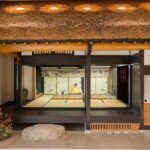
Hokoku-jinja, also called Senjokaku Pavilion, receives a short 15-minute visit. Construction began in 1587, ordered by the warlord Toyotomi Hideyoshi, but the building was never finished because of his death.
That unfinished quality is the point. The open pavilion gives you a clear example of a major project interrupted by history. It also adds a Sengoku-period layer to a day otherwise centered on modern memory and Buddhist or Shinto sites.
Admission costs ¥100 per person and is not included. The fee is small, but keep track of these separate charges if you are comparing tour prices. Fifteen minutes is enough to see the pavilion and hear its story, though it will not suit someone hoping for a long historical explanation.
This stop also shows why the private format helps. Your guide can connect the building’s incomplete state to the person who ordered it, rather than leaving you with a quick name and date. The tour remains brisk, but each stop has a reason for being there.
Omotesando Street: oysters, lemons, and souvenirs
The final Miyajima stop is Omotesando Shopping Street, planned for about 30 minutes. The street is lined with souvenir shops, and you can try Hiroshima specialties such as oysters and lemons.
This is a useful finish after the serious morning and the religious sites. You have time to browse, taste local food, and pick up something small without giving the shopping street control of the whole day. The stop is free, but food purchases are your responsibility.
The half-hour window is practical, not generous. You can sample a specialty and look through a few shops, but you should not expect a long meal or a relaxed shopping afternoon. Lunch is not included, so speak with Miyu early about how your group wants to handle food during the eight-hour schedule.
Oysters and lemons are a fitting way to close the Miyajima section because they connect the island visit to local flavors. Still, this is not a food tour. If eating is a priority, you will need to manage your time and budget carefully.
What the $424.71 group price really covers
The listed price is $424.71 per group of up to eight people. That works out well for a full private day if you have a family or group of friends. At the maximum group size, the guide fee is about $53 per person before admission, food, and transportation.
For two people, the price is much harder to justify on cost alone. You are paying for privacy, a dedicated guide, and Miyu’s specialist background rather than for a low-cost shared outing. The value improves when the group can split the fee.
The guide fee is included. The following costs are separate:
- Peace Memorial Museum: ¥200 per person
- Itsukushima Shrine: ¥300 per person
- Hokoku-jinja, or Senjokaku Pavilion: ¥100 per person
- Lunch
- Transportation during the tour
Transportation deserves special attention. The experience begins and ends at the meeting point, but the supplied details do not give a transport method or a total transport price. Ask for a clear estimate before the day so you can compare the real cost with other private Hiroshima options.
The tour is booked an average of 154 days ahead, which suggests that planning early is wise, particularly if your dates are fixed. Confirmation is provided when you book, and free cancellation is available if you cancel at least 24 hours before the 8:00 am start. Changes or cancellations within that final 24-hour period are not accepted for a refund.
Who should choose this private Hiroshima experience
I would choose this tour if your group wants serious historical context but also wants to see Miyajima in the same day. It suits families, couples, and small groups who prefer asking questions instead of following a large crowd.
It is especially well matched to people interested in the atomic bombing, Hibakusha support, radiation, and Hiroshima’s rebuilding. Miyu’s professional experience is not a minor detail. It is the feature that gives the morning its real value.
You should think twice if you want a slow museum visit, a long lunch, or free time on Miyajima. The plan covers seven stops in about eight hours, so the day is structured and fairly quick. It is also less attractive for solo visitors or pairs watching every yen.
The single available rating is 5 out of 5, and the praise focuses on Miyu’s attentiveness and strong grasp of local history. That matches the tour’s design: personal guidance is more important here than a long list of inclusions.
Should you book it?
Book this tour if you want Hiroshima explained by someone with direct experience in survivor support, and if your group values a private day that joins Peace Park with Miyajima. The combination of the Atomic Bomb Dome, museum, shrine, temple, cave, pavilion, deer, and local food creates a well-rounded first look at the area.
Skip it if your priority is the lowest possible price or a relaxed, open-ended schedule. The $424.71 fee is good for a full group of up to eight, but less compelling for one or two people once transport, lunch, and admission are added. For the right group, though, Miyu’s background makes this more than a sightseeing circuit.
FAQ
How long does the Hiroshima and Miyajima tour last?
The tour lasts approximately eight hours and starts at 8:00 am. It ends back at the meeting point.
Is this a private tour?
Yes. Only your group participates, and the group can include up to eight people.
Who is the guide?
The experience provider is Miyu. Miyu worked for 12 years in Hiroshima’s Hibakusha Support Division and continues to interact with Hibakusha.
Is lunch included?
No. Lunch is not included in the tour price.
Are transportation costs included?
No. Transportation fees during the tour are paid separately.
What entrance fees must I pay?
The Peace Memorial Museum costs ¥200 per person, Itsukushima Shrine costs ¥300 per person, and Hokoku-jinja, or Senjokaku Pavilion, costs ¥100 per person. These fees are separate from the guide fee.
Can I cancel for a full refund?
Yes, if you cancel at least 24 hours before the experience’s start time. Cancellations or changes made less than 24 hours before the start are not accepted for a refund.
More Hiroshima City Tours in Hiroshima
More Peace Memorial Tours in Hiroshima
More Miyajima Tours in Hiroshima
More tours in Hiroshima we've reviewed


Miyajima Tours, compared.
 ★ 5.0Peaceful Hiroshima & Miyajima UNESCO 1 Day Bus TourFrom $129
 ★ 4.9Hiroshima: Hiroshima and Miyajima UNESCO Sites 1-Day TourFrom $1228 hours
 ★ 5.0Hiroshima / Miyajima Full-day Private Tour with Government Licensed GuideFrom $202
 ★ 4.7Osaka/Kyoto: Hiroshima Miyajima Bus Tour & Shinkansen TicketFrom $27712 hours
 ★ 4.7From Hiroshima: Hiroshima & Miyajima 1 Day Tour with LunchFrom $1168 hours
 ★ 5.0Hiroshima and Miyajima Day Trip with Itsukushima Shrine & FerryFrom $45
