
Reviewed · ONOMICHI & SHIMANAMI TOURS
1-Day Onomichi & Ikuchijima Island: Temples, Ropeway & Ferry
Onomichi is the kind of Japanese town that rewards slow walking, but this tour adds a fine island trip to the mix. You move from hillside temples and literary paths to a ferry and the wonderfully strange Kosanji Temple on Ikuchijima. The day covers a lot, yet the route feels varied rather than repetitive.
I like the mix of local streets and grand viewpoints, and I like that the English-speaking guide adds context instead of simply leading you from gate to gate. Guide Isabella is noted for promising a surprise around every corner, a fitting approach for a town where a tiny lane can suddenly open to a temple or harbor view.
The main drawback is the physical demand. You will spend several hours outdoors, climb 108 stone steps, walk on hills, and manage a ferry crossing. The schedule can last from 390 minutes to nine hours, so this is not a relaxed half-day outing.
In This Review
- Key points to know before you book
- Why this Onomichi route feels different
- Starting along Onomichi’s coast
- Climbing Saikokuji Temple’s 108 steps
- Reaching Senkoji Peak by ropeway
- Walking the literary Bungaku no Komichi
- Senkoji Temple and its vermilion hall
- Lunch and free time around Hondori
- The 40-minute ferry to Ikuchijima
- Kosanji Temple, an elaborate modern creation
- The Cave of 1,000 Buddhas and the Hill of Hope
- Is $170 fair value?
- Who should book this day?
- Should you book the Onomichi and Ikuchijima tour?
- FAQ
- Where does the tour meet?
- How long does the experience last?
- Is the tour conducted in English?
- Is lunch included?
- Does the tour include the ferry?
- Is the ropeway ticket included?
- How physically demanding is the tour?
Key points to know before you book
- Kosanji Temple is modern, unusual, and highly decorative, built over more than 30 years rather than dating from Japan’s distant past.
- The ropeway runs one way, taking you to Senkoji Peak before you walk down through the literary Bungaku no Komichi path.
- Saikokuji Temple requires 108 stone steps, with huge straw sandals displayed at its Niomon Gate.
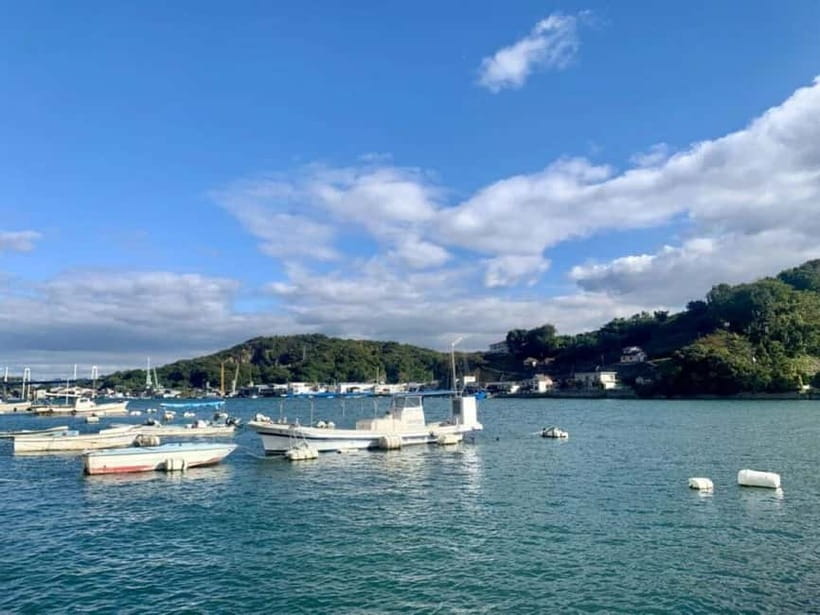
- A 40-minute ferry ride connects Onomichi with Ikuchijima, adding open-water scenery and a useful change of pace.
- Lunch is on your own in the Hondori area, where you can try Onomichi ramen or Hiroshima-style okonomiyaki.
- The tour costs $170 per person, including the guide, admissions, public transport, ropeway ticket, and round-trip ferry, but not lunch or travel to Shin-Onomichi Station.
Why this Onomichi route feels different
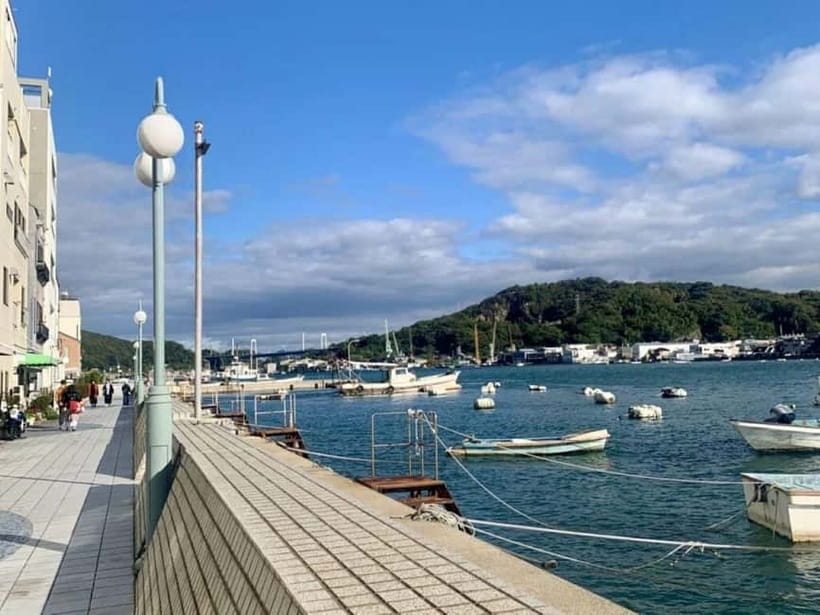
Many visitors pass through Onomichi for its temples or use it as a gateway to the Setouchi islands. This outing gives you both sides of the town. You see the compact harbor city from street level, climb into the hills, then leave by boat for an island temple complex that looks unlike a traditional temple in almost every way.
That variety is the strongest reason to choose this experience. One hour may involve a quiet stone stairway and Buddhist history. The next may bring a broad view of the Onomichi Channel, followed by a ferry ride and a marble garden on Ikuchijima.
I also like the balance between guided time and personal time. Your guide leads the temple visits and explains the religious details, while lunch in Hondori gives you room to choose your own food and browse the shops. This works well if you want structure without having every minute filled with group activity.
The exact meeting point can vary according to the option you book, but the route begins at Shin-Onomichi Station before continuing into Onomichi. You should check the confirmed meeting instructions carefully and allow enough time to reach the station.
If you're still narrowing it down, here are other tours in Hiroshima we've reviewed.

Starting along Onomichi’s coast
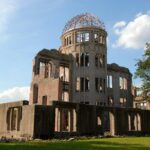
The opening walk takes you toward the coast and along Kaigan Dori Street. This is a useful introduction because Onomichi is best understood as a town compressed between water and hills. The streets, harbor, slopes, and temples sit close together, creating the miniature garden city feel described by the tour.
That compact layout also explains the walking. You are not being driven from one isolated sight to another. You move through the town on foot, with the scenery changing naturally from waterfront streets to temple approaches and hillside paths.
Your guide can help you read the town in a way that is easy to miss when walking alone. The English-language commentary covers the history of Japanese Buddhism and the role of the temples on the route. If you enjoy learning why a gate, statue, or hall matters, the guided format adds real value.
The early part of the day is also a good time to settle into the pace. There is no need to expect a polished theme-park version of Japan. Onomichi’s appeal comes from its ordinary streets, old-looking lanes, harbor setting, and religious sites woven into daily life.
Climbing Saikokuji Temple’s 108 steps
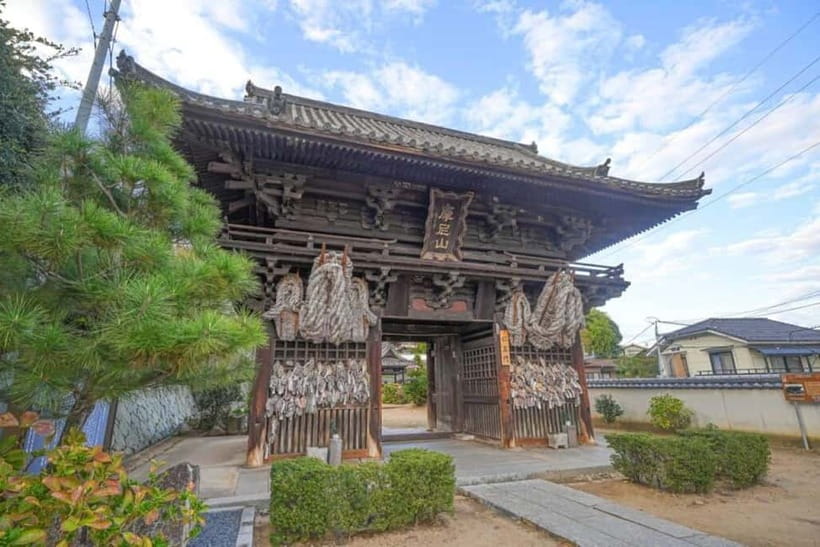
Saikokuji Temple brings the first serious climb. At the entrance, the Niomon Gate is easy to remember because of its large straw sandals in different sizes. They are an unusual visual welcome and give the site a touch of local character before you reach the main grounds.
From the gate, you climb 108 stone steps to the Main Hall. The number has Buddhist meaning, representing the worldly desires people seek to overcome, but the practical point is simpler: you will feel this ascent in your legs, especially on a hot or humid day.
Your guide explains the temple grounds and the background of Japanese Buddhism after you reach the top. That timing makes sense. You can focus on the climb first, then take in the buildings and religious details without trying to follow a long explanation while out of breath.
Wear shoes with a firm grip and avoid treating this as a fashion stop. The tour includes more walking after Saikokuji, so comfortable footwear matters from the start. If stairs are difficult for you, this temple is an important part of the booking decision, not a minor detail.
Reaching Senkoji Peak by ropeway
From Saikokuji, the route continues toward Senkoji mountain and the ropeway. The included ticket is for a one-way ride, so you should expect to continue on foot after reaching the upper station.
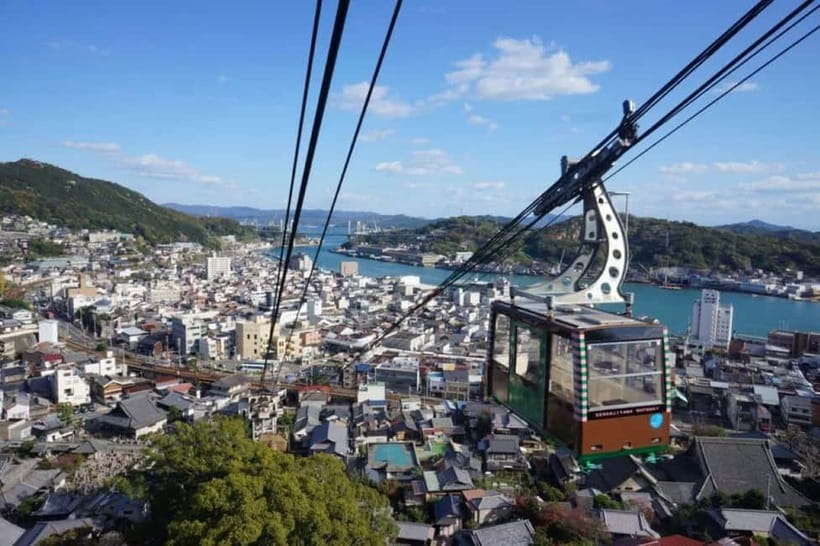
The cabin ride gives you a break from climbing and changes your viewpoint quickly. Instead of looking up at the hills, you begin to see Onomichi from above. The ride is short compared with the ferry, but it is one of the day’s most efficient scenic moments.
At the summit, make the Senkoji Peak Observatory your first stop. It offers broad views of Onomichi, the Onomichi Channel, and the surrounding city area. Bring your camera, but give yourself a moment to look without framing everything through a screen. The height and waterway are the main attraction here.
Weather matters. On a clear day, the observatory should be one of the strongest photo stops. Cloud, haze, or rain can reduce the distance you can see, and summer heat can make the exposed viewpoint feel tiring. A light shirt, water, sun protection, and a hat are sensible from June through the hotter months.
Walking the literary Bungaku no Komichi
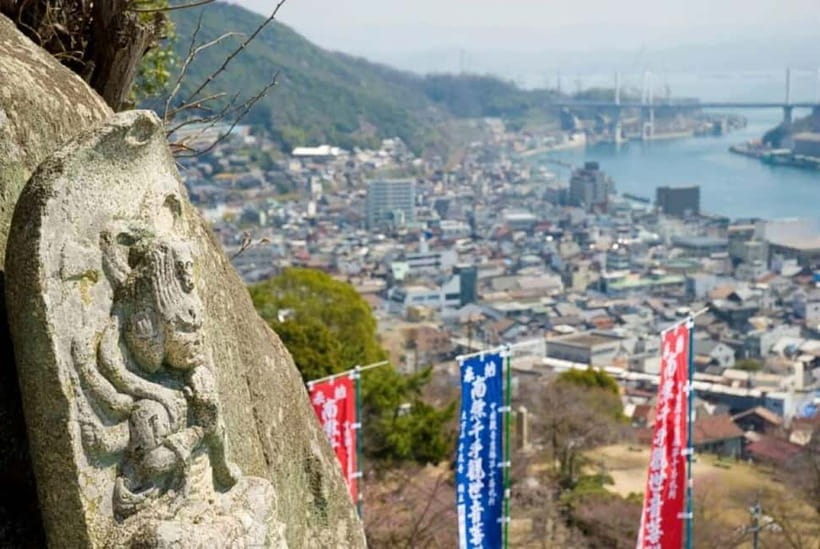
After the observatory, you walk down the Bungaku no Komichi path. Its name means Literary Path, and passages from Japanese authors are inscribed on rocks along the way.
This is a thoughtful change from the big viewpoint above. Instead of rushing between famous structures, you read short pieces while moving through the hillside. The writing gives the path a cultural layer, even if you do not know every author or understand every Japanese reference.
Ask your guide about the passages and writers as you go. The stone markers are more rewarding when you know why they are placed there and how literature connects with Onomichi. The available information does not specify every author, so your guide’s explanations will be especially useful.
The route leads toward Senkoji Temple. The walk is downhill, but it is still uneven outdoor walking, and downhill steps can be hard on knees. Good shoes remain more important than speed. You should also keep some energy in reserve for the later temple visit and ferry transfer.
A few more Hiroshima tours and experiences worth a look


Senkoji Temple and its vermilion hall
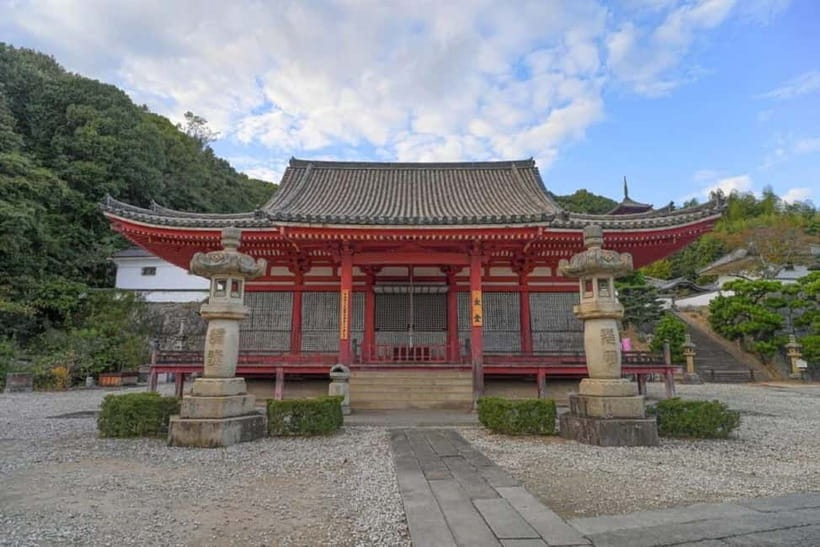
Senkoji Temple is one of Onomichi’s best-known landmarks. Founded in the ninth century, it is recognizable for its vermilion Main Hall on the hillside. Kannon, the bodhisattva of compassion, is enshrined inside.
The temple gives the route a strong focal point after the observatory and literary path. You have just seen the town from above, then walked down through writing and stone, and now arrive at a major religious site tied closely to Onomichi’s identity.
I appreciate that the tour does not present Senkoji as just a photo stop. The guide provides the religious setting, which helps you understand why Kannon matters and why the temple occupies such a prominent place on the hill.
At the same time, this is not a quiet private visit. Senkoji is a famous landmark, and the route is designed to include it as part of a full day. If you want a long, silent temple visit with no time pressure, an independent visit may suit you better. If you want the temple placed in a wider route with a guide and viewpoint, this schedule makes sense.
Lunch and free time around Hondori
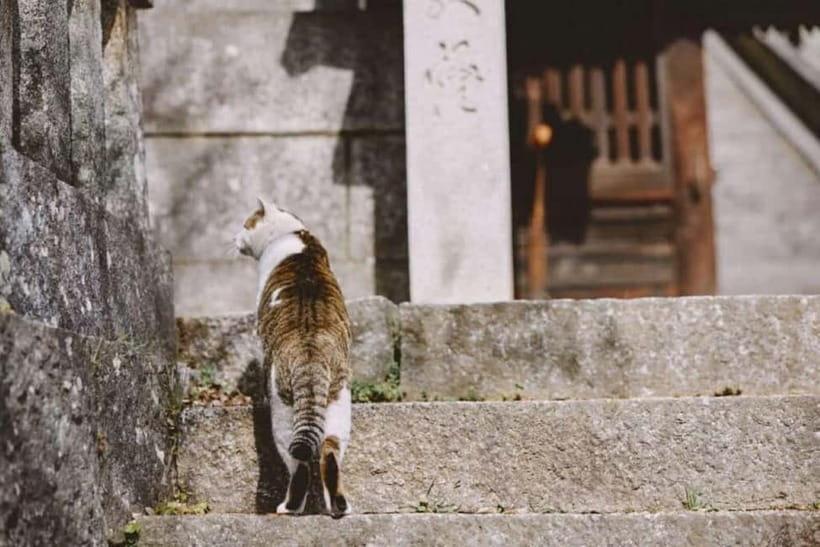
The tour then moves to the Hondori Shopping Street area for free time and lunch. This is one of the practical strengths of the day because the tour does not force you into a fixed meal or restaurant.
Lunch is not included, so budget separately for food. You can look for Onomichi ramen, a local specialty, or Hiroshima-style okonomiyaki. The shopping street is not especially large, but it has quaint antique shops where you might find a souvenir with more character than a standard station purchase.
Use this pause wisely. You can eat, browse, and rest your feet before the afternoon ferry. Since the day includes several walks and temple grounds, lunch is also your best chance to slow down and reset.
The free time means the exact food experience is up to you. That is good for people with strong preferences, but less convenient if you want a fully managed meal. Bring a little flexibility, since the stop is meant to serve both dining and shopping.
The 40-minute ferry to Ikuchijima
After lunch, you go to the Onomichi Port Terminal and board the ferry to Ikuchijima. The ride takes about 40 minutes each way, and the ticket is included.
The ferry is not just transport between two points. It gives the day a proper island section and lets you see the waterway from a lower, slower viewpoint than the ropeway. After a morning of stairs and hillside walking, the crossing provides a welcome seat and a change in scenery.
If you are prone to seasickness, take precautions before boarding. The tour specifically warns about the crossing, and conditions can affect how comfortable the ride feels. Bring whatever measures you normally use, and remember that you still have the return ride later in the day.
The ferry schedule also helps explain the long duration. This is not simply an Onomichi temple walk with a quick add-on. The island visit involves port transfers, two boat rides, and time at a large temple complex.
Kosanji Temple, an elaborate modern creation
Kosanji is the most unusual stop on the route. It belongs to the True Pure Land school of Buddhism, but it is not an ancient temple in the usual sense. The complex took more than 30 years to complete and brings together structures modeled on famous religious buildings from across Japan.
That mixture is precisely what makes Kosanji interesting. You are not looking at one old building preserved from a distant era. You are seeing a carefully made collection of replicas and interpretations, some based on Buddhist sites and others inspired by Shinto architecture.
The Koyomon Gate, for example, takes its design from the Yomeimon Gate at Nikko Toshogu Shrine. The five-storied pagoda is modeled after the ancient pagoda at Muroji Temple. These comparisons are far more useful with a guide, since otherwise the details can blur into a series of ornate gates and halls.
The complex gives you a chance to think about how Japan presents its religious architecture. Some visitors want only original, centuries-old structures. Others enjoy seeing how famous forms were brought together into a single place. Kosanji is best for the second group.
The Cave of 1,000 Buddhas and the Hill of Hope
Two parts of Kosanji deserve special attention. The Cave of 1,000 Buddhas is an underground passage beneath the Main Hall area. It contains about one thousand stone Buddha statues, along with images representing hell and paradise.
The route through the cave symbolizes a descent into Buddhist hell followed by a return to the living world. It is a more theatrical and enclosed experience than the open temple courtyards, and the contrast gives the visit a memorable shape.
The Hill of Hope offers a completely different mood. Japanese sculptor Itto Kuetani created the marble garden over 16 years. The white marble forms a large modern artwork within the temple grounds, bringing a contemporary visual language to a religious site filled with traditional references.
Together, the cave and marble garden show why Kosanji is not a routine temple visit. You get religious symbolism, replicas of famous buildings, underground sculpture, and modern art in one complex. Some people may find the mixture too eclectic, but that is also its defining quality.
After exploring Kosanji, you return to the port and take the ferry back to Onomichi. The included round-trip ticket removes the need to organize the island connection yourself, which is useful on a day with several moving parts.
Is $170 fair value?
At $170 per person, this is not a cheap walking tour. The price includes an English-speaking guide, admission fees at the listed sites, public transport to and from the activities, a one-way ropeway ticket, and the round-trip ferry.
That package has real value if you would otherwise need to plan the temple order, find the ropeway, work out the ferry, pay several entry fees, and keep an eye on the clock. The guide also adds context at Saikokuji, Senkoji, and Kosanji, where the visual details are easier to appreciate with explanation.
The price is less appealing if you want only a short Onomichi stroll or prefer to explore at your own pace. Lunch, accommodation, and transportation to the meeting point are not included. You should also allow for incidental spending at Hondori and any food or drinks during the day.
For a full day combining town, mountain, and island, I consider the cost reasonable for people who value convenience and interpretation. It is a poor fit for anyone mainly seeking a low-cost independent outing.
Who should book this day?
I would choose this tour if you want to see more than the best-known Onomichi streets but do not want to arrange a complicated island connection yourself. It suits first-time visitors to the area and experienced Japan visitors who want a route away from the usual major-city circuit.
The day is also a good match for people who enjoy cultural explanation. The guide helps connect Buddhist ideas, temple design, Japanese literature, and local geography. Isabella’s friendly, surprise-focused style may appeal to you if you prefer a tour that feels curious and lively rather than formal.
You should think twice if you dislike hills, stairs, outdoor walking, ferries, or fixed timing. Summer can bring temperatures around 32 C and extreme humidity, while winter averages about 1 C to 10 C. Dress for the season, protect yourself from sun and heat in summer, and wear warm clothing and suitable shoes in winter.
The activity can last anywhere from 390 minutes to nine hours, and starting times depend on availability. Ask about the exact schedule when booking so you know how the day fits with your other plans. Free cancellation up to 24 hours before the activity and reserve-now, pay-later terms give you some flexibility, but the physical commitment remains the same.
Should you book the Onomichi and Ikuchijima tour?
Book it if you want a full, active day with a strong sense of place. The best parts are the changing viewpoints, the literary walking path, the ferry crossing, and the odd beauty of Kosanji’s cave and marble garden. The route feels more unusual than a standard temple circuit, and the guide helps you understand what you are seeing.
Skip it if you want a slow morning, a simple town walk, or complete control over every stop. The 108 steps, long walking time, ferry ride, and nine-hour possible duration require stamina.
For the right person, this is one of the better ways to explore Onomichi beyond its postcard views. You get a town, a mountain, and an island in one day, with enough free time at Hondori to make the schedule feel human.
FAQ
Where does the tour meet?
The meeting point may vary depending on the option booked. The stated starting point is Shin-Onomichi Station, so check your confirmed booking details for the exact instructions.
How long does the experience last?
The duration is listed as 390 minutes to nine hours. Starting times and the final length depend on availability and the selected option.
Is the tour conducted in English?
Yes. The experience includes a live English-speaking guide.
Is lunch included?
No. Lunch is not included. You have free time in the Hondori Shopping Street area, where you can look for Onomichi ramen or Hiroshima-style okonomiyaki.
Does the tour include the ferry?
Yes. Round-trip ferry tickets are included, and each crossing takes about 40 minutes.
Is the ropeway ticket included?
Yes. The tour includes a one-way ropeway ticket to Senkoji mountain. The route then continues on foot.
How physically demanding is the tour?
The tour involves several hours of outdoor walking and includes 108 stone steps at Saikokuji Temple. Comfortable walking shoes and clothing suited to the season are recommended. Take precautions if you are prone to seasickness.
More 1-Day Tours in Hiroshima
More Island Hopping & Ferries in Hiroshima
More tours in Hiroshima we've reviewed



Onomichi & Shimanami Tours, compared.
 ★ 5.0Shimanami Kaido, 1Day Relaxed Island Hopping Cycling TourFrom $325
 ★ 5.0Onomichi Half-Day Private Trip with Government-Licensed GuideFrom $107
 ★ 5.0Onomichi: Private Walking Tour with Local GuideFrom $964 - 6 hours
 ★ 5.0Half-Day Shimanami Kaido Private E-Bike Cycling Tour – 3 RoutesFrom $276
 ★ 5.0Fukuyama/Tomonoura Half-Day Private Tour with Government-Licensed GuideFrom $98
 ★ 5.0Shimanami Day Bike Tour: Fun for All, Great for FamiliesFrom $255
