
Reviewed · FUKUYAMA
Tomonoura 6hr Private Tour with Government-Licensed Guide
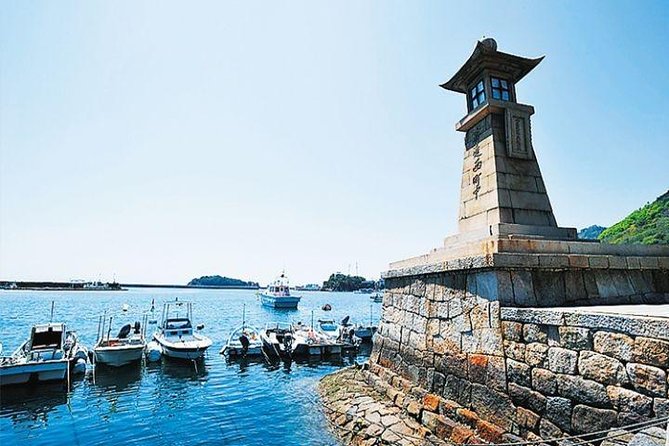
Tomonoura is the star here: a quiet Seto Inland Sea port where old wooden buildings, traditional boats, medicinal herbal liquor, and island views still give the town a strong sense of place. I like the private format, which lets you choose three or four stops, and I like having a government-licensed guide such as Mami to explain the culture behind what you see. The drawback is practical: this is a walking tour without private transportation, and entrance fees, meals, and local fares are extra.
At $155.34 per person, the tour makes the most sense for a small group that wants a flexible day rather than a fixed sightseeing circuit. You can focus on Tomonoura, add Fukuyama Castle, or trade major sights for temples, archaeology, or museums. Just remember that six hours is enough for three or four selected sites, not all ten places listed.
In This Review
- Key points to know before booking
- Why Tomonoura is worth six hours of your Japan trip
- How the private format changes the day
- Tomonoura Museum of History and Folklore
- Tomonoura Tourist Information Center
- Fukuyama Castle and its rebuilt remains
- Shinshoji Temple, a Zen-focused stop
- Kusado Sengen and the story beneath the riverbank
- Hiroshima Prefectural Museum of History
- Myooin Temple and an important five-story pagoda
- Fukuzen-ji Temple and the view from Taicho-ro
- Susanoo Shrine and the local festival tradition
- Matsunaga’s footwear museum
- Price, walking, and what is actually included
- Who should book this Fukuyama tour?
- Booking and cancellation details
- Should you book it?
- FAQ
- How long is the Tomonoura private tour?
- How many places can I visit?
- Is the tour private?
- Is transportation included?
- Are admission fees included?
- Is lunch included?
- Is the guide English-speaking?
- Can I choose the places I want to see?
- What happens if the weather is poor?
Key points to know before booking
- Tomonoura gives the tour its strongest sense of place: See a preserved port town on the Seto Inland Sea, with old buildings and calm bay views.
- You choose three or four stops: The guide builds the day around your must-see places instead of rushing through every suggested site.
- Mami can tailor the experience: She reaches out before the tour to learn your interests and can introduce local homeishu, a herbal medicinal liquor.
- Fukuyama adds castle and temple variety: Pair Tomonoura with Fukuyama Castle, Myooin Temple, or Shinshoji Temple for a fuller look at the area.
- Transportation is not included: You meet the guide on foot, and you pay for buses, trains, taxis, and admissions separately.
- Bad-weather flexibility matters: You can cancel for a full refund up to 24 hours before departure, and poor weather may lead to a new date or full refund.
Why Tomonoura is worth six hours of your Japan trip
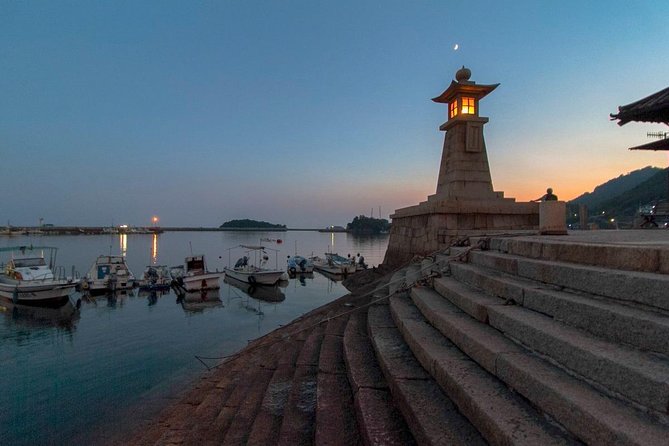
Tomonoura sits at the southern end of Fukuyama, in a bay facing the Seto Inland Sea. Its appeal is not based on one grand monument. You come for the combination of a fishing-town setting, historic streets, small cultural sites, and quiet water dotted with islands.
The port prospered when sailing ships crossed the Inland Sea. Ships often stopped at Tomonoura while waiting for the tide, bringing trade and work to the town. That past still helps explain the old buildings and the town’s connection to homeishu, a shochu-based herbal liquor made with 16 types of herbs.
I would choose this tour for you if you prefer local character to a checklist of famous sights. Tomonoura has a calm, old-fashioned feel, but it is not presented as a preserved stage set. It is a working port town with an easy pace, and a guide can help you notice how the waterfront, shops, temples, and narrow streets fit together.
The scenery is another reason to come. The bay opens toward the Seto Inland Sea National Park, where islands spread across quiet water. Weather and visibility will affect the views, but the setting gives the town a strong visual reward even when you spend much of your time simply walking between sites.
Other guided tours in Fukuyama
How the private format changes the day
This is a six-hour private activity for your group alone. The guide meets you on foot within the designated Fukuyama area, so this is not a private-car tour with door-to-door transport. You need to account for transportation fees and walking time when choosing your stops.
Before the tour, select your must-see places from the available list. The plan is then customized around three or four sites. That choice is important. Ten one-hour stops are listed, but the schedule is not designed to visit all ten in a single half-day. The descriptions are best understood as a menu of possible stops.
The private setup is especially useful if your group has different interests. One person can favor castles and archaeology, while another prefers temples and sea views. A guide can help you decide which combination works best within six hours.
Mami is the named guide connected with the experience. She reached out in advance to understand a guest’s wishes and build a schedule. Her local focus included Tomonoura’s homeishu breweries, a detail that gives the tour a more personal angle than a standard walk through the port.
A multilingual, government-licensed guide also brings cultural context. The National Government Licensed Guide Interpreter certification requires a strong understanding of Japanese culture and history. That does not remove the need to check costs and logistics, but it is useful when you want more than directions and brief facts.
Tomonoura Museum of History and Folklore
This is a good first choice if you want context before walking through the port town. The museum deals with Tomonoura’s development as a harbor and its place in the life of the Seto Inland Sea.
You can connect what you see in the galleries with the town outside: ships waiting for the tide, trade around the bay, and the production of homeishu. A guide can help turn those separate details into a clear story about why Tomonoura grew where it did.
Allow about an hour. Admission is not included, so confirm the current fee when you build the schedule. This stop is less about dramatic views and more about making the rest of Tomonoura easier to understand.
Tomonoura Tourist Information Center
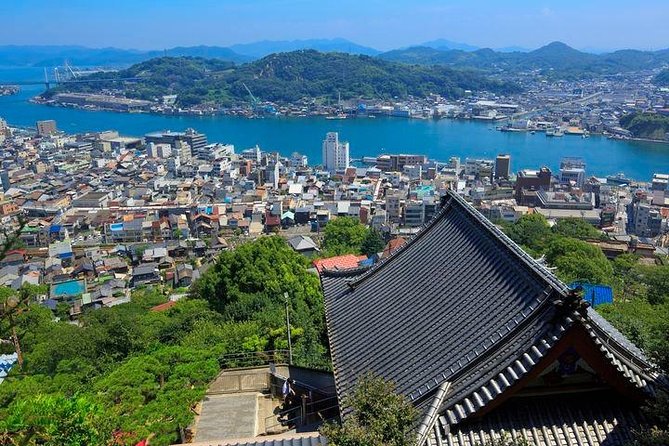
The tourist information center can help you get oriented before exploring the port. It is listed as a possible one-hour stop, though the experience description does not specify a particular exhibit or admission arrangement.
I would select it if you want practical local information or if your group needs help deciding how to use its time in Tomonoura. It may be less satisfying than the museum or Fukuzen-ji Temple if you are looking for a major historic building, so it works best as part of a broader Tomonoura plan rather than the main reason for booking.
The town itself is the real attraction here. Use the center as a starting point, then let the guide explain the old port, the bay, and the local traditions that are easy to miss on your own.
Fukuyama Castle and its rebuilt remains
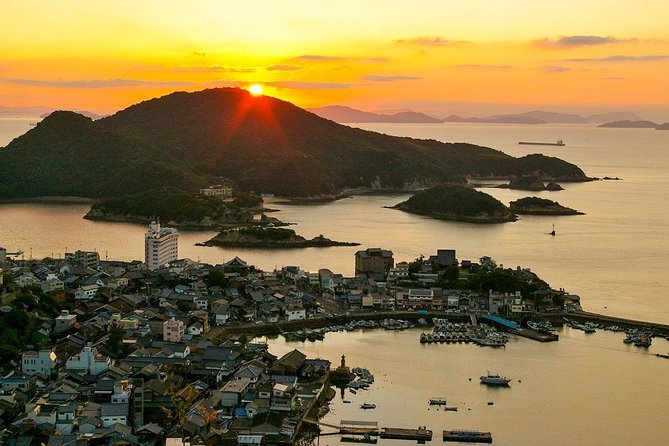
Fukuyama Castle gives the day a different focus. Built in 1619 by Katsunari Mizuno, lord of the Bingo district, it was one of the major castles of the Edo period. Much of the complex was destroyed during World War II and rebuilt in 1966.
Inside, a small museum presents belongings connected with medieval lords along with archaeological and historical objects. Two surviving or restored structures, Fushimi-yagura and Sujigane-gomon, are designated important cultural properties of Japan.
The castle is a sensible choice if you want a recognizable landmark and indoor museum time alongside Tomonoura’s streets. It also works well at the beginning or end of a Fukuyama visit, depending on where you meet the guide.
Admission is extra. Since the castle is in Fukuyama and Tomonoura is farther south, ask the guide how transportation time will affect the rest of your plan. The tour does not include private transport, so a castle and port combination needs more planning than two nearby sites.
Shinshoji Temple, a Zen-focused stop
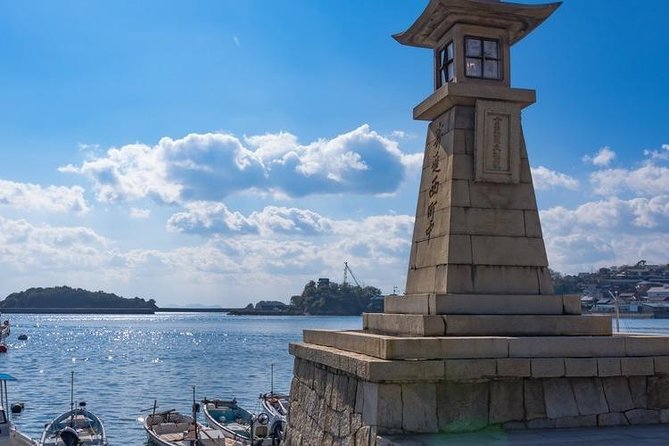
Shinshoji Temple sits about 15 kilometers southwest of central Fukuyama on broad, forested grounds. The Rinzai Zen temple was established in 1965 by a local industrialist, and its buildings are spread around a pond and wooded paths.
This is not only a place to look at a main hall and leave. The grounds include tea houses, meditation classes, a gallery devoted to Zen master Hakuin, and a contemporary art installation. The result is a more varied temple visit, with walking paths and several ways to approach Zen practice and art.
Choose Shinshoji if you want a slower, more reflective stop. It may not be the best pick if your priority is a dense cluster of old buildings, since the site was constructed in the 20th century and occupies a broad area. Transportation time also matters because of its distance from central Fukuyama.
Kusado Sengen and the story beneath the riverbank
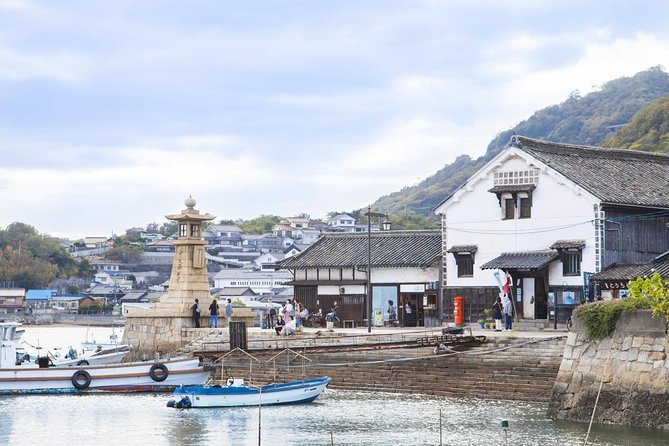
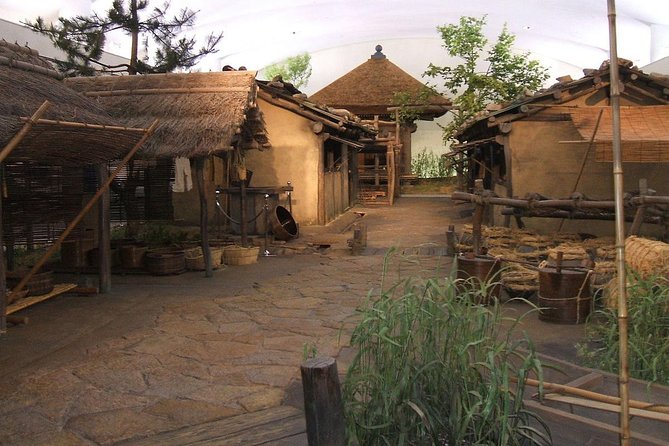
Kusado Sengen was once a medieval town on the Ashida River, with thousands of houses and buildings. For a long time, it was known mainly through local records from the Edo period. Excavations began in 1961 and uncovered tools and other objects that show how people lived in the settlement.
The site offers a different kind of Japanese history. Instead of focusing on a castle lord or famous temple, it looks at ordinary life in a medieval community. Archaeological finds can reveal work, household routines, and local trade in ways that polished monuments cannot.
This stop suits you if you enjoy archaeology and social history. The remains may require more explanation than a visually complete building, which is where the licensed guide is useful. Admission is not included.
Hiroshima Prefectural Museum of History
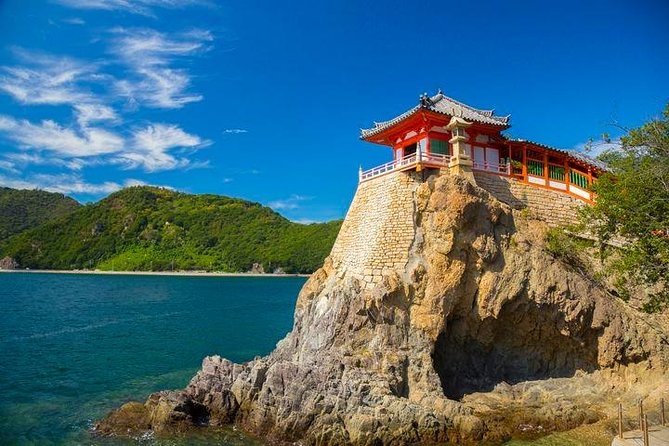
The Hiroshima Prefectural Museum of History is closely tied to the discoveries at Kusado Sengen. Its exhibits include objects found through excavation along the Ashida River and focus on the culture and daily life of people around the Seto Inland Sea.
A restored old town setting helps show how people once lived in Kusado Sengen. I would pair this museum with the archaeological site if you want the clearest version of that story. The site gives you the ground and discoveries, while the museum provides objects and interpretation.
Like the other stops, it takes about an hour in the suggested schedule, and admission is extra. If your group has limited time, choose it over the Kusado site only if indoor exhibits and historical objects appeal more than seeing the location of the former settlement.
Myooin Temple and an important five-story pagoda
Myooin Temple is traditionally said to have been established in 807 by Kobo Daishi. Its central religious image is the Eleven-Faced Kannon, and the main hall combines a generally Japanese style with Chinese details.
The highlight is the five-story pagoda, described as the fifth oldest of Japan’s national treasure pagodas. The pagoda and main hall are designated important cultural properties. This gives the stop genuine architectural weight, not just a scenic temple visit.
Pick Myooin if you want an older religious site with a strong architectural focus. The experience description does not give a separate admission price, so budget for an additional entrance fee unless your guide confirms otherwise.
Fukuzen-ji Temple and the view from Taicho-ro
Fukuzen-ji Temple is one of the best choices for a first visit to Tomonoura. Attached to the temple is Taicho-ro, a reception hall built in 1690. Its windows look across the nearby islands and the Seto Inland Sea.
The room was once used to receive Korean envoys, who praised the view. That detail gives Taicho-ro an international connection and helps explain why the building mattered beyond local religious life.
This is the stop I would choose if your priority is a historic building with a memorable outlook. It is also a strong partner for the Tomonoura museum or a walk through the port. The hall is a designated historic site, and its position above the water makes it one of the most visually rewarding choices on the list.
Susanoo Shrine and the local festival tradition
Susanoo Shrine is dedicated to Susanoo-no-Mikoto, the Shinto deity associated with the sea and storms. The shrine is also known as Tenno-san, and its Gion Festival is said to date to the middle of the Heian period.
The annual events include Mikoshi-awase and the Chinowa-kuguri purification rite. The suggested stop is only one minute, so this is not a full hour-long attraction in the same way as the museums, castle, or temples.
Choose it when you have a specific interest in Shinto traditions or want to add a brief local shrine visit to a Tomonoura route. On a tight schedule, Fukuzen-ji Temple or the history museum will usually provide more to see and discuss.
Matsunaga’s footwear museum
Matsunaga is home to what is described as Japan’s only footwear museum. Its collection covers Japanese and international footwear from older periods to modern times, with about 2,266 pieces designated important cultural folk artifacts by the Japanese government.
An adjacent Japan Folk Toy and Doll Museum adds another collection of local objects. This makes Matsunaga a useful alternative if you have already seen several temples and castles or want something unusual.
The museum is not in the same sightseeing zone as central Tomonoura, so transportation planning is important. I would choose it because of a strong interest in material culture, design, or local industry, not simply to fill an open hour.
Price, walking, and what is actually included
The listed price is $155.34 per person. For a private six-hour tour with a licensed English-speaking guide and a custom route, that can be fair value for a small group, especially if you care about explanation and flexibility.
The price does not cover transportation, admission fees, lunch, or personal expenses. Private transportation is also not included. You meet the guide on foot, and the activity is described as suitable for most participants, with service animals allowed and public transportation nearby.
Group discounts may be available, but the exact terms are not provided. You cannot combine separate tour groups, so this is designed for one private party rather than a shared excursion.
The best way to protect the value is to choose sites that are close enough to fit comfortably into six hours. A day built around Tomonoura, Fukuzen-ji Temple, and the museum will feel different from a route that combines Tomonoura, Fukuyama Castle, and Shinshoji. Ask about travel time before finalizing your must-see list.
Who should book this Fukuyama tour?
I would recommend it to you if you want a personal introduction to Fukuyama and Tomonoura, especially if this is your first visit to the area. It is also a good fit for small groups that do not want to follow a fixed route.
You will get the most from it if you enjoy local history, religious buildings, archaeology, or coastal scenery. The guide’s ability to explain homeishu and Tomonoura’s port traditions adds something you might not get from simply walking around with a map.
This is less suitable if you want a fully escorted vehicle tour, a low-cost group outing, or a packed schedule of every listed stop. It also may not suit anyone who wants all costs settled in advance, since entrance fees and transportation are separate.
Only one published rating is available, so there is not enough feedback to judge consistency across many departures. Still, the available experience points to a guide who takes initiative before the day begins and shapes the schedule around your interests.
Booking and cancellation details
Confirmation is provided at booking. The tour requires good weather, and if poor weather cancels the experience, you can receive a different date or a full refund.
You may cancel for a full refund up to 24 hours before the start time. Cancellations or changes made less than 24 hours before departure are not accepted for a refund. Cutoff times follow local time in Japan.
Should you book it?
Book this tour if you want Tomonoura explained rather than simply photographed. The strongest plan is to choose two or three Tomonoura-area stops, then add Fukuyama Castle or one museum if transportation time allows.
Before paying, decide what matters most: coastal scenery, old port culture, castle architecture, Zen, archaeology, or unusual museums. Tell Mami or the assigned guide your priorities early, and confirm the transport plan and admission costs.
For a private six-hour introduction with a flexible route, the value is strongest when you use the guide’s local knowledge to make careful choices. If you prefer to move independently and pay only for the sights you enter, you can explore Tomonoura on your own. If you want context, conversation, and a day shaped to your interests, this tour is a worthwhile choice.
FAQ
How long is the Tomonoura private tour?
The tour lasts approximately six hours.
How many places can I visit?
The customized tour includes three or four sites chosen from the available options.
Is the tour private?
Yes. Only your group participates, and separate tour groups cannot be combined.
Is transportation included?
No. You meet the guide on foot within the designated Fukuyama area. Transportation fees and private transportation are not included.
Are admission fees included?
No. Entrance fees are separate. Guide entry fees are covered only for sights listed in the tour information.
Is lunch included?
No. Lunch and other personal expenses are not included.
Is the guide English-speaking?
Yes. A licensed local English-speaking guide is included. The provider also describes the guide service as multilingual.
Can I choose the places I want to see?
Yes. You select your must-see sites from the provided list, and the guide creates a customized itinerary around three or four choices.
What happens if the weather is poor?
Because the tour requires good weather, the provider may offer a different date or a full refund if the experience is canceled due to poor weather.
More Private Tours in Fukuyama
More Guided Tours in Fukuyama
More tours in Fukuyama we've reviewed
Fukuyama, compared.
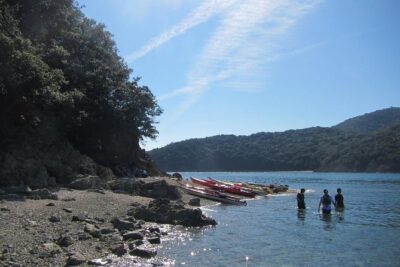 ★ 5.0Explore the Nature that Inspired Ghibli Movies by Kayak (Half Day)From $53
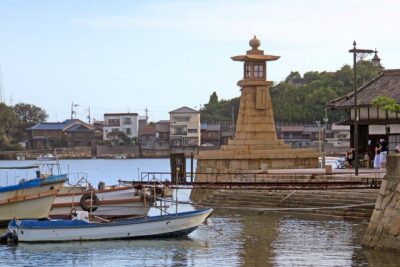 ★ 5.0Sea Kayak Tour to the History of Tomonoura in the Seto Inland SeaFrom $88
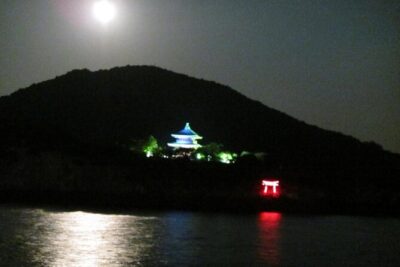 ★ 5.0Night Kayak Tour Relax Under the Natural Glow of Sea FirefliesFrom $69
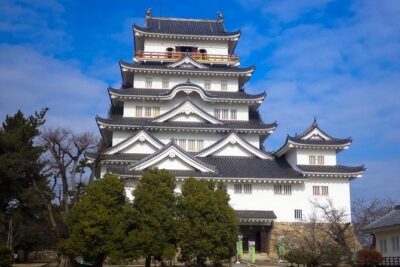 ★ 5.0Fukuyama/Tomonoura Half-Day Private Tour with Government-Licensed GuideFrom $98
