
Reviewed · ONOMICHI & SHIMANAMI TOURS
Fukuyama/Tomonoura Half-Day Private Tour with Government-Licensed Guide
Fukuyama’s best sights are spread across two very different settings: Fukuyama Castle, a major Edo-period stronghold, and Tomonoura, an old port facing the quiet islands of the Seto Inland Sea. This private tour lets you choose two or three places and spend your limited time where it matters most.
I like the custom itinerary and the chance to have a licensed local guide explain Japan’s history, temples, port culture, and archaeological finds in plain English. I also like the private format. You do not have to match another group’s pace or interests.
The main catch is transportation. This is a walking tour with an on-foot meeting point, not a private car tour. Entrance fees, buses, taxis, meals, and other personal costs are extra, so the advertised price is a guide fee rather than an all-inclusive day out.
In This Review
- Key points for choosing this Fukuyama tour
- Why Fukuyama and Tomonoura make a good half-day pairing
- Building your two or three-site itinerary
- Tomonoura Museum of History and Folklore
- Tomonoura Tourist Information Center
- Fukuyama Castle and the Edo period
- Shinshoji Temple, Zen, and art
- Kusado Sengen archaeological site
- Myooin Temple and Eleven-Faced Kannon
- Hiroshima Prefectural Museum of History
- Matsunaga’s unusual footwear museum
- Fukuzen-ji Temple and Taicho-ro
- Susanoo Shrine and Tomonoura’s sea traditions
- What $98.22 per person really buys you
- Who should book this private walking tour
- Practical booking advice before you go
- Should you book the Fukuyama and Tomonoura tour?
- FAQ
- How long is the Fukuyama and Tomonoura tour?
- Is this a private tour?
- How many sites can I choose?
- Is a licensed English-speaking guide included?
- Is private transportation included?
- Is pickup offered?
- Are entrance fees included?
- Is lunch included?
- Can the tour date be changed?
- What is the cancellation policy?
Key points for choosing this Fukuyama tour
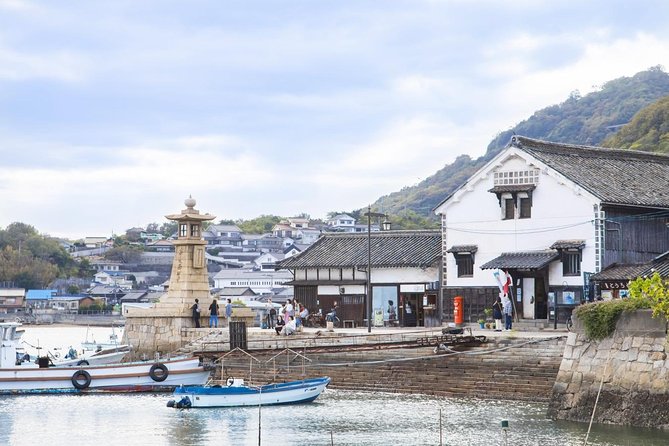
- Tomonoura gives you old Japan by the water, with Edo-period buildings, a historic port, Fukuzen-ji Temple, and Susanoo Shrine.
- You choose two or three sites, so you can focus on castles, temples, museums, archaeology, or local culture.
- The four-hour private format works well for a short stay, especially if you want context without spending a full day.
- Mami Mukai is one named guide associated with the experience, and she has led visits to Shinshoji Zen and Art Museum and Tomonoura.
- The price of $98.22 per person is strongest for a small group, since you receive private guiding rather than joining a large fixed route.
- You must budget for transport and admission, because neither private transportation nor most entrance fees are included.
Why Fukuyama and Tomonoura make a good half-day pairing
Fukuyama is easy to overlook when planning a Hiroshima Prefecture trip. That is a shame if you like places where castle history, temple art, archaeology, and working-port life sit close together. The city and its nearby sights offer a useful counterpoint to Hiroshima’s better-known attractions.
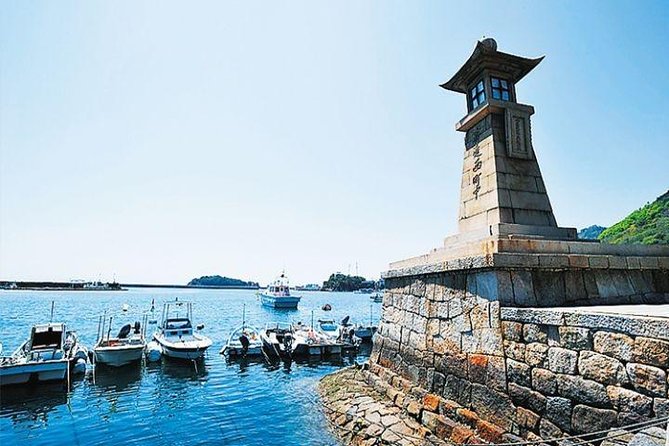
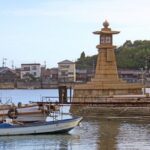
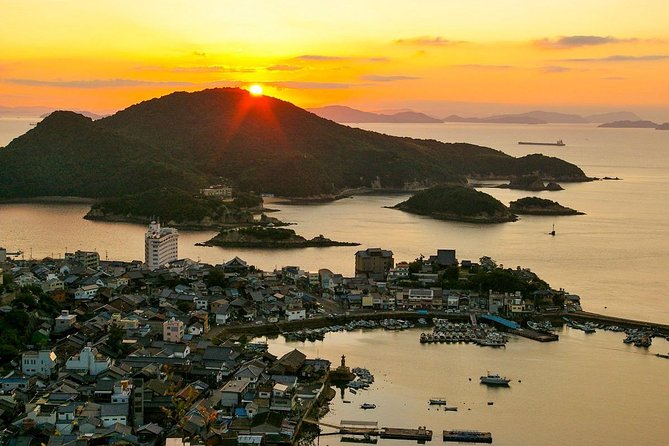
Tomonoura is the visual star. It occupies a bay on the southern edge of Fukuyama, looking across the Seto Inland Sea toward scattered islands. The port has an old-fashioned feel, with historic buildings and a slower rhythm than a major city.
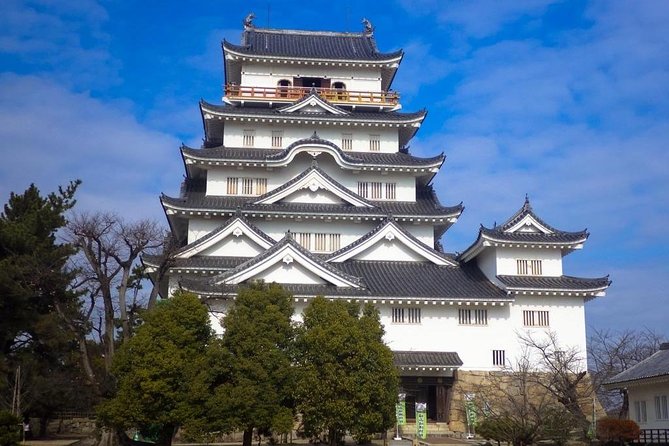
Fukuyama Castle gives you a different kind of story. Built in 1619 by Katsunari Mizuno, feudal lord of the Bingo area, it was one of the great castles of the Edo period. Its surviving structures include Fushimi-yagura and Sujigane-gomon. The castle is a useful choice if you want a clear introduction to regional power and castle design.
The smart move is to decide what sort of afternoon you want before booking. Choose Tomonoura and Fukuzen-ji for scenery and port history. Choose Fukuyama Castle and the Hiroshima Prefectural Museum of History for a more traditional history-focused visit. Pick Myooin Temple and Shinshoji if temples, art, and quiet gardens appeal more than urban sights.
If you're still narrowing it down, here are other tours in Fukuyama we've reviewed.
Building your two or three-site itinerary
The tour is not designed for all ten listed stops. The stated plan is to select two or three sites from the available choices. That matters because several stops are far enough apart that trying to cover everything would turn the afternoon into a rushed checklist.
Tell the agency your must-see places when you book. A private guide can then shape the route around your priorities, though the tour still remains a walking experience and transportation between separated sights is not included.
If you are arriving by train, ask exactly where you will meet and how much local transport you should allow. The service offers pickup on foot within a designated area of Fukuyama, but pickup does not mean a private vehicle collecting you at your hotel and carrying you around.
A four-hour limit is enough for two substantial stops and perhaps a shorter nearby visit. It is not enough for a relaxed look at every temple, museum, shrine, castle, and archaeological site in the area.
Tomonoura Museum of History and Folklore
This is a sensible first stop if you want the port town to make more sense. The museum focuses on Tomonoura’s past and local traditions, helping you see the old buildings and waterfront as part of a working community rather than as a pretty photo setting.
The planned visit is about 30 minutes. That is enough for a guided orientation, but probably not enough for a slow study of every display. Admission is not included, so confirm the current fee before you arrive.
I would pair this museum with a walk through Tomonoura or with Fukuzen-ji Temple. The museum supplies background; the streets and waterfront show how that past looks in place.
Tomonoura Tourist Information Center
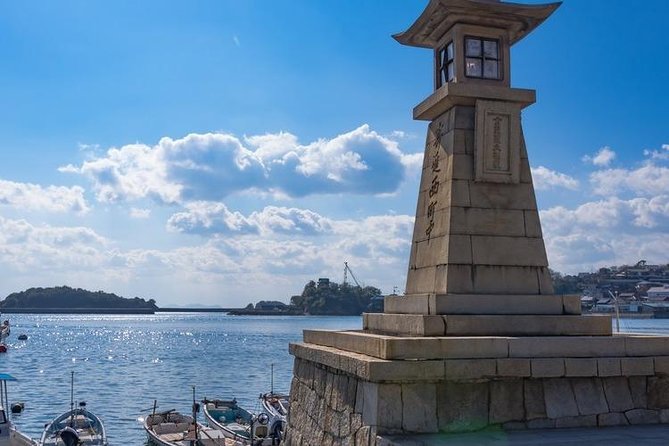
The tourist information center is another short Tomonoura stop, listed at about 30 minutes. It may be useful for getting your bearings and learning how the port’s sights fit together, especially if this is your first visit.
On its own, it is less of a destination than a museum or temple. Its value comes from the guide’s explanation and from using the stop as a starting point for nearby sights.
If you want the strongest Tomonoura half-day, ask whether the center can be combined with Fukuzen-ji Temple or Susanoo Shrine. The center helps you orient yourself, while the temple and shrine give you more distinctive places to see.
Fukuyama Castle and the Edo period
Fukuyama Castle is the clearest choice for anyone who wants a major historical monument. Built in 1619, it reflects the political order of Edo-period Japan and the importance of the Bingo district.
The itinerary gives the castle only a one-minute listing, but that should not be read as the amount of time you will spend there. It is one of the selectable sites, and the four-hour tour allows the guide to spend time at your chosen locations. Still, ask how long the castle portion will be and whether admission is needed.
The castle’s Fushimi-yagura and Sujigane-gomon are especially useful details to discuss with a guide. Instead of simply taking a castle photograph, you can learn what these structures did and how the site fit into regional rule.
Castle fans may want to make this the main stop, then add a nearby city sight if timing allows. If you prefer temples or coastal scenery, do not feel obliged to include it just because it is Fukuyama’s most famous landmark.
Other guided tours in Fukuyama
Shinshoji Temple, Zen, and art
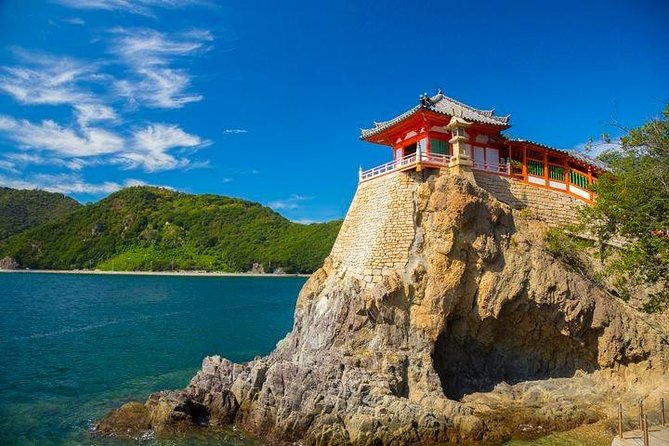
Shinshoji is a Rinzai Zen temple about 15 kilometers southwest of central Fukuyama. It was built in 1965 by a local industrialist and occupies an expansive setting.
This is a particularly good choice for you if you want more than old buildings. The temple combines Zen practice, gardens, and art, including an art pavilion. A detailed visit led by Mami Mukai included the Zen museum and garden, the art pavilion, and time for photographs of maple trees.
That account also included a taxi ride and lunch, but those extras are not part of this half-day walking package. Keep that distinction clear when planning. Shinshoji may require transport and additional time, and the tour price does not cover private transportation or meals.
Because it sits outside central Fukuyama, Shinshoji is best treated as a primary destination rather than a quick add-on. Ask the provider how the meeting point and local transport will work before choosing it.
Kusado Sengen archaeological site
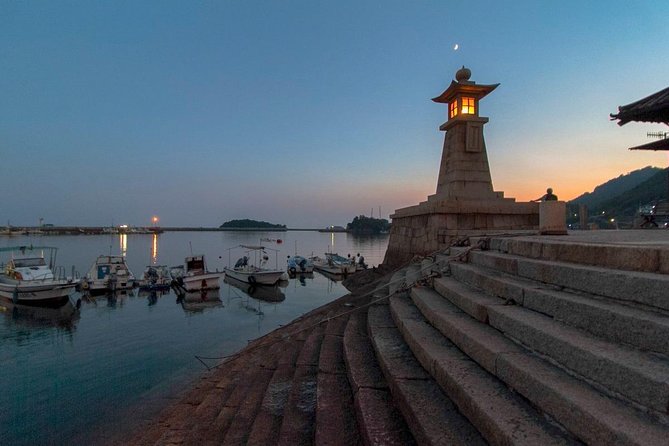
Kusado Sengen was a medieval town on the bank of the Ashida River. It once contained about a thousand houses and other buildings, making it an important window into ordinary town life in medieval Japan.
The suggested visit is about 30 minutes. That makes it a good companion to the Hiroshima Prefectural Museum of History, where excavated objects from the Ashida River area help explain the people and culture of the Seto Inland Sea.
This stop may appeal more to you if you enjoy archaeology than if you want grand architecture. The remains can be harder to grasp without explanation, which is exactly where a private guide earns the fee. Ask the guide to connect the site to the museum displays rather than treating the two places as separate facts.
Myooin Temple and Eleven-Faced Kannon
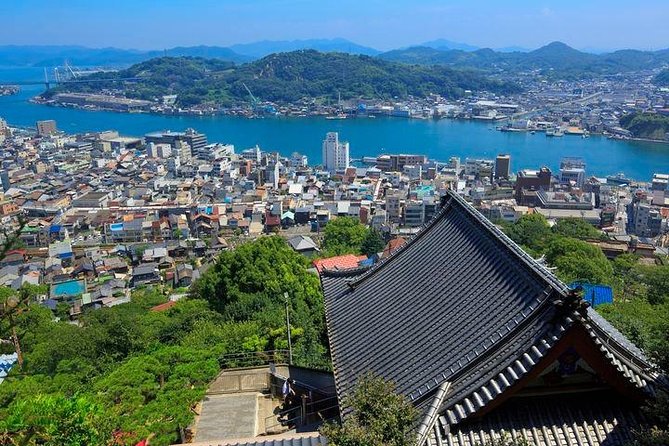
Myooin Temple is said to have been founded in 807 by Kobo Daishi. Its main religious focus is an Eleven-Faced Kannon statue, and the main hall contains a range of Buddhist art and vocabulary.
The suggested time here is one hour, making it one of the more substantial choices. That tells you something useful: this is not merely a quick stop for a photograph. You need time to look, listen, and ask questions.
Choose Myooin if you want a temple visit with religious meaning and older cultural material. As with other temples, be prepared for a quieter experience than a major city attraction. Admission is not included, and you should ask the guide which entry costs are covered, if any.
Hiroshima Prefectural Museum of History
This museum focuses on the culture of people living around the Seto Inland Sea. Its exhibits include antiques and objects recovered through excavation along the Ashida River in Fukuyama.
The planned visit is one hour. That makes it a strong anchor for a history-focused tour, especially when paired with Kusado Sengen. The museum can give you a wider regional picture, while the archaeological site shows where some of that story took place.
I would choose this museum on a hot, wet, or very bright day when you want an indoor stop. The drawback is simple: if your main reason for visiting Fukuyama is coastal scenery, an hour in a museum may feel less rewarding than Tomonoura.
Matsunaga’s unusual footwear museum
Matsunaga Station is associated with what is described as Japan’s only footwear museum. It displays Japanese and overseas footwear from earlier periods to the present.
The stop is listed at one minute, so it is clearly an optional point rather than a full museum visit in the standard half-day plan. If footwear, manufacturing, or unusual local collections interest you, ask whether a proper visit can be arranged and how much time it would take.
Do not choose this sight without checking the schedule. Four hours disappears quickly, and a museum with meaningful displays needs more than a brief photo stop.
Fukuzen-ji Temple and Taicho-ro
Fukuzen-ji Temple is one of the best choices in Tomonoura. The temple is believed to date from around 950, while Taicho-ro, its attached reception hall, was built later.
The site combines religious history with the setting that makes Tomonoura special. From here, you can connect the temple to the port, the bay, and the islands of the Seto Inland Sea.
The itinerary gives it a one-minute listing, but again, that is not a useful guide to the real visit time. It is a selectable site, and it deserves more attention if you want to understand Tomonoura rather than simply pass through it.
I would place Fukuzen-ji high on your list. It fits naturally with the museum, tourist center, or Susanoo Shrine, and it gives your guide plenty to explain.
Susanoo Shrine and Tomonoura’s sea traditions
Susanoo Shrine, also called Tenno-san, honors Susanoo-no-Mikoto, a Shinto deity linked with the sea and storms. The shrine is tied to the Gion Festival.
This is a useful pick if you want to see how local religious life connects to a port community. It adds a Shinto perspective to the Buddhist temples and secular museums elsewhere on the route.
The stop is listed at one minute, so treat it as a short visit unless you arrange more time. Pairing it with Fukuzen-ji creates a good contrast between Shinto and Buddhist traditions in the same coastal area.
What $98.22 per person really buys you
At $98.22 per person, this is not a cheap transport solution. It is a private guiding service, and the value depends heavily on your group size and your willingness to use the guide well.
For a couple or small family, the price can make sense because you receive a private four-hour service rather than a fixed group route. A guide can explain details that signs and quick photographs will not provide, then adjust the pace around your interests.
The price does not include transportation fees, entrance fees, lunch, or personal expenses. It also does not include private transportation. If you choose Shinshoji or try to cover widely separated sites, add local taxi or public transport costs to your budget.
Group discounts are offered, which may improve the per-person value for a larger private party. You cannot combine separate tour groups, so this is not a way to join with unrelated bookings.
The strongest value comes from choosing sites that need explanation: Kusado Sengen, Myooin Temple, the history museum, or the architectural details of Fukuyama Castle. If you only want a quick walk and photographs, you may prefer to explore independently.
Who should book this private walking tour
I would recommend it to you if you have about half a day in Fukuyama and want to make clear choices rather than guess which sights fit together. It is also useful if you want English guidance on Japanese history, Buddhism, Shinto traditions, or Seto Inland Sea culture.
The private format suits families, couples, and small groups with different energy levels. Most people can participate, and service animals are allowed. The experience operates near public transportation, but you still need to plan your own movement between sites.
This tour is less suitable if you expect a chauffeured sightseeing circuit. It is also a poor fit if you want to visit all ten listed places. The route is flexible, but the clock is not.
The guide’s national government certification indicates formal training and understanding of Japanese culture and history. Mami Mukai is a named guide connected with the experience, and her approach includes explaining Shinshoji’s garden and art pavilion and pointing out local products such as Houmei-shu, a special liquor from Tomonoura.
Practical booking advice before you go
Choose your two or three must-see sites before booking. Put them in priority order, then tell the agency what you want to experience. That gives the guide a clear starting point and reduces the chance of spending your four hours on too many short stops.
Ask about current admission fees and the meeting point. The booking confirmation arrives at the time of reservation, but a date change can result in a different guide or no availability.
The tour can be changed up to two days before the date. You can cancel for a full refund up to 24 hours before the start time, but late cancellations and late changes are not accepted. The experience requires good weather, and poor weather can lead to a different date or a full refund.
Should you book the Fukuyama and Tomonoura tour?
Book it if you want a private, flexible introduction to Fukuyama and are happy to handle transport and admission costs yourself. The best version is not an attempt to see everything. It is a focused plan, such as Fukuyama Castle plus the history museum, or Tomonoura Museum, Fukuzen-ji, and Susanoo Shrine.
Skip it if you want a private car, a fully packaged day, or a broad sightseeing sweep with no extra planning. For the right visitor, the $98.22 fee buys something useful: time with a licensed guide who can connect Fukuyama’s castle, temples, archaeology, and sea culture into one readable story.
FAQ
How long is the Fukuyama and Tomonoura tour?
The tour lasts approximately four hours.
Is this a private tour?
Yes. Only your group participates, and you cannot combine multiple tour groups.
How many sites can I choose?
The tour includes a customizable itinerary of two or three sites from the available choices.
Is a licensed English-speaking guide included?
Yes. A licensed local English-speaking guide is included. The guide holds National Government Licensed Guide Interpreter certification.
Is private transportation included?
No. This is a walking tour. Private transportation and transportation fees are not included.
Is pickup offered?
Yes, pickup is offered on foot within the designated area of Fukuyama. This does not include hotel pickup by private vehicle.
Are entrance fees included?
Entrance fees are not generally included. Guide entry fees are covered only for sights listed under the tour’s specified inclusions.
Is lunch included?
No. Lunch and other personal expenses are extra.
Can the tour date be changed?
Yes. Tour dates can be changed up to two days before the tour, though a change may result in a different guide or no availability.
What is the cancellation policy?
You can cancel at least 24 hours before the start time for a full refund. Cancellations or changes made less than 24 hours before the start time are not accepted for a refund.
More Private Tours in Fukuyama
More Guided Tours in Fukuyama
More tours in Fukuyama we've reviewed
Onomichi & Shimanami Tours, compared.
 ★ 5.0Shimanami Kaido, 1Day Relaxed Island Hopping Cycling TourFrom $325
 ★ 5.0Onomichi: Private Walking Tour with Local GuideFrom $964 - 6 hours
 ★ 5.0Onomichi Half-Day Private Trip with Government-Licensed GuideFrom $107
 ★ 5.0Half-Day Shimanami Kaido Private E-Bike Cycling Tour – 3 RoutesFrom $276
 ★ 5.01-Day Onomichi & Ikuchijima Island: Temples, Ropeway & FerryFrom $170390 minutes - 9 hours
 ★ 5.0Shimanami Day Bike Tour: Fun for All, Great for FamiliesFrom $255
