
Reviewed · ONOMICHI & SHIMANAMI TOURS
Onomichi: Private Walking Tour with Local Guide
Onomichi’s best moments come on foot, where steep lanes lead past old homes, temples, lucky stone cats, and sudden views of the Seto Inland Sea. A private guide lets you shape the day around what interests you most, rather than follow a fixed sightseeing route.
I like the personal itinerary and the chance to learn small cultural details, such as the proper way to pray at a Shinto shrine. I also like the mix of Senko-ji’s grand views, Neko no Hosomichi’s odd little cat figures, and a bowl of local ramen. The main consideration is cost: at $96 per person, you still pay separately for food, drinks, entrance fees, and transportation.
In This Review
- Key points to know
- Why a private walk fits Onomichi
- Senko-ji gives you the classic Onomichi view
- Senko-ji Shinmichi and the town’s literary side
- Neko no Hosomichi and its lucky cats
- Ushitora Shrine and a useful lesson in shrine manners
- Kosan-ji Temple and an unusual act of remembrance
- Onomichi ramen makes a good finish
- What the guides add to the day
- Is $96 per person a fair price?
- Who should book this Onomichi walking tour?
- My booking advice
- FAQ
- How long does the Onomichi private walking tour last?
- What languages are available?
- Is the tour private?
- Where does pickup take place?
- Are food, entrance fees, and transportation included?
- Can the itinerary be changed?
- What is the cancellation policy?
Key points to know
- Ride up and walk down from Senko-ji: The route lets you see Onomichi as the town of slopes, with a hilltop view followed by a gradual descent.
- Choose your own priorities: You can focus on temples, literary sites, local food, photography, or everyday culture.
- Meet at your hotel or station: Pickup is on foot from any address or train station in Onomichi.
- See Neko no Hosomichi: Lucky stone cats line this narrow lane, which runs between Ushitora Shrine and Tennei-ji’s three-floor pagoda.
- Ask about Onomichi ramen: Your guide can point you toward local shops serving the town’s light, seafood-based style.
- Private guiding matters here: Guides including Yuji, Mami, and Kazuha have helped visitors understand shrine customs, local stories, food, and good photo spots.
Why a private walk fits Onomichi
Onomichi is not a city you understand by ticking off a list of sights. Its appeal lies in the connection between them: a temple above the rooftops, a narrow lane below it, an old wooden house beside a literary marker, then a glimpse of islands across the water.
That layout can be a little confusing on your own. Onomichi is famously hilly, and the most interesting streets are not always the easiest to find. A guide can arrange the day around your pace and interests, then explain what you are seeing instead of leaving you with a string of names.
You receive a private tour for four to six hours, with a licensed local guide speaking English or Japanese. The guide meets you in the lobby of your hotel or at the train station you request, ten minutes before the scheduled pickup. Pickup is on foot, so the experience begins without arranging a separate vehicle.
The flexible format is especially useful if you have only one day in town. You can request temples and views, ask for more food time, or spend longer in the old lanes. The exact route depends on the requests you make and what your guide confirms before the tour.
A few more Onomichi tours and experiences worth a look

Senko-ji gives you the classic Onomichi view
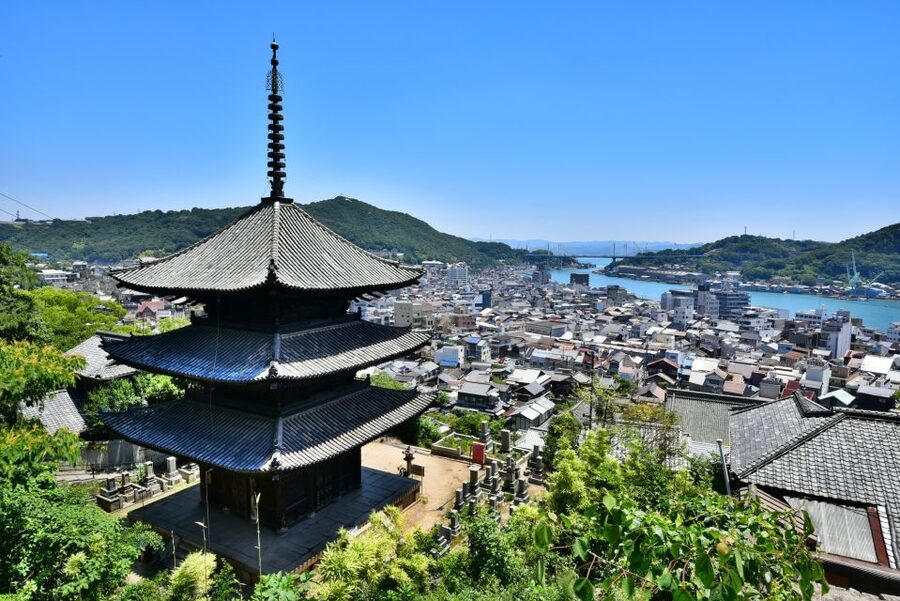
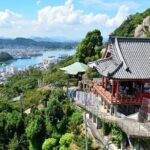
The hilltop Senko-ji Temple is the natural centerpiece of the walk. From above, you can look over Onomichi, the Seto Inland Sea, and the islands scattered beyond the town. It is the sort of view that explains the city better than a museum label can: Onomichi grew as a seaport, and the water remains part of its identity.
The suggested approach is practical. Take the ropeway up, visit the temple and Senko-ji Park, then walk down through the hills. This saves your legs for the descent and gives you the feeling of moving through Onomichi rather than simply arriving at a lookout.
The walk down is part of the attraction. Onomichi is often described as a town of slopes, and this route shows why. You pass between homes and temple grounds, with the streets changing height and direction as you go.
There is a small planning point here. Transportation is not included in the tour price, so confirm how the ropeway fits into your itinerary and which costs you will handle separately. The tour includes the guide, but not transport, entrance fees, food, or drinks.
Senko-ji Shinmichi and the town’s literary side
As you leave the hilltop area, Senko-ji Shinmichi gives you one of the clearest pictures of old Onomichi. This narrow road is lined with older houses, including former residences connected with literary figures.
The value of this stop is not just architectural. A local guide can connect the homes and lanes with the writers who spent time in Onomichi, helping you see the town as a place of creative work rather than only a scenic port.
You should expect a walking route with slopes and uneven changes in level. The activity is described as wheelchair accessible, but the route includes a hilltop temple, a ropeway, and a walk down the slope. If mobility is a concern, tell the local partner and guide what you need before the day so the private format can work in your favor.
Neko no Hosomichi and its lucky cats
Neko no Hosomichi, or Cat Alley, runs from the east side of Ushitora Shrine toward the three-floor pagoda of Tennei-ji Temple. It is a narrow hillside lane with a playful side: small fukuishi-neko, or lucky stone cats, are scattered along the way.
These cats are easy to miss if you hurry. This is one reason a guide adds value. You can pause for photographs, ask about the local meaning of the figures, and take in the lane’s old houses and quiet corners.
The small Maneki-neko Museum is another stop along the route. It gives the cat theme a more direct focus, though you should remember that entrance fees are not included. Ask your guide which visits make sense for your interests and how much time remains in the four to six hour schedule.
Neko no Hosomichi will appeal most to you if you enjoy small details and slightly unusual sights. It is not a grand monument. Its pleasure comes from the cats, the slope, and the sense that you are walking through an ordinary part of town with a few surprises tucked into it.
Ushitora Shrine and a useful lesson in shrine manners
A visit to a Shinto shrine can feel incomplete if you do not know what to do once you arrive. One of the strongest details from this experience is the chance to learn how to pray properly at a shrine.
Guide Yuji gave a visitor a lesson in shrine prayer and even added a surprise instrumental performance. That combination captures what a private guide can offer here: not just directions, but a personal exchange that makes the place more memorable.
You can ask for this kind of cultural explanation when you set your preferences. The tour is designed to respond to requests, so tell the guide if you want more context about Shinto customs, Buddhist temples, local traditions, or daily life.
The distinction between Shinto shrines and Buddhist temples is also easier to appreciate with a guide beside you. Onomichi brings both traditions into a compact walking area, and the route can show how they fit into the town’s older neighborhoods.

Kosan-ji Temple and an unusual act of remembrance
If you want a larger temple complex, ask to include Kosan-ji Temple. Its story begins with an Osaka industrialist who built it in memory of his mother.
The temple grounds are wide, and the buildings take their design from famous architecture elsewhere in Japan. That makes Kosan-ji different from the more intimate temple stops on the hillside. You get a grander setting, a strong personal story, and buildings that invite comparison with other well-known Japanese sites.
The entrance fee is not included, so budget for it separately. It may also make sense to reserve Kosan-ji for a day when you want a slower, more focused temple visit instead of trying to pack every possible stop into one route.
Because the full experience lasts four to six hours, your guide can help you decide how much time to give Kosan-ji. If your main goal is the hilltop view, cat lane, and ramen, the temple may compete for time. If architecture and Buddhist art matter most to you, it could be the right addition.
Onomichi ramen makes a good finish
Onomichi is known for its ramen, and the local style is described as light tasting, with seafood from the Seto Inland Sea in the soup. It is a fitting meal after a hilly walk.
Food is not included, but your guide can recommend ramen shops. That is more useful than having lunch arranged in advance because you can ask for advice based on where the route ends, how much time you have, and what kind of meal you want.
I would make ramen part of the plan from the start rather than treat it as an afterthought. Tell the guide you want to try it, then allow enough time for a proper stop. The tour is private, so you do not need to match a larger group’s meal schedule.
You should also keep the price in mind. A $96 tour does not include lunch, so the value comes from the guiding and flexibility, not from bundled admissions or meals. For a first visit, that trade can make sense. The guide can help you choose a shop, explain the local style, and fit the meal into a day that already includes several sights.
What the guides add to the day
The strongest praise has focused on the individual guides. Yuji helped explain shrine prayer and provided an unexpected instrumental performance. Mami was able to shape a day around specific interests, make connections with inspiring people and meaningful places, and keep the schedule organized.
Kazuha was especially useful for city history, photo opportunities, and food. The practical lesson is simple: contact with your guide matters. Give clear requests before the tour, and do not be shy about naming the things you care about.
You might ask for:
- Temple architecture and Buddhist stories
- Shinto customs and shrine etiquette
- Literary sites and old residences
- Cats, local streets, and photography
- Onomichi ramen and food recommendations
- A gentle route with fewer priorities
The tour is not confirmed until a guide contacts you. Most guides make contact within seven days, but the search can continue until 24 hours before the tour if a guide has not yet accepted. The local partner will also confirm the practical details before the experience.
That waiting period is the one notable booking concern. If you need a completely fixed plan far in advance, keep an eye on the confirmation messages. If a guide cannot be found, you will be informed, and cancellation fees do not apply when you cancel at least 24 hours before the start.
Is $96 per person a fair price?
At $96 per person, this is not the cheapest way to walk around Onomichi. You still cover your own food, drinks, transport, and entry fees, and the tour is four to six hours rather than a full-day vehicle excursion.
The price makes more sense if you value a private guide who can adapt the route. Onomichi’s appeal is spread across slopes, temples, lanes, viewpoints, and food stops. A guide can reduce the time spent finding the right paths and give meaning to small details you might otherwise pass without noticing.
The value is also stronger for a first visit, a short stay, or a day when you want to combine several interests. If you already know Onomichi well and only want to stroll independently, you may prefer to spend the $96 elsewhere.
The private format is important. You are not paying to follow strangers through a fixed route. You are paying for time with one licensed local guide and the ability to adjust the day. That is a good fit for couples, families, friends, and solo visitors who want direct help without joining a large group.
Who should book this Onomichi walking tour?
I would recommend it if you want local explanation rather than a checklist. The shrine lesson, literary connections, temple stories, and food advice are the kind of details that turn a pleasant walk into a better understanding of the town.
It also suits you if you have several competing interests. You can combine Senko-ji, Neko no Hosomichi, Kosan-ji, ramen, and cultural sites, then let the guide help set a sensible order.
You should think carefully if steep walking is difficult. The tour is marked wheelchair accessible, but the suggested route includes a hilltop temple and a descent through Onomichi’s slopes. Share your needs before booking so the route can be adjusted as far as possible.
Rain does not cancel the experience. It takes place rain or shine, so bring suitable clothing and footwear for the conditions. Since the schedule is flexible, you can also ask the guide to emphasize stops that work best for the weather.
My booking advice
Book this tour if your ideal Onomichi day includes a view from Senko-ji, old hillside lanes, a few temples, a lesson in local customs, and a bowl of ramen chosen with local help. The personal guiding is the main reason to pay the premium.
I would be less quick to book if you want a low-cost self-guided walk or a fully confirmed itinerary months ahead. For everyone else, especially first-time visitors with limited time, the private format offers a useful balance of freedom and direction. Tell the guide your priorities early, confirm the ropeway and entrance arrangements, and leave room for the small surprises that make Onomichi worth walking.
FAQ
How long does the Onomichi private walking tour last?
The tour lasts four to six hours. Starting times depend on availability.
What languages are available?
The live guide service is available in English and Japanese.
Is the tour private?
Yes. It is a private group experience with a licensed local guide.
Where does pickup take place?
Your guide can meet you on foot at any address or train station in Onomichi. The guide waits in your hotel lobby or at the requested train station ten minutes before pickup.
Are food, entrance fees, and transportation included?
No. Food and drinks, entrance fees, and transportation are not included in the tour price.
Can the itinerary be changed?
Yes. The experience can be personalized around your requests and preferences. You can tell the guide which Onomichi sights and activities interest you.
What is the cancellation policy?
You can cancel up to 24 hours before the start time for a full refund. You can also reserve now and pay later.
More Guided Tours in Onomichi
More Onomichi & Shimanami Tours in Onomichi
More tours in Onomichi we've reviewed
Onomichi & Shimanami Tours, compared.
 ★ 5.0Shimanami Kaido, 1Day Relaxed Island Hopping Cycling TourFrom $325
 ★ 5.0Onomichi Half-Day Private Trip with Government-Licensed GuideFrom $107
 ★ 5.0Half-Day Shimanami Kaido Private E-Bike Cycling Tour – 3 RoutesFrom $276
 ★ 5.01-Day Onomichi & Ikuchijima Island: Temples, Ropeway & FerryFrom $170390 minutes - 9 hours
 ★ 5.0Fukuyama/Tomonoura Half-Day Private Tour with Government-Licensed GuideFrom $98
 ★ 5.0Shimanami Day Bike Tour: Fun for All, Great for FamiliesFrom $255
