
Reviewed · MIYAJIMA TOURS
Miyajima: Private Rickshaw Tour to Itsukushima Shrine
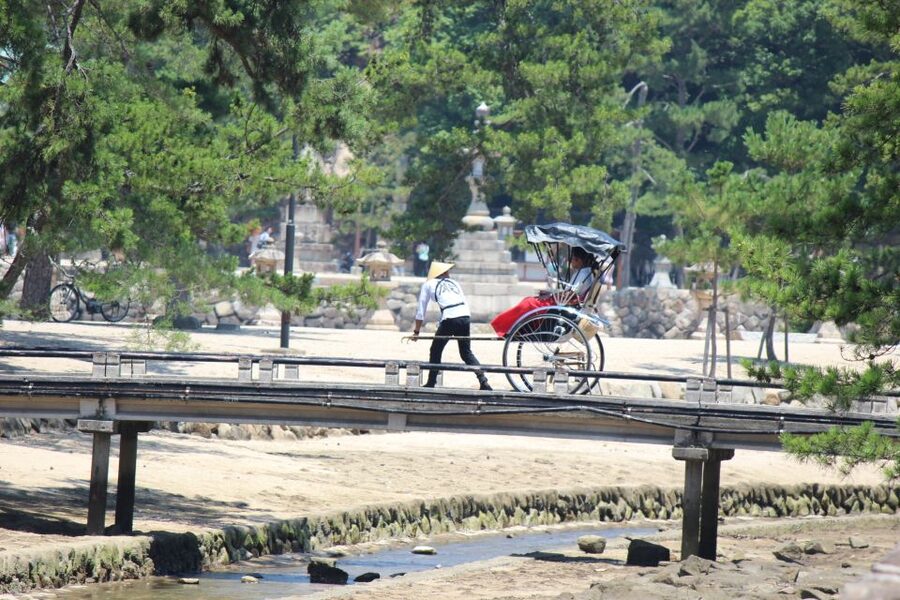
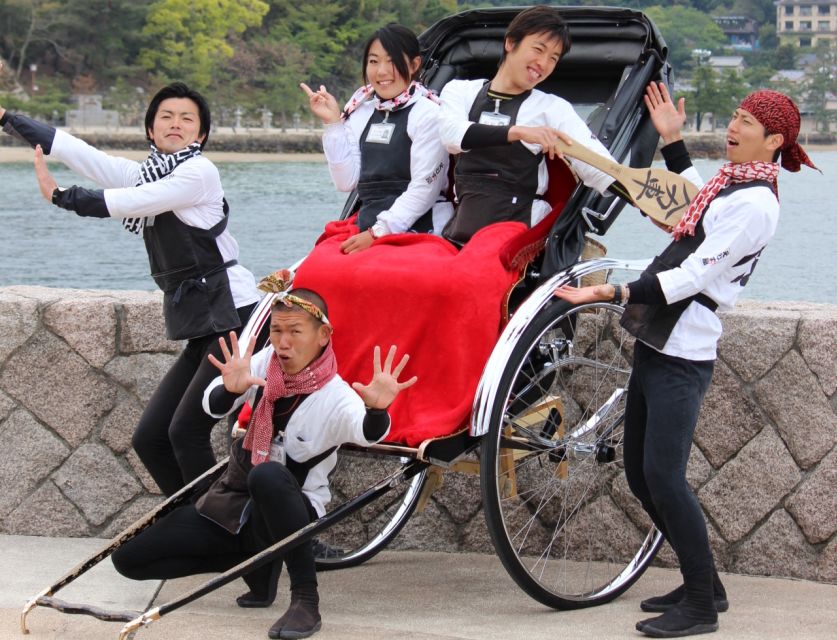
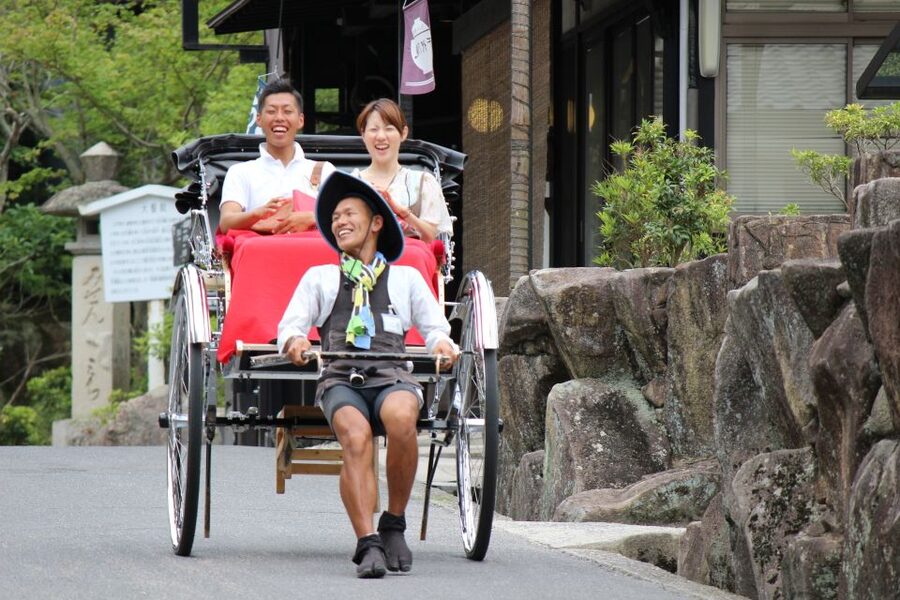
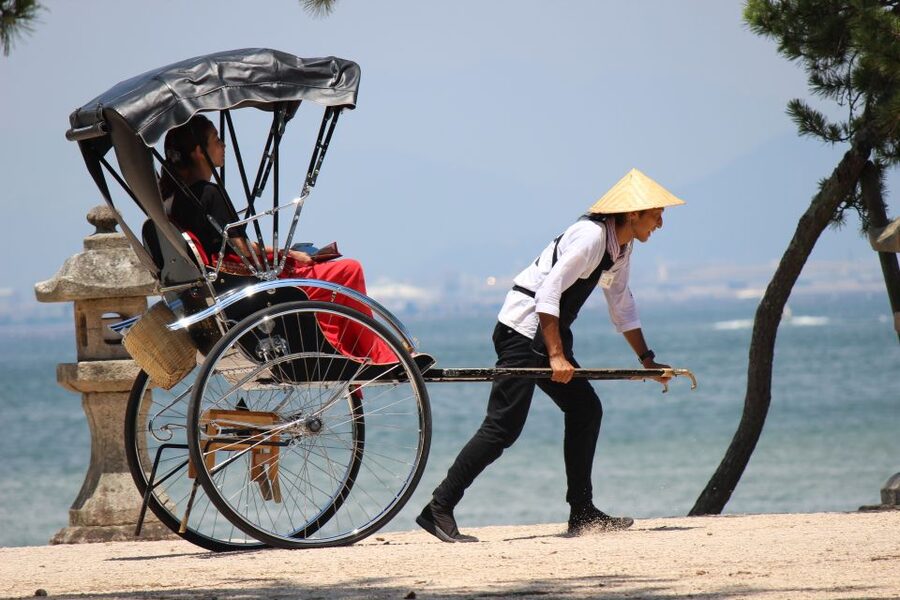
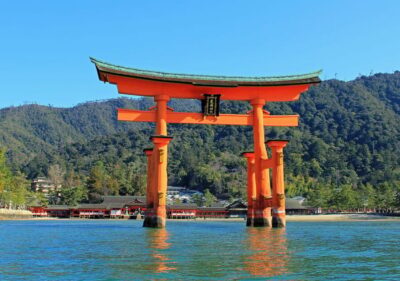
The floating red torii gate is Miyajima’s great showstopper, and a private rickshaw is a smart way to reach it without spending your first hour sorting out the island’s streets. You roll from the ferry terminal through old town, along the waterfront, and toward Itsukushima Shrine with a local guide doing the steering and storytelling.
I like two things here: the ride gives you a quick feel for Miyajima’s history and layout, and the private format lets you ask for more temples, more photo stops, or a different endpoint. Guides such as Kim and Jose have been praised for their warmth, humor, local knowledge, and willingness to use Google Translate when needed.
The main catch is comfort. A rickshaw seat is only 74 centimeters wide, and the ride is not recommended for people with back problems or those in the first 16 weeks of pregnancy. Also, the guide language is Japanese, so communication may vary by guide.
In This Review
- Key points to know before you book
- Why a rickshaw makes sense on Miyajima
- Meeting your guide outside the Miyajima Ferry Terminal
- Old town streets, townhouses, and the shopping arcade
- The waterfront route to Itsukushima Shrine
- Daishoin Temple on the 70-minute option
- Senjokaku Shrine on the 130-minute option
- Scenic roads, parks, and seaside views on the 190-minute tour
- What the guides add to the ride
- Is $51 per person a fair price?
- Families, couples, and comfort concerns
- How to choose the right duration
- Should you book the Miyajima rickshaw tour?
- FAQ
- Where does the Miyajima rickshaw tour meet?
- How long does the tour last?
- Is the rickshaw private?
- How many adults fit in one rickshaw?
- Can children ride for free?
- Does a child aged six or older need an adult booking?
- Is the tour offered in English?
- Is admission to Senjokaku Shrine included?
- Is food included?
- Can I cancel the tour?
Key points to know before you book
- The ferry terminal is the meeting point: Your guide waits just outside the Miyajima Ferry Terminal, with a map and photo sent after booking.
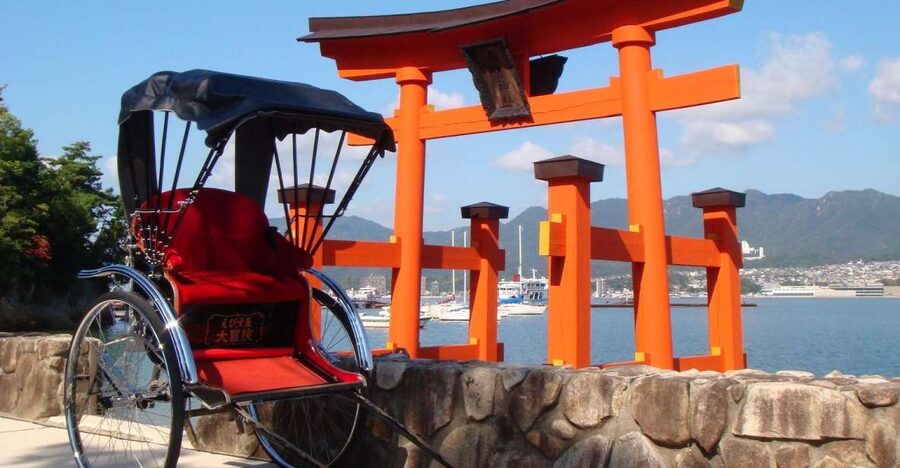
- The torii looks best at high tide: Itsukushima Shrine’s great orange gate appears to float in the sea when the tide is high.
- Longer tours add the best viewpoints: The 70-minute option reaches Daishoin Temple, the 130-minute route includes Senjokaku Shrine, and the 190-minute ride adds scenic park and seaside roads.
- This is a genuinely private outing: You ride with your own group, and the route can be adjusted to your interests.
- Two adults fit, but closely: Each rickshaw seats up to two adults side by side. Booking separate rickshaws may be more comfortable for some couples or groups.
- Temple entry costs extra: Admission is not included, and entering Senjokaku Shrine costs 100 yen.
Why a rickshaw makes sense on Miyajima
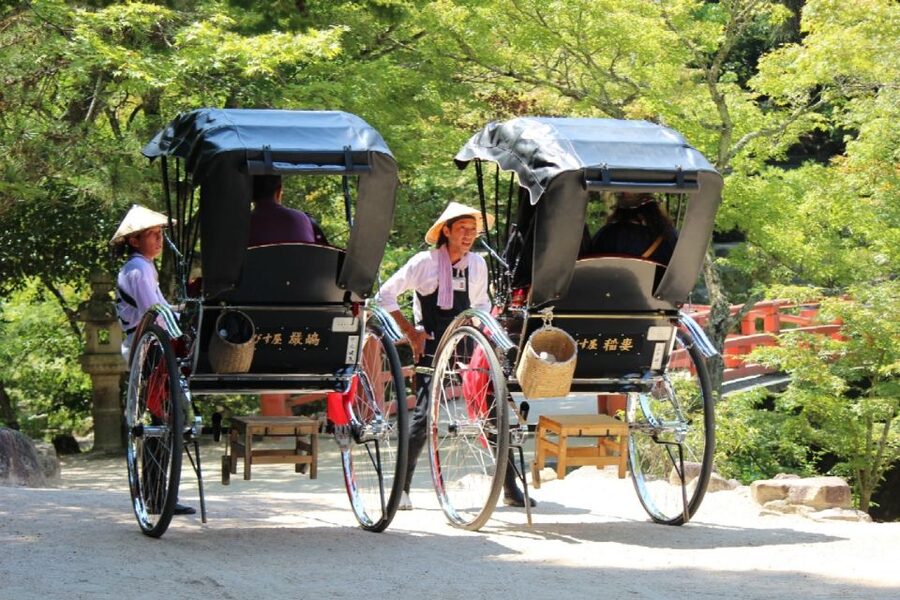
Miyajima is compact enough to walk, but a rickshaw changes how you see it. Instead of simply moving from the ferry to Itsukushima Shrine, you get a guided introduction to the island’s older streets, townhouses, shopping arcade, waterfront, shrines, and temples.
I especially like this as a first activity after arriving by ferry. You can get your bearings quickly, learn which sights deserve more time, and ask your guide to point out places you might otherwise pass without noticing. The ride also saves energy for the rest of your day.
The private setup matters. You are not sharing the rickshaw with strangers, and your guide can shape the outing around your pace. You might want the classic shrine and torii views, a temple stop, scenic roads, or a particular endpoint. The tour is designed to be adjusted rather than treated as a fixed group procession.
There is also a pleasant sense of ceremony to being pulled through Miyajima’s streets. It is slower than a bus and more personal than simply following a map. You can look around, take photographs, and listen while the guide handles the route.
A few more Hiroshima tours and experiences worth a look
Meeting your guide outside the Miyajima Ferry Terminal
The practical starting point is simple: arrive on Miyajima Island, leave the ferry terminal, and look for your guide just outside. After booking, the local partner sends a map and photograph showing the meeting place, which should make the first few minutes easier.
I would keep that meeting information available on your phone. Miyajima’s ferry area can feel busy when several boats arrive close together, and having the photo is more useful than relying on a vague description.
The rickshaw tour lasts from 45 to 190 minutes, depending on the option you choose. The longer choices give you more than extra riding time. They add temples, elevated views, and scenic routes, so the right duration depends on how much of Miyajima you want to see through the guide’s eyes.
Old town streets, townhouses, and the shopping arcade
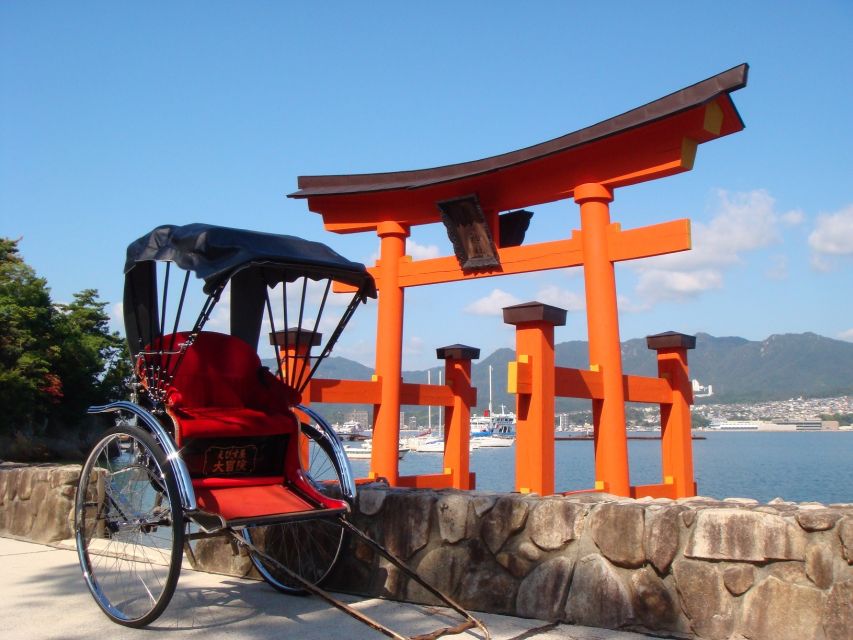
The first part takes you toward the center of town through Miyajima’s charming streets. You pass old-fashioned townhouses and the shopping arcade, where the island’s visitor life is concentrated.
This section is valuable because it gives context before the major shrine. Miyajima is not only a photo stop for one famous torii. Its character also comes from the narrow streets, traditional buildings, small shops, and close connection between town and sea.
Your guide can explain local customs and island life as you ride. Communication may be a little uneven because the advertised guide language is Japanese, but the experience can still work well through gestures, photographs, simple explanations, and translation tools. One guide, Shinemasa, was praised for sharing the island’s lesser-known details, while guides named Kim and Jose were noted for friendly storytelling and humor.
You should still keep your expectations realistic. This is not guaranteed to be a full English-language tour. If detailed English interpretation is essential to you, confirm the language arrangements before booking.
The waterfront route to Itsukushima Shrine
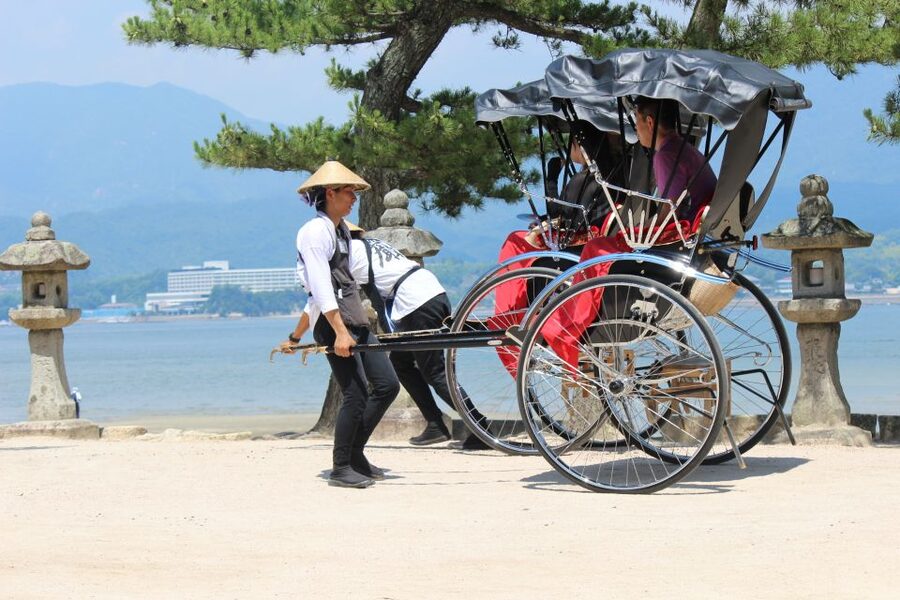
The rickshaw continues along the waterfront toward Itsukushima Shrine. This is where the ride opens up and the famous orange torii gate comes into view in the water.
The gate is most striking at high tide, when the sea reaches around its base and creates the floating effect that makes Miyajima so famous. Tide levels change, so the exact appearance depends on the time of your tour. You should not book solely for a guaranteed postcard view without checking the tide.
Your guide can help you choose good places to pause for photographs. Guides have also taken photos for visitors during the outing, a useful touch when you want more than hurried selfies. Selfie sticks are not allowed, so a guide who helps with pictures can make the photo stops easier.
Itsukushima Shrine is the central cultural sight on the route. The orange gate, waterfront setting, and shrine buildings make this more than a simple ride through town. The rickshaw gets you close to the visual heart of Miyajima while giving you someone to explain what you are seeing.
Admission fees for temples and shrines are not included in the tour price. Budget separately for any entry you choose, and remember that Senjokaku Shrine has a 100 yen entrance fee.
Daishoin Temple on the 70-minute option
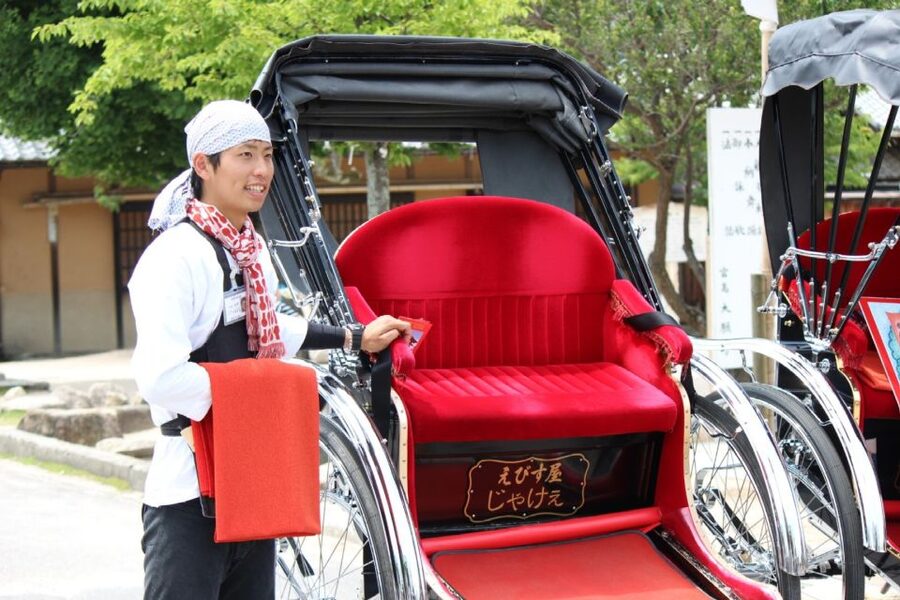
The 70-minute option includes a visit to Daishoin Temple, a 1,200-year-old Buddhist temple on Miyajima. It is described as a power spot, a place associated with renewed energy and good fortune, and it also offers a broad view over the island.
I think this is the most useful upgrade for many visitors. You get the town, waterfront, torii, and a temple stop without committing to the longest route. Daishoin adds a more spiritual side of Miyajima and gives you a change of scene from the busy central streets.
The temple’s age adds weight to the stop, but the appeal is not only historical. The setting and view make it a strong place to pause, especially if you want a quieter moment during your island visit.
The tradeoff is time. A 70-minute ride cannot offer every road and sight on the island, so the stop may feel brief if you want to linger. I would choose it when you want a balanced introduction rather than an extensive tour.
Other private tours in Hiroshima


Senjokaku Shrine on the 130-minute option
The 130-minute option adds Senjokaku Shrine, built under the order of Toyotomi Hideyoshi. Your guide explains the site’s background and points out the sea views from this unusual temple setting.
Senjokaku is a good choice if architecture and Japanese history matter to you. The connection to Hideyoshi gives the stop a clear historical story, while the open views add a visual reward that differs from the waterfront perspective near Itsukushima Shrine.
Entry is not included and costs 100 yen. That is a small extra charge, but it is worth knowing before you arrive so the advertised price does not come as a surprise.
The longer route suits you if you want the rickshaw to be the main event rather than a short introduction. You will have more time for explanations and pauses, but you also need to consider your sitting comfort. Two adults share a 74-centimeter seat, and a long ride may feel close for larger passengers.
Scenic roads, parks, and seaside views on the 190-minute tour
The 190-minute option adds special scenic routes through parks and along the seaside. This is the fullest version of the experience, combining the central sights with a slower look at parts of Miyajima beyond the main town.
I would choose this only if you enjoy unhurried sightseeing and want the ride itself to be a major part of the day. The extra time gives your guide more room to adapt the route, stop for views, and respond to your interests.
You can also choose your endpoint. That flexibility is useful if you want to finish near a particular part of the island, though the exact endpoint should be discussed with the guide or local partner.
The drawback is obvious: nearly three hours in a narrow rickshaw seat is a long time. People with back problems should avoid the tour, and anyone unsure about sitting comfort should consider the shorter option or ask about booking separate rickshaws.
What the guides add to the ride
The quality of this experience depends heavily on the individual guide. The strongest part of the tour is not simply being pulled through Miyajima. It is having someone explain the island, share local customs, point out photo spots, and bring the stories to life with personality.
Kim has been described as enthusiastic, funny, and helpful with photographs. Jose has been praised for friendly storytelling and for showing places that are easy to miss. Shinemasa has been noted for listening carefully and sharing the island’s special details.
Those names are useful examples, but you should not assume a particular guide is guaranteed unless the operator confirms it. The official guide language is Japanese, and English ability can differ. One guide handled gaps in English with Google Translate, which can work well for simple questions and short explanations.
I like the fact that this is a private group rather than a large shared tour. You can ask for clarification, request a photo stop, or explain that you want more time at a temple. That personal contact is where the price makes the most sense.
Is $51 per person a fair price?
At $51 per person, the tour is not the cheapest way to see Miyajima. Walking costs nothing, and the island’s central sights are close enough to reach on foot.
The value comes from the private guide, the rickshaw ride, the route planning, and the chance to see more in a limited amount of time. If you are visiting Miyajima for only part of a day, the tour can help you use those hours well. You also receive a souvenir postcard and sticker.
The price makes the most sense for couples, families, first-time visitors, and anyone who prefers guided sightseeing to map reading. It is less compelling if you already know the island well, plan to spend a full day walking, or mainly want independent time at the shrine.
Remember to add the cost of temple and shrine admission, plus your own food and drinks. The tour price covers the private rickshaw, local guide, postcard, and sticker, but not those extras.
Families, couples, and comfort concerns
Children six and under can ride free when seated on an adult’s lap, with one child per adult and a maximum of two adults and two children per rickshaw. A child aged six or older who uses one of the two seats must be booked as an adult.
Two adults can sit side by side, but the seat measures 74 centimeters wide. If you prefer personal space, or if either passenger is broad shouldered, individual rickshaws may be more comfortable.
The ride is not recommended for pregnant women in their first 16 weeks, and the activity is listed as unsuitable for pregnant women generally and for people with back problems. You should treat that warning seriously, especially for the 130- and 190-minute options.
The rickshaw format works particularly well for couples who want a private introduction and families who need a little help managing Miyajima’s streets. It can also suit older visitors who prefer not to walk between every sight, provided they are comfortable with the seat and ride.
How to choose the right duration
Choose the shortest available option if you want a quick orientation, a few photographs, and the main waterfront sights. A short ride is also the safest choice if you are unsure about the seat or have a tight ferry and train schedule.
Choose 70 minutes if you want Daishoin Temple added to the main town and shrine route. For many people, this is the best balance between cost, comfort, and depth.
Choose 130 minutes if Senjokaku Shrine and its history appeal to you. You will have more time for temple visits and views, but you should plan for a longer period seated in the rickshaw.
Choose 190 minutes if you want the full experience, including parks, seaside roads, temples, shrines, and a customizable route. This is best for a relaxed Miyajima visit, not a quick stop between other plans.
Should you book the Miyajima rickshaw tour?
You should book it if you want a personal introduction to Miyajima, enjoy local stories, value help with photographs, or have limited time on the island. The private format and flexible route are the strongest reasons to choose it over simply walking.
I would favor the 70-minute option for most first-time visitors. It adds Daishoin Temple and its view without making the ride too long. Choose the 130- or 190-minute option only if you are comfortable with the seat and want the temples and scenic roads to take up a larger part of your day.
Skip it if you prefer complete independence, have back problems, dislike narrow seating, or need guaranteed detailed English interpretation. For everyone else, this is a fun and practical way to connect the ferry terminal, old town, Itsukushima Shrine, and Miyajima’s quieter sights.
FAQ
Where does the Miyajima rickshaw tour meet?
Your guide waits just outside the Miyajima Ferry Terminal on the island. After booking, the local partner sends a map and photograph of the meeting place.
How long does the tour last?
Available durations range from 45 to 190 minutes. The listed longer options include 70 minutes with Daishoin Temple, 130 minutes with Senjokaku Shrine, and 190 minutes with additional scenic routes.
Is the rickshaw private?
Yes. This is a private group tour, so you ride with your own party rather than joining a large shared group.
How many adults fit in one rickshaw?
A maximum of two adults can ride in one rickshaw. The seat is 74 centimeters wide, so some passengers may prefer to book separate rickshaws.
Can children ride for free?
Children six years old and under can ride free while sitting on an adult’s lap. There can be one child per adult, with a maximum of two adults and two children per rickshaw.
Does a child aged six or older need an adult booking?
Yes. If a child aged six or older uses one of the two rickshaw seats, that child must be booked as an adult.
Is the tour offered in English?
The listed live guide language is Japanese. English ability may vary by guide, and translation tools may be used when needed.
Is admission to Senjokaku Shrine included?
No. Entry to Senjokaku Shrine costs 100 yen and is paid separately.
Is food included?
No. Food and drinks are not included in the tour price.
Can I cancel the tour?
You can cancel up to 24 hours in advance for a full refund. The reserve-now, pay-later option lets you book without paying at the time of reservation.
More Private Tours in Hiroshima
More Miyajima Tours in Hiroshima
More tours in Hiroshima we've reviewed

Miyajima Tours, compared.
 ★ 5.0Peaceful Hiroshima & Miyajima UNESCO 1 Day Bus TourFrom $129
 ★ 4.9Hiroshima: Hiroshima and Miyajima UNESCO Sites 1-Day TourFrom $1228 hours
 ★ 5.0Hiroshima / Miyajima Full-day Private Tour with Government Licensed GuideFrom $202
 ★ 4.7Osaka/Kyoto: Hiroshima Miyajima Bus Tour & Shinkansen TicketFrom $27712 hours
 ★ 4.7From Hiroshima: Hiroshima & Miyajima 1 Day Tour with LunchFrom $1168 hours
 ★ 5.0Hiroshima and Miyajima Day Trip with Itsukushima Shrine & FerryFrom $45
