
Reviewed · MIYAJIMA TOURS
Kimono and Calligraphy Experience in Miyajima
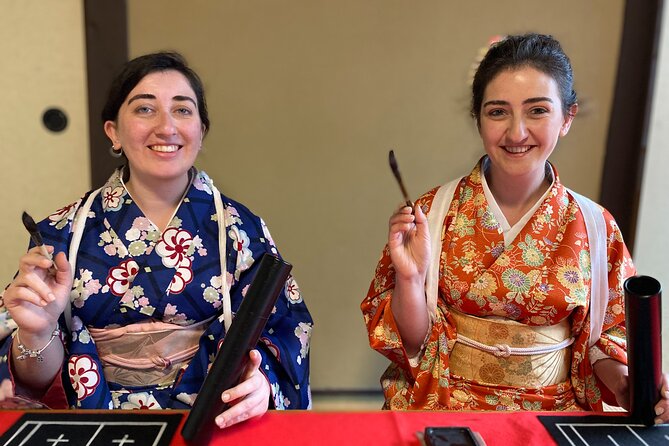
Miyajima’s best cultural moments are not always found around Itsukushima Shrine. At this experience, you leave the busy waterfront and dress in a traditional kimono inside a quiet temple before learning Japanese calligraphy in a tea-room setting. You write a kanji character, add your name in hiragana or katakana, and take home a personalized wooden rice scoop.
I like two things in particular: the choice of more than 100 kimono, including options for plus-sized participants, and the small group size of up to six people. The staff take photos during the session, and the finished rice scoop gives you a useful souvenir rather than another generic trinket.
The main catch is getting there. Mapping apps may send you along a mountain-side road, and the temple is away from Miyajima’s main tourist area. Allow extra time, follow the directions carefully, and do not schedule this too tightly against a ferry or shrine visit.
In This Review
- Key points to know before you book
- Leaving Miyajima’s waterfront for a quieter temple
- Choosing a kimono from more than 100 options
- Learning brush control before writing kanji
- Writing your name in hiragana or katakana
- Personalizing a wooden rice scoop
- Photos in the kimono and Japanese garden
- Why the one-hour format works
- Is $84.92 good value?
- Who will enjoy this most
- Should you book the Miyajima kimono and calligraphy experience?
- FAQ
- Where does the kimono and calligraphy experience start?
- How long does the activity last?
- How many people can join the activity?
- What age is required to participate?
- Are morning and afternoon sessions available?
- What happens if I need to cancel?
Key points to know before you book
- More than 100 kimono: You choose your own outfit, with help putting on the obi belt and other layers.
- A real calligraphy lesson: You begin with brush basics and simple lines before choosing a kanji character.
- Your name becomes part of the artwork: Staff prepare your name in hiragana or katakana for you to copy.
- Personalized rice scoop included: You sign and stamp your work on a wooden scoop that you take home.
- Photos are part of the experience: Pictures are taken during the lesson and shared with you after you answer a questionnaire.
- Small-group format: The activity lasts about an hour and accepts up to six people, with morning and afternoon sessions.
Leaving Miyajima’s waterfront for a quieter temple
Most visitors first see Miyajima through the ferry terminal, shopping streets, and the approach to Itsukushima Shrine. This activity takes you in a different direction, to Tokujuji, a Soto Zen temple at 741-1 Miyajimacho in Hatsukaichi.
That change of setting matters. You are not trying on a costume in a crowded shop with people coming and going. You enter a temple environment, then take part in the activity in a more private room. The setting gives the hour a calmer pace and makes the clothing and calligraphy feel connected to Japanese culture rather than simply staged for a photograph.
The quiet location is also the source of the chief practical problem. One booking party found that both Google Maps and Apple Maps provided clear directions, but mapping apps can still guide you toward a mountain-side road. I would build in a generous buffer and avoid arriving at the last minute.
The meeting point is also the end point, so you do not need to arrange a separate return transfer. Public transportation is nearby, and the activity is open to most people age six and older.
A few more Hiroshima tours and experiences worth a look

Choosing a kimono from more than 100 options
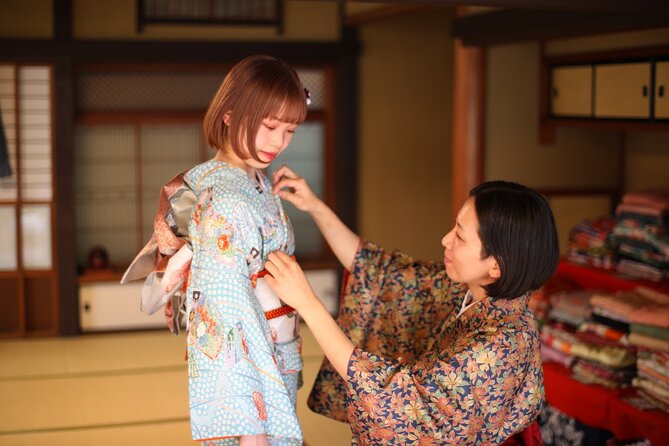
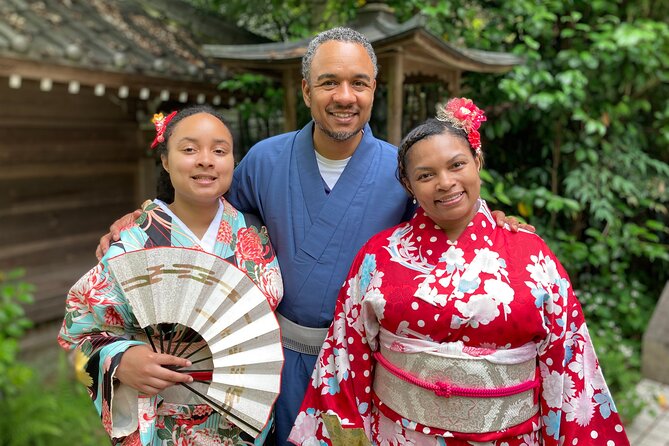
The first part of the session is getting dressed. You choose a kimono from a collection of more than 100 garments, then the staff help you put it on with the obi belt and the other pieces needed to complete the outfit.
That choice is more meaningful than a quick rental counter selection. You can look for a color and pattern that suits you instead of being handed the first available garment. The staff also appear used to helping people with different body shapes. Plus-sized participants found suitable choices, and one older participant who felt unsure about wearing a kimono was made to feel comfortable.
Do not expect to dress yourself without help. Kimono layers and the obi belt are not ordinary holiday clothes, and the value here comes partly from having local staff guide you through the process. The hands-on assistance keeps the activity accessible for first-time visitors.
Once dressed, you can take photographs before the calligraphy lesson begins. This is a smart order. You get pictures while the kimono is still freshly arranged, and you are free to focus on the brush work afterward.
The clothing also changes the mood of the session. Sitting in a tea room in a kimono gives the calligraphy lesson a stronger sense of place than practicing at a table in street clothes. You are still taking part in a short visitor activity, but the temple room and traditional clothing make it feel more grounded.
Learning brush control before writing kanji
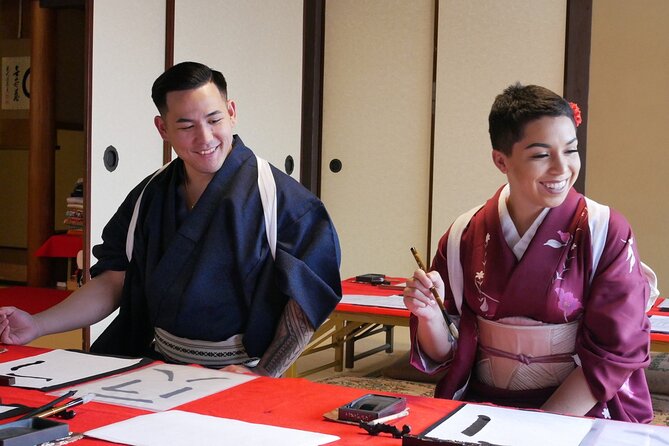
The calligraphy lesson starts with the basics. You learn how to hold the brush and practice simple lines before moving on to Chinese characters, known in Japan as kanji.
This gradual approach is important if you have never used a calligraphy brush. A brush can feel awkward at first, and the first marks may spread or wobble. Starting with lines lets you get used to pressure, movement, and the shape of the brush before you try a complete character.
You then select a kanji character from several samples. The choice gives the finished piece a personal angle. You might choose a character for its meaning, its appearance, or simply because you like the way it looks. The lesson is not about producing perfect professional calligraphy. It is about understanding the basic strokes well enough to create something that belongs to you.
The staff are patient and attentive during this stage. That matters because the activity is short, and a rushed instructor could easily turn it into a quick demonstration. Here, you get time to practice before making the final version.
One useful detail is that you are not limited strictly to the displayed character choices. A participant was allowed to select a kanji that was not on the sample list. It is worth asking if you have a particular character in mind, though the provided materials may guide the final choice.
Writing your name in hiragana or katakana
The lesson includes more than kanji. Staff prepare a sample of your name using Japanese phonetic writing, either hiragana or katakana, and you practice copying it.
This is one of the most useful parts for a first-time visitor. Kanji can feel distant if you do not read Japanese, but seeing your own name written in Japanese gives you an immediate connection to the writing system. Hiragana and katakana represent sounds, so they are used to write names and words that do not originate in traditional Chinese characters.
You sign the artwork in Japanese and add a stamp. These finishing touches turn the practice sheet into a keepsake. You are not simply watching someone write your name for you. You take part in the strokes, layout, signature, and stamp.
The completed work goes home with you in a suitable container. That small bit of preparation is practical. Calligraphy paper is easy to crease inside a day bag, especially if you are continuing around Miyajima after the class.
Personalizing a wooden rice scoop
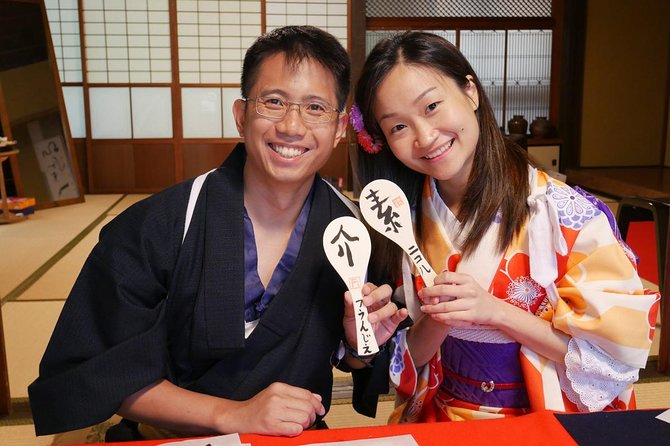
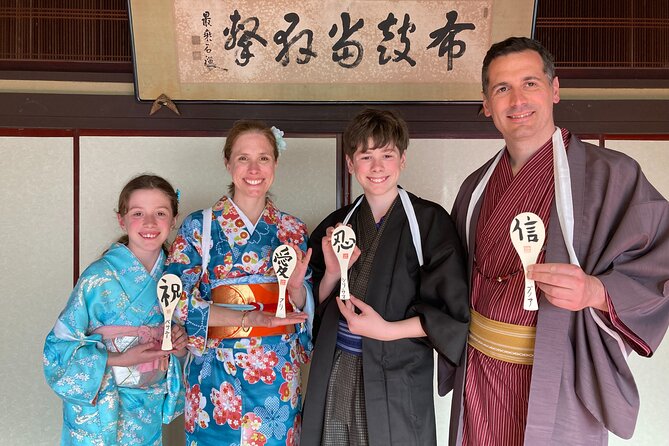
The rice scoop is the activity’s most distinctive souvenir. Miyajima is associated with wooden rice scoops, and this experience lets you write on one as part of the lesson.
You practice first, then transfer your chosen kanji and name to the wooden scoop. The process gives you a second chance to make something tangible after working on paper. You also take the scoop home, so the souvenir has a clear connection to the place and the activity.
I like this better than a simple photo-only experience. The pictures preserve the moment, but the rice scoop remains a physical reminder of your time on the island. It can be displayed in a bedroom or another small space, and its association with good luck adds meaning beyond decoration.
The final result will reflect your skill level. Expect a handmade memory, not factory-perfect lettering. That is part of the point. The staff guide you, but your marks remain visible.
A few more Hiroshima tours and experiences worth a look

Photos in the kimono and Japanese garden
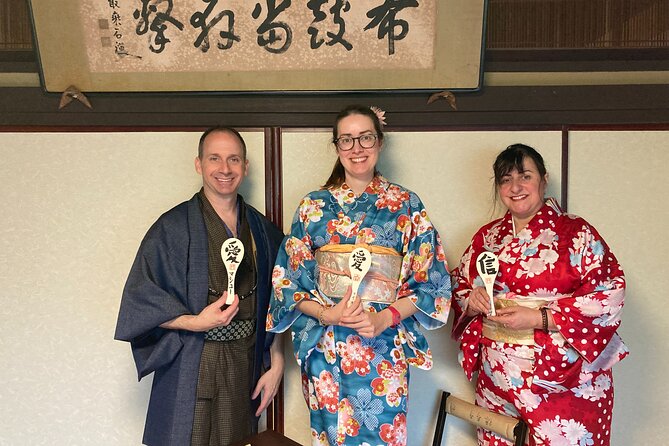
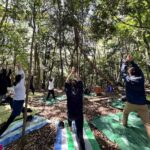
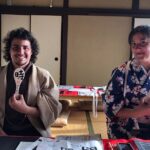
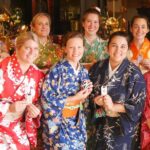
Photography is built into the session. Staff take pictures while you work, and there are additional photo opportunities in a Japanese garden.
This is helpful if you are traveling alone or if everyone in your group wants to be in the frame. You do not have to depend entirely on a hurried selfie or ask another visitor to take a picture. The photos also record more than the finished outfit. You may be photographed during the lesson, with the brush in hand and the calligraphy process underway.
The photo portion should not be mistaken for a long professional portrait session. The activity lasts about one hour, and its main purpose is the combined kimono and calligraphy lesson. Still, having staff take pictures adds real value to the $84.92 price, especially for families and couples who want a shared record.
After the activity, the pictures are shared with you by answering a questionnaire. Be sure to complete that step so you can receive them.
Why the one-hour format works
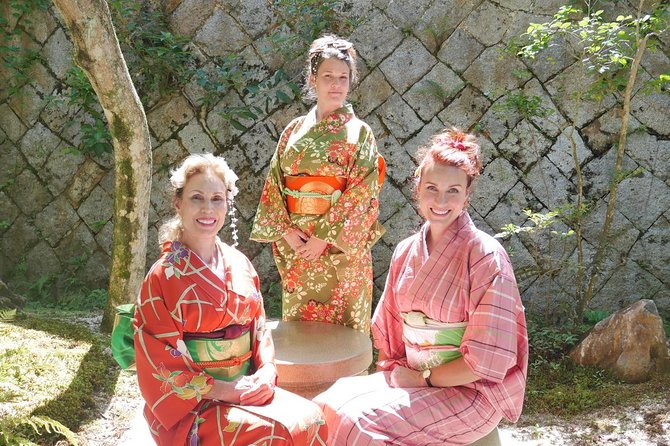
The short duration makes this easy to add to a Miyajima day. You can choose a morning or afternoon session, then plan the rest of your time around the ferry, Itsukushima Shrine, the shopping streets, or the island’s other sights.
The one-hour length is also a limitation. You will learn the fundamentals, not become a calligrapher. The kimono dressing, photos, practice strokes, kanji, name writing, signature, stamp, and rice scoop all need to fit into the same visit.
For most people, that is a fair trade. You receive two linked activities without spending half a day indoors. If you want a long lesson on Japanese calligraphy or a full traditional dressing service, this will feel brief. If you want a focused cultural break between sightseeing stops, the timing is well judged.
The small group limit of six helps the hour feel personal. Staff can assist with dressing, correct your brush handling, and help with the final piece. A report from a group of seven suggests that larger arrangements may sometimes be accommodated, but the stated maximum is six, so I would not count on a bigger party fitting into one session.
Is $84.92 good value?
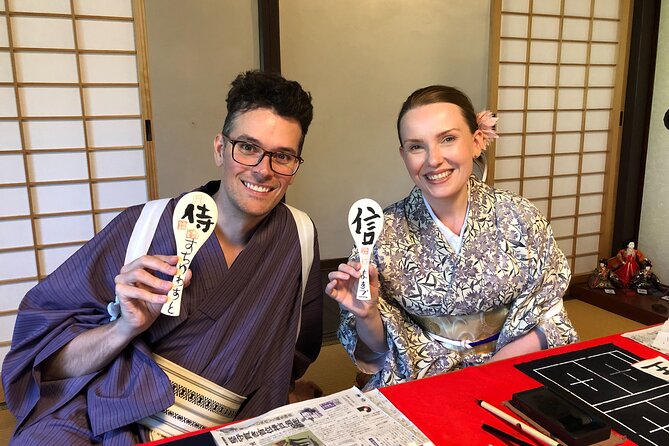
At $84.92 per person, this is not the cheapest way to take a photograph in a kimono. You are paying for more than the clothing, though. The price includes dressing help, the calligraphy lesson, practice materials, your finished artwork, a personalized wooden rice scoop, staff-taken photos, and the setting inside a temple.
For a couple or family, the combination makes more sense than booking separate activities. You get an outfit, instruction, photographs, and a souvenir in roughly an hour. The small group size also helps explain the cost. This is not a large demonstration where one instructor addresses a crowd.
I consider it good value if you care about doing something rather than only seeing something. It is less attractive if you are mainly looking for an inexpensive souvenir photo or if you already have a full schedule of paid attractions.
The experience is booked, on average, 36 days in advance. That suggests you should reserve ahead, especially if you need a particular morning or afternoon time. Confirmation is provided at booking, and the mobile ticket makes the entry process simple.
Who will enjoy this most
I would recommend this for families with children age six and older, couples, friends, and solo visitors who want photos without relying on strangers. The lesson is gentle enough for beginners, and the staff help with both the clothing and the brush.
It is also a good choice for anyone who wants a quieter Miyajima activity. The temple setting gives you a break from the island’s busiest areas, and the experience works well during a gap in your sightseeing schedule. One couple used the hour while waiting for the high and low tides around Itsukushima Shrine, which is a sensible way to fit it into the day.
You should consider it carefully if walking directions frustrate you, if you have mobility concerns, or if you need to move quickly to another timed booking. The activity is near public transportation, but the route can be less straightforward than the central streets.
The weather policy also matters. The activity requires good weather, and if poor weather causes cancellation, you are offered another date or a full refund. You can cancel for a full refund up to 24 hours before the start time. Changes or cancellations inside 24 hours are not accepted or refunded.
Should you book the Miyajima kimono and calligraphy experience?
Book it if you want a compact cultural activity with something personal to take home. The best parts are the broad kimono selection, patient instruction, Japanese version of your name, staff-taken photos, and wooden rice scoop. The quiet temple setting gives the hour more character than a standard rental-shop visit.
Skip it if you want a long calligraphy course, a cheap costume rental, or a completely effortless meeting point. The route deserves extra planning, and the one-hour schedule leaves little room for delay.
For most visitors spending a day on Miyajima, I think this is a worthwhile addition, particularly for families and anyone who values handmade souvenirs. Reserve early, allow time to reach Tokujuji, and treat the experience as a calm cultural pause rather than a rushed photo stop.
FAQ
Where does the kimono and calligraphy experience start?
It starts at Tokujuji, a Soto Zen temple at 741-1 Miyajimacho, Hatsukaichi, Hiroshima 739-0513, Japan. The activity ends back at the same meeting point.
How long does the activity last?
The experience lasts approximately one hour.
How many people can join the activity?
The stated maximum is six participants.
What age is required to participate?
The minimum age is six.
Are morning and afternoon sessions available?
Yes. You can choose a morning or afternoon session.
What happens if I need to cancel?
You can cancel up to 24 hours before the start time for a full refund. Cancellations or changes made less than 24 hours before the start time are not accepted, and poor-weather cancellations offer either another date or a full refund.
More Tea Ceremony & Kimono Experiences in Hiroshima
More Miyajima Tours in Hiroshima
More tours in Hiroshima we've reviewed



Miyajima Tours, compared.
 ★ 5.0Peaceful Hiroshima & Miyajima UNESCO 1 Day Bus TourFrom $129
 ★ 4.9Hiroshima: Hiroshima and Miyajima UNESCO Sites 1-Day TourFrom $1228 hours
 ★ 5.0Hiroshima / Miyajima Full-day Private Tour with Government Licensed GuideFrom $202
 ★ 4.7Osaka/Kyoto: Hiroshima Miyajima Bus Tour & Shinkansen TicketFrom $27712 hours
 ★ 4.7From Hiroshima: Hiroshima & Miyajima 1 Day Tour with LunchFrom $1168 hours
 ★ 5.0Hiroshima and Miyajima Day Trip with Itsukushima Shrine & FerryFrom $45
