
Reviewed · PEACE MEMORIAL TOURS
Hiroshima Peace Memorial and Atomic Bomb Dome Private Tour
Hiroshima Peace Memorial Park asks you to face one of history’s darkest moments without turning it into a dry lesson. This three-hour private tour links the museum with the park’s memorials, the Cenotaph, and the Atomic Bomb Dome, giving the places around you a clear human meaning.
I like the one-to-one attention of a private guide, especially at a site where context matters. I also like the route’s balance: the museum supplies difficult evidence, while the park gives you quiet space to think about Sadako Sasaki, the victims’ ashes, and the call for nuclear disarmament.
The main caution is practical and emotional. The museum can be upsetting, and a three-hour visit may feel rushed if you want to read every display. There has also been at least one serious problem with museum entry being confirmed too late, so check that access is secured before you set out.
In This Review
- Key points to know before booking
- Why a guide helps at Hiroshima Peace Park
- Starting at the Peace Memorial Museum
- A quiet pause at the National Peace Memorial Hall
- The Cenotaph and its park view
- Sadako Sasaki and the Children’s Peace Monument
- The Atomic Bomb Memorial Mound
- Ending beside the Atomic Bomb Dome
- What $85 buys you
- Timing, meeting point, and pace
- The emotional side of the visit
- Who should book this private tour
- Should you book it?
- FAQ
- How long is the Hiroshima Peace Memorial and Atomic Bomb Dome tour?
- Is this a private tour?
- What is the meeting point?
- Where does the tour end?
- Is admission to the Peace Memorial Museum included?
- Is admission to the National Peace Memorial Hall included?
- Which places are visited?
- How much does the tour cost?
- Is a mobile ticket available?
- Can I cancel for a full refund?
Key points to know before booking
- A private three-hour route covers six major sites, with only your group taking part.
- Museum admission is included, along with entry to the National Peace Memorial Hall.
- The Atomic Bomb Dome is the final stop, so the tour ends at the north corner of Peace Memorial Park.
- Guides including Khan, James, Hans, and Ali have been praised for clear explanations, patience, and thoughtful storytelling.
- The tour costs $85 per person, with group discounts available and a mobile ticket supplied.
- The subject is emotionally heavy, but the tour places Hiroshima’s story in a wider call for peace and nuclear disarmament.
Why a guide helps at Hiroshima Peace Park
You can walk through Hiroshima Peace Memorial Park on your own. The monuments are easy to find, and the park is close to public transportation. But the meaning behind them is not always obvious. A private guide helps connect the names, shapes, stories, and locations into one understandable account.
That matters here because the park is more than a collection of memorials. The position of the Cenotaph, the view toward the museum and Atomic Bomb Dome, the Children’s Peace Monument, and the Memorial Mound all carry meaning. Without explanation, you may see the objects but miss the links between them.
The guides praised most often are Khan, James, Hans, and Ali. Khan is described as especially good at organizing facts into a memorable story and answering questions. James has been singled out for a calm, clear manner and for helping visitors who needed extra assistance. Hans is noted for thoughtful conversation and for showing quieter historical spots. Ali is praised for adapting the pace, explaining individual stories, and offering food suggestions for after the tour.
Because this is a private activity, you can ask questions without worrying about holding up a large group. You can also spend more time on a subject that matters to you, though the exact pace depends on the guide and your group.
A few more Hiroshima tours and experiences worth a look
Starting at the Peace Memorial Museum
The first major stop is the Hiroshima Peace Memorial Museum, with about 90 minutes and admission included. This is the most demanding part of the visit. The displays use damaged personal belongings, photographs, explanations, and survivor stories to show what the bombing meant for ordinary people.
The museum places the destruction in historical context, then brings the story down to individual lives. That movement from broad events to clothing, household objects, and personal records gives the visit its force. You are not simply looking at a date and a military decision. You are seeing the effects on civilians and families.
Ninety minutes is a useful starting point, but it is not enough for every display if you read slowly. I would treat the tour as an introduction rather than a final museum visit. Your guide can point out the most important sections and explain details that might otherwise pass unnoticed, but you may want to return later if your schedule allows.
The subject can be emotionally exhausting. I recommend keeping your expectations realistic, especially if you are visiting with children. One family praised a guide for being patient with an eight-month-old, but the museum content itself remains difficult for people of any age.
Museum entry is also the most important logistical detail to confirm. One booking experienced a last-minute failure to enter the museum, which caused major disruption. That appears to be an exception among the supplied experiences, but it is serious enough to justify checking the admission arrangement before the tour begins.
A quiet pause at the National Peace Memorial Hall
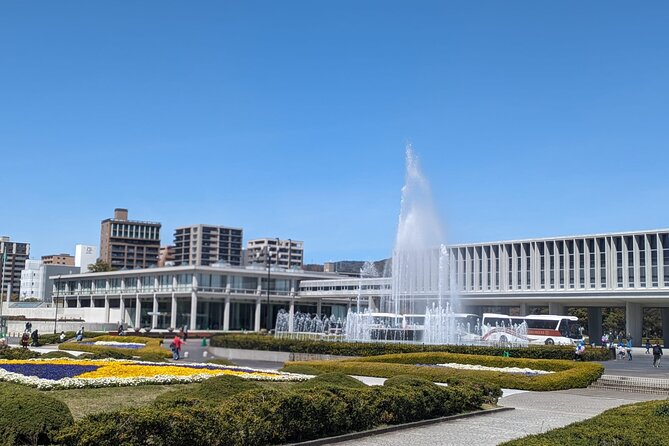
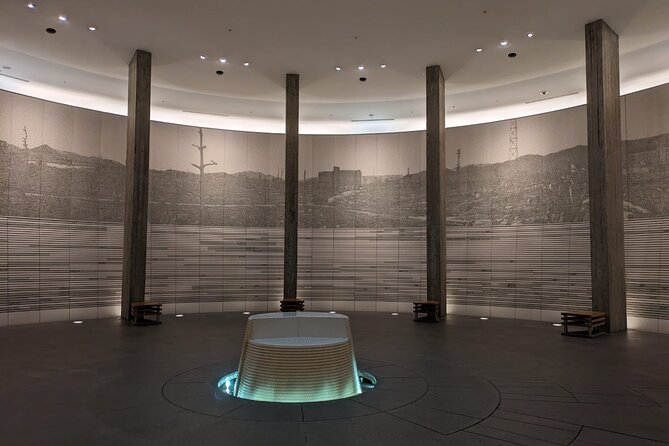
The Hiroshima National Peace Memorial Hall for the Atomic Bomb Victims receives about 20 minutes. This stop has a quieter mood than the museum and gives you room to reflect on the human cost of the bombing.
A screen-based display provides access to a database of victims. That detail changes the visit from a general account of tragedy to something more personal. Names and records make the scale of loss easier to grasp, even though no short visit can represent every life affected.
Twenty minutes is brief, but appropriate for a place built around contemplation. Your guide can explain the purpose of the hall and give you time without filling every moment with commentary. If you prefer a tour that moves constantly, this pause may feel slow. I think the slower rhythm is useful here.
The Cenotaph and its park view
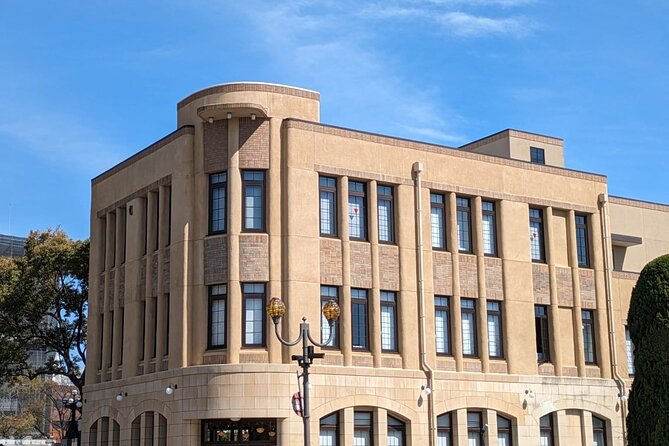
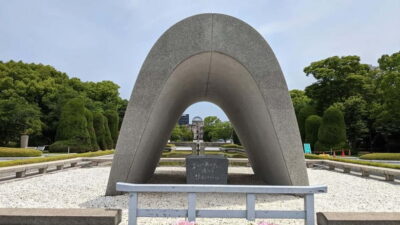
At the Hiroshima Peace City Monument Cenotaph for the Atomic Bomb Victims, you spend roughly 20 minutes. The stop offers a broad view of Peace Memorial Park, including the museum, the Atomic Bomb Dome, and other monuments dedicated to peace and reconciliation.
This is one of the best points for understanding how the park is arranged. Instead of viewing each memorial as an isolated object, you can see the relationship between them. The guide can explain why this central viewpoint matters and how the park’s design directs your attention across the riverfront memorial area.
The Cenotaph is also a natural place to pause after the museum and hall. You may find that the open space feels very different from the indoor exhibits. The tour does not treat that contrast as an afterthought. It gives you time to look, listen, and consider the park’s wider message.
Sadako Sasaki and the Children’s Peace Monument
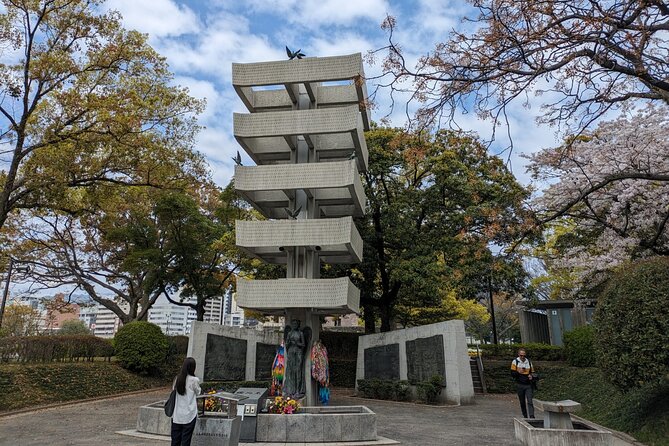
The Children’s Peace Monument takes about 10 minutes. It recalls Sadako Sasaki and the many children who died from the effects of the atomic bomb.
Sadako’s story has become one of the most widely recognized parts of Hiroshima’s peace message. The monument also brings attention to children whose names and individual stories are less familiar. That focus makes the site particularly affecting for families, though it is not limited to family visits.
The short stop works well because the monument does not require a long explanation to make an impact. A good guide adds the cultural meaning and historical background, then allows you to look at the memorial and the colorful paper cranes often associated with it. The supplied details specifically refer to the monument’s vivid colors, but the emotional weight comes from the children it represents, not from decoration alone.
A few more Hiroshima tours and experiences worth a look

The Atomic Bomb Memorial Mound
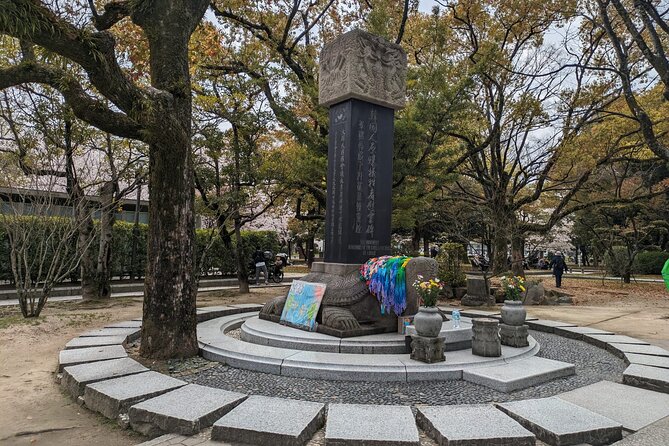
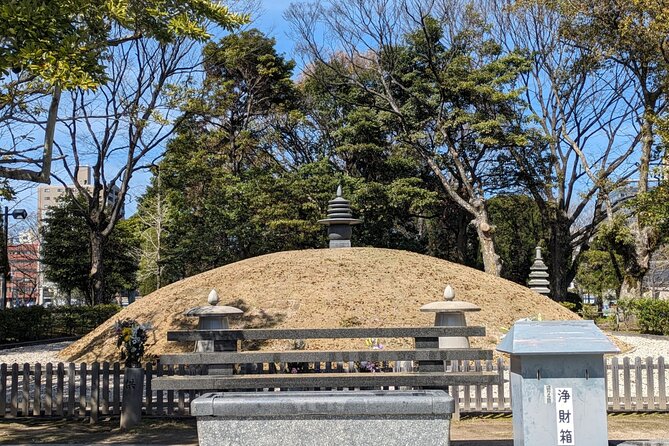
The Atomic Bomb Memorial Mound receives around 20 minutes. It is a peaceful, sacred place containing ashes recovered from victims of the bombing.
This stop is simple in appearance but heavy in meaning. The mound represents people who could not be identified or returned to their families. Its form may look calm and beautiful, while its purpose is profoundly sad. That contrast is exactly why a guide’s explanation helps.
I would not expect a dramatic presentation here. The value lies in the quiet and in understanding what the mound contains. After the museum’s objects and the Cenotaph’s broad view, this memorial brings the story back to the remains of individual human beings.
Ending beside the Atomic Bomb Dome
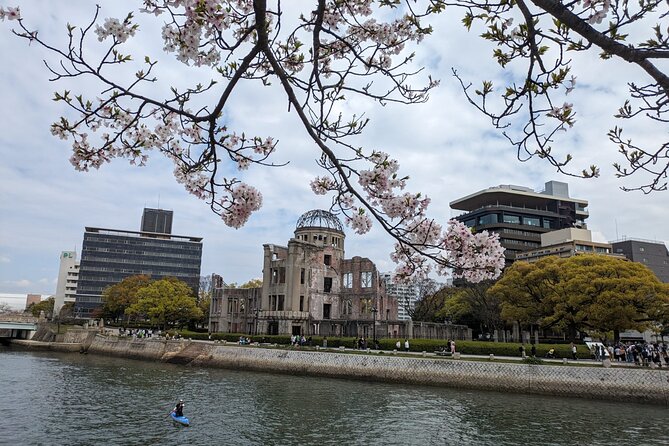
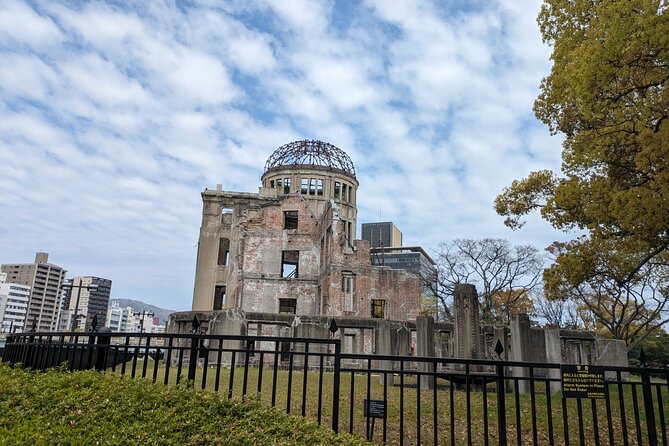
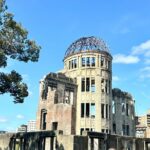
The tour finishes at the Atomic Bomb Dome, with about 20 minutes to walk around it. The building is one of Hiroshima’s most recognizable sights, but recognition should not make it feel ordinary.
The preserved structure recalls the destruction caused by nuclear war and gives the tour a powerful closing point. You can look at the Dome from different angles while your guide explains its place in Hiroshima’s memory. The route does not end with a cheerful attraction or a shopping street. It ends with a question about what the world chooses to remember and prevent.
The stated end point is the north corner of Hiroshima Peace Park at 1-chome-1-10 Otemachi. This is useful if you plan to continue exploring independently or meet someone afterward. It also means the tour does not return you to the starting point at the Peace Memorial mailbox.
What $85 buys you
At $85 per person, this is not the cheapest way to see the park. You can enter several outdoor memorial areas without an admission charge, and Hiroshima Peace Memorial Park is accessible to independent visitors. The price makes more sense if you value explanation, a private pace, and help finding details you might otherwise miss.
The fee includes admission to the Peace Memorial Museum and the National Peace Memorial Hall. It also pays for approximately three hours with a guide assigned only to your group. For a family or small group, the listed group discounts may improve the value.
I think the tour earns its price most clearly when you are visiting Hiroshima for the first time, have limited time, or want to ask many questions. Several experiences describe guides showing places that were easy to miss on an independent walk, including less crowded historical spots and areas just beyond the main route.
The value is weaker if you prefer to spend a full morning reading every museum panel at your own speed. In that case, you may want to visit the museum separately and use the private tour mainly for the park.
Timing, meeting point, and pace
The tour lasts about three hours. It begins at the Peace Memorial mailbox at 1 Nakajimacho, Naka Ward, Hiroshima. The route then finishes at the Atomic Bomb Dome, near the north corner of the park.
The order creates a sensible progression: museum evidence first, reflection indoors, then outdoor memorials and the Dome. You should allow enough energy for walking and standing. The information describes the tour as suitable for most people and near public transportation, but it does not give a detailed accessibility plan.
One guide helped a visitor who had swollen feet and needed a wheelchair, including assistance with transport and bathroom access. That is encouraging, but you should still explain any mobility needs when booking rather than rely on a guide’s goodwill on the day.
The private format is useful for families. A guide can slow down for a child, answer questions at the right level, and avoid the pressure of keeping up with a large party. Still, the museum’s subject matter may not suit very young children, so consider your family’s comfort as well as its ability to walk.
There was also a reported schedule change from 10 AM to 11 AM on the evening before one visit. That change interfered with other plans. I would avoid placing a tight activity immediately before or after this tour, particularly if your day depends on a fixed train.
The emotional side of the visit
Hiroshima is not a place to rush through with a camera and a checklist. The museum and memorials ask you to think about civilians, survivors, children, family loss, and the wider danger of nuclear weapons.
The strongest part of this experience is its movement between evidence and reflection. The museum shows what happened. The hall gives victims a more personal presence. The park monuments create space for mourning, while the Dome keeps the destruction visible.
Many of the guides are praised for a respectful manner rather than for theatrical storytelling. That distinction matters. You want clear history and useful context, but you do not want the subject turned into entertainment. Khan, James, Hans, and Ali are repeatedly described as personable, patient, and able to answer questions in a way that keeps the focus on Hiroshima’s people and its message of peace.
You may leave feeling emotionally tired. That is not a flaw, but you should plan something gentle afterward. Ali has helped visitors with suggestions for okonomiyaki and ramen, and Hiroshima is also associated in these accounts with baumkuchen. A meal can give you a practical pause after a serious morning or afternoon.
Who should book this private tour
I would choose this tour if you want a guided introduction to Hiroshima and prefer personal attention over a large group. It suits first-time visitors, families, history-minded people, and anyone who wants the symbolism of the park explained rather than simply photographed.
It is also a strong choice for a short stay. One visitor completed the Hiroshima visit as a day trip from Tokyo by Shinkansen, with a very long schedule. That is possible according to the account provided, but it leaves little room for delays or a slower museum visit. Staying in Hiroshima gives you a calmer experience.
You may want a different plan if you need extended time in the museum, dislike guided pacing, or find memorial sites emotionally overwhelming. Independent visitors can walk the outdoor park and return to the museum at their own speed. The private tour is paying for interpretation and efficiency, not exclusive access to the grounds.
Free cancellation is available up to 24 hours before the start time. Cancellations or changes made less than 24 hours ahead are not accepted for a refund, and the cut-off follows local Hiroshima time.
Should you book it?
Yes, if you want Hiroshima’s memorials explained with care and you have only a few hours. The museum admission, private format, and connected route make $85 reasonable for a small group, particularly when a strong guide such as Khan, James, Hans, or Ali shapes the visit around your questions.
Before booking, confirm that museum entry is arranged and leave room in your schedule in case the start time changes. If you do that, this tour offers a clear, respectful way to understand Peace Memorial Park, remember the people lost, and carry Hiroshima’s peace message beyond the park.
FAQ
How long is the Hiroshima Peace Memorial and Atomic Bomb Dome tour?
The tour lasts approximately three hours.
Is this a private tour?
Yes. Only your group participates in the activity.
What is the meeting point?
The tour starts at the Peace Memorial mailbox at 1 Nakajimacho, Naka Ward, Hiroshima, 730-0811, Japan.
Where does the tour end?
It ends at the Atomic Bomb Dome at 1-chome-1-10 Otemachi, Naka Ward, Hiroshima, 730-0051, near the north corner of Hiroshima Peace Park.
Is admission to the Peace Memorial Museum included?
Yes. Admission to the Hiroshima Peace Memorial Museum is included.
Is admission to the National Peace Memorial Hall included?
Yes. Admission to the Hiroshima National Peace Memorial Hall for the Atomic Bomb Victims is included.
Which places are visited?
The route includes the Hiroshima Peace Memorial Museum, National Peace Memorial Hall, Cenotaph for the Atomic Bomb Victims, Children’s Peace Monument, Atomic Bomb Memorial Mound, and Atomic Bomb Dome.
How much does the tour cost?
The listed price is $85 per person. Group discounts are available.
Is a mobile ticket available?
Yes. The experience includes a mobile ticket.
Can I cancel for a full refund?
You can cancel at least 24 hours before the experience start time for a full refund. Cancellations or changes made less than 24 hours before the start time are not accepted for a refund.
More Private Tours in Hiroshima


More Hiroshima City Tours in Hiroshima
More Peace Memorial Tours in Hiroshima


More tours in Hiroshima we've reviewed



Peace Memorial Tours, compared.
 ★ 4.8Hiroshima Historical Walking Tour – Why A-Bomb was DroppedFrom $352h 30m
 ★ 5.0Hiroshima Peace (Heiwa) Walking Tour at World Heritage SitesFrom $94
 ★ 4.9Hiroshima: Miyajima Peace Memorial Icons of Peace and BeautyFrom $1638 hours
 ★ 5.0Hiroshima Walking Tour Why A Bomb was dropped to HiroshimaFrom $28
 ★ 5.0Hiroshima 2hr Peace Cycling Tour with Local GuideFrom $59
 ★ 4.8Hiroshima: Peace Cycling Tour with Local GuideFrom $522 - 3 hours
