
Reviewed · PEACE MEMORIAL TOURS
Hiroshima and Peace Park Private guided Tour
The most powerful part of this private Hiroshima tour is its steady walk through places that connect a vast wartime event with individual lives. You move from the Gates of Peace to the cenotaphs, student memorial, burial mound, and Atomic Bomb Dome, with a guide providing context along the way.
I like the private format, since you can ask questions and set the pace more easily than in a large group. I also like the range of stops, especially the Korean Victims and Survivors Monument, the preserved Phoenix Trees, and the Peace Bell. The main drawback is time: two hours is tight, and one verified booking praised the information but noted that timekeeping could be improved.
In This Review
- Key points to know before booking
- Why this Hiroshima walk carries so much weight
- Meeting at Hiroshima Station and entering the park
- Cenotaphs, names, and the Flame of Peace
- Children’s Peace Monument and a story of remembrance
- Korean victims, the burial mound, and forgotten names
- The Atomic Bomb Dome and the physical evidence of 1945
- The Peace Bell, students, trees, and the Rest House
- Hiroshima Castle and what to clarify
- Why two hours is not enough for the full museum experience
- Is $51 a fair price?
- Who should book this private tour?
- Should you book the Hiroshima Peace Park tour?
- FAQ
- How long does the Hiroshima Peace Park tour last?
- Where does the tour meet?
- Where does the tour finish?
- Is transportation included?
- Is the tour private?
- Which languages are available?
- Does the tour include Hiroshima Peace Memorial Park?
- Is the Hiroshima National Peace Memorial Hall included?
- Do I need extra time for the museum?
Key points to know before booking
- The Atomic Bomb Dome is the tour’s visual anchor: The preserved ruin gives the walk a clear historical focus.
- You visit more than the best-known memorials: The route includes the Korean victims’ cenotaph, mobilized students’ tower, burial mound, and Children’s Peace Monument.
- A private guide makes questions easier: English and Hindi tours are available for private groups.
- The Peace Memorial Museum needs extra time: Plan at least half a day in the park and museum area, not just the scheduled two-hour walk.
- The $51 price buys personal attention, not a full-day visit: It can be good value if you want guided orientation, but less so if you expect a long museum session.
- Check the castle detail before paying: Hiroshima Castle is listed among the inclusions, but it is not shown as one of the timed stops in the park route.
Why this Hiroshima walk carries so much weight
Hiroshima Peace Memorial Park is not a single monument with a quick photo stop. It is a broad memorial district filled with names, ashes, survivor accounts, ruined structures, and reminders of how ordinary people were caught in war.
I find a guided walk useful here because the meaning of each site is not always obvious from its appearance. A bell, mound, tree, or low stone monument can look simple until you learn who it remembers and why it was preserved.
The route begins at the Gates of Peace, then moves through a sequence of memorials before finishing in Peace Memorial Park. That order gives you a gradual introduction rather than dropping you straight beside the Atomic Bomb Dome with little context.
You should expect a serious experience. This is not sightseeing in the light, casual sense, and the subject matter may be difficult. The guide’s role is to explain the sites clearly, connect them to personal stories, and help you understand what you are seeing without turning the visit into a rushed checklist.
A few more Hiroshima tours and experiences worth a look
Meeting at Hiroshima Station and entering the park
The meeting point is Hiroshima Station Shinkansen Exit, at 1 Matsubaracho, Minami Ward. This is practical if you are arriving by bullet train, but the tour does not include transportation to or from Hiroshima, so you need to arrange your own way to the station and onward from the park.
The walk begins at the Gates of Peace, where you receive the first 10 minutes of guided explanation. This opening stop is useful for getting your bearings and understanding the purpose of the memorial area before reaching the more emotionally intense sites.
I would arrive early. A private tour depends on meeting efficiently, and the only detailed booking comment available praised the information but flagged timekeeping. Starting on time matters here because the schedule already allows limited minutes at each stop.
Comfortable shoes are essential. You will be walking between several memorials, and an umbrella is sensible in Hiroshima’s changeable weather. Hand sanitizer or tissues are also recommended.
Cenotaphs, names, and the Flame of Peace
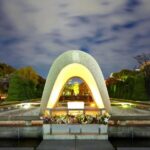
The Hiroshima Victims Memorial Cenotaph receives about 10 minutes of guided attention. This is one of the places where the city’s remembrance becomes personal, since memorial spaces in the park connect the bombing to the people who died, not only to the physical damage left behind.
Next comes the Hiroshima National Peace Memorial, with about 20 minutes. The supplied details also describe the Hiroshima National Peace Memorial Hall for the Atomic Bomb Victims, which offers survivor testimonies, a panoramic view of Hiroshima after the bombing, and a registry of victims.
This is a valuable stop for anyone who wants more than dates and military facts. Survivor accounts give you individual voices, while the registry makes the scale of loss easier to grasp. I would ask the guide how this stop fits with the museum portion, since the tour information uses several similar memorial names and the exact order may vary.
The Flame of Peace receives another 10 minutes. Its symbolism is direct: it represents the wish for a world without nuclear weapons and is intended to burn until that goal is achieved. You do not need a long stop to understand its message, but the guide can place it within the wider design of the park.
Children’s Peace Monument and a story of remembrance
The itinerary allows about 20 minutes at the Children’s Peace Monument, making it one of the longer stops. This memorial is linked to children affected by the bombing and is closely associated with the tradition of folding paper cranes as a sign of hope and remembrance.
For me, this is one of the stops where the human side of the park comes through most clearly. The monument is not just about the moment of destruction. It also reflects how later generations have chosen to remember children and express a wish for peace.
The extended time here is helpful, although it adds to the pressure on the rest of the schedule. If you want photographs, quiet reflection, or questions answered at each stop, ask the guide at the start how strictly the timing will be followed.
Korean victims, the burial mound, and forgotten names
The Korean Atomic Bomb Victims Cenotaph receives about 10 minutes. Its presence is important because the bombing affected people from across the Japanese Empire, including thousands of Koreans who died or suffered. This memorial broadens the story beyond a single national viewpoint.
I especially value this inclusion because it prevents the park from becoming a narrowly framed account. You are reminded that wartime movement, forced labor, migration, and imperial rule shaped who was in Hiroshima when the bomb fell.
The Atomic Bomb Memorial Burial Mound is another 10-minute stop. It commemorates victims whose remains could not be identified or returned to families. A burial mound can seem less visually dramatic than the Dome, but it carries a blunt message: many victims were never given an individual grave or name.
These stops are easy to miss if you explore alone with only the main park map. A guide gives them their proper place in the story, which is one of the clearest reasons to choose this tour rather than simply walking to the Dome for a photograph.
A few more Hiroshima tours and experiences worth a look

The Atomic Bomb Dome and the physical evidence of 1945
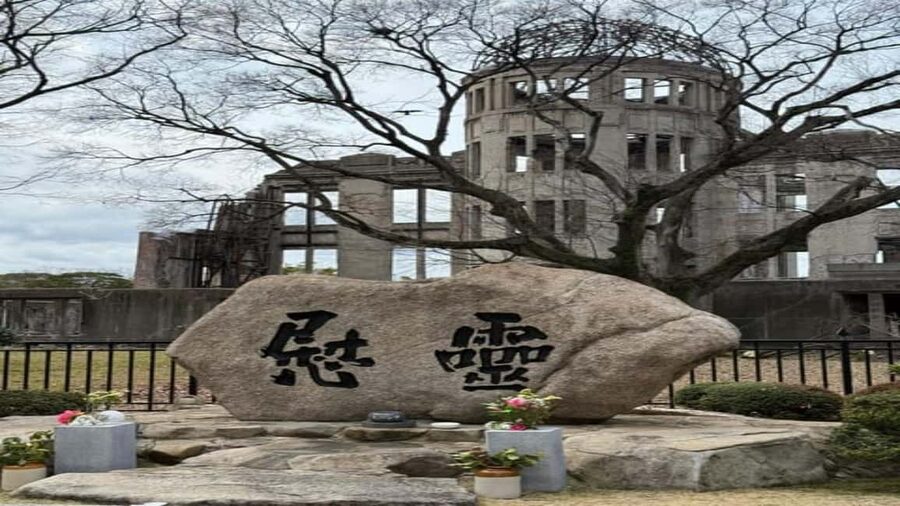
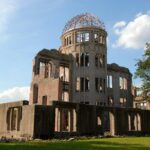
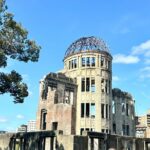
The tour allows about 15 minutes at the Atomic Bomb Dome, the most recognizable structure in Hiroshima’s Peace Memorial Park. The former building survived the blast in damaged form, and its exposed frame provides a stark contrast with the modern city around it.
The Dome is powerful because it is physical evidence. Photos and testimonies explain what happened, but the remaining structure shows you that destruction and survival existed side by side. It also gives the route a strong ending point, even though the official finish is elsewhere in Peace Memorial Park.
You should not expect the Dome stop alone to explain the entire bombing. Its value increases when you have already heard about victims, students, Korean survivors, children, and unidentified remains. The route builds the context first, then brings you to the ruin.
The itinerary also includes two additional guided segments of about 10 minutes each, although the supplied details do not identify those stops by name. This is another reason to confirm the exact order and stop list with the provider before the day of the tour.
The Peace Bell, students, trees, and the Rest House
The Peace Bell is one of the most participatory moments. You are invited to ring the large bronze bell and make a personal wish for world peace. That action is simple, but it gives you a way to take part rather than only observe.
The tour also includes the Memorial Tower to the Mobilized Students, remembering more than 6,000 students who died while carrying out labor duties during the war. This stop makes clear that young people were drawn into wartime work and exposed to danger far from any battlefield.
You will also see the Phoenix Trees and Rest House. The trees survived the blast and continue to represent nature’s ability to recover. The Rest House, another structure preserved after the bombing, adds a human-scale detail to the park’s story.
I like these smaller elements because they keep the visit from focusing only on grand monuments. A damaged building, surviving tree, or bell can make the history easier to picture. At the same time, the two-hour limit means you may receive a brief explanation rather than the long pause these sites might deserve.
Hiroshima Castle and what to clarify
Hiroshima Castle is listed as an included visit, but the timed route provided for this experience moves through Peace Memorial Park and does not identify a castle stop. That is a practical point to settle before booking.
Ask whether the castle is visited during the same private tour, treated as an additional stop, or included in a different version of the experience. Do not assume it replaces museum time or that it is located within the park route.
The castle could add useful city context, but it also changes the balance of the tour. If your main goal is the Atomic Bomb Dome, memorials, and Peace Memorial Museum, you may prefer every available minute in the Peace Park area.
Why two hours is not enough for the full museum experience
The tour lasts two hours, but the practical advice is to plan at least half a day for Peace Memorial Park and the museum. Those two facts are not contradictory. The guided walk gives you orientation and meaning, while the museum requires more time for exhibits, photographs, artifacts, and personal accounts.
The activity information describes the museum as documenting the events leading to the bombing and its aftermath, with personal stories, artifacts, and photos. That is a lot to absorb in a short visit. Even if the guide helps you reach the museum efficiently, you should not expect the full museum experience to fit comfortably inside the walking tour.
A small museum fee may apply, and the supplied details state that entry to most memorials is free while the museum has a small charge. Entry to the National Peace Memorial Hall for the Atomic Bomb Victims is included as a guided stop, but confirm exactly what admission is covered if you are comparing prices.
I would treat this tour as the first part of a half-day visit. Take the guided walk, note the places you want to revisit, then spend additional time at the museum and memorials that affected you most.
Is $51 a fair price?
At $51 per person, this is not the cheapest way to walk through the park. Much of the memorial area is free to enter, and you can visit many sites independently.
The price makes more sense if you want an English or Hindi guide, a private group, help understanding less obvious memorials, and a planned route from the Gates of Peace to the Atomic Bomb Dome. The Korean victims’ cenotaph, mobilized students’ tower, burial mound, Phoenix Trees, and Rest House give the walk more depth than a basic Dome visit.
Value depends on what you expect. If you want a concise historical introduction and the chance to ask questions, the price is reasonable. If you want a long museum session, leisurely reflection, or a full-day city tour, you will need to add time and possibly other costs yourself.
Free cancellation up to 24 hours in advance and the reserve-now, pay-later option reduce the financial risk. Still, the more important issue is scheduling. Confirm the meeting time, exact route, castle visit, and museum admission before you commit.
Who should book this private tour?
I would recommend it to first-time visitors who want a clear introduction to Hiroshima’s memorial district without organizing every stop themselves. It also suits people who prefer a private setting, need an English or Hindi guide, or want to ask questions about the city’s wartime past.
It is a good match for visitors with only a short initial window in Hiroshima, provided you understand that the two-hour walk is an orientation rather than a complete half-day visit.
I would be more cautious if punctuality is crucial or if you have a tight train connection afterward. The detailed booking feedback specifically points to timekeeping as an issue, so leave a buffer before any departure.
Should you book the Hiroshima Peace Park tour?
Book it if you want the human stories behind the memorials, a private guide, and a route that includes important sites many people skip. The inclusion of the Korean victims’ monument, mobilized students’ memorial, burial mound, and Phoenix Trees gives the experience real substance.
Skip it if you are comfortable researching the park yourself and want to spend most of your time inside the museum. In that case, use the two-hour cost for admission or another activity and explore at your own pace.
For most visitors, the best plan is to book the walk, keep the rest of the day open, and continue into the museum afterward. Confirm the castle detail and timing before you go, wear comfortable shoes, and treat the tour as a thoughtful introduction to Hiroshima rather than the final word on the city’s past.
FAQ
How long does the Hiroshima Peace Park tour last?
The guided experience lasts two hours.
Where does the tour meet?
The meeting point is the Hiroshima Station Shinkansen Exit at 1 Matsubaracho, Minami Ward, Hiroshima, 732-0822, Japan.
Where does the tour finish?
The tour finishes at Hiroshima Peace Memorial Park.
Is transportation included?
No. Transportation to and from Hiroshima is not included.
Is the tour private?
Yes. The activity is offered for a private group.
Which languages are available?
Live guiding is available in English and Hindi.
Does the tour include Hiroshima Peace Memorial Park?
Yes. Access to Hiroshima Peace Memorial Park is included.
Is the Hiroshima National Peace Memorial Hall included?
Yes. A guided visit to the Hiroshima National Peace Memorial Hall for the Atomic Bomb Victims is included.
Do I need extra time for the museum?
Yes. The practical advice is to plan at least half a day for the Peace Memorial Park and Museum. The two-hour tour cannot provide the same amount of time as a longer independent visit.
More Guided Tours in Hiroshima

More Hiroshima City Tours in Hiroshima
More Peace Memorial Tours in Hiroshima

More tours in Hiroshima we've reviewed



Peace Memorial Tours, compared.
 ★ 4.8Hiroshima Historical Walking Tour – Why A-Bomb was DroppedFrom $352h 30m
 ★ 5.0Hiroshima Peace (Heiwa) Walking Tour at World Heritage SitesFrom $94
 ★ 4.9Hiroshima: Miyajima Peace Memorial Icons of Peace and BeautyFrom $1638 hours
 ★ 5.0Hiroshima Walking Tour Why A Bomb was dropped to HiroshimaFrom $28
 ★ 5.0Hiroshima 2hr Peace Cycling Tour with Local GuideFrom $59
 ★ 4.8Hiroshima: Peace Cycling Tour with Local GuideFrom $522 - 3 hours
