
Reviewed · HIROSHIMA
Original Omamori Charm Making Experience
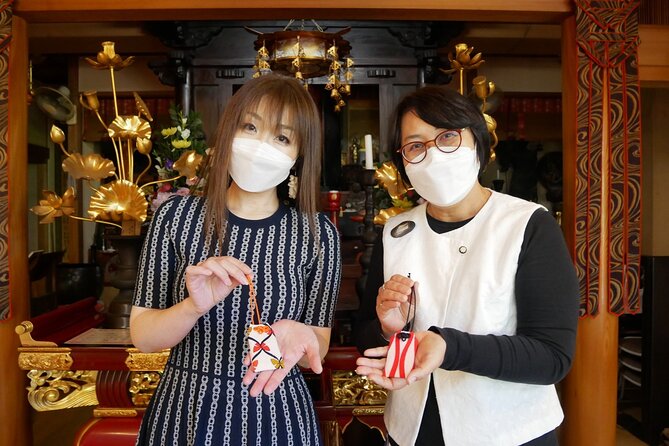
Making an omamori is more personal than buying one from a shrine shop. At Okeiko Japan, you choose the cloth case and cord, add a wish to a miniature Miyajima rice scoop, and put the charm together yourself. I especially like the old kimono fabric and the quiet temple setting away from the busiest sights.
I also like that this short activity explains basic temple manners instead of treating the charm as a simple craft project. The main drawback is the price: $45.90 for about 30 minutes is not cheap, and the experience requires good weather, so you should leave room in your plans for a possible change of date.
In This Review
- Key points at a glance
- What makes this omamori experience different
- Arriving at the quiet temple near Miyajima
- Learning basic temple manners before the craft
- Choosing an old kimono case and cord
- Adding your wish to a miniature shamoji
- Putting the omamori together
- How the setting affects the experience
- Who will get the most from 30 minutes here
- Is $45.90 a fair price?
- Booking, age, tickets, and cancellation
- Should you book the Okeiko Japan omamori activity?
- FAQ
- How long does the omamori-making activity last?
- Where does the activity begin and end?
- What will I make during the experience?
- What are the amulet cases made from?
- Is the activity suitable for children?
- How many people can join the activity?
- Can I cancel for a full refund?
Key points at a glance
- One-of-a-kind keepsake: You make an omamori for yourself, rather than buying a ready-made charm.
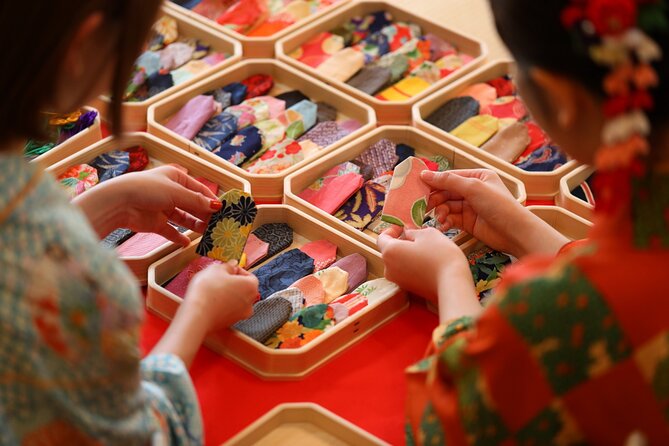
- Recycled kimono cases: The fabric comes from old kimono that are no longer worn, giving each case a different look.
- Miyajima detail: Your wish goes on a miniature shamoji, the rice scoop associated with Miyajima.
- Quiet temple location: The meeting point is away from the main tourist area and surrounded by nature.
- Short, family-friendly format: The activity lasts about 30 minutes and accepts children from age six.
- Small enough to feel personal: The maximum group size is 20, though the actual group may be smaller.
What makes this omamori experience different
An omamori is a small Japanese protective charm, usually sold at a shrine or temple. You may see charms for health, study, safe travel, business, relationships, or general good fortune. The usual process is simple: choose one, pay, and take it with you.
Here, the making is the point. You choose the materials and decide what wish to place inside. That gives the finished charm a personal meaning that a packaged amulet cannot quite match.
The activity also links three local ideas in a neat way. The temple setting introduces basic religious manners. The kimono cloth connects the charm to Japanese textile traditions. The little shamoji brings in a Miyajima specialty, so the finished piece is not just a generic souvenir.
I like this mix because it gives you something to do with your hands while also explaining why the object matters. The result is small, but it carries a clear memory of Miyajima.
If you're still narrowing it down, here are other tours in Hiroshima we've reviewed.


Arriving at the quiet temple near Miyajima
The meeting point is 741-1 Miyajimachō, Hatsukaichi, Hiroshima 739-0588, Japan. The site is near public transportation, but it is a little away from the main tourist area. That distance is part of the appeal.
Miyajima can feel busy around its best-known sights. Moving to a quieter temple area gives you a calmer start and a better setting for a hands-on lesson. You should allow enough time to reach the exact address rather than assuming every temple on the island is close together.
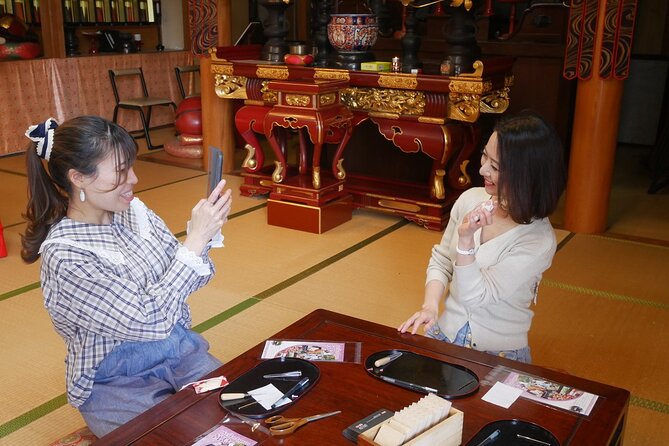
The setting is surrounded by nature, which helps the 30-minute activity feel separate from the usual sightseeing rush. You are not simply stopping at a counter in a souvenir shop. You are entering a temple environment, learning a few basic manners, and then working on a craft.
The location does create one practical issue. Since the activity is off the main route, check your transport plan and meeting time carefully. The supplied details confirm access near public transportation, but they do not give a walking time from a ferry terminal or a particular station.
Learning basic temple manners before the craft
The lesson includes an introduction to basic temple manner. That is useful even if you have visited Japanese temples before, because small points of conduct can be easy to miss when you are moving quickly between sights.
You should expect the instructor to explain the meaning behind the steps involved in the activity. The available information does not name the guide or list a full teaching script, so I would not expect a formal religious ceremony. Think of it as a short cultural explanation paired with a simple craft.
This part matters because it sets the right tone. An omamori is not presented only as decoration. It is connected to wishes, protection, and the place where it is made. Understanding that gives your finished charm more weight.
The lesson should also work well for families. The minimum age is six, and the craft has a clear sequence. Younger children may need help with writing, stamping, or assembly, but the activity is short enough to hold their attention better than a long temple talk.
Choosing an old kimono case and cord
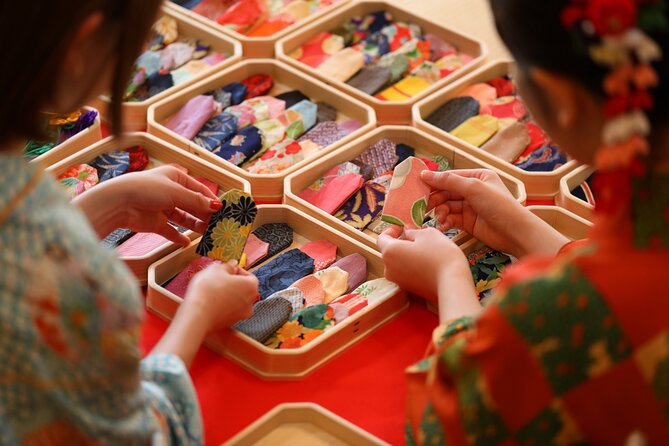
The first creative decision is selecting your omamori case and string. The cases are made from old kimono that are no longer worn. Because kimono fabric can have different colors and patterns, your choice becomes part of the design.
This is one of my favorite features. A new mass-produced charm may be attractive, but it usually looks like hundreds of others. An old kimono case gives your amulet a stronger sense of place, and choosing it yourself makes the object feel more personal.
The cord is another small choice that changes the final appearance. You can select the cord you like, then combine it with the case. The supplied information does not list the available colors or patterns, so the exact range will depend on what is on hand when you arrive.
Do not expect a large textile workshop. The activity lasts roughly 30 minutes, so the selection and assembly are designed to fit a compact lesson. If you enjoy crafts, you may wish the making time were longer. If you prefer a focused activity that does not take over your day, the short format works in its favor.
Adding your wish to a miniature shamoji
Your wish is written or stamped onto a mini shamoji, or rice scoop. Shamoji is one of Miyajima’s specialty items, so this step gives the charm a local connection that goes beyond the temple setting.
The shamoji is a clever choice for a souvenir. It is small enough to fit inside the amulet, but it also points to Miyajima itself. The activity does not ask you to choose a vague souvenir from a shelf. It gives you a physical place to put a personal intention.
You may write your wish or use a stamp. That choice makes the activity accessible to different ages and writing abilities. If you are making the charm with a child, stamping may be the easier option. If you want a more personal keepsake, writing your own wish adds another layer of meaning.
The details do not specify which languages or writing tools are available. If your Japanese is limited, ask the instructor what options are offered before you begin. The activity clearly provides a writing or stamping step, but you should not assume that every preferred language or style will be supported.




Putting the omamori together
After choosing the case and cord and adding your wish to the mini shamoji, you put the parts together to make the amulet. This is the moment when the separate materials become a finished object.
The process appears simple enough for beginners. You do not need previous sewing or craft experience, and most people age six and above can take part. Still, simple does not mean meaningless. The value comes from making a personal charm in a temple setting, not from mastering a difficult technique.
A 30-minute session also means the finished item is likely to be completed during the visit. That makes it a practical choice if you want to leave Miyajima with something you made yourself, but do not have time for a long workshop.
I would treat the charm as a personal keepsake rather than a high-value souvenir. The $45.90 price pays for the setting, instruction, materials, and guided cultural activity. It is more expensive than buying an omamori at a shrine, but comparison with a shop-bought charm misses the main point. You are paying for participation as well as the object.
How the setting affects the experience
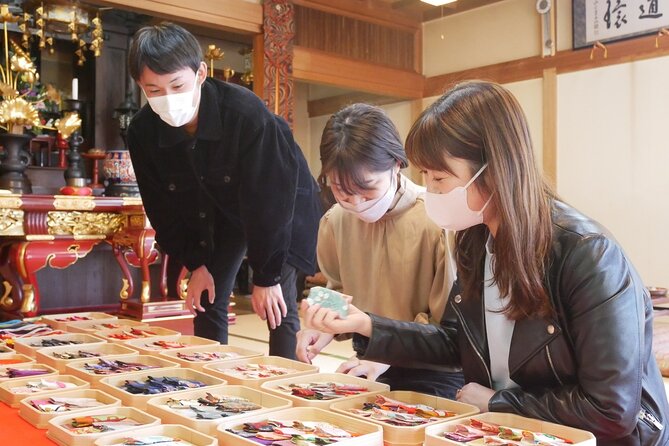
The quiet location is not just a pleasant extra. It changes how the activity feels. In a crowded sightseeing area, a 30-minute craft can become another item to hurry through. In a peaceful temple surrounded by nature, the same amount of time can feel more deliberate.
The published details describe the site as off the tourist route, which should appeal to you if you want a break from Miyajima’s most visited areas. It may be less convenient if your schedule is built around a tight list of central sights.
The experience also depends on the weather. Good weather is required, and if poor conditions force a cancellation, you will be offered another date or a full refund. That policy is helpful, but it means you should avoid placing the activity at the very end of a tightly packed Japan itinerary.
Because the session ends back at the meeting point, you do not need to arrange a separate return transfer. You can continue sightseeing afterward, but the exact onward journey depends on your own transport plans.
Who will get the most from 30 minutes here
I would recommend this activity most strongly to:
- You want a personal souvenir rather than a standard purchase.
- You enjoy crafts but do not want to spend half a day in a workshop.
- You are visiting Miyajima with a child aged six or older.
- You want a quieter cultural stop away from the busiest sights.
- You are interested in temple etiquette and Japanese religious customs.
- You like objects made with reused or traditional materials.
It is also a good fit for couples, families, and solo visitors who want a small ritual connected to a trip. The charm can represent a wish for yourself or someone at home.
I would be more cautious if you are mainly looking for a long lesson, detailed religious instruction, or advanced textile work. Thirty minutes is enough to choose materials, add a wish, and assemble the charm. It is not enough for a broad seminar on Japanese amulets or a complex craft class.
The group limit is 20 people. That keeps the activity from becoming a very large event, although a full group could feel less quiet than the setting suggests. The available information does not promise private instruction or a small private group, so book it for the cultural activity rather than an intimate one-to-one lesson.
Is $45.90 a fair price?
At $45.90 per person, this is a premium souvenir experience. You could buy many ordinary Japanese charms for less. The price makes more sense when you count the instruction, temple setting, old kimono material, mini shamoji, cord, and the time spent making the item.
Value depends on what you want from Miyajima. If you only need a small good-luck charm, a shrine shop will be cheaper and faster. If you want a meaningful object tied to your own wish and your own choices, this activity offers something a shop cannot.
The short duration helps balance the cost. You do not lose a full morning or afternoon, and the activity can fit between larger sightseeing plans. On the other hand, people who judge value mainly by minutes of instruction may find the price high.
The experience currently carries a 5 rating from one posted rating. That is encouraging, especially since the praise focuses on the quiet location and the guide’s explanation of each step and material. Still, one rating is too small a sample to treat as a broad guarantee. I would use the details of the activity itself to make the decision.
Booking, age, tickets, and cancellation
Confirmation is provided when you book, and the activity uses a mobile ticket. You should have the booking information ready when you arrive.
The minimum age is six, and the maximum group size is 20. The activity ends at the same meeting point where it begins.
Free cancellation is available if you cancel at least 24 hours before the local start time. Cancellations or changes made less than 24 hours ahead are not refunded or accepted. Since good weather is required, keep some flexibility in your plans. If the provider cancels because of poor weather, you can choose another date or receive a full refund.
The experience is booked, on average, 52 days in advance. That suggests you should reserve ahead if the date matters to you, particularly during a busy Miyajima visit. The activity is short, but a fixed appointment can be hard to replace once your ferry, hotel, and sightseeing schedule are set.
Should you book the Okeiko Japan omamori activity?
Book it if you want a small, personal link to Miyajima and like the idea of making your own charm from old kimono fabric. The mini shamoji, temple manners, and quiet setting give the activity more character than a simple souvenir purchase.
Skip it if you want the lowest-cost omamori, a long craft class, or a completely flexible schedule. At $45.90, the appeal is the experience and the meaning you give the finished piece, not the material value alone.
For families and culture-focused visitors, I think the format is especially appealing. You leave with a charm that records a wish, a choice of fabric, and a moment spent in a calmer part of Miyajima. Just check the meeting point, protect your schedule from bad weather, and allow enough time to reach this quieter temple location.
FAQ
How long does the omamori-making activity last?
The activity lasts approximately 30 minutes.
Where does the activity begin and end?
It begins at 741-1 Miyajimachō, Hatsukaichi, Hiroshima 739-0588, Japan, and ends back at the same meeting point.
What will I make during the experience?
You will make an original omamori charm by choosing a case and cord, adding a written or stamped wish to a miniature shamoji, and assembling the parts.
What are the amulet cases made from?
The amulet cases are made from old kimono that are no longer worn.
Is the activity suitable for children?
The minimum age is six. Most people can participate.
How many people can join the activity?
The maximum group size is 20 people.
Can I cancel for a full refund?
Yes. You can cancel at least 24 hours before the local start time for a full refund. Changes or cancellations made less than 24 hours before the start are not accepted or refunded. If poor weather causes the provider to cancel, you will be offered another date or a full refund.
More tours in Hiroshima we've reviewed








Hiroshima, compared.
 ★ 5.0Peaceful Hiroshima & Miyajima UNESCO 1 Day Bus TourFrom $129
 ★ 4.9Hiroshima: Hiroshima and Miyajima UNESCO Sites 1-Day TourFrom $1228 hours
 ★ 5.0Hiroshima / Miyajima Full-day Private Tour with Government Licensed GuideFrom $202
 ★ 4.8Hiroshima Historical Walking Tour – Why A-Bomb was DroppedFrom $352h 30m
 ★ 5.0Hiroshima Peace (Heiwa) Walking Tour at World Heritage SitesFrom $94
 ★ 5.0Hiroshima in a Nutshell: Morning Bike AdventureFrom $72
