
Reviewed · HIROSHIMA CITY TOURS
Highlight of Hiroshima with Licensed Guide (6h)
Hiroshima is best understood on foot, with time to pause at its monuments and ask hard questions. This private six-hour tour brings together the Atomic Bomb Dome, Peace Memorial Park, the Peace Memorial Museum, Hiroshima Castle, Shukkeien Garden, and a meal of local okonomiyaki. Guides may include Naoko Koh, Takeshi, Naoko, Nao, Minami, or Ms. Okura, depending on availability.
I like the private format, which lets your guide adjust the pace and explain the memorials in a personal way. I also like the balance between solemn sites and ordinary Hiroshima life, with public transportation, a garden visit, and lunch built into the day.
The main consideration is cost: at $200 per person, this is a serious outlay, and lunch is extra. You also need to be comfortable walking and riding public transportation, while taxi fares are not covered.
In This Review
- Key points to know before booking
- Why a private guide changes Hiroshima’s memorial visit
- Starting at Hiroshima Castle after the station pickup
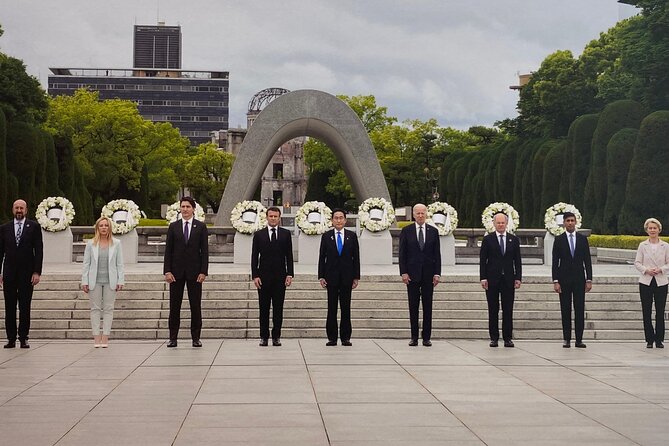
- Walking through Peace Memorial Park’s monuments
- The Peace Memorial Museum deserves your full attention
- Seeing the Atomic Bomb Dome up close
- A lunch break with Hiroshima-style okonomiyaki
- Shukkeien Garden brings a quieter finish
- Public transportation keeps the day connected to the city
- Is $200 per person a fair price?
- Who will get the most from this six-hour tour?
- Should you book Highlight of Hiroshima with Licensed Guide?
- FAQ
- How long does the Hiroshima tour last?
- Where does the tour start?
- Can the guide pick me up at my hotel?
- Where does the tour end?
- Is this a private tour?
- Are admission tickets included?
- Is lunch included in the price?
- Is public transportation included?
- Can I use a taxi instead of public transportation?
- Can I cancel for a full refund?
Key points to know before booking
- A personal look at Hiroshima’s wartime history: Visit Peace Memorial Park, the Atomic Bomb Dome, and the Peace Memorial Museum with a licensed guide.
- Private and flexible: Only your group takes part, so the guide can adapt the order, pace, and depth of the visit to your interests.
- Local lunch, separate bill: You pause for Hiroshima-style okonomiyaki, but the meal cost is not included.
- More than memorials: Hiroshima Castle and Shukkeien Garden add samurai-era history, architecture, and seasonal beauty.
- Public transportation included: The tour uses local transit, with hotel pickup available and taxi rides possible at your own cost.
- A six-hour city sampler: You get a serious introduction to Hiroshima without having to arrange several separate admissions and transit connections.
Why a private guide changes Hiroshima’s memorial visit
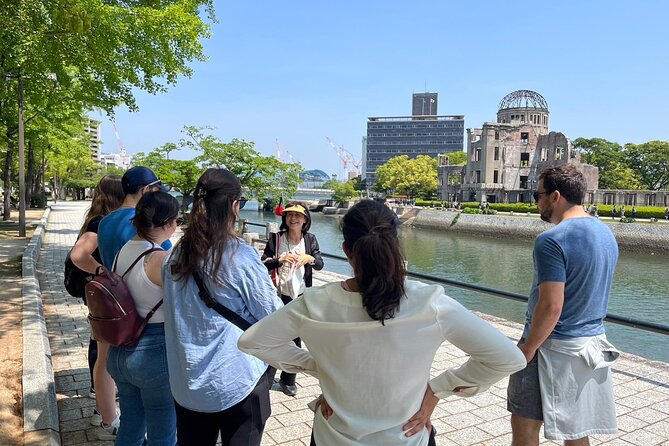
Hiroshima’s central sights are easy to locate, but their meaning is not always easy to grasp from signs alone. The monuments in Peace Memorial Park each carry a message, and a guide can explain how they fit into the city’s story before, during, and after World War II.
The private setup matters most here. You can ask about a particular monument, spend more time at an exhibition, or move along when the subject becomes emotionally heavy. A fixed group tour often has to keep everyone moving together. This format gives your party more room to set the tone.
The guides also bring varied personal connections to Hiroshima. Ms. Okura is a second-generation survivor of the bombing, while Takeshi has spent decades supporting survivors. Those details do not mean you will necessarily be assigned either guide, but they show the kind of personal perspective that may shape the experience.
English ability is highlighted in the praise for Naoko Koh, whose kindness and strong English helped make the history easier to discuss. Nao and Minami are also noted for their warm, personable approach. The most useful quality in a Hiroshima guide is not just a list of dates. It is the ability to handle a painful subject with care, clarity, and room for questions.
A few more Hiroshima tours and experiences worth a look
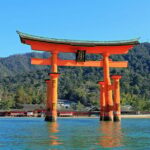

Starting at Hiroshima Castle after the station pickup
The tour begins at Hiroshima Station, at 1-2-37 Matsubaracho, or your hotel if that arrangement is made. Meeting at the station is practical if you are arriving by train, and one guide, Takeshi, helped a party find a place to store bags before the tour began. Bag storage is not listed as a standard inclusion, so treat that as an example of helpful assistance, not a promised service.
Hiroshima Castle is the opening stop, with about 40 minutes set aside. The castle offers a useful change of focus before the memorial sites. You can look at the city through its older political and military history and learn about a building with roughly 400 years of history.
The admission ticket is not included for Hiroshima Castle. That is a small but important cost detail. You can enjoy the exterior and views without entering, but ask your guide what the current admission arrangements are if you want to go inside.
The stop is fairly short. Do not expect a full castle museum visit and a long guided examination of every feature. Instead, think of Hiroshima Castle as a compact introduction to the city’s earlier past before the tour turns to the events that made Hiroshima known around the world.
Walking through Peace Memorial Park’s monuments
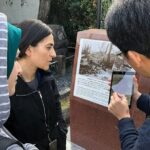
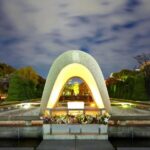
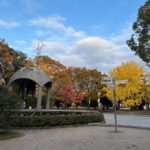
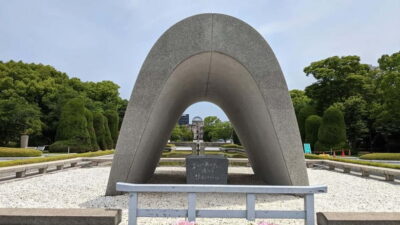
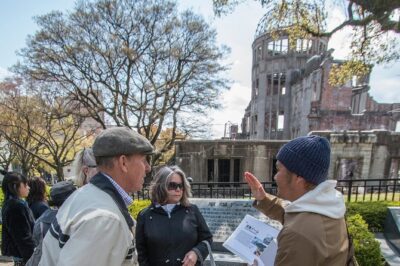
The tour then spends about 45 minutes in Peace Memorial Park. This is where the guide’s role becomes especially valuable. You will walk among monuments and statues while learning what each one represents and what message it delivers.
The park is not just a green space with a few famous markers. Its layout and memorials ask you to think about victims, children, peace, mourning, and the city’s effort to communicate beyond Japan. A guide can give you the basic context so that the names and symbols do not blur together.
Allow yourself to be quiet here. The schedule provides a clear amount of time, but a private tour can sometimes be adjusted. If a particular monument affects you, you can ask questions or take a moment before moving on.
The park is outdoors, so comfortable shoes and weather-appropriate clothing make sense. The itinerary is built around walking and public transportation, not a private vehicle that carries you from door to door. That is part of the value, since you experience the city at street level, but it also means the day may feel tiring if you are not prepared for regular walking.
The Peace Memorial Museum deserves your full attention
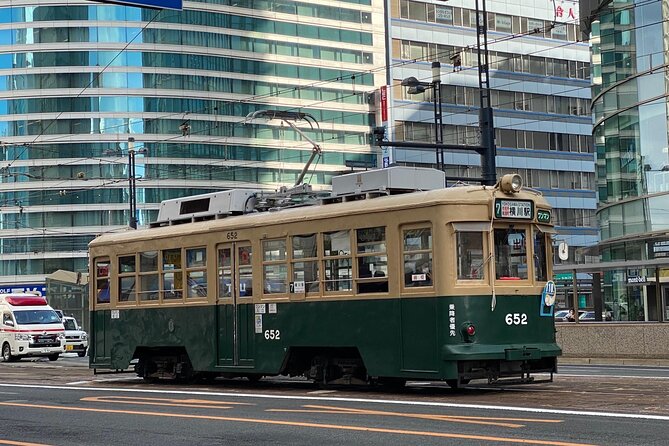
The Peace Memorial Museum receives about one hour, and admission is included. You may walk through it on your own or go through with your guide.
This choice is important. Some people prefer to read and reflect privately, while others want historical details explained as they go. You can use the guide for the first part and continue alone, or stay together for the full visit if that suits your group.
The exhibits are difficult. The museum presents the human cost of the atomic bombing through objects and personal accounts, not just military dates. A guide can help connect the museum displays with the memorials outside, but no guide can make the material easy.
One hour gives you a meaningful visit, though not unlimited time. If you read every panel carefully, you might want longer. The private format gives you a better chance of discussing what you have seen instead of rushing straight to the next sight.
This is also the point where a personal guide connection can matter most. A second-generation survivor such as Ms. Okura, if assigned, can offer a family perspective. Takeshi’s work supporting survivors also adds a human dimension. Still, the exact guide is not guaranteed, so book this experience for its licensed private format rather than for one named individual.
Seeing the Atomic Bomb Dome up close
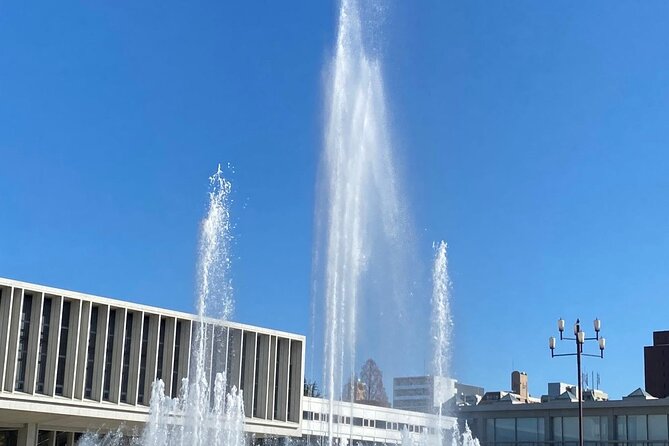
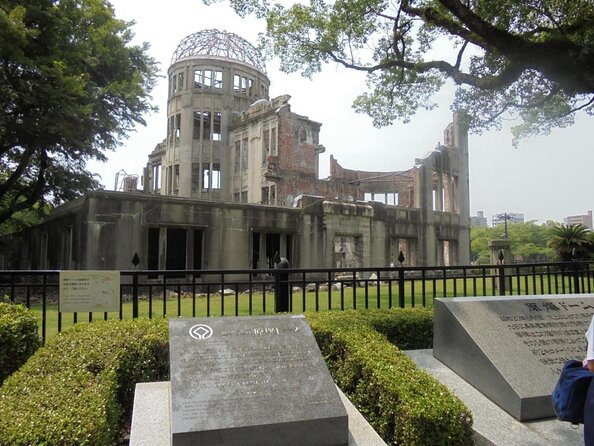
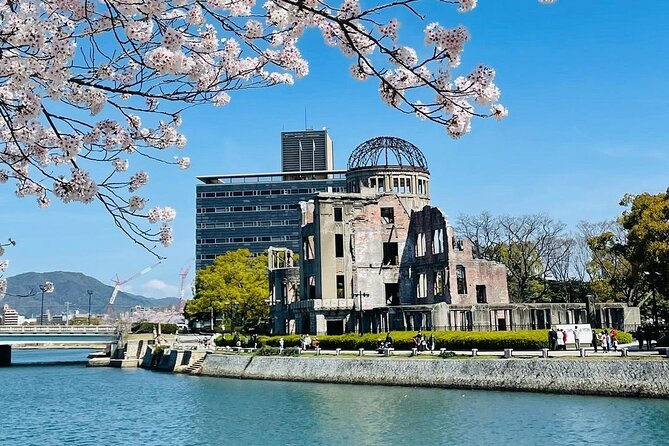
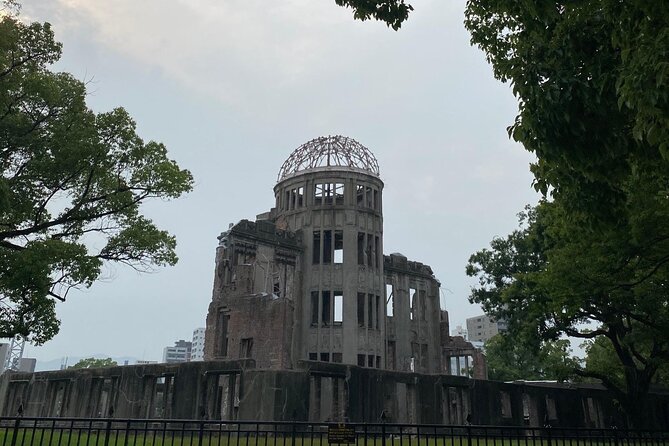
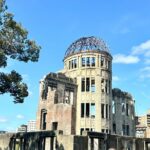
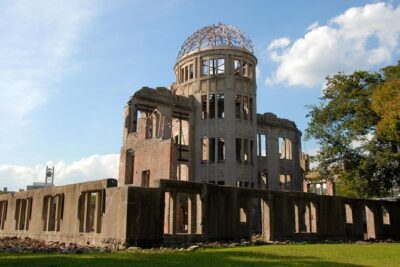
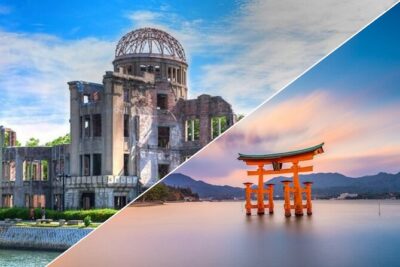
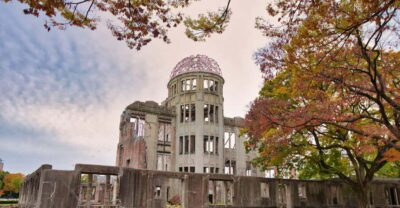
The Atomic Bomb Dome receives about 10 minutes, but the short time does not make it unimportant. The preserved structure is one of Hiroshima’s clearest physical reminders of August 1945, and its damaged form contrasts sharply with the modern city around it.
Your guide explains the building’s history before and after World War II. The stop works best as part of the larger sequence: the park gives you the memorial setting, the museum provides detailed evidence, and the Dome gives you a stark structure to look at while absorbing the scale of what happened.
Ten minutes is enough for an explanation and photographs, but it is not a long architectural visit. The Dome is viewed from outside, and the power of the stop comes from its location and context rather than from an extended interior tour.
Other guided tours in Hiroshima


A lunch break with Hiroshima-style okonomiyaki
The one-hour lunch stop introduces you to Hiroshima okonomiyaki. This local specialty is a practical way to pause after the morning’s serious subject matter and experience a familiar part of city life.
The lunch cost is not included, so you need to budget separately. The tour includes the lunch stop, not the meal itself. That arrangement gives your group a chance to choose what to order, but the final price depends on your appetite and selection.
Do not confuse the included itinerary time with a prepaid meal. If you are comparing this tour with a more expensive package that includes food, add lunch to the $200 price before deciding which offers the better value.
I like this break because it keeps the day from becoming one continuous memorial visit. Hiroshima is not only a place of remembrance. It is also a living city with its own food traditions and daily rhythm. The contrast can make the morning’s history easier to process without treating it lightly.
Shukkeien Garden brings a quieter finish
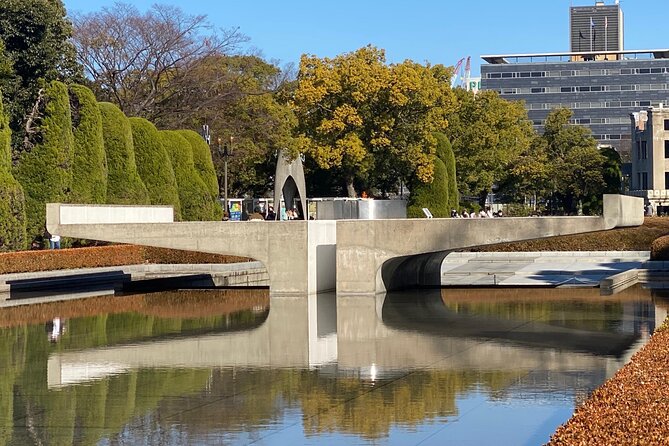
The final major stop is Shukkeien Garden, with about 45 minutes to explore. Here you can see a traditional Japanese garden and experience the seasonal character of the setting.
After Peace Memorial Park and the museum, the garden offers a calmer pace. Ponds, paths, planted areas, and carefully arranged views give you a chance to notice another side of Hiroshima. The garden also broadens the tour beyond the city’s wartime identity.
Forty-five minutes is enough for a pleasant walk and an introduction, but not a slow, detailed garden study. If you care deeply about Japanese garden design, you may want to return on your own. As part of a six-hour tour, though, this is a sensible final stop.
The sequence works well. Hiroshima Castle looks back to the city’s earlier history, the memorial sites confront the twentieth century, lunch brings you into present-day local life, and Shukkeien closes with beauty and quiet.
Public transportation keeps the day connected to the city
The tour uses public transportation, and those fees are included. That makes the $200 price easier to assess, since local rides and entry to several major sights are covered.
You travel with your guide rather than being driven in a private car. This can save the hassle of figuring out which tram, train, or other local connection to use, while still letting you see how Hiroshima works as a city.
Hotel pickup is offered, with the guide meeting you at your hotel and using public transportation together. The listed starting point is Hiroshima Station, and the activity ends back at the meeting point.
Taxi transport can be arranged if you prefer it, but the fare is yours to pay. Cruise-port pickup is also possible, but you must pay the round-trip local taxi fare between the port and the city center. If you are arriving by cruise ship, include that extra cost before booking.
The public-transit plan may not suit everyone. It is less comfortable than a private car for anyone with mobility concerns, heavy luggage, or a strong dislike of transfers. The tour does allow service animals, and most people can participate, but the supplied details do not promise a fully step-free route.
Is $200 per person a fair price?
At $200 per person, this is not a budget sightseeing walk. Its value depends on what you would otherwise arrange yourself.
You are paying for a private, licensed guide over about six hours, public transportation fees, and admission to the Peace Memorial Park, Peace Memorial Museum, and Shukkeien Garden. The private format is the biggest cost driver. If you are a small party, the per-person price may feel high. If you are several people and can use a group discount, the comparison may look better, though the discount amount is not specified.
You still pay for lunch, Hiroshima Castle admission if you enter, and any taxi fares. These extras are manageable, but they should be part of your calculation.
I think the price makes the most sense if you want interpretation rather than simple transportation. You could visit the Dome and park on your own, but the guide helps connect the monuments, museum, older city history, and modern Hiroshima. The experience is also useful if your time is limited and you want the major sights arranged into one coherent day.
The five-star rating across seven reviews is encouraging, especially because the praise focuses on guide quality, kindness, English communication, personal connection, and flexibility. That is a small sample, so I would not treat it as proof that every guide will be identical. I would treat it as a strong sign that the human side of this experience is central to its value.
Who will get the most from this six-hour tour?
This tour suits you if you want a serious first visit to Hiroshima and prefer to ask questions as you go. It is especially useful for first-time visitors who want the memorial sites explained without arranging museum tickets, transit, and timing themselves.
It also fits families or private groups with different interests. One person can ask about the war years, another can focus on Japanese gardens, and the guide can adjust the conversation. Nao and Minami have been praised for being personable and going out of their way to make the day comfortable, while guides such as Ms. Okura and Takeshi may provide especially personal perspectives.
You may want a different plan if you want a slow museum day, a private car, or a food-focused tour. The six-hour schedule covers a lot, and the garden visit is fairly short. Anyone uncomfortable with heavy wartime material should know that the museum is not a casual attraction.
Confirmation is provided at booking, and free cancellation is available up to 24 hours before the start time. Changes or cancellations inside that window are not accepted for a refund. Most people can participate, and service animals are allowed.
Should you book Highlight of Hiroshima with Licensed Guide?
Book it if you want Hiroshima explained by one person across several connected stops, rather than visited as a list of landmarks. The combination of a licensed private guide, included museum admission, local transit, okonomiyaki time, and Shukkeien Garden gives you a balanced day.
Before you commit, confirm how your group will handle walking, public transportation, lunch costs, and any cruise-port taxi fare. If a named guide matters to you, understand that Ms. Okura, Takeshi, Naoko Koh, Nao, and Minami are examples of guides connected with the experience, not guaranteed assignments.
For a focused and human introduction to Hiroshima, I would book it. For the lowest possible price or a leisurely museum-and-garden day, I would plan the sights independently and spend more time at fewer stops.
FAQ
How long does the Hiroshima tour last?
The tour lasts approximately six hours.
Where does the tour start?
The listed meeting point is Hiroshima Station at 1-2-37 Matsubaracho, Minami Ward, Hiroshima.
Can the guide pick me up at my hotel?
Yes. When a hotel pickup is selected, the guide meets you at the hotel and uses public transportation with you.
Where does the tour end?
The activity ends back at the meeting point.
Is this a private tour?
Yes. Only your group takes part in the activity.
Are admission tickets included?
Entry tickets included in the tour cover the listed included attractions, including the Peace Memorial Museum and Shukkeien Garden. Hiroshima Castle admission is not included.
Is lunch included in the price?
No. The tour includes a one-hour stop for Hiroshima okonomiyaki, but you pay the lunch expense separately.
Is public transportation included?
Yes. Public transportation fees are included in the tour.
Can I use a taxi instead of public transportation?
Yes, a taxi can be arranged, but you must pay the taxi fare yourself. Cruise-port pickup also requires payment of the round-trip local taxi fare between the port and city center.
Can I cancel for a full refund?
You can cancel up to 24 hours before the experience start time for a full refund. Cancellations or changes made less than 24 hours before the start time are not refunded or accepted.
More Guided Tours in Hiroshima
More Hiroshima City Tours in Hiroshima
More tours in Hiroshima we've reviewed


Hiroshima City Tours, compared.
 ★ 5.0Peaceful Hiroshima & Miyajima UNESCO 1 Day Bus TourFrom $129
 ★ 4.9Hiroshima: Hiroshima and Miyajima UNESCO Sites 1-Day TourFrom $1228 hours
 ★ 5.0Hiroshima / Miyajima Full-day Private Tour with Government Licensed GuideFrom $202
 ★ 4.7Osaka/Kyoto: Hiroshima Miyajima Bus Tour & Shinkansen TicketFrom $27712 hours
 ★ 4.8Hiroshima Historical Walking Tour – Why A-Bomb was DroppedFrom $352h 30m
 ★ 5.0Hiroshima Peace (Heiwa) Walking Tour at World Heritage SitesFrom $94
