
Reviewed · HIROSHIMA CITY TOURS
Half-Day Hiroshima Highlights Tour
Hiroshima’s story comes into focus as you move from a peaceful Edo-period garden to castle ruins, then into the sobering heart of Peace Memorial Park. The tour links these places well, showing not only what happened on August 6, 1945, but also what Hiroshima was like before the bombing and how the city rebuilt afterward.
I especially like the careful route from Shukkei-en to the Atomic Bomb Dome and the chance to offer an orizuru, or paper crane, at the Children’s Peace Monument. The guide adds context at each stop, though the 270-minute schedule involves steady walking and the museum portion is self-guided.
In This Review
- Key Points Worth Knowing
- From a Quiet Garden to Hiroshima’s Hardest Stories
- Shukkei-en: Hiroshima Before 1945
- Hiroshima Castle Ruins and Gokoku Shrine
- Walking Toward the Atomic Bomb Dome
- The Children’s Peace Monument and the Orizuru Offering
- The Cenotaph and Flame of Peace
- The Peace Memorial Museum: Go at Your Own Pace
- What the $110 Price Includes
- Walking, Weather, and Practical Comfort
- Who Will Get the Most From This Tour
- Should You Book the Hiroshima Highlights Tour?
- FAQ
- Where does the tour meet?
- How long does the experience last?
- Which places are visited?
- Is the museum visit guided?
- What is included in the price?
- Is the tour wheelchair accessible?
Key Points Worth Knowing
- Shukkei-en begins the story: See an Edo-period garden designed as a small, scenic world of ponds, bridges, tea houses, and hills.
- Hiroshima’s past comes before the bombing: The castle ruins and Gokoku Shrine help explain the city’s earlier role and identity.
- The orizuru offering adds a personal gesture: Your guide supplies paper and explains how to fold a crane before you place it at the Children’s Peace Monument.
- The guide provides the historical thread: You receive background on World War II and the events leading to the bombing as you walk between sites.
- The museum is self-guided: Your guide prepares you before entry, then you examine the exhibits independently.
- Plan for walking and weather: Comfortable shoes, water, and rain protection matter, and large bags are not allowed.
From a Quiet Garden to Hiroshima’s Hardest Stories
This tour works because it does not begin with the bomb. You first see Shukkei-en, a garden created during the Edo period, then visit the Hiroshima Castle ruins before entering Peace Memorial Park. That order gives you a sense of Hiroshima as a living city with centuries of culture, not only as a place defined by wartime destruction.
You meet your guide beneath the Tourist Information sign outside the Shinkansen gates at Hiroshima Station. If you arrive by Shinkansen, the meeting point is directly to your left after leaving the gates. From a regular JR line, follow the signs toward the Shinkansen gates. Bus and streetcar arrivals use the station’s signs and underground passage to reach the same area.
The tour lasts about four and a half hours. Public transportation connects the stops, and entry fees are included. You will want to store large luggage in one of the coin lockers at Hiroshima Station before meeting the guide, since large bags are not allowed on the tour.
A few more Hiroshima tours and experiences worth a look

Shukkei-en: Hiroshima Before 1945
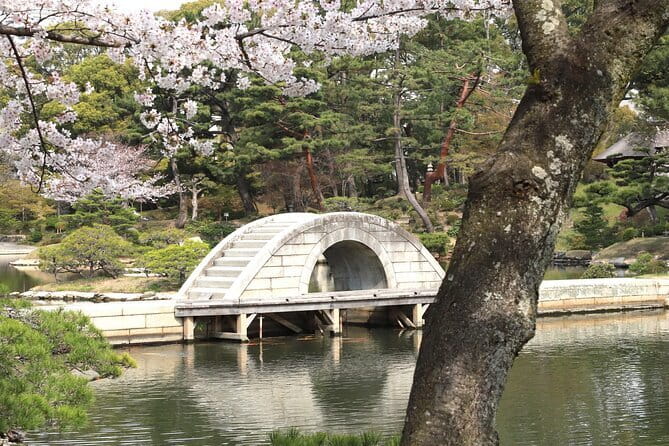
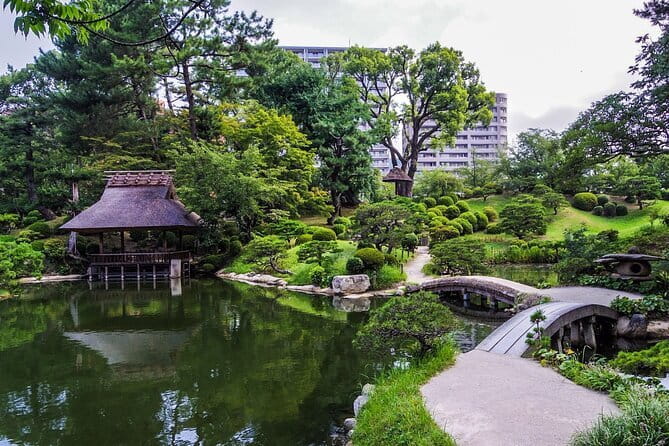
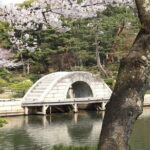
Shukkei-en is a smart first stop because it slows the pace and gives you room to look. The garden centers on a main pond with bridges, tea houses, and carefully arranged hills. Rather than presenting nature as untouched wilderness, its design reduces larger scenes into a small setting you can walk through.
Your guide explains the garden’s Edo-period construction, its idea of a miniature setting, and the restorations carried out over roughly four centuries. This is useful background for understanding Japanese garden design, where spacing, borrowed views, water, bridges, and controlled movement all shape what you see.
You will stop at several photo points, but the garden is more than a quick camera break. It gives you a physical sense of continuity. Hiroshima had a long cultural life before the atomic bombing, and Shukkei-en helps make that fact real.
The garden also carries a painful wartime story. It served as an evacuation site during World War II, linking this calm setting directly to the city’s wartime experience. Your guide explains what Shukkei-en means to Hiroshima today, including the contrast between its beauty, its use during the war, and its restoration after the bombing.
I like this part of the route because it gives you time to settle into the day. The main limitation is simple: if you want a slow, unhurried garden visit, the group schedule may feel brisk. This is a guided introduction rather than a long period for sitting beside the pond or exploring every corner.
Hiroshima Castle Ruins and Gokoku Shrine
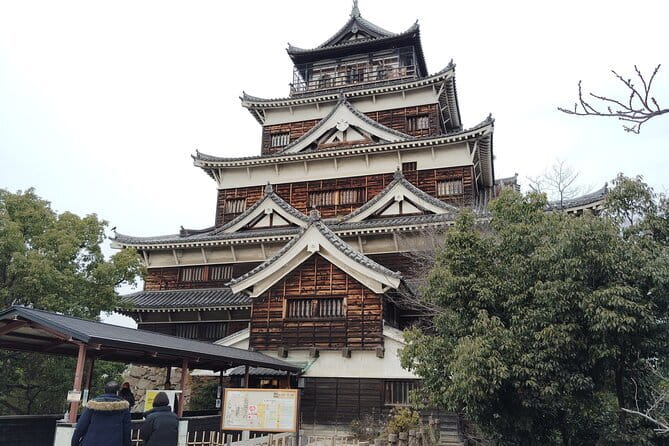
From the garden, the tour continues to the Hiroshima Castle ruins. The guide points out important locations within the ruins and explains their former purpose and significance. You are not simply looking at old foundations. You are learning how the castle area fitted into the city’s earlier political and military life.
The stop adds useful balance to the Peace Memorial sites. Hiroshima was not created by the atomic bomb, and the castle ruins make that clear. They help place the modern city within a longer story that includes the Edo period, local power, religion, and urban development.
The Hiroshima Gokoku Shrine is also visited with the guide. The supplied information emphasizes the shrine and castle area as part of the guided visit, so you can expect explanation of the main locations rather than a long independent religious visit.
This section still involves walking across outdoor areas, so your shoes matter. There may be uneven surfaces and changes in weather, and the tour is not suitable for wheelchair users or people with mobility impairments. The activity also excludes children under six.
Walking Toward the Atomic Bomb Dome
The transition to Peace Memorial Park is one of the tour’s strongest features. As you walk, the guide explains World War II and the events leading up to the bombing. That context matters because the Atomic Bomb Dome and memorials can otherwise feel like isolated monuments without a clear historical frame.
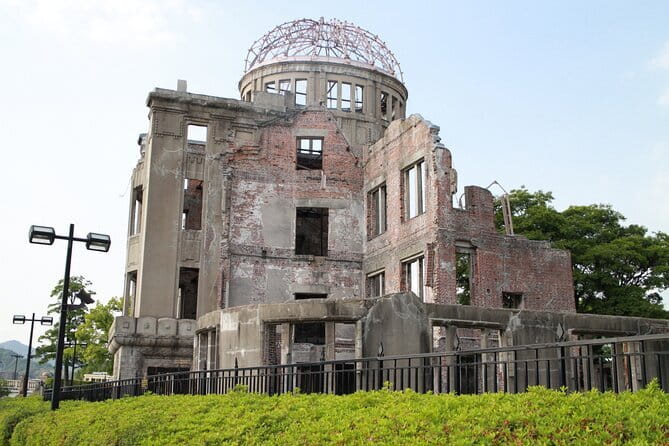
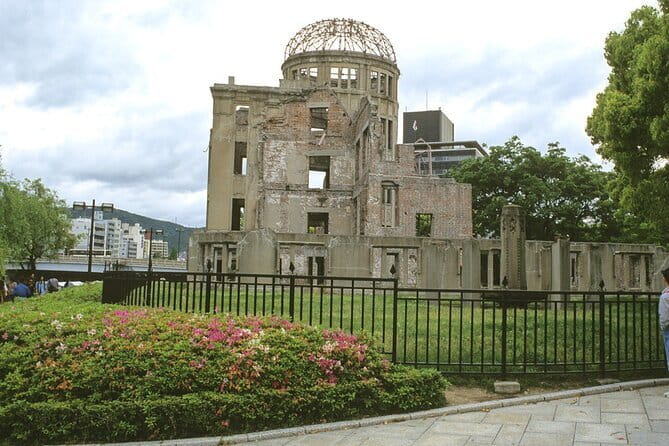
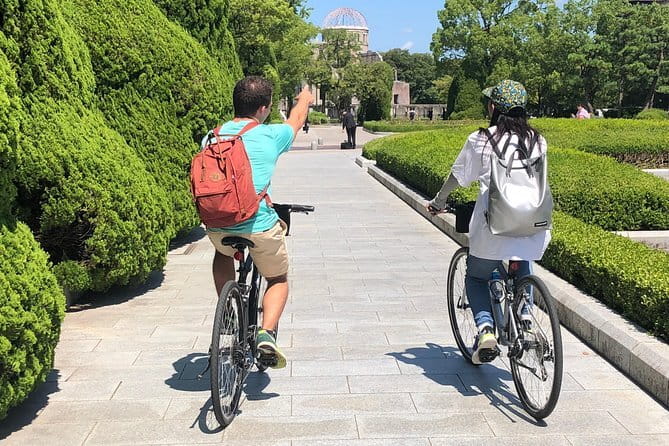
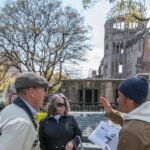
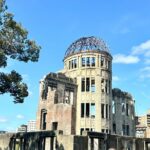
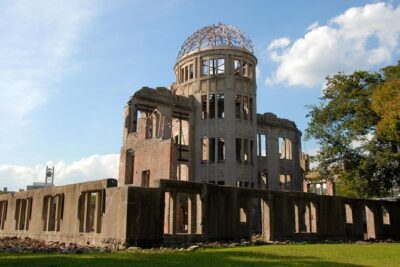
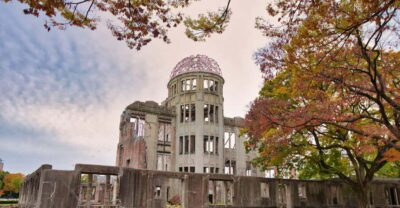
The Atomic Bomb Dome is the most recognizable structure on the route. Your guide explains its place within Hiroshima Peace Memorial Park, then leads you through a short visit to several important monuments. Photography is allowed, but this is a place where your behavior should remain quiet and respectful.
The route does not treat the Dome as a simple photo stop. Its damaged structure is tied to the story of August 6 and to the city’s decision to preserve a visible reminder of the bombing. You will have time to observe it as part of the park, while the guide helps explain why it remains such a powerful symbol.
Because the tour covers several locations, you should not expect a long, solitary period at every monument. The value comes from seeing the sites in sequence and receiving explanations while you move through the park.
The Children’s Peace Monument and the Orizuru Offering
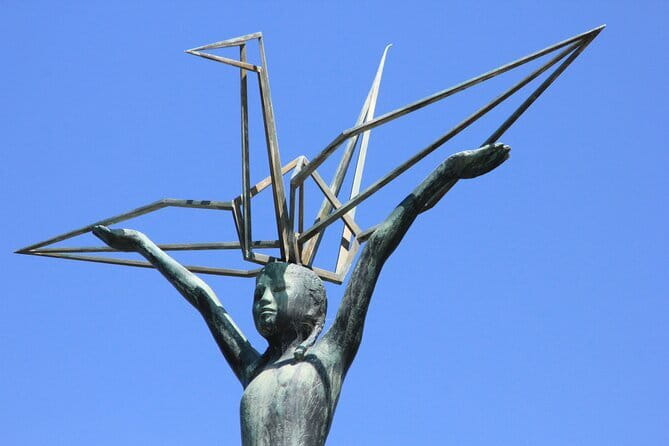
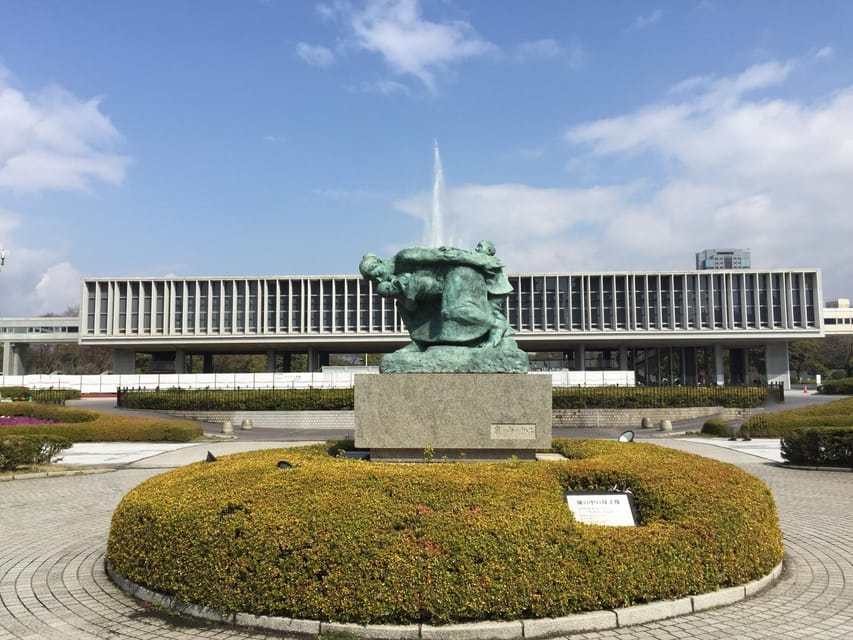
At the Children’s Peace Monument, the guide tells the story of Sadako Sasaki and the children who died as a result of the atomic bombing. This stop focuses on the human cost of the event, particularly the children whose lives were cut short and those who suffered afterward.
You receive origami paper and have the chance to fold an orizuru, a paper crane. The guide explains the folding process and the meaning connected to this design. You can then make an offering at the monument.
This small act gives the visit a personal focus. You are not asked to make a grand gesture. You simply use your hands, follow the instructions, and take part in a custom that connects memory, hope, and peace.
The activity may be especially meaningful if you have never folded a paper crane before. It also gives families and younger participants a concrete way to engage with the memorial, although the overall tour is not suitable for children under six and includes a moderate amount of walking.
Please keep your tone and conduct respectful here. Photography is allowed in the memorial area, but a quiet approach is appropriate. The point is not to rush through the monument for a picture.
A few more Hiroshima tours and experiences worth a look

The Cenotaph and Flame of Peace
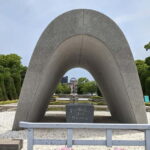
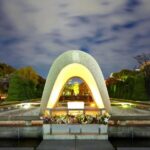
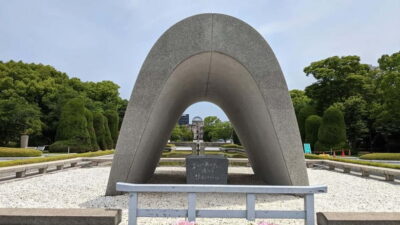
The next major stop is the Cenotaph for the Victims of the Atomic Bomb. The monument contains a registry of the names of those who died as a consequence of the bombing. Your guide explains its purpose and gives you time to take in the setting.
From the Cenotaph, you can see the Flame of Peace and the Atomic Bomb Dome aligned with one another. This view is carefully arranged and carries a clear message. The monuments connect remembrance of the dead with the continuing call for peace.
This is one of the places where a guide adds real value. A quick solo walk through the park may show you the monuments, but it may not explain how they relate to one another or why the alignment matters. The guide provides that framework before you continue to the museum.
You may find this part emotionally difficult. The tour does not soften the subject, and the memorials are designed to make the scale of the loss personal. Allow yourself a quiet moment rather than treating the stop as another item to check off.
The Peace Memorial Museum: Go at Your Own Pace
The tour ends at the Peace Memorial Museum. Before you enter, the guide gives you historical context and prepares you for the material inside. The museum visit itself is self-guided, which means you can examine the exhibits independently after the walking portion ends.
The displays cover the events of August 6, the suffering and trauma that followed, and Hiroshima’s reconstruction. Personal belongings left behind by victims form part of the museum experience. These objects can be more difficult to face than general statistics because they connect the bombing to individual lives.
Ending here is practical as well as meaningful. You receive the broader explanation outdoors, then have time to process the evidence inside the museum. Since the museum portion is not guided, the amount of time you spend there depends on your own pace and interest.
Keep in mind that the advertised 270 minutes covers the whole experience, including gardens, ruins, public transportation, memorials, and the museum. You should not assume all four and a half hours are available inside the museum. If you want an especially long museum visit, plan to return independently after the tour.
What the $110 Price Includes
At $110 per person, this is not the cheapest way to see Hiroshima’s central sights. The cost includes an English-speaking guide, entry fees at all tour locations, public transportation between activities, and origami paper for the crane offering.
The value depends on how much context you want. You could visit several of these places on your own, but you would need to organize the route, pay separate admission charges, find the relevant memorials, and learn the background as you go. This tour combines those tasks into one half-day route.
I consider the price most worthwhile for a first visit to Hiroshima, especially if you have limited time or want help handling the memorial sites with care. The guide explains the links between the places, which is more useful than simply being taken from one entrance to another.
The price does not include lunch, lodging, or transportation to Hiroshima Station. You also need to bring your own water and weather protection. Those costs are minor, but they matter if you are building a tight day-by-day budget.
Walking, Weather, and Practical Comfort
The tour involves a moderate amount of walking, including outdoor garden paths, castle grounds, streets, and Peace Memorial Park. Wear comfortable shoes rather than dress shoes or thin sandals. Water is also worth carrying, particularly in warm weather.
The activity operates in changing weather conditions, so bring an umbrella or raincoat if the forecast looks uncertain. The outdoor sections are central to the experience, and rain can affect both comfort and photo opportunities.
The tour is not wheelchair accessible and is not suitable for people with mobility impairments. Large luggage and large bags are not allowed, so use the coin lockers at Hiroshima Station before departure.
Photography is permitted, including at the outdoor sites, but memorial areas call for restraint. The guide can help you understand where a photo is appropriate, but your own judgment still matters.
The exact starting time depends on availability. The operator offers free cancellation up to 24 hours before the tour and a reserve-now, pay-later option, which helps if your Japan schedule is still shifting. Listed activities remain subject to availability, and an adjustment may be needed if a venue cannot confirm the planned visit.
Who Will Get the Most From This Tour
I would choose this experience if you are visiting Hiroshima for the first time and want a clear introduction in one morning or afternoon. It suits you particularly well if you prefer history explained on foot rather than reading every detail alone.
It is also a good fit if you want to understand the city beyond the Atomic Bomb Dome. Shukkei-en and the castle ruins show Hiroshima’s older identity, while the memorial sites explain the events that changed it.
The tour may be less suitable if you prefer to set your own pace. The group must move between several stops, and the museum is self-guided only after the formal tour ends. You may also find the schedule tiring if walking for several hours is difficult.
A private experience may be possible depending on the booking date and group size. One highly rated booking had only one participant, allowing the guide, Isabella, to provide a private tour. Group size is not guaranteed, so confirm the arrangement if personal attention is important to you.
Should You Book the Hiroshima Highlights Tour?
Book it if you want a thoughtful route through Hiroshima’s major historical sites, with an English guide to connect the garden, castle, memorials, and museum. The orizuru offering and the alignment of the Cenotaph, Flame of Peace, and Atomic Bomb Dome give the tour moments that are more meaningful than a basic sightseeing loop.
Skip it if you need wheelchair access, dislike steady walking, or want to spend most of your time inside the Peace Memorial Museum. For everyone else, the $110 price is reasonable when you value included admissions, public transport, and historical explanation in a compact 4.5-hour schedule.
FAQ
Where does the tour meet?
Meet your guide under the Tourist Information sign outside the Shinkansen gates at Hiroshima Station. If you arrive by Shinkansen, the sign is directly to your left after you exit the gates.
How long does the experience last?
The tour lasts 270 minutes, or about four and a half hours. Check availability for the specific starting time.
Which places are visited?
The route includes Shukkei-en Garden, the Hiroshima Castle ruins, Hiroshima Gokoku Shrine, the Atomic Bomb Dome, the Children’s Peace Monument, the Cenotaph for the Victims of the Atomic Bomb, and the Peace Memorial Museum.
Is the museum visit guided?
The guide provides historical context before you enter, but the Peace Memorial Museum visit is self-guided.
What is included in the price?
The price includes an English-speaking guide, entry fees at all tour locations, public transportation between activities, and paper for folding an orizuru.
Is the tour wheelchair accessible?
No. The tour is not wheelchair accessible and is not suitable for people with mobility impairments. It also is not suitable for children under six.
More Half-Day in Hiroshima
More Hiroshima City Tours in Hiroshima
More tours in Hiroshima we've reviewed



Hiroshima City Tours, compared.
 ★ 5.0Peaceful Hiroshima & Miyajima UNESCO 1 Day Bus TourFrom $129
 ★ 4.9Hiroshima: Hiroshima and Miyajima UNESCO Sites 1-Day TourFrom $1228 hours
 ★ 5.0Hiroshima / Miyajima Full-day Private Tour with Government Licensed GuideFrom $202
 ★ 4.7Osaka/Kyoto: Hiroshima Miyajima Bus Tour & Shinkansen TicketFrom $27712 hours
 ★ 4.8Hiroshima Historical Walking Tour – Why A-Bomb was DroppedFrom $352h 30m
 ★ 5.0Hiroshima Peace (Heiwa) Walking Tour at World Heritage SitesFrom $94
