
Reviewed · PEACE MEMORIAL TOURS
”Explore Peace Memorial Park and the Atomic Bomb Dome”
Hiroshima Peace Memorial Park is not a place to rush through with a camera and a map. This 3-hour-15-minute walking tour puts the Atomic Bomb Dome, the Cenotaph for A-bomb Victims, and the Flame of Peace into a clear historical story, guided by a PhD candidate.
I like the human focus, especially the use of survivor testimonies and quiet time for reflection. I also like the practical finish: advice on Hiroshima food culture, including where to look for okonomiyaki after the walk. The main concern is serious, though: the experience currently carries a 1 out of 5 rating after one guest reported that the guide did not arrive or answer messages.
In This Review
- Key points to know before booking
- Why Hiroshima Peace Memorial Park deserves a guided walk
- Starting at the Gates of Peace
- The Atomic Bomb Dome and its survival story
- The Cenotaph, Flame of Peace, and the park’s quiet spaces
- The Peace Memorial Museum and survivor testimonies
- Ending at the Peace Bell
- Food advice after the memorial walk
- What the $35.54 price really buys
- The reliability issue you should not ignore
- Who will get the most from this experience
- Should you book the Hiroshima peace tour?
- FAQ
- Where does the tour start?
- Where does the tour end?
- How long does the experience last?
- Is the Peace Memorial Museum entrance included?
- Is this a private tour?
- What languages are available?
- Can I cancel for a full refund?
Key points to know before booking
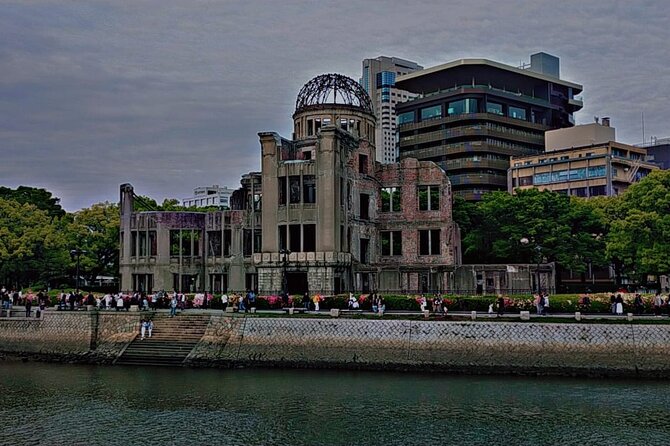
- The Atomic Bomb Dome anchors the walk: You hear how this preserved building survived the 1945 blast and why it became a UNESCO-listed symbol.
- The route covers Hiroshima’s major peace sites: The Cenotaph for A-bomb Victims, Flame of Peace, Peace Memorial Museum area, and Peace Bell are all part of the experience.
- A PhD candidate leads the discussion: The guide is described as offering historical and cultural context rather than only pointing out monuments.
- Museum admission costs extra: The tour price includes a guide and entrance fee details, but the Peace Memorial Museum charges separately.
- The tour is private: Only your group participates, with guiding offered in English, Hindi, Urdu, or Panjabi.
- There is one major reliability warning: The only recorded rating is 1 out of 5, citing a missed meeting and unanswered messages.
Why Hiroshima Peace Memorial Park deserves a guided walk
Hiroshima’s memorial district can feel simple on a map. It is not simple in meaning. The park contains monuments, a preserved building, a museum, a riverfront setting, and small places for prayer and silence. Without context, you can see the sights but miss how they connect.
This tour is designed to help you follow that connection. It begins at the Gates of Peace, at 4-15 Nakajimacho in Naka Ward, and ends at the Peace Bell on Motomachi. The route lasts about 3 hours and 15 minutes, giving you enough time to move between major sites without turning the visit into a quick checklist.
I would choose a guide here for one reason: the history is difficult to interpret alone. A guide can explain the meaning of the memorials, place the atomic bombing in historical context, and help you understand why Hiroshima’s public message centers on peace rather than revenge.
The tour is also private. That matters if you want to ask questions, pause at a memorial, or adjust the pace for your group. You are not trying to hear a guide over a large crowd. The tradeoff is that the quality of the experience depends heavily on the person who arrives to lead it.
A few more Hiroshima tours and experiences worth a look
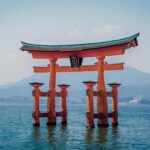
Starting at the Gates of Peace
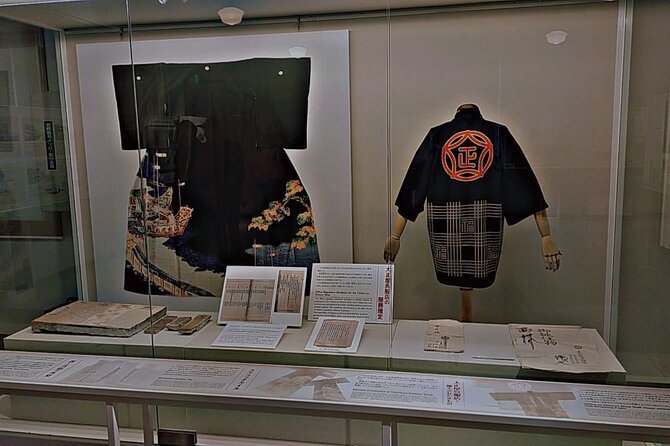
The meeting point is the Gates of Peace, located at 4-15 Nakajimacho. Your confirmation is provided at booking, and the area is near public transportation, so reaching the start should be manageable within Hiroshima’s central city area.
The name sets the tone. This is not a standard sightseeing departure point designed to get you quickly to the next attraction. It introduces the park’s theme before you reach the better-known monuments.
The guide is identified as Arsal, and the experience is described as being led by a PhD candidate. Guiding is offered in English, Hindi, Urdu, and Panjabi. The available information does not provide the individual guide’s academic specialty or personal name, so you should not book expecting a named historian or a particular guide unless that is confirmed directly.
I like the chance to begin with a short orientation. Hiroshima’s memorial park includes several locations that can blur together on a first visit. Starting with a guide gives you a framework for what you are about to see and why each stop matters.
The Atomic Bomb Dome and its survival story
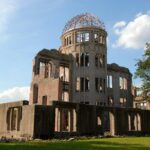
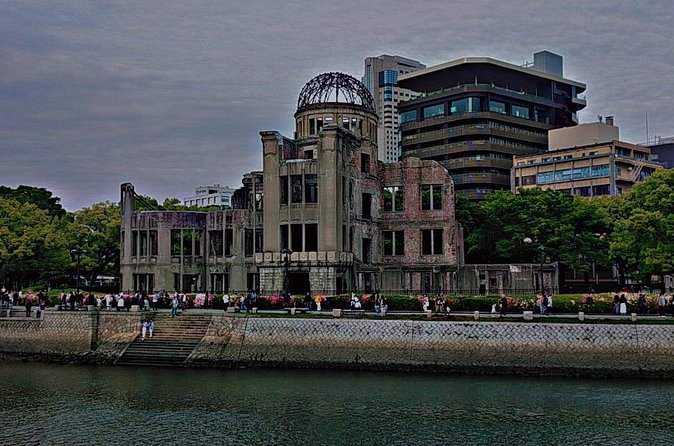
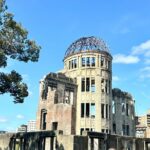
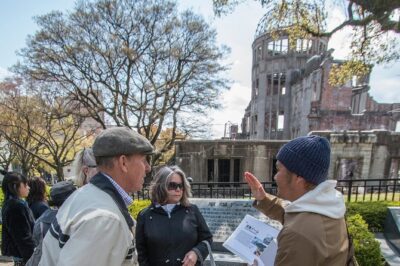
The Atomic Bomb Dome is the emotional center of the route. The building’s preserved remains make the destruction of Hiroshima visible in a way that photographs cannot quite match. It is also one of the city’s most recognizable landmarks and is listed as a UNESCO site.
The tour promises an explanation of the Dome’s survival story. That detail is important because the building is not simply an old structure left standing by chance. Its damaged form became part of Hiroshima’s public memory, and its preservation raises a difficult question: how do you keep evidence of destruction without turning suffering into a display?
A guide can help you approach the building with care. You will hear about its place in the bombing and its later meaning as a warning about nuclear weapons and war. The Dome is viewed from outside as part of the public memorial route, and you should expect the main value here to come from the explanation and the act of seeing it in its setting.
This stop also rewards a slower pace. You may want time to look at the exposed framework, the remaining walls, and the river nearby. A private group can make that pause easier, though the schedule still includes several other sites.
The Cenotaph, Flame of Peace, and the park’s quiet spaces
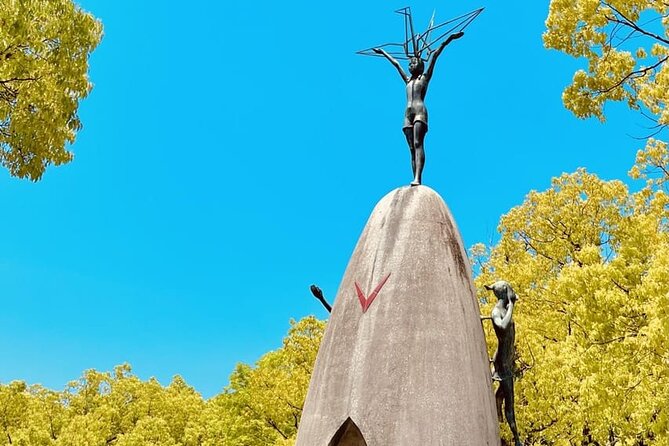
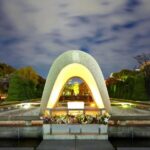
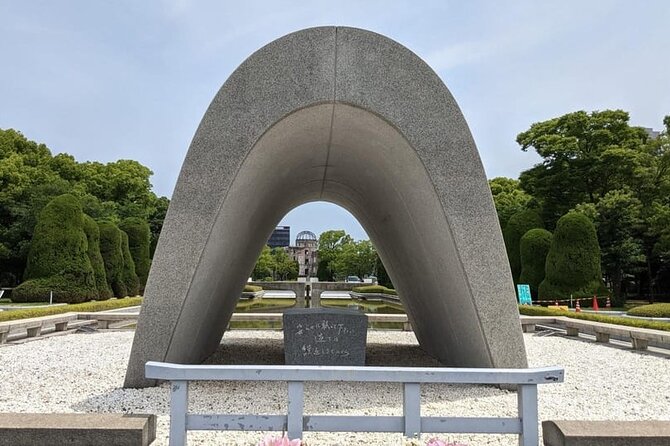
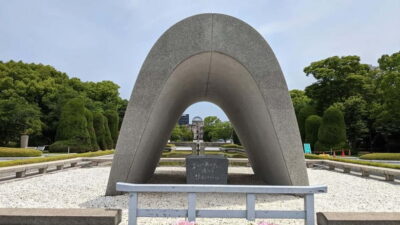
The Cenotaph for A-bomb Victims is another central stop. This memorial is not only a monument to the dead. It is tied to the city’s commitment to remembering victims and working toward peace.
The Flame of Peace adds another layer to the visit. The tour gives you time to reflect at quieter parts of the park, rather than treating every stop as a short explanation followed by a hurried walk. That is a strong feature for anyone who wants more than a fact-filled tour.
I especially like the emphasis on reflection. Hiroshima can become emotionally exhausting if you try to absorb every detail at once. A pause gives you room to consider the names, testimonies, and public messages without having to move immediately to the next photo opportunity.
Do not expect the park to feel like a conventional attraction. The mood is solemn. Families with young children, visitors with limited time, and anyone seeking a light sightseeing activity may find the subject matter demanding. You should book this walk when you are ready to give it your attention.
The Peace Memorial Museum and survivor testimonies
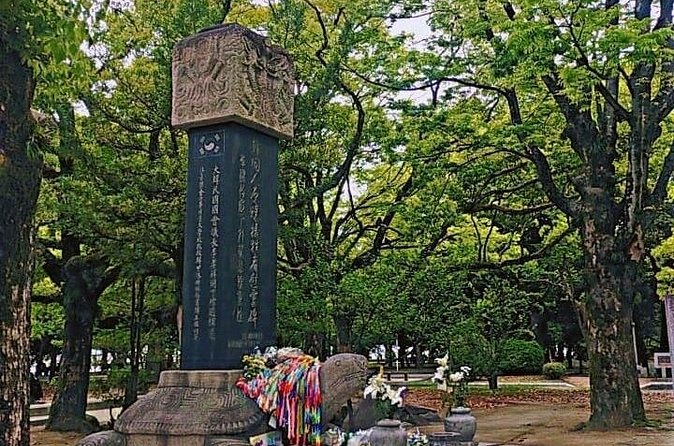
The Peace Memorial Museum is included in the tour’s focus, but its entrance charge is separate. This distinction matters when you compare the $35.54 price with other Hiroshima activities. You are paying for the guided experience, but you should budget extra if you want to enter the museum.
The museum provides important material about the bombing and its effects. The tour description specifically mentions survivor testimonies, which can give a personal voice to an event that otherwise risks becoming a list of dates and statistics.
Because admission is separate, confirm how your particular booking handles the museum portion. The information supplied describes the museum as one of the key sites and says its entrance charge will be applied separately, but it does not give a separate museum price or explain whether the guide enters with you.
That lack of detail is worth checking before you pay. If museum access is essential to your plan, you want to know the exact arrangement. If you are mainly interested in the outdoor memorials, the tour still offers several substantial stops without relying entirely on the museum.
The museum can be emotionally intense. You may prefer to visit it at a time when you have space afterward, rather than placing it immediately before a long train ride or a packed evening schedule.

Ending at the Peace Bell
The route finishes at the Peace Bell at 5 Motomachi. Visitors are invited to ring the large bronze bell for world peace, giving the walk a participatory ending rather than stopping at a final lecture.
That closing moment suits the tone of the experience. The Atomic Bomb Dome presents the physical evidence of destruction. The Cenotaph and Flame of Peace ask you to remember. The bell gives you a small, personal action connected to the park’s message.
The end point is different from the starting point, so plan your next activity from Motomachi rather than returning automatically to the Gates of Peace. The area is near public transportation, and the tour information identifies the Peace Bell clearly as the finish.
A useful practical point: the tour does not include meals. The duration is long enough to cover a substantial part of your morning or afternoon, but you need to arrange breakfast, brunch, or other food yourself.
Food advice after the memorial walk
The experience adds local food recommendations, including okonomiyaki. This is a welcome touch because Hiroshima’s food culture gives you a way to continue exploring the city after a serious morning or afternoon.
Okonomiyaki is especially associated with Hiroshima, but the supplied information does not name a particular restaurant. Treat the food advice as general local guidance, not a guaranteed restaurant reservation or included meal.
I like this feature because it respects the shape of a real day. After a memorial visit, you may need a change of pace. Sitting down for a local dish can help you process what you have seen while still keeping your time in Hiroshima connected to the city itself.
The timing is also useful for planning. If you begin in the morning, ask for lunch suggestions. If you begin later, ask about dinner. Since meals are not included, make sure you do not assume the $35.54 price covers food or refreshments.
What the $35.54 price really buys
At $35.54 per person, this is not a museum ticket with a short introduction. The price pays for a private, guided walk lasting about 3 hours and 15 minutes, with historical explanation, cultural context, and food recommendations.
That can be fair value if you want help understanding Hiroshima rather than simply finding the monuments. A private guide is more useful for couples, families, and small groups who prefer questions and conversation over a fixed large-group script.
The value becomes less clear if you only want to see the Atomic Bomb Dome and take a few photographs. You can visit the park’s public memorial areas without booking a tour, so the added cost makes sense mainly when the guide’s explanation is important to you.
Remember that museum admission is extra. Meals are also extra. The mobile ticket is convenient, but it does not remove the need to check the meeting instructions carefully.
The booking pattern indicates that this experience is often reserved about 24 days ahead. That suggests you should plan early if the date matters, but advance booking alone does not prove that the operation is dependable. Given the current service concern, I would confirm the meeting details and guide availability close to the tour date.
The reliability issue you should not ignore
The largest drawback is not the subject matter or the price. It is the reported failure to provide the tour at all.
The experience currently shows a 1 out of 5 rating from one recorded booking. The accompanying account says the vendor never appeared, the group waited 20 minutes, and messages received no response. That is a major warning for an activity built around a precise meeting point and a fixed start time.
A single report does not tell you the full pattern of service, but it does affect the booking decision. Hiroshima’s Peace Memorial Park is easy to visit on your own, yet you cannot recover lost time if you have reserved only one morning for it.
If you decide to book, save the confirmation, keep the provider name Arsal handy, and send a message before the tour date asking for a clear meeting confirmation. Arrive at the Gates of Peace with the mobile ticket ready and allow enough time to wait without damaging the rest of your schedule.
The cancellation policy offers a full refund if you cancel at least 24 hours before the local start time. Changes or cancellations inside that 24-hour window are not accepted for a refund. This gives you some protection while you are still planning, but it does not solve the problem of a missed meeting on the day.
Who will get the most from this experience
I would consider this tour for someone visiting Hiroshima for the first time who wants an organized explanation of the memorial district. The private format suits people who value questions, a quieter pace, and a guide who can connect monuments with survivor accounts and the city’s peace message.
It also suits visitors who speak English, Hindi, Urdu, or Panjabi and prefer one of those languages for a serious historical subject. The tour may be useful for families or mixed-age groups, provided everyone understands that the subject matter is solemn and not light entertainment.
I would be more cautious if you have a tight schedule, need guaranteed on-time service, or consider the museum essential but do not want to pay a separate entrance fee. Independent visitors can see the outdoor sites without this added cost, and the one service report means you should not make the tour the only fixed plan of a short Hiroshima stay.
Should you book the Hiroshima peace tour?
The content is appealing: major memorial sites, survivor testimonies, a PhD candidate guide, a private group, and useful okonomiyaki advice. At $35.54, it can offer good value if you want context and conversation rather than a self-guided walk.
Still, I would book only after confirming that Arsal will provide the guide and that the meeting details are current. The single 1 out of 5 rating and report of a no-show are too serious to ignore.
My advice is simple: book this if the provider confirms promptly, you have room in your schedule, and guided interpretation matters to you. If you need absolute reliability or have just one chance to see Hiroshima, visit the park independently or choose an experience with a stronger service record.
FAQ
Where does the tour start?
The tour starts at the Gates of Peace, 4-15 Nakajimacho, Naka Ward, Hiroshima, 730-0811, Japan.
Where does the tour end?
The tour ends at the Peace Bell, 5 Motomachi, Naka Ward, Hiroshima, 730-0011, Japan.
How long does the experience last?
The advertised duration is approximately 3 hours and 15 minutes.
Is the Peace Memorial Museum entrance included?
No. The museum entrance charge is applied separately, so you should budget for an additional admission cost.
Is this a private tour?
Yes. Only your group participates in the activity.
What languages are available?
The included guide is offered in English, Hindi, Urdu, and Panjabi.
Can I cancel for a full refund?
Yes, if you cancel at least 24 hours before the experience start time. Cancellations or changes made less than 24 hours before the local start time are not refunded or accepted.
More Peace Memorial Tours in Hiroshima


More tours in Hiroshima we've reviewed



Peace Memorial Tours, compared.
 ★ 4.8Hiroshima Historical Walking Tour – Why A-Bomb was DroppedFrom $352h 30m
 ★ 5.0Hiroshima Peace (Heiwa) Walking Tour at World Heritage SitesFrom $94
 ★ 4.9Hiroshima: Miyajima Peace Memorial Icons of Peace and BeautyFrom $1638 hours
 ★ 5.0Hiroshima Walking Tour Why A Bomb was dropped to HiroshimaFrom $28
 ★ 5.0Hiroshima 2hr Peace Cycling Tour with Local GuideFrom $59
 ★ 4.8Hiroshima: Peace Cycling Tour with Local GuideFrom $522 - 3 hours
