Reviewed · YAMAGUCHI TOURS
Kintai-Kyo Bridge and Iwakuni Castle with local guide 3h
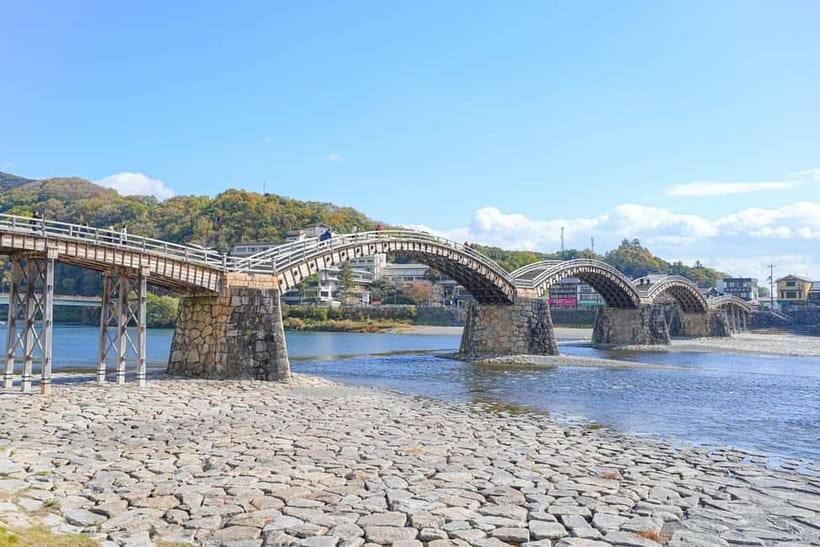
Kintai Bridge is the star here: five graceful wooden arches stretch over a clear stream, with Iwakuni Castle waiting above the town. The ropeway ride adds a fine change of pace, carrying you up the mountain for wide views back toward the bridge and city.
I like the way this tour joins a beautiful walk with real samurai history, rather than treating the bridge as a quick photo stop. I also like the practical setup: transport from Iwakuni Station, bridge and castle admission, and a private guide are all included. The main caution is simple: you will walk quite a bit, and bad weather can stop the ropeway.
In This Review
- Key points at a glance
- Why Kintai Bridge makes a strong starting point
- Following the Kikkawa clan through Iwakuni
- The five-minute ropeway ride to Iwakuni Castle
- Iwakuni Castle and its samurai collection
- Returning to Iwakuni Station in a practical loop
- What the guide adds to the experience
- Is $92 a fair price?
- Who should book this three-hour tour?
- Practical details to know before you go
- Should you book Kintai Bridge and Iwakuni Castle?
- FAQ
- Where does the tour meet?
- How long does the experience last?
- What languages are available?
- Is this a private tour?
- Is transportation included?
- Is the ropeway included?
- What admissions are included?
- Can I take photographs?
Key points at a glance
- Five-arch Kintai Bridge: Cross one of Japan’s most recognizable bridges while looking down at the clear stream below.
- Kikkawa clan connections: See how the bridge, castle, mansions, and town fit into Iwakuni’s feudal past.
- Ropeway to Iwakuni Castle: Save the steep mountain climb for another day and enjoy a five-minute cable car ride instead.
- Samurai arms inside the castle: Swords and armor linked to the Kikkawa clan give the visit a personal historical angle.
- Private three-hour tour: Meet your guide at Iwakuni Station and return there after the sightseeing.
- Good winter option: A January visit can be quiet, with less activity around the sights and more room to enjoy the setting.
Why Kintai Bridge makes a strong starting point
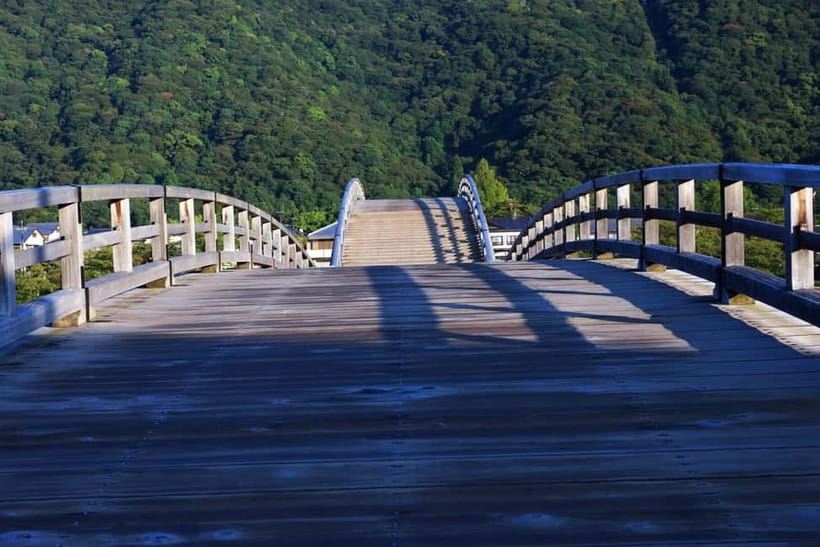
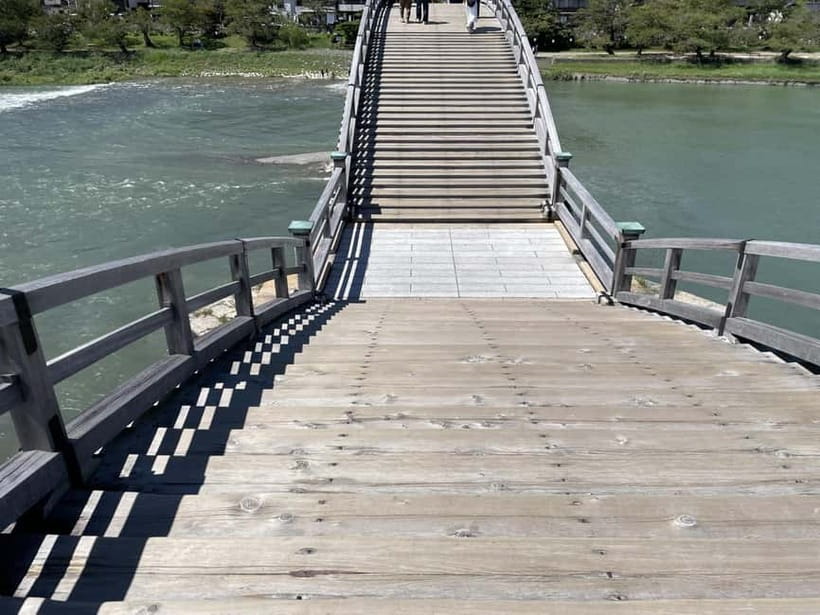
Kintai Bridge is not a flat modern crossing. Its five arches rise and fall in a graceful rhythm above the stream, creating the view that defines Iwakuni. From the bridge, you get water, wooded slopes, and the castle area above town in one frame.
The bridge admission is included, and the guided visit lasts about 15 minutes. That is enough time to cross at an easy pace and hear why this structure matters, but it is not a long architectural lecture. You should still allow yourself to look carefully at the timber construction and the changing view between the arches.
I like beginning here because the bridge gives you an immediate sense of place. Iwakuni is not just a castle town with a bridge added for decoration. The bridge links the town below with the former Kikkawa territory around the mountain, so the rest of the tour feels connected from the start.
The stream is also part of the appeal. The clear water gives the bridge a calm setting, and the view changes as you walk across. On a pleasant day, this is the most relaxed part of the experience. On wet days, the crossing may be slippery, so comfortable shoes are more than a polite suggestion.
Following the Kikkawa clan through Iwakuni
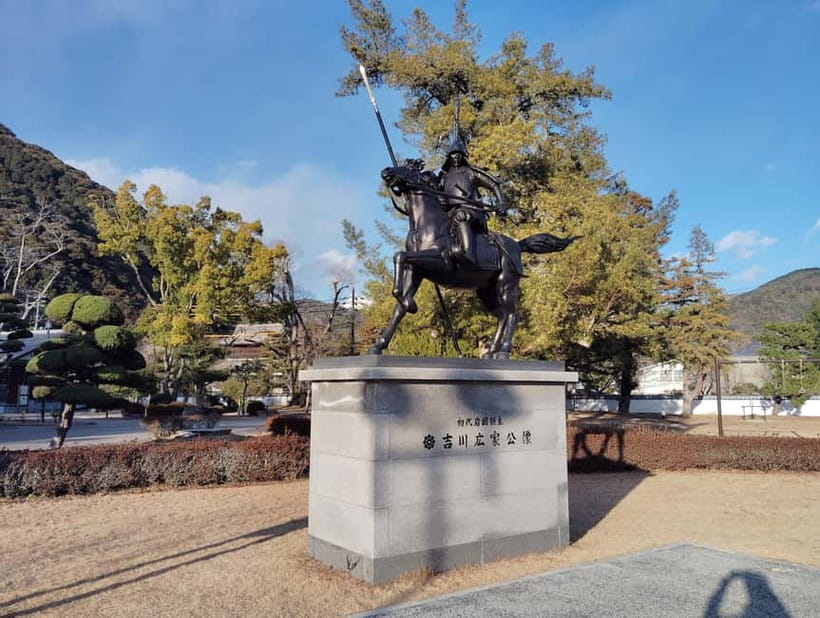
After the bridge, the tour moves through the maintained area where mansions once stood. The old Kikkawa domain shaped this part of Iwakuni during Japan’s feudal era, building the castle, residences, and town that still give the area its character.
The next guided visit is shorter, about 10 minutes. Do not expect a full museum visit at every stop. Instead, this part helps you connect the bridge to the wider town and understand that the Kikkawa influence was spread across the whole area.
That context matters. Without it, you might see Kintai Bridge, ride a ropeway, and visit a castle as three separate attractions. With a guide, the route becomes a story about how a samurai clan organized its domain, protected its position, and built the setting you are walking through today.
The gardens and open spaces around the former residences are maintained, but the supplied information does not promise access to every historic building or mansion. Think of this section as a scenic historical walk, not a string of fully furnished house museums.
The five-minute ropeway ride to Iwakuni Castle
The ropeway takes about five minutes and removes the hardest part of reaching the castle. You still walk around 10 minutes after the cable car, but you avoid making the entire climb on foot.
The ride itself is one of the tour’s strongest practical features. You rise from the bridge area toward the castle site while the view opens behind you. It gives you a useful sense of the town’s position and makes the castle feel like a proper mountain stronghold rather than a building placed beside the road.
The ropeway operates according to weather conditions. If the weather turns bad, it may be unavailable, so this is the main element you cannot fully control. Check the forecast before leaving, and dress for the conditions rather than relying on a warm or dry castle interior.
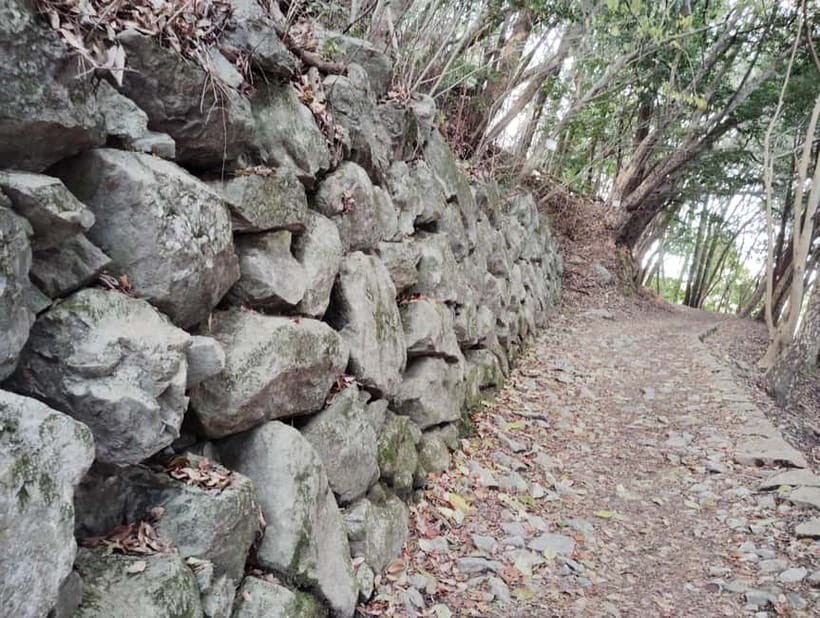
You should also remember that a ropeway does not remove all walking. The schedule includes about 10 minutes on foot after the ride, then a guided castle visit of around 30 minutes. Comfortable shoes are essential, especially if the path is damp.
Iwakuni Castle and its samurai collection
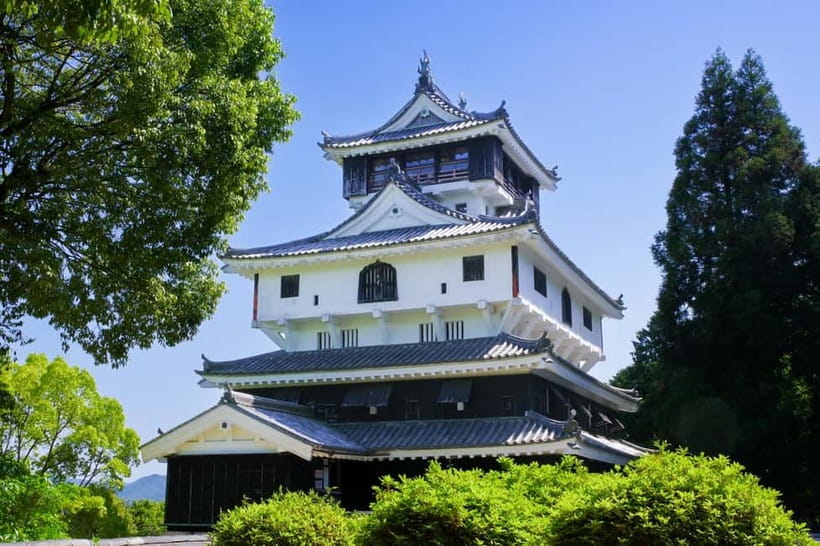
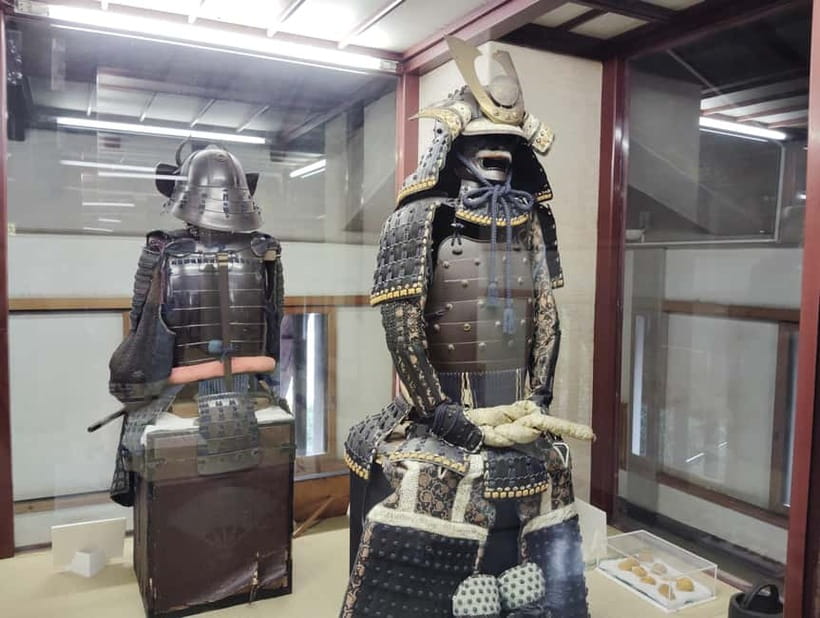
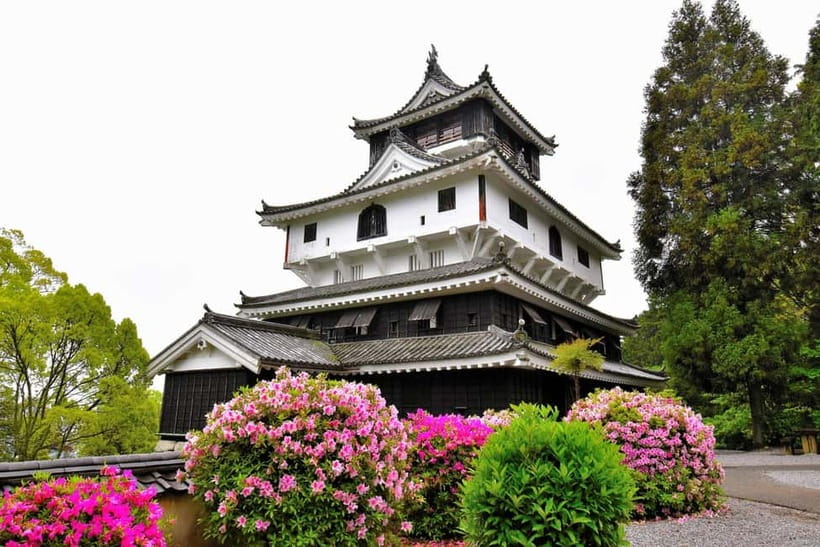
Iwakuni Castle was the Kikkawa clan’s castle on the mountain. Inside, you can see swords and armor connected with the clan. These objects give the visit more weight than a simple lookout stop, since you are not only seeing where the samurai rulers lived and watched over the town, but also objects tied to their military world.
The castle visit lasts about 30 minutes with the guide. That is a useful amount of time for a focused look at the interior, the displays, and the building’s story. If you like long museum visits, you may want more time, but the three-hour format has to keep moving.
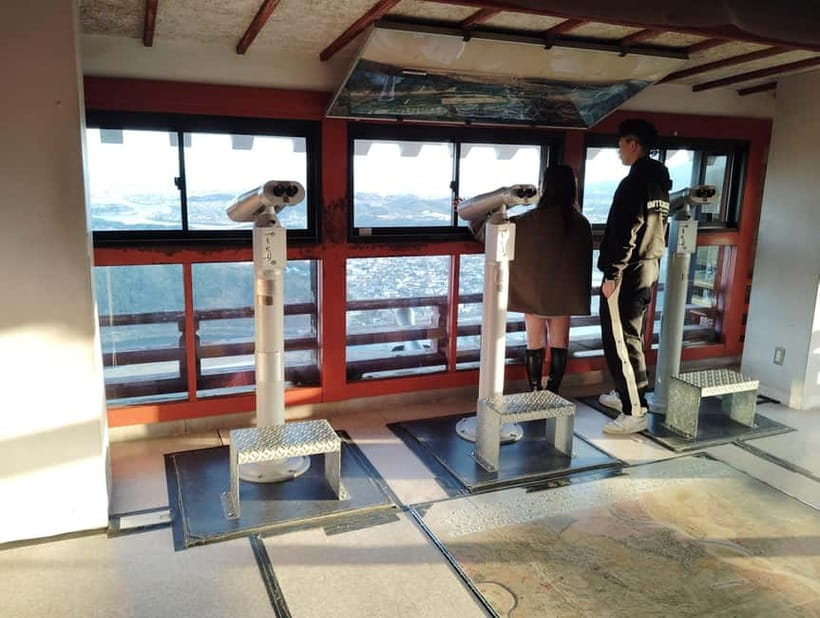
The best moment comes at the top floor. From there, you can look down toward Kintai Bridge and across Iwakuni. The view works as a visual recap of the whole outing: the bridge you crossed below, the town shaped by the Kikkawa clan, and the mountain position that made the castle important.
This is also where the tour earns its samurai viewpoint appeal. You are not simply looking at a distant city panorama. You have followed the route from the stream to the former residences and then up to the castle, so the view has context.
Photography is allowed, which is useful at the top and around the bridge. Drones are not permitted.
Returning to Iwakuni Station in a practical loop
After the castle visit, you walk about 10 minutes back to the ropeway. The return cable car takes another five minutes, followed by roughly 20 minutes on foot and a 20-minute bus ride back to Iwakuni Station.
The return walk means the tour is not over the moment you leave the castle. You should keep your shoes on and save a little energy for the final section. The route does not include food or drinks, so bring what you need for three hours, especially if you prefer to have water with you.
The bus transport from Iwakuni Station is included in the price, both at the start and on the return. That makes the meeting point straightforward: stand in front of the ticket gate at Iwakuni Station and look for the guide holding the yellow DeepExperience sign.
Starting and ending at the station is helpful if you are using Iwakuni as a day stop or connecting with another train. It also removes the need to work out the local bus route to Kintai Bridge on your own.
What the guide adds to the experience
This is a private group tour with a live guide in English or Japanese. That format matters most at the historical stops. You can ask about the Kikkawa clan, the bridge, the castle displays, or the view without trying to follow a large group.
Tomoko is one guide associated with this experience. She is described as lovely and helpful, and her guidance helped make a winter visit especially enjoyable. You cannot necessarily request her unless the provider confirms it, but the detail is useful if a friendly personal approach matters to you.
A private tour also gives the three-hour schedule some flexibility in feel, even though the listed route has set travel times. You are not waiting for a large crowd to finish every photo stop, and you can use the guide to decide where a little extra explanation is worth your time.
The experience has a five-star rating from one verified booking, made by a visitor from Hong Kong on January 8, 2026. That is a positive sign, especially for the quiet winter atmosphere and Tomoko’s help, but it is still a very small sample. I would treat the praise as encouraging rather than conclusive.
Is $92 a fair price?
At $92 per person, this is not the cheapest way to see Kintai Bridge and Iwakuni Castle. The value depends on what you would otherwise have to arrange yourself.
The fee includes transportation from Iwakuni Station, admission to Kintai Bridge, the ropeway, admission to Iwakuni Castle, and a professional guide. Food and drinks are not included. If you already know the bus system, prefer to explore silently, and are comfortable paying each admission separately, an independent visit may cost less.
I think the price is easier to justify for visitors who have only a few hours, want English guidance, or prefer a private group. The route covers both major sights and handles the transport between them. You are paying for convenience as well as interpretation.
The three-hour length is another part of the value. It is long enough to connect the bridge, the former Kikkawa area, and the castle without taking over your whole day. At the same time, it is tightly timed. You will not have hours to linger at every stop, eat along the way, or browse at leisure.
For a first visit to Iwakuni, the package is sensible. For a repeat visit, or for someone who enjoys moving slowly and reading every display, the fixed pace may feel less appealing.
Who should book this three-hour tour?
I would recommend it to you if you want the main Iwakuni sights in one clean outing. It suits first-time visitors, people arriving by train, and anyone who would rather have a local guide explain the historical links than piece them together alone.
It is also a good fit for couples, families, or small private groups with mixed interests. One person can enjoy the bridge views, another can focus on samurai arms and armor, and the ropeway keeps the mountain section manageable.
You should think twice if walking is difficult, if you dislike scheduled sightseeing, or if you want a slow meal and plenty of unplanned time. The route includes several walks, and the return section still requires energy after the castle.
Winter can be a smart time to go. The January 8 visit was praised for its tranquility, and the cooler season may give the setting a quieter feel. You will need to dress properly and check the weather, since the ropeway can stop operating in poor conditions.
Practical details to know before you go
Meet in front of the ticket gate at Iwakuni Station. The guide will hold a yellow sign with the DeepExperience logo, so you should not need to search around the station for a separate office.
Wear comfortable shoes. The route includes the bridge crossing, walks through the former mansion area, a walk after the ropeway, the return walk to the cable car, and the final walk before the bus.
Check the weather on the day of your visit. The ropeway may be unavailable during bad weather, and clothing that works for the station may not be enough for the mountain castle area.
The tour offers free cancellation up to 24 hours before the start for a full refund. You can also reserve now and pay later, which helps if your wider Japan schedule is still changing. Starting times vary, so check availability for your chosen date.
Should you book Kintai Bridge and Iwakuni Castle?
Book this tour if you want a well-organized introduction to Iwakuni with the bridge, castle, ropeway, transport, admissions, and a live guide handled in one three-hour visit. The best parts are the five-arch bridge, the castle-top view, and the clear link between the sights and the Kikkawa clan.
Skip it if you want to spend a full day at each site, avoid walking, or keep your sightseeing budget as low as possible. Also check the forecast before paying, since bad weather can affect the ropeway.
For most first-time visitors arriving at Iwakuni Station, I see $92 as a reasonable convenience price. You get the town’s signature view, a mountain castle, samurai displays, and a guide who can connect them into one story. That is a useful half-day plan, especially when you want to see Iwakuni without wasting time on local transport details.
FAQ
Where does the tour meet?
Meet in front of the ticket gate at Iwakuni Station. The guide will be holding a yellow sign with the DeepExperience logo.
How long does the experience last?
The tour lasts three hours and returns to Iwakuni Station.
What languages are available?
The live guide is available in English or Japanese.
Is this a private tour?
Yes. The experience is arranged for a private group.
Is transportation included?
Yes. Transportation from Iwakuni Station is included, with a bus ride of about 20 minutes each way.
Is the ropeway included?
Yes. The ropeway ride to and from Iwakuni Castle is included. Each ride takes about five minutes.
What admissions are included?
Admission to Kintai Bridge and Iwakuni Castle is included.
Can I take photographs?
Yes. Photography is allowed, but drones are not permitted.