
Reviewed · MIYAJIMA TOURS
Miyajima Guided Tour and Fresh Oyster Farm Tour
Miyajima’s famous shrine is only half the story here. This tour pairs Itsukushima Shrine and the Great Torii with a working oyster farm, giving you both the island’s sacred side and a taste of Hiroshima’s coastal food culture. The boat ride to Shimada Suisan is the unusual touch, with oyster rafts and the torii viewed from the water.
I like the small group of no more than eight, which should make questions and conversation easy. I also like that the $97.55 price covers the ferry, charter boat, shrine admission, tourism tax, lunch, and bottled water. The main drawback is pace: four and a half hours gives you a useful introduction, but only about an hour for Miyajima’s shopping street and no broad free time for the rest of the island.
In This Review
- Key points at a glance
- Why this Miyajima tour feels different
- Starting at Miyajima-guchi at 9:00 a.m.
- Entering Itsukushima Shrine and learning how worship works
- One hour on Omotesando Shopping Street
- Cruising past the Great Torii and oyster rafts
- Grilling oysters at Shimada Suisan
- Is $97.55 a fair price?
- What the strong guide feedback tells you
- Who should book this experience?
- Should you book the Miyajima oyster farm tour?
- FAQ
- Where does the Miyajima Guided Tour and Fresh Oyster Farm Tour begin?
- What time does the tour start?
- How long does the experience last?
- Is ferry transportation included?
- Is lunch included?
- Are drinks included with lunch?
- How many people can join the tour?
Key points at a glance
- Itsukushima Shrine with cultural context: An English-speaking guide explains Japanese worship customs rather than simply pointing out buildings.
- A sea-level view of the Great Torii: The charter boat brings you close to the famous gate and offers a different angle from the usual shore photographs.
- Hiroshima oyster rafts: You see the floating structures used in one of Japan’s leading oyster-producing areas and hear about cultivation from local producers.
- Hands-on oyster lunch: At Shimada Suisan, you grill your own oysters as part of a substantial seafood meal.
- Good format for solo visitors: The tour accepts solo bookings and limits the group to eight people.
- Useful all-in pricing: Ferry fare, charter boat, shrine admission, tax, lunch, and one bottle of mineral water are included.
Why this Miyajima tour feels different
Many Miyajima outings stop at the shrine, the deer, and Omotesando’s snack shops. This one adds a working coastal food experience, which gives the island a more complete shape. You see Miyajima as a place of worship, a tourist destination, and part of Hiroshima’s oyster industry.
That combination is the tour’s main strength. The morning starts with familiar sights, but the day moves away from the main sightseeing path. At Shimada Suisan, you are not just ordering oysters in a restaurant. You watch the cultivation area from a boat, hear about local production, and grill the oysters yourself.
The experience lasts about four hours and 30 minutes. It begins at 9:00 a.m. at Miyajima-guchi, not on the island itself, and returns to that same meeting point. That detail matters. You need to reach the ferry area on time, but you also avoid having to work out separate transport between the mainland, the shrine, and the oyster farm.
A few more Hiroshima tours and experiences worth a look

Starting at Miyajima-guchi at 9:00 a.m.
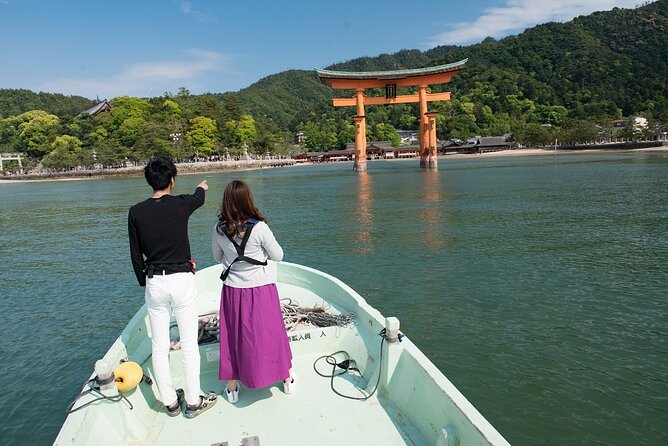
The meeting point is at Miyajima-guchi 1 Chome-11, Hatsukaichi, Hiroshima, near public transportation. From there, the tour includes the ferry fare to Miyajima, followed later by charter boat transport from Miyajima to Shimada Suisan.
The early start is sensible. Miyajima can become crowded as the day develops, and the first shrine visit takes place during the morning. The tour does not promise an empty island, but beginning at 9:00 gives you a better chance to see the main approach before the day reaches its busiest stretch.
The group limit of eight is important here. Miyajima’s streets and shrine walkways can feel tight, especially when larger groups gather around a guide. A small party is easier to keep together, and you can ask about customs without trying to speak over a crowd.
The tour is also open to solo visitors. That makes it a practical choice if you want structure and company without booking a private full-day guide. Service animals are allowed, and most people can take part, though the information provided does not specify a detailed accessibility route.
Entering Itsukushima Shrine and learning how worship works
The first main stop is Itsukushima Shrine, a UNESCO World Heritage Site. Admission is included, so you do not need to budget separately for the shrine ticket.
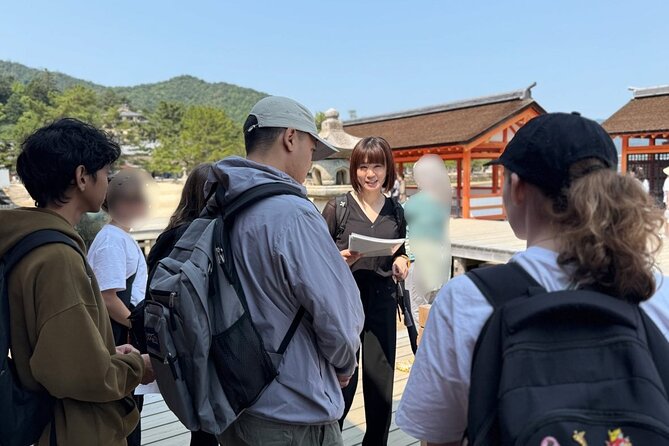
The value here is the guide’s explanation. Itsukushima is not just a photogenic complex built over the water. It is a religious site, and the tour focuses on Japanese worship customs and traditions. That context helps you understand how to behave at the shrine and why its layout and rituals matter.
Expect about an hour at this stop. That is enough for an organized visit and an explanation of the main features, but it is not enough for every corner of the shrine complex or a long, unhurried photo session. If you have already spent several hours at Itsukushima on another trip, the historical and cultural commentary may be more useful than the physical visit itself.
Guiding is one of the most praised parts of this experience. Takeshi-san is named in the tour feedback and is described as clear, warm, and strong on the stories of Miyajima’s shrines and temples. Guide assignments can change, so I would not treat his presence as guaranteed. Still, the experience is designed around an English-speaking guide who can explain the island beyond surface facts.
Take your time with the views toward the Great Torii, but remember that the gate’s appearance changes with the tide. This tour later provides a boat view, which is helpful because it gives you a second perspective instead of relying on one shoreline stop.
One hour on Omotesando Shopping Street
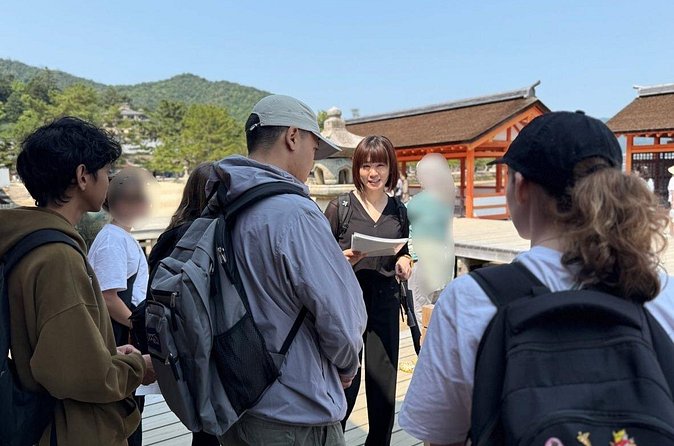
After the shrine, you get about an hour of free time on Miyajima Omotesando Shopping Street. This is your chance to sample food, browse souvenirs, and choose how much attention you want to give the island’s commercial side.
An hour is enough for a focused stroll. You can look for local snacks, pick up a small souvenir, or pause for a quick bite if you still have room before lunch. It is not enough for a leisurely shop-by-shop visit, and you will not want to wander far from the agreed meeting plan.
This pause also breaks up the guided portion. Some people prefer a tour that explains every minute. I prefer having a short stretch to follow my own interests, especially in a shopping street where the best choice may be a snack that catches your eye.
Keep your timing under control. The oyster farm visit is the centerpiece of the second half, and the boat connection is less flexible than free time on a shopping street. If you want to buy something, do it early rather than saving every purchase for the last few minutes.
Cruising past the Great Torii and oyster rafts
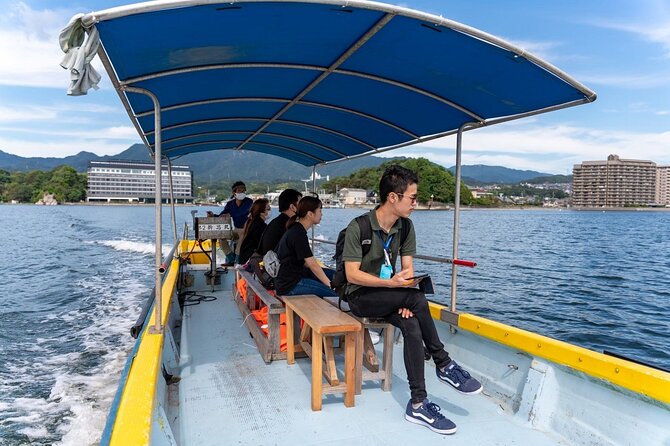
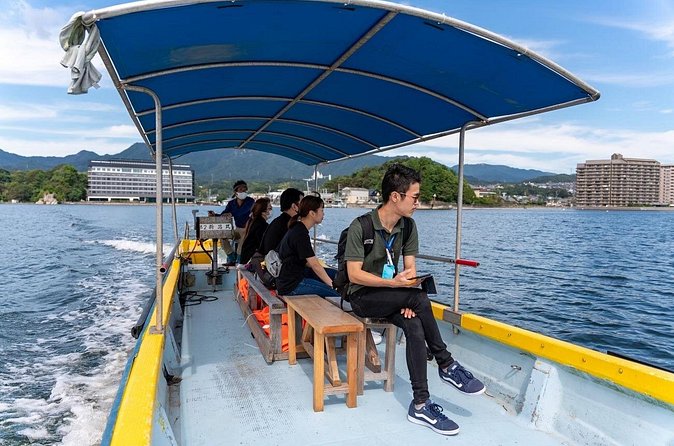
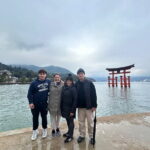
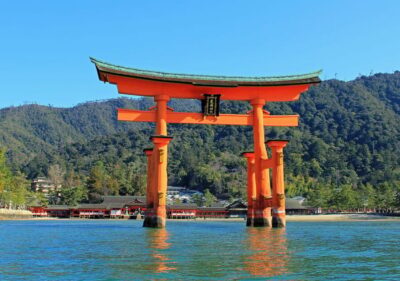
The charter cruise from Miyajima to Shimada Suisan is the tour’s most distinctive sightseeing section. From the sea, you get a close view of the Great Torii of Itsukushima Shrine. The angle changes the familiar scene: instead of looking toward the gate from shore, you see the shrine and torii as part of the water around them.
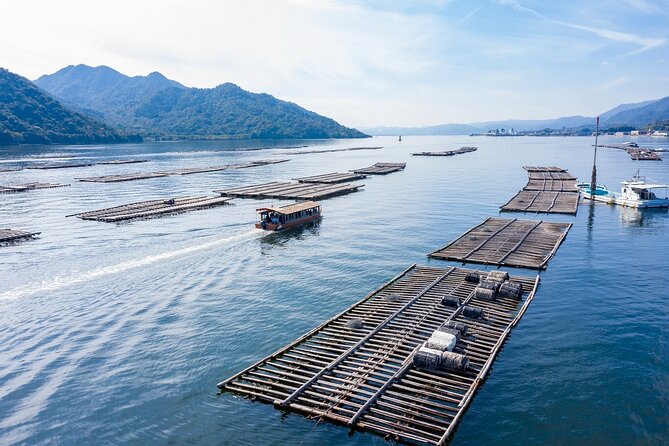
The cruise also takes you past Hiroshima’s oyster rafts. Hiroshima is Japan’s leading oyster-producing region, and these floating structures connect the lunch to the place itself. You are not simply eating a regional specialty with a label attached. You see part of the system that produces it.
The available information says local oyster producers provide commentary during this portion. That can make the boat ride more useful than a simple transfer. You learn what the rafts are for and how oyster cultivation fits into Hiroshima’s coastal economy.
Weather matters. This is an outdoor boat experience, and the tour requires good conditions. If poor weather forces cancellation, you are offered another date or a full refund. On a clear day, the cruise should be a highlight. On a rough or wet day, the experience may feel less comfortable, so bring clothing suited to changing conditions even though the tour supplies one bottle of mineral water.
The boat is also why the schedule cannot be treated as completely flexible. The tour includes private transportation from Miyajima to Shimada Suisan, but the boat segment still needs to run safely and on time.
Other guided tours in Hiroshima


Grilling oysters at Shimada Suisan
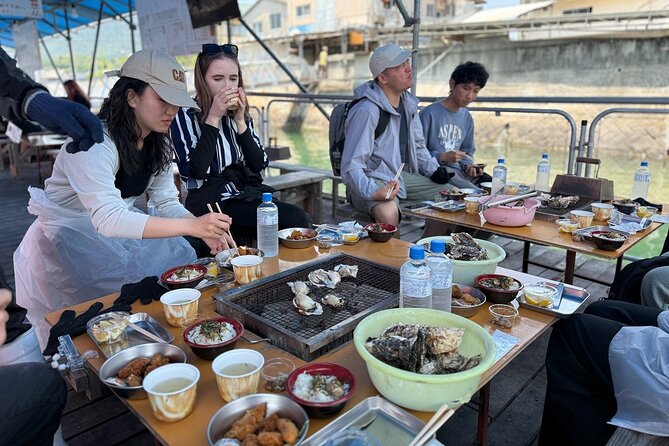
The final two-hour stop is Shimada Suisan, where the lunch and oyster experience take place. The meal includes an oyster feast and a hands-on chance to grill your own oysters.
That practical element gives the lunch some character. You are involved in the preparation rather than receiving a finished plate with no connection to the farm. It also lets you focus on the oysters at their freshest, after seeing the cultivation area from the boat.
The meal is included in the tour price, along with mineral water. Other drinks are not included. You can add wine for ¥8,000, specifically a white wine from Hiroshima Miyoshi Winery that was served to world leaders at the G7 Hiroshima Summit. That is an interesting optional pairing, but the cost is high compared with the tour itself. I would view it as a special splurge, not a necessary part of the experience.
Alcoholic beverages are otherwise excluded, and personal expenses are your responsibility. If you want extra drinks or souvenirs, carry some spending money. The tour price does not mean every food and beverage cost is covered.
The oyster lunch is especially well suited to people who want a regional specialty in its production area. If you dislike oysters or cannot eat shellfish, much of the tour’s second half will lose its appeal. The food is not a minor add-on here. It is one of the central reasons to book.
Is $97.55 a fair price?
At $97.55 per person, this is not the cheapest way to see Miyajima. You can visit the shrine and shopping street independently for less, especially if you are already comfortable arranging the ferry and finding your way around.
The comparison changes once you count what is included. The price covers:
- Ferry fare between Miyajimaguchi and Miyajima
- Charter boat transport from Miyajima to Shimada Suisan
- Itsukushima Shrine admission
- Miyajima tourism tax
- Lunch
- One bottle of mineral water
- English-language guiding
The charter boat and oyster farm access are the pieces that make the price easier to justify. You are paying for a planned route that connects several parts of the area, not just an escort through the shrine.
I would call the value good for someone who wants cultural explanation, organized transport, and a seafood meal in one half-day. It is less attractive if you only want shrine photography, a long walk around the island, or maximum freedom to choose your own restaurants.
The small group helps. A maximum of eight people gives the tour a more personal feel than a large coach outing, while the solo-friendly booking policy means you do not need a larger party to make it work.
What the strong guide feedback tells you
The most consistent praise centers on the guides, especially Takeshi-san. The useful point is not simply that he is friendly. The feedback describes clear explanations of Miyajima’s stories, shrines, temples, and customs.
That matters because the shrine portion is compact. A good guide can make an hour feel substantial by explaining what you are looking at and why it matters. Without context, you might remember the gate and the photographs but miss the meaning of the site.
The warm tone also seems to be part of the experience. The tour brings together solo visitors, friends, and families in a small group, so a guide who explains things clearly can set an easy pace. You should expect an informative outing rather than a formal academic lecture.
Guide availability is not guaranteed by name, so book this for the itinerary and format rather than solely for Takeshi-san. The published details confirm English-language guiding, which is the key practical point for most international visitors.
Who should book this experience?
I would choose this tour if you want Miyajima in a compact morning and early afternoon, with a clear plan from the mainland meeting point to the shrine and oyster farm.
It suits:
- First-time visitors who want help understanding Itsukushima Shrine
- Solo visitors who prefer a small organized group
- Food-focused visitors who want Hiroshima oysters at a production site
- Couples and friends looking for more than a standard shrine visit
- Repeat visitors who have already seen Miyajima’s main sights and want a new angle
- People who value included transportation and lunch
I would look elsewhere if you want to hike Mount Misen, spend a full day on the island, browse shops slowly, or choose your own seafood restaurant. The four-and-a-half-hour schedule is focused, not expansive.
You should also consider the weather requirement and the outdoor boat ride. The tour can be rescheduled or fully refunded if poor weather causes cancellation, but you still need to allow flexibility in your Hiroshima plans.
Should you book the Miyajima oyster farm tour?
Book it if the idea of pairing a UNESCO shrine with a working oyster farm sounds better than seeing Miyajima as a quick photo stop. The tour gives you cultural explanation, a close Great Torii view from the water, local oyster production, and a hands-on lunch in one well-organized package.
The strongest reasons to go are the small group, the English guide, and the unusual second half at Shimada Suisan. The main tradeoff is limited independent time. You get a useful taste of Miyajima, not the freedom of a full day.
For a first visit, I think this is a well-balanced choice if you enjoy food and want the logistics handled. For a repeat visit, it offers a fresh reason to return, especially if you have never seen Hiroshima’s oyster rafts or grilled oysters at the farm.
FAQ
Where does the Miyajima Guided Tour and Fresh Oyster Farm Tour begin?
The tour begins at Miyajima-guchi 1 Chome-11, Hatsukaichi, Hiroshima 739-0411, Japan.
What time does the tour start?
The tour starts at 9:00 a.m.
How long does the experience last?
The experience lasts approximately four hours and 30 minutes.
Is ferry transportation included?
Yes. The tour includes the Miyajimaguchi to Miyajima ferry fare and charter boat transportation from Miyajima to Shimada Suisan.
Is lunch included?
Yes. Lunch is included and features an oyster feast with the opportunity to grill your own oysters. One bottle of mineral water is also included.
Are drinks included with lunch?
Mineral water is included, but other beverages and alcohol are not. White wine from Hiroshima Miyoshi Winery can be added for ¥8,000.
How many people can join the tour?
The tour has a maximum of eight travelers.
More Guided Tours in Hiroshima
More Miyajima Tours in Hiroshima
More tours in Hiroshima we've reviewed


Miyajima Tours, compared.
 ★ 5.0Peaceful Hiroshima & Miyajima UNESCO 1 Day Bus TourFrom $129
 ★ 4.9Hiroshima: Hiroshima and Miyajima UNESCO Sites 1-Day TourFrom $1228 hours
 ★ 5.0Hiroshima / Miyajima Full-day Private Tour with Government Licensed GuideFrom $202
 ★ 4.7Osaka/Kyoto: Hiroshima Miyajima Bus Tour & Shinkansen TicketFrom $27712 hours
 ★ 4.7From Hiroshima: Hiroshima & Miyajima 1 Day Tour with LunchFrom $1168 hours
 ★ 5.0Hiroshima and Miyajima Day Trip with Itsukushima Shrine & FerryFrom $45
