
Reviewed · MIYAJIMA TOURS
Miyajima: Cultural Experience in Zen Temple
Miyajima is best known for its floating torii gate, but Tokujuji Temple offers a quieter way to meet Japanese tradition. You can choose a kimono, learn the careful steps of a matcha ceremony, practice calligraphy, or make an amulet from kimono fabric. I especially like the patient hands-on teaching and the peaceful garden photo session.
The price is about $90 per person, which is fair if you choose several activities and value the photos and handmade souvenirs. The main consideration is comfort: you must remove your shoes, the temple has limited mobility access, and the schedule can stretch beyond the advertised 90 minutes.
In This Review
- Key points at a glance
- A peaceful cultural stop away from Miyajima’s crowds
- Choosing and wearing a kimono
- The garden photo session
- What happens during the tea ceremony
- Practicing Japanese calligraphy
- Making an amulet from kimono fabric
- How the activities fit together
- Is $90 a good value?
- Practical details before you book
- Who will enjoy Tokujuji Temple most?
- Should you book this Miyajima cultural experience?
- FAQ
- Where does the cultural experience take place?
- How long does the activity last?
- How much does it cost?
- Which languages are available?
- Can I wear a kimono during the activities?
- What is included in the tea ceremony?
- Can I take my calligraphy home?
- Is the activity suitable for young children or people with limited mobility?
Key points at a glance
- Kimono dressing with personal help: Choose from a broad selection of traditional garments, then let the staff arrange the kimono, obi, and accessories.
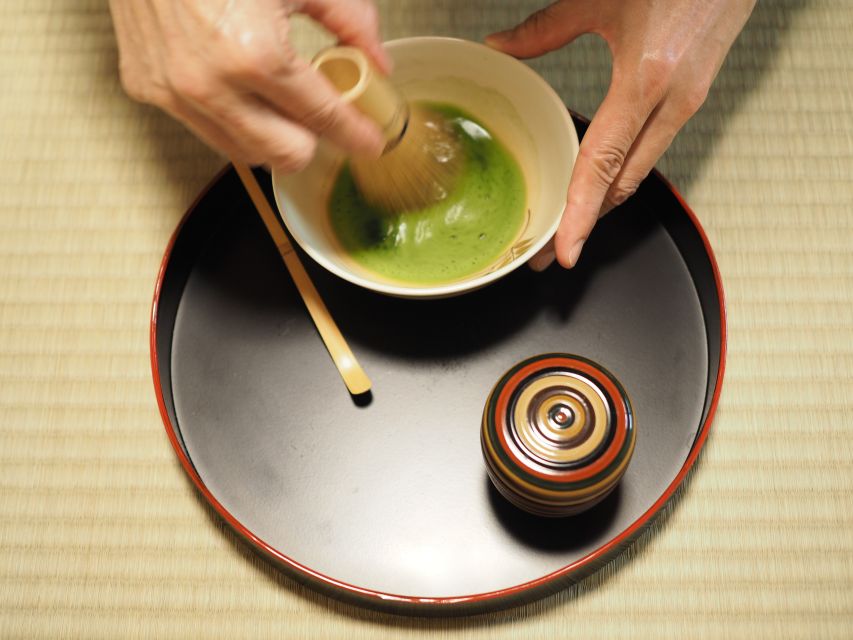
- Ryurei-style tea ceremony: Sit at a table and chairs as the tea master explains the greeting, purification of the tools, preparation, serving, and closing.
- Two bowls of matcha and two sweets: You taste matcha, learn the correct way to drink it, and prepare a bowl yourself.
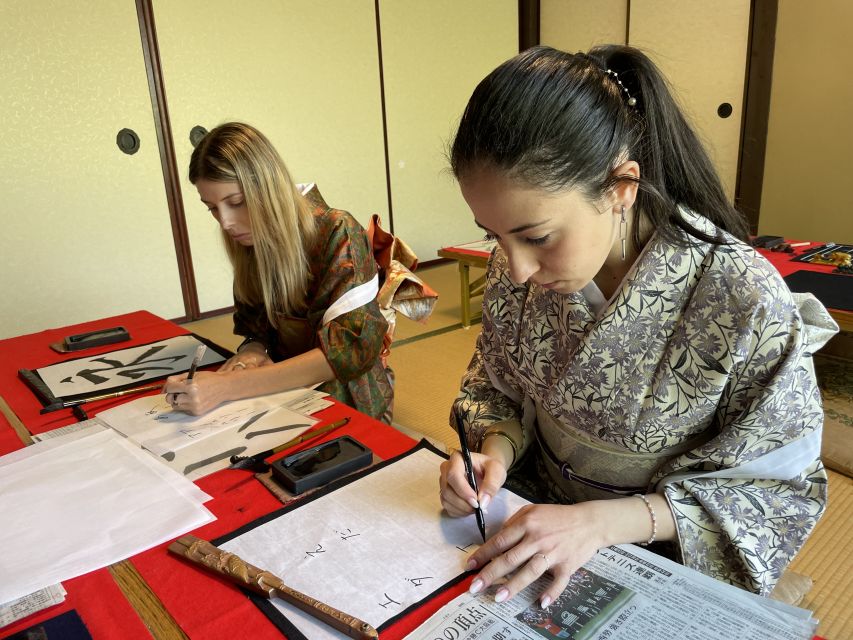
- Calligraphy you can take home: Practice Kanji, Hiragana, Katakana, and your name before signing and wrapping your finished work.
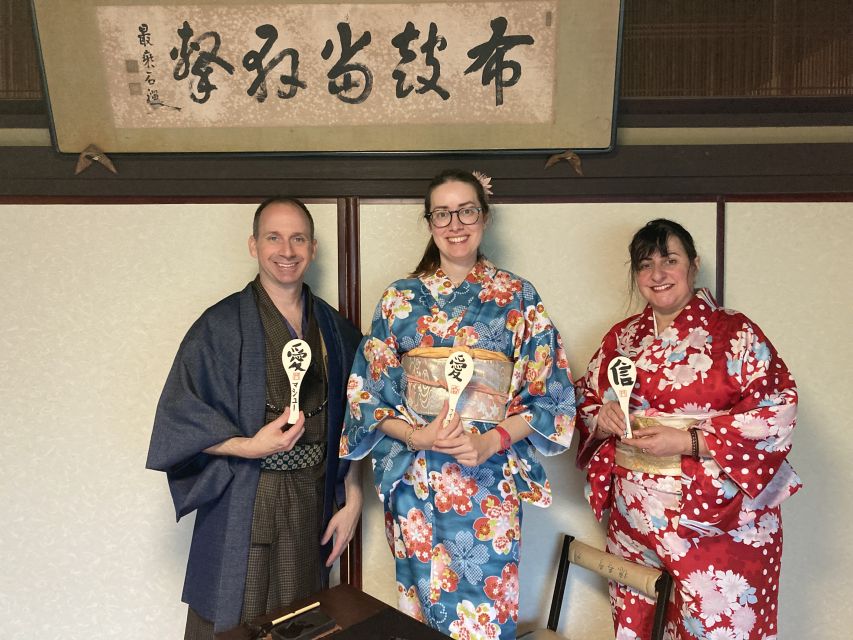
- Handmade amulet option: Pick a bag made from kimono fabric, choose Kumihimo cord, and create a wish amulet with a miniature rice scoop.
- A calmer corner of Miyajima: The garden gives you time for photographs away from the island’s busiest sights.
A peaceful cultural stop away from Miyajima’s crowds
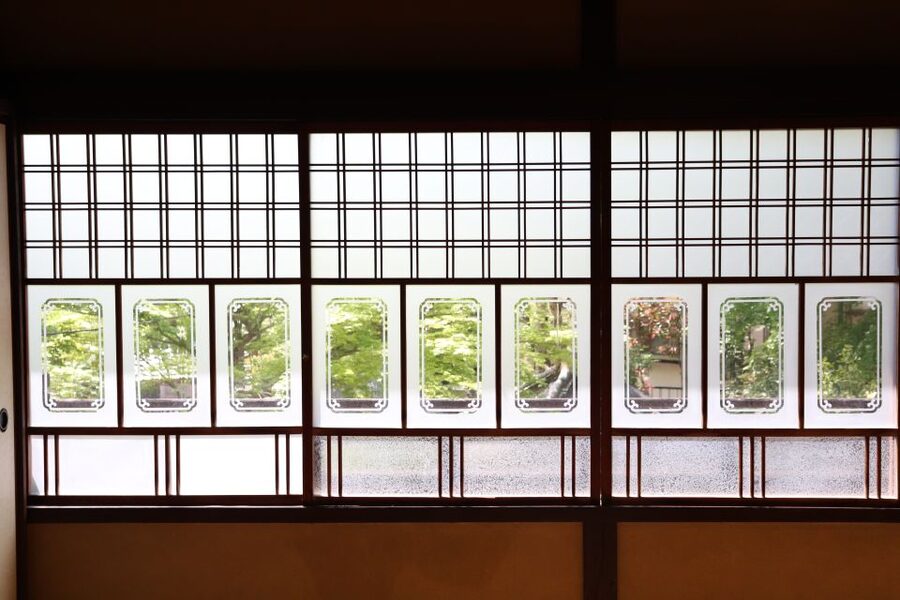
The activity takes place at Tokujuji Temple, a small religious setting on Miyajima in Japan’s Chugoku Region. You leave the busiest part of the island behind and enter a space where the pace changes quickly.
That contrast matters. Miyajima can feel crowded around the famous torii gate and the main shopping streets, especially during the middle of the day. Here, you have time to sit, listen, dress in traditional clothing, and focus on one task at a time.
The experience lasts roughly one to two hours. Your exact length depends on the option you choose and how many activities are included. Some sessions finish in about 90 minutes, while others run beyond two hours because the staff allow time for photographs, practice, and questions.
The lesson is available in English or Japanese. English ability appears to be a strong point, with Yoko specifically noted for fluent English and several comments describing the explanations as clear. Still, this is a cultural workshop rather than a formal lecture, so the emphasis is on doing rather than listening to long historical explanations.
A few more Hiroshima tours and experiences worth a look

Choosing and wearing a kimono
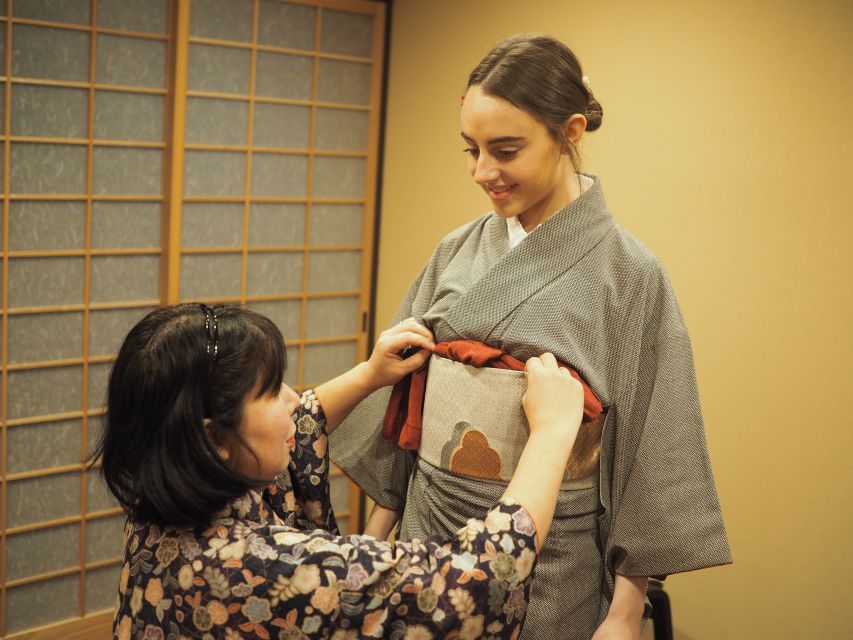
The kimono portion begins with a choice. You select the garment you like, then staff help match it with an obi and other pieces. The selection includes many colors and patterns, and the dressing process is part of the experience rather than a quick costume change.
That distinction is important. You are not simply handed a robe and left to figure it out. The staff dress you and adjust the layers carefully, which helps the kimono look finished in photographs. Several people especially enjoyed having someone else handle the dressing because it made the process feel ceremonial and unusual.
Expect the clothing to feel structured. An obi is tied firmly, and the layers can limit your stride. That is one reason this activity is not recommended for people with limited mobility. You will also remove your shoes before entering the temple, so wear footwear that is easy to take off and put back on.
Children under six cannot take part in the activities. Older children can enjoy the visual side of the experience, and the calligraphy lesson is explained step by step. The activity has also worked well for mixed-age family groups, including children, parents, and grandparents, as long as everyone is comfortable with the clothing and floor-level temple setting.
The garden photo session
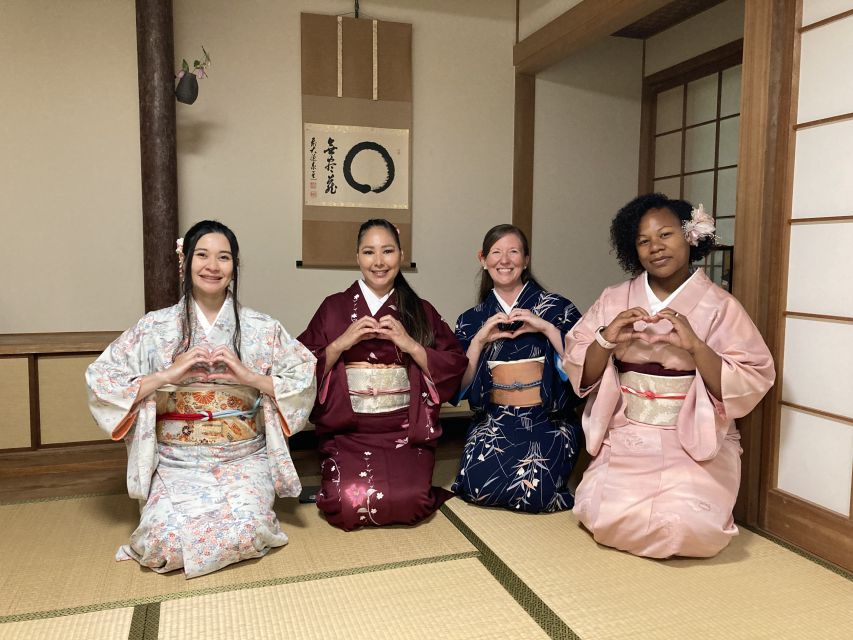
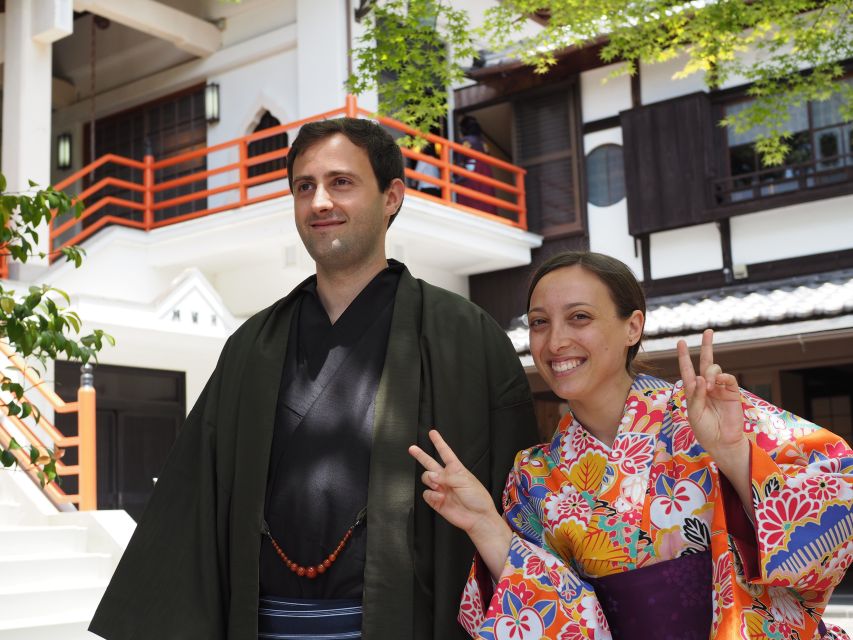
Once you are dressed, you have time for photographs in the Japanese garden. The staff take pictures for you, offer suggestions for poses and locations, and send the images by email or AirDrop on site.
This is a real advantage. Someone in your group does not have to spend the whole session behind a phone. You can concentrate on the experience, then take your own photographs as well.
The garden provides a more natural setting than an indoor studio. The photographs capture the kimono, the temple setting, and the quiet mood of the grounds. Light can change from one part of the garden to another, so it is worth asking the staff to find a bright angle for your face. Some outdoor shots may come out darker than expected, particularly if you stand with the light behind you.
The photography is not a professional portrait session with edited prints. Think of it as a generous record of the visit, with staff taking many informal pictures while you enjoy the setting. For many people, those images add real value to the $90 cost.
What happens during the tea ceremony
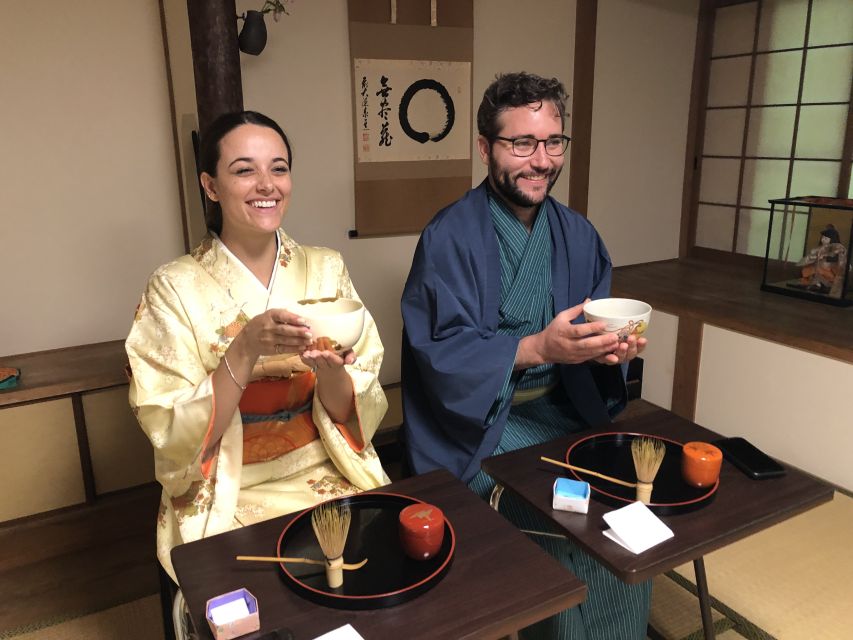
The tea ceremony follows the Ryurei style, which uses a table and chairs. This makes the experience easier for many people than a ceremony requiring you to kneel on the floor for a long period.
The tea master follows a set sequence. It begins with a greeting, then moves through the purification of the tea tools, the preparation of the matcha, the serving of the tea, the cleaning of the tools, and the closing of the ceremony.
You are shown how to drink the tea properly, including the respectful order of actions. The point is not only the flavor of the matcha. You learn how each movement has a purpose and how the ceremony creates a calm, attentive rhythm.
You receive two bowls of matcha and two types of sweets. The sweets balance the tea’s bitterness, and they give you a small taste of the hospitality built into the ceremony. You also learn to make matcha yourself, using the tools provided.
The ceremony is quiet and formal, but it is not stiff. The staff explain what is happening and make room for questions. If you are looking for a quick cup of green tea, this will feel slow. If you want to understand why tea preparation involves so much care, the measured pace is the main point.
Practicing Japanese calligraphy
The calligraphy lesson gives you a useful souvenir rather than a mass-produced trinket. The instructor first demonstrates how to draw the lines, then guides you through the shape and balance of the characters.
You have time to practice one or more Kanji, the Chinese characters used in Japanese writing. The instructor also prepares a sample of your name, which gives you a model to copy and helps you understand how your name can be represented in Japanese.
Next, you practice writing your name in either Hiragana or Katakana. These are Japanese phonetic alphabets, and the instructor helps you choose the appropriate form. You then sign your work in Japanese.
The process is forgiving. You practice on draft paper first, so the final piece does not need to be your first attempt. Staff work patiently, including with children, and help you adjust the brush strokes one at a time.
When you finish, your artwork is wrapped so you can take it home safely. Bring care with packing if you plan to continue traveling for several weeks. The materials for calligraphy are included, and the finished work gives you a direct connection to the lesson because you made it yourself.
I like this part for a practical reason: it demands concentration. You slow down, watch the brush, and stop worrying about the next sightseeing stop. It is a small, meditative break in a busy Japan itinerary.



Making an amulet from kimono fabric
The amulet workshop offers a different kind of keepsake. You can choose from more than 300 handmade amulet bags made from kimono fabric. Since the bags vary in color and pattern, choosing one becomes part of the creative work.
You then select a Kumihimo cord. Kumihimo is a traditional form of braided cord, and here it is tied in a special way connected with making a wish. You choose the wish, then write or stamp it onto a miniature rice scoop.
The rice scoop carries your wish, and you put the scoop, cord, and fabric bag together to create your own amulet. The result is personal and one of a kind, not just an object purchased from a temple shop.
After completing the amulet, you greet Kinseki Jizou, the Buddha at the temple, to report that you have come to make a wish. That final visit gives the craft a religious setting and keeps it from feeling like a simple souvenir class.
The amulet option is a good choice if calligraphy does not appeal to you or if you want a hands-on activity with a clear finished object. You should check the option details when booking because the meeting point and activities can vary depending on the package.
How the activities fit together
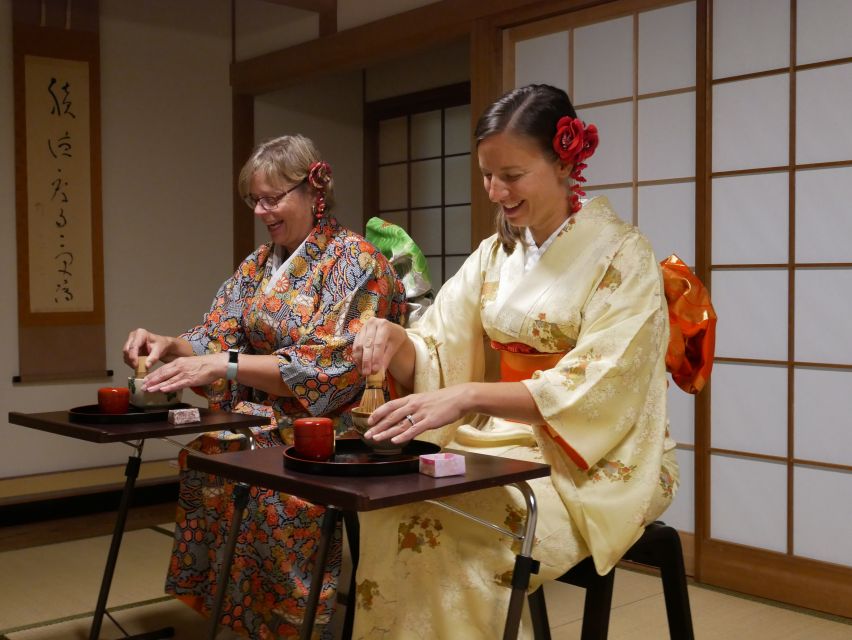
The strongest part of this experience is the way the activities support one another. The kimono makes the tea ceremony feel more formal, the garden creates a setting for photographs, and calligraphy or amulet making gives you something tangible to carry home.
You do not need to rush from one station to another. The staff allow time for changing, photographs, instruction, and practice. That relaxed approach is particularly helpful if you are traveling with a child or with family members who need frequent pauses.
At the same time, not every option includes every activity. Some bookings focus on kimono and tea, others combine kimono with calligraphy, and some include amulet making as well. Read the selected option carefully before paying so you know exactly what your session covers.
The advertised duration is one to two hours, but you should leave extra room in your Miyajima schedule. A session can run longer than planned, especially when the staff take many photographs or you spend time refining your calligraphy.
Is $90 a good value?
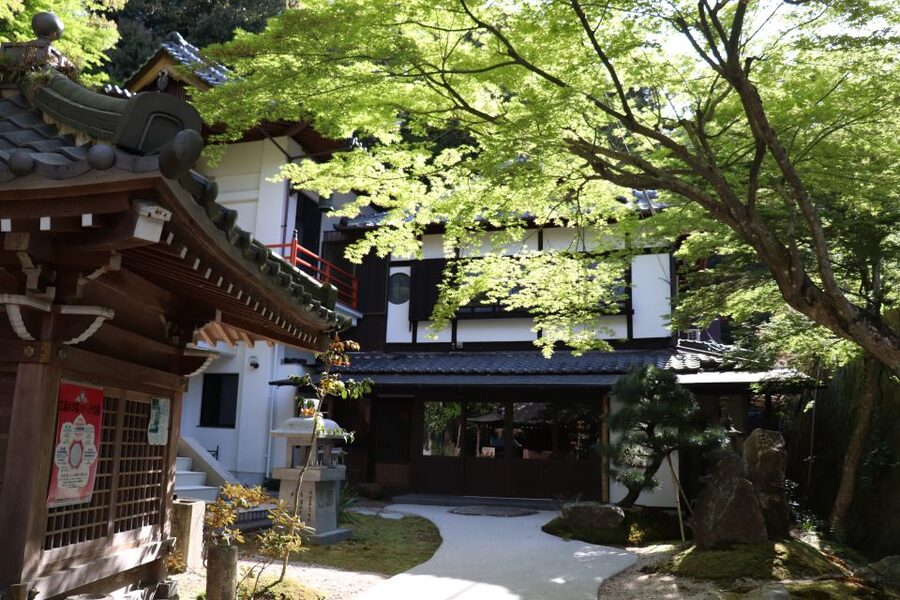
At approximately $90 per person, this is not the cheapest cultural activity you can find in Japan. The price makes more sense when you count the separate elements: kimono assistance, a garden photo session, matcha and sweets, instruction, art materials, and a wrapped piece of calligraphy or a handmade amulet, depending on your booking.
You are also paying for a small-group setting rather than a large demonstration. Small groups give you more direct help with the kimono, brushwork, tea preparation, and photographs. That personal attention is especially useful if you have never worn a kimono or used a calligraphy brush.
The value is weaker if you only want a quick costume photograph. In that case, the ceremony and instruction may feel like extras you did not need. But if you want several connected cultural activities in one calm location, the price is reasonable for Miyajima.
The experience also saves planning time. Instead of arranging a kimono rental, a tea ceremony, a calligraphy class, and a photographer separately, you can do several of them during one island visit.
Practical details before you book
Plan to arrive with enough time to find the correct meeting point. The meeting point may vary according to the option booked, so check your confirmation rather than assuming every package begins in the same place.
Wear shoes that come off easily. You must remove them to enter the temple. Comfortable clothing underneath the kimono is sensible, since the dressing process involves several layers and adjustments.
The activity is not suitable for people with mobility impairments. The temple setting and traditional clothing can make walking and changing position difficult. The Ryurei tea style uses chairs, but that does not remove every access concern.
English and Japanese are available for instruction, and small groups may be offered. Cancellation is free up to 24 hours before the activity for a full refund, and you can reserve now and pay later. These policies are useful if your Miyajima day depends on ferry timing or changing weather.
The photographs are sent by email or AirDrop on site. Check that your phone can receive files before you begin, especially if you are using AirDrop. You will have your own camera time as well, but the staff photographs are a valuable part of the session.
Who will enjoy Tokujuji Temple most?
I would recommend this for first-time visitors to Japan who want an approachable introduction to several traditions. You do not need prior knowledge of tea ceremony, calligraphy, Japanese writing, or kimono dressing.
It suits couples, families with children over six, and solo visitors. Families can split their interests between calligraphy and amulet making, while couples can use the garden session for photographs together.
It is also a good fit if you have about two hours on Miyajima and want something quieter than the main sightseeing route. The experience gives your island visit a slower center rather than filling every minute with shrines, shops, and photographs of the torii gate.
I would hesitate to recommend it to anyone who dislikes structured activities. The tea ceremony follows strict procedures, and the calligraphy lesson asks you to repeat movements carefully. You should also skip it if you want an entirely flexible schedule, since sessions may last longer than the shortest advertised time.
Should you book this Miyajima cultural experience?
Book it if you want to wear a real kimono, learn rather than simply watch, and leave Miyajima with photographs plus something you made yourself. The friendly staff, clear English explanations, calm garden, and patient instruction make this a strong choice for a first Japanese cultural activity.
Choose the package carefully. The tea ceremony and calligraphy combination is the best all-round option for many people, while the amulet workshop is ideal if you prefer craft and symbolism. If the main appeal is photography, allow time for the garden and ask the staff to check the lighting.
For most visitors with two spare hours, this is money well spent. It does not replace visiting Miyajima’s major sights, but it adds a personal, hands-on side to the island that you will not get from simply walking past a temple.
FAQ
Where does the cultural experience take place?
The experience takes place at Tokujuji Temple on Miyajima in Japan’s Chugoku Region.
How long does the activity last?
The activity lasts about one to two hours. The exact length depends on the option booked and the activities included.
How much does it cost?
The listed price is $90 per person.
Which languages are available?
The lesson is available in English or Japanese. English-speaking staff are available, including Yoko, who is noted for fluent English.
Can I wear a kimono during the activities?
Yes. Depending on the option booked, you can choose a kimono and receive help dressing before taking part in the tea ceremony, calligraphy, amulet making, and garden photography.
What is included in the tea ceremony?
You receive two types of sweets and two bowls of matcha tea. You learn how to drink matcha correctly and how to prepare it.
Can I take my calligraphy home?
Yes. You practice Kanji and your name in Hiragana or Katakana, sign your finished work, and have it wrapped so you can take it home.
Is the activity suitable for young children or people with limited mobility?
Children under six cannot participate. The activity is not recommended for people with mobility impairments, and you must remove your shoes to enter the temple.
More Miyajima Tours in Hiroshima
More tours in Hiroshima we've reviewed



Miyajima Tours, compared.
 ★ 5.0Peaceful Hiroshima & Miyajima UNESCO 1 Day Bus TourFrom $129
 ★ 4.9Hiroshima: Hiroshima and Miyajima UNESCO Sites 1-Day TourFrom $1228 hours
 ★ 5.0Hiroshima / Miyajima Full-day Private Tour with Government Licensed GuideFrom $202
 ★ 4.7Osaka/Kyoto: Hiroshima Miyajima Bus Tour & Shinkansen TicketFrom $27712 hours
 ★ 4.7From Hiroshima: Hiroshima & Miyajima 1 Day Tour with LunchFrom $1168 hours
 ★ 5.0Hiroshima and Miyajima Day Trip with Itsukushima Shrine & FerryFrom $45
