
Reviewed · PEACE MEMORIAL TOURS
Mitaki Peace Tour Beyond Central Hiroshima
Mitaki-dera gives you a side of Hiroshima that many visitors miss: a quiet mountainside temple where ancient Buddhist sights meet the city’s atomic-bomb story. The tour begins at Peace Memorial Park, then shifts from the Rest House and Atomic Bomb Dome to wooded paths, stone statues, a pagoda, and places of remembrance.
I like the strong historical connection between the two stops, and I like the small maximum of six people. The bus and train rides also make this feel like a real outing in Hiroshima, not a packaged ride between attractions. The main drawback is the walking: steep or uneven sections may be hard if you have mobility problems, and the tour requires good weather.
In This Review
- Key points at a glance
- Why Mitaki-dera adds something new to Hiroshima
- Starting at the Rest House and Atomic Bomb Dome
- Taking the bus from central Hiroshima to Mitaki
- Entering the wooded grounds of Mitaki-dera
- Seeing Hiroshima’s past in a different setting
- What the guide adds to a self-guided visit
- Returning by train through Mitaki Station
- Is $88.68 a fair price?
- Who will enjoy this afternoon most?
- Timing, weather, and small practical details
- Should you book the Mitaki Peace Tour?
- FAQ
- How long does the Mitaki Peace Tour take?
- Where does the tour start?
- What will I see at Peace Memorial Park?
- Is transportation included?
- Is the tour suitable for people with walking difficulties?
- What is the cancellation policy?
Key points at a glance
- Peace Memorial Park sets the context: Visit the Rest House, Atomic Bomb Dome, and possibly the hypocenter before leaving central Hiroshima.
- Mitaki-dera feels far from the city: A short local bus ride leads to a wooded temple area cherished by local people.
- The temple joins beauty and memory: See a pagoda, bell hall, stone Buddhist figures, preserved bomb-damaged structures, and peace-related monuments.
- The group stays small: With a maximum of six people, you can hear explanations clearly and ask questions without shouting.
- Public transit is part of the experience: Bus fare to Mitaki and train fare back toward Hiroshima are included.
- Allow nearly four hours: The listed duration is about 3 hours 25 minutes to 4 hours, with the tour beginning at 1 p.m.
Why Mitaki-dera adds something new to Hiroshima
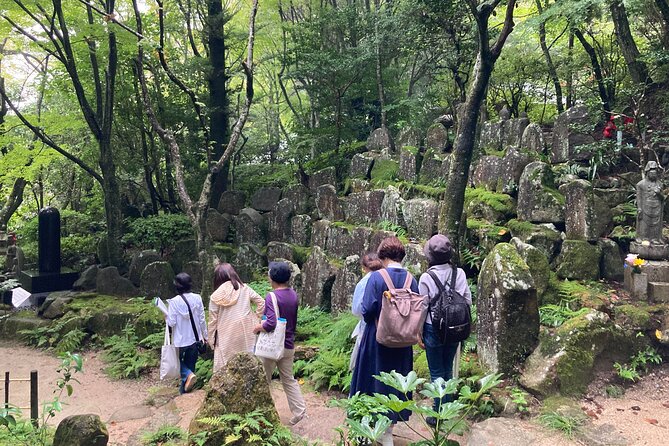
Most first visits to Hiroshima focus on Peace Memorial Park, the Atomic Bomb Dome, and perhaps Miyajima. Those places matter, but Mitaki-dera offers a different pace and setting. You trade city streets for a wooded slope, temple paths, flowing water, old religious buildings, and views from the mountain.
The change is not just scenic. Mitaki helps you see how Hiroshima’s past reaches beyond the best-known monuments. The temple contains memorials and structures connected with the atomic bombing, so the afternoon links the city’s wartime destruction with a place of long spiritual importance.
I find that contrast especially useful. Peace Memorial Park presents the bombing directly and publicly. Mitaki gives you time to think about its effects in a quieter setting. The tour does not treat the temple as a simple nature stop. Its purpose is to help you connect geography, memory, and peace.
The temple was founded in 809 and has been cared for over centuries. You can expect a sense of age here, but the visit is not only about old architecture. Small activities and guided explanations help you notice details that could easily be missed on your own, including the meaning behind the stone figures and memorials.
A few more Hiroshima tours and experiences worth a look
Starting at the Rest House and Atomic Bomb Dome
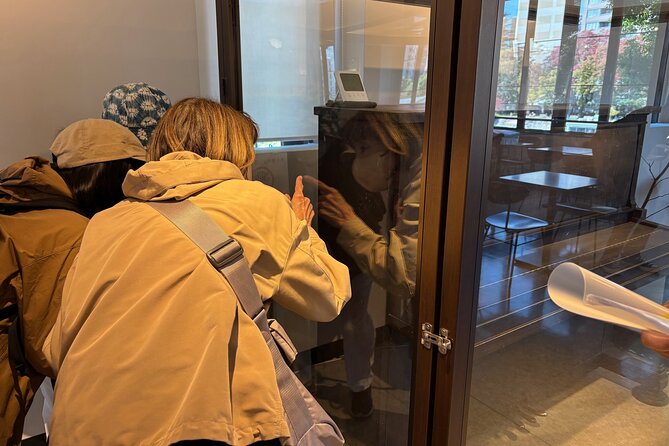
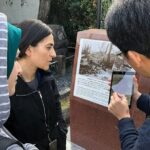
The tour begins at Hiroshima’s Peace Memorial Park at 1 p.m. The meeting point is beside the Rest House, at the site marked with an atomic-bomb damage explanation board. This is a practical starting place because you are already close to several of Hiroshima’s most important memorials.
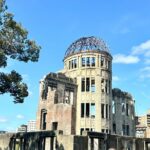
The first part takes about 1 hour and 4 minutes. Your guide explains the Rest House, a building damaged by the atomic bomb, and the Atomic Bomb Dome. Depending on the available time, the walk may also include the hypocenter.
That opening matters. Mitaki-dera can look like a peaceful mountain retreat with little connection to the city’s central memorial area. The park walk gives you the facts and physical setting you need before arriving at the temple. You begin with the scale and reality of the bombing, then move to a quieter place where the same history is remembered in a different way.
The park portion is free, but its emotional weight is considerable. I would not treat it as a quick photo stop before the bus. Listen closely, especially if Hiroshima is new to you. The guide’s explanation should help you understand why memorials at Mitaki are important rather than simply decorative.
You should also expect the exact park route to vary. The itinerary says the hypocenter may be included depending on time, so it is not guaranteed on every departure. If that site is essential to your plans, make sure you allow separate time to visit it.
Taking the bus from central Hiroshima to Mitaki
After the Peace Memorial Park walk, you take a local bus from the Atomic Bomb Dome area toward Mitaki. The bus fare is included, which keeps the tour simple and lets you focus on the transition rather than sorting out payment during the afternoon.
This ride is part of the appeal. You are not being whisked away in a private coach with no sense of place. You use the city’s public transportation, moving from central Hiroshima toward the Mitaki area as the urban setting gives way to the foot of the mountain.
The tour description places Mitaki about two kilometers from central Hiroshima, although the route still involves a bus and then a walk. After getting off, expect roughly 10 minutes on foot to reach the temple, with stops at points of interest and explanations along the way.
That distance makes Mitaki easy to add to a Hiroshima stay, but it does not make the tour effortless. You will walk in the park, board a bus, climb and descend around the temple grounds, walk back to Mitaki Station, and take a train afterward. Wear shoes with a firm sole and bring water. Bottled water is not included, and the activity specifically advises carrying something to drink.
Entering the wooded grounds of Mitaki-dera
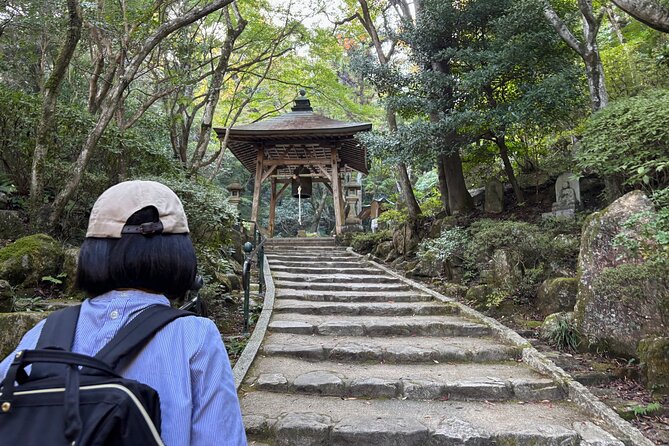
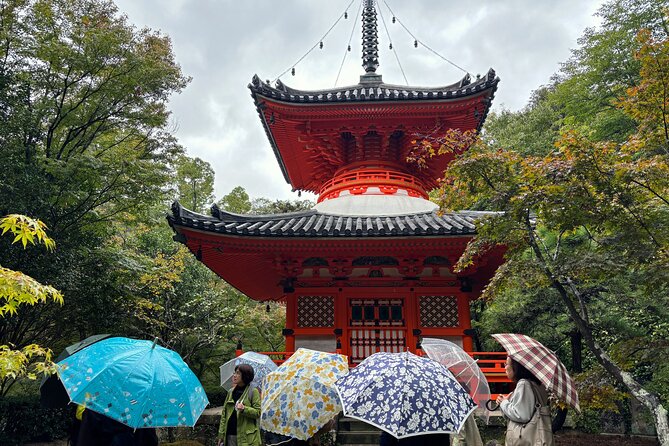
The temple visit lasts about 2 hours and 50 minutes, making it the main event. Mitaki-dera is a mountainside temple founded in 809, with a calm wooded setting that feels markedly different from central Hiroshima.
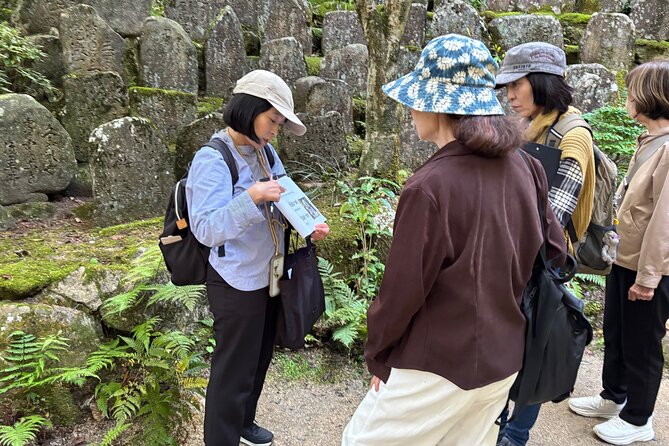
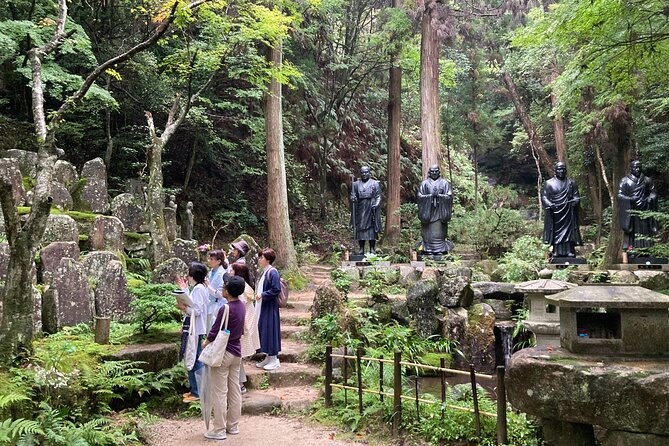
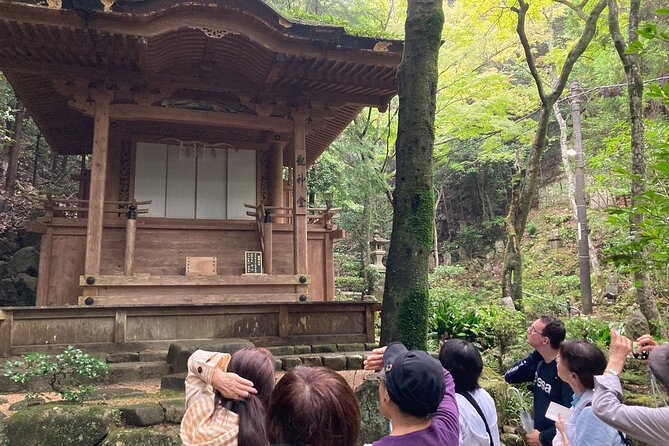
You will see a striking pagoda, a bell hall, many stone Buddhist statues, and other temple features as the guide leads you along the grounds. The paths are photo-friendly, but the best reason to slow down is that the setting rewards careful attention. A statue tucked beside a path or a monument among the trees may carry more meaning once its story is explained.
The temple’s name and mountain setting are closely tied to water and greenery, but the supplied information does not promise a particular waterfall, garden feature, or seasonal display. What you can count on is a wooded temple with historic structures, religious images, and a peaceful atmosphere.
The autumn color can be especially attractive in early December, though it is seasonal and not guaranteed. At that time of year, the remaining red leaves and scattered foliage can add color to the walk. If you visit in another season, the temple’s value rests more on its quiet setting and historical details than on a specific display of leaves.
The paths are not described as difficult hiking trails, and the pace is relaxed. Still, this is not a flat museum visit. The tour is not recommended for people with walking difficulties, and the narrow paths make a small group useful. Keep that in mind if you have trouble with steps, slopes, or uneven ground.
Seeing Hiroshima’s past in a different setting
Mitaki-dera contains preserved structures damaged by the atomic bomb, along with monuments connected to peace and remembrance. These details give the temple a direct link to the events introduced in the park.
I value this part of the route because it avoids a common problem with historical sightseeing. A visitor can learn facts at a memorial, take in a serious monument, and then move on without seeing how the event affected the wider city. At Mitaki, the story continues in a place that is still used and valued as a temple.
The result is not a second Peace Memorial Park. Mitaki is quieter and less formal. Its Buddhist statues, bell hall, pagoda, and trees create space for reflection, while the guide provides the background needed to understand the memorials.
The seven experiences mentioned for the tour include small activities and easy walks around the temple and surrounding area. The available information does not name each activity in detail, so you should not book expecting a specific craft, ceremony, meal, or performance. Think of the experiences as guided ways to notice and engage with the temple rather than a string of large attractions.
That low-key approach will suit you if you want time to look, listen, and consider the meaning of the place. If you prefer a fast tour packed with headline sights, the pace may feel slow.
A few more Hiroshima tours and experiences worth a look

What the guide adds to a self-guided visit
Mitaki-dera is possible to visit independently, but the historical connections are not always obvious from the buildings alone. A licensed local guide accompanies the group, explains the temple and its monuments, and stays with you through the public transit portion.
The guide’s role is most valuable at the point where the tour joins ancient temple history with Hiroshima’s modern history. You can photograph a pagoda or stone figure without knowing why it matters. Clear explanations give those sights a place in the larger story.
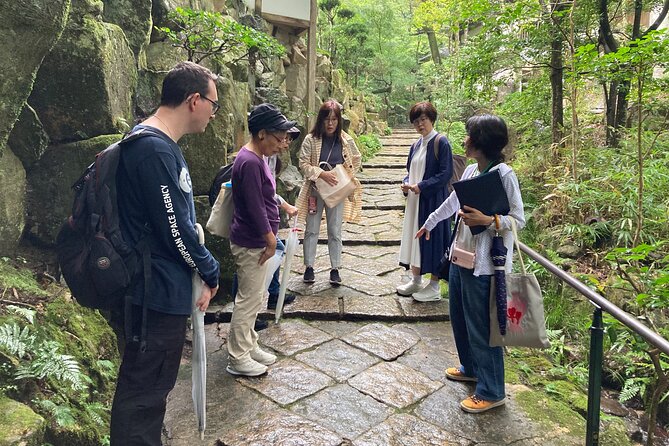
The group limit of six is a real advantage. The temple paths are not wide, and a small party helps preserve the quiet mood. It also means you can usually stay near the guide and ask questions without turning the walk into a large group lecture.
No guide name is provided for this experience, so you cannot request a particular person in advance based on the available information. What is confirmed is a licensed local guide, with explanations throughout the route.
I would ask questions as you go. The tour is designed to connect what you saw in the park with what you see at Mitaki, and the value comes from making those links personal and clear.
Returning by train through Mitaki Station
At the end of the temple visit, the group walks to Mitaki Station and takes a train back toward central Hiroshima. The return train fare is included.
Your guide accompanies you as far as Hiroshima Station, which is two stops from Mitaki. You may also leave the train at Yokogawa Station, the next stop, or Hakushima Station, the stop after that. This flexibility is useful if your hotel, dinner plans, or next attraction is closer to one of those stations.
The tour ends at Hiroshima Station, with the stated duration ranging from about 3 hours 25 minutes to 4 hours. In practical terms, you should keep the rest of the afternoon fairly open. The timing can shift with the walking pace, the park route, and public transportation.
Ending at Hiroshima Station also makes this a handy outing for a rail-based schedule. You are not returned to the Peace Memorial Park meeting point, so plan your evening from the station area or use one of the earlier stops.
Is $88.68 a fair price?
At $88.68 per person, this is not the cheapest way to reach Mitaki-dera. You are paying for more than admission. The price includes a licensed guide, the temple entrance fee, the bus from the Atomic Bomb Dome area, and the train back toward central Hiroshima.
You also receive a postcard featuring a recycled paper crane and a stamp. It is a small extra, but it fits the peace focus better than a generic souvenir.
The value depends on how much explanation you want. If you only want to see the temple, you could consider going independently and paying your own transit and admission costs. You would save money, but you might miss the connections between the park, the temple, the bomb-damaged structures, and the peace memorials.
For me, the small group is the strongest value point. A maximum of six people gives the guide room to explain details and keeps the narrow temple paths from feeling crowded. The tour also removes the need to work out the bus route to Mitaki and the train ride back.
The price is easiest to justify if Hiroshima’s history is a central reason for your visit and you want more than the standard memorial circuit. It is less compelling if you have limited time, dislike guided walking, or already feel comfortable navigating local transit and researching the temple yourself.
Who will enjoy this afternoon most?
I would recommend this tour to you if you want:
- A quieter Hiroshima experience beyond the main memorial sites
- A guide to explain the link between the atomic bombing and Mitaki-dera
- A small group rather than a large coach tour
- A mix of history, Buddhist architecture, nature, and easy walking
- A practical way to visit Mitaki without planning the bus and train connections yourself
- Time for reflection instead of a rapid list of attractions
You may want to skip it if you have walking difficulties, need a fully flat route, or have only a short stay in Hiroshima. The tour covers a lot in less than four hours, but it still requires several walks and a change of setting.
It is also best for people who are comfortable with a serious subject. The first hour deals with the atomic bombing directly, and the temple visit continues that theme through its memorials and damaged structures. The natural beauty does not erase the history. It gives you a quieter place to consider it.
Timing, weather, and small practical details
The start time is 1 p.m., so you can visit another Hiroshima sight in the morning. I would avoid scheduling a tight appointment immediately after the tour, since the expected duration can reach four hours and public transit is part of the route.
The activity requires good weather. If poor weather causes cancellation, you are offered another date or a full refund. For your own comfort, carry water and wear shoes suitable for temple paths and a mountainside walk.
Confirmation is received when you book. The meeting point is at the Hiroshima Peace Memorial Park Rest House area, and the experience ends at Hiroshima Station unless you choose to get off earlier at Yokogawa or Hakushima.
Free cancellation is available up to 24 hours before the start time. Cancellations or changes made less than 24 hours ahead are not accepted for a refund, so check the local time and forecast before the deadline.
Should you book the Mitaki Peace Tour?
Book it if you want Hiroshima to feel like more than a list of memorials. The tour takes you from the direct, solemn spaces of Peace Memorial Park to an old mountain temple where peace and remembrance appear among pagodas, statues, trees, and preserved bomb-damaged structures.
I especially like the way it connects two very different parts of the city. You get clear historical context, local buses and trains, a small group, and a temple that many short-term visitors might otherwise miss.
Skip it if mobility is a concern or if you prefer to spend every available hour at the central memorials. For everyone else, this is a thoughtful half-day addition, especially for a second day in Hiroshima or for anyone who wants a slower and more personal look at the city’s story.
FAQ
How long does the Mitaki Peace Tour take?
The tour lasts approximately 3 hours 25 minutes to 4 hours. It begins at 1 p.m.
Where does the tour start?
It starts at the Hiroshima Peace Memorial Park Rest House area, near the atomic-bomb damage explanation board.
What will I see at Peace Memorial Park?
You will visit the Rest House and Atomic Bomb Dome while listening to explanations from the guide. The route may also include the hypocenter, depending on available time.
Is transportation included?
Yes. The bus from the Atomic Bomb Dome area to the Mitaki area and the train from Mitaki Station back toward central Hiroshima are included. You can finish at Hiroshima Station, Yokogawa Station, or Hakushima Station.
Is the tour suitable for people with walking difficulties?
No. The activity is not recommended for people with walking difficulties. It includes walking through Peace Memorial Park, a walk to Mitaki-dera, movement around a mountainside temple, and a walk to Mitaki Station.
What is the cancellation policy?
You can cancel up to 24 hours before the start time for a full refund. Cancellations or changes made less than 24 hours before the start are not refunded or accepted. If poor weather cancels the tour, you can choose another date or receive a full refund.
More Hiroshima City Tours in Hiroshima
More Peace Memorial Tours in Hiroshima


More tours in Hiroshima we've reviewed



Peace Memorial Tours, compared.
 ★ 4.8Hiroshima Historical Walking Tour – Why A-Bomb was DroppedFrom $352h 30m
 ★ 5.0Hiroshima Peace (Heiwa) Walking Tour at World Heritage SitesFrom $94
 ★ 4.9Hiroshima: Miyajima Peace Memorial Icons of Peace and BeautyFrom $1638 hours
 ★ 5.0Hiroshima Walking Tour Why A Bomb was dropped to HiroshimaFrom $28
 ★ 5.0Hiroshima 2hr Peace Cycling Tour with Local GuideFrom $59
 ★ 4.8Hiroshima: Peace Cycling Tour with Local GuideFrom $522 - 3 hours
