
Reviewed · HIROSHIMA CITY TOURS
Hiroshima: Shukkei-en Garden with local guide 90min
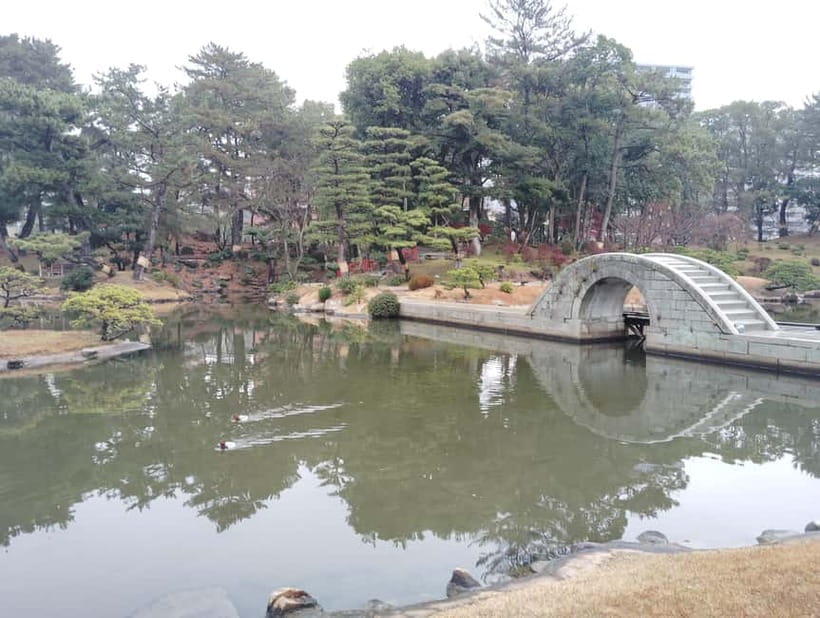
Shukkei-en gives you a quiet pocket of old Japan in the middle of Hiroshima. Its large central pond, curved stone bridge, boat landing, and moon-viewing stage show you how feudal lords built gardens for strolling, viewing, and reflection. I like the way the garden feels carefully composed without being hard to enjoy, and I like that a guide can explain why each feature sits where it does. The possible drawback is simple: at $58 per person for 90 minutes, this is a focused private visit, not a broad Hiroshima history tour.
I especially like the private-group format and the choice of English or Japanese guiding. Naoko received warm thanks from Koichi after a visit with German friends, while Emiko was praised for being friendly and explaining things clearly. You should also know that food and drinks are not included, and the experience begins and ends at Shukkei-en rather than connecting you with other city sights.
In This Review
- Key points at a glance
- Why Shukkei-en feels different from an ordinary city park
- The central pond and the garden’s changing views
- The curved stone bridge, boat landing, and moon-viewing stage
- What the 90-minute guided walk is like
- The value of a private guide at $58
- Who will get the most from this garden visit
- Practical details before you book
- Should you book Shukkei-en with a guide?
- FAQ
- Where does the Shukkei-en Garden tour start?
- How long does the experience last?
- Is the entrance fee included?
- What languages are available?
- Is this a private tour?
- Are food and drinks included?
- Can I cancel for a full refund?
Key points at a glance
- A 300-year-old feudal garden: See a surviving example of the large pond gardens created by regional lords.
- The pond is the garden’s anchor: Paths lead you past changing views of water, buildings, bridges, and planted areas.
- A private 90-minute visit: Your group can focus on questions and move at a more personal pace than a large shared tour.
- English or Japanese guiding: You can select the language that works best for your group.
- Two praised guides: Naoko and Emiko are associated with warm, clear explanations in recent bookings.
- An easy city pause: The garden offers nature and quiet without taking you far from central Hiroshima.
Why Shukkei-en feels different from an ordinary city park
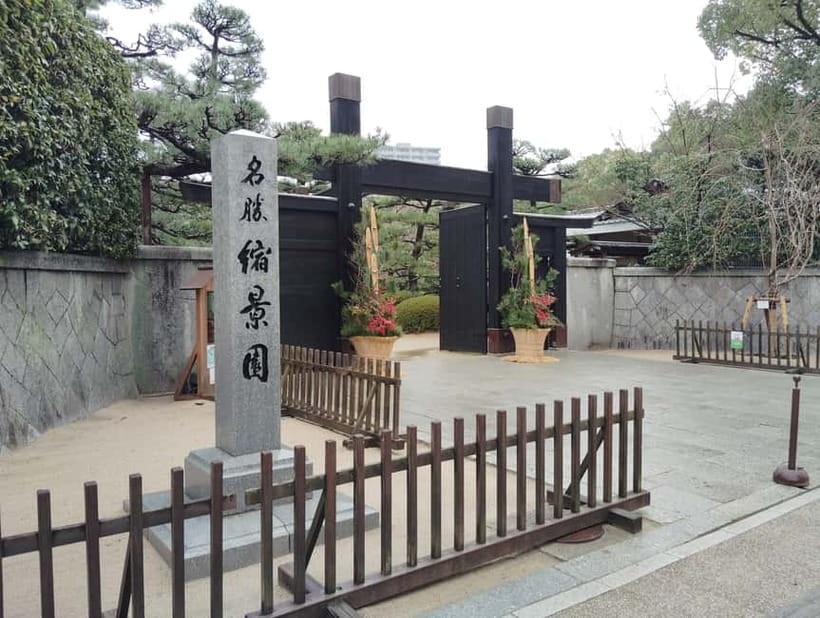
Shukkei-en was built about 300 years ago as a feudal lord’s garden. That detail matters because this is not simply a patch of greenery added to modern Hiroshima. The garden follows the design tradition of daimyo gardens, where a large pond forms the center and the surrounding paths reveal a series of carefully arranged views.
I like this kind of garden because it rewards slow walking. You are not rushing from one famous object to the next. Instead, the scenery changes as you move beside the pond, cross a bridge, look toward a building, or pause near the water. The pleasure comes from the order of the whole place.
The name Shukkei-en is connected with the idea of condensed scenery. The garden reflects famous scenic places in smaller form, giving you variety within a compact area. Your guide can help you notice that design rather than seeing only a pleasant pond and a few attractive structures.
That guidance is useful even if you already enjoy Japanese gardens. Without context, you might admire the curved stone bridge and move on. With an explanation, you can think about how the bridge, water, buildings, and viewing points work together.
A few more Hiroshima tours and experiences worth a look

The central pond and the garden’s changing views
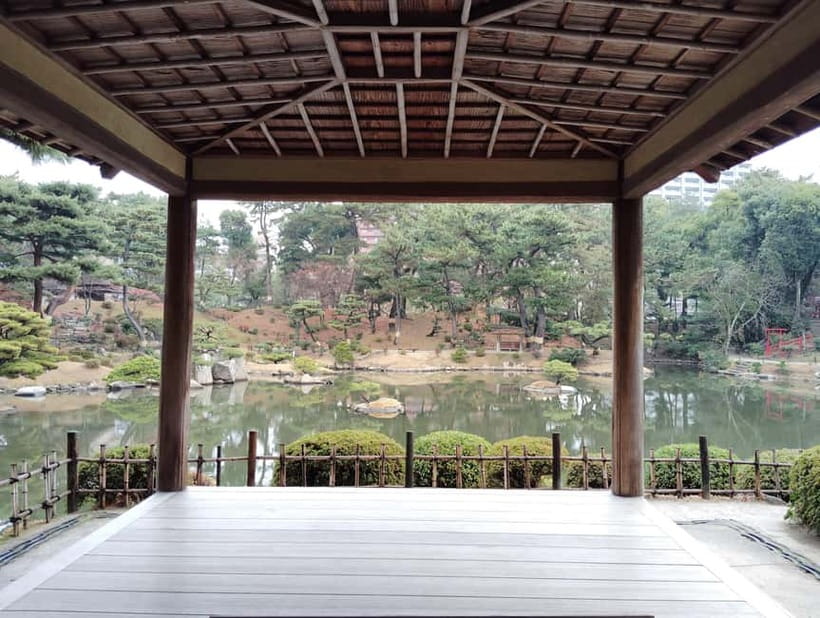
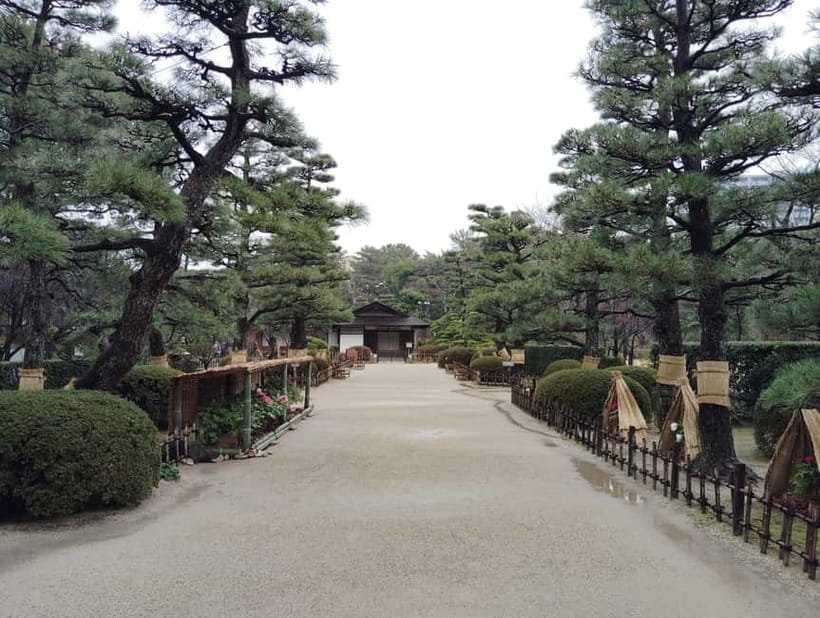
Your walk centers on the large pond. In a daimyo garden, the pond was not a minor decoration. It was the main stage for the garden, with paths and structures arranged around it to create different views from different angles.
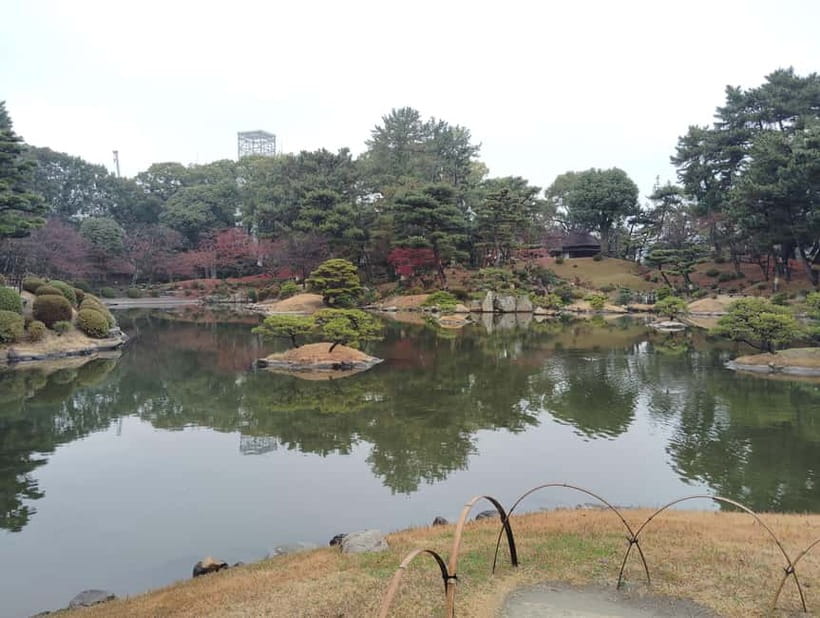
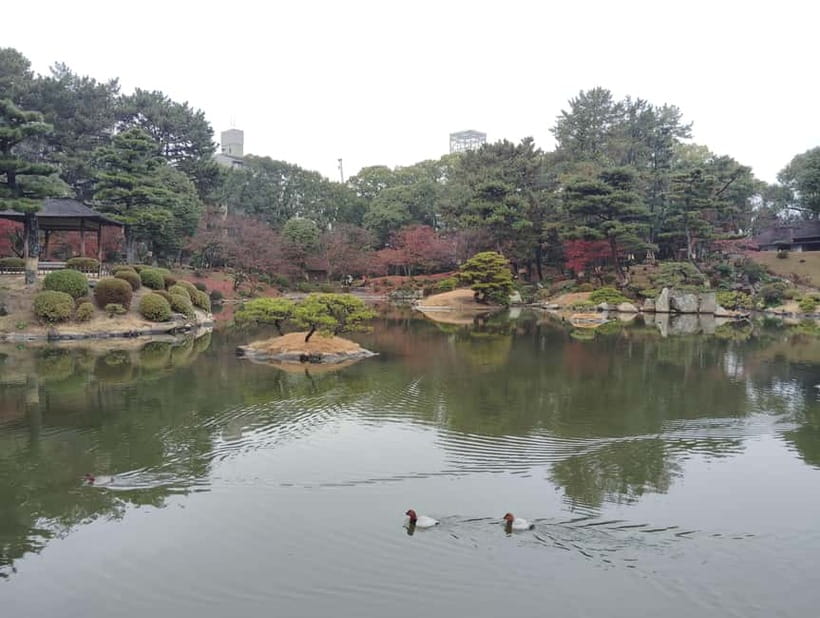
As you follow the path, you can expect a mix of water views, planted areas, and small architectural details. The garden is designed so that one scene leads into another. A view that looks simple from one point can take on a different shape after a short walk.
I find this especially appealing for visitors who want a break from Hiroshima’s busier streets. You get nature without making a separate day trip, and the 90-minute duration gives you enough time to walk with purpose without turning the visit into an exhausting half-day outing.
The pace is also one of the experience’s strengths. A private guide can stop to explain a view or answer a question instead of following a fixed crowd. The tour description does not promise a formal tea service, meal, or extended activity, so you should book it for the garden walk itself.
The curved stone bridge, boat landing, and moon-viewing stage
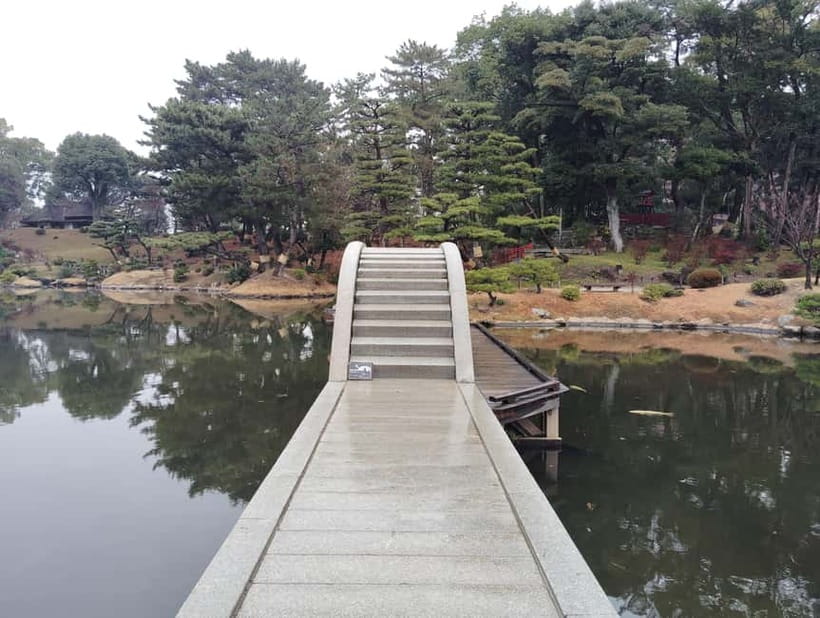
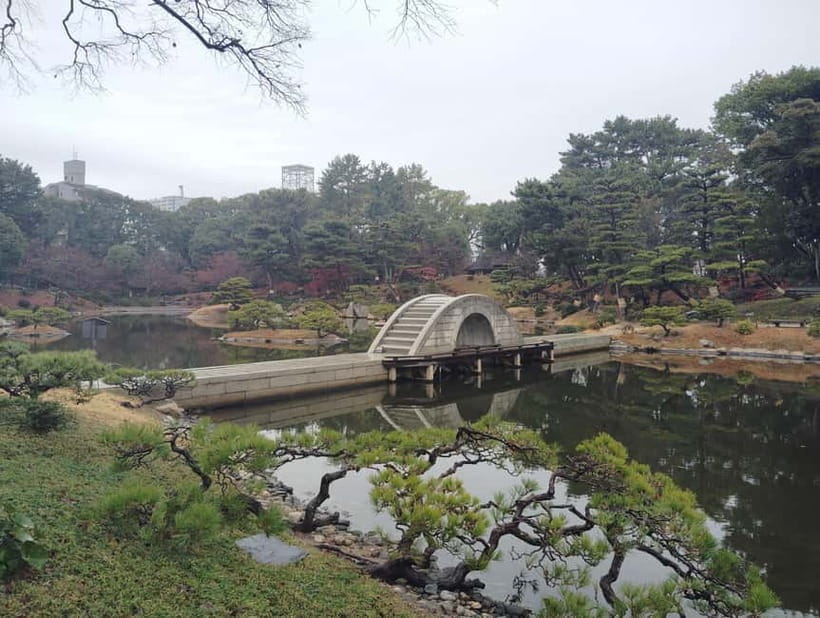
Several structures give the pond its character. The curved stone bridge is one of the most distinctive sights, with a shape that adds a clear visual line across the water. It is the kind of feature that can look decorative at first, but it also helps frame the pond and the views beyond it.
The boat landing offers another reminder that the garden was made for more than walking. It points to an older style of enjoying a daimyo garden, where water, boats, buildings, and carefully planned views formed part of one experience. The supplied details do not say that a boat ride is included, so treat the landing as a feature to see, not a scheduled activity.
You will also see a stage for viewing the moon. Its purpose gives you a glimpse into the garden’s original social life. The structure was meant to support a particular kind of viewing and appreciation, not simply to fill space beside the pond.
I like these details because they give the visit a human scale. You are looking at places built for sitting, watching, crossing, and arriving. A guide can turn those features into a connected story instead of leaving you to guess why they matter.
What the 90-minute guided walk is like
The meeting point is in front of Shukkei-en. Look for the guide holding a yellow sign with the DeepExperience logo. The stated route starts at the garden, includes the garden visit and guided sightseeing walk, then returns to the same location.
That simple arrangement works well if you are planning other Hiroshima activities before or after. You do not need to account for a separate pickup or an end point in another part of the city. At the same time, you are responsible for reaching the garden on your own because transportation is not listed as part of the experience.
The visit lasts 90 minutes. I see that as a good length for a first look at Shukkei-en. You can walk the main paths, spend time around the pond, and hear the garden’s story without committing a full morning or afternoon.
A short tour does require sensible expectations. You are unlikely to inspect every corner in depth or linger at every view for as long as you might on a solo visit. If you want to sketch, photograph every bridge from several angles, or sit quietly for a long time, you may prefer to return independently after the guided walk.
The value of a private guide at $58
At $58 per person, this is not the cheapest way to enter a garden. The price includes the entrance fee and a professional guide, but not food or drinks. The value depends on how much you want from the explanation and how useful a private group feels to you.
For a solo visitor or a couple, $58 can feel like a premium for a 90-minute garden visit. For a small group, the private format may make more sense, especially if you want to ask questions or need English guidance. You are paying for interpretation and attention, not just admission.
The guide language is English or Japanese. That is important because the garden’s design is subtle. A clear explanation of daimyo gardens, the central pond, and the purpose of the structures can make the setting more meaningful than a self-guided stroll.
Recent guide experiences give you useful names to note. Naoko led Koichi and German friends, who were very pleased with the visit. Emiko was praised for her friendly manner and clear explanations during a German-language booking, though the listed tour languages are English and Japanese. These comments point to the personal tone you can expect, but guide assignment is not stated as guaranteed.
The booking terms also reduce some planning risk. You can cancel up to 24 hours before the experience for a full refund, and you can reserve now and pay later. Starting times depend on availability, so check the schedule that fits your Hiroshima plans.
Other guided tours in Hiroshima




Who will get the most from this garden visit
I would recommend this experience to you if you enjoy gardens but want help understanding what you see. It also suits first-time visitors to Hiroshima who want a calm activity in the city rather than another tightly packed historical stop.
The private group format is useful for families, couples, and friends who prefer not to join strangers. It can also help if some people in your group are more interested in Japanese design than others. A guide can keep the walk engaging without requiring everyone to read signs or research the garden beforehand.
This is also a good choice for people who have already visited Hiroshima’s major memorial sites and want a change of mood. Shukkei-en does not replace those important places, but it offers a different way to understand the city. Here, the focus is on scenery, garden planning, and quiet observation.
I would be more cautious if your main goal is Hiroshima’s wartime history. The experience takes place at Shukkei-en and is built around the garden. It does not list the Peace Memorial Park, Atomic Bomb Dome, museum visits, or transportation between attractions.
You should also think about your timing. The garden may be most enjoyable when you are willing to slow down. If your schedule is packed and you dislike stopping for views, the price may be harder to justify. If you appreciate a peaceful walk with explanation, 90 minutes is a manageable commitment.
Practical details before you book
Meet in front of Shukkei-en and identify the yellow DeepExperience sign. Since the tour returns to the garden, plan your next activity with the garden as your reference point rather than expecting to finish at another landmark.
Entrance is included, as is the professional guide fee. Food and drinks are not included, so do not expect refreshments as part of the visit. The available guide languages are English and Japanese, and the group type is private.
The garden walk involves strolling along paths by the pond. The information provided does not specify accessibility conditions, restroom details, weather arrangements, or the exact starting times. If any of those points affect your plans, confirm them before booking rather than guessing.
The overall rating is 5 from three reviews, including recent visits in June and September 2025. That is encouraging, especially because the praise focuses on the human side of the tour: Emiko’s friendly, clear explanations and Naoko’s successful visit with German friends. The sample is small, so I would treat it as a positive signal rather than a guarantee of the same guide or experience.
Should you book Shukkei-en with a guide?
Book this tour if you want a short, private, explained visit to one of Hiroshima’s historic gardens. The central pond, curved bridge, boat landing, and moon-viewing stage give you plenty to see, while the guide helps connect those features to daimyo garden design.
Skip it if you only want a quick admission ticket, prefer to wander alone, or need an activity centered on Hiroshima’s modern history. At $58, the tour makes the most sense when the guide’s interpretation and private format matter to you.
For many visitors, Shukkei-en works best as a quiet counterpoint to Hiroshima’s more serious memorial sites. You get a well-shaped 90-minute walk, a little breathing room, and a clearer sense of how a traditional Japanese garden creates beauty through movement and changing views.
FAQ
Where does the Shukkei-en Garden tour start?
The meeting point is in front of Shukkei-en. Your guide will hold a yellow sign with the DeepExperience logo.
How long does the experience last?
The guided garden visit lasts 90 minutes.
Is the entrance fee included?
Yes. The entrance fee for Shukkei-en Garden is included in the price.
What languages are available?
The live guide is available in English or Japanese.
Is this a private tour?
Yes. The group type is listed as a private group.
Are food and drinks included?
No. Food and drinks are not included.
Can I cancel for a full refund?
Yes. You can cancel up to 24 hours in advance for a full refund. You can also reserve now and pay later.
More Guided Tours in Hiroshima
More Hiroshima City Tours in Hiroshima
More tours in Hiroshima we've reviewed




Hiroshima City Tours, compared.
 ★ 5.0Peaceful Hiroshima & Miyajima UNESCO 1 Day Bus TourFrom $129
 ★ 4.9Hiroshima: Hiroshima and Miyajima UNESCO Sites 1-Day TourFrom $1228 hours
 ★ 5.0Hiroshima / Miyajima Full-day Private Tour with Government Licensed GuideFrom $202
 ★ 4.7Osaka/Kyoto: Hiroshima Miyajima Bus Tour & Shinkansen TicketFrom $27712 hours
 ★ 4.8Hiroshima Historical Walking Tour – Why A-Bomb was DroppedFrom $352h 30m
 ★ 5.0Hiroshima Peace (Heiwa) Walking Tour at World Heritage SitesFrom $94
