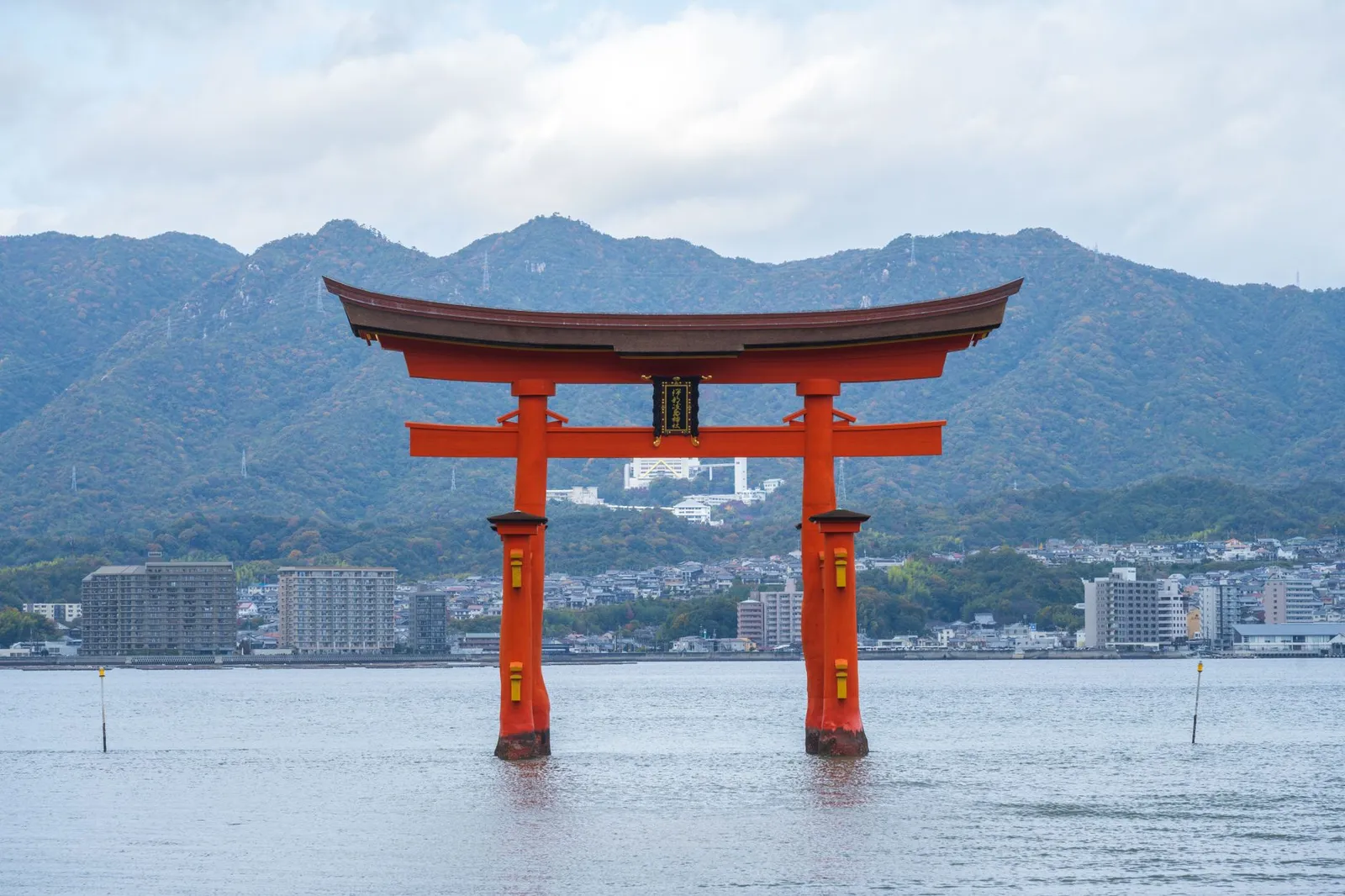
Most Hiroshima plans give Miyajima the middle of the day: a train after breakfast, the ferry at ten, the shrine at eleven, grilled oysters at noon and back on the mainland by three. It works. It also puts you on the island in exactly the hours when the shopping street moves at a shuffle and every tour group in the prefecture is queuing at the shrine gate.
The fix costs an alarm clock or one hotel night. Itsukushima Shrine opens at 06:30 every day of the year, and the first JR ferry leaves Miyajimaguchi at 06:25. Sleep on the island instead and you get the other end of the day as well: the Great Torii floodlit from half an hour after sunset until 23:00, with the last JR boat back to the mainland at 22:14 if you change your mind.
Everything below hangs on that one choice, Miyajima early or Miyajima overnight, and on the tide table, which decides whether the torii is standing in the sea or on sand when you get there. Two days is enough for the city and the island. A third adds an arched bridge, a naval port or a ride across the islands, and a fourth reaches the sake breweries of Saijō or the hillside temples of Onomichi.
On this page8 stops
- How many days, and the one rule
- Two days: the city, then the island
- Three days: add Iwakuni, Kure or the Shimanami
- Four days: Onomichi and the islands, or Saijō sake
- Where to sleep, and what to do with your bags
- The rail pass question, as of 2026
- From Osaka or Kyoto in a day
- Seasons, crowds and dates to plan around


How many days, and the one rule
One day is possible, and I cover how to make it work from Osaka or Kyoto further down, but it means choosing between the Peace Memorial Museum and Mount Misen, and rushing both. Two days is the real minimum: one for Hiroshima city, one for Miyajima (宮島). Three days lets you add one side trip without stealing time from either, and four gives you a choice of two, or a night somewhere other than Hiroshima.
| Trip length | Day 1 | Day 2 | Day 3 | Day 4 |
|---|---|---|---|---|
| 2 days | Hiroshima city | Miyajima from the first ferry | ||
| 2 days, island night | City, then Miyajima by late afternoon | Shrine at 06:30, Misen, back by lunch | ||
| 3 days | Hiroshima city | Miyajima | Iwakuni, Kure or the Shimanami | |
| 4 days | Hiroshima city | Miyajima | Iwakuni or Kure | Onomichi, or Saijō and Ōkunoshima |
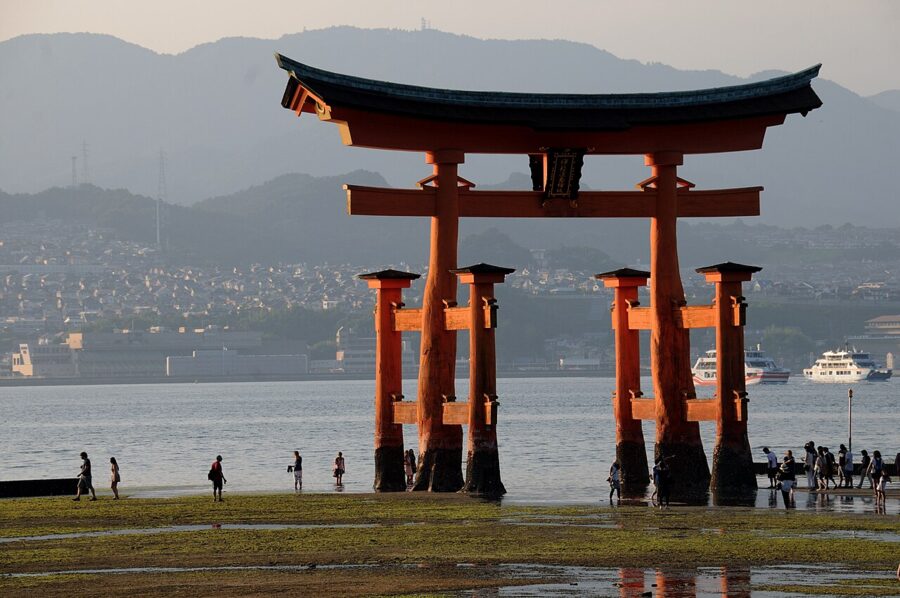
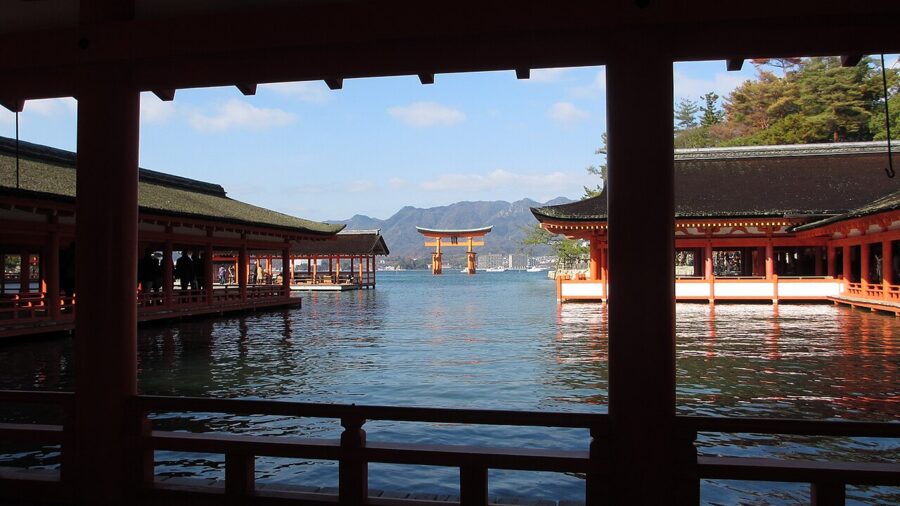
The rule is about the tide as much as the crowds. The Miyajima Tourist Association publishes a tide calendar for every day of the year, with two thresholds that matter: below 100 centimetres you can walk out to the torii, and above 250 the shrine and the gate appear to float. High tide alone is not enough, and low tide does not always mean dry sand. The figures are for Hiroshima port, and the turn at Itsukushima comes slightly earlier.
So before you fix which day is the Miyajima day, open that calendar. If one of your days has a low tide around 07:00 and a high tide around lunchtime, that is the one: walk out to the gate first thing, ride up the mountain, and come back down to the shore to see the shrine standing in water. A day with high water at dawn suits the overnight plan better, because you see the floating shrine from the beach before breakfast.

Two days: the city, then the island
This is the core of every longer trip below, so it is worth getting the order right. If you arrive in Hiroshima before noon, do the city on day one and give the whole of day two to Miyajima. If you arrive in the afternoon, start with the Peace Memorial Museum, which stays open into the evening, and still keep the next full day for the island: Misen’s ropeway stops by late afternoon.
Day 1: Hiroshima city
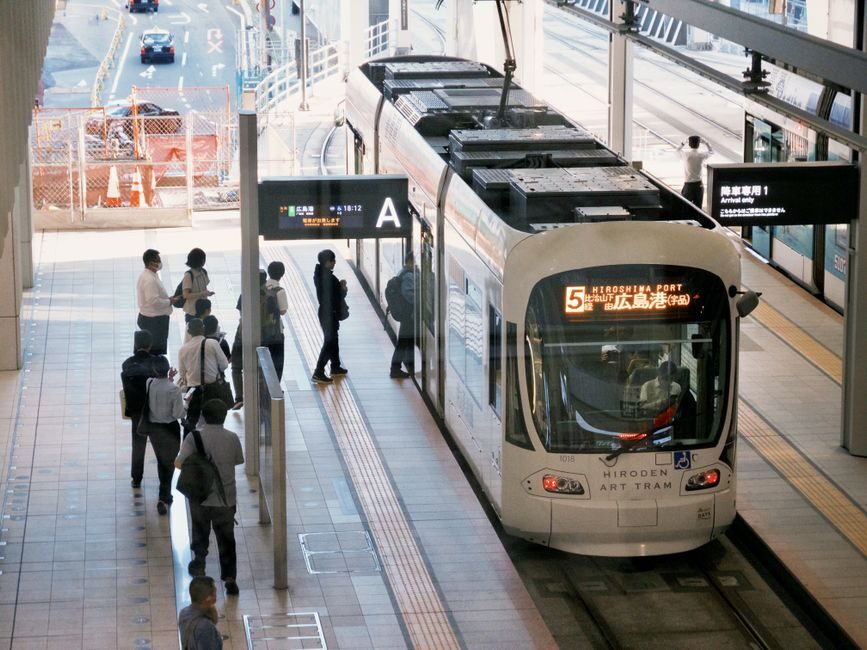
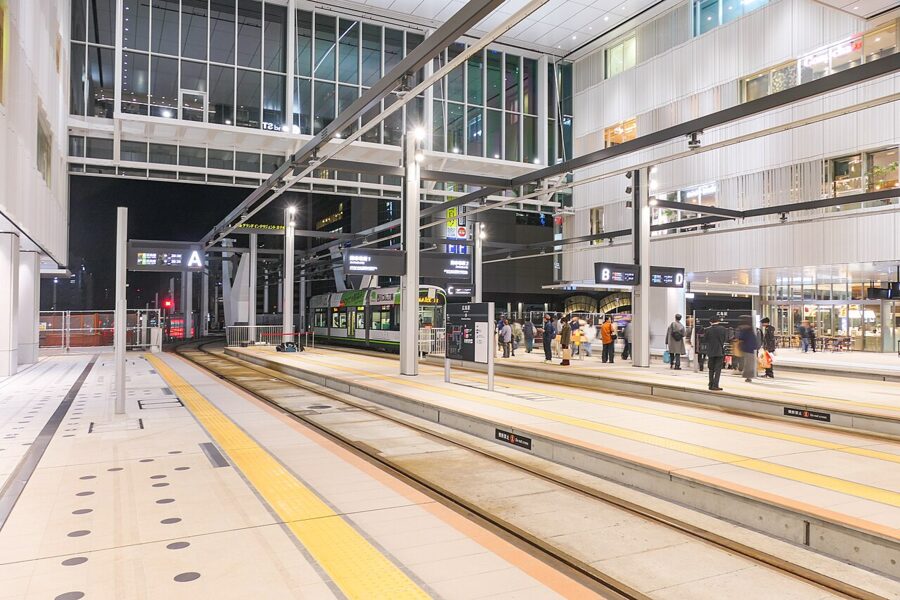
Leave your bags at Hiroshima Station and take the tram. Since August 2025 the Hiroden stop has been on the second floor of the station building, with separate platforms for each route, and every ride inside the city costs the same ¥240. A tram day pass is ¥700 (about US$4.50), which pays for itself on the third ride.
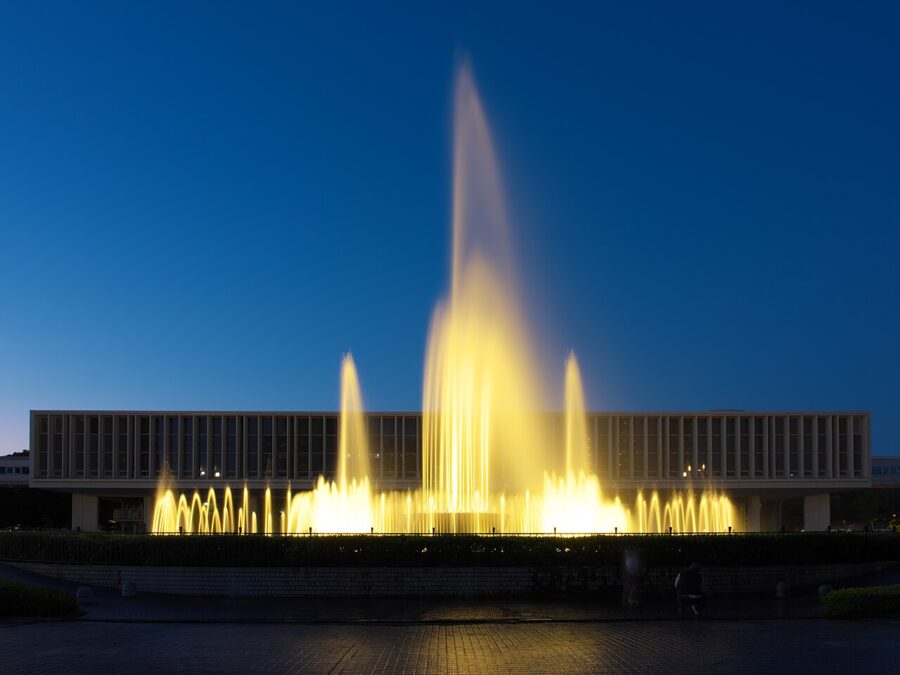
07:30, the museum. The Hiroshima Peace Memorial Museum opens at 07:30 all year. Entry to the permanent galleries between 07:30 and 08:30 needs an online reservation, and that early slot is the best hour in the building: the school groups and tour coaches arrive later. Adult entry is ¥200 (about US$1.30).
Give it two hours at the very least, because the rooms of belongings and testimony are not something to walk through quickly.
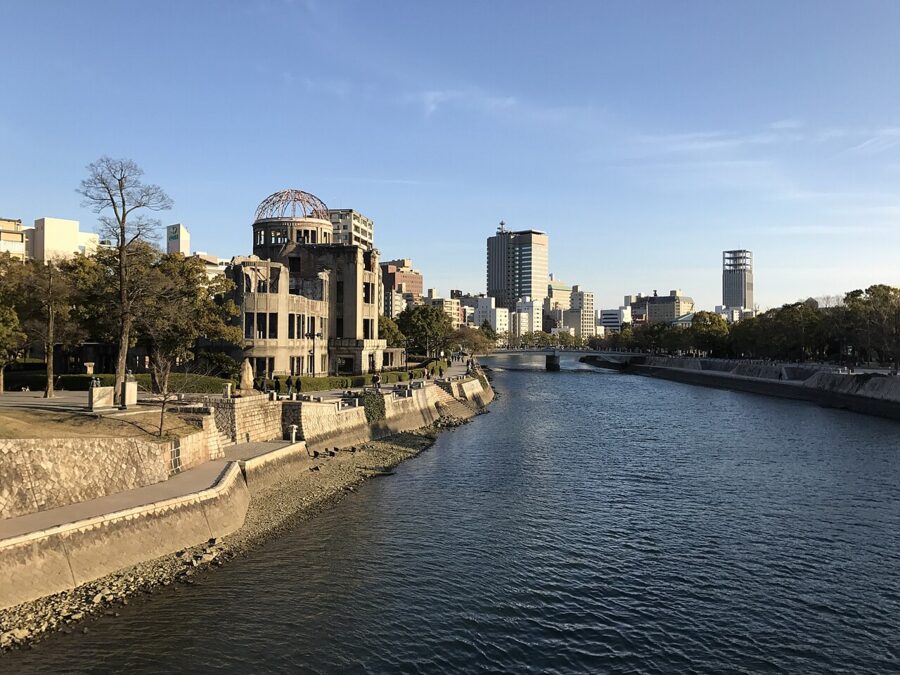
Around 10:00, the park. Come out into the Peace Memorial Park and walk north past the Cenotaph and the Children’s Peace Monument to the Atomic Bomb Dome on the riverbank. Every memorial in the Peace Memorial Park has its own story, and they make more sense taken in order. Allow an hour, and longer if the flame and the bells hold you.

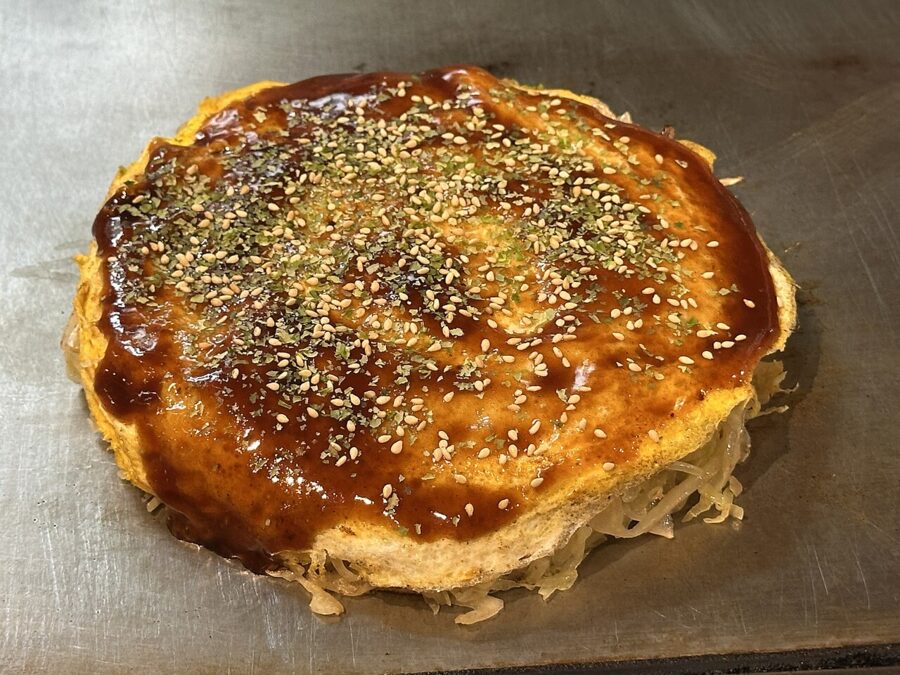
12:00, lunch. Hiroshima-style okonomiyaki, layered rather than mixed, with noodles and a heap of cabbage pressed down on the griddle, is the city’s lunch. Hiroshima okonomiyaki comes with its own etiquette, starting with where to sit at the counter. Leave the Peace Park area for it and head towards Hondōri and Hatchōbori, which are a few minutes’ walk east.

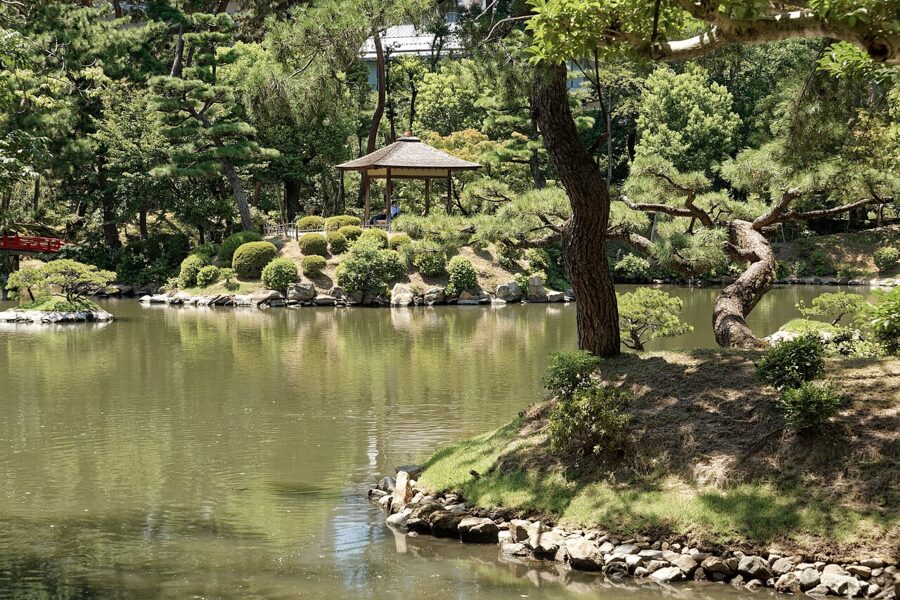
13:30, Shukkeien. Shukkeien (縮景園) is the Asano lords’ garden, laid out around a pond with islands, bridges and tea houses. Entry is ¥350 (about US$2.30).
It opens 09:00 to 17:00 from mid-September to mid-March and until 18:00 in summer, with last entry half an hour before closing. It is the quiet hour that makes the morning bearable.

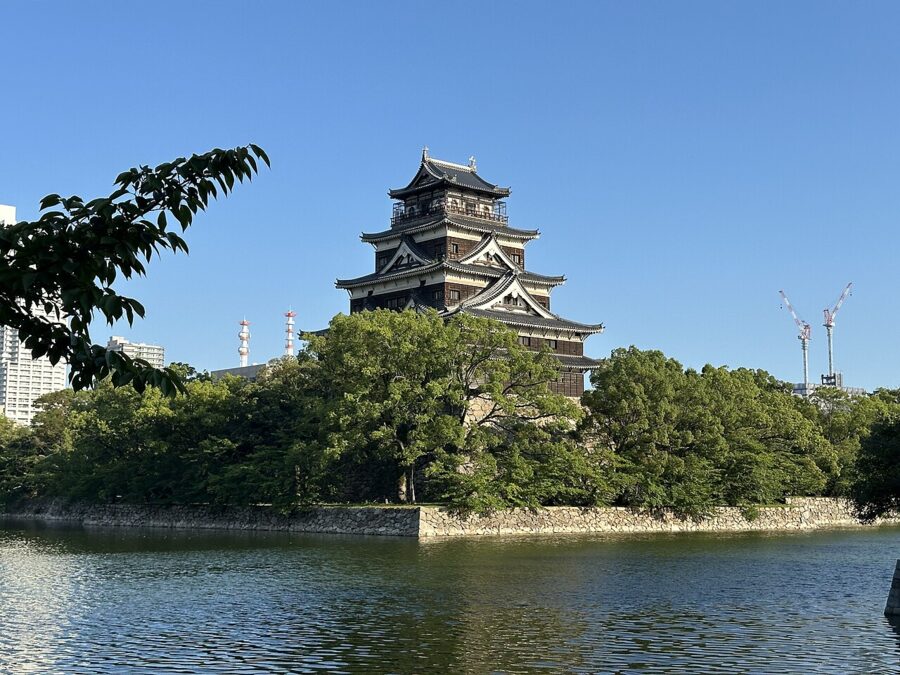
15:00, the castle grounds. Hiroshima Castle’s keep closed to visitors on 22 March 2026, after the city judged its 1958 concrete too worn to keep the museum inside open. You can still walk the moat and the grounds and look at the exterior, and the city says it has no plans to demolish the keep.
Its museum role moves to a new Sannomaru history museum, scheduled to open in two stages from June 2027. For now, treat the castle as a walk rather than a ticket.

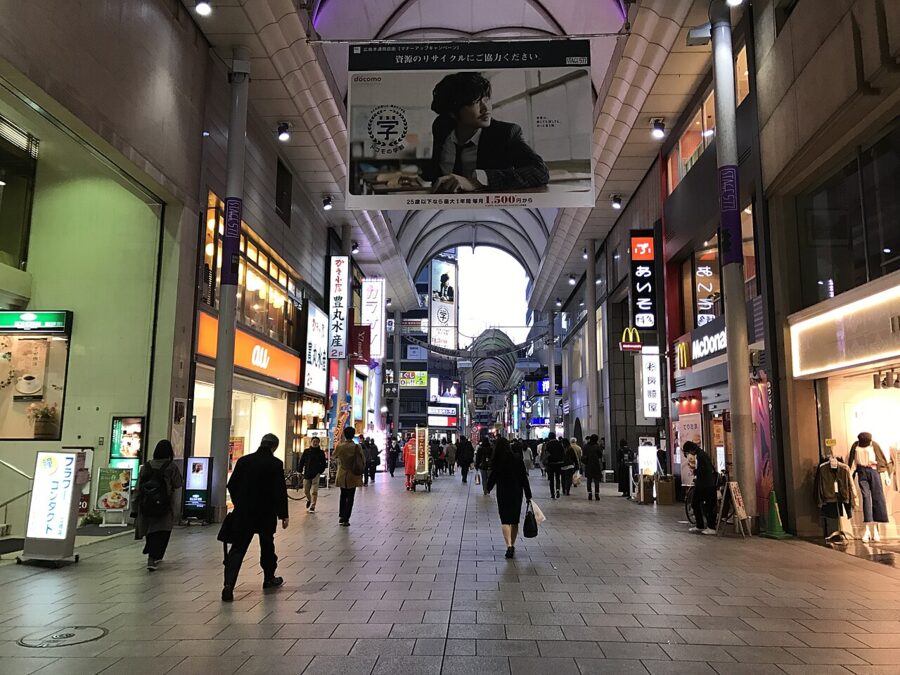
Evening. Hondōri, the covered shopping street, runs east from the Peace Park towards Hatchōbori, and the bars and izakaya of Nagarekawa start just beyond. There is plenty more of Hiroshima to fill a second evening if you have one. If lunch was something else, this is when the okonomiyaki happens.

Day 2: Miyajima from the first ferry
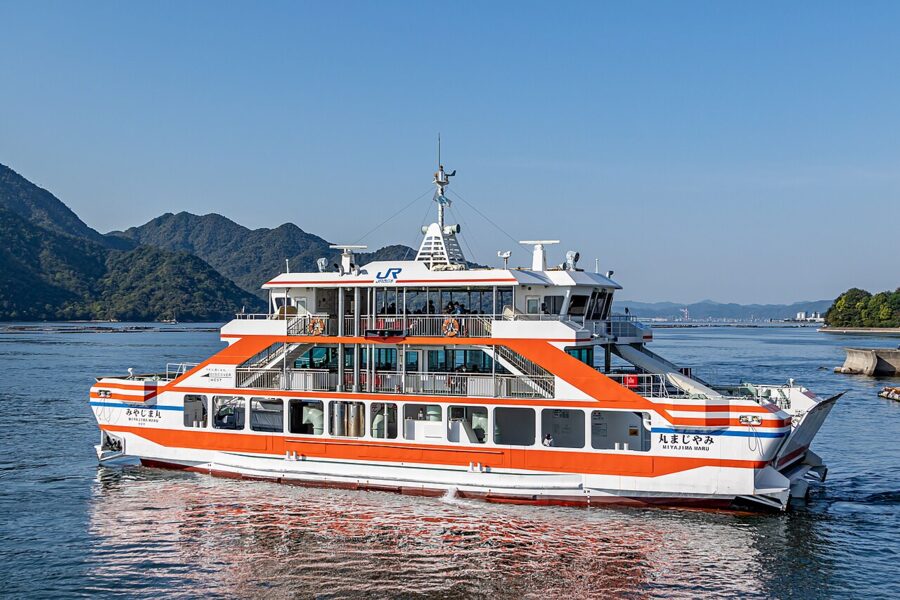
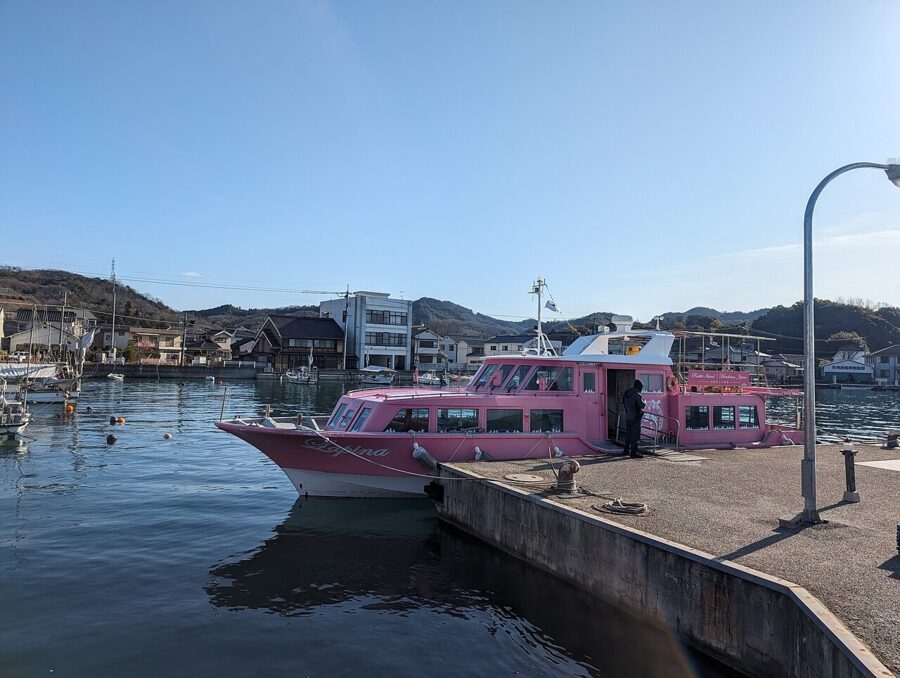
Getting there. JR Sanyō Line local trains from Hiroshima Station reach Miyajimaguchi in about half an hour for ¥420 (about US$2.70), and the ferry pier is a short walk from the station. The JR ferry timetable runs every 15 minutes through most of the day, and each crossing takes about ten minutes. The fare is ¥200 each way, plus the island’s ¥100 (about US$0.65) visitor tax on the way out.
The slower alternative is the Hiroden tram, line 2, all the way to Miyajimaguchi. If you go that way, the tram-and-ferry day pass at ¥1,000 (about US$6.50) covers the trams and the other ferry company, Miyajima Matsudai Kisen, and already includes the visitor tax. It is not valid on the JR boats.
06:30, the shrine. Itsukushima Shrine (厳島神社) opens at 06:30 and closes between 17:00 and 18:00 depending on the month. Entry is ¥300 (about US$2), or ¥500 (about US$3.20) with the Treasure Hall. The route through the corridors runs one way, and in the first hour you can stop on the Hirabutai platform and look at the torii without anyone at your elbow.
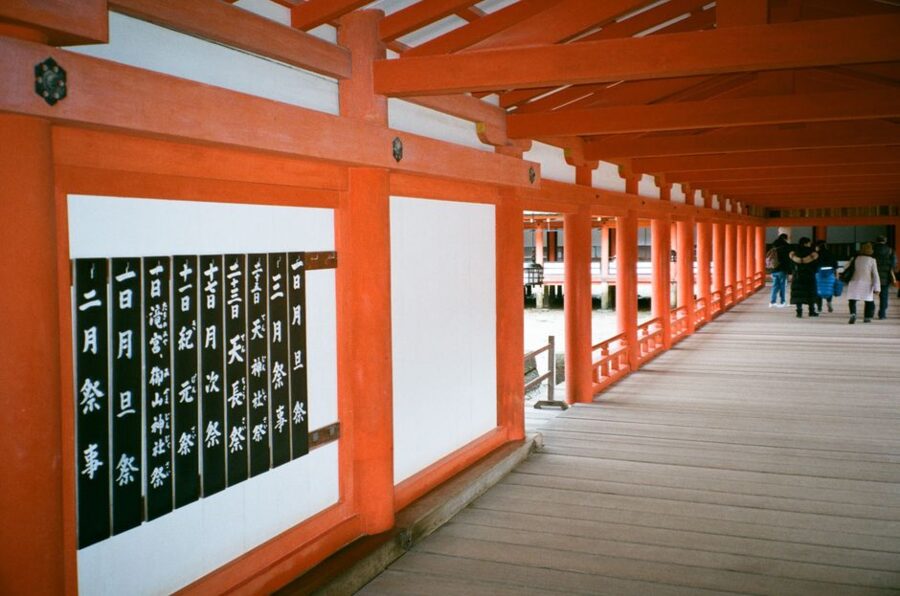
Before 09:00, the beach. If the calendar shows a low tide in the early morning, go straight from the shrine exit to the sand and walk out to the gate. The shrine, the torii and the rest of Miyajima deserve more than a timetable, but here the timings are what matter.
09:00, Mount Misen (弥山). The Miyajima Ropeway starts running at 09:00. A free shuttle bus runs up to its lower station in Momijidani Park, or you can walk up through the park from the shrine.
Two lines take you up: the small Momijidani cars for about ten minutes, then the larger Shishiiwa cars for about four. The return fare is ¥2,000 (about US$13), or ¥1,100 (about US$7) one way.
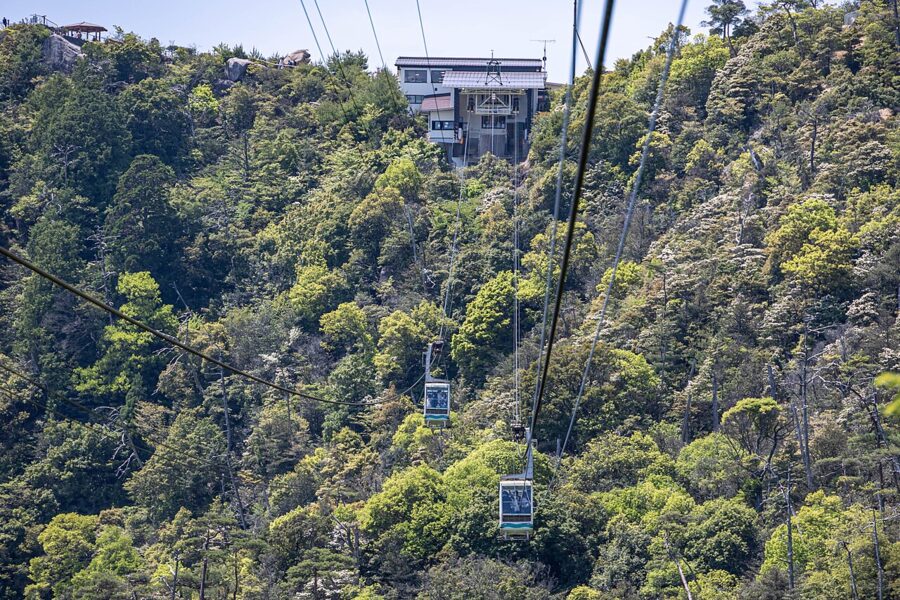

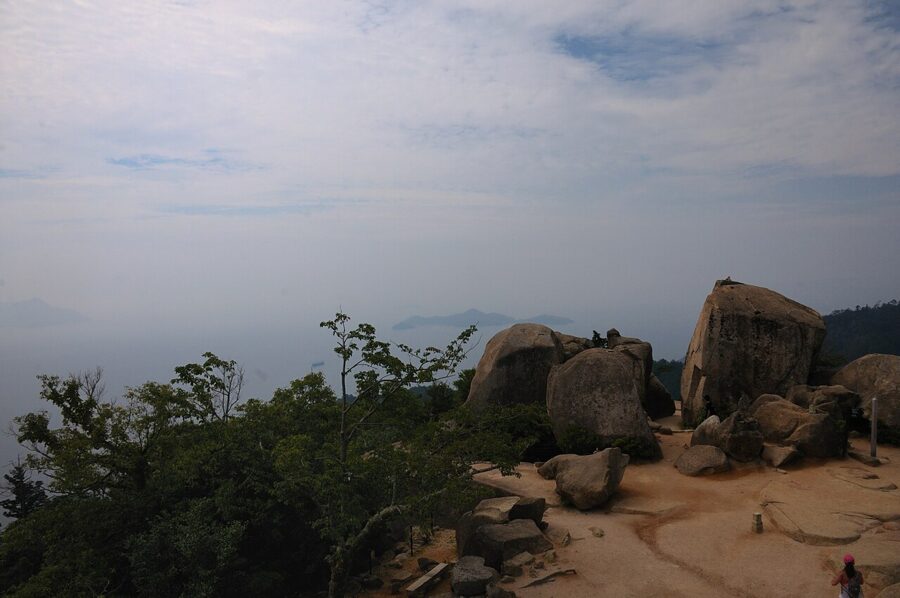
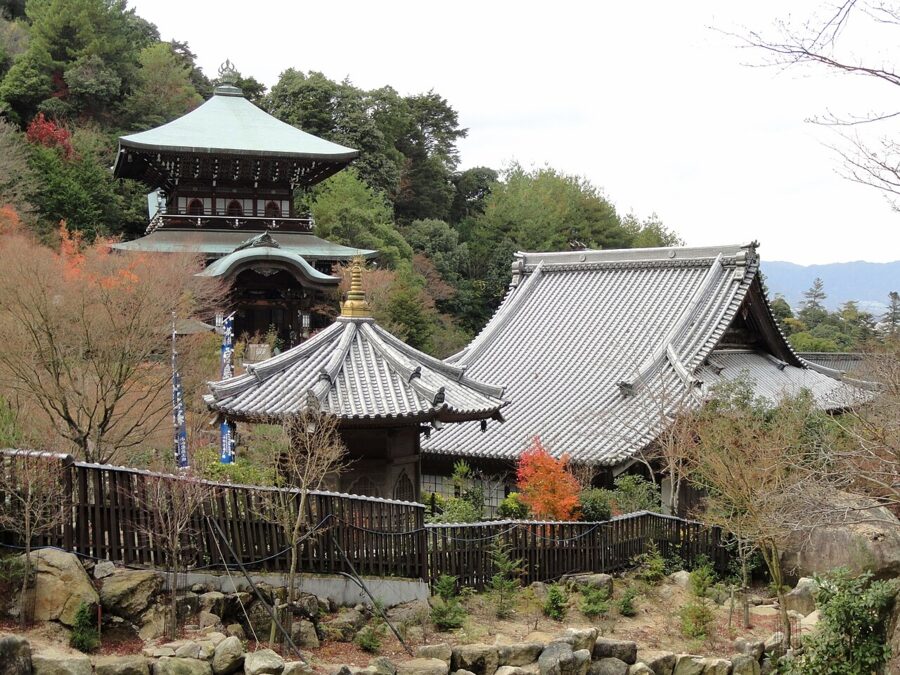
From Shishiiwa Station it is still about 30 minutes on foot to the summit, over steps and rock, so this is not a sandals walk. The last car up leaves at 16:00 as of late 2026, and on its busiest dates you need to reserve a slot online in advance. The cleanest plan is to ride up, walk to the top, and walk all the way down on the Daishō-in trail, which takes an hour and a half to two hours in the uphill direction and less going down.

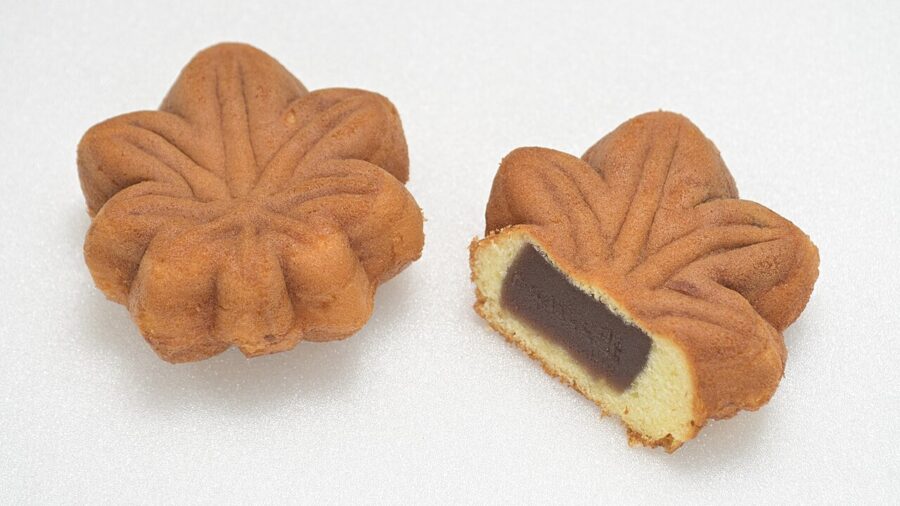
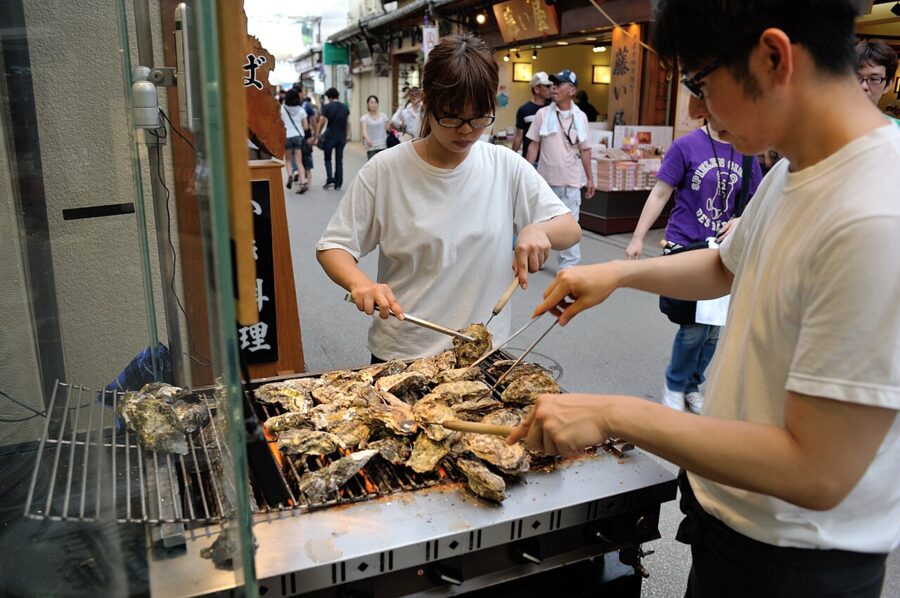
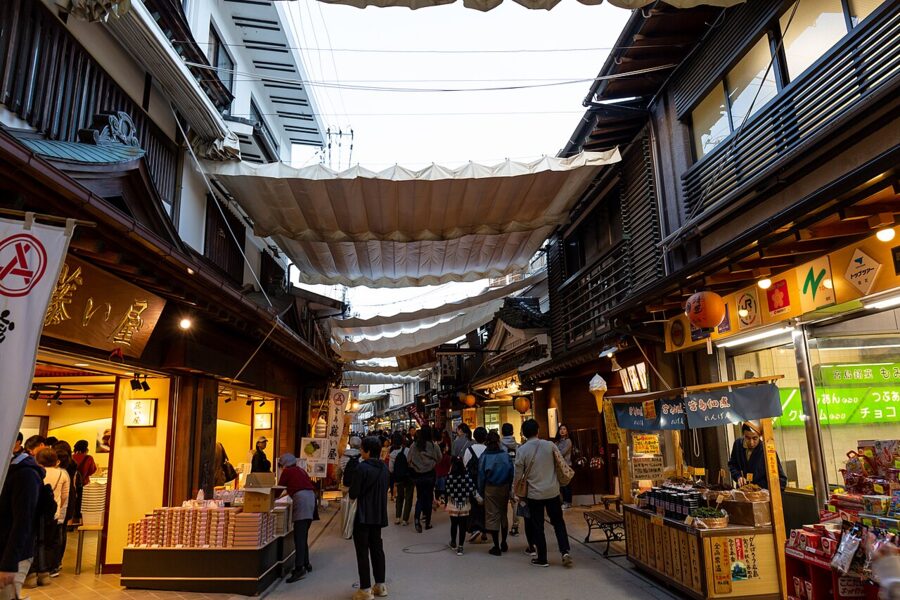
12:30, lunch on the shopping street. Omotesandō, the main shopping street between the pier and the shrine, is lined with stalls grilling oysters in their shells and shops selling momiji manjū, maple-leaf cakes. By lunchtime it is at its busiest, which is a good reason to have done the shrine already. The Hiroshima oysters page explains why this bay grows so many of them.

Afternoon, the second tide. Go back to the shore when the calendar says the water is high, and the shrine you walked through at dawn is standing in the sea. Then take one of the last boats back. The fastest way to Hiroshima’s centre is the World Heritage Sea Route high-speed boat to the Peace Park pier, 45 minutes for ¥2,400 (about US$15.50) one way plus the visitor tax, with the last sailing from Miyajima at 17:30 on the current timetable.
The overnight version
If you can afford one night on the island, it is the better trip. Do the city in the morning of day one, then take the train and ferry across by late afternoon. Watch the sun go down from the beach, eat on the island, and walk out along the shore after dark: the illuminations on the torii, the shrine and the pagodas run from 30 minutes after sunset until 23:00 nearly every night. You cannot enter the shrine during the light-up, but the shore paths stay open.
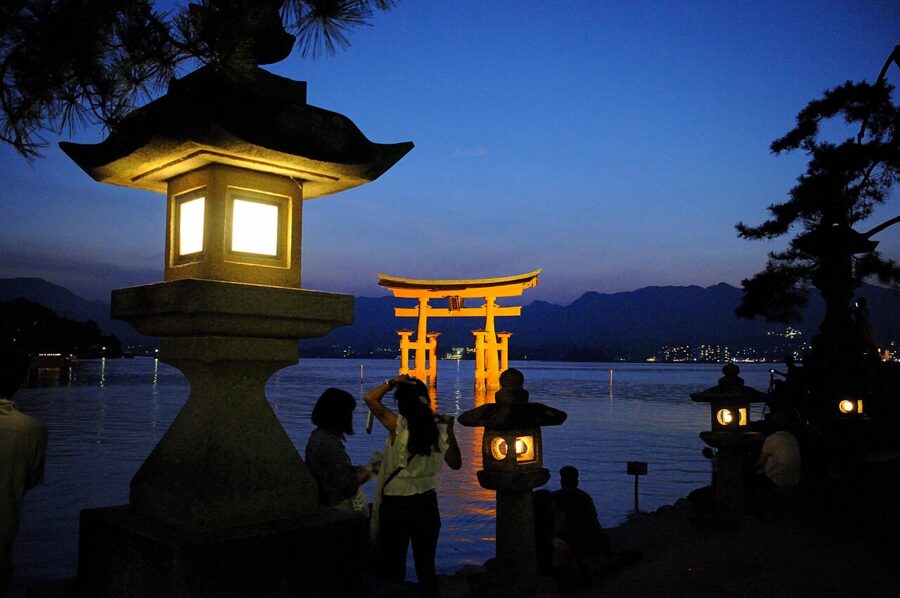

Day two then starts on the doorstep. Be at the shrine at 06:30, walk to the gate if the tide allows, ride up Misen when the ropeway opens at 09:00, and be back in Hiroshima by early afternoon, ready for a train out. You lose nothing from the two-day plan and gain the island’s two quietest stretches of the day.
Three days: add Iwakuni, Kure or the Shimanami
With a third day, pick one of these. Each is a comfortable day trip from a Hiroshima hotel, and each suits a different traveller: Iwakuni for a beautiful bridge and a castle, Kure for naval history, the Shimanami for a bicycle and the Inland Sea.
Iwakuni and Kintai-kyō
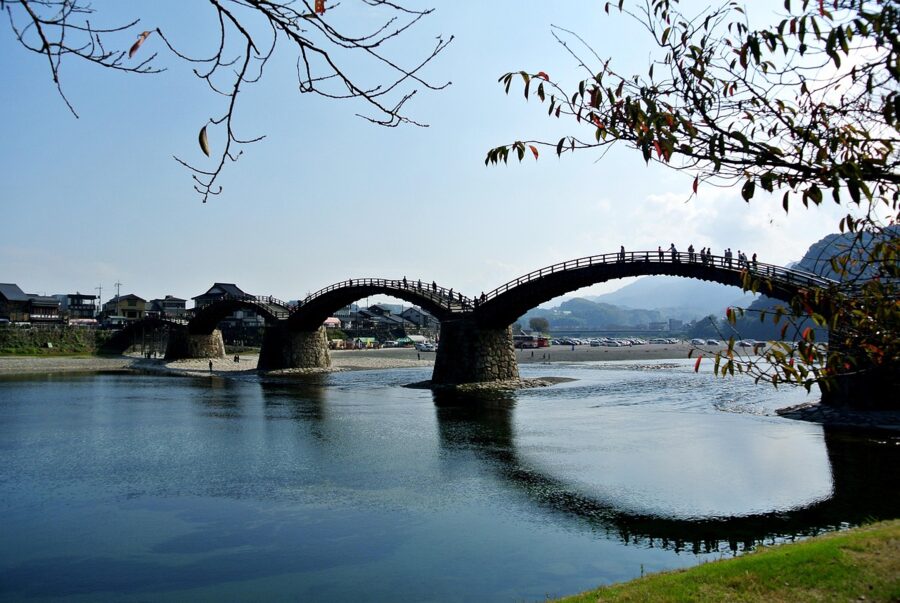
Iwakuni is on the same JR Sanyō Line as Miyajimaguchi, about 50 minutes from Hiroshima for ¥770 (about US$5), and buses from the station reach the bridge in around 20 minutes. Kintai-kyō (錦帯橋), five wooden arches over the Nishiki River, opens its ticket booth at 08:00. Since 1 September 2026 the bridge ticket has been ¥500, or ¥1,550 (about US$10) for a set that adds the ropeway up to Iwakuni Castle and the castle itself.
Because Iwakuni and Miyajimaguchi are on the same line, this side trip also fits the overnight plan neatly. Do the bridge and the castle in the morning, ride back towards Hiroshima and get off at Miyajimaguchi, and be on the island for the afternoon and the night. The Iwakuni guide has the bridge’s history, the castle and the cormorant fishing season.
If you want someone to explain the Kikkawa clan’s bridge and castle as you go, a three-hour private walk with a local guide starts and ends at Iwakuni Station and includes the bridge and castle tickets. My review of the Iwakuni guided walk covers how much walking it involves.

Kure, the naval port
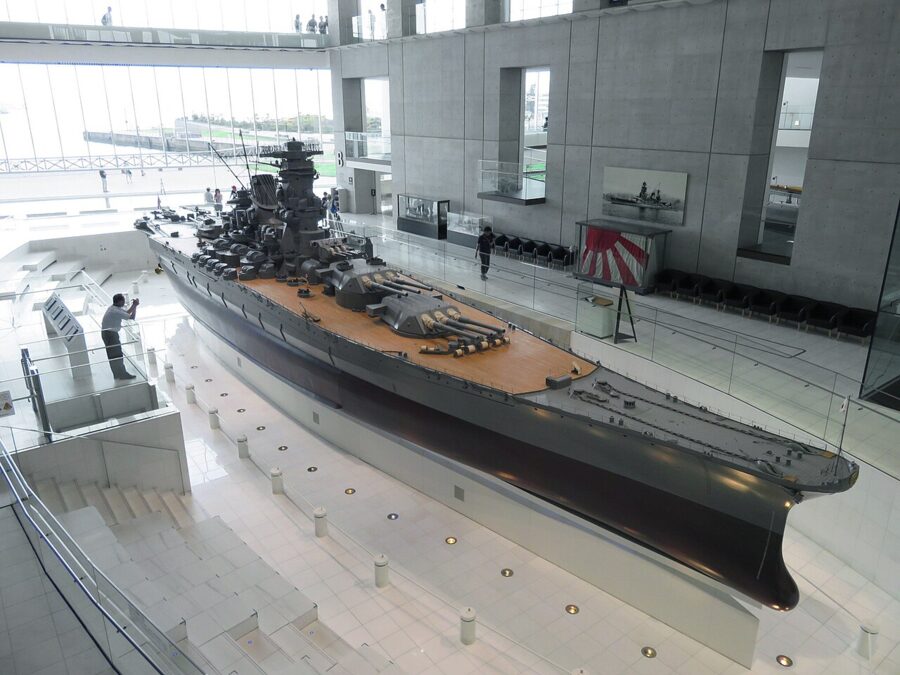
Kure (呉) built the battleship Yamato, and it is still a naval base. JR Kure Line trains reach it in about 35 minutes on the Akiji Liner rapid, for ¥510 (about US$3.30). The Yamato Museum reopened on 23 April 2026 after more than a year of renovation, with around 300 more exhibits and a reworked version of its one-tenth scale Yamato. It opens 09:00 to 18:00.

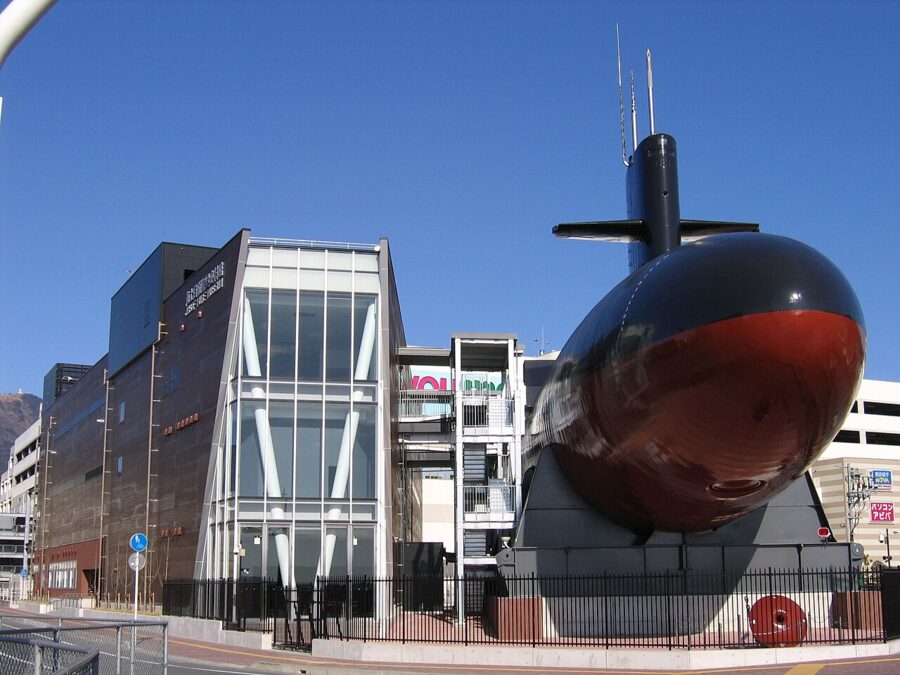
Across the road, the Maritime Self-Defense Force’s Kure Museum puts a real submarine, the Akishio, on the pavement, and entry is free. Both museums close on Tuesdays outside Golden Week and the summer holidays, so do not choose a Tuesday for Kure.

A guided day in Kure with a harbour cruise adds a short boat trip past the warships and submarines in the harbour, with an English-speaking guide handling the trains and the timings. It starts at Hiroshima Station and runs about nine hours; my review of the Kure naval day tour has the details.
The Shimanami Kaidō, as a long day
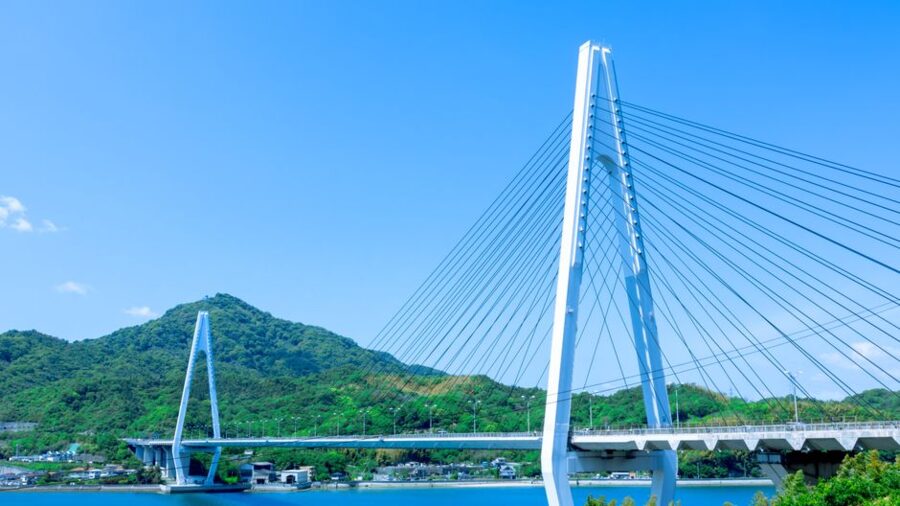
The Shimanami Kaidō is the road and cycle route that hops across six islands on a chain of bridges from Onomichi to Imabari on Shikoku. From Hiroshima, the start at Onomichi is about 55 minutes by Shinkansen with a change at Fukuyama, or about an hour and a half on local trains for ¥1,520 (about US$10).
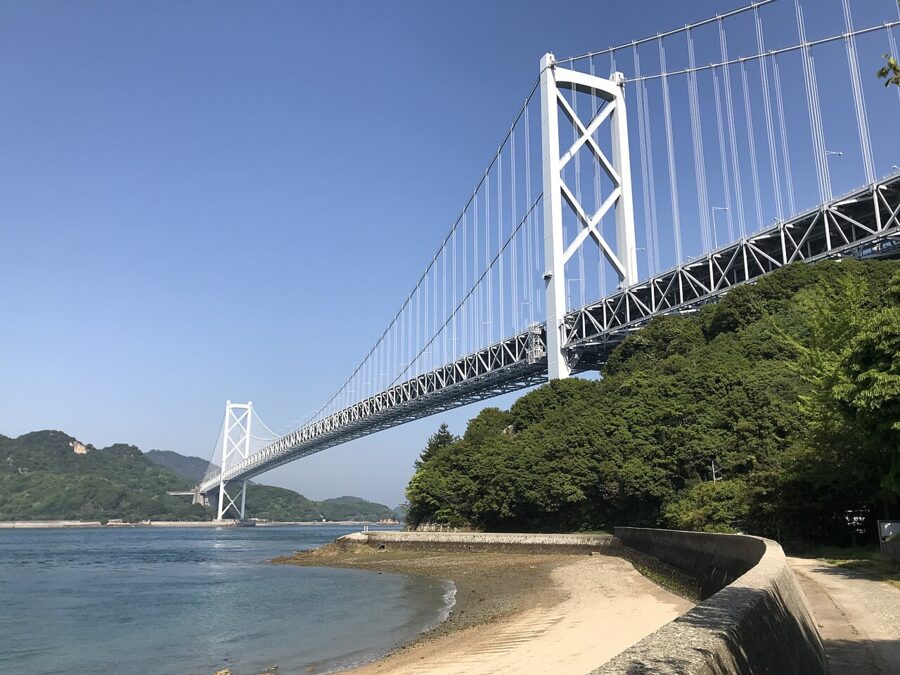

As a day trip from Hiroshima it is a stretch: by the time you have reached Onomichi, rented a bike and crossed to the first island, it is late morning. Ride the first two or three islands and come back the way you came, or better, move the Shimanami into a four-day plan with a night in Onomichi.
Four days: Onomichi and the islands, or Saijō sake
Four days lets you keep the city and Miyajima at a gentle pace, add one of the three-day options, and still have a fourth day to spend east of Hiroshima. I would choose between two very different days.
Onomichi and the islands, with a night
Take your bags with you on day three and sleep in Onomichi. The town is built up a steep hillside of temples and narrow lanes above a narrow strait, and an afternoon on the slopes, followed by an evening by the water, is the best introduction to it. On day four you can rent a bike at the port and ride into the islands from the start of the route, then return to Onomichi for a train out.
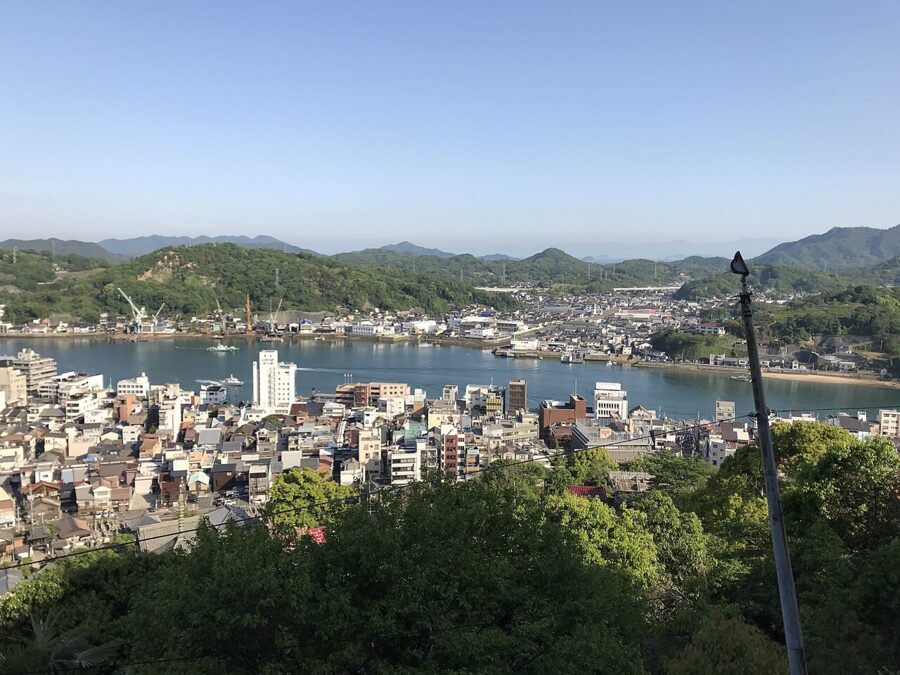

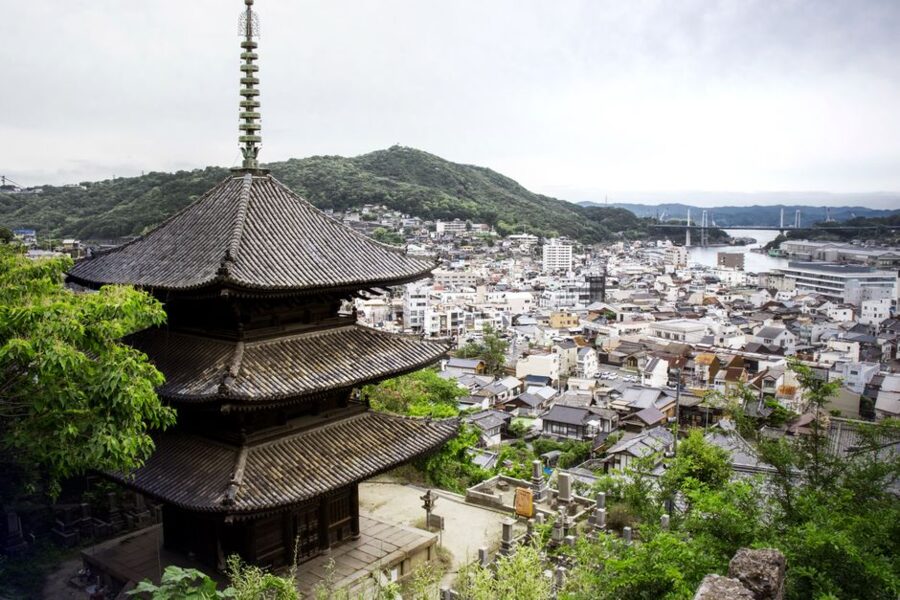
Onomichi is also the natural break if you are moving east afterwards. Fukuyama is the nearest Nozomi stop, and from there it is a short run to Okayama and Kurashiki.
Saijō sake and Ōkunoshima
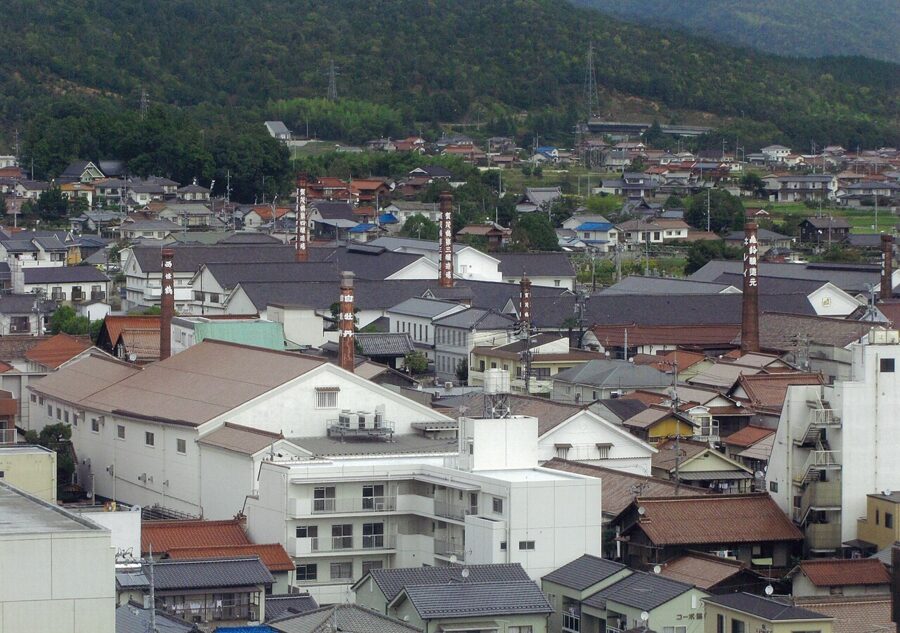
Saijō (西条) is a 36-minute ride east of Hiroshima on the JR Sanyō Line, for ¥590 (about US$3.80), and seven sake breweries stand within a short walk of the station along Sakagura-dōri. Their brick chimneys and white walls are the reason to go even if you drink very little. The town’s sake festival takes over the streets on a weekend in early October; in 2026 it ran on 10 and 11 October.

If you would rather have a guide who can talk you through the water, the rice and the brewing calendar, a half-day Saijō brewery walk leaves from Hiroshima Station and includes several tastings. My review of the Saijō sake tour weighs up the price.
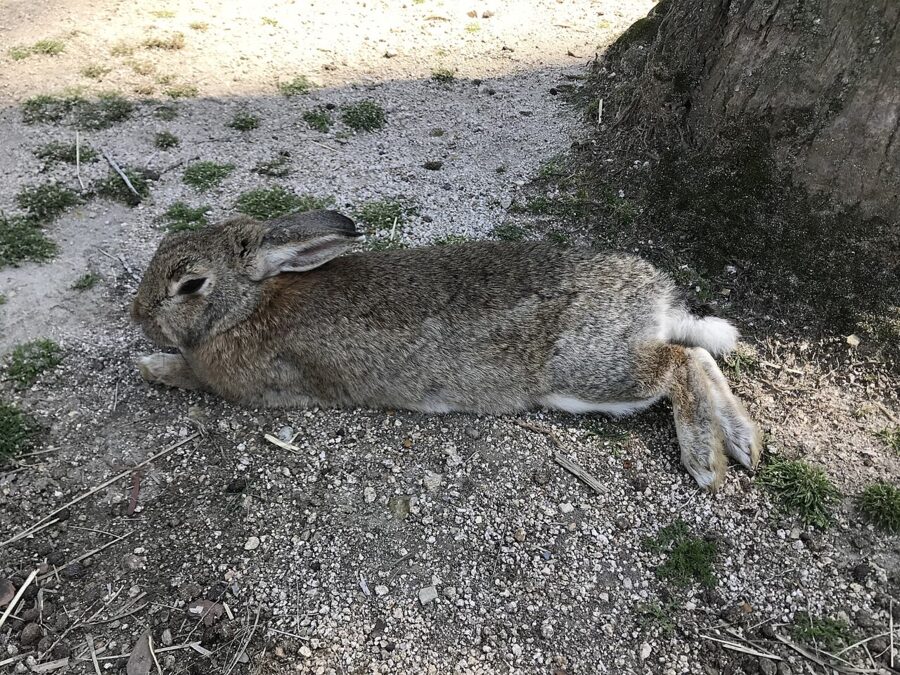
Saijō makes a good morning before Ōkunoshima (大久野島), the island of free-roaming rabbits and wartime ruins. Continue east to Mihara, change to the Kure Line for Tadanoumi, and take the 15-minute ferry across. Coming back, the Kure Line follows the coast all the way into Hiroshima through Takehara and Kure, so the day makes a loop without retracing a single stretch of track.


Where to sleep, and what to do with your bags
In the city, you have two good areas. Stay near Hiroshima Station if your trip has side trips in it, because every train you need leaves from there. Stay around Hatchōbori and Hondōri if your evenings matter more, because the bars, restaurants and the Peace Park are all within walking distance.
On Miyajima, a couple of dozen inns and hotels sit between the pier and the shrine and up the slopes behind them. Many of the inns include dinner and breakfast, so ask when you book. The streets behind Omotesandō, especially Machiya-dōri, are the ones to wander after dark.
For luggage, the Crosta counter in the Hiroshima Station concourse holds bags for ¥1,000 a piece, open 09:00 to 20:00. Its delivery service takes bags to city hotels for ¥1,500 (about US$10) each if you hand them in by 14:00. On Fridays, weekends, holidays and in the summer holidays it also delivers to hotels on Miyajima for ¥2,500 (about US$16), handed in by 13:00 and delivered by early evening. There are coin lockers at both ferry terminals for the day.
The rail pass question, as of 2026
The national Japan Rail Pass costs ¥50,000 (about US$320) for seven days bought online. It covers the Sakura and Hikari Shinkansen trains at no extra charge, but Nozomi trains need a separate special ticket for every ride. For a trip that only goes Osaka to Hiroshima and back, it does not come close to paying off; it makes sense only as part of a long route from Tokyo.
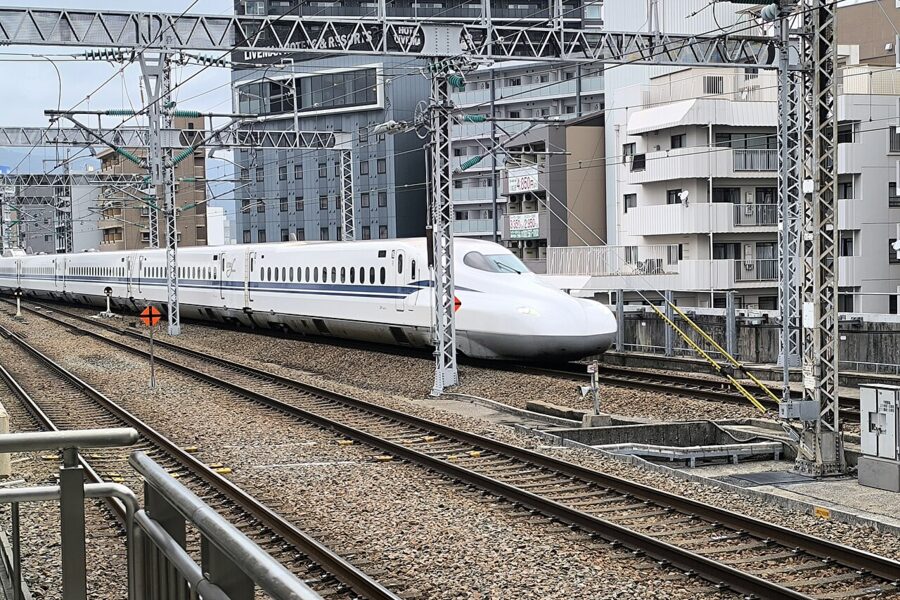

The pass that does fit is JR West’s Kansai-Hiroshima Area Pass: five consecutive days for ¥17,000 (about US$110). It covers reserved seats on the Sanyō Shinkansen between Shin-Osaka and Hiroshima, JR local and rapid trains within its area, and the JR Miyajima ferry. A Nozomi seat from Shin-Osaka to Hiroshima costs ¥10,950 (about US$70) each way at the regular-season fare, so the round trip alone comes to ¥21,900 and the pass is ahead before you have ridden a single local train.
Two caveats. It does not cover the Tokaido Shinkansen between Kyoto and Shin-Osaka, so from Kyoto ride the JR Special Rapid to Shin-Osaka instead, which the pass does cover. And check JR West’s area map before counting on it for a particular side trip. Within the city, the Hiroden tram pass is a separate ticket, and IC cards work on the trams, JR trains and both ferry companies.
From Osaka or Kyoto in a day
It can be done, and plenty of people do it. The 07:11 Nozomi from Shin-Osaka has you in Hiroshima at 08:37; from Kyoto, Nozomi trains take about an hour and 40 minutes, and a reserved seat is ¥11,940 (about US$77) each way.
The order I would use is Miyajima first and the Peace Park second, because the boat between them saves a change of trains. Take JR to Miyajimaguchi and one of the torii-route ferries after 09:10. Spend the late morning on the island, then catch an early-afternoon World Heritage Sea Route boat straight to the Peace Park pier beside the Dome. That leaves the afternoon for the museum, an okonomiyaki dinner, and an evening Shinkansen back.
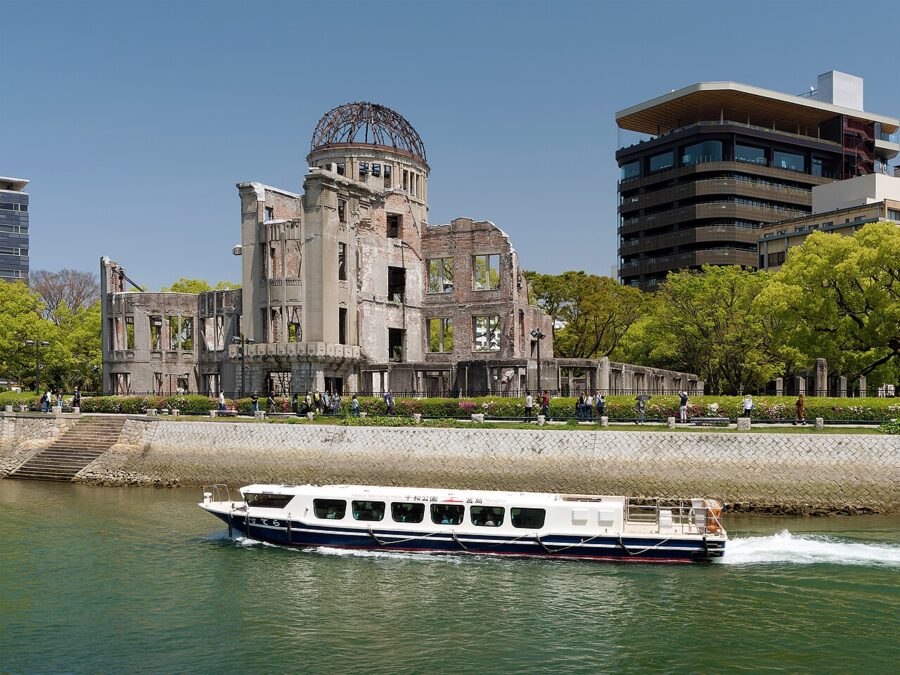
The trade-off is real. You miss Mount Misen, the island at dawn and after dark, Shukkeien, and any slack in the museum visit. If the museum queue is long or the tide is wrong, a day trip has no room to absorb it.
If you would rather not juggle the connections, a guided Hiroshima and Miyajima day by bullet train from Osaka handles the trains, the ferry and the shrine ticket. It runs about 11 and a half hours, groups can reach 30, and lunch is not included; check that the option you book includes the Shinkansen ticket. My review of the Osaka bullet-train day trip has more, and the same operator runs a version from Kyoto.
As part of a wider trip, Hiroshima sits neatly between Kansai and Kyushu on the Sanyō Shinkansen. Coming from Osaka, it is easy to break the journey at Okayama or Kurashiki; going on, Hakata is about an hour further west.
Seasons, crowds and dates to plan around
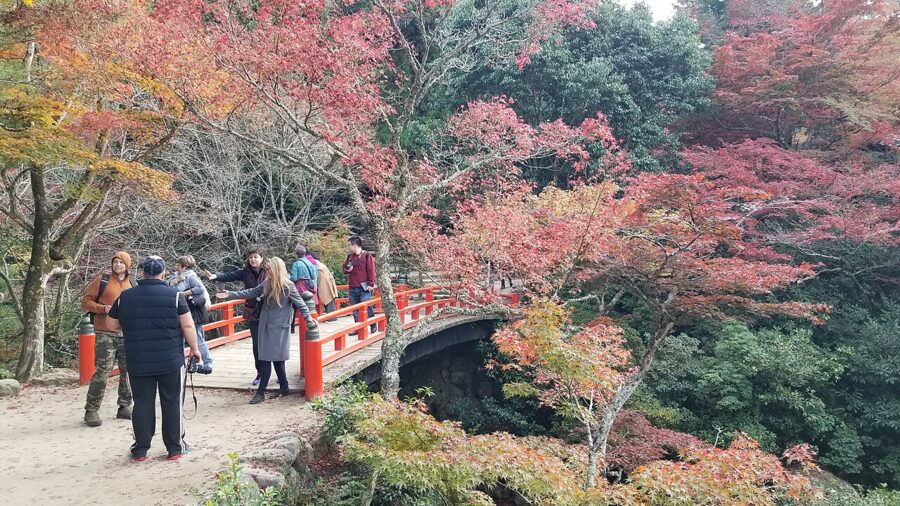
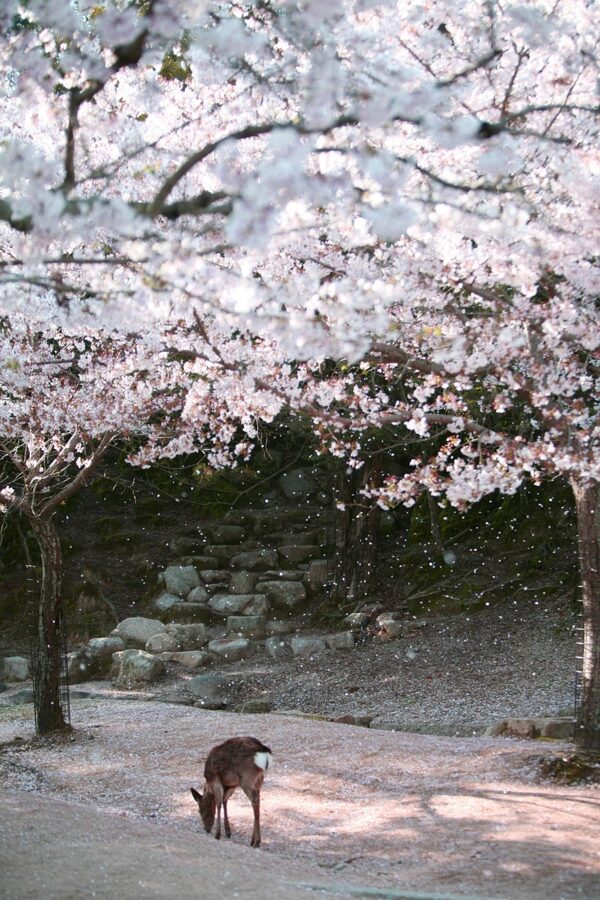
Weekdays are calmer than weekends everywhere in this plan, and Miyajima’s peak weeks are Golden Week in early May, Obon in mid-August, New Year and the maple season in November, when Momijidani Park below the ropeway turns red. Cherry blossom arrives around late March and early April, and the island’s deer spend the season under the trees.

On 6 August, the anniversary of the bombing, the Peace Memorial Ceremony fills the park in the morning and the museum keeps special hours, so check before you plan a museum visit that week. Summer is hot and humid for the Misen walk, and winter is the best season for oysters and the quietest for the island.
Whatever the season, the plan comes back to the same first step. Open the tide calendar, pick the Miyajima day, and catch the 06:25 ferry or book the island night.