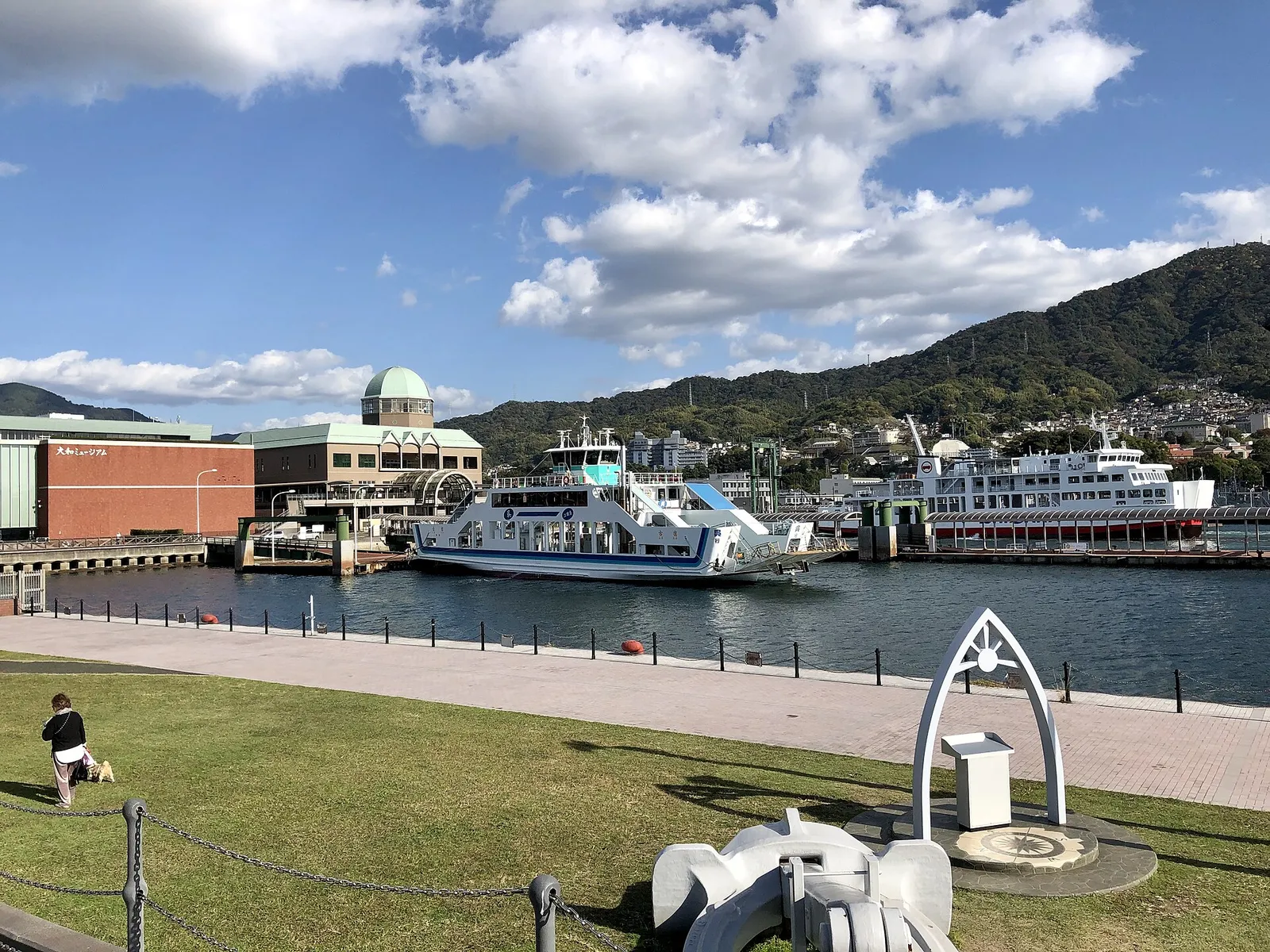
Kure is 33 minutes from Hiroshima on the Aki-Liner rapid, and the navy turns up before you have walked five minutes. Walk out along the raised footbridge from the ticket gates towards the harbour and the grey hulls of the Maritime Self-Defense Force come into view, moored at the base across the water. Two museums, a ferry pier and a boat that takes you out among the warships are all within ten minutes of the barriers.
Plenty of people do Hiroshima and Miyajima and never make this trip, and they miss the town that explains the other half of the region’s twentieth century. In one waterfront block in Kure (呉) you get a 26.3-metre model of the battleship Yamato at one-tenth scale, a real submarine you can walk through for free, and a cruise past destroyers and submarines at their moorings. After dark, a row of food stalls hangs out red lanterns along Kuramoto-dōri.
The timing is good. The Yamato Museum reopened on 23 April 2026 after a refit of about a year, with a corrected model, a rebuilt third floor and a new admission price of ¥1,000 (about US$6) for visitors from outside Kure. The one day to avoid is Tuesday, when nearly all of it is shut.
On this page8 stops


Half a day or a whole one?
A half day from Hiroshima covers the two museums, which face each other across a road about eight minutes on foot from Kure Station. Give the Yamato Museum two hours and the submarine museum up to one; its own estimate is 40 to 60 minutes. Add the 40-minute harbour cruise and a navy curry for lunch and you have a full, easy day, back in Hiroshima by early evening.
Stay later if you can. The food stalls on Kuramoto-dōri get going around 18:00, the once-a-day sunset cruise leaves 20 minutes before the sun goes down, and the town looks better under its lanterns than it does at noon. If you would rather sleep near the trains than ride back, see where to stay in Hiroshima.
A day that works, in order:
- 09:00 Yamato Museum, as it opens.
- 11:00 Kure Bay cruise from Kure Central Pier, next door to the museum.
- 12:00 Lunch: a ship’s curry from the Kure Kaiji Curry list.
- 13:30 The JMSDF Kure Museum and the submarine Akishio.
- 15:00 Alley Karasukojima for the submarine piers, or Irifuneyama Memorial Museum (last entry 16:30).
- 18:00 Yatai on Kuramoto-dōri, then the train back.
Tuesday is what catches people out. The Yamato Museum, the JMSDF Kure Museum and Irifuneyama Memorial Museum all close on Tuesdays (on the Wednesday instead when Tuesday is a public holiday), the harbour cruise has no regular Tuesday sailings, and the best-known fry cake shop shuts too. The Yamato Museum opens every day from 29 April to 5 May, from 21 July to 31 August and from 29 December to 3 January, and the submarine museum opens daily through August but closes from 29 December to 3 January.
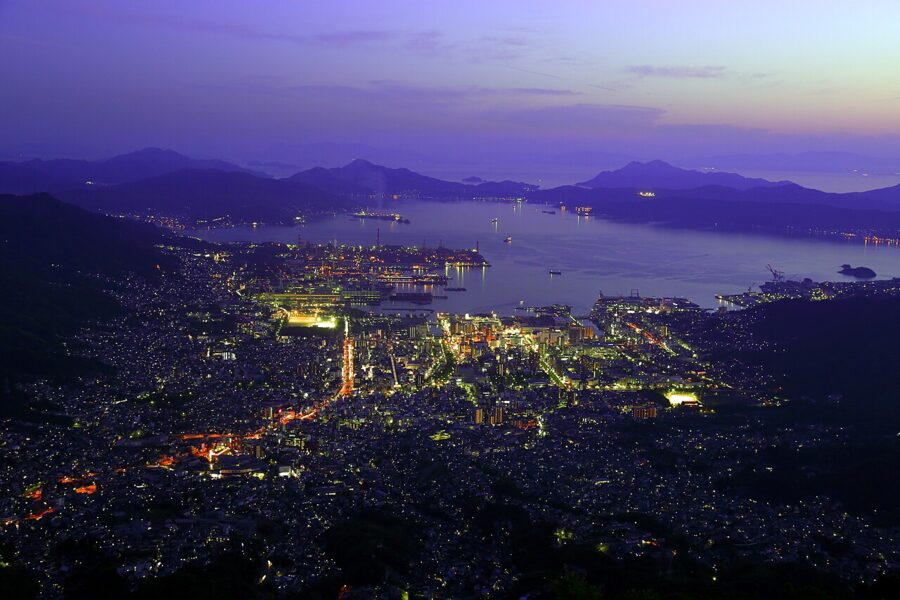

The Yamato Museum after its 2026 refit
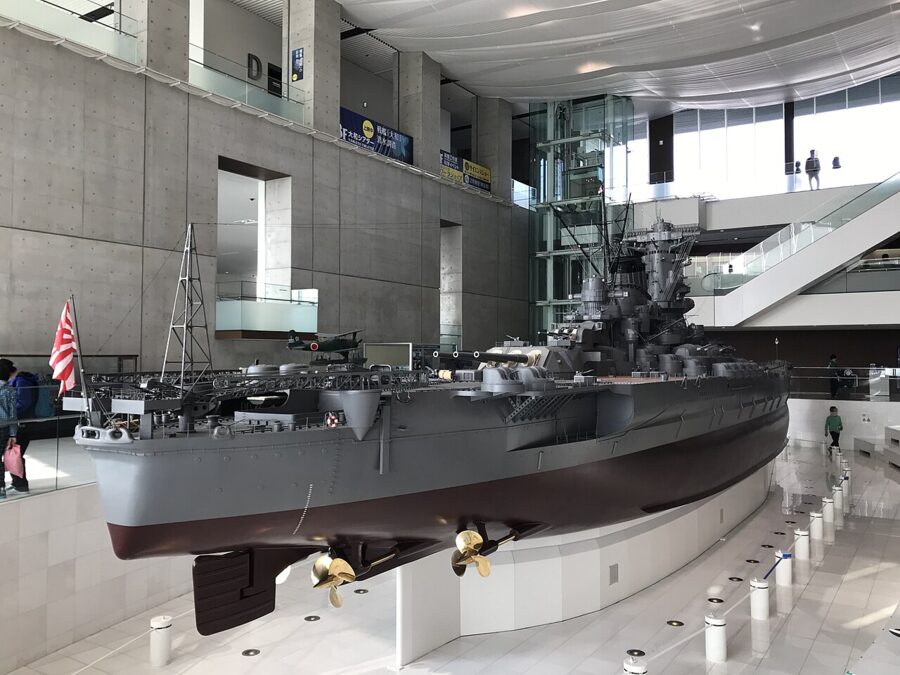
The Yamato Museum (大和ミュージアム), officially the Kure Maritime History and Science Museum, opened in 2005 on the harbour front a short walk from the old arsenal docks. It tells the story of Kure as the navy’s great arsenal town and then, after the war, as a shipbuilding town whose yards turned out some of the largest tankers in the world. The battleship is the hook, but the building is really about the people who built ships here.
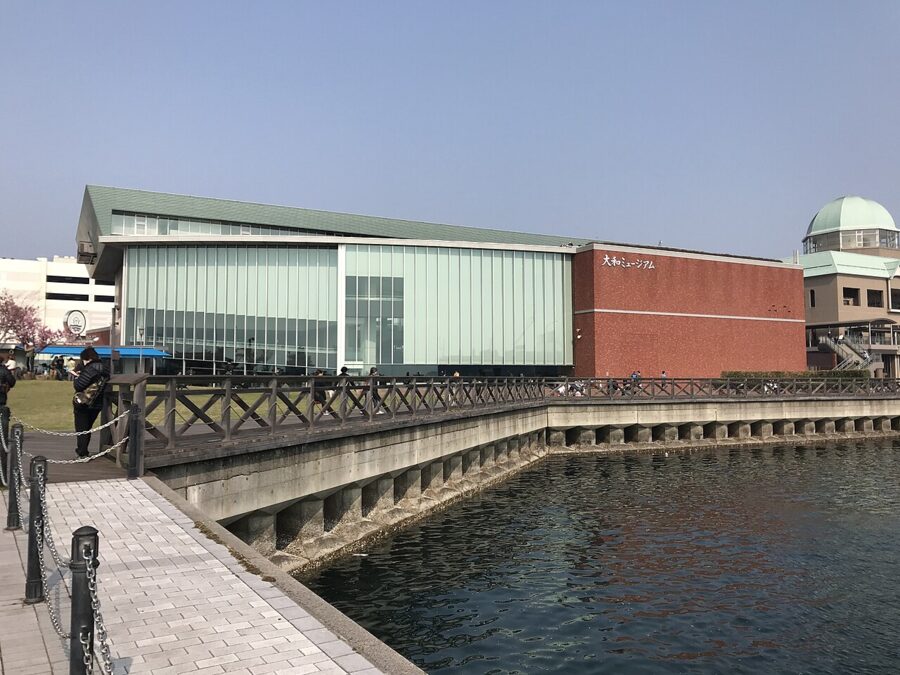

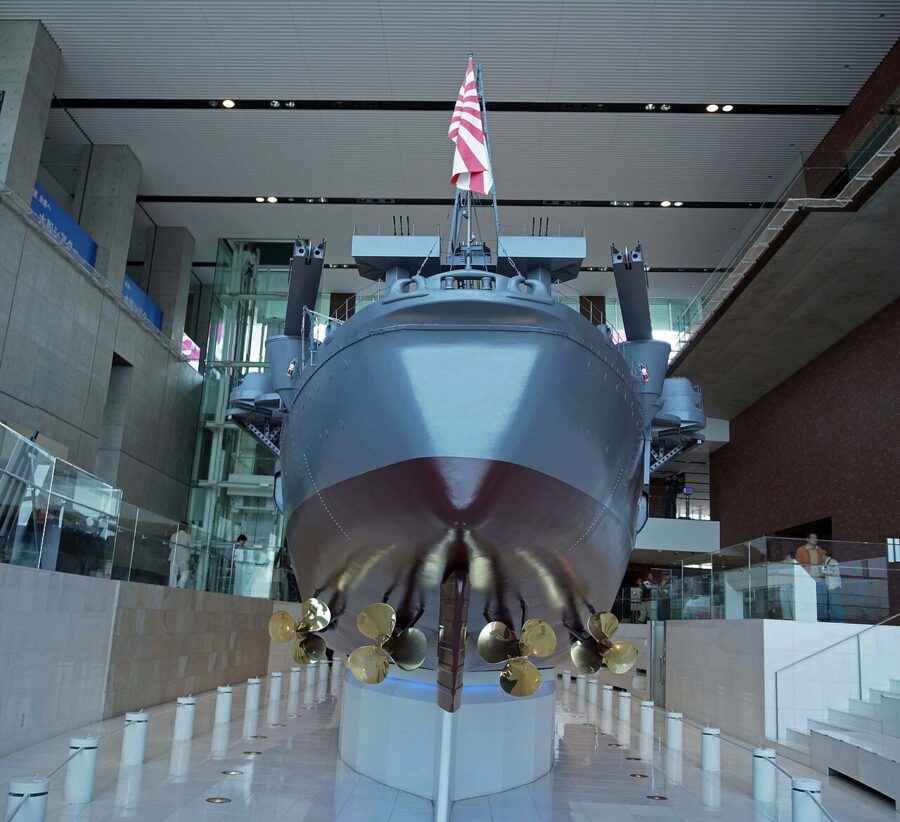
The one-tenth Yamato
The model is 26.3 metres long, one tenth of the real ship’s 263 metres, and it was built from plans, photographs and the footage of underwater surveys of the wreck. The refit corrected it. Kure City’s 2016 dive on the wreck showed that the chrysanthemum crest on the bow measured one metre across, not the 1.5 metres everyone had assumed, so the crest was remade at the smaller size and more than ten other details around it were rebuilt.
Look at it from every level. From the floor of the hall the bow and the three main turrets loom over you; from the upper galleries you take in the whole deck at once. The museum’s figures for the real ship are hard to picture even with the model in front of you: 65,000 tonnes standard displacement, nine 46 cm guns that could throw a 1.46-tonne shell about 42 kilometres, and a crew of 3,332 by the end.

The rest of the building
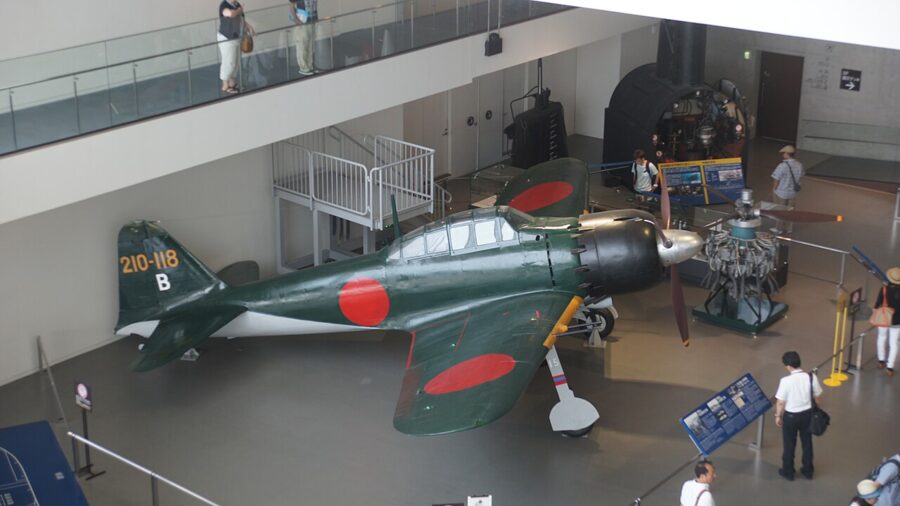
The first-floor history galleries follow Kure from the opening of the naval district through the war, with a section on Yamato herself and the men who served in her. Next door, the large exhibits room is the sober heart of the museum: a Zero fighter, a Kaiten manned torpedo and a Kairyū midget submarine, all real, shown as a lesson in what the war cost rather than as trophies.
The Zero is a Type 62 from the 210th Naval Air Group that ditched in Lake Biwa with engine trouble in August 1945 and was raised and restored after the war. The Kaiten, a torpedo steered into its target by the man inside it, was developed and built at the Kure Naval Arsenal; this one is the Type 10, a short-range prototype. The winged Kairyū was hit by a rocket and sank in Ajiro Bay in Shizuoka in 1945, and was also recovered after the war.

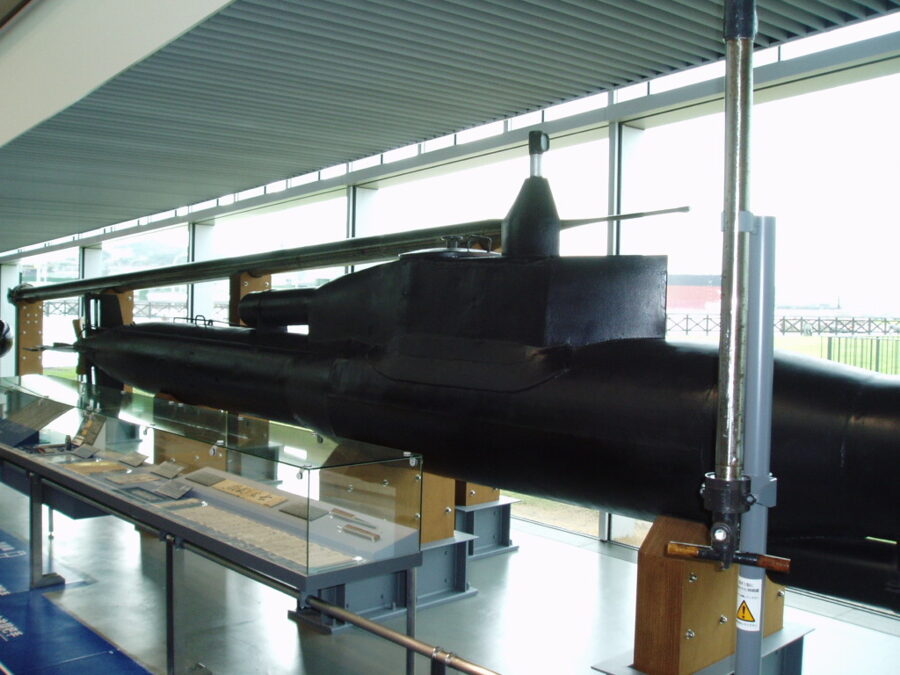

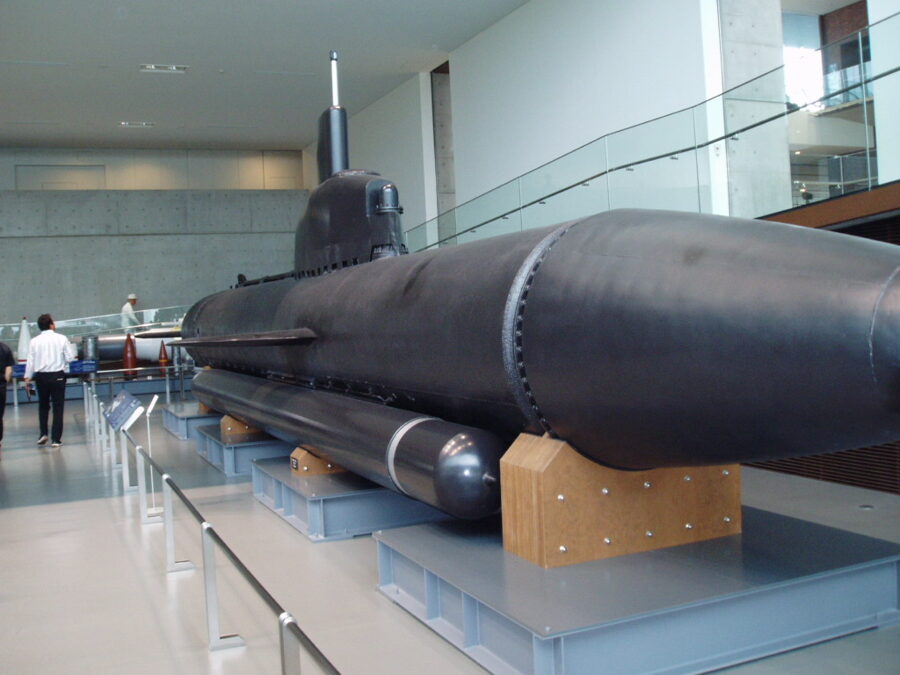

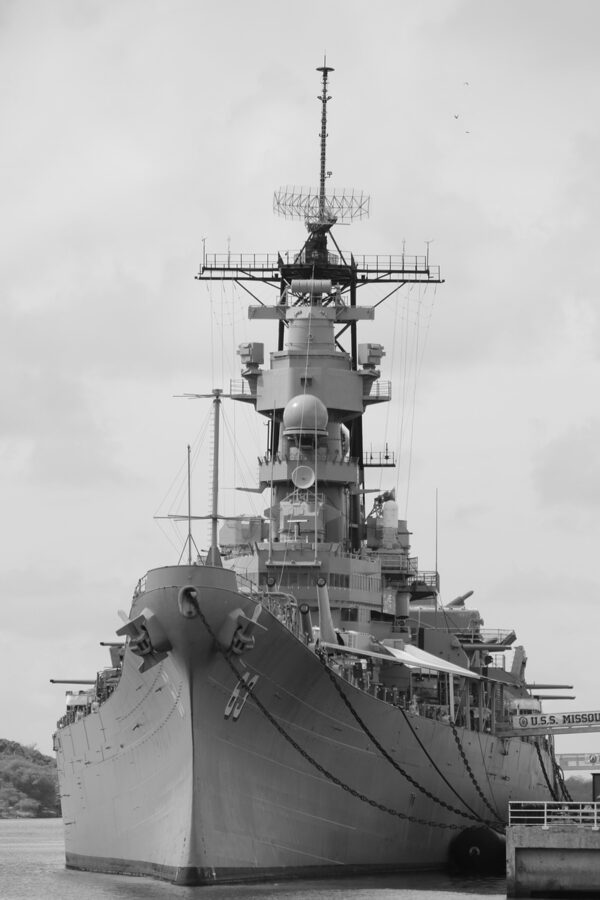
In the same room stands a model of one of the main gun turrets of USS Missouri, given by the Battleship Missouri Memorial in Honolulu, which signed a sister-museum agreement with the Yamato Museum in 2015. It is a striking pairing: the two ships fought on opposite sides, and the surrender that ended the war was signed on Missouri’s deck.
Upstairs, the third floor was rebuilt from scratch in the refit. It covers the Kure and Hiro naval arsenals through real engines, from a triple-expansion steam engine out of a torpedo boat to the Kasei and Homare aero engines, with models of the flying boats designed at Hiro. The windows look straight onto the working port, and you can try the controls of a real ship’s integrated bridge console with the cranes in front of you.
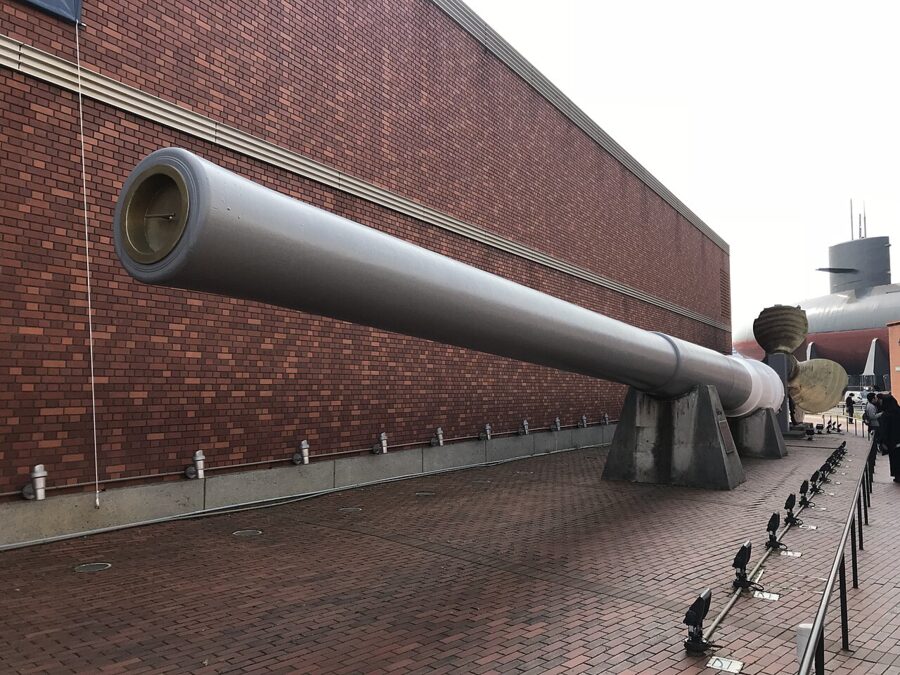
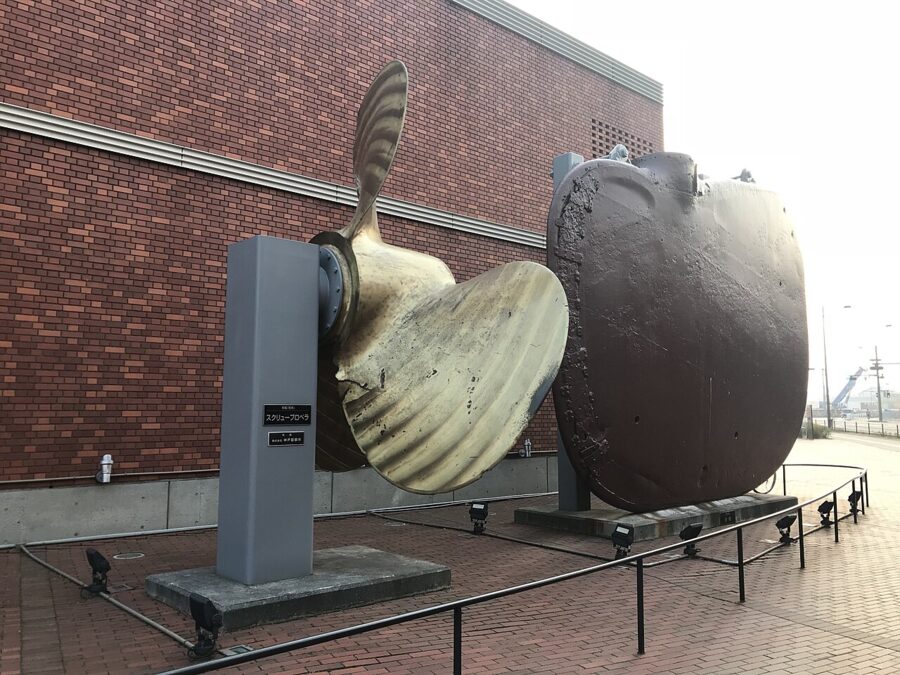
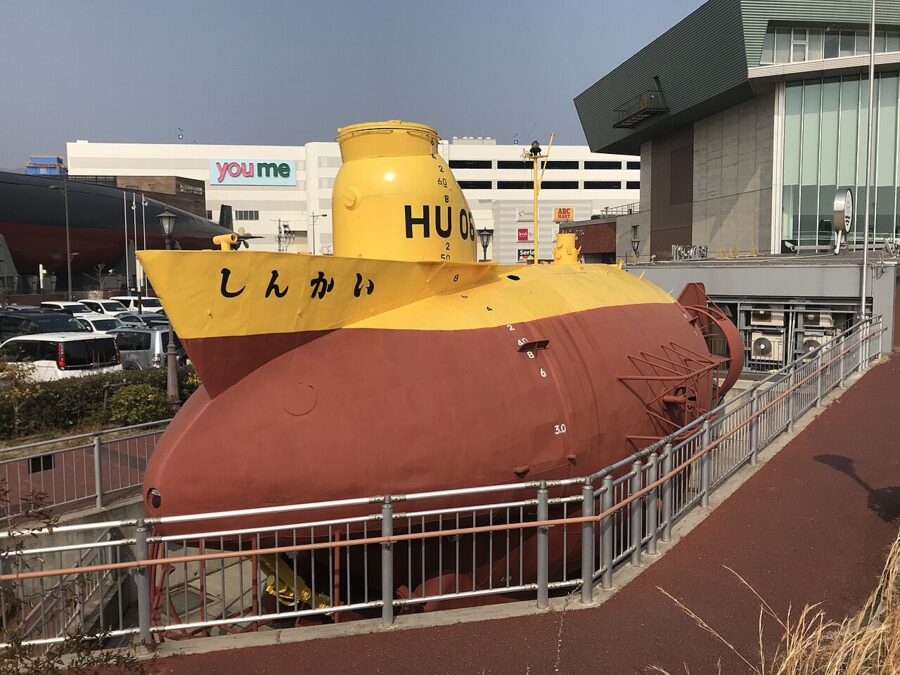
Outside, and free, Renga Park in front of the entrance holds the 41 cm gun barrel, propeller and rudder raised from the battleship Mutsu, which blew up and sank at anchor in 1943. The giant lathe the navy imported from Germany to turn the barrels of the Yamato-class guns has stood outdoors since 2023, and the research submersible Shinkai sits on the lawn on the sea side. Beyond it, Yamato Wharf is a park laid out to suggest the full-size ship.




Tickets, hours and help in English
| Yamato Museum (as of November 2026) | |
|---|---|
| Hours | 09:00–18:00, last entry 17:30 |
| Closed | Tuesdays (Wednesday if Tuesday is a holiday); open daily 29 April–5 May, 21 July–31 August and 29 December–3 January |
| Adults and university students | ¥1,000 |
| High school students | ¥300 (about US$2) |
| Elementary and junior high students | ¥200 (about US$1) |
| Preschool children | Free |
| Combined ticket with Irifuneyama Memorial Museum | ¥1,050 (about US$7) |
Those are the prices for visitors from outside Kure; residents pay less. For English, the museum runs a browser-based guide in 24 languages that you open by scanning the QR codes on the displays with your own phone, so bring headphones and a data connection. Plan on two hours, more if you read every panel.
Two dates are worth knowing. From 30 January to 9 May 2027 the ground-floor hall hosts a touring exhibition marking 50 years of the anime Space Battleship Yamato, with more than 2,000 production drawings and documents, and the set ticket for the exhibition and the permanent galleries costs ¥2,000 (about US$13). And the temporary Yamato Museum Satellite in the Viewport Kure building, which kept a small display going during the refit, closes for good on 20 December 2026.
Tetsu no Kujira-kan: walking through the submarine Akishio
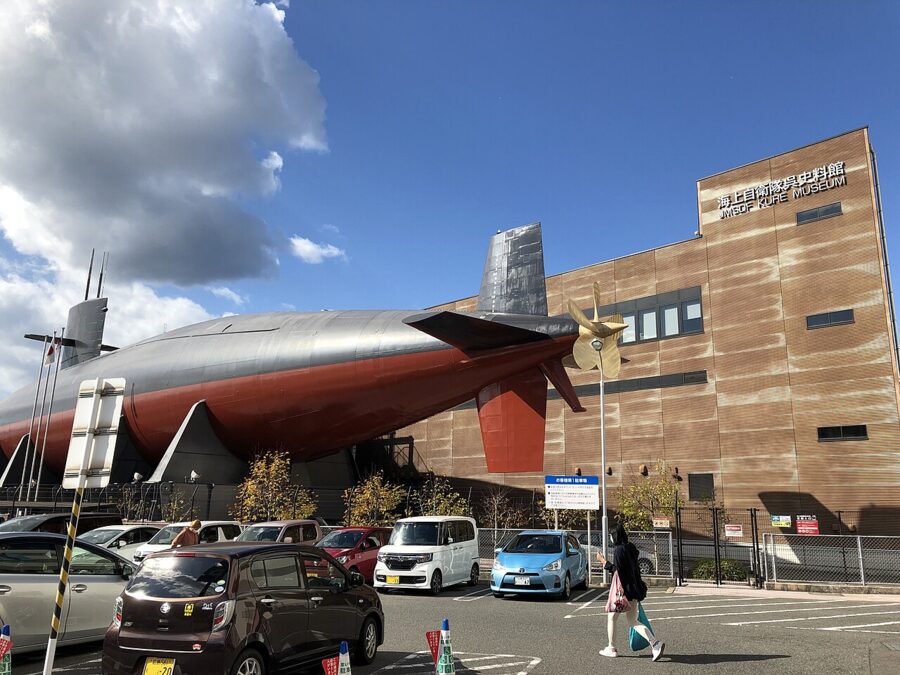
Across the road from the Yamato Museum, a whole submarine sits on dry land beside a brown-panelled building, her black hull lifted above the car park. This is the JMSDF Kure Museum (海上自衛隊呉史料館), known to everyone by its nickname, Tetsu no Kujira-kan (てつのくじら館), the Iron Whale. The Maritime Self-Defense Force runs it, and entry is free.
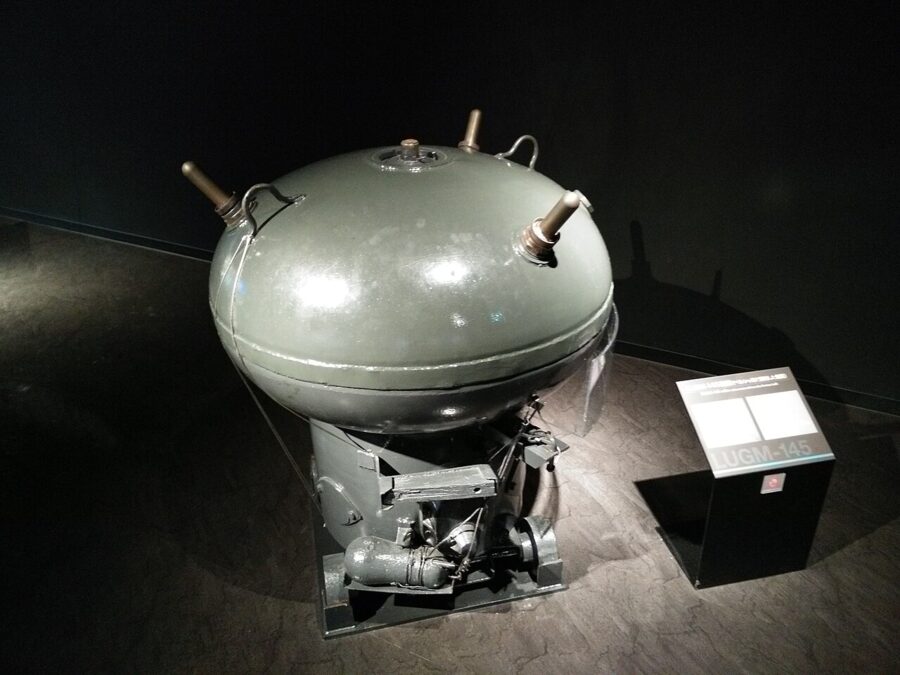
The building takes you up in order. The ground floor covers the history of the post-war navy with Kure at the centre. The second floor is given to minesweeping, from the clearance of the mines that choked Japan’s sea lanes after 1945 to the 1991 deployment to the Persian Gulf, with real mines, sweep gear and a recreated minesweeper deck. The third floor covers submarines, from torpedoes and rescue gear to how crews live and train, and then a door takes you straight into the boat.

Akishio is a Yūshio-class boat, 76.2 metres long and 2,250 tonnes, launched at Mitsubishi’s Kobe yard in 1985 and in service from 1986 to 2004. In 2006 one of the largest floating cranes in Japan lifted her onto the quay. Inside you pass the captain’s cabin, the officers’ wardroom and the crew spaces, and reach the control room, where you can put your eye to the periscope.
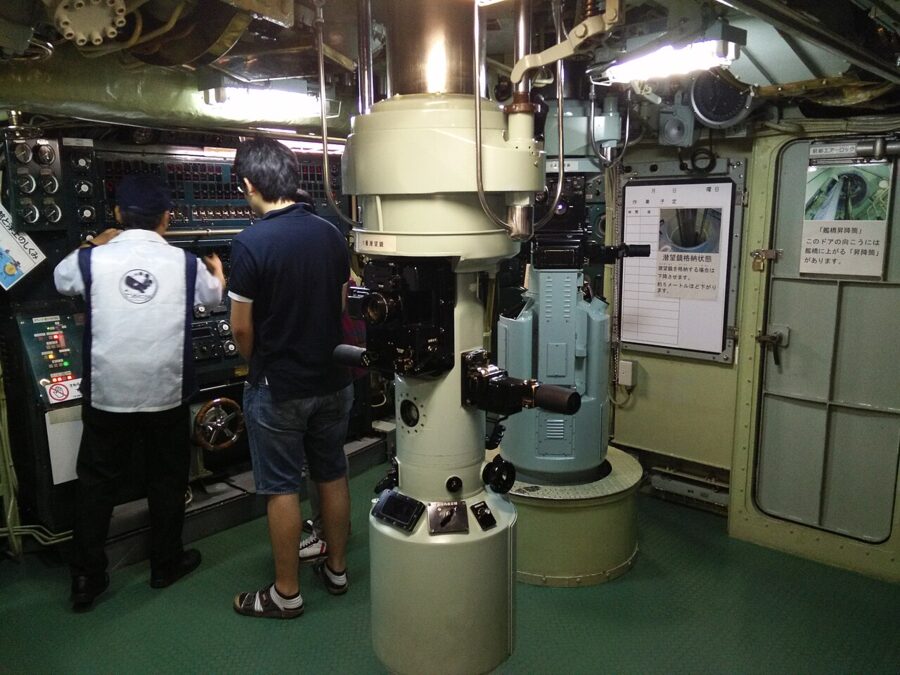

The museum is open 10:00 to 18:00 (last entry 17:30), closed Tuesdays and from 29 December to 3 January. Photography is allowed in most areas, without flash or tripods. The building is step-free, but the submarine is too narrow for wheelchairs and pushchairs: staff move wheelchair users into a smaller chair at the hatch and mind pushchairs while you carry children through. The ground-floor café, open from 11:00, serves an Akishio curry approved by the boat’s tenth captain.
One date to note: from 6 January to 12 March 2027 Akishio is being repainted, and scaffolding will hide parts of the hull. The museum and the inside of the submarine stay open as normal.
Out on the water: the Kure Bay cruise
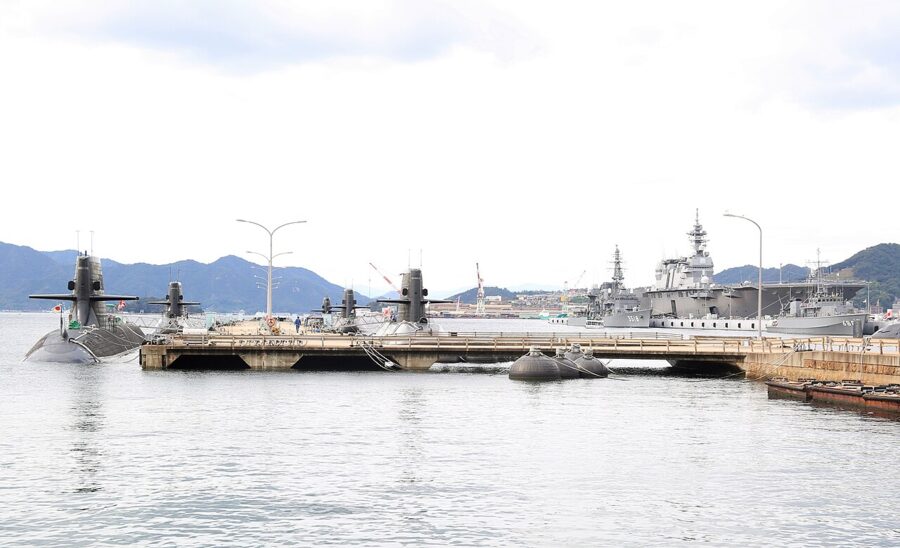
The Kure Bay cruise (呉湾艦船めぐり) is the best ¥2,200 (about US$14) you will spend in town. For about 40 minutes a small boat with an open top deck runs out from Kure Central Pier, next door to the Yamato Museum, along the Maritime Self-Defense Force piers and past the shipyards that grew out of the old arsenal, while a guide on board talks you through what is in port. What you see depends on who is home; the submarines along the old arsenal waterfront are the closest most people will ever get to one.
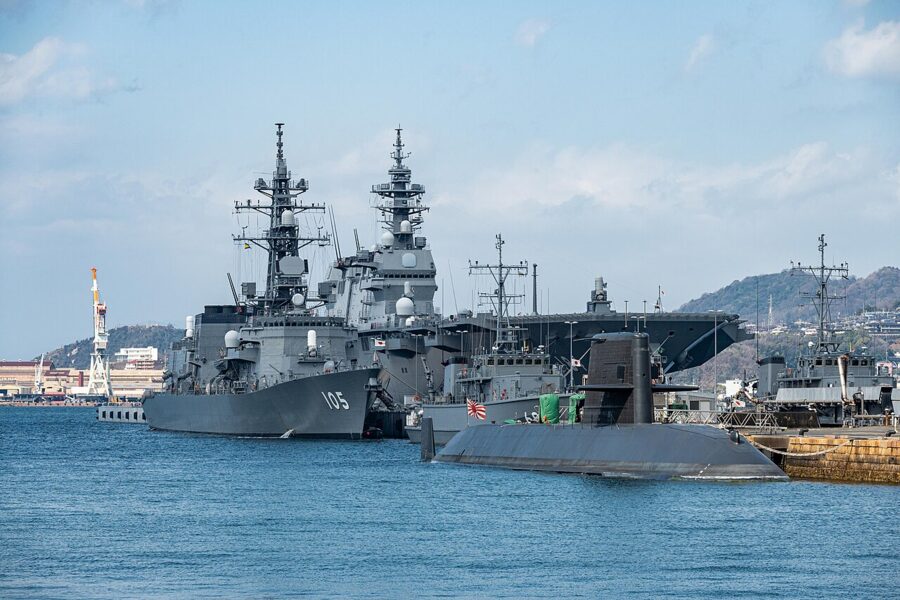

As of late 2026, sailings leave at 10:00, 11:00, 13:00 and 14:00 on Mondays, Wednesdays, Thursdays and Fridays, and every hour from 10:00 to 15:00 at weekends and on holidays. Elementary school children pay ¥800 (about US$5). Book online up to two days ahead; the operator takes no phone bookings on the day, though it keeps some seats for people who turn up at the counter on the ground floor of the pier terminal, where everyone checks in 15 minutes before departure. Rain does not stop it; wind and high waves can.
Once a day, the Yūkure cruise leaves 20 minutes before sunset, timed so that you are offshore when the ships lower their ensigns to a bugle call at sundown. The time moves with the season, so ask at the counter. There is also a 60-minute long cruise at 12:00 that carries on to the narrow Ondo strait, for ¥3,500 (about US$22), by reservation and with a minimum of four passengers.
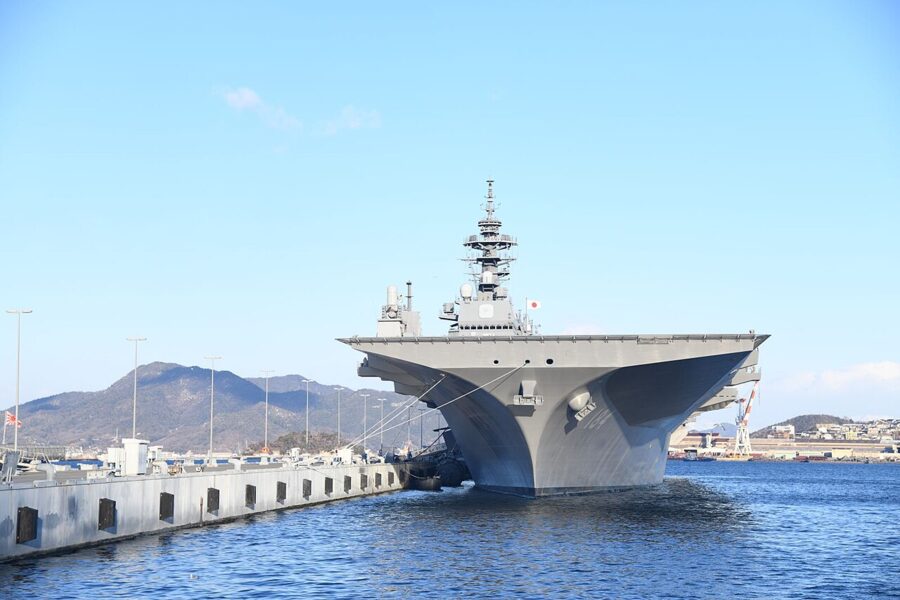

If you would rather someone else handled the trains, tickets and timings, a guided day from Hiroshima Station covers the Yamato Museum, the submarine, the cruise and Irifuneyama in about nine hours: the Kure port city day tour. Lunch is not included and you make your own way to the 09:30 meeting point; I go through the rest in my review of the Kure battleships and submarines day tour.
Alley Karasukojima: submarines from a park bench
For a free look at the submarines, go 1.8 kilometres along the harbour from the museums to Alley Karasukojima (アレイからすこじま), a strip of park along the road near the headquarters of the 1st Submarine Flotilla. Submarines and destroyers moor just beyond the railings, and the city calls it the only place in Japan where you can see submarines this close. It is about 25 minutes on foot, or take the Hiroden bus on the Kure–Kurahashi line to the Sensuitai-mae (潜水隊前) stop, a minute away.
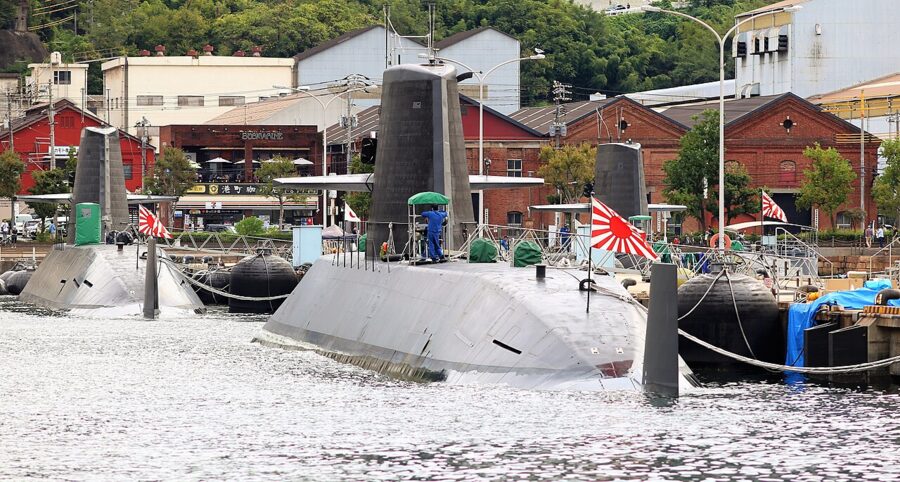

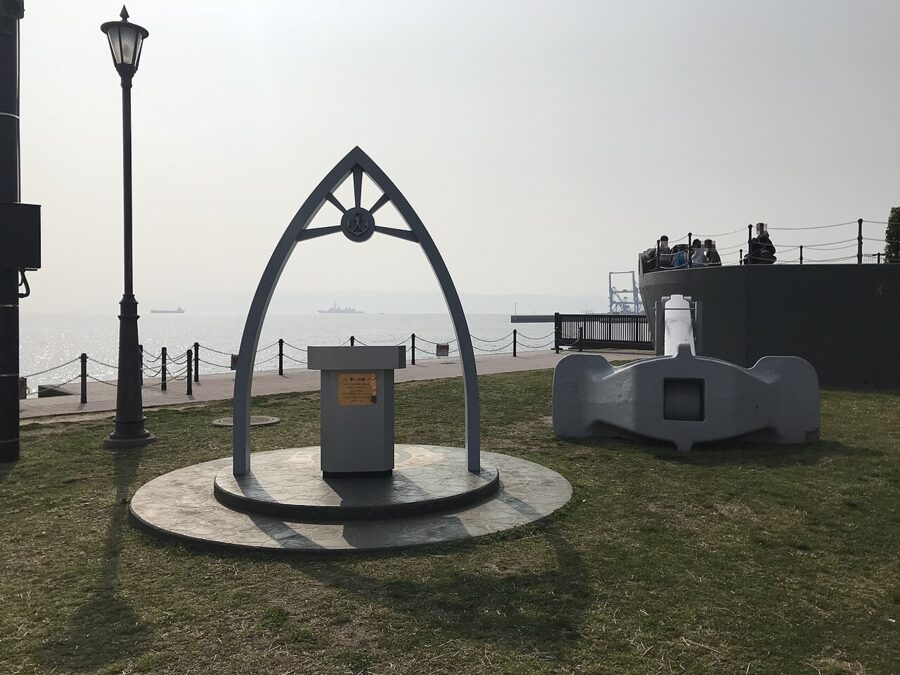
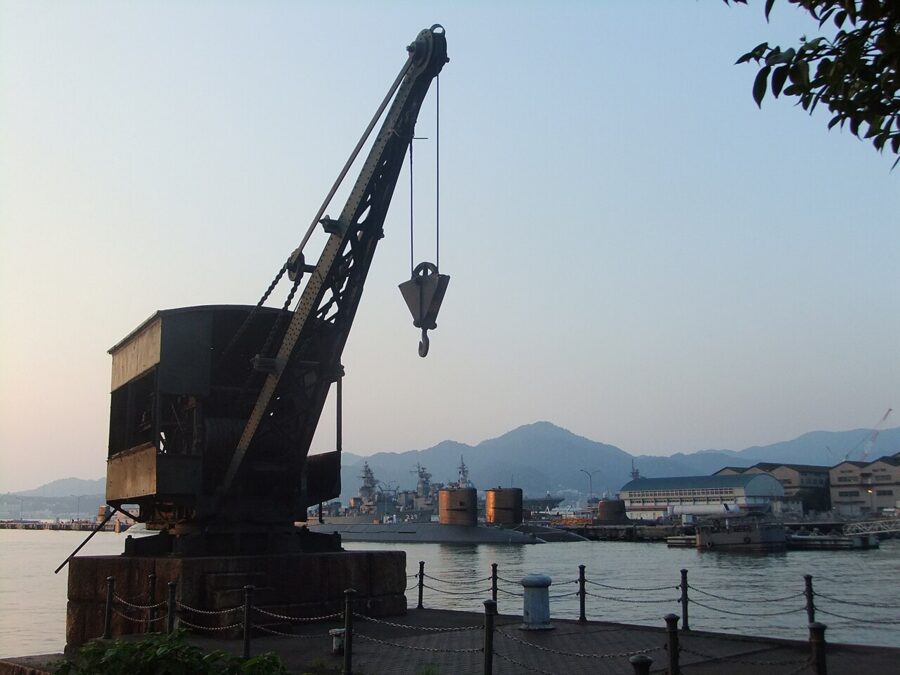
The name joins the English word alley to Karasukojima, a tiny island 30 to 40 metres round that was filled in during the Taishō period to make a torpedo-firing range. Across the road stands a row of red-brick warehouses built for the navy’s ordnance works between 1897 and 1903, shortened when bombs hit them in the war. At the water’s edge, a crane that loaded torpedoes into warships survived the raids and now stands as a monument. The park is free and never closes.

Kure’s naval history, told plainly
Until the 1880s Kure was a farming and fishing village on a sheltered bay. The navy chose it for a base, the Kure Naval District opened in 1889 and the Kure Naval Arsenal followed in 1903. By the Pacific War the city had grown to around 400,000 people, a great many of them working for the navy or its arsenal.
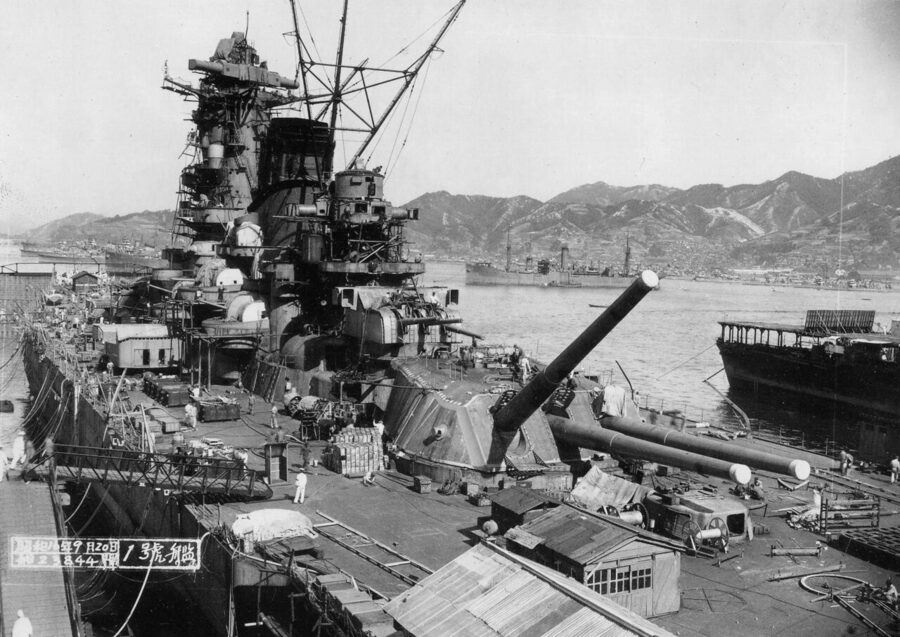
Yamato was built here, in secret. She was laid down in the arsenal’s shipbuilding dock in 1937, launched in August 1940 and commissioned on 16 December 1941, eight days after Pearl Harbor, and the true size of her guns stayed hidden from the Americans until after the war. She sailed on her last sortie in April 1945 and was sunk by American carrier aircraft south-west of Kyushu on 7 April, taking around 3,000 of her crew with her.
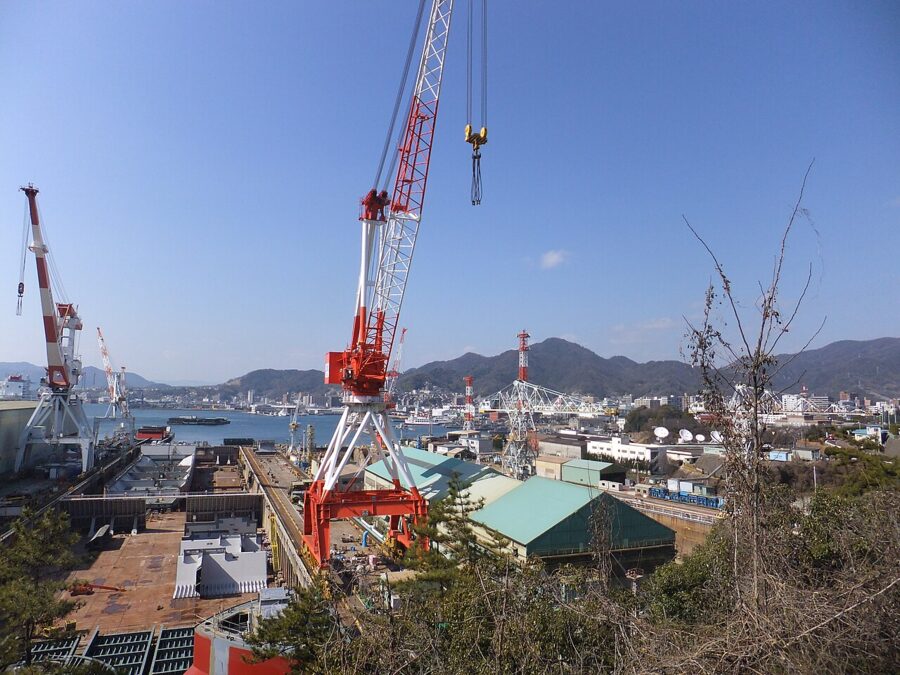
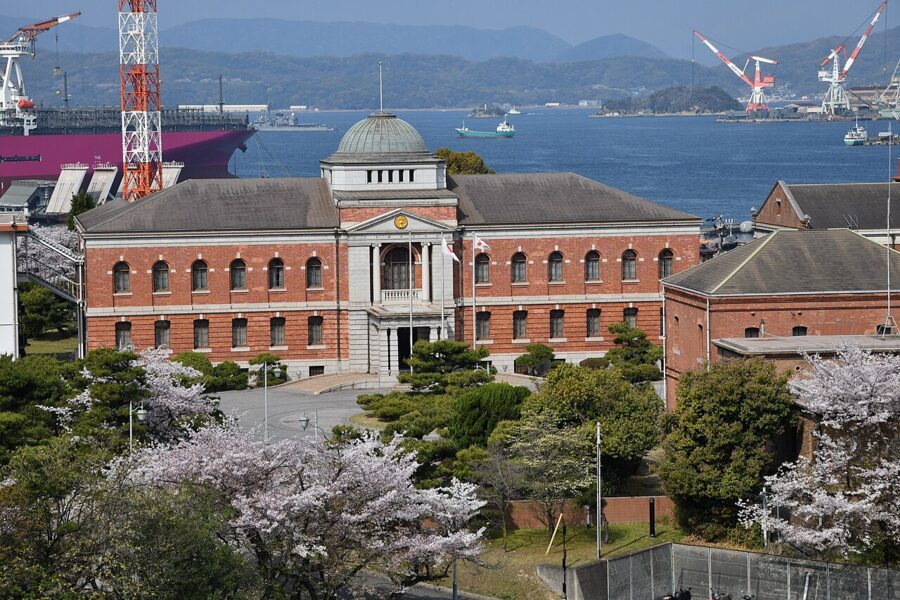
The best place to take it all in is Rekishi no Mieru Oka (歴史の見える丘), the “hill where you can see history”, laid out in 1982 above the shipyard. From it you look over the red-brick former naval district headquarters and down on the yard where Yamato was built. A tower shaped like her bridge, put up by a local Yamato association in 1969 on the anniversary of her launch, stands beside a 46 cm armour-piercing shell of the kind her main guns fired. The Hiroden bus stop is Shiki Kuhi-mae (子規句碑前), named after the stone carved with a haiku the poet Masaoka Shiki wrote about Kure in 1895.


The war came home to Kure in 1945. American carrier aircraft attacked the fleet in the harbour on 19 March, and on the night of 1 to 2 July B-29 bombers burned out the city centre: a 2026 report in the Chugoku Shimbun puts that night’s dead at more than 1,800, and other counts put it above 2,000. Carrier raids on 24 and 28 July sank or crippled most of the big ships still at their moorings. Across all the raids between March and August, about 3,700 people died, and the city has held a memorial service for its war dead every 30 June since 1952.
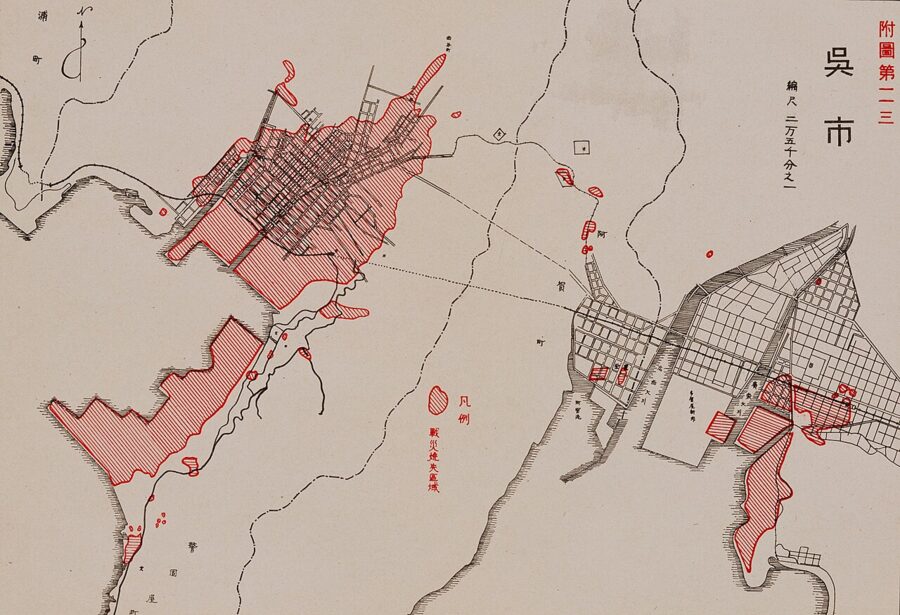
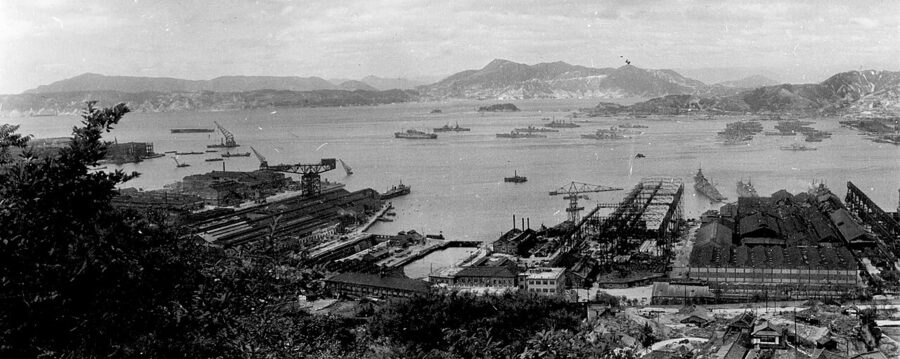
After the surrender, Kure became the headquarters of the British Commonwealth Occupation Force, in which Australians were the largest contingent. The arsenal’s docks turned to merchant ships and built some of the largest tankers in the world, and in 1954 the new Maritime Self-Defense Force set up its Kure District headquarters in the old naval district buildings, where it still is. In 2016 Kure was named Japan Heritage together with the other old naval district ports, Yokosuka, Sasebo and Maizuru.
Irifuneyama Memorial Museum
The former residence of the naval district’s commander-in-chief stands in a wooded park about 13 minutes’ walk from Kure Station, now the Irifuneyama Memorial Museum (入船山記念館). A two-storey Western building put up here in 1889 was flattened by the Geiyo earthquake of 1905 and rebuilt the same year as a single-storey house, with a Western wing for receiving guests and a Japanese wing for living. After the war the commanders of the occupation force used it.
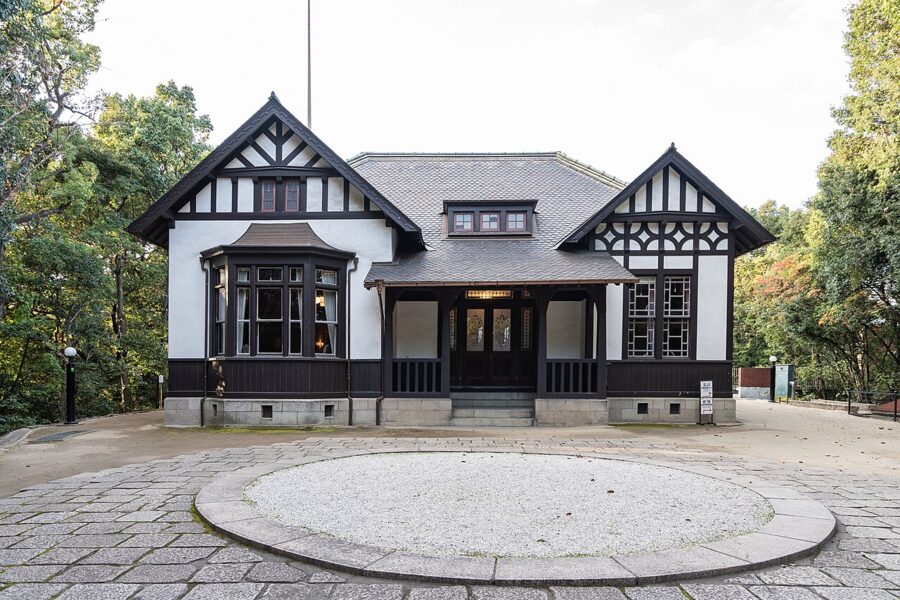

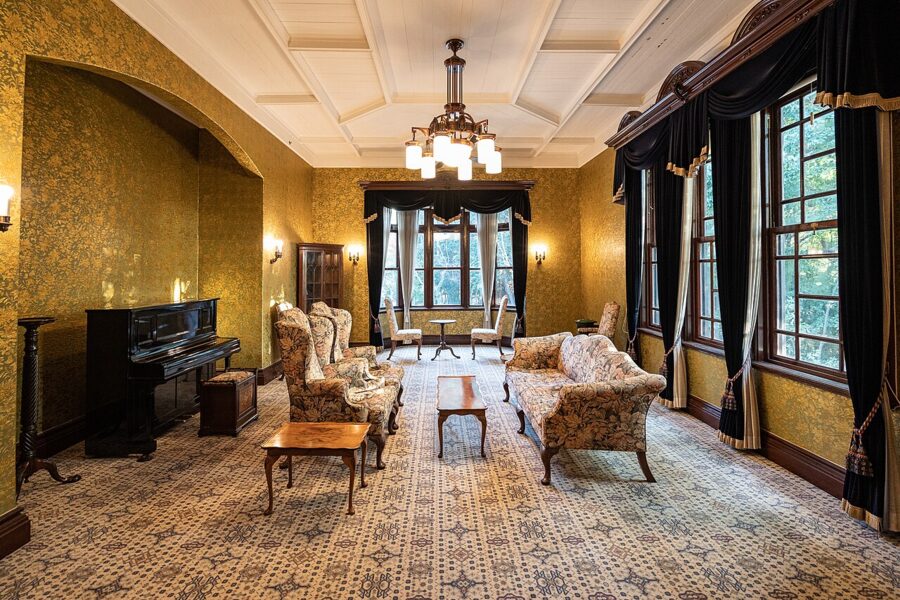
Restored in the early 1990s, the house has been a National Important Cultural Property since 1998. The reason to go is the Western wing, whose walls and ceilings are covered in kintōshi (金唐紙), embossed and gilded paper made to look like tooled leather, now rare anywhere in Japan. Admission is ¥250 (about US$2), 09:00 to 17:00 with last entry at 16:30, closed Tuesdays.

What to eat in Kure
Yatai on Kuramoto-dōri
Fukuoka is the city famous for its yatai (屋台), open-air food stalls, but Kure has its own row of them. Each evening they set up under red lanterns along Kuramoto-dōri (蔵本通り), a tree-lined avenue about ten minutes’ walk from Kure Station, lined with azaleas in spring and gold gingko in autumn. Around ten stalls trade on a typical night, selling ramen, oden, yakitori and teppanyaki alongside a few that have gone Italian.
The city’s rules let them open from 16:30 to 05:00, but most get going around 18:00, and which ones are open changes from night to night. The stalls were gathered onto this one street by agreement between the owners, the police and the city in the 1960s, and each pitch now has its own electricity, water and drains, which is unusual for yatai anywhere. Seats are few and elbows are close; bring some cash, order a drink first and let the cook steer you.
Kure reimen
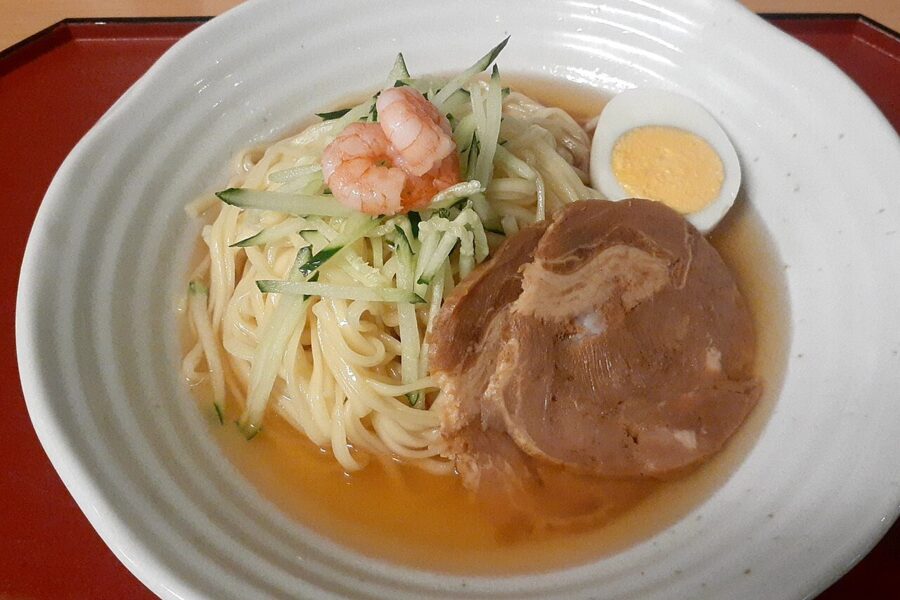
Kure reimen (呉冷麺) is a summer dish eaten all year: flat, chewy noodles in a sweet, sour and chilli-hot chicken broth, topped with cucumber, char siu, a boiled egg and shrimp, with vinegar on the side. It dates from around 1955, when a ramen stall in Nakadōri came up with a cold dish for the months when nobody wanted hot noodles. Chinraiken (珍来軒) on Hondōri, which calls itself the original, opens from 11:30 until 15:30 or until the noodles run out.

Kure Kaiji Curry
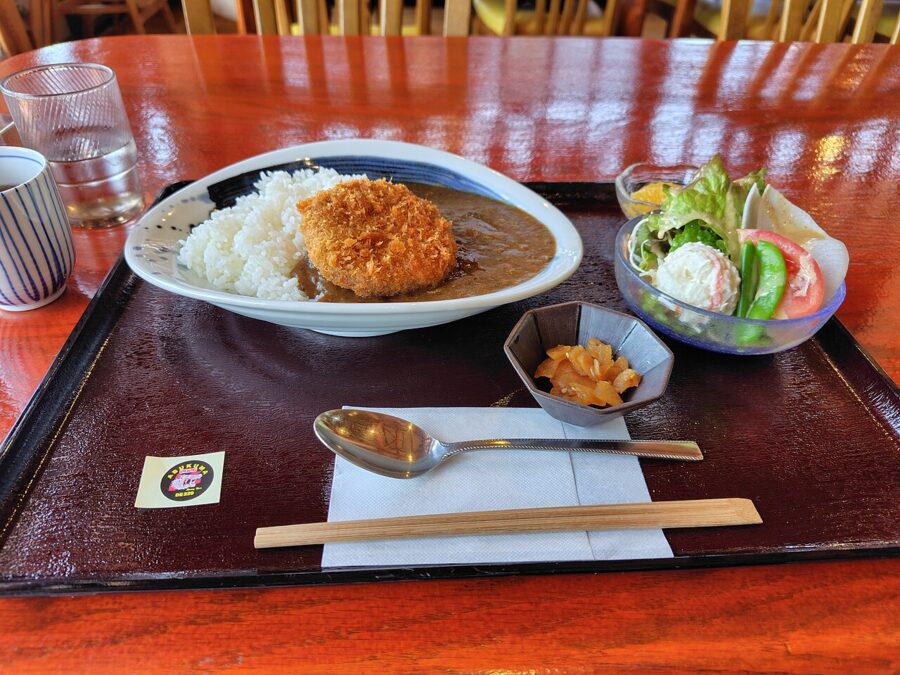
Many Maritime Self-Defense Force units eat curry for lunch every Friday, by most accounts so that crews on long voyages keep track of the days. In Kure, 23 restaurants each serve the curry of one particular ship or unit at the base, cooked to a recipe taught by its cooks and signed off by its captain. That is the Kure Kaiji Curry (呉海自カレー) scheme, now in its twelfth year, and the official shop list tells you which ship each place represents, from the destroyer escort Abukuma to the helicopter carrier Kaga.
Kure is also one of Hiroshima Prefecture’s main oyster-growing areas, with 50 to 60 growers around Ondo, Kurahashi and Yasuura, so in winter the oysters on a Kure menu have not travelled far. The Setouchi oysters guide has the season and the ways to eat them.
Fry cakes and Renga-dōri
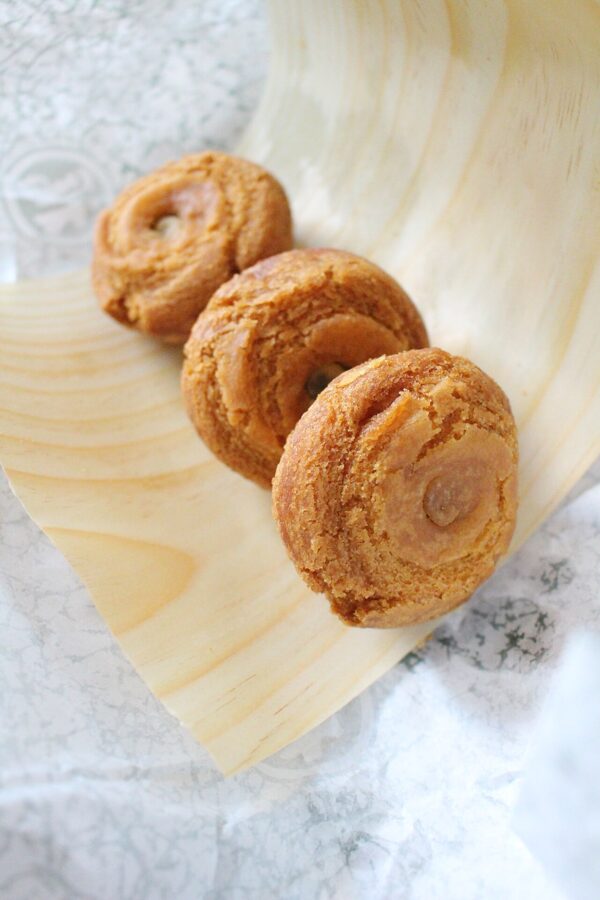
For something sweet, Fukuzumi (福住) has been making fry cakes, bean-paste buns fried like doughnuts, since just after the war. It closes on Tuesdays and when it sells out, so go before late afternoon rather than on your way to the train.

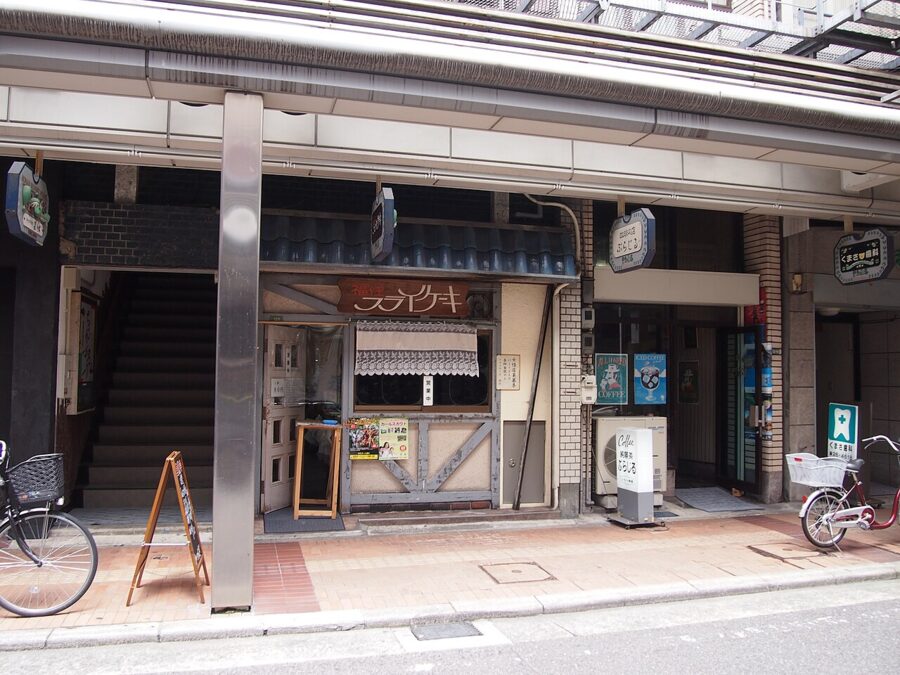

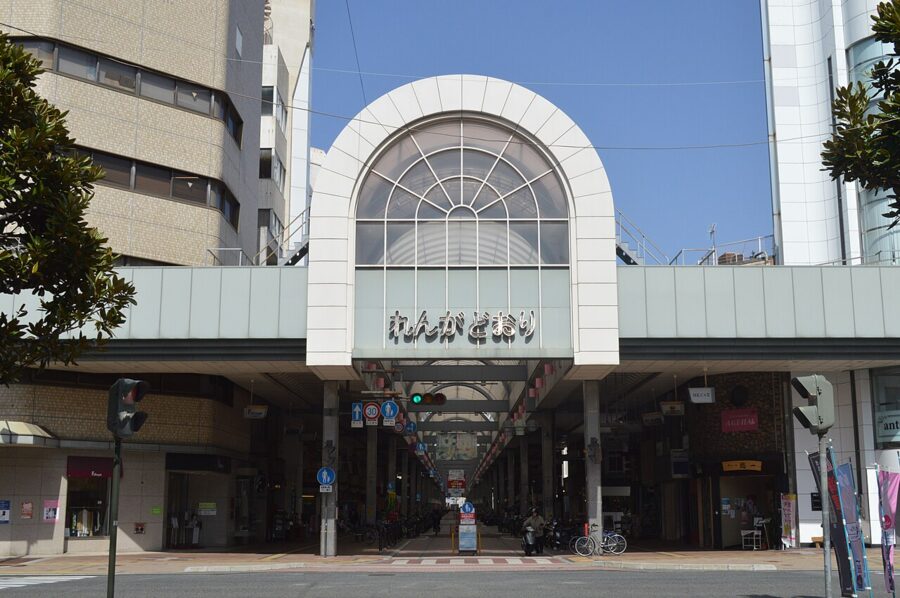
Central Kure’s shopping street is Renga-dōri (れんがどおり), a covered arcade that is home to the Kure branch of the Fukuya department store, open 10:00 to 18:00 and closed on Wednesdays. It is the place to shelter from rain between lunch and the evening stalls, which set up close by.

Getting to Kure from Hiroshima
By train on the Kure line
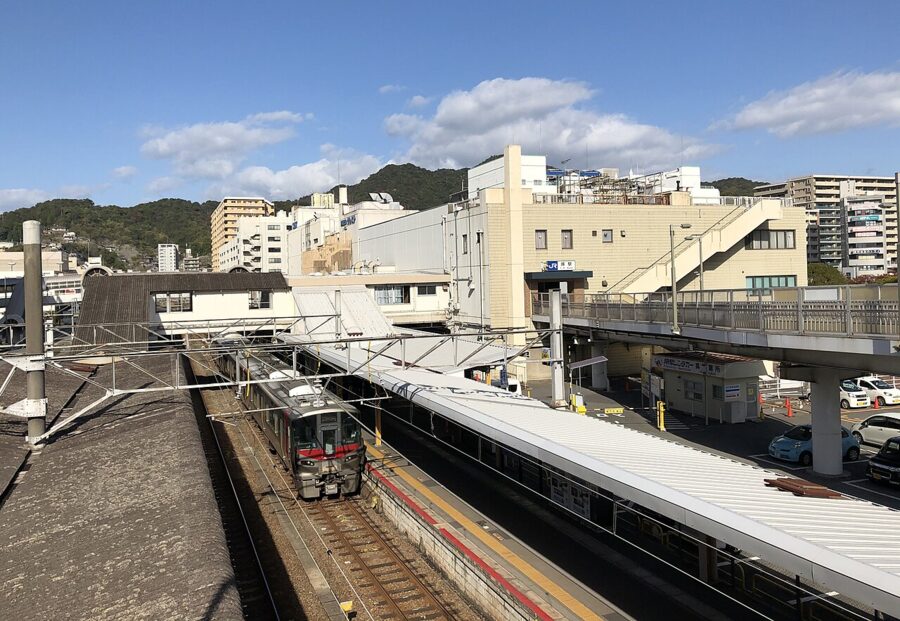
Trains on the JR Kure line run from Hiroshima Station to Kure Station. The Aki-Liner rapid takes about 33 minutes and a local about 47 to 50; the fare is ¥510 (about US$3) as of 2026, and the Japan Rail Pass covers it. From Kure Station the museums are about eight minutes on foot along the raised walkway towards the harbour.
By sea from Hiroshima Port or Miyajima
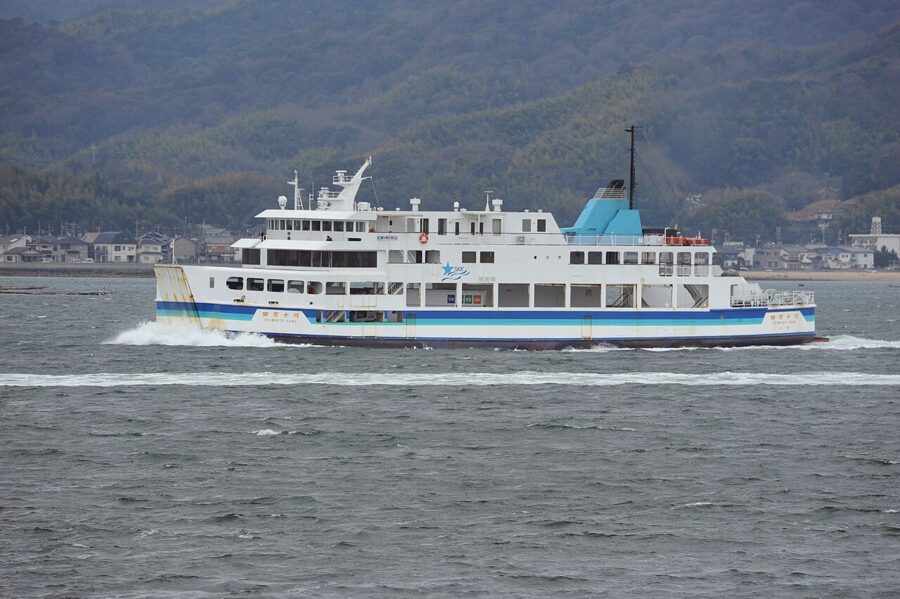
Setonaikai Kisen’s car ferries and Linear Jet high-speed boats on the Hiroshima–Matsuyama route call at Kure Central Pier, a minute from the Yamato Museum, and the crossing is the scenic way in. From Hiroshima Port at Ujina, reached by tram from the city centre, the ferry takes about 45 minutes and costs ¥1,200 (about US$8); the Linear Jet takes about 25 minutes for ¥2,900 (about US$18), fares that took effect on 1 September 2026. Some weekday ferries between 1 and 25 December 2026 are cancelled because of high fuel prices, and from 6 January to 12 March 2027 the ferry runs to a temporary timetable, so check the day’s sailings.
From Miyajima, the Miyajima–Kure Blue Line high-speed boat crosses in about 45 minutes for ¥2,500 (about US$16), saving the trip back through Hiroshima. It sails only on weekends and public holidays in April to July and September to November, leaving Miyajima at 11:30 and 15:10, and not at all from December to March; seats go first to those who reserved by phone before 16:00 the previous day. Heading the other way, Kure to Miyajima, you also pay the island’s ¥100 (under US$1) visitor tax.
By bus
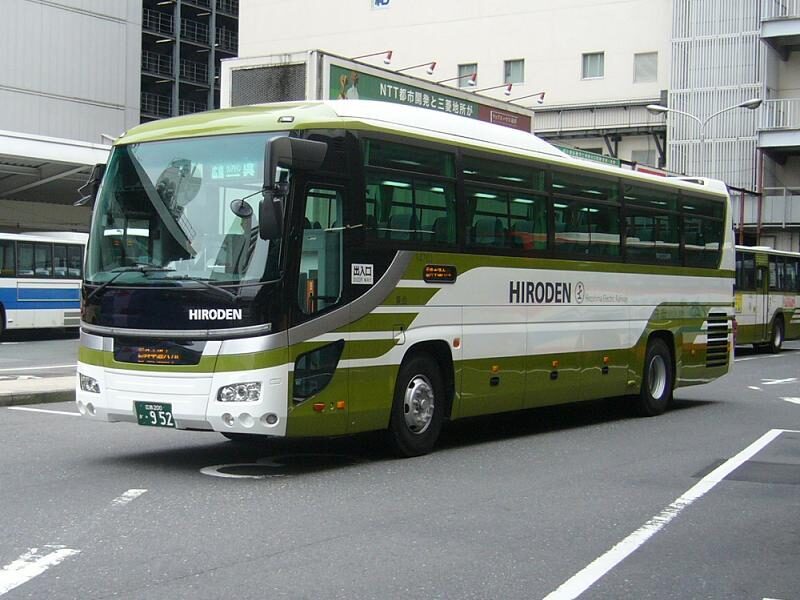
The Clear Line highway bus from Hiroshima Bus Center, a short walk from the Peace Memorial Park, reaches Kure Station in about 46 minutes. It is handy if you are starting from the park side of the city rather than the station.

Along the coast: the Kure line to Takehara and Mihara
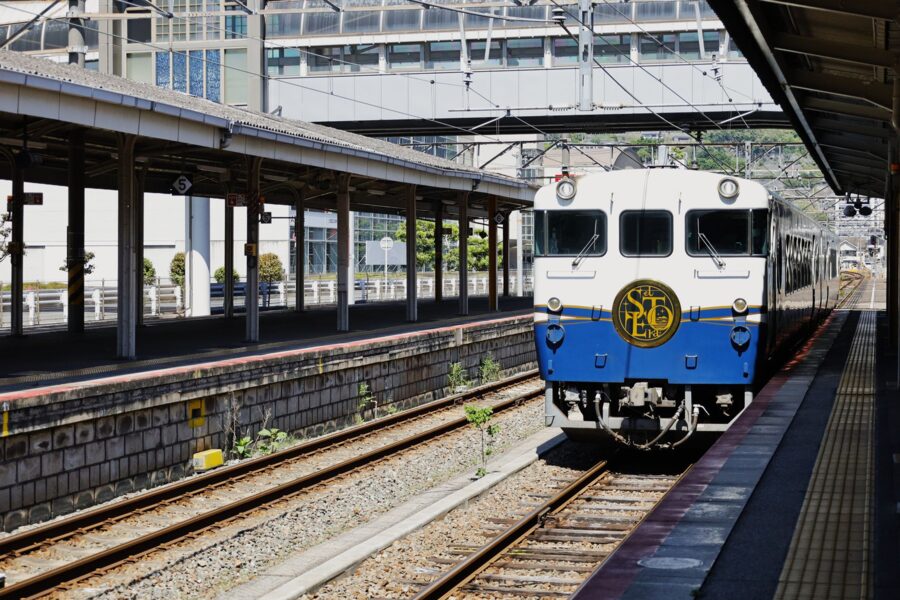
East of Kure the Kure line follows the Inland Sea coast to Takehara and Mihara, with islands and oyster rafts out of the window, and it is one of the best rides in western Japan by train. The etSETOra tourist train runs it on Mondays, Fridays, weekends and holidays through February 2027, leaving Hiroshima at 09:32 and Kure at 10:23 for Fukuyama, and coming back through Kure at 16:37 to reach Hiroshima around 17:25.
Come on any day but a Tuesday, cross the footbridge with the warships below you, see Yamato at nine, and leave the red lanterns of Kuramoto-dōri for last.