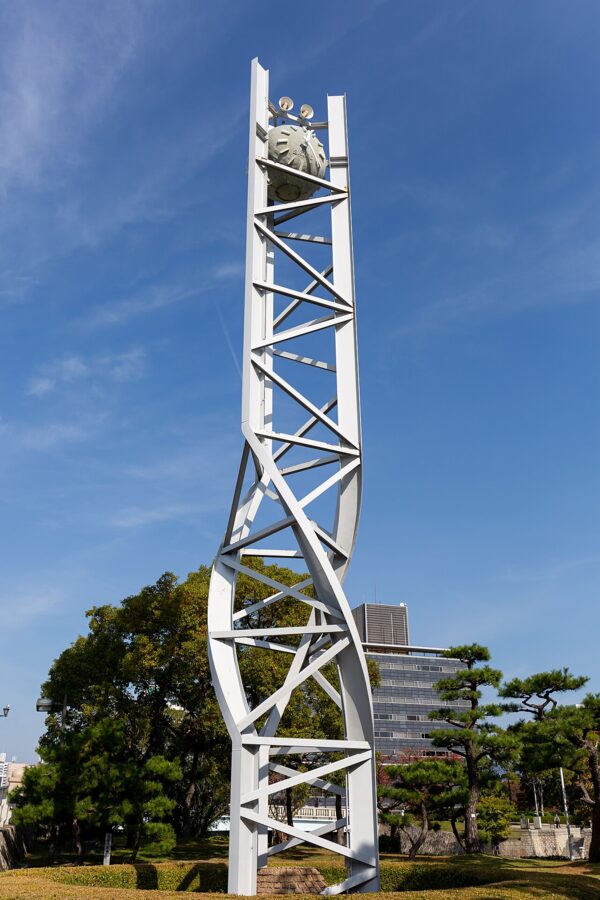
Every morning at 08:15 the chimes of the Peace Clock Tower ring out over the Motoyasu River. Most people crossing the Aioi Bridge on their way to work don’t look up. The time is the reason the tower exists: at 08:15 on 6 August 1945 an atomic bomb exploded about 600 metres above a hospital a short walk from here, and the city has marked that minute ever since.
Hiroshima Peace Memorial Park fills the northern tip of the sandbar where that bomb fell. It is free, never closes, and is full of joggers, office workers on lunch breaks and school groups carrying strings of paper cranes. It is also the city’s grave and its memorial, and the museum at its southern end is the hardest two hours most visitors spend in Japan. In the year to March 2026 that museum took 2,580,926 visitors, a record for the third year running.
So the one decision that shapes your day is when you go to the museum. Book a web ticket for the 07:30 slot, or the last hour of the evening, and you walk in past the queue into rooms you can actually move through. Leave it to late morning in October and you will shuffle through it in a crowd. Everything else in the park can be done at your own pace, at any hour.
On this page10 stops
- Before you go: time, timing and what it asks of you
- 6 August 1945, in brief
- The Atomic Bomb Dome
- The park, memorial by memorial
- The Peace Memorial Museum
- Hearing the testimony
- The National Peace Memorial Hall
- 6 August: the ceremony and the lanterns
- Guided walks that help
- Getting there, and the rest of the city

Before you go: time, timing and what it asks of you
Allow an hour to walk the memorials at an easy pace, and two hours for the museum if you read as you go; three if you take the audio guide and watch the testimony videos. With the Atomic Bomb Dome, the National Peace Memorial Hall and a pause by the river, half a day is right. Don’t squeeze it in before a train. The visit leaves most people needing a quiet hour afterwards, and the city has plenty of those to offer.
The museum is busiest from late morning into the afternoon, and its busiest months are October, November and August; in the year to March 2026, October alone brought more than 320,000 people. December to February are the calmest. Spring and autumn weekdays bring school trips, which crowd the Children’s Peace Monument as much as the galleries.
Be ready for what the museum shows. The Main Building displays the clothes, belongings and photographs of people who were burned, injured and killed, many of them children. Some visitors cry, and nobody will mind if you do.
The park itself has no graphic displays, and families with young children sometimes walk the memorials and leave the museum for another visit or skip it. Read the park’s rules before you go: no smoking anywhere in it since April 2018, no fires or fireworks, and no climbing inside the Dome’s fence.
Through 2025 and 2026 the city has been moving trees and digging trial pits in parts of the park to open up the view along the central axis, with archaeologists recording the old Nakajima streets underneath. Expect a fenced-off patch or two.
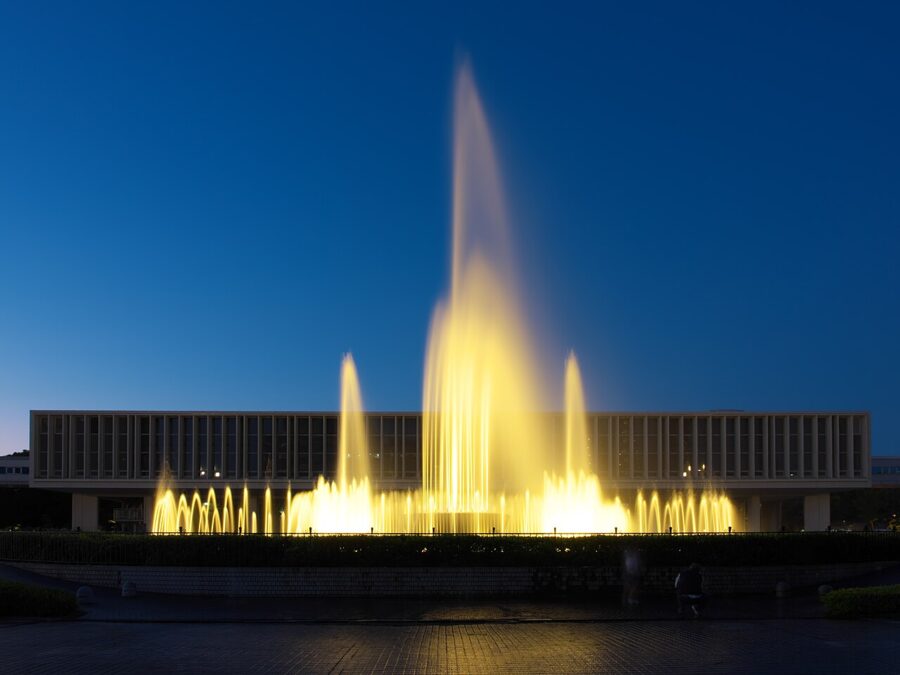
Dress for the season. The park has shade along the rivers but little on the central plaza, and a summer afternoon on that stone can be punishing. The city’s tourist information counter is in the Rest House at the north end, and the museum’s East Building has a café and a free rest area.
6 August 1945, in brief
By the summer of 1945 Japan was losing the war, and the United States had selected a short list of target cities for a new weapon, sparing them from conventional air raids so the effect could be measured. On 2 August the order named Hiroshima as the first target for 6 August. That morning the B-29 Enola Gay dropped a uranium bomb over the city centre.
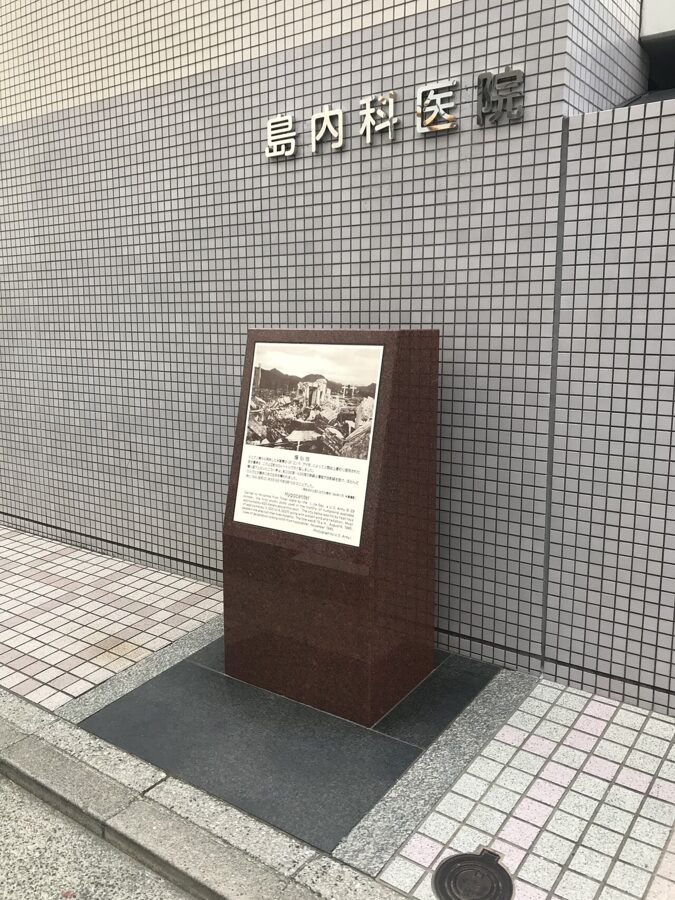
It exploded at 08:15, about 600 metres above Shima Hospital, according to the city’s account of the hypocentre. The aiming point was the T-shaped Aioi Bridge, easy to pick out from the air, at the north end of what is now the park.
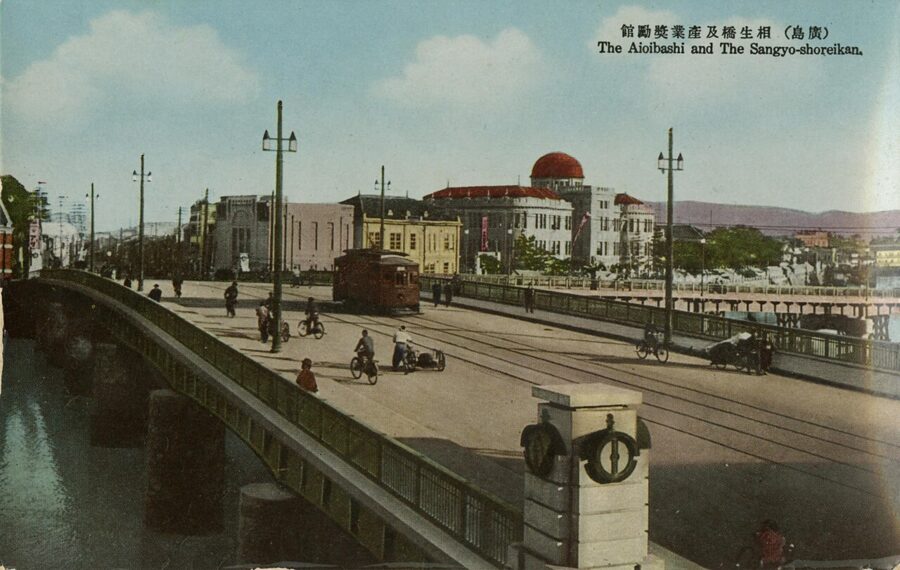
About 350,000 people are thought to have been in the city that day: residents, soldiers, and workers and students brought in from the surrounding towns. Heat rays, blast and fire destroyed most buildings within about two kilometres.
Hiroshima City estimates that roughly 140,000 people had died by the end of December 1945, when the acute effects of radiation had mostly passed. The city is careful to say the exact number is still unknown, and it puts the error at about 10,000 either way. Within 1.2 kilometres of the hypocentre, about half the people died that day.

Deaths from injuries and radiation went on for years. That is why the register of names kept inside the Cenotaph grows every summer, and why the city counts its dead differently from the estimates: the register holds everyone whose family has asked for their name to be added, whenever they died.
The Atomic Bomb Dome
What the building was
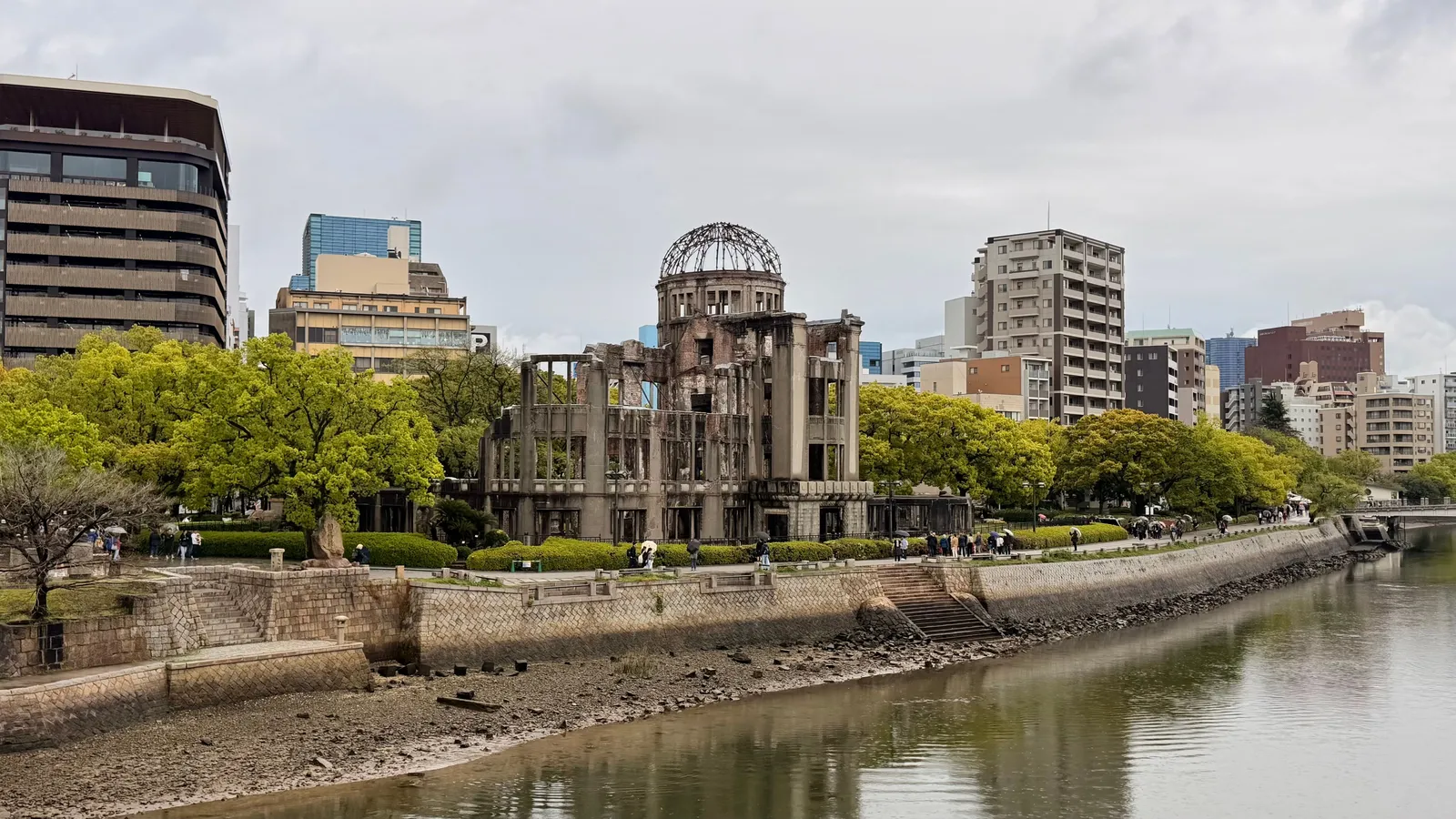
The Dome began as a showpiece. The Czech architect Jan Letzel designed it, and it opened in April 1915 as the Hiroshima Prefectural Commercial Exhibition Hall: three storeys of brick with stone and mortar facing, a five-storey stairwell at the front and an oval copper dome on top. In a city of two-storey wooden houses it was a sensation, and the reflection of the building in the river made it one of Hiroshima’s sights. Renamed the Prefectural Industrial Promotion Hall in 1933, it held exhibitions, art shows and trade fairs until March 1944, when it was turned over to government and wartime offices, as the city’s history of the Dome sets out.
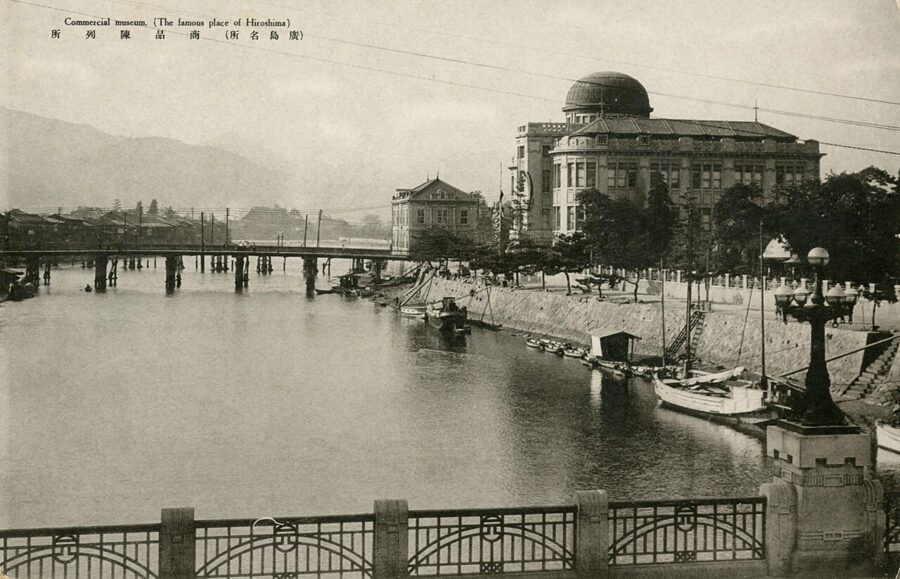
It stood about 160 metres northwest of the hypocentre. The blast came from almost directly above, so the walls of the central section stayed standing while the roof and floors collapsed and the building burned out. Everyone inside was killed.
Why it was kept
After the war people began calling the ruin the Genbaku Dōmu (原爆ドーム), the A-bomb Dome, after the bare steel frame of its cupola. For twenty years Hiroshima argued over it. Some wanted it kept as a monument; others wanted the painful sight taken down, and as the city rebuilt and other ruined buildings disappeared, the debate grew. The Dome was fenced off in 1962 as bricks began to fall.
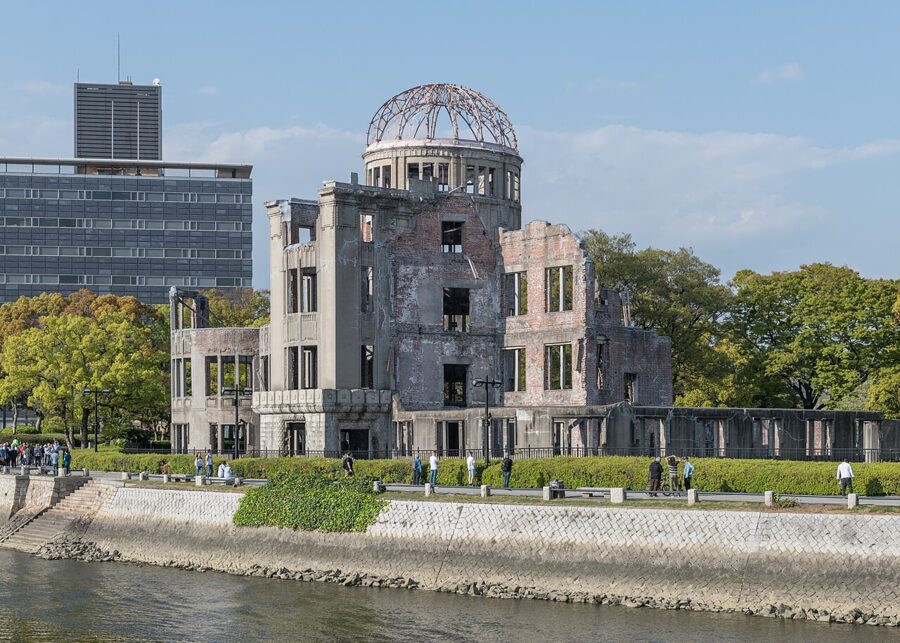

In July 1966 the city council voted to preserve it, and a public appeal raised more than 66 million yen from Japan and abroad, from over 1.3 million donors. The first preservation work followed in 1967.
The Dome was listed as a national Historic Site in 1995 and inscribed as a UNESCO World Heritage Site on 5 December 1996. In September 2025 the national government raised it to a Special Historic Site, the highest grade of protection for a historic place in Japan. The 30th anniversary of the World Heritage listing falls on 5 December 2026, with commemorative events through the winter.
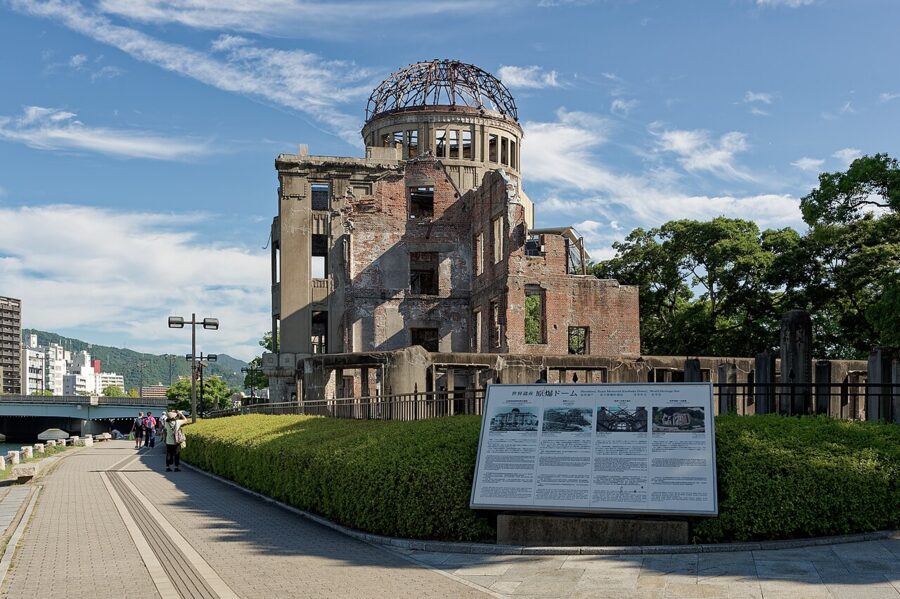

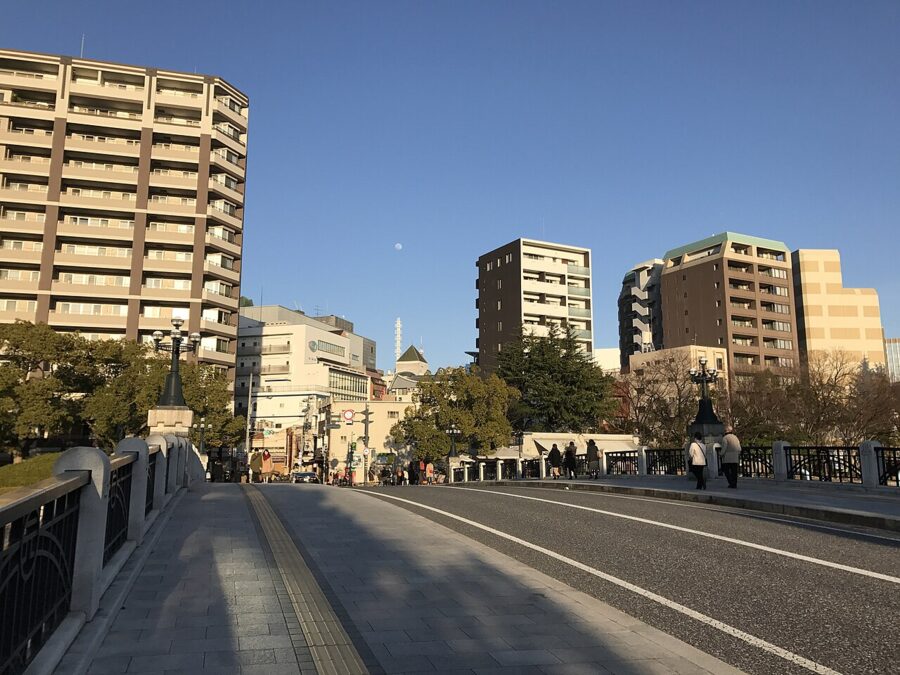
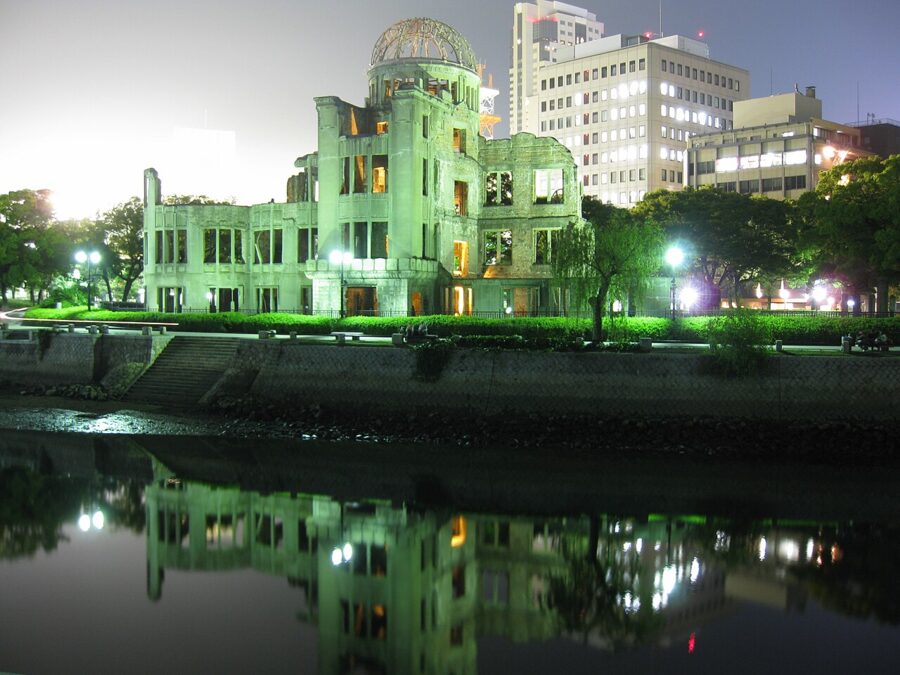
The best views are from the riverbank opposite, from the Aioi Bridge and from the Motoyasu Bridge. After dark it is floodlit, and the walk back along the river to the Cenotaph is one of the quietest in the city.

The park, memorial by memorial
Before 1945 this sandbar was the Nakajima district, a dense neighbourhood of shops, temples and homes where an estimated 6,500 people lived. The bomb wiped it out.
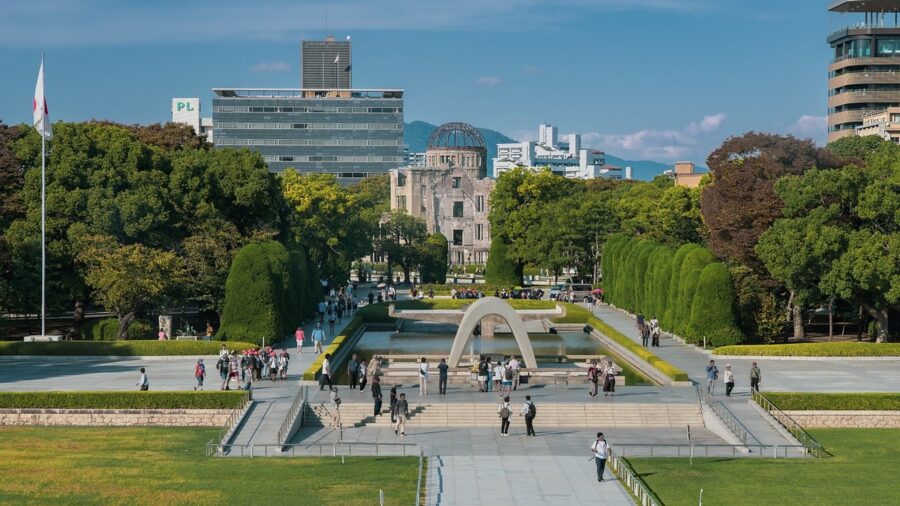
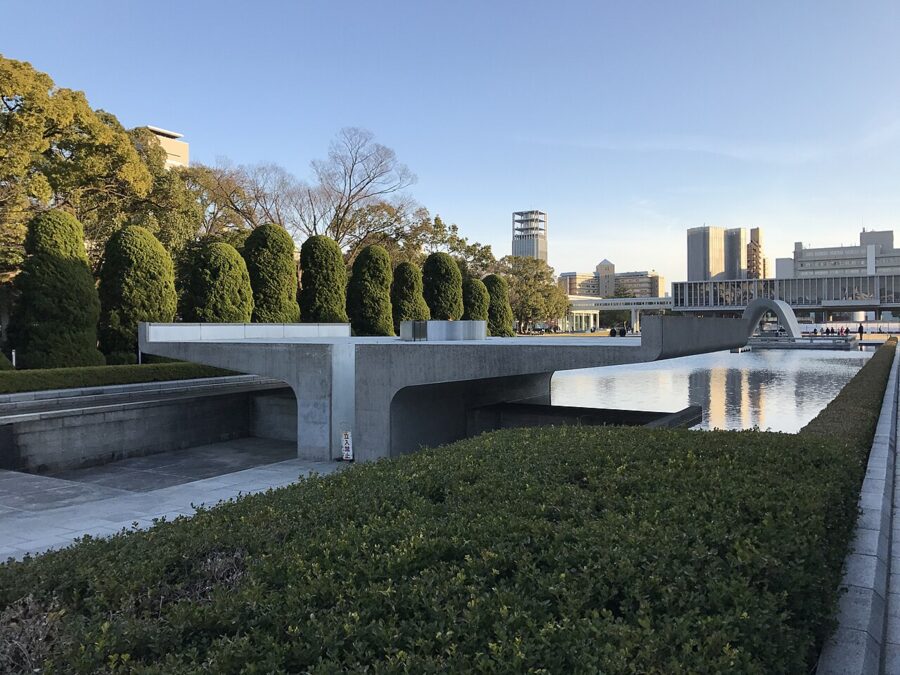
In 1949 a national law made Hiroshima a “peace memorial city”, Tange’s design won the competition for the park, and building ran from 1950 to 1955. Much of the ground was raised with fill, so you are walking above the old streets. The city counts 35 monuments inside the park and many more around it, and its register of A-bomb memorials describes each one with its inscription.
The Cenotaph for the A-bomb Victims
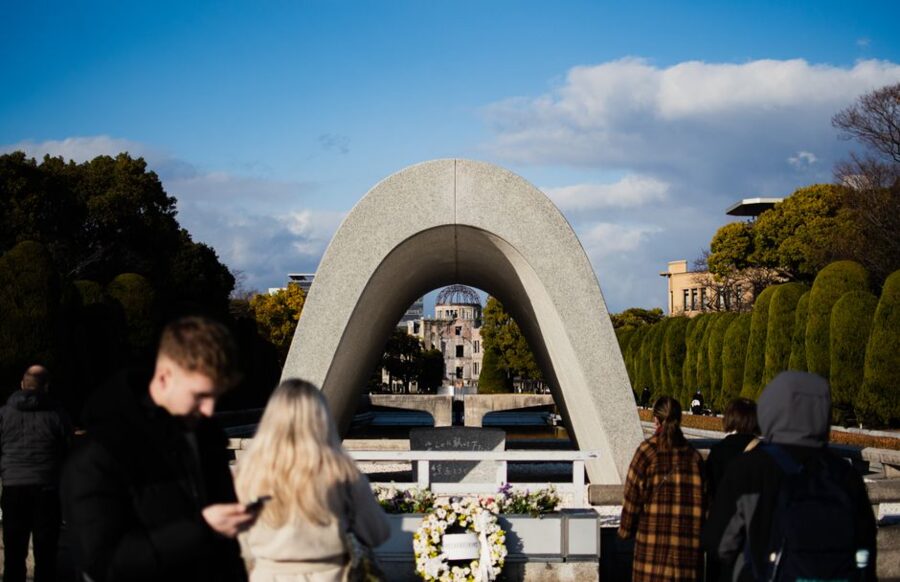
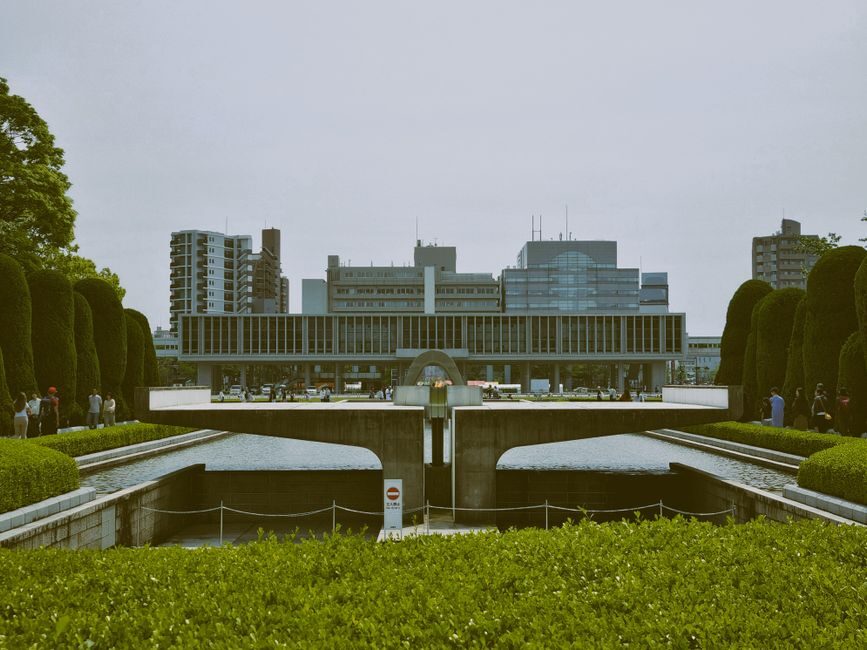
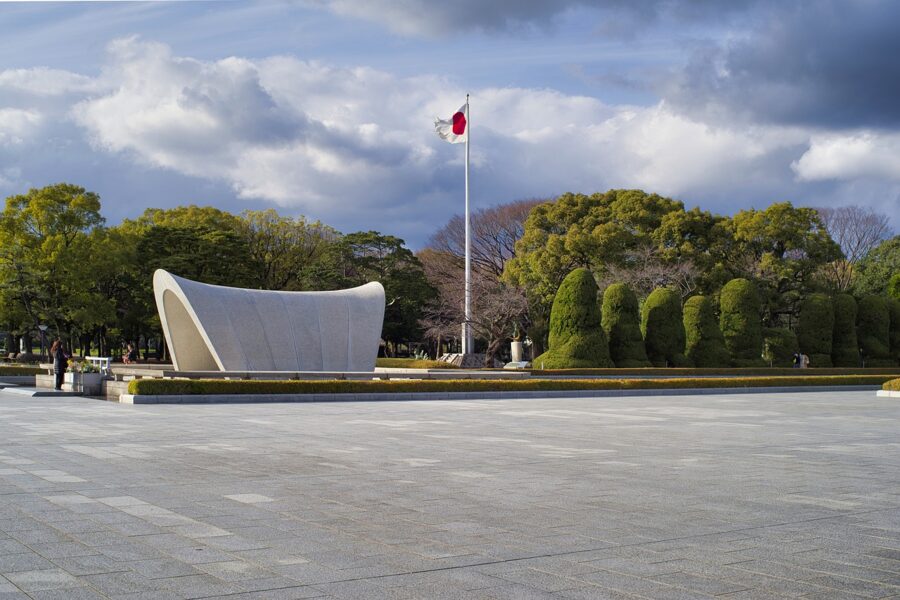
The arch at the centre of the park was unveiled on 6 August 1952. Its shape copies the roof of an ancient clay haniwa house, meant to shelter the souls of the dead from the rain. Its official name is the Hiroshima Peace City Memorial Monument, because it was built with the hope of rebuilding Hiroshima as a city of peace.
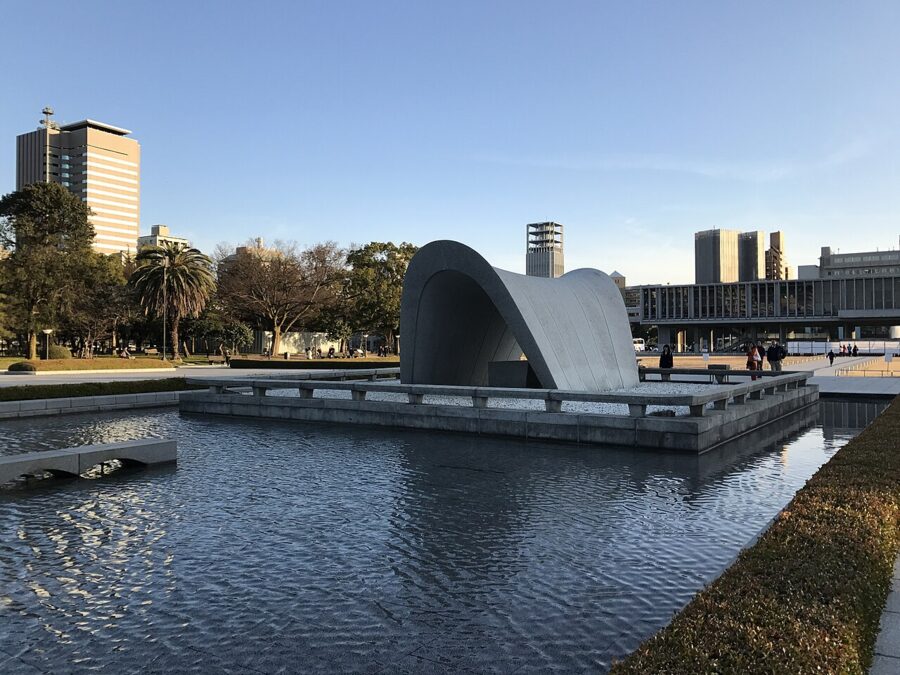

Under the arch, a stone chest holds the register of the dead. On 6 August 2026 another 4,393 names were added, bringing the register of A-bomb victims to 353,639 names in 132 volumes, one of them for the many whose names were never known.
The epitaph on the front reads 安らかに眠って下さい 過ちは繰返しませぬから, usually translated “Let all the souls here rest in peace, for we shall not repeat the evil.” The Japanese gives the sentence no subject. The city explains it as a pledge made by everyone, not by one nation.
Anyone may lay flowers here. Take your hat off, stand for a moment, and step aside for the next person. Then look north through the arch: the Flame of Peace and the Dome sit in the frame, exactly as Tange intended.
The Flame of Peace
The flame at the end of the pond was lit on 1 August 1964 and will burn until the last nuclear weapon is gone. Tange designed the pedestal as two hands opened upwards. It was lit from “religious flames” sent by 35 shrines, temples and churches around Japan and “industrial fire” from factory furnaces.

The Children’s Peace Monument and Sadako Sasaki
North of the flame, a nine-metre monument carries a bronze girl holding a golden crane above her head.
Sadako Sasaki was two when the bomb fell. In 1955 she was diagnosed with leukaemia, and in hospital she folded more than 1,300 paper cranes from medicine wrappers, believing that a thousand would make her well. She died eight months after the diagnosis, in October 1955, at the age of twelve. Her classmates began collecting money for a memorial to all the children killed by the bomb, schools across Japan joined in, and the monument was unveiled on Children’s Day, 5 May 1958.
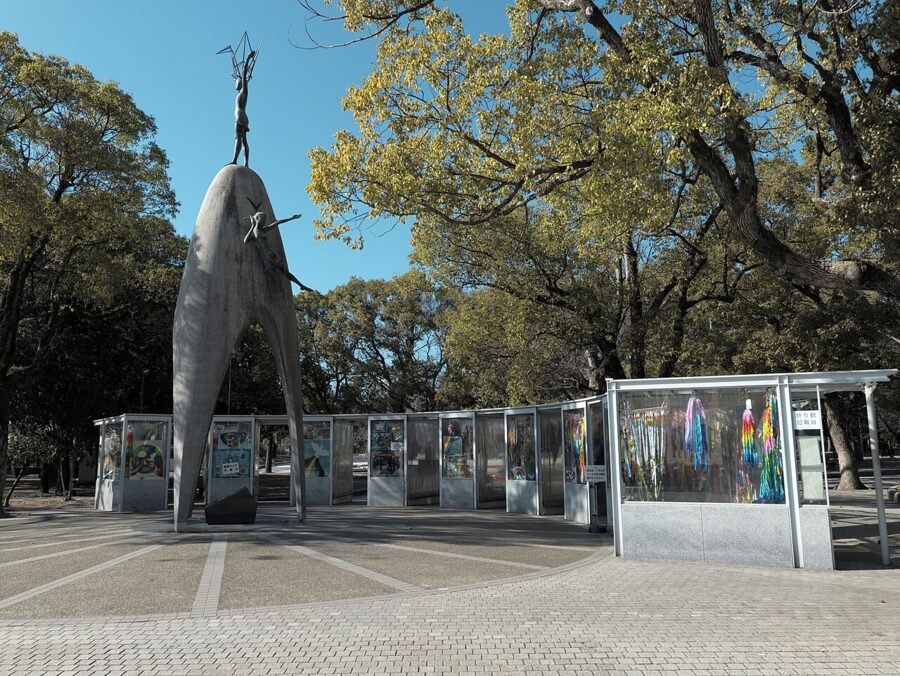

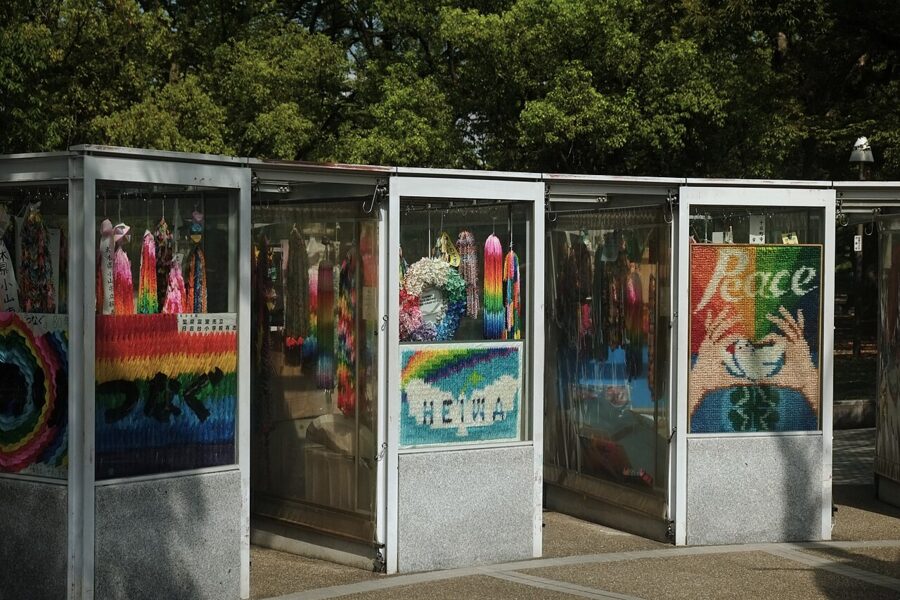
Around 10 million cranes arrive here every year, roughly ten tonnes. They hang in the glass booths around the monument until there is no room, then are moved to storage to make space for the next. If you bring your own, the city’s guidance on offering cranes asks for strings no longer than 1.5 metres and no wider than 25 centimetres, with a strong thread. The booths are open from 08:45 to 17:00 (06:00 to 20:00 on 6 August) and curtained at night.

The Peace Bell
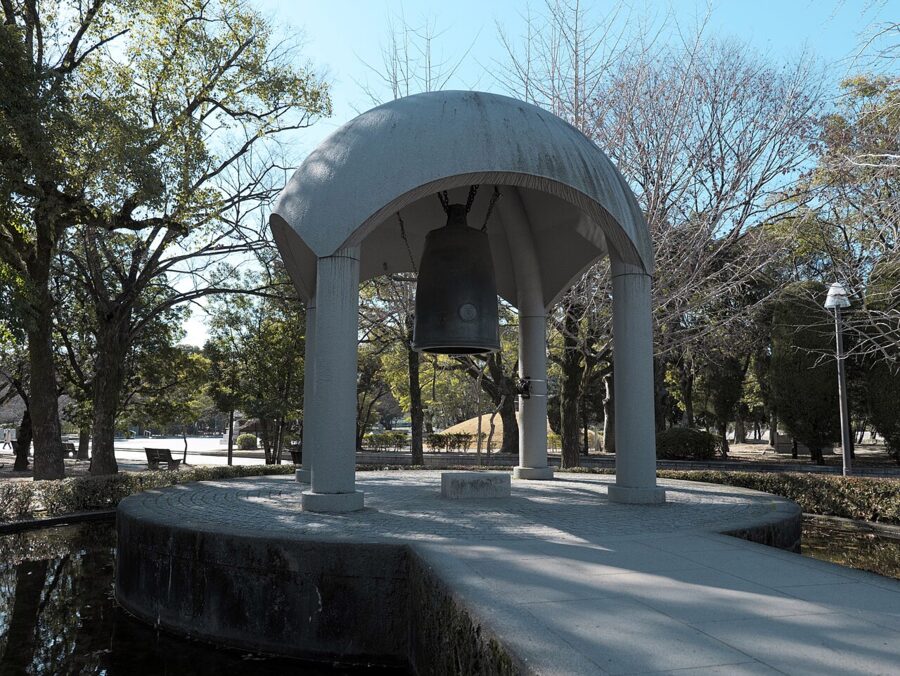
East of the Children’s Peace Monument, a bell hangs under a small domed shelter. It was installed in 1964, and its surface is cast with a map of the world without national borders. Anyone may ring it, and people do, one deep stroke at a time. The sound has been chosen as one of Japan’s 100 soundscapes worth preserving.

The Atomic Bomb Memorial Mound
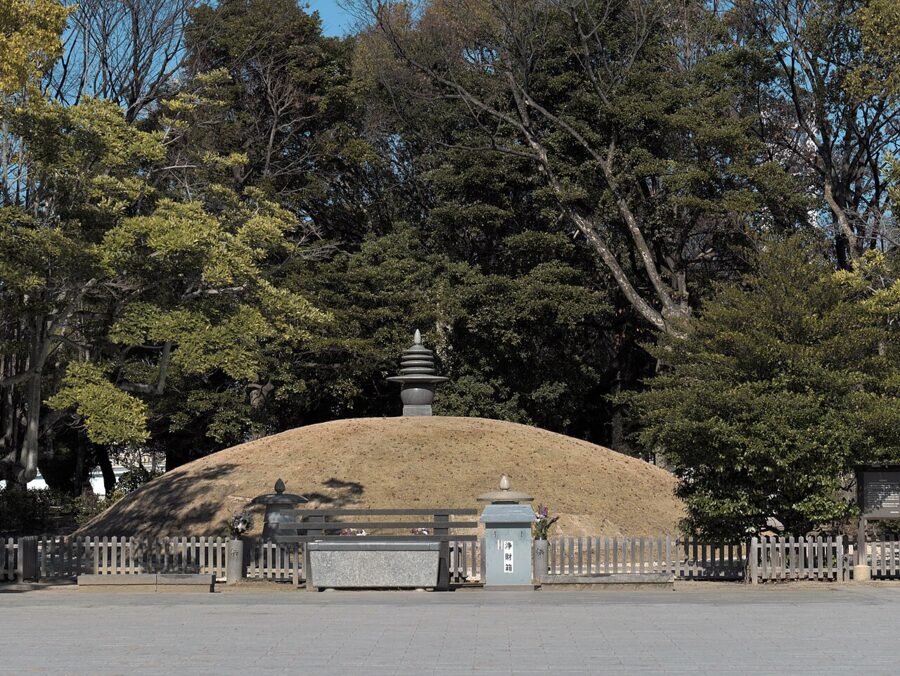
Near the river at the north end of the park is a low grassed mound. This was close to the hypocentre, and in the days after the bombing countless bodies were brought here and cremated. A temporary memorial went up in 1946, and the present mound dates from 1955. Inside lie the ashes of about 70,000 people.
Most are unnamed; where a name is known, the city still returns the remains to the family when relatives are found. Services are held here on the 6th of every month.

The memorial to Korean victims
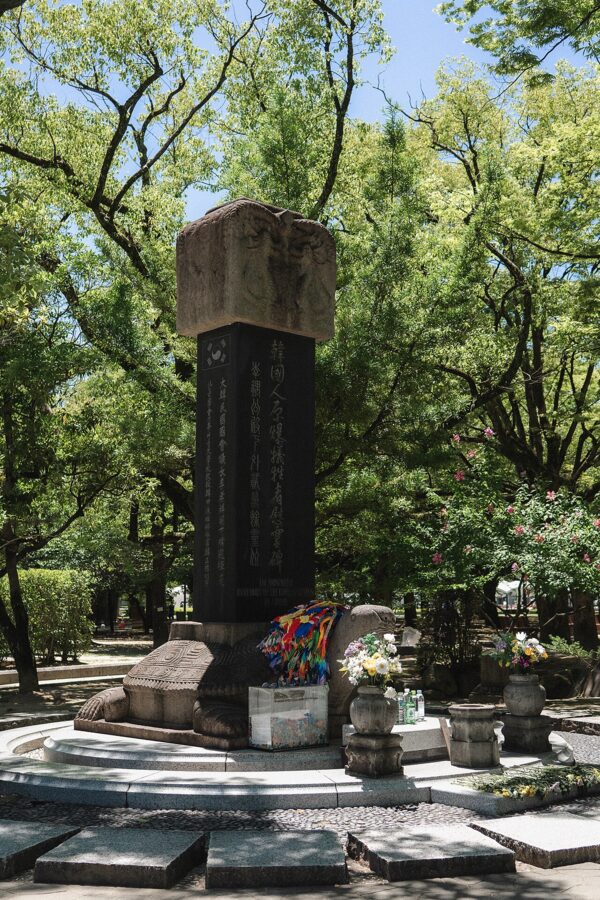
Just south of the mound stands a tall stone on the back of a carved tortoise, crowned with twin dragons. Wartime Hiroshima was a military city full of munitions factories, and tens of thousands of people from the Korean Peninsula were living and working here in 1945, many conscripted or mobilised for work. Some 20,000 of them are said to have been killed by the bomb.

Beside it, sunk below the level of the paths, is a gravestone from the Jisenji temple that stood here 200 metres from the hypocentre. It was left as the blast left it, and the hollow it sits in shows the height of the ground in 1945.
The Peace Clock Tower, the Rest House and the stones in between
The Peace Clock Tower at the south end of the Aioi Bridge was given by a local Lions Club in 1967, and it chimes at 08:15 every day.
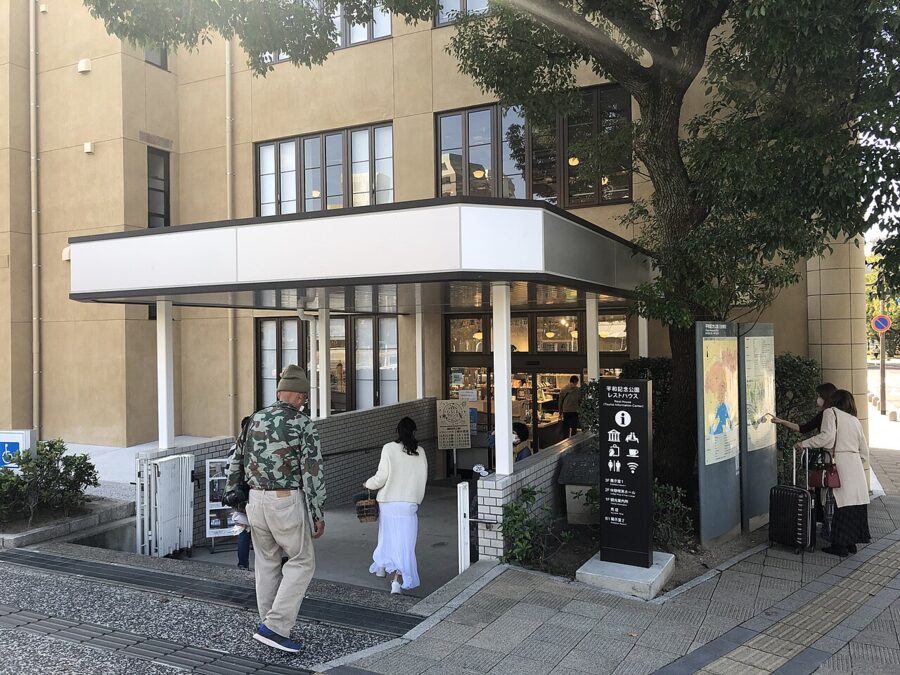
Across the path from the Children’s Peace Monument is the Rest House, built in 1929 as the Taishoya kimono shop. It stood within a couple of hundred metres of the hypocentre, and one man working in its basement survived. Today it holds the city’s tourist information counter and a shop on the ground floor, a café on the first, and exhibitions in the basement and on the top floor. Check the Rest House for its current events.
Along the riverbanks are dozens of smaller stones, many of them for the schoolchildren who died. In the summer of 1945 thousands of students were mobilised to clear firebreaks in the city centre, and whole year groups were working in the open when the bomb fell. The memorial to the Hiroshima Municipal Girls’ High School, by the Peace Bridge, remembers more than 670 students and staff; its relief carries the formula E=MC², because under the Occupation the word “atomic bomb” could not be carved. The Memorial Tower to the Mobilised Students, southeast of the Dome, honours the more than 6,000 mobilised students killed by the atomic bomb.
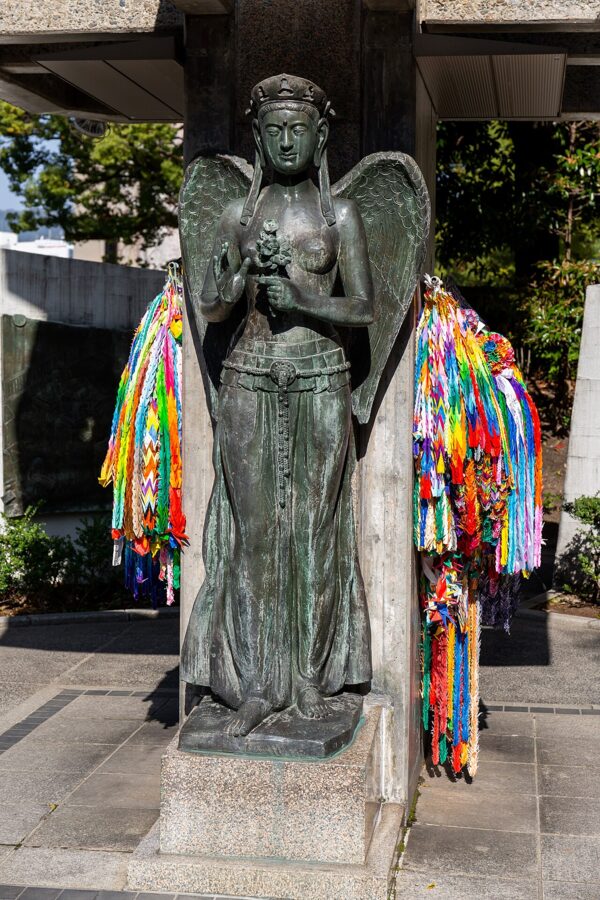
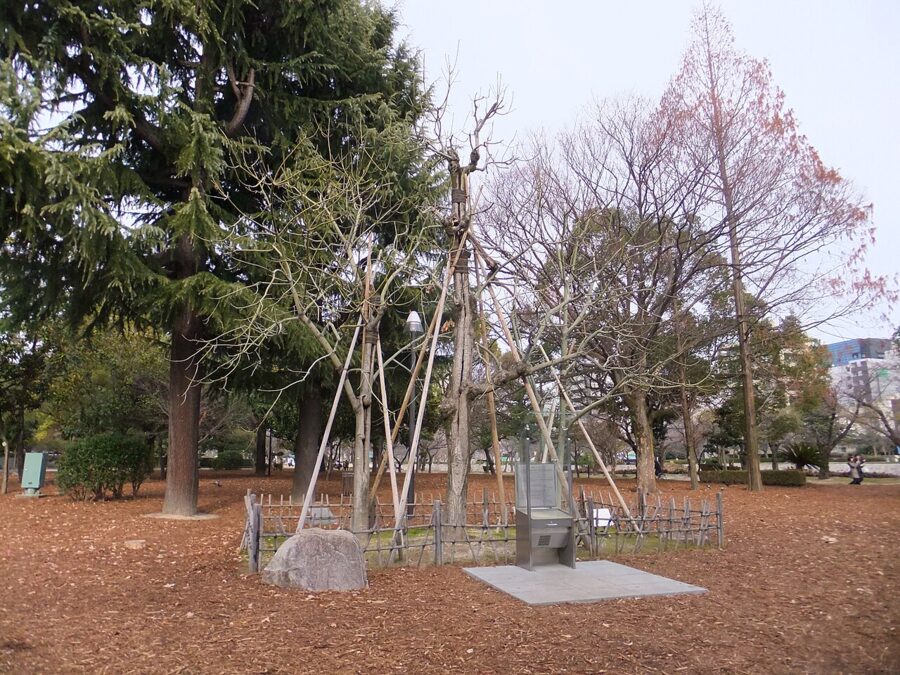

North of the East Building, the A-bombed Remains Exhibition, opened in 2022 and free, shows a section of the old Nakajima streets dug out 60 to 90 centimetres below the lawn: a gutter, asphalt paving and the floors of houses as the fire left them. It opens 08:30 to 18:00 for most of the year (to 17:00 in winter) and takes ten minutes.
The Peace Memorial Museum
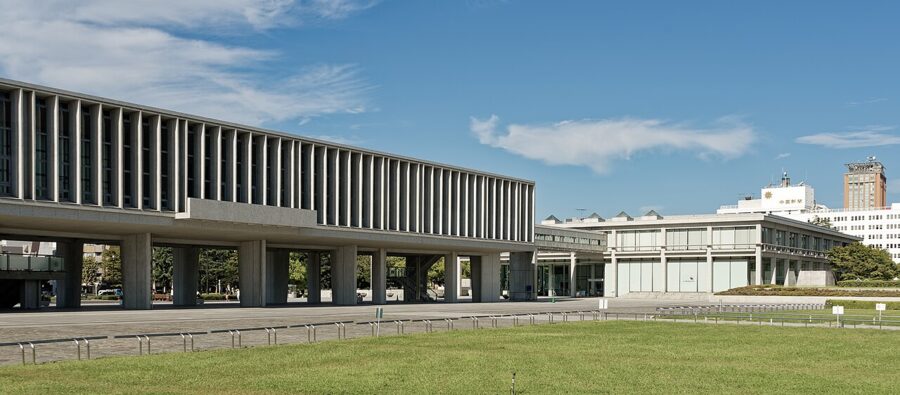
The museum opened in August 1955, and its two buildings were rebuilt inside in stages: the East Building reopened in 2017 and the Main Building in April 2019. It is run by the Hiroshima Peace Culture Foundation for the city, and its exhibits are real objects: the things people were wearing and carrying, with the stories of their owners.
Tickets, hours and timed entry (as of 2026)
Admission is ¥200 (about US$1.30) for adults, ¥100 for high school students and free for junior high age and under, according to the foundation’s 2026 report on the museum; anyone 65 or over pays ¥100 with official ID. In August 2026 the city said it would look again at the fee, so check before you go.
| Months | Open | Web ticket needed to enter |
|---|---|---|
| March to July, September to November | 07:30–19:00 | 07:30–08:30 and 17:30–18:30 |
| August | 07:30–20:00 (21:00 on 5 and 6 August) | 07:30–08:30 and 17:30–19:30 |
| December to February | 07:30–18:00 | 07:30–08:30 and 16:30–17:30 |
Last entry is 30 minutes before closing. The museum closes on 30 and 31 December and for a few days in mid-February while exhibits are changed (16 to 21 February in 2026). Those are the hours given in the city’s museum information; on 6 August 2026 itself, the ceremony pushed opening back to 09:45.
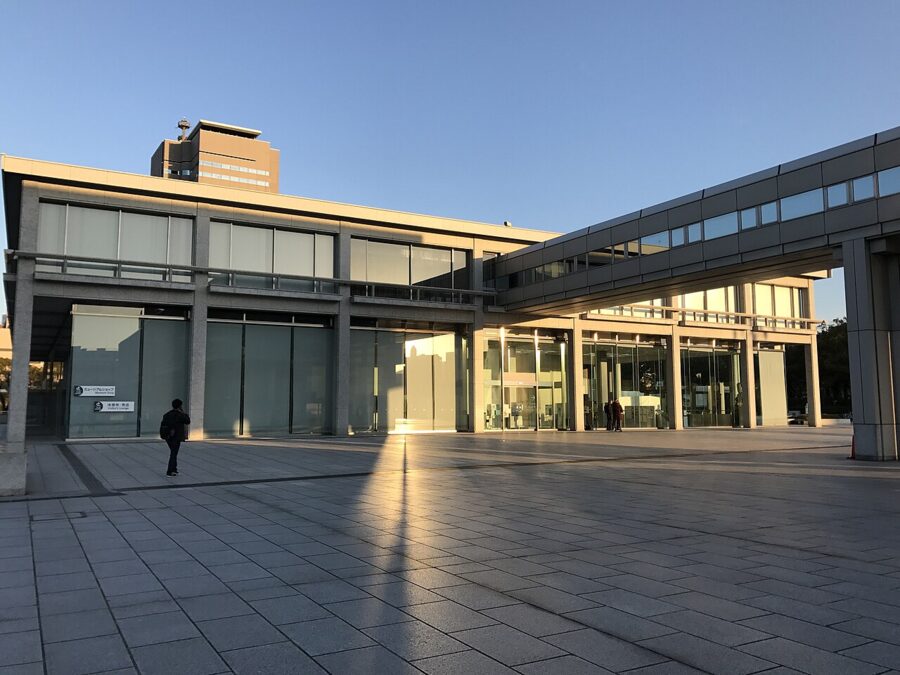

Outside the early and late slots you can buy a ticket at the door, but the queue at midday can be long. Buying a web ticket in advance lets you skip the ticket line at any hour, and in August 2026 the city ran a trial of reservation-only entry for the Obon week (8 to 16 August), capped at 1,000 people an hour, after crowds in 2025 made the galleries almost impossible to move through. Expect something similar at the busiest times in future.
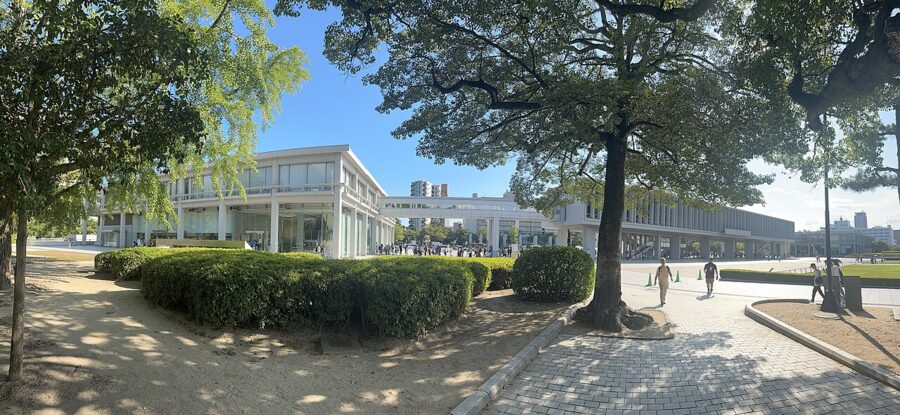

The route through the East and Main Buildings
The route starts on the upper floor of the East Building with a short introduction: images of the city before the bomb, and of what was left of it afterwards. A bridge then takes you into the Main Building, which is given over to the people. Its first zone, on 6 August, shows the devastation of that day; the second, on the hibakusha (被爆者), the survivors, turns to the damage done by radiation, to their letters, drawings and last words, and to how they lived afterwards.
Here are the things you will remember: school uniforms torn and burned, a child’s tricycle, lunch boxes with their charred contents, a wristwatch stopped at 08:15, the stone steps that once stood at a bank entrance and still carry the dark shadow of a person who was sitting there. Each object has a name and a short account of the person it belonged to. Go slowly, read the names, and sit on the benches when you need to.
Back in the East Building, the second half explains why Hiroshima was chosen, how the bomb was built and used, the dangers of nuclear weapons today and how the city rebuilt itself. There is a corner where survivors tell their own stories on video. On the ground floor, the Hiroshima Appeals corner, opened on 28 March 2026, closes the visit with testimony on two large screens and the message that humanity and nuclear weapons cannot coexist.
The audio guide and the free volunteer guides
The audio guide costs ¥500 (about US$3) and is worth it: 64 commentaries, about 70 minutes in all, in 15 languages including English, French, Spanish, German, Chinese and Korean, rented from the counter on the East Building’s ground floor, as listed in the foundation’s guide to the audio guide. You pick the items that interest you. The Japanese version includes readings by the actress Sayuri Yoshinaga.
Better still, and free, are the Hiroshima Peace Volunteers, 183 trained local guides who walk small groups (up to ten) around the park’s memorials for 60 to 90 minutes, between 10:30 and 15:30. The volunteer programme takes bookings by phone through the Peace Culture Foundation from a year ahead up to a week before, and sometimes on the day if a guide is free. Bookings are not taken for July, August and September, or on days with a heatstroke alert. Guided walks inside the museum are suspended because of the crowds.
Hearing the testimony
The youngest survivors are now in their eighties. The foundation still keeps a roster of hibakusha who give talks, mostly to school groups by advance booking, and in the summer holidays of 2025 it also held free survivor talks open to anyone, with no booking. Most visitors who want to hear the testimony in person will hear it from an A-bomb Legacy Successor: a volunteer who has spent years learning one survivor’s story, with their permission, in order to pass it on.
These talks are free and need no booking. They are held every day the museum is open in the special exhibition room on the East Building’s basement floor, according to the foundation’s report on the talks: 10:00, 11:30 and 14:30 in Japanese, and 13:00 in English, each about an hour. In the year to March 2026, nearly 5,000 people heard one of the 355 English sessions. Times can change, so check at the information desk when you arrive, and plan your museum slot around the 13:00 talk.
Listening to one person’s morning on 6 August changes the museum. If you can, hear the talk after you have been through the galleries, then go and sit somewhere quiet.
The National Peace Memorial Hall
East of the Flame of Peace, a fountain and a low entrance are almost all you see of the Hiroshima National Peace Memorial Hall for the Atomic Bomb Victims. It is free, the national government opened it in 2002, and it is far quieter than the museum. A slope spirals down to the Hall of Remembrance, a round room whose walls carry a 360-degree panorama of the ruined city as seen from the hypocentre, made of about 140,000 tiles: one for each person estimated to have died by the end of 1945. Beneath it are the names of the 226 neighbourhoods that existed that morning, each placed in its direction.
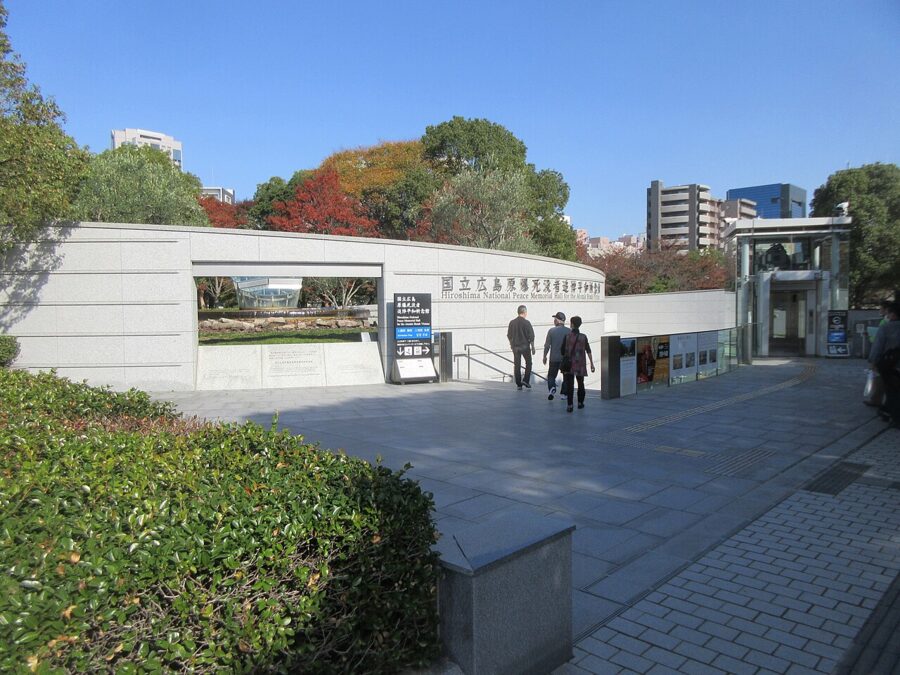
Beside the hall, screens show the names and photographs of victims sent in by their families, and the library upstairs holds more than 140,000 written memoirs and testimony videos, a selection of them in over 20 languages. The current special exhibition, on students of the First Prefectural Girls’ School, runs from 1 March 2026 to 28 February 2027. The Peace Memorial Hall opens 08:30 to 18:00 from March to July and September to November, 08:30 to 19:00 in August (20:00 on 5 and 6 August), and 08:30 to 17:00 in winter (December to February). It closes only on 30 and 31 December.
6 August: the ceremony and the lanterns
Every 6 August the city holds the Peace Memorial Ceremony in front of the Cenotaph. In 2026 it ran from 08:00 to 08:50: the register of names was dedicated, flowers were laid, and at 08:15 the city stood in silence while the Peace Bell rang, before the mayor read the Peace Declaration. The main venue had about 7,000 seats, with another 2,200 indoors at the International Conference Center showing the ceremony live.
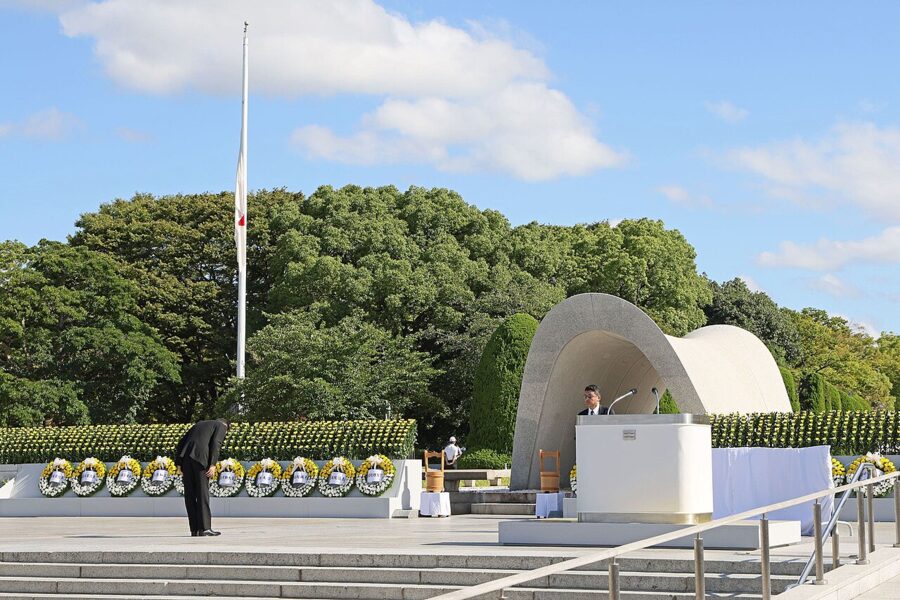

Coming as a visitor is possible, but plan for it. According to the city’s 2026 ceremony arrangements, the park was cleared and closed to ordinary users from 05:00 to 09:00; attendees were let in from 06:00 through bag checks and metal detectors.
About 1,600 unreserved seats were set aside for survivors and families and about 1,200 for the general public, first come, first served. People who only wanted to pray at the Cenotaph could use a separate entrance between 05:00 and 07:00. Placards, banners, loudhailers and drones were banned. The city also takes advance applications for a block of seats for foreign visitors in early summer.
If you are here on the day, behave as you would at a funeral. Keep your voice down, put the phone away during the silence, and give the elderly people around you room and the best of the shade. The day before, a memorial service is held at the monument to Korean victims, and on the evening of 5 August candles lit from the Flame of Peace glow at seven temples and shrines near the station’s north exit for a summer evening of prayer.
The lantern floating
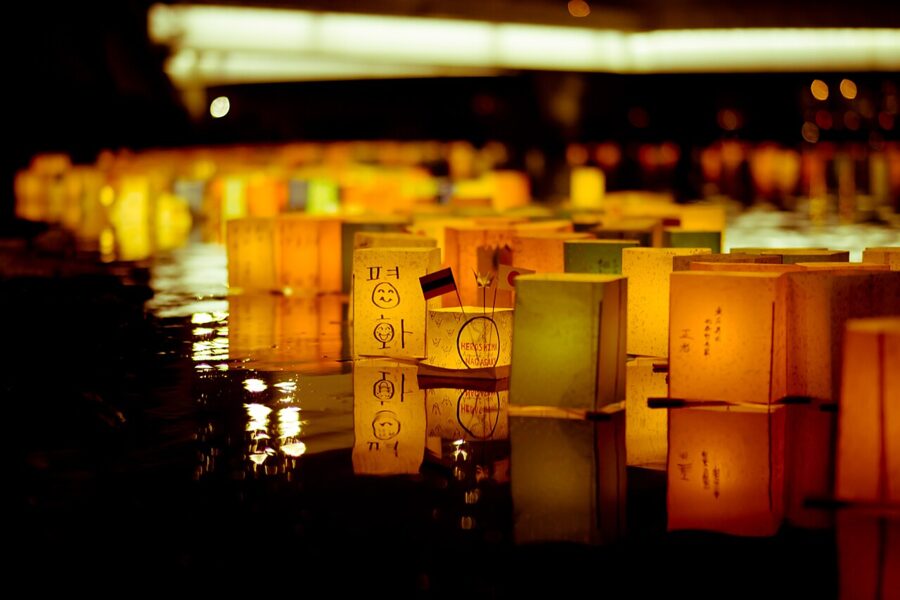
As darkness falls on 6 August, thousands of paper lanterns are set on the Motoyasu River opposite the Dome, carrying the names of the dead and messages of peace. The custom began around 1947, when bereaved families and neighbours floated handmade lanterns for their dead, and it is now run by the city-centre shopping streets with volunteers. In 2026, according to the lantern floating organisers, lanterns were sold from 07:00 to 20:30 for ¥1,000 (about US$6.50) each, cash only, from tents in the park; the floating ran from 18:00 to 21:00 after a short ceremony at 17:30.
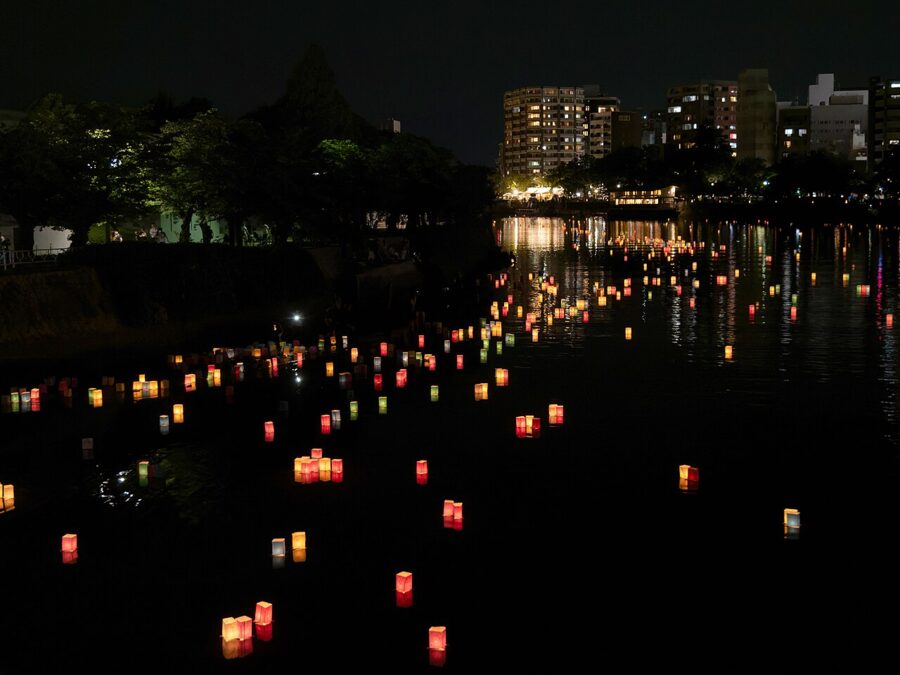
You write your message on the coloured paper, then either build your lantern and set it on the water yourself from the riverside terrace west of the Motoyasu Bridge, or hand it to the volunteers, who float it from a boat. The wait to float your own can be long. Writing the name of someone you have lost, or simply a wish, is welcome from anyone.

Guided walks that help
The free Peace Volunteers are the first thing to try. If they are booked up or you are visiting in summer, a paid walk can do the same job: most visitors take in more of the park, and the museum, with someone to explain what each stone is for.
On a budget, the two-hour History of Hiroshima group walking tour covers nine stops, including the Korean victims’ memorial and the Rest House, with guides who study peace and conflict; groups can be large, so ask your questions early (a review of the History of Hiroshima group walk has more). The Peace Park and Atomic Bomb Dome guided walk adds the hypocentre and a chance to ring the Peace Bell, though its museum stop is short (see the full Peace Park and Dome guided walk review).
For a quieter start, the private morning tour of the Peace Memorial Park begins at the Dome and gives you about an hour in the museum with your own guide before the crowds build (the two-hour private morning tour review covers it). And to understand why a castle town became a military city and a target, the walking tour on why the bomb was dropped on Hiroshima starts by Hiroshima Castle and finishes in the park (read the review of the why-Hiroshima walking tour).
Getting there, and the rest of the city
From the tram terminal in Hiroshima Station, take Hiroden tram line 2 or 6 to Genbaku Dome-mae (原爆ドーム前) for the north end of the park, about 20 minutes. For the museum end, take line 1 to Hondori or Fukuro-machi and walk about 400 metres west.
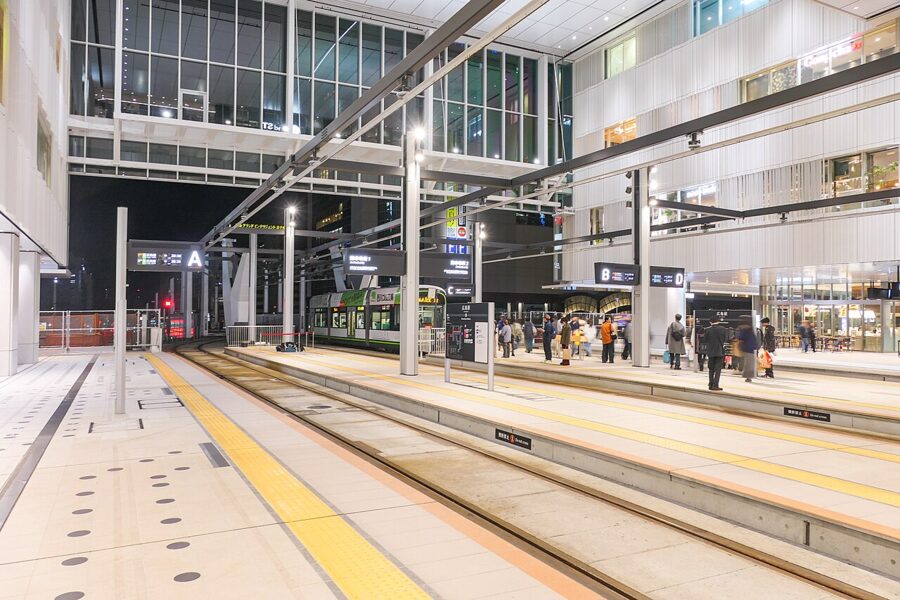
Trams charge a flat ¥240 (about US$1.50), and IC cards work; the Japan Rail Pass does not cover them. The orange route of the Hiroshima Meipuru-pu sightseeing loop bus stops at both ends of the park. There is no car park for private cars.
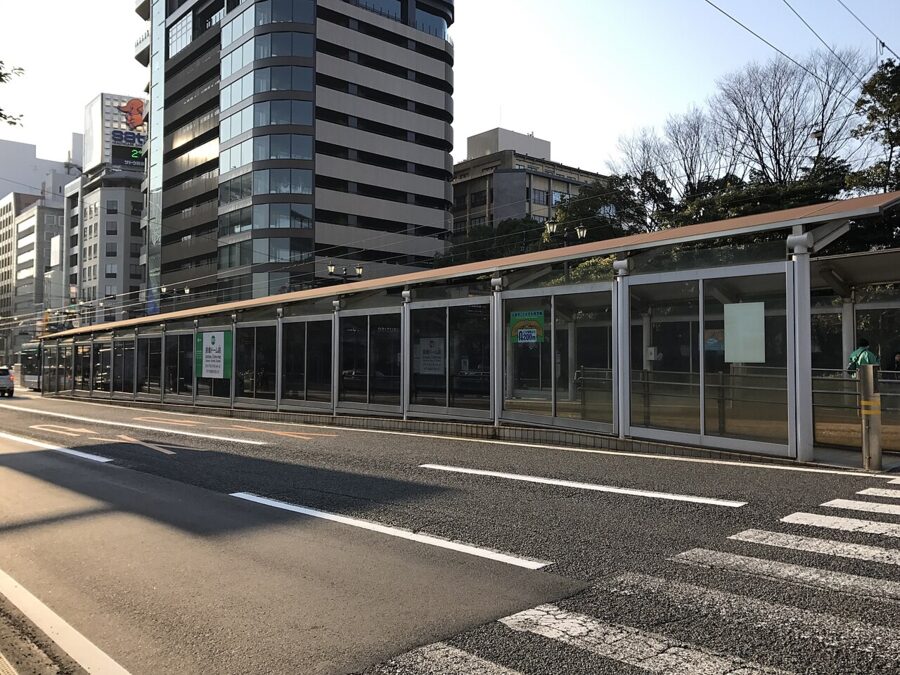

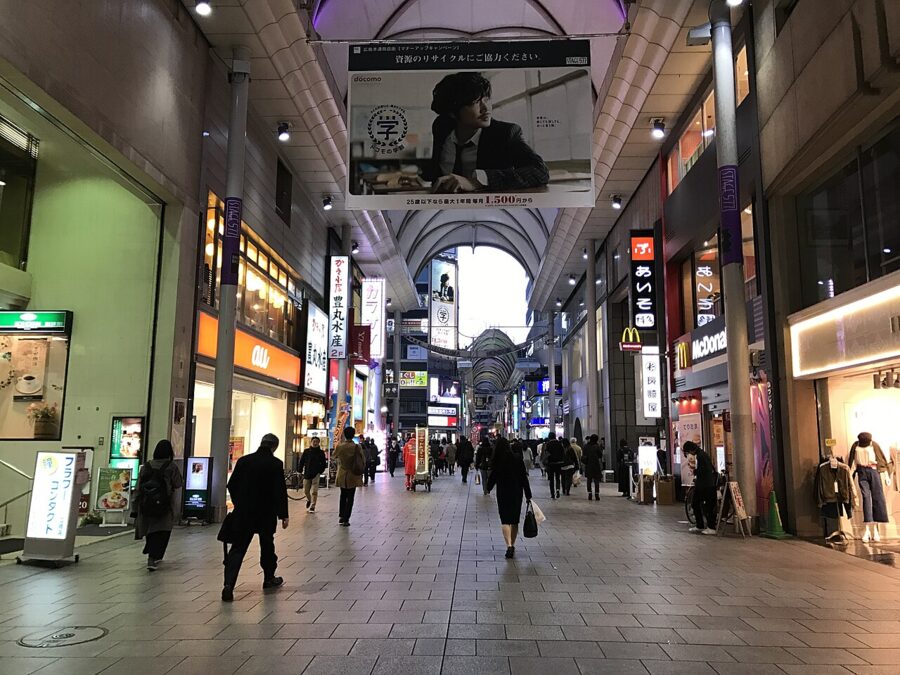
The Motoyasu Bridge leads straight into the Hondori shopping arcade and the city centre, ten minutes on foot. That is the way to lunch, and to the counters where you will want to try Hiroshima okonomiyaki after the museum. For the castle, Shukkeien garden and everything else in town, the guide to Hiroshima has the detail, and a Hiroshima itinerary shows how the park fits into two or three days.

Most people pair the park with Miyajima; do the park in the morning and take the train and ferry out to the island for the afternoon. Further east, Onomichi and the cycle route of the Shimanami Kaido make a lighter second day. And if the museum leaves you wanting to understand more of the wartime story, Okunoshima is known now for its rabbits, but it was once a secret poison gas factory, and its small museum tells that side of the war plainly.

Take the 07:30 museum slot, hear the 13:00 talk, and finish at the river as the light goes. At 08:15 the next morning, wherever you are in the city, you may find you notice the time.