The ferry from Uno to Naoshima takes twenty minutes and costs ¥370 (about US$2.40). The ticket that shapes your day costs more and goes on sale weeks earlier: a timed entry to the Chichu Art Museum, released for the whole of the following month on the second Friday at 10:00. When the online slots for a day are gone, the museum sells none at the door.
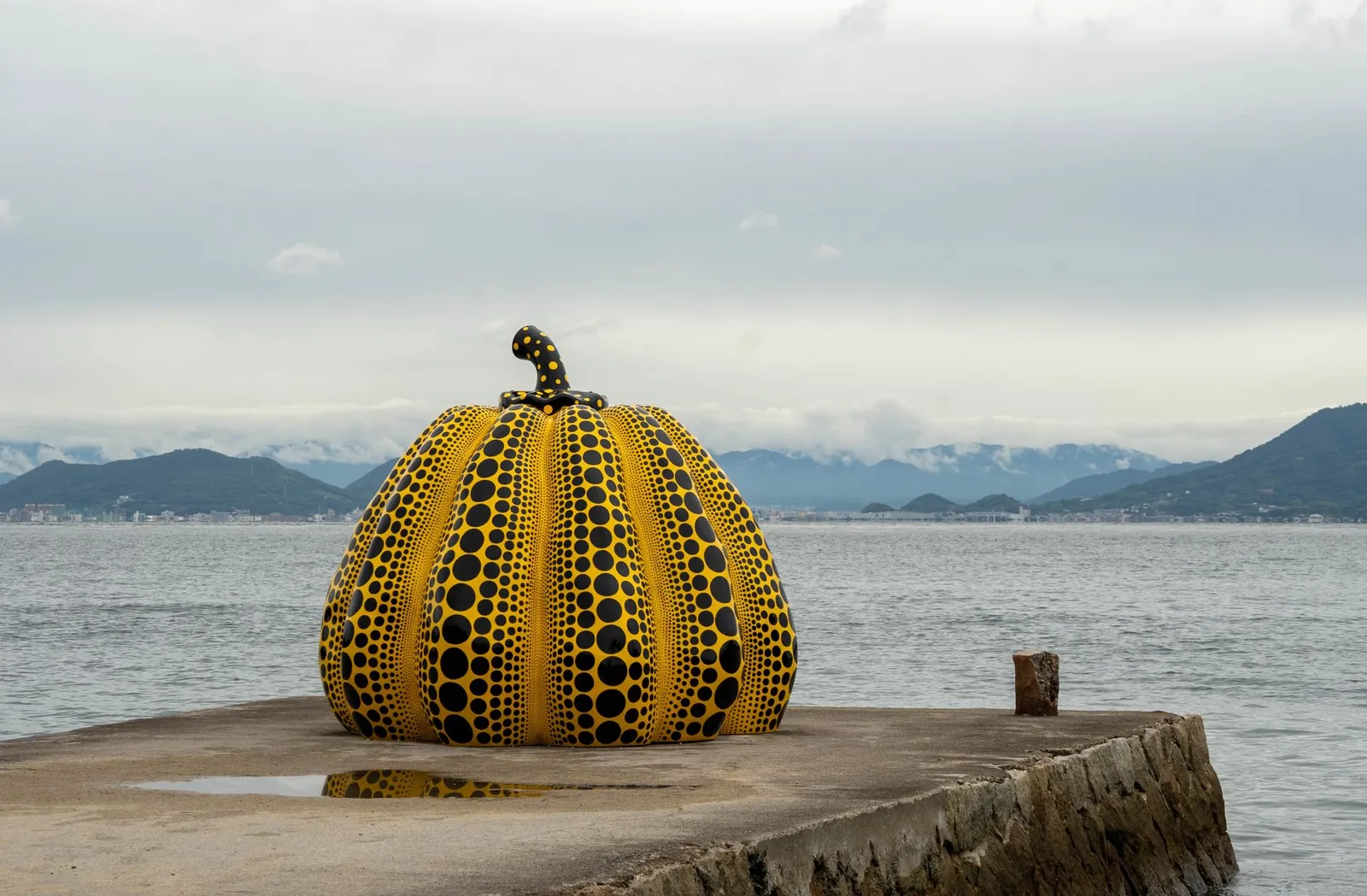
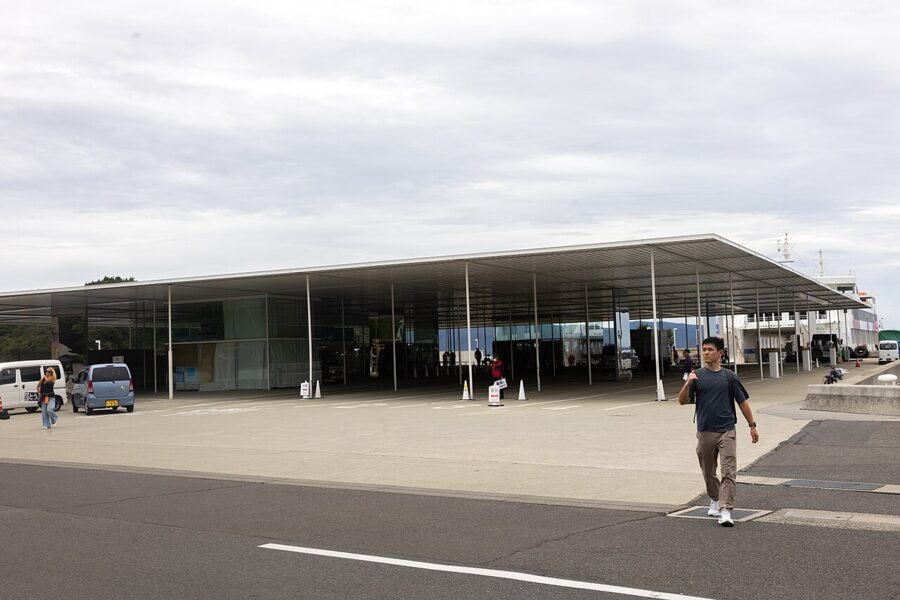
Everything else on the island is easier than people fear. You step off at Miyanoura and the first artwork is already on the quay, Yayoi Kusama’s red pumpkin, with holes in its dots big enough to climb through. Across the road are the bike rental shops, and down on the south coast the yellow pumpkin sits alone on its pier, which is where most of the photographs you have seen were taken.
Three decisions make or break a visit: not coming on a Monday, getting that Chichu slot, and choosing whether to sleep on the island. Get those right and Naoshima is one of the best days you can have in western Japan, a small island of fishing villages where Tadao Ando’s concrete, old wooden houses and some very good art share the same few kilometres of coast.
On this page10 stops




Day trip or a night: decide this first
A day trip from Okayama works. You can see the Chichu, one or two of the other museums, the pumpkins and a good part of the Art House Project between a morning ferry and an evening one. What you cannot do in a day is see everything, and you will spend some of it waiting for buses that are full.
A night changes the island. The day-trippers leave on the evening boats, the bathhouse stays open until 21:00, and Benesse House Museum is open to hotel guests until 23:00. It also lets you split the island in two: the museum district one day, Honmura and perhaps Teshima the next. If you have the time, I would stay.
Whichever you choose, the calendar matters more than anything else. Nearly every art site on Naoshima closes on Mondays. When a national holiday falls on a Monday they open that day and close on the Tuesday instead, so check the Benesse Art Site open days calendar before you fix a date.
| Site | Usually closed | Worth knowing |
|---|---|---|
| Chichu Art Museum, Lee Ufan Museum, Naoshima New Museum of Art | Mondays | Holiday Monday: open, closed Tuesday |
| Art House Project, Ando Museum | Mondays | Kinza is also closed Tuesday and Wednesday |
| Benesse House Museum, Hiroshi Sugimoto Gallery | Open all year | The one safe bet on a Monday |
| Naoshima Bath (I Love Yu) | Mondays | Opens 13:00 |
| Teshima Art Museum | Tuesdays (March to November) | Tuesday to Thursday from December to February |
| Inujima Seirensho Art Museum | Tuesday to Thursday | Closed every day from December to February |
Two winter closures are worth putting in your diary now. The New Museum of Art is closed from 24 November to 12 December 2026 while part of its collection is rehung. Then, for scheduled maintenance in early 2027, most of the island shuts for a week from 12 January, and the Chichu Art Museum stays closed until 19 March 2027. During that week even the pumpkin on its pier is out of bounds.
Booking the Chichu
Every Chichu ticket is for a set date and time, and they are sold online through Benesse Art Site’s own pages. The next month’s slots go on sale on the second Friday of each month at 10:00 Japan time, so tickets for any day in May appear on the second Friday of April. Children of 15 and under go free, but they still need a reservation.
Buy only from the official site. In November 2026 the museum warned about Chichu tickets resold at inflated prices, and said such tickets may be refused at the door. Once you have your slot, build the rest of the day around it.
Getting there from Okayama via Uno
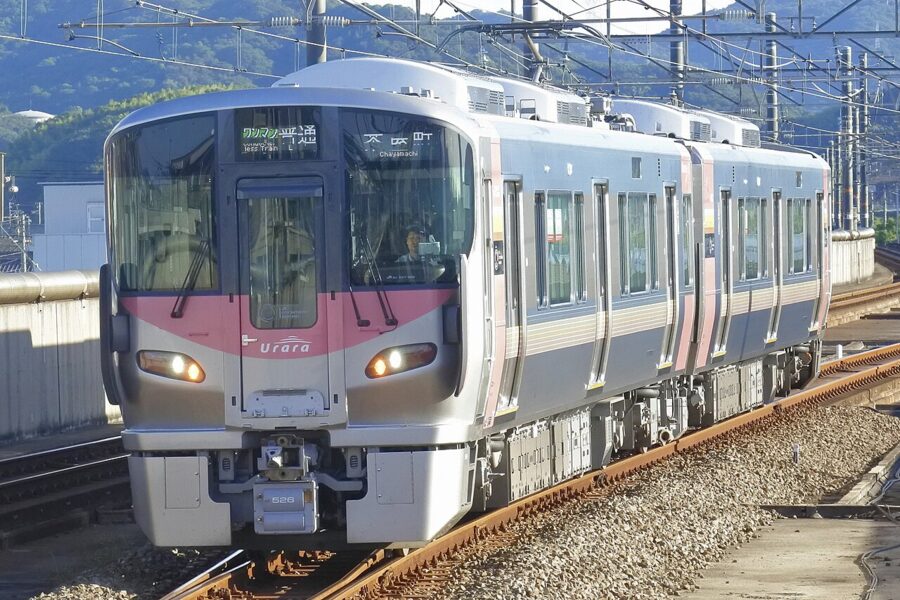
From the Shinkansen the route is simple: Okayama is about 50 minutes from Shin-Osaka and 40 from Hiroshima, and from there a JR local runs south to the port town of Uno. The fare from Okayama to Uno is ¥590 (about US$3.80) and the trip takes 40 to 55 minutes, usually with a change at Chayamachi to the Uno Minato Line. If you have a JR pass, it covers this part, and Ryobi buses also run from Okayama to Uno in about 45 minutes. If you like your trains with a view, the Uno line is a short one among the scenic railways of western Japan.
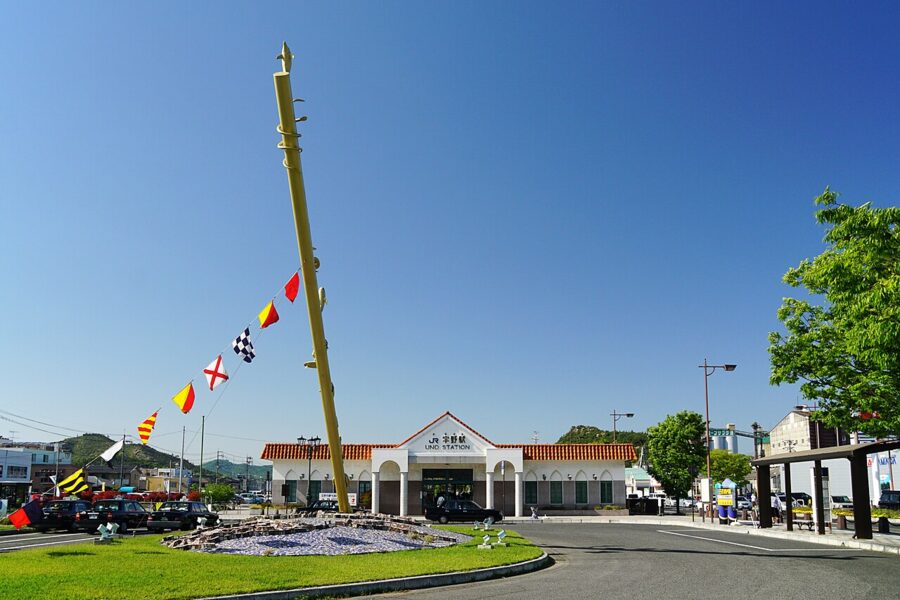

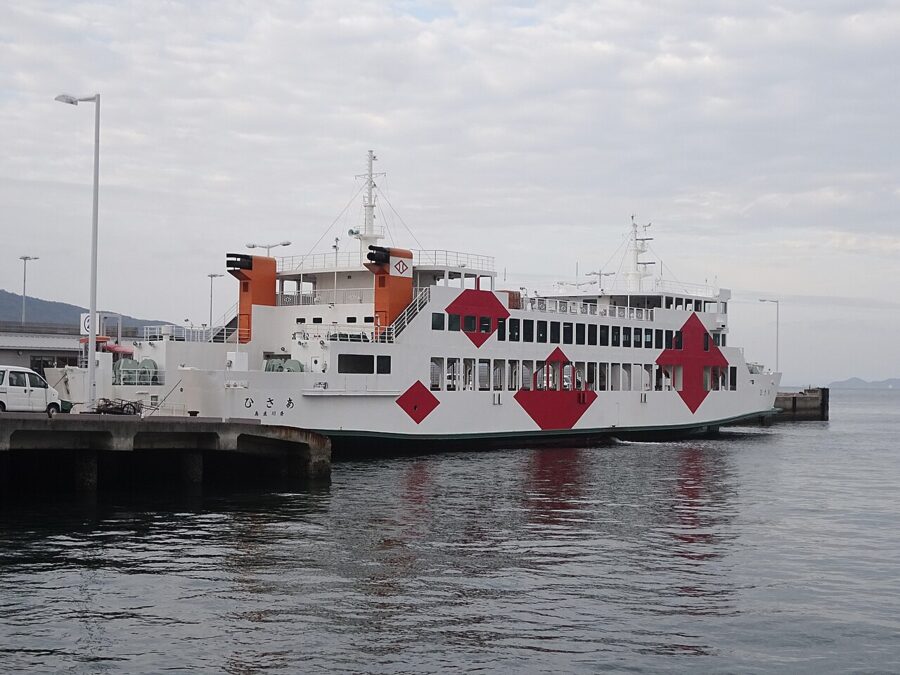
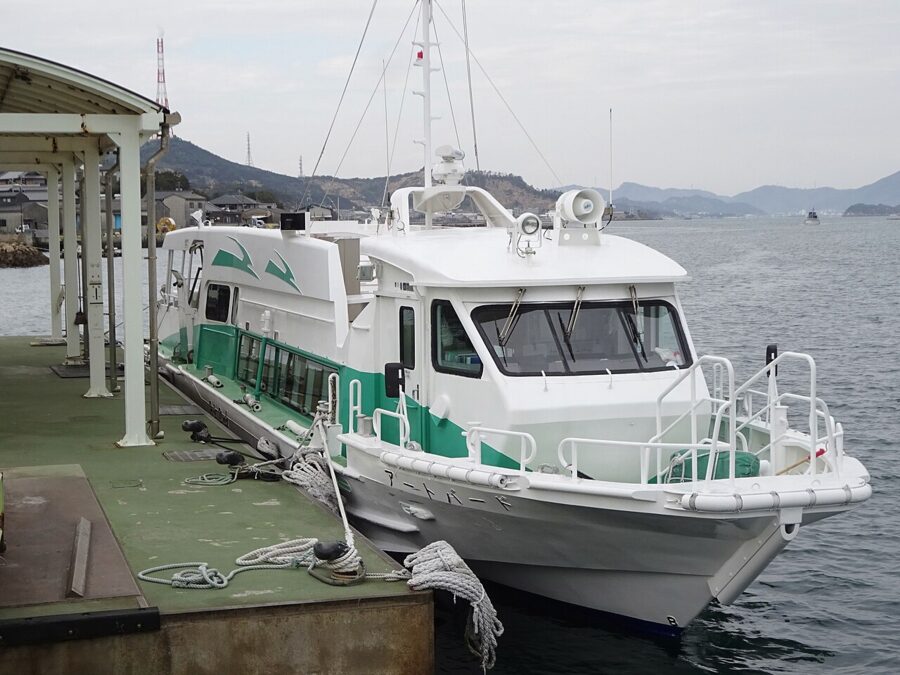
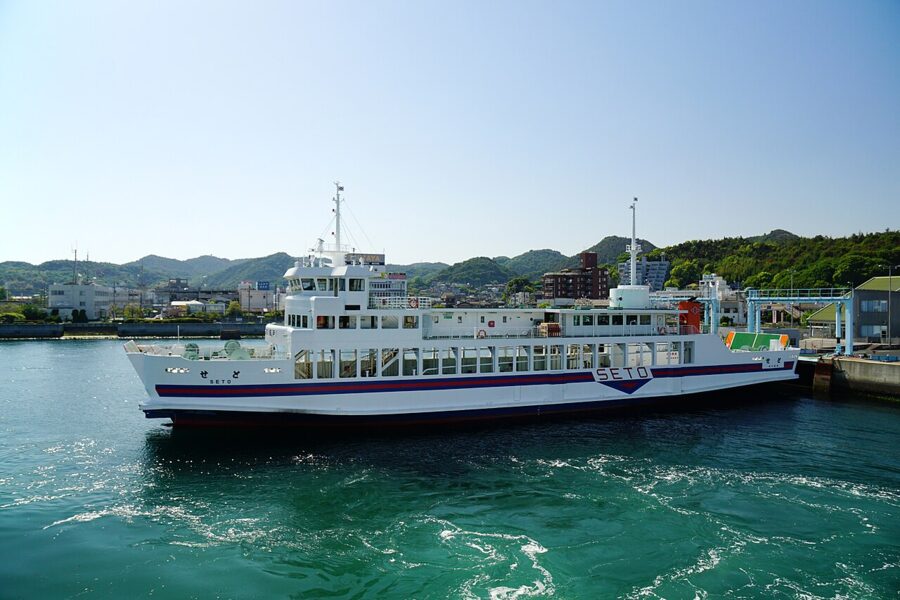
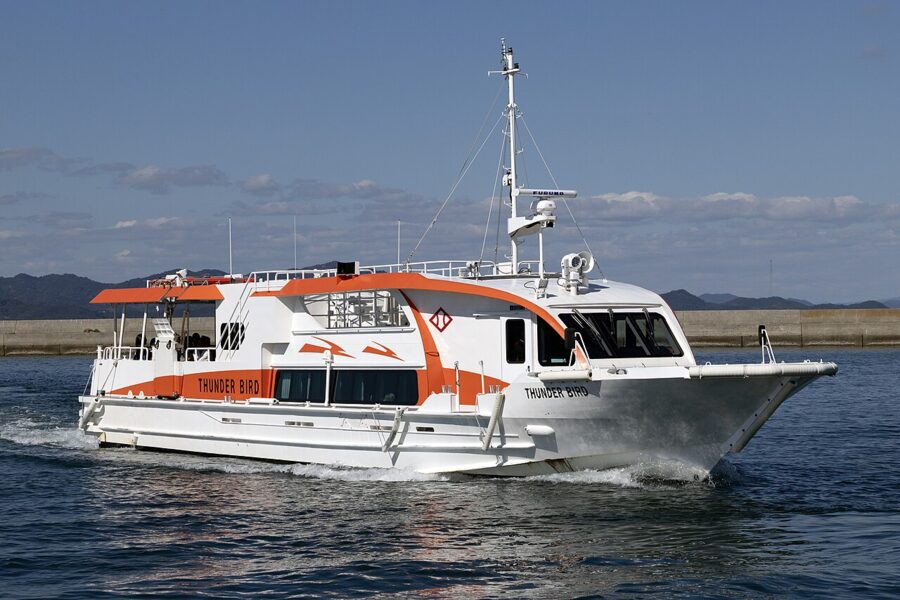
The boats are run by Shikoku Kisen. Big car ferries take about 20 minutes to Miyanoura, and small passenger boats about 15. Since the fare rise on 1 February 2026 both cost ¥370 one way for adults, up from ¥300, and a bicycle on the ferry is ¥330 (about US$2.10) more. There is no booking: you buy a ticket and queue, and on the passenger boats it is cash only.
As of November 2026, the Uno to Miyanoura timetable looks like this. Check it again before you travel, because times change with the seasons and during the Triennale.
| Direction | Ferries | Passenger boats |
|---|---|---|
| Uno to Miyanoura | 06:10, 06:30, 07:20, 08:22, 09:22, 11:00, 12:15, 14:25, 15:30, 16:30, 17:05, 18:53, 20:25 | 13:30, 22:30, 00:35 (late-night fare) |
| Miyanoura to Uno | 06:00, 06:40, 07:50, 08:52, 09:52, 11:10, 12:45, 14:55, 16:02, 16:35, 17:35, 19:02, 20:25 | 13:55, 21:15, 00:15 (late-night fare) |
The two late-night boats cost ¥730 (about US$4.70). For a day trip, the 08:22 or 09:22 ferry gets you to the island in good time, and allowing about an hour from Okayama to the quay is about right. On the way back, check the last train from Uno before you count on the later boats.

The quieter boat to Honmura
A handful of small boats run from Uno straight to Honmura, on the east side of the island, for the same ¥370. As of November 2026 the Uno to Honmura boats leave Uno at 07:25, 11:55, 16:50, 17:45 and 18:35, and leave Honmura at 06:45, 07:55, 13:00, 17:20 and 18:10. The 17:20 back from Honmura is a neat way to finish a day spent in the Art House Project without going back to Miyanoura.
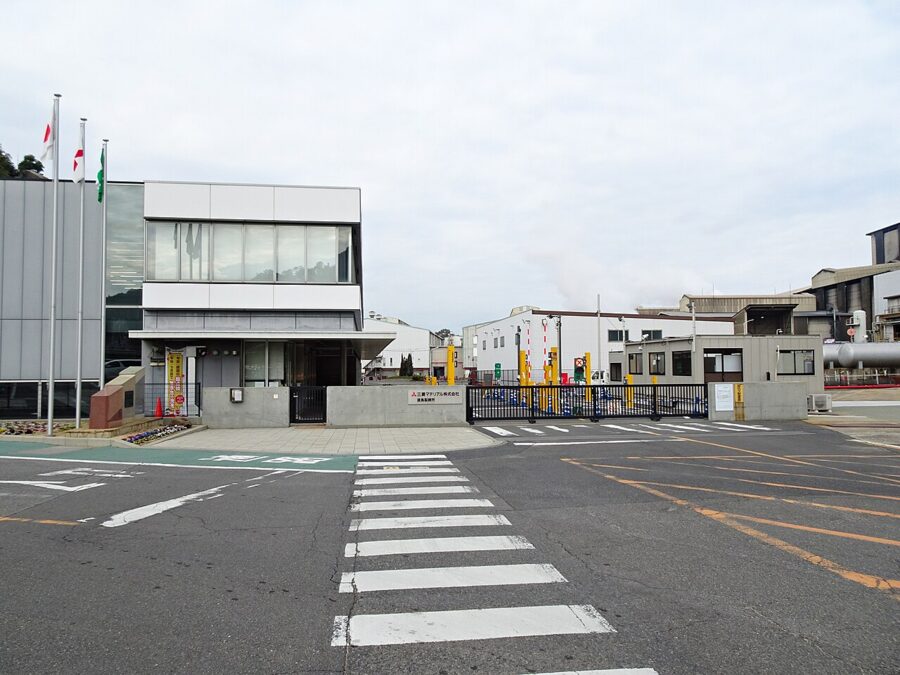
One trap: some Shikoku Kisen ferries from Uno go to Kazato port, on the north side of the island near the Mitsubishi Materials smelter. That is not where you want to be. Look for Miyanoura or Honmura on the ticket.


From Takamatsu
If you are coming from Shikoku, Shikoku Kisen also sails from Takamatsu port to Miyanoura. The ferry takes about 50 minutes out and an hour back for ¥680 (about US$4.40), and the high-speed boat takes about 30 minutes for ¥1,590 (about US$10). As of November 2026 the Takamatsu timetable has ferries from Takamatsu at 08:12, 10:14, 12:40, 15:35 and 18:05, and high-speed boats at 07:20, 09:20 and 20:30.
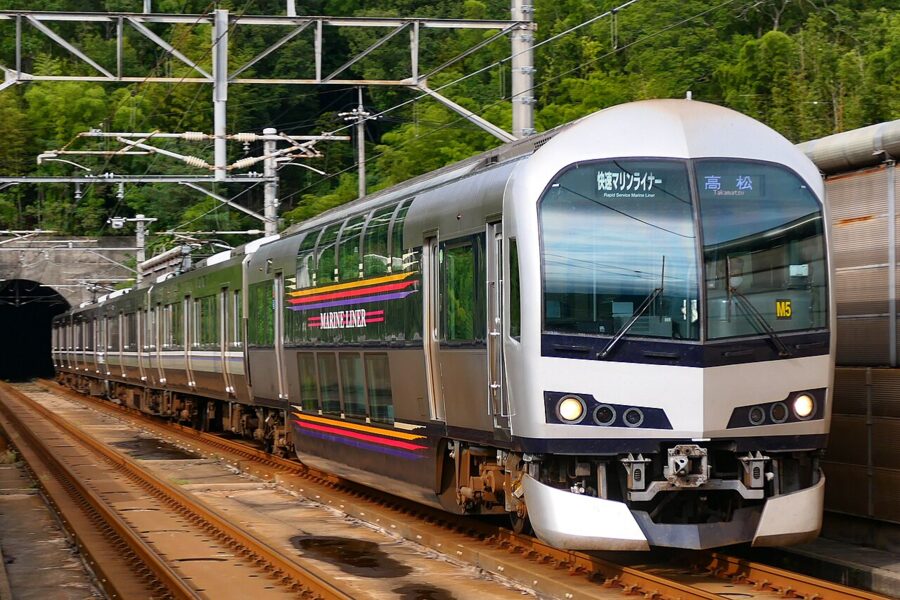
Coming back is where it goes wrong. Ferries leave Miyanoura for Takamatsu at 07:00, 09:07, 11:30, 14:20 and 17:00, with high-speed boats at 06:45, 08:40 and 19:45, and the island’s tourism association has warned that the 17:00 ferry and 19:45 boat often fill up. Tickets for the 19:45 go on sale at 18:30 and stop when it is full. The fallback is to take a ferry to Uno and the train back to Takamatsu with a change to the Marine Liner at Chayamachi, which takes about two hours.


Miyanoura: the red pumpkin and the bathhouse
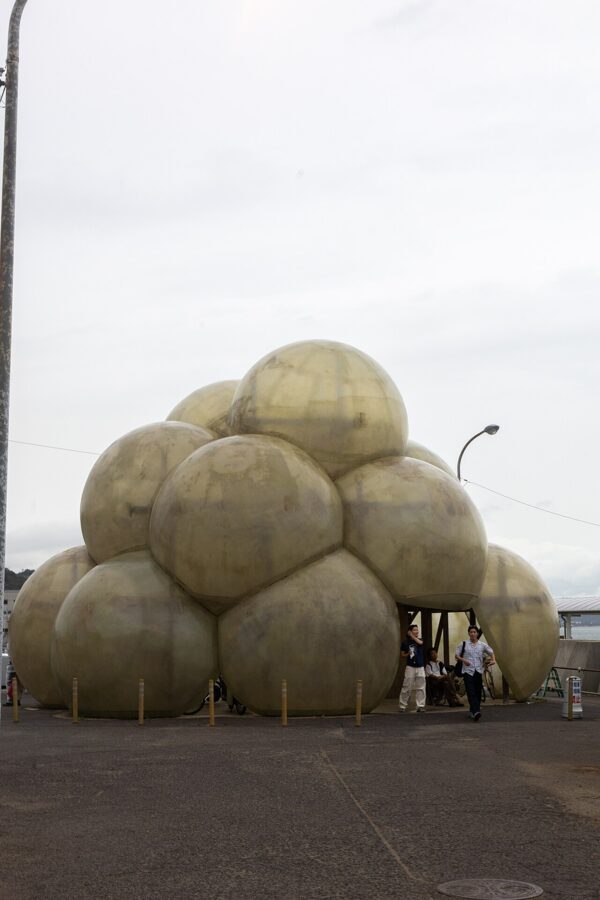
Miyanoura is the island’s main port and its liveliest corner. Kusama’s Red Pumpkin stands by the water, and some of its black dots are cut out so you can step inside. A short walk away is Sou Fujimoto’s Naoshima Pavilion, made from about 250 stainless steel mesh panels and imagined as a 28th island for a town that already counts 27.
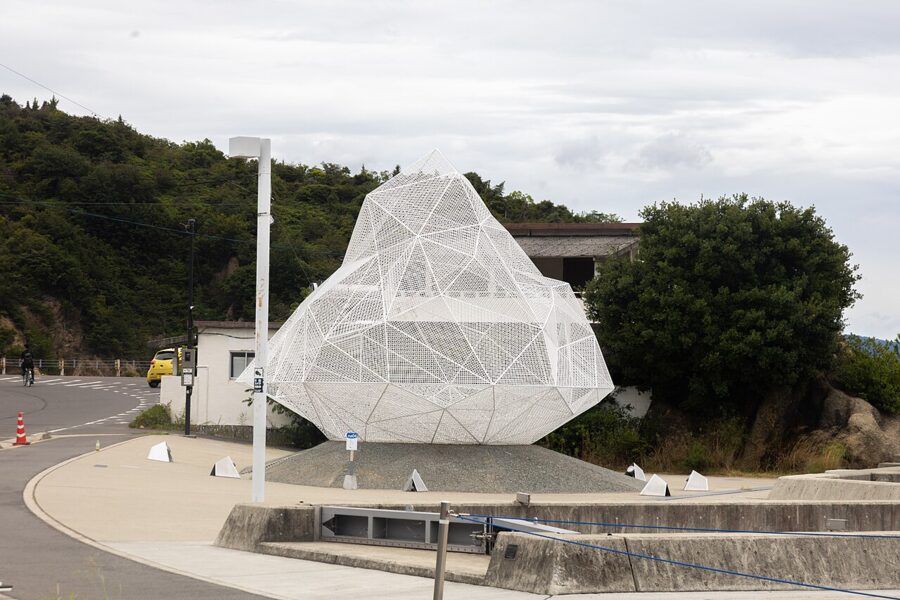

The other reason to linger is the public bath. Naoshima Bath I♥湯, said “I Love Yu” (the yu means hot water), is a working sentō, a neighbourhood bathhouse, designed inside and out by the artist Shinro Ohtake in 2009. The tiles, the murals, the tubs and even the toilets are part of the piece.
It is open from 13:00 to 21:00 (last entry 20:30), closed on Mondays, and costs ¥660 (about US$4.25), or ¥310 for children of 15 and under. Body soap and shampoo are provided and towels are sold at the counter. Photography is not allowed while people are bathing, but on Saturdays, Sundays and holidays a viewing programme runs from 13:00 to 15:50.
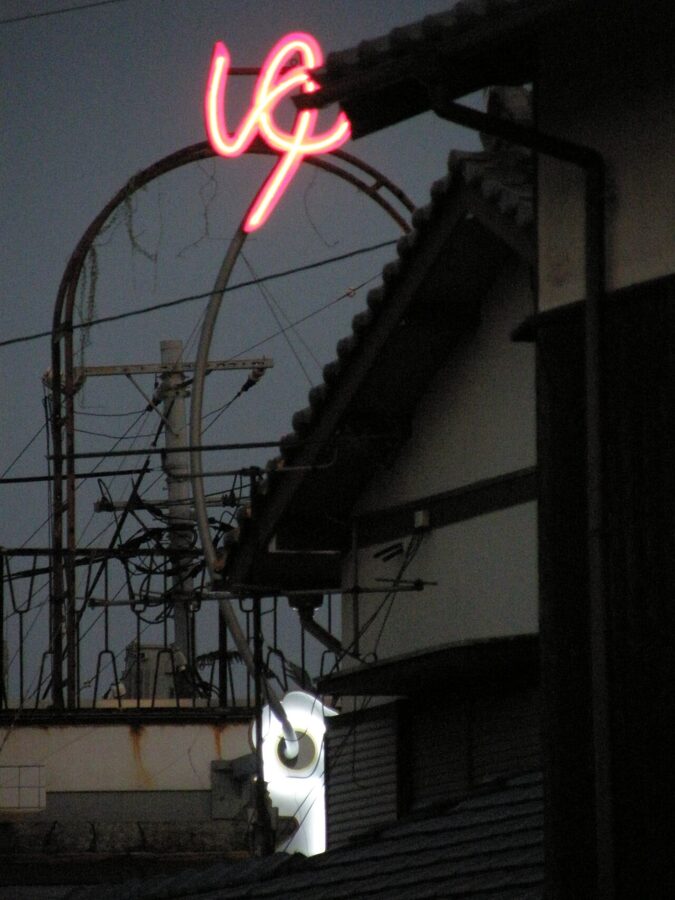
Next to the bath, Miyanoura Gallery 6 occupies a former pachinko parlour, reworked by the architect Taira Nishizawa with louvres in the roof to let daylight in. It houses Motoyuki Shitamichi’s archive of Inland Sea history and folklore, open in the afternoons for ¥520 (about US$3.35) and closed from December to February.
The museum district
The south of the island belongs to Benesse Art Site Naoshima, the art project run by Benesse Holdings and the Fukutake Foundation. Ordinary traffic is not allowed into the Benesse House area, so you arrive by the free shuttle bus, by bike or on foot. Allow at least half a day here, more if you want the Sugimoto gallery as well.
| Museum | Hours (last entry) | Online / at the door |
|---|---|---|
| Chichu Art Museum | 10:00–17:00 (16:00) | ¥2,500 / ¥2,800 weekdays; ¥2,700 / ¥3,000 weekends and holidays |
| Lee Ufan Museum | 10:00–17:00 (16:30) | ¥1,200 / ¥1,400 |
| Benesse House Museum and Valley Gallery | 08:00–21:00 (20:00); Valley Gallery 09:30–16:00 | ¥1,300 / ¥1,500 |
| Hiroshi Sugimoto Gallery: Time Corridors | 11:00–15:00 (14:00) | ¥1,600 / ¥1,700, tea and sweets included |
| Naoshima New Museum of Art (Honmura) | 10:00–16:30 (16:00) | ¥1,500 / ¥1,700 |
Prices are as of November 2026, and children of 15 and under go free at all of them. Online tickets are cheaper than buying on the day at all of these.
Chichu Art Museum
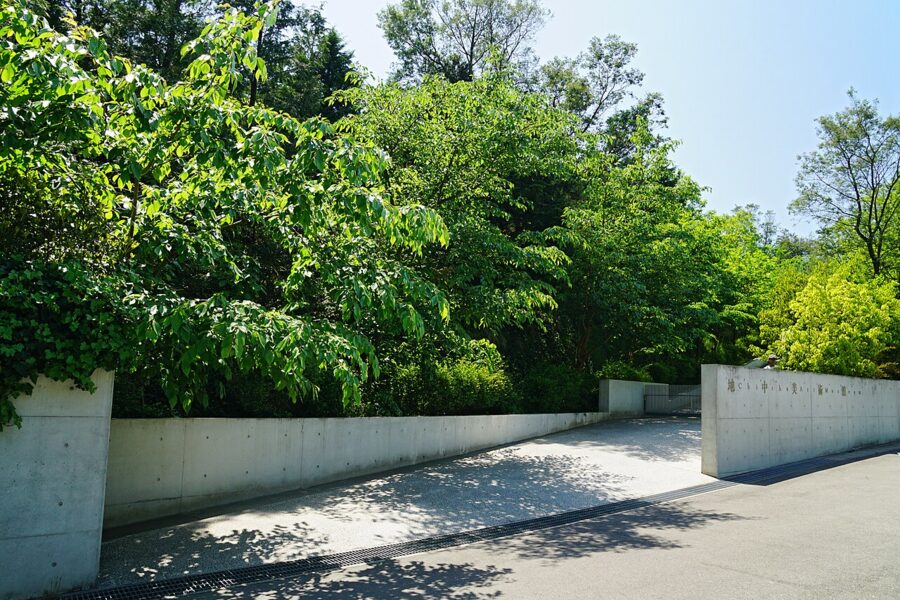
The Chichu Art Museum (地中美術館, “in the earth”) opened in 2004, and Ando built almost all of it underground so as not to spoil the coast. It holds the work of only three artists, each in a room made for it, and much of it is lit by daylight from above. The light changes through the day and the year, so the same room never looks quite the same twice.
Claude Monet gets a room built around five of his late Water Lilies, seen in natural light. Walter De Maria’s Time/Timeless/No Time is a sphere 2.2 metres across with 27 gilded wooden forms around it, the whole room made as one work. James Turrell has three works spanning his career, including Open Sky, a room open to the sky through its ceiling.

On Fridays and Saturdays the museum runs the Open Sky Night Program, a seated 45-minute sunset viewing of the Turrell room. It costs ¥3,700 (about US$24) with museum admission included, takes about 80 minutes in all, and needs its own ticket. If you are staying the night, it is the single best thing to book.
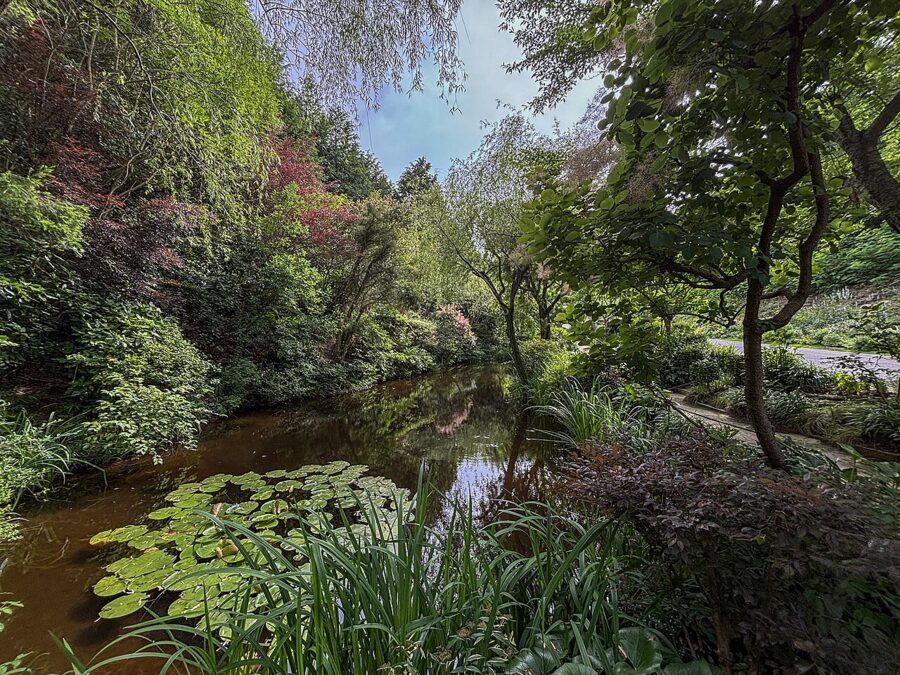
Give yourself the full hour or more inside. The museum café looks out over the sea, and outside is the Chichu Garden, planted with about 200 kinds of flowers and trees like those Monet grew at Giverny. As with the museum, photography is allowed outside and in the reception area only.

Lee Ufan Museum
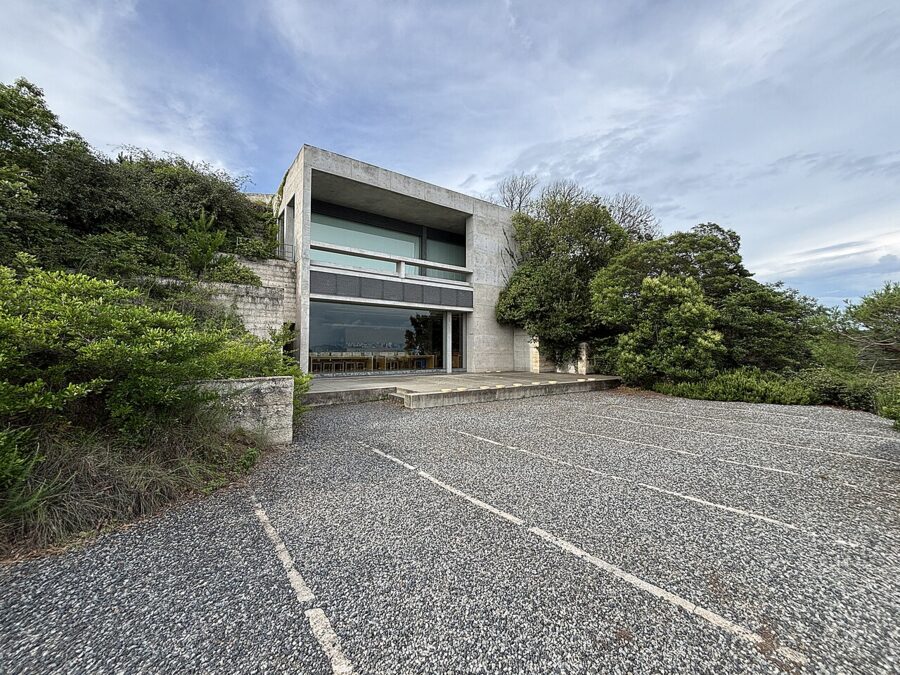
Down the hill, the Lee Ufan Museum is a joint work by the Korean-born artist and Ando, half sunk into a small valley that runs down to the sea. Lee was a leading figure of Mono-ha, the “school of things”, and his work here is a few stones, steel plates and canvases of slow, repeated brushstrokes from the 1970s onwards. It is the calmest building on the island.
Some people find it too spare, and if you only have time for one museum besides the Chichu, the New Museum of Art gives you more to look at. But if Ando’s walls are the reason you came, this is the one where the building and the art are hardest to tell apart. Photography is allowed in the outdoor area only.
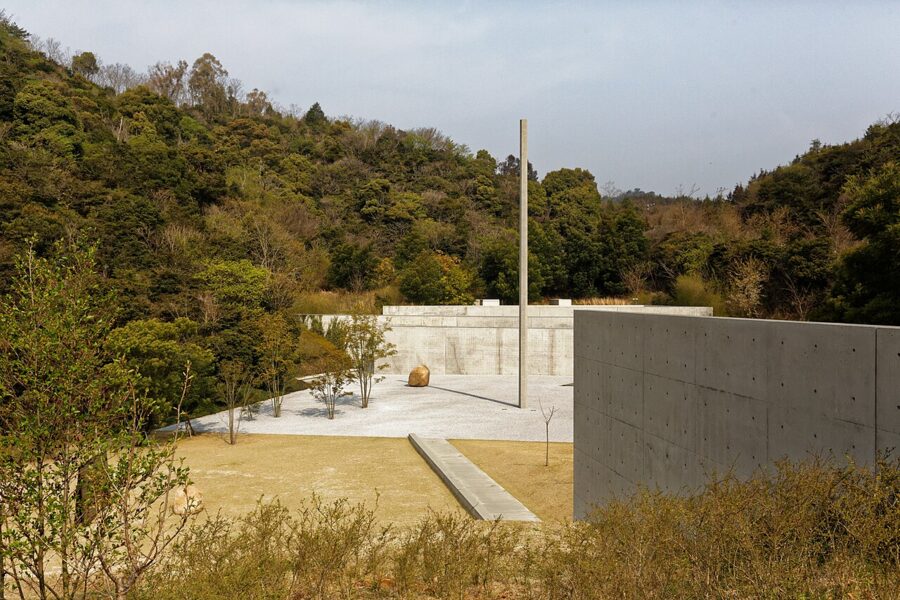

Benesse House Museum and Valley Gallery
Benesse House Museum opened in 1992 as a museum and hotel in one, Ando’s first building on Naoshima. It is open every day from 08:00, two hours before the others, which makes it the natural first stop on a day trip and the only big museum open on a Monday.
The collection is a who’s who of the late 20th century, with Cy Twombly, Jean-Michel Basquiat, David Hockney and Bruce Nauman’s flashing neon 100 Live and Die. My favourite is easy to miss: Yoshihiro Suda’s Weeds, carved wooden plants so lifelike that people walk past them in the corners. Richard Long made his circles of stone and Avon mud for the building in 1997.
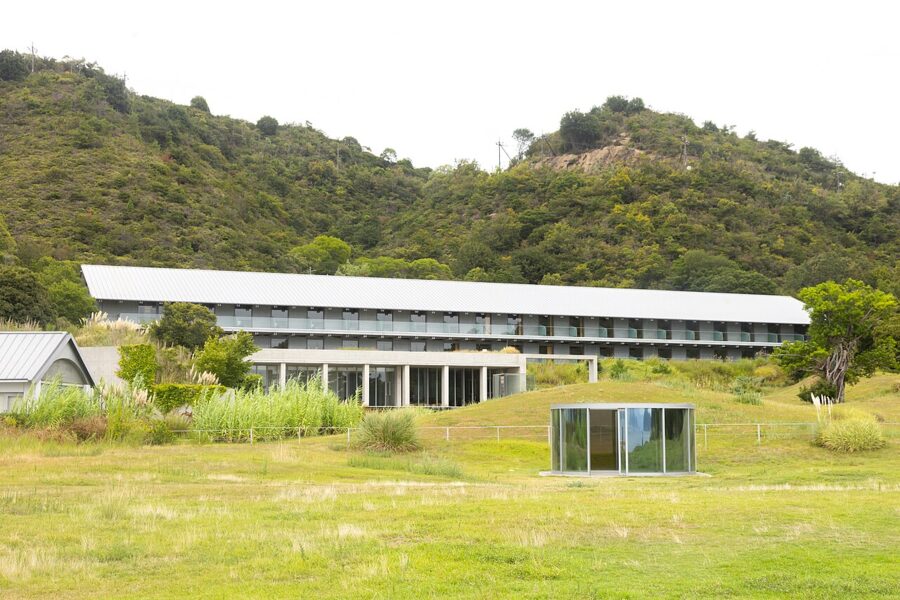

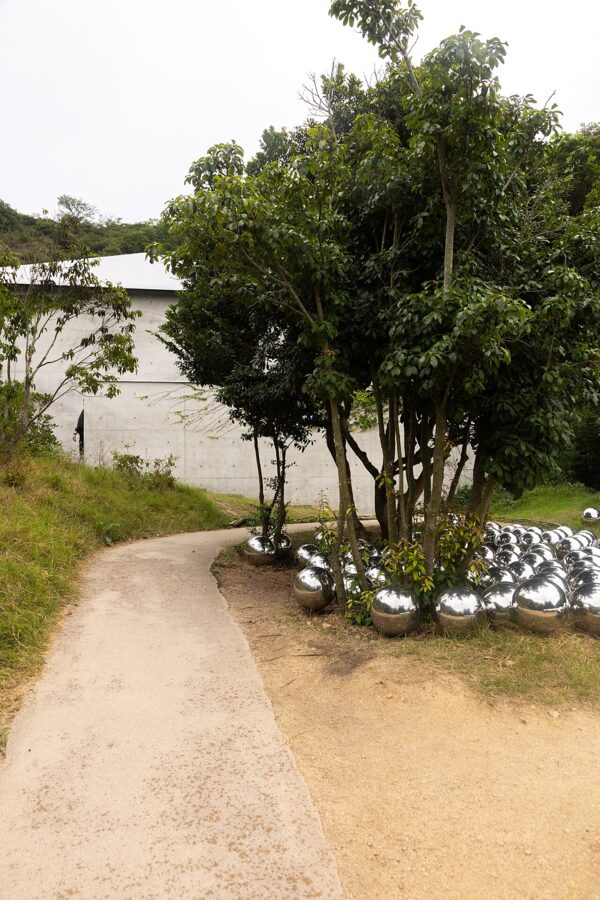
The same ticket covers Valley Gallery, opened in 2022 opposite the Lee Ufan Museum, a small Ando building like a shrine in a wooded valley. Kusama’s Narcissus Garden of mirrored steel balls spills out of it into the trees, alongside Tsuyoshi Ozawa’s 88 Buddhas made from industrial slag. Valley Gallery keeps shorter hours, 09:30 to 16:00, so do not leave it until last.

The Hiroshi Sugimoto Gallery: Time Corridors opened in the Benesse House area in 2022 and shows the photographer’s seascapes, theatres and architectural studies. Entry is by timed slot, and the ticket includes tea and sweets. It is the extra I would skip on a first day trip, but it is lovely with time to spare.
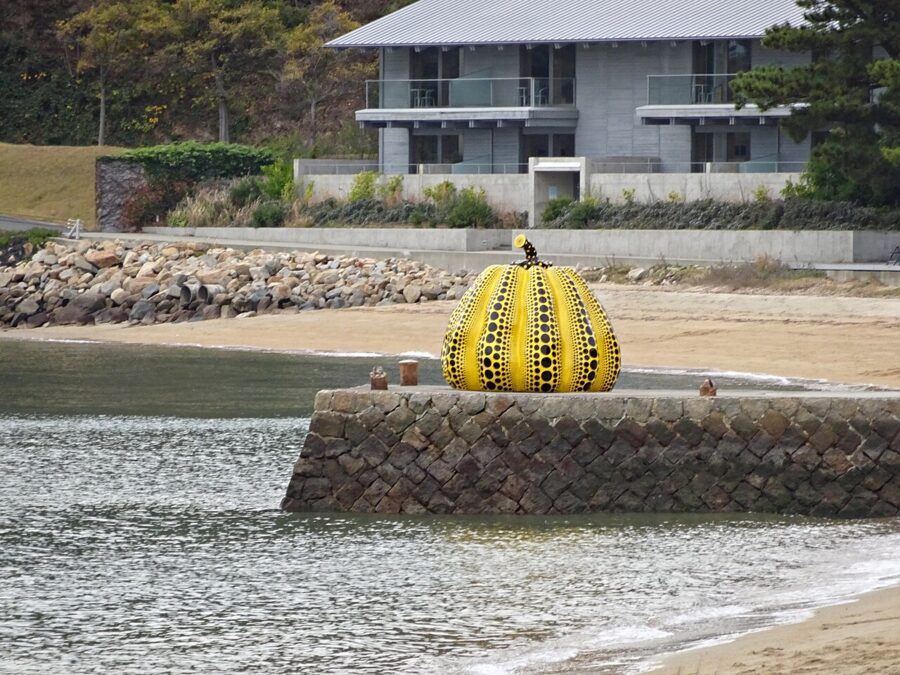
The yellow pumpkin
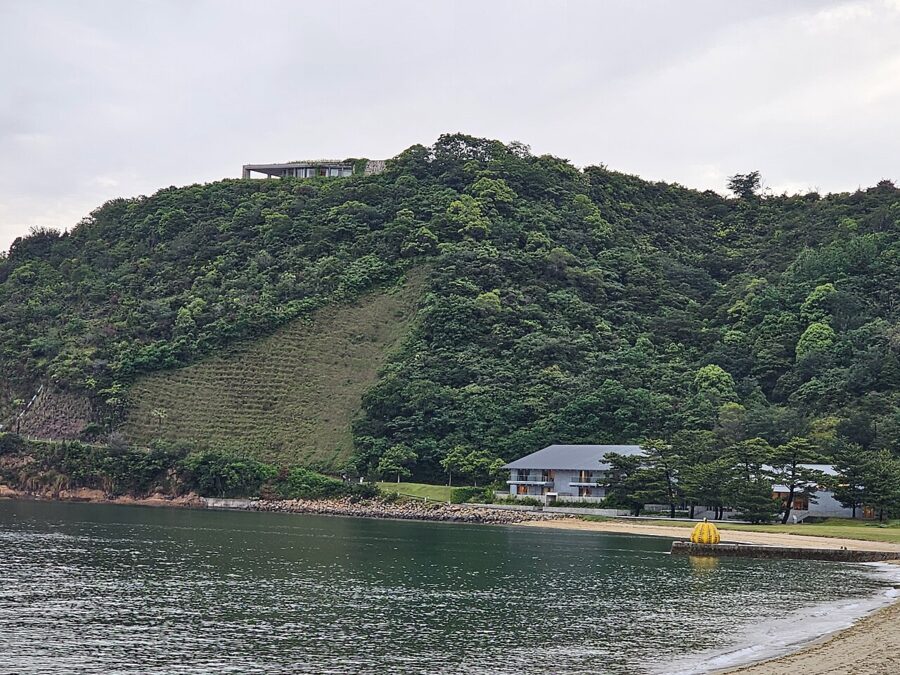
Kusama’s Pumpkin sits at the end of a small stone pier below Benesse House, on the coast path between the museums. It became the image of the island, and the pumpkin on the pier now is dated 2022 in Benesse’s own list of outdoor works, replacing the earlier one in all those older photographs. It is free to see, and around Benesse House you also pass Niki de Saint Phalle’s animals and Karel Appel’s Frog and Cat.
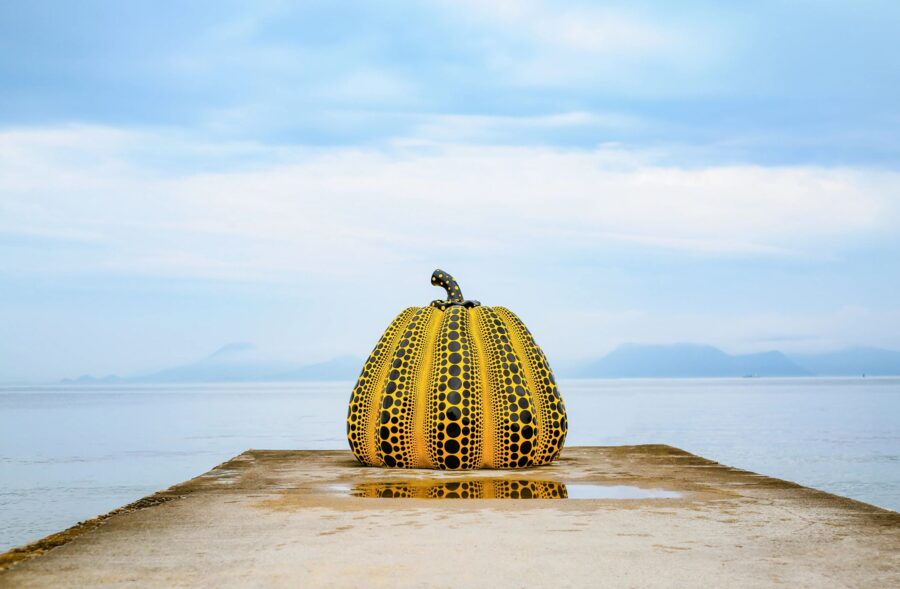
If there is a queue for the classic straight-on shot, walk down onto the beach beside it. The side view, with Benesse House behind, is just as good and needs no waiting.

Honmura and the Art House Project
Honmura (本村) is the old village on the east coast, a maze of narrow lanes, charred cedar walls and tiled roofs around a small harbour. Since 1998 the Art House Project has turned empty houses here into artworks, and there are now seven: Kadoya, Minamidera, Kinza, Go’o Shrine, Ishibashi, Gokaisho and Haisha. They are a few minutes’ walk apart, and finding them between the ordinary houses is half the pleasure.
Start at the Honmura Lounge & Archive, a former co-op supermarket redesigned by Ryue Nishizawa, which sells tickets and doubles as an information centre (09:30 to 16:30, closed Mondays). A multi-site ticket for five of the houses costs ¥1,200 online or ¥1,400 on the day; a single house is ¥600 or ¥700. Minamidera and Kinza are not included and need their own timed tickets at ¥600 online each.
Watch the lunch break. Kadoya, Ishibashi and Haisha close from 12:00 to 13:00, and Go’o Shrine and Gokaisho from 13:00 to 14:00, so a late morning here can stall. As of November 2026 the houses reopen until 16:30, and Haisha will be closed from 12 January to 22 February 2027.
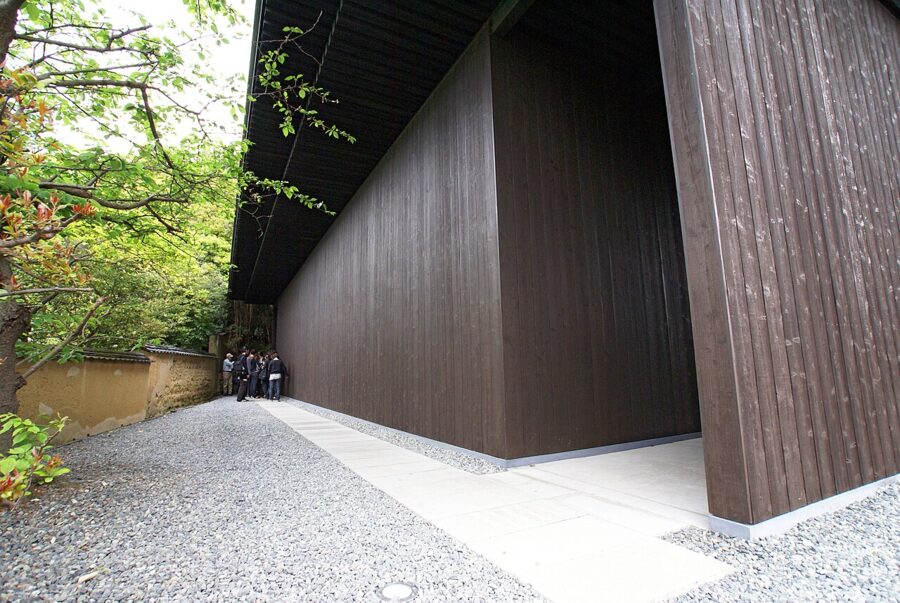

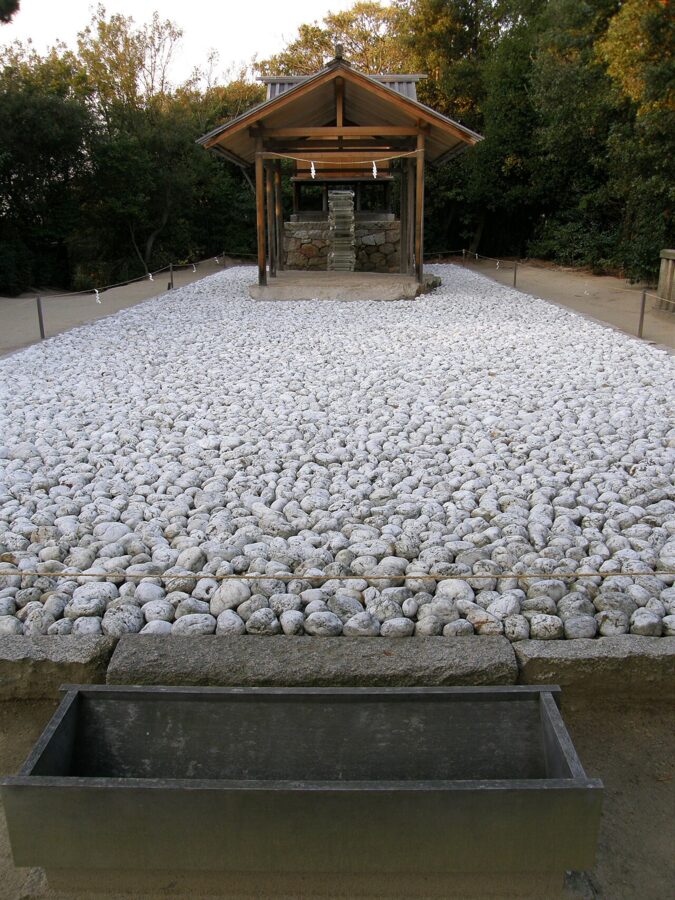
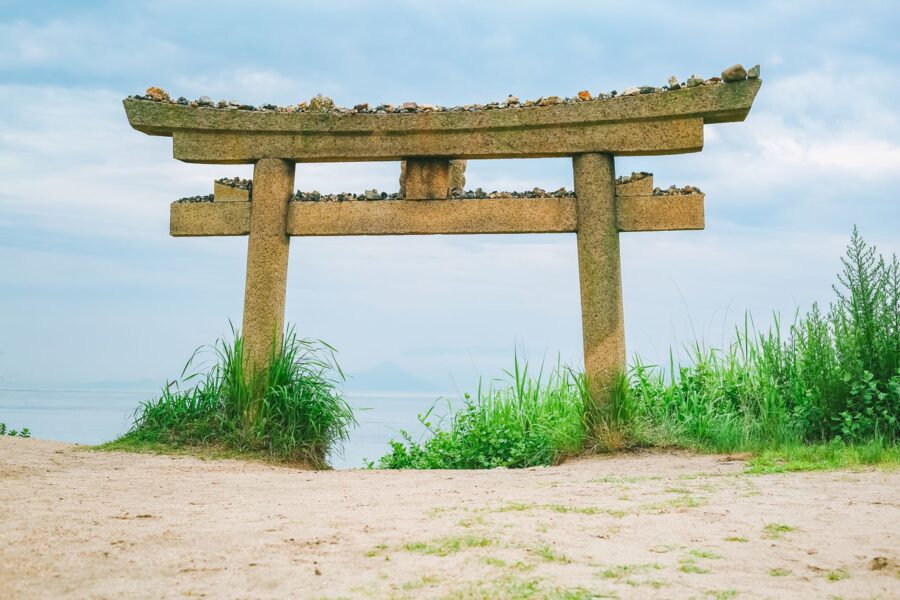
If you only see three, make them Minamidera, Go’o Shrine and Kadoya. Minamidera is the one people talk about afterwards, and I will not spoil it. At Go’o Shrine, Hiroshi Sugimoto rebuilt an Edo-period shrine with a flight of glass stairs joining the hall to a stone chamber underground, so the surface and the earth below read as one.

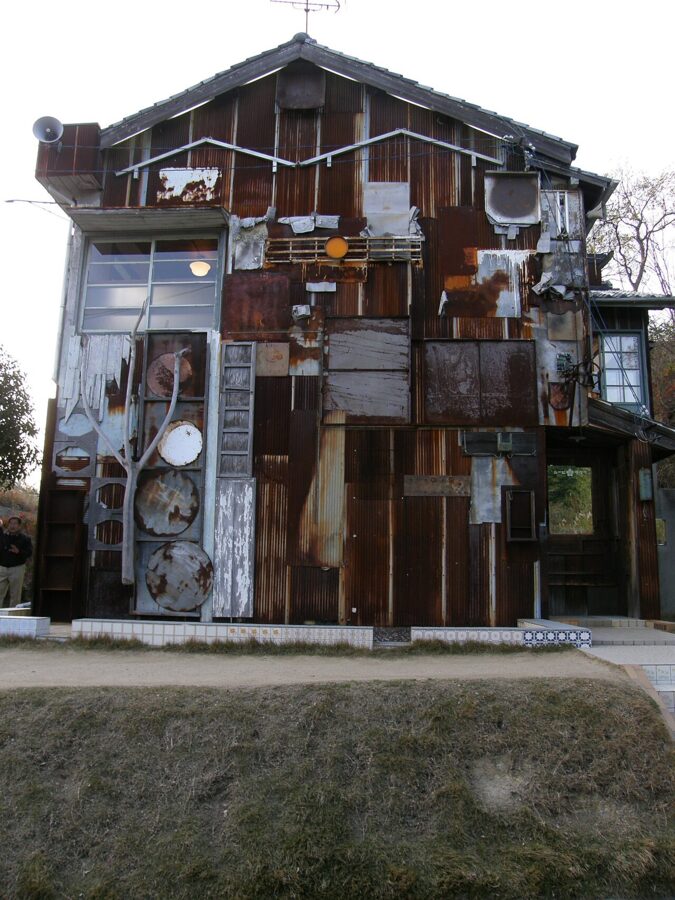
Kadoya holds Tatsuo Miyajima’s Sea of Time ’98, made with the help of Naoshima’s own townspeople, the project’s first step into island life. Haisha, a former dentist’s house, is Shinro Ohtake’s scrapbook in three dimensions, part sculpture, part painting, part collage. Ishibashi, the home of a family that grew rich on salt, holds Hiroshi Senju’s waterfall paintings.
Kinza is the odd one out: Rei Naito’s work inside a 200-year-old house, seen by one person at a time for 15 minutes, by reservation only and open Thursday to Sunday. It is very quiet and very small, and people either love it or wonder what they paid for.
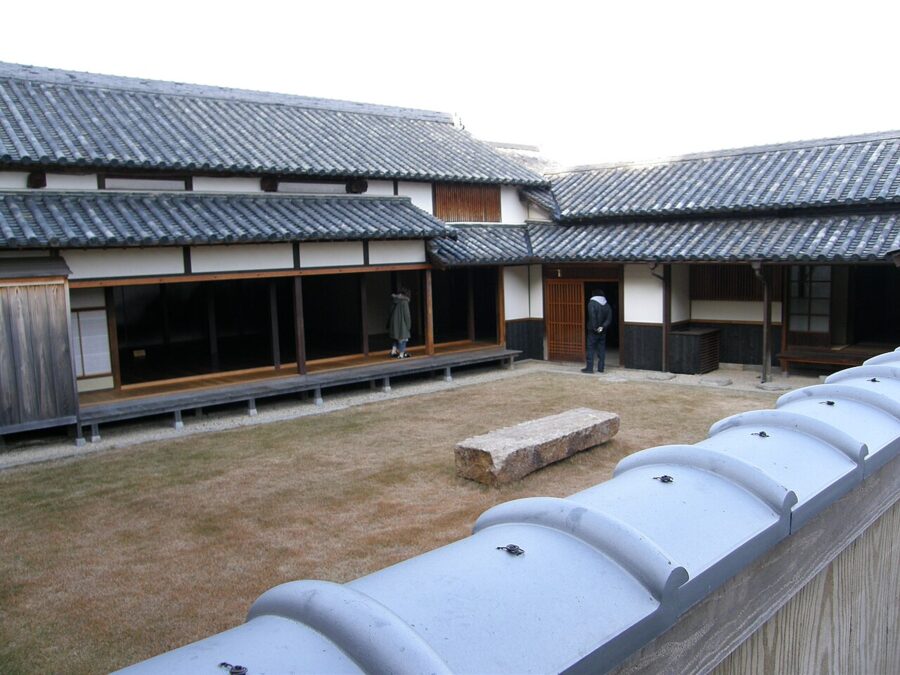

The Ando Museum and Ring of Fire
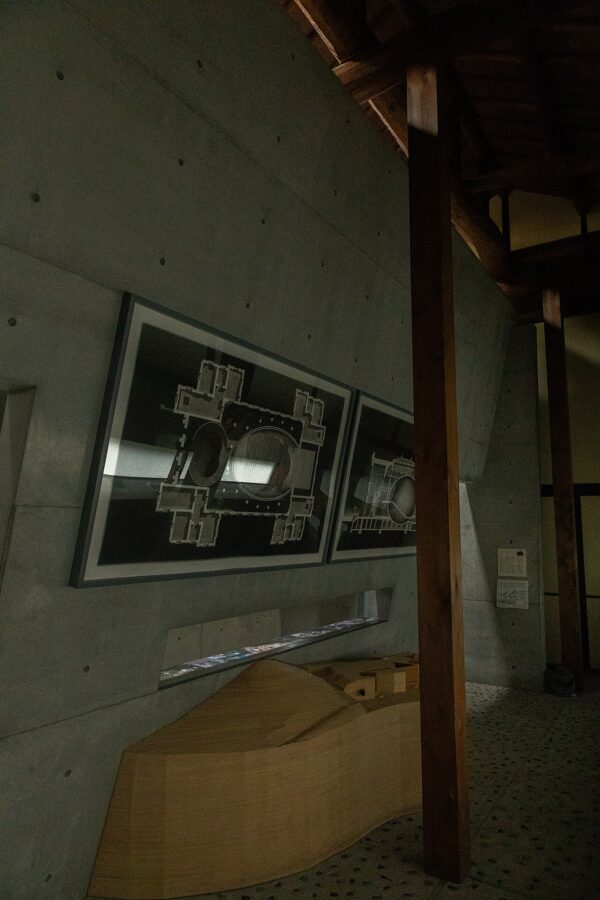
The Ando Museum is a wooden house of about a century old with a concrete box slipped inside it, lit from a skylight in the old roof. Photographs, sketches and models tell the story of Ando’s work on the island. It costs ¥600 online, keeps the same lunch break as Go’o Shrine, and has no toilet; the nearest public one is by Minamidera.

Another recent arrival in the village is Ring of Fire, by Haegue Yang and the Thai film-maker Apichatpong Weerasethakul, in a house called Matabe renovated by Hiroshi Sambuichi. By day (10:00 to 14:00, ¥600 online) you see Yang’s work; in the afternoon three short “night” sessions at 15:00, 16:00 and 17:00 (¥1,800 online) switch to Weerasethakul’s. It opens Friday to Sunday only.
Naoshima New Museum of Art
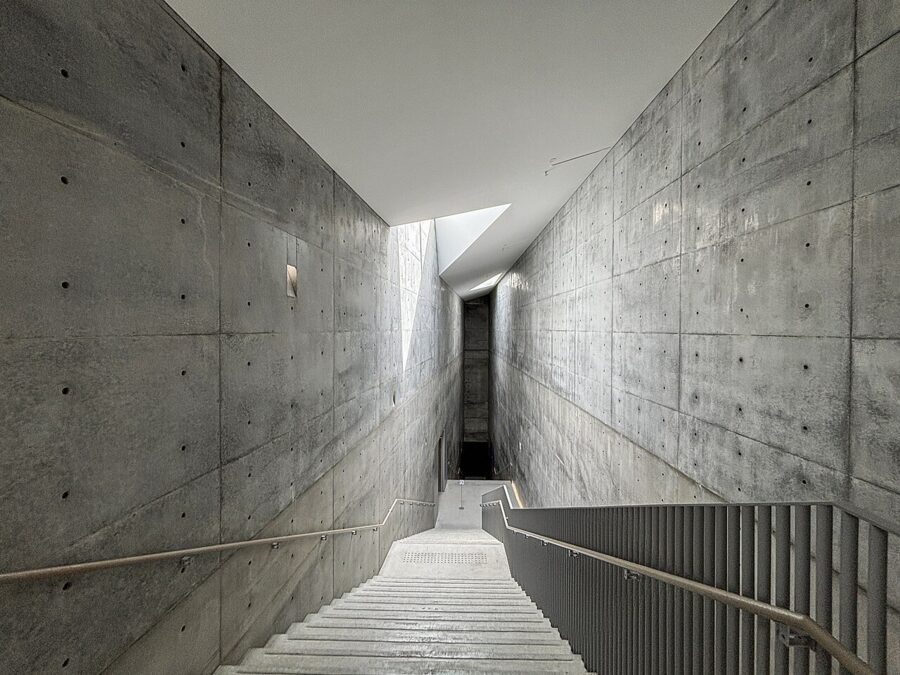
On the hill above Honmura, the Naoshima New Museum of Art opened in spring 2025, Ando’s tenth building for Benesse Art Site and the first museum named after the island itself. It has one floor above ground and two below, linked by a long staircase lit from a skylight, with galleries opening off it on either side. The collection is of artists from Japan and the rest of Asia.
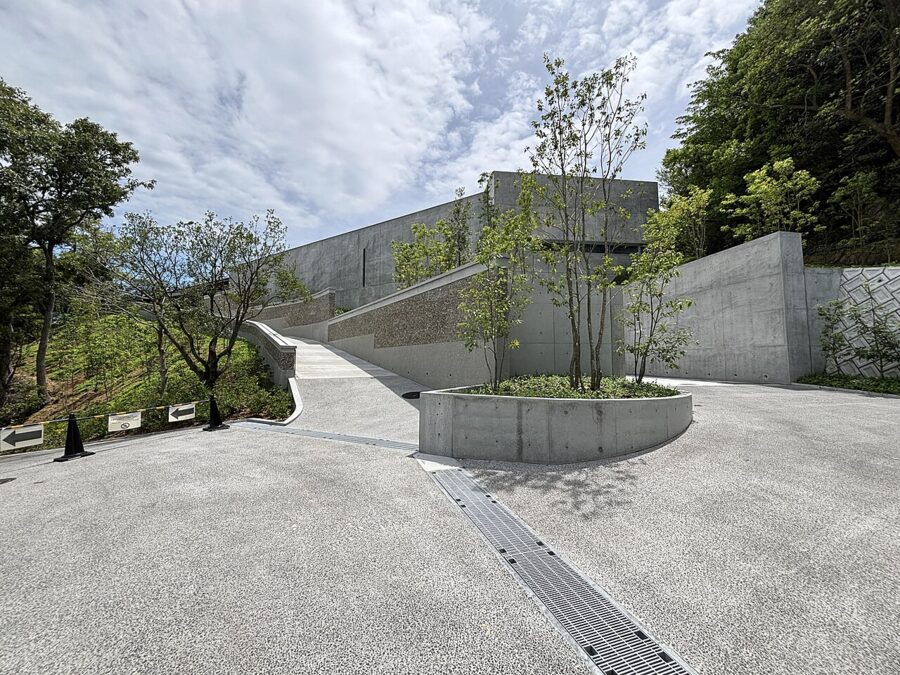

The 2026 displays included Cai Guo-Qiang, Takashi Murakami, Do Ho Suh, Aida Makoto, Heri Dono and the Indian artist N.S. Harsha. Part of the collection is being rehung while the museum is closed from 24 November to 12 December 2026, so the line-up after that may differ. It is the best place on the island for a first-timer who wants more than one artist’s ideas in a single visit, and photography is allowed except for a few works.

Getting around the island
The island is small, and the main places sit in a rough triangle: Miyanoura in the west, Honmura in the east and the museum district in the south. The town bus links the first two and goes on to Tsutsujiso, a seaside lodge at the edge of the museum district. It costs ¥100 (about US$0.65) a ride for adults, paid in coins as you get off, with no change machine on board.
From Tsutsujiso a free Benesse Art Site shuttle runs into the museum area, stopping at Benesse House, the Lee Ufan Museum and the Chichu. The shuttle does not run on days the Chichu and Lee Ufan are closed, which usually means Mondays. Both buses are small, the town bus holds 28, and on weekend afternoons the run from Tsutsujiso back to Miyanoura fills up, so leave a margin before your boat. The town bus and shuttle timetables are on the tourism association’s site.

A bike is the best answer, and an electric one is worth the extra. Several rental shops line the road opposite the Miyanoura terminal, and there is one at Honmura. The roads between the villages and the museums climb over the island’s hills, and in summer an ordinary bike turns the ride into a workout.
Walking is fine between the museums in the south, where Benesse House, the pumpkin, Valley Gallery, Lee Ufan and the Chichu are strung along one road and the coast below it. There are only two taxis on the island, so book one ahead if you need it. A couple of rental-car outfits exist but have only a few cars, and I would not bother.
Food and staying overnight
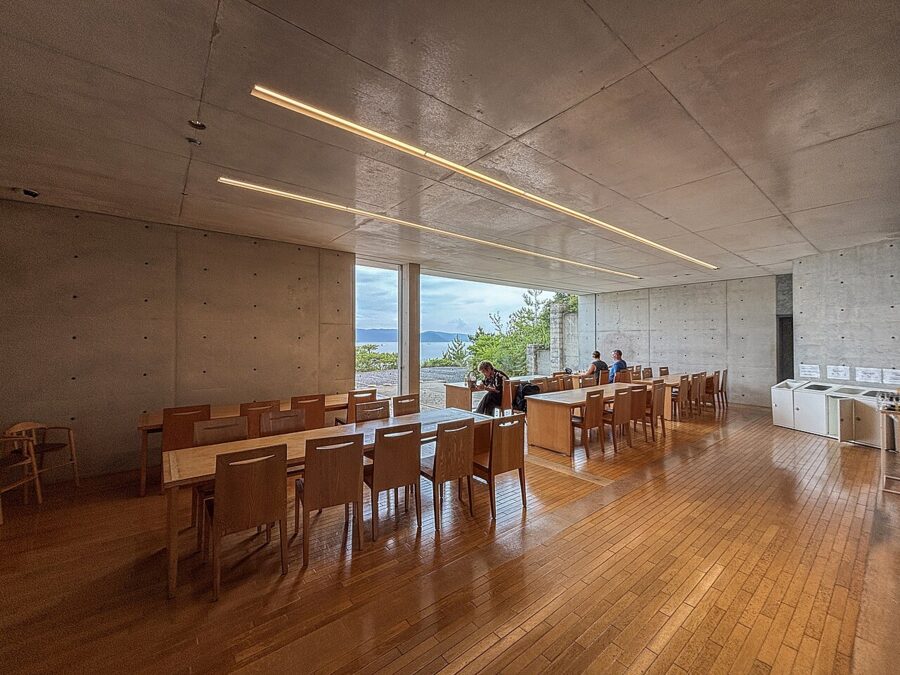
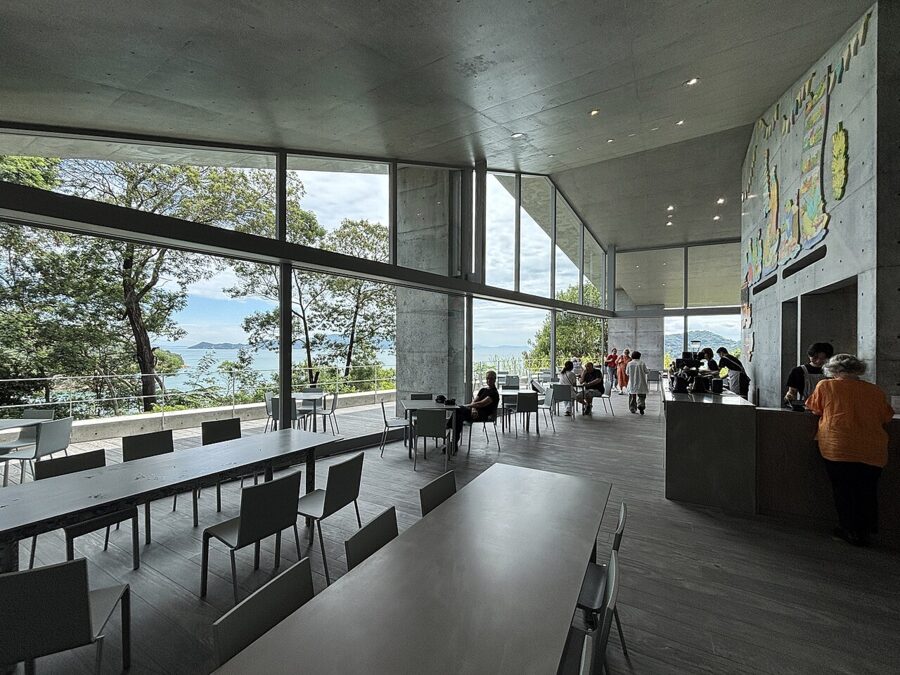
Eating on Naoshima is simpler than the art. In the museum district the best lunches are in the museums: the Chichu Café, with its view over the sea (you need a museum ticket to use it, 10:30 to 16:45), and the café at Benesse House Museum. In Honmura, the bright, glass-walled &CAFE at the New Museum of Art serves lunch made with local residents and has a terrace facing Teshima.


Miyanoura and Honmura both have small cafés and restaurants, and the tourism association keeps a list of them. Opening days on a small island are not city opening days, so if you are staying, ask your inn about dinner when you book.
Benesse House or a minshuku
Benesse House is the stay that people dream about, and it earns it. You sleep with art in the room, the museum stays open for guests until 23:00, and the Sugimoto gallery is included. There is a guest-only bus between the ports and the museums, and from 1 April 2027 a new guest benefit will let you into eligible art sites without buying tickets or booking slots.
The catch is getting a room. Bookings open 180 days ahead, just after midnight Japan time, and in spring and autumn the rooms can go within an hour. The hotel has also announced maintenance closures between January and March 2027, so check your dates on its own site.
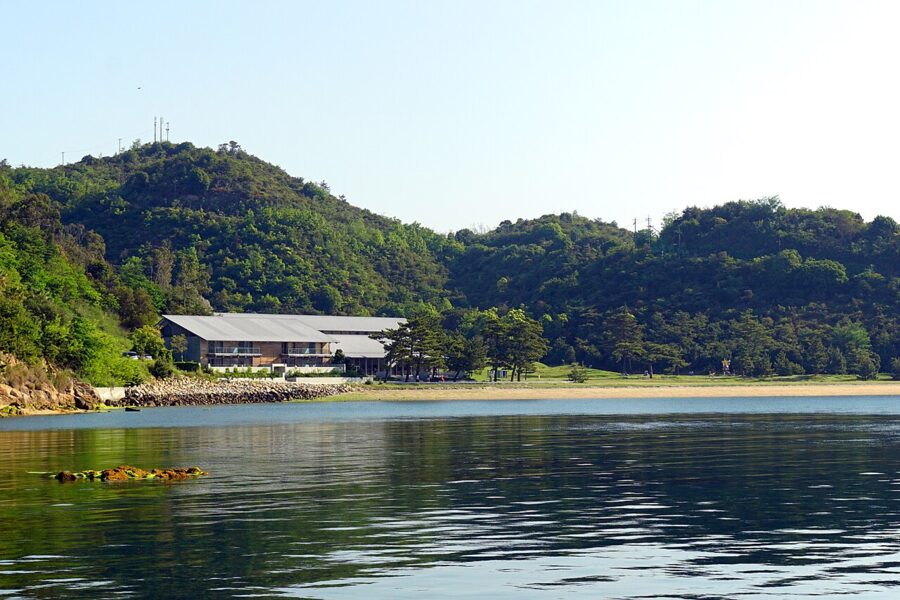

Most of the island’s beds are in minshuku, small family-run inns, and guesthouses in Miyanoura and Honmura, which you can find through the tourism association’s accommodation list. Some lend bikes to guests. If the island is full, sleep in Okayama and take the early train, or base yourself in Kurashiki, a short train ride west of Okayama and lovely in the evening.
Teshima and Inujima, in short
Naoshima is the start of the art islands, not the end. From Miyanoura a small high-speed boat runs to Ieura on Teshima (about 22 minutes, ¥820, about US$5.30) and on to Inujima. As of November 2026 the Naoshima to Teshima and Inujima boats leave Miyanoura at 09:20, 12:10 and 14:50, and come back from Inujima at 10:25, 13:10 and 15:47, calling at Ieura on the way.
That boat runs only when the islands’ museums are open: from March to November it skips Tuesdays, and from December to February it sails on Mondays, Fridays, weekends and holidays only. If one island’s museum is closed, it does not call there at all. Teshima can also be reached directly from Uno on the Shōdoshima Toyoshima Ferry.

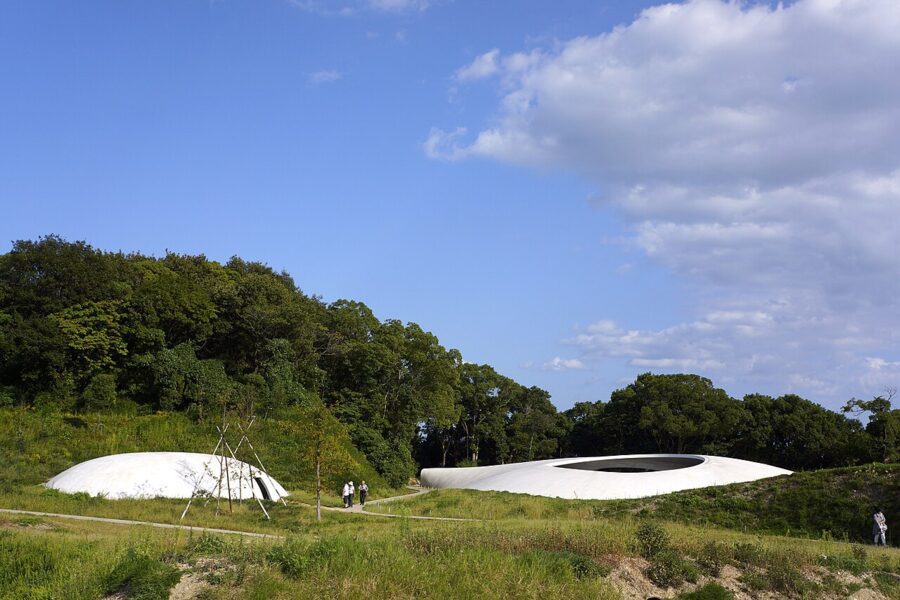
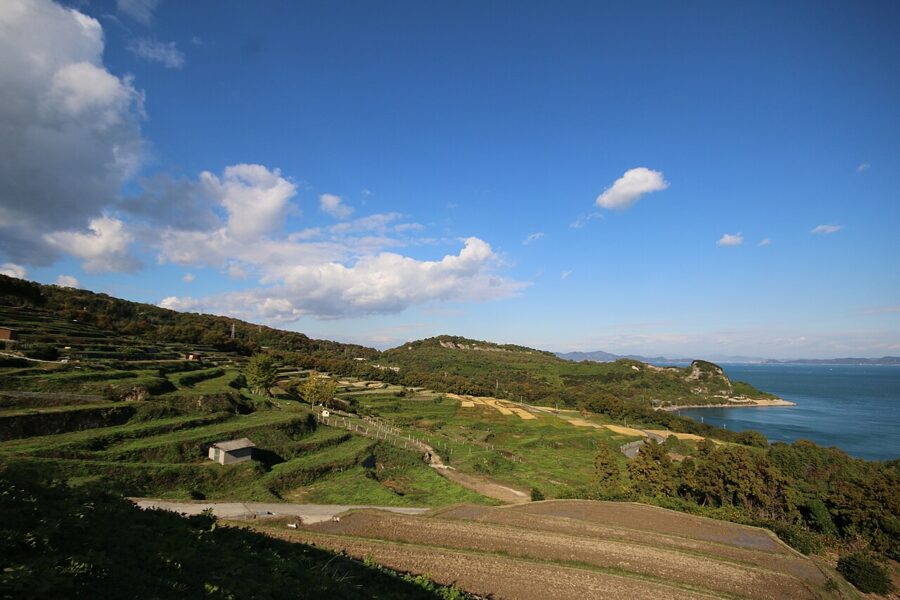
Teshima is greener and slower than Naoshima, an island of terraced fields. Its reason to visit is the Teshima Art Museum, by the artist Rei Naito and the architect Ryue Nishizawa: a single concrete shell, 40 by 60 metres and no more than 4.3 metres high, with two oval openings to the sky. Water springs from the floor and runs about all day, and I think it is the most moving building in the Inland Sea.

Also on Teshima are Christian Boltanski’s Les Archives du Cœur, where heartbeats recorded around the world are kept (you can add your own for ¥1,570), and the Teshima Yokoo House by Tadanori Yokoo. Teshima is hilly, so sort out the island’s bus times or a bike before you sail, and remember the art sites here close on Tuesdays.
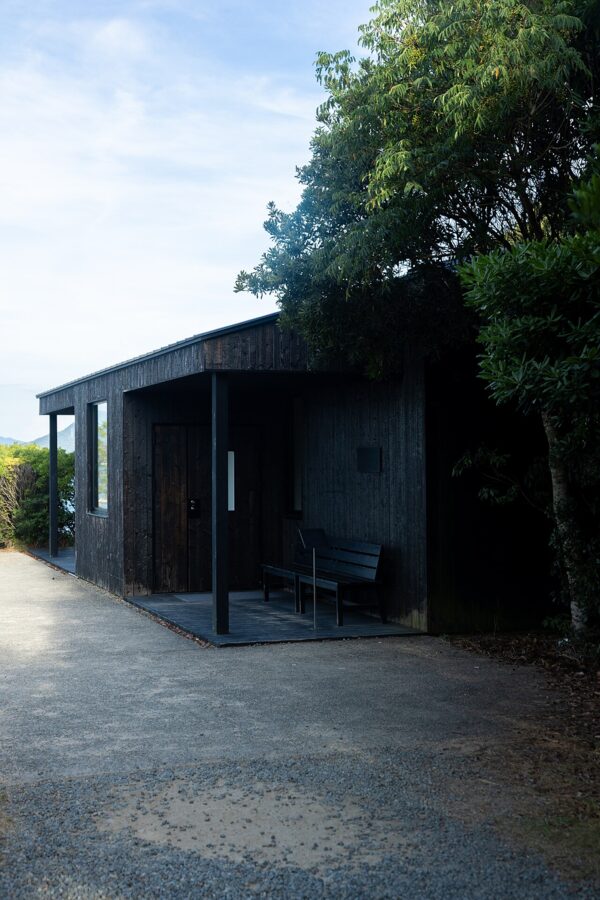


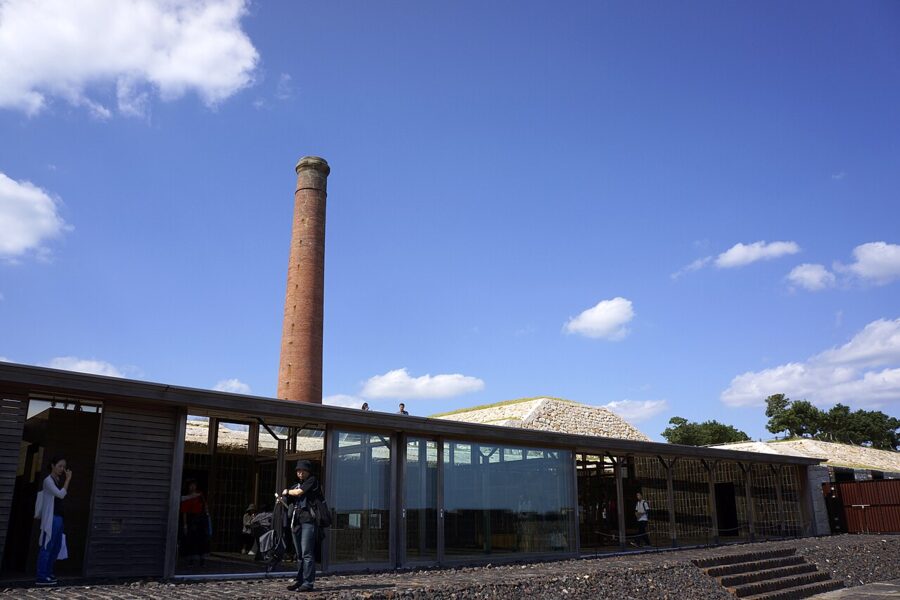
Inujima is tiny and easily walked. Its Inujima Seirensho Art Museum fills the brick ruins of a copper refinery built in 1909 and closed about ten years later, with Sambuichi’s building using the old chimney to move air through it and Yukinori Yanagi’s installations on the writer Yukio Mishima. One ticket, ¥2,100 (about US$13.50) online, also covers the village’s own Art House Project. It is closed Tuesday to Thursday, and all winter from December to February.

The Setouchi Triennale
Every three years the islands host the Setouchi Triennale, a contemporary art festival of about 100 days spread over spring, summer and autumn sessions. It began in 2010, and the 2025 edition drew about 1.08 million visitors. Naoshima counted about 1.13 million visits that year in its own tourism figures, half as many again as the year before.
The next edition is in 2028. As of November 2026 the dates have not been announced, and the call for artists’ proposals closed on 2 November. To deal with the queues at the ports, the organisers trialled online ferry tickets on the Takamatsu, Honmura and Teshima route in November 2026 and are considering it for 2028.
The festival brings temporary works, extra boats and a festival passport, but also crowds, full ferries and sold-out Chichu slots. If you want the permanent collection in peace, come in a non-festival year, which means any time from now until spring 2028. Some festival works stay on afterwards and open on set days.
Putting the day together
On a day trip, take the 08:22 ferry from Uno and go straight to the museum district, starting at Benesse House Museum, which has been open since 08:00. Walk the coast path past the pumpkin, then Valley Gallery and the Lee Ufan Museum, with your Chichu slot around midday and lunch at the Chichu Café. After 14:00, when the Art House Project houses have all reopened, take the bus to Honmura, see Minamidera, Go’o Shrine and Kadoya, then the New Museum of Art if you have the legs.
From Honmura you can catch the 17:20 boat to Uno, or go back to Miyanoura for a soak at I Love Yu and one of the evening ferries. If the Chichu’s mix of garden, daylight and art is what stays with you, the Adachi Museum of Art in Shimane is the region’s other great museum built around a view.
Book the Chichu on the second Friday, steer clear of Mondays and the January 2027 closures, and be on the 08:22 from Uno. The red pumpkin will be waiting on the quay when you step off.