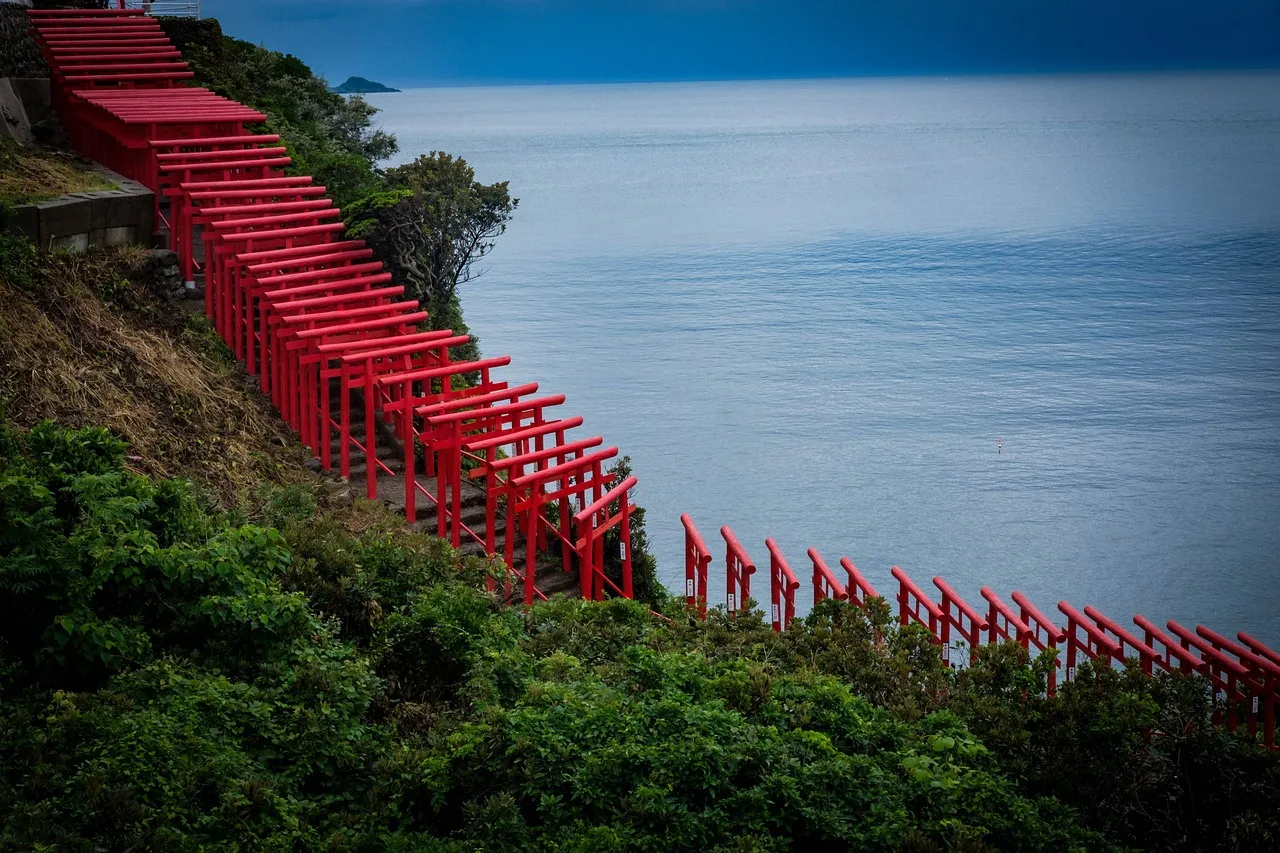
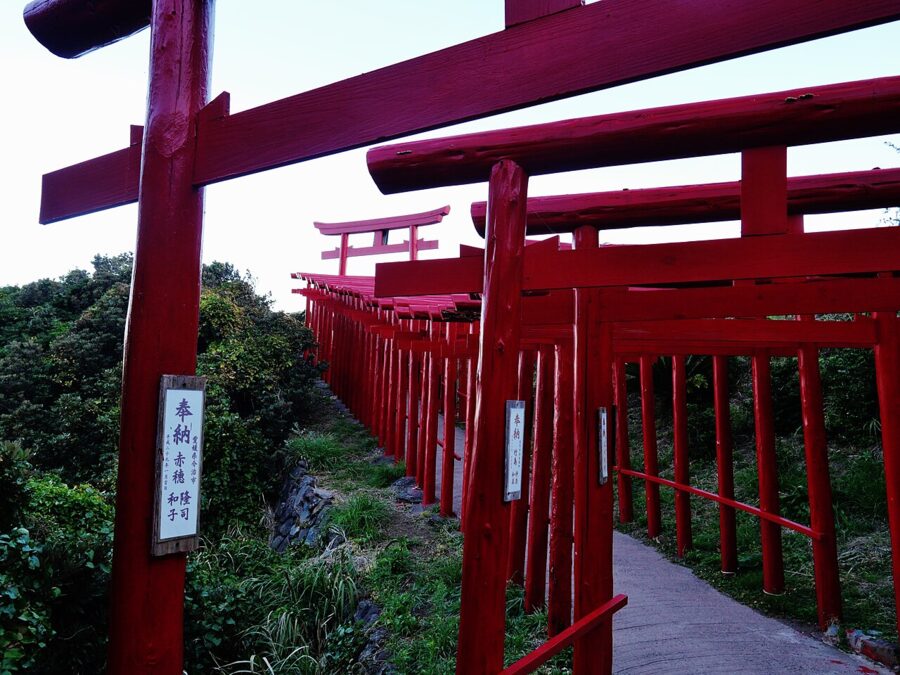
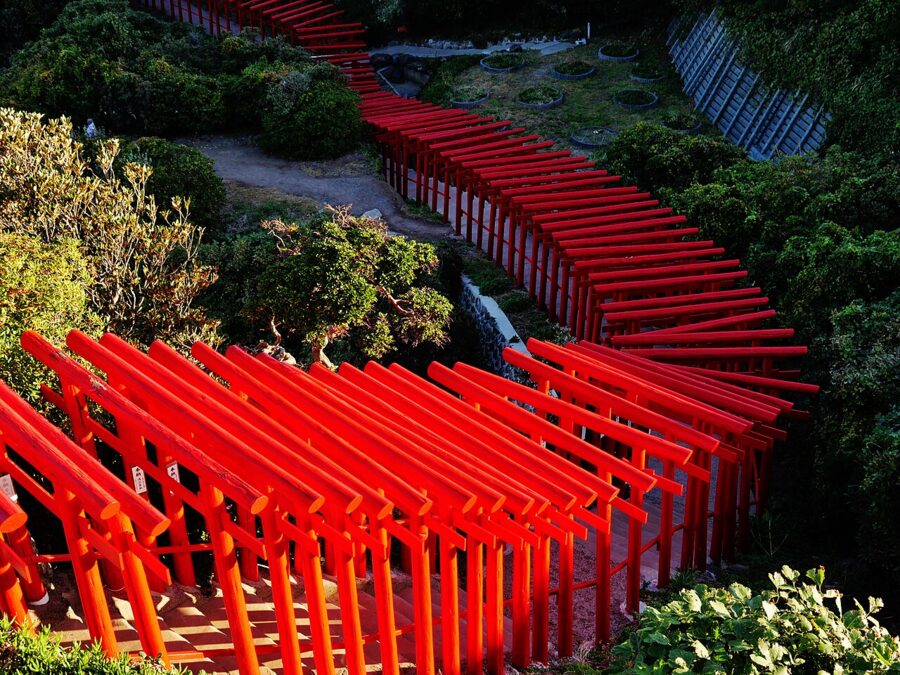
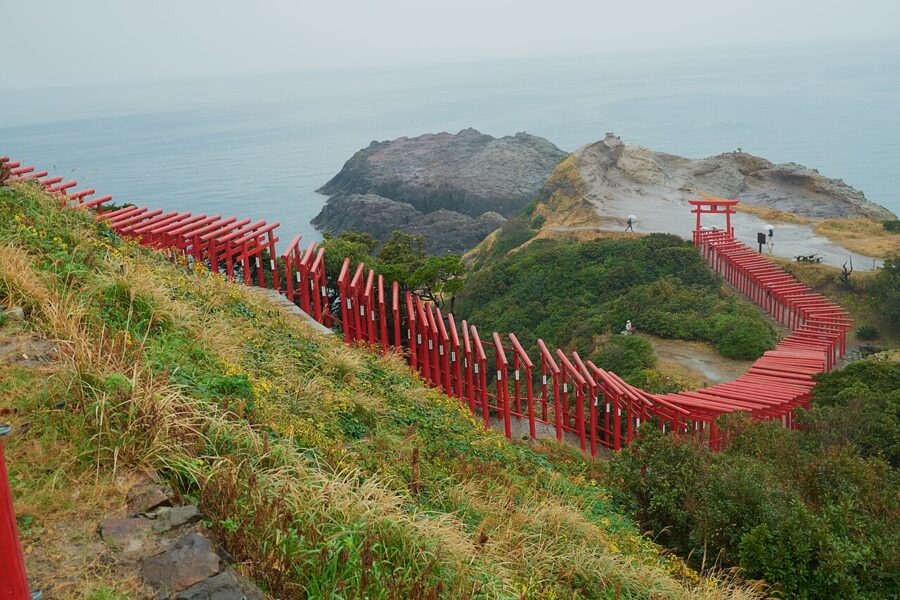
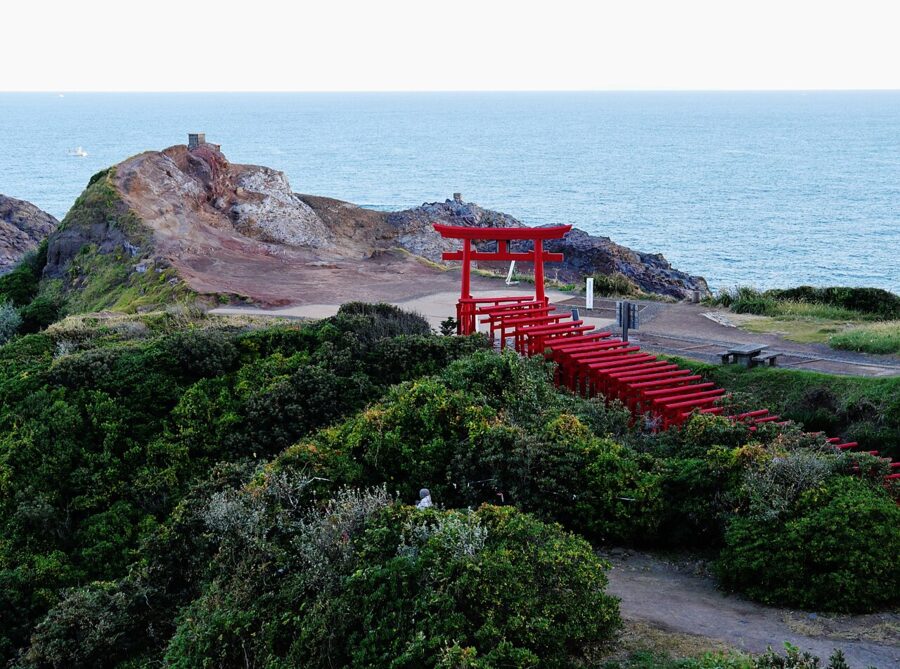
From the car park at Motonosumi Shrine (元乃隅神社) you look down on 123 red torii, set so close together that they read as one line, running more than 100 metres down a green slope to bare rock and the Sea of Japan. It is the picture that put a fishing village’s shrine on the north-western tip of Honshu onto travel lists around the world. This winter it comes with a catch you should know before you set off.
As of 28 November 2026 you cannot walk through the torii on any day. The tunnel has been shut for repairs since early September 2026, and Nagato’s tourism association expects the work to run until spring 2027 or later. You can still see the whole line from the grounds and from the rocks below, and the shop and car park stay open.
The other rule has just changed in your favour. Through November the shrine closes to worship at weekends and on holidays, but from 1 December 2026 to the end of February 2027 it is open every day, weekends included, from 09:30 to 16:30. Nothing is decided yet for March onwards. Add Tsunoshima Bridge, under an hour along the coast, and you have the best day out on this side of Yamaguchi, provided you sort out the transport, which is the hard part.
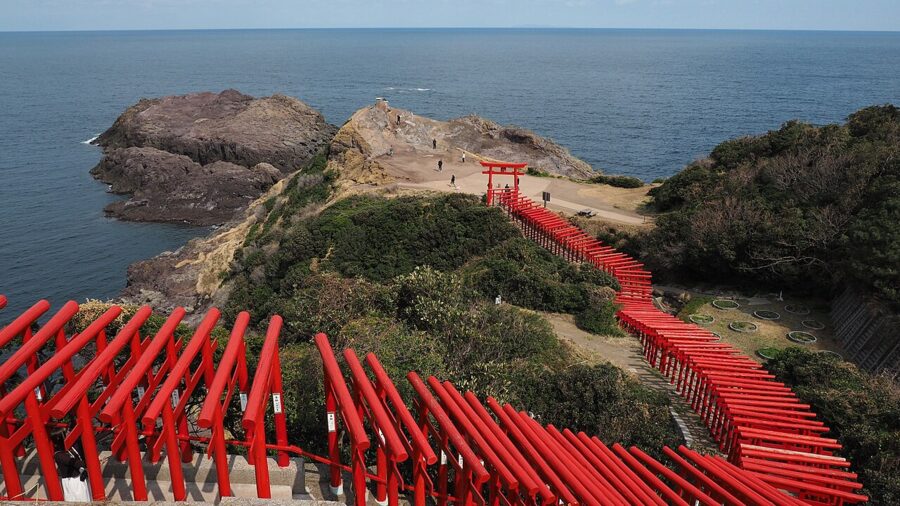

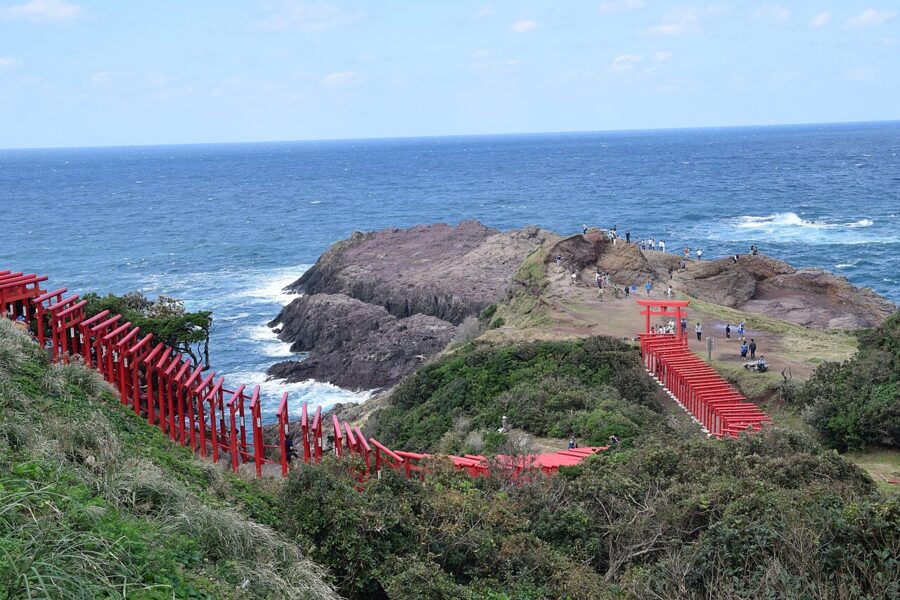

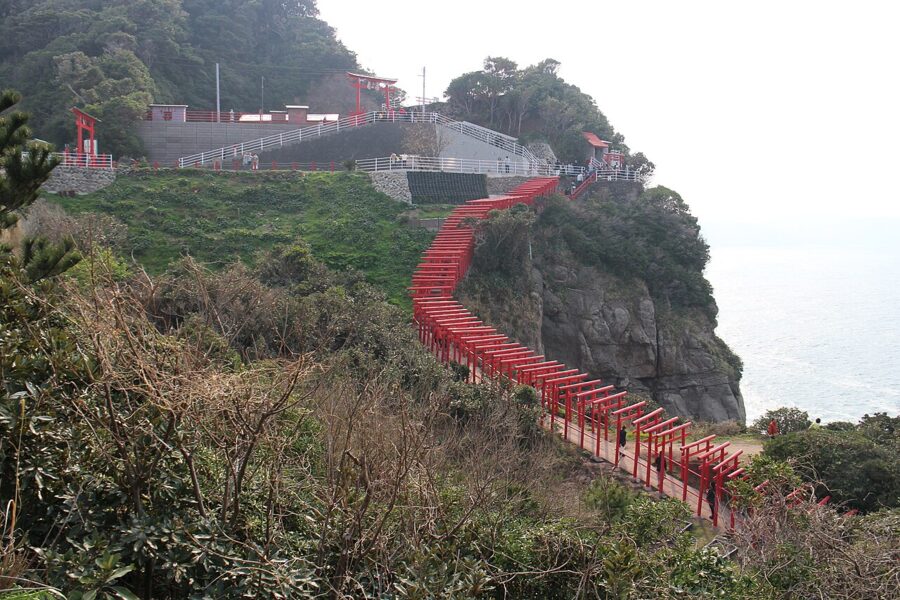

What is open, and when (as of 28 November 2026)
Two different closures are in force, and older articles and many photos describe a shrine that no longer quite exists. The weekend closures are about traffic: the shrine stands on private land at the end of a narrow road, and in July 2025 the shrine started cutting hours and closing on busy days to spare the people who live along it. The torii closure is about safety. The shrine’s own notice says wind and rain had damaged the gates so badly that walking through them was no longer safe.
| Period | Weekdays | Saturdays, Sundays, holidays |
|---|---|---|
| Until 30 November 2026 | Open 09:30–16:30 | Closed to worship |
| 1 December 2026 to end of February 2027 | Open 09:30–16:30 | Open 09:30–16:30 |
| March 2027 onwards | Not yet announced | |
| Torii tunnel | Closed every day for repairs, expected until spring 2027 or later | |
“Closed to worship” does not mean the place shuts. Nagato City’s announcement of the 2026 closure days says you can still photograph the shrine from outside the grounds on those days, and the shop and car park next door run as normal. In 2026 the weekend rule also bent: weekends in May, August and September reopened, except the Golden Week, Obon and Silver Week holiday blocks. So check the dates before you plan anything for spring.
The single page to check before you go is the tourism association’s running notice on Motonosumi access, updated on 25 November 2026 at the time of writing. It carries the closure calendar and the repair news, and it is updated first when either changes.

The decision: car or not, how long, what light
With a car this is easy. The shrine is about an hour from Mine IC on the Chūgoku Expressway, and Tsunoshima Bridge is about 30 km away by road. Satnav says 40 minutes; the prefecture’s own test drive in 2026 took an hour, because the last stretch to the shrine is narrow, steep and slow.
Without a car you have three ways in: a train to a small San’in Line station and a 20-minute taxi, a prefecture-backed bus tour that runs on Fridays, weekends and holidays, or a mix of the two that also takes in Tsunoshima. All three are set out in the last section. Allow 45 minutes to an hour at the shrine itself while the tunnel is shut. The bus tour gives you about an hour, which is plenty.
Light is simpler than it looks. The grounds open at 09:30 and close at 16:30, and night entry is banned, so sunrise and sunset shots are off the table.
What matters is a clear day, because the red only stands out against blue sea. Winter brings the north-easterly winds and rough seas that make the blowhole perform, but also grey days. Weekday mornings, straight after opening, are the quietest time.

The shrine
A white fox and a fisherman
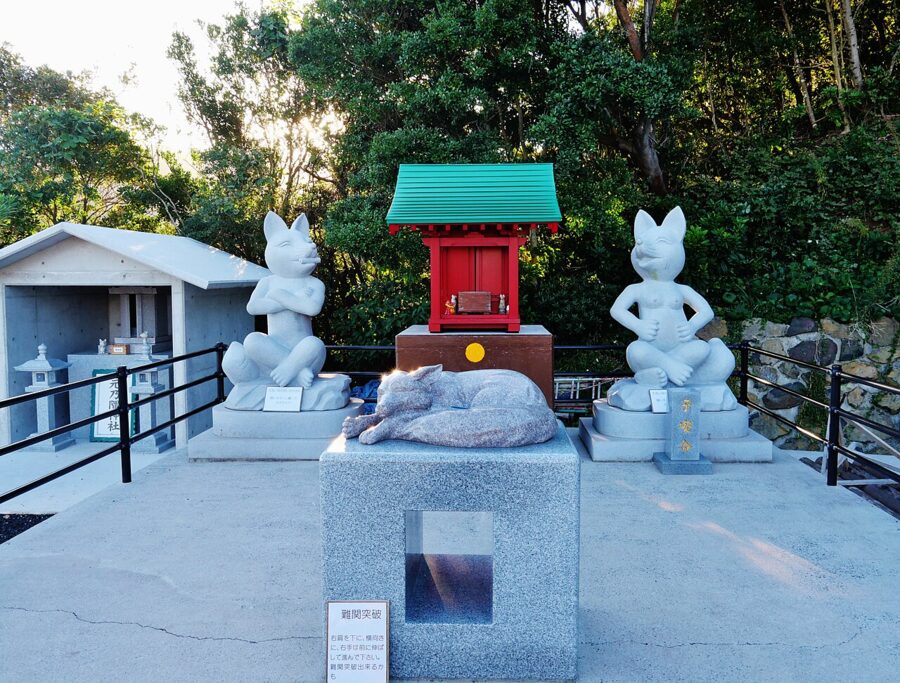
The story the city tells is short. In 1955 a white fox appeared at the bedside of Okamura Hitoshi, head of a local fishing outfit, and told him to enshrine it on this spot. He did.
The shrine was known as Motonosumi Inari until 1 January 2019, when it dropped the long name, partly because overseas visitors found it hard. It is not connected with Taikodani Inari in Tsuwano, despite the old name: the city makes the point on its own page.
It is a small place. There is no grand hall here, only a modest shrine and white fox statues at the top. People come to pray for business, big catches and safety at sea, and also for marriage, children and exams.

The 123 torii
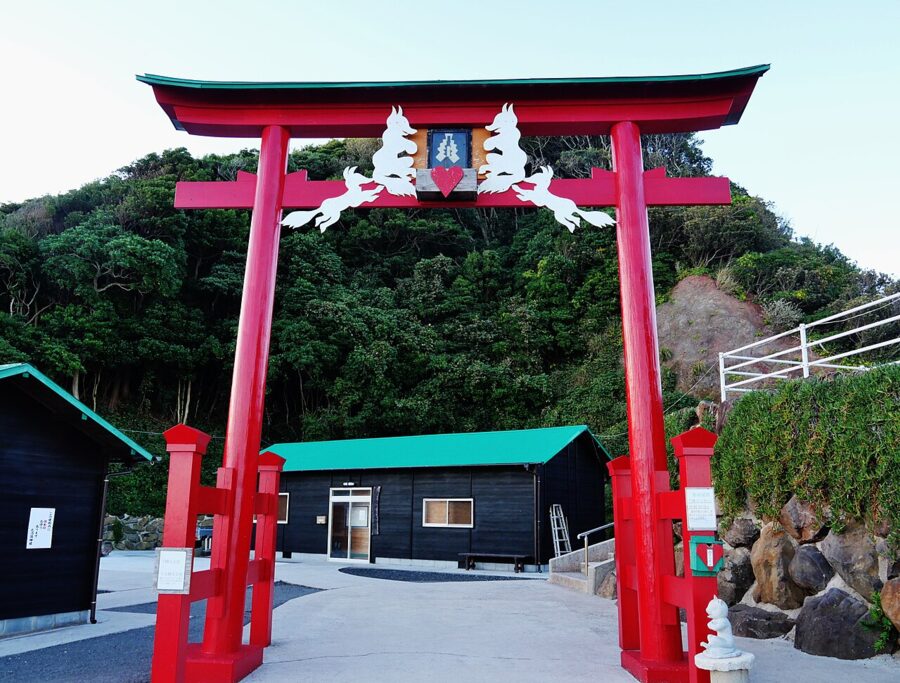
The gates came later than the shrine. They were donated over ten years from 1987, and now run for more than 100 metres from the Ryūgū side up to a 6-metre great torii by the car park. Before the repairs you walked up through them from the sea. Look out too for Nankan Toppa (難関突破, “breaking through difficulties”), a narrow stone gap in the grounds that you squeeze through sideways for luck; the instructions are posted beside it.
The goshuin (御朱印, the stamped calligraphy that shrines give pilgrims) here is unusual. It comes from an unstaffed stand near the great torii, with a white fox in the centre and ten characters to choose from, such as love, victory and wealth. You leave an offering of your choosing; the tourism association suggests about ¥500 (about US$3).

The offering box that is gone
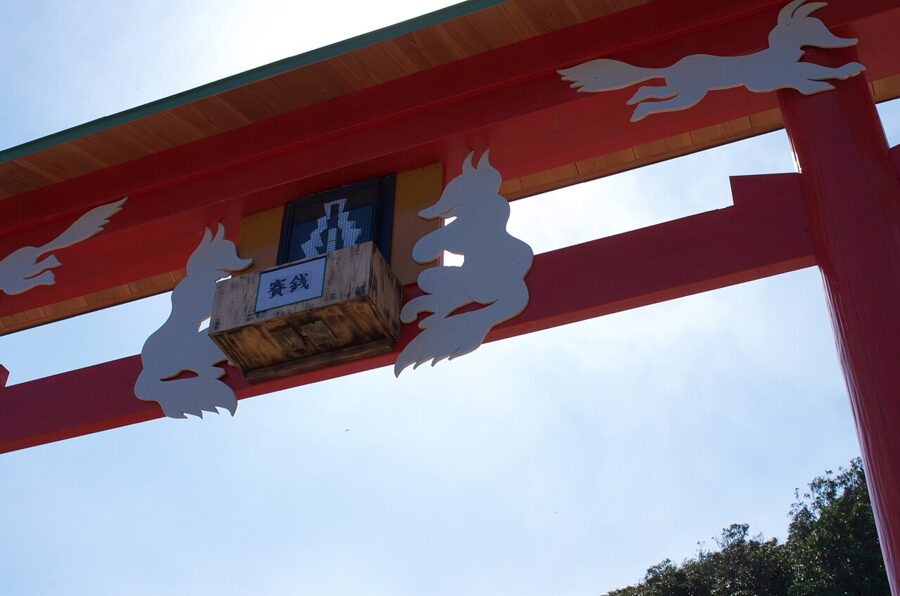
Plenty of photos and guides still show the shrine’s most famous gimmick: an offering box fixed high on the great torii, about five metres up. You threw coins at it, and a coin that landed was said to make your wish come true. It was billed as Japan’s hardest offering box to hit.
It is gone, and it is not coming back. When the great torii was moved and rebuilt in November 2016, the box went up about a metre higher than before, to roughly five metres. It came down on 31 July 2020, to stop crowds packing under the gate during the pandemic.
Nagato City’s December 2025 announcement states that it has been removed and there are no plans to put it back.


Ryūgū no Shiofuki, the blowhole
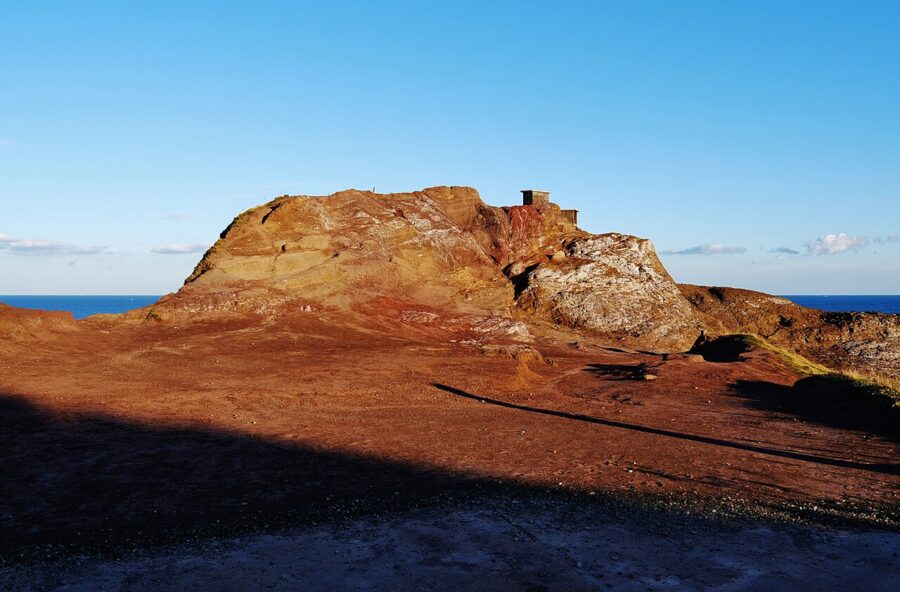
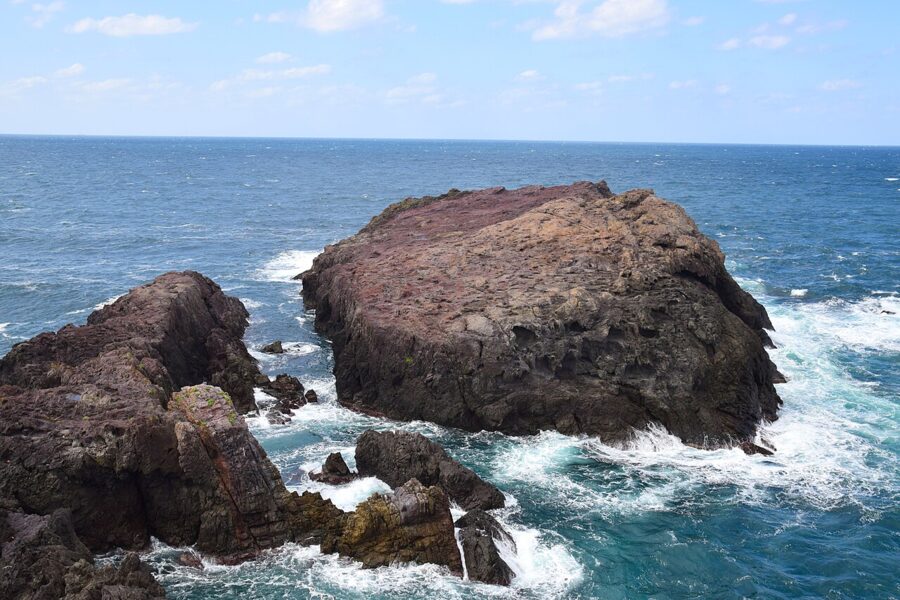
Below the lowest torii, waves run into a sea cave under the basalt cliff. Each one squeezes the air inside, and the air bursts out through a slit in the rock about a metre long and twenty centimetres wide, throwing up seawater with a roar. Ryūgū no Shiofuki (龍宮の潮吹, “the Dragon Palace sea spout”) has been a national Natural Monument since 1934, years before the shrine existed.
On a still day it puffs a metre or two. When the north-easterly wind and the winter monsoon whip up the sea, Nagato City says the spray can reach 30 metres. The hole itself is low on the cliff face and is not visible from the top, so watch from the viewing deck and stay behind the barriers. The rock is wet, the wind is strong, and there is nothing between you and the sea.

How it became famous, and why it now closes
For decades this was a local shrine. Then in 2015 CNN put it on a list of Japan’s 31 most beautiful places, and the numbers jumped. The city counted 30,000 visitors in 2014 and 75,000 in 2015, then more than 300,000 in the first eight months of 2016 alone.
The road never grew to match. In April 2018 the city opened a shop and a large car park by the shrine to ease the jams, but the lane in is still narrow, and two coaches cannot pass on the final stretch. In July 2025 the shrine moved its opening time from 07:00 to 09:30 and closed over Obon. The weekend and holiday closures followed for autumn 2025 and most of 2026.

Visiting respectfully
- Arrive after 09:30 and leave the grounds by 16:30. Entering or photographing after dark is banned; this is private land on a cliff edge.
- Personal drones are not allowed.
- When the tunnel reopens, walk it in single file and keep moving. The gates are offerings, not props.
- By car or coach, follow the one-way signs. The lane cannot take two buses side by side.
- The offering box on the great torii is gone, so do not throw coins at the gate.

Tsunoshima Bridge and the island
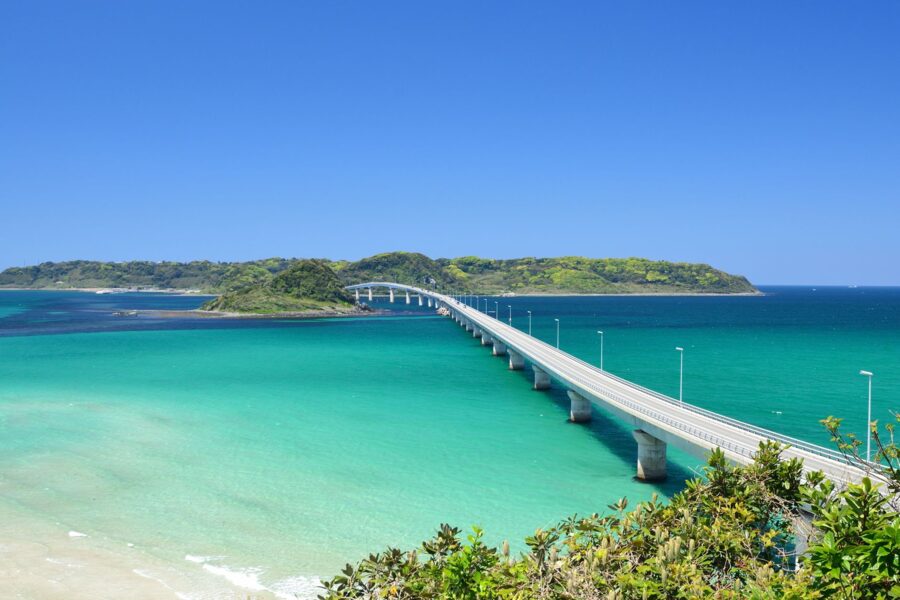
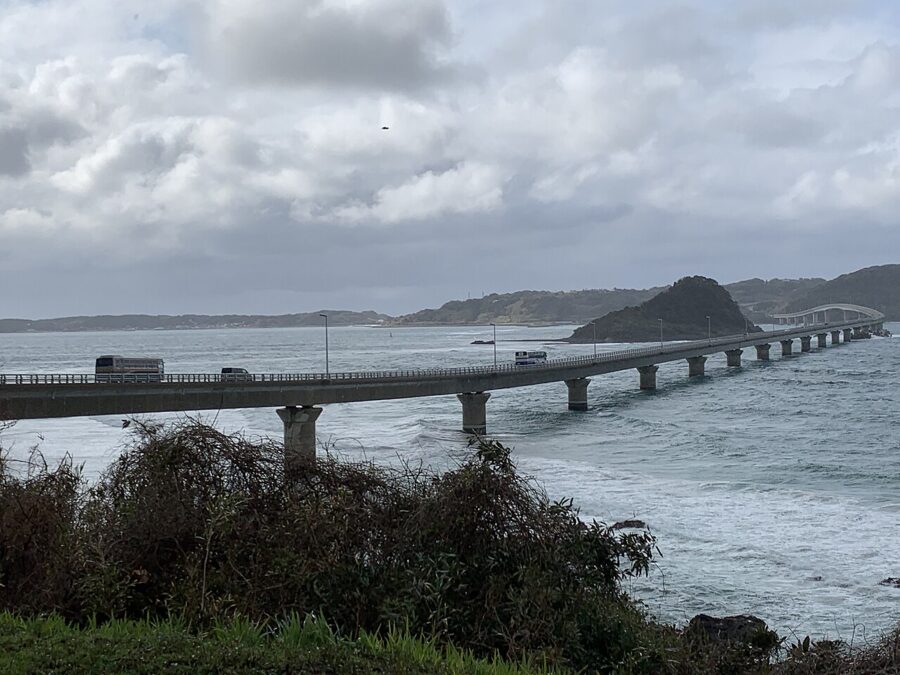
Tsunoshima Bridge (角島大橋, Tsunoshima Ōhashi) is the other half of the postcard. It runs 1,780 metres across shallow water from the mainland to Tsunoshima island, in Shimonoseki, and it is free to cross. The prefecture calls it one of the longest toll-free bridges in Japan, and on a sunny day the water under it is a startling pale turquoise. On a grey day it is just a long bridge, so save it for sunshine if you can.
The classic photo comes from Amagase Park (海士ヶ瀬公園) on the mainland end, whose car park is free and open 24 hours, according to the prefecture’s Tsunoshima Bridge page. Strong wind sometimes closes the bridge, so check on stormy days. At peak times the queue to drive back off the island can be long. The prefecture’s tip for anyone heading towards Shimonoseki is to turn left after the bridge and cut across to Route 191.

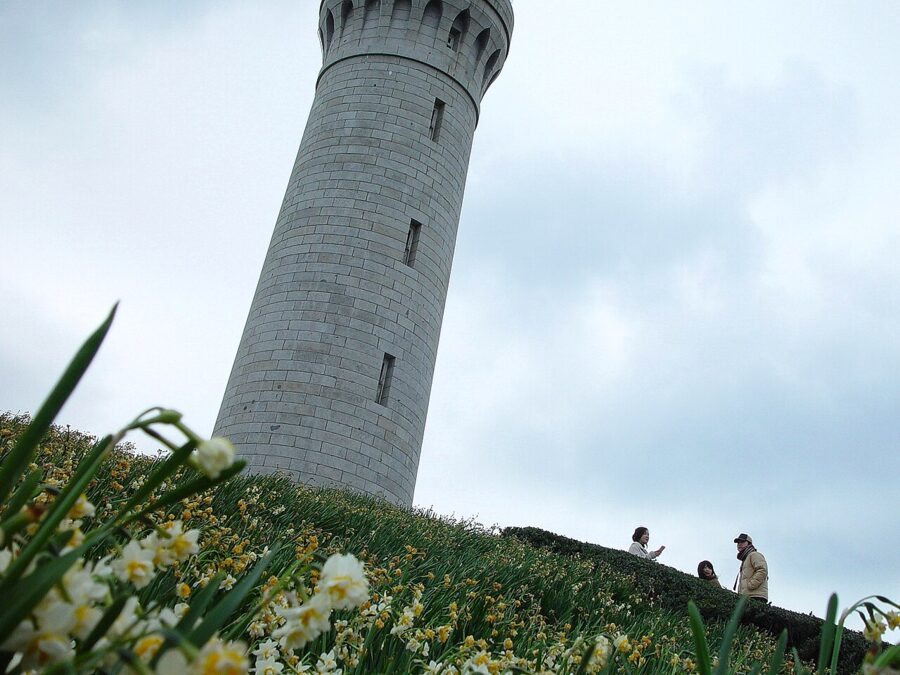
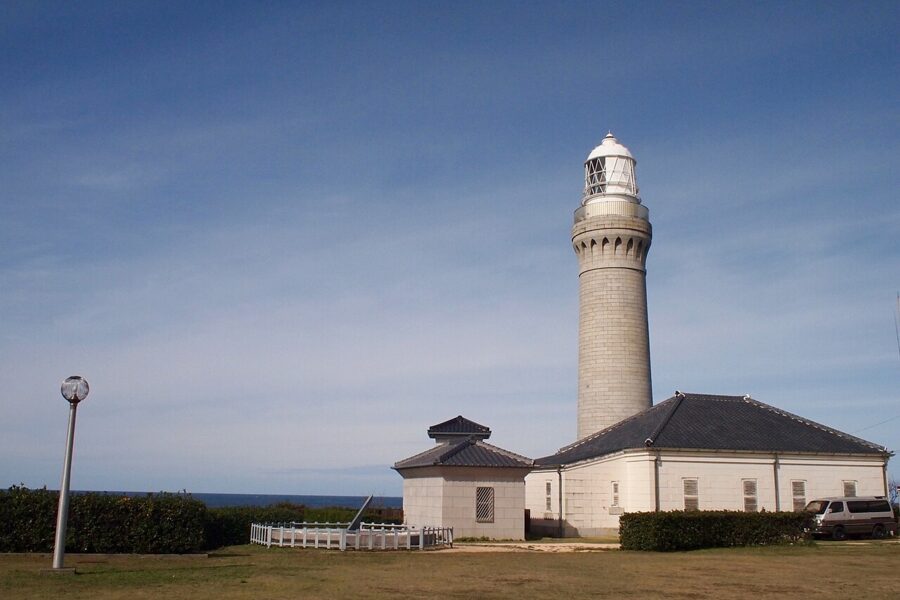
Across the bridge, the island’s western tip has Tsunoshima Lighthouse, first lit in 1876 and designed by Richard Henry Brunton, the Scottish engineer behind many of Japan’s first Western-style lighthouses. It was the first large lighthouse on the Sea of Japan coast, it still works, and it is one of only 16 in Japan you can climb: 105 spiral steps and a ladder to a gallery with a full circle of sea.
The lighthouse climb costs ¥300 (about US$2) for anyone of junior-high age or above, and runs 09:00–17:00 from March to September and 09:00–16:30 from October to February, as of 2026. It can close in bad weather. From late January to mid-February the grounds fill with narcissus.


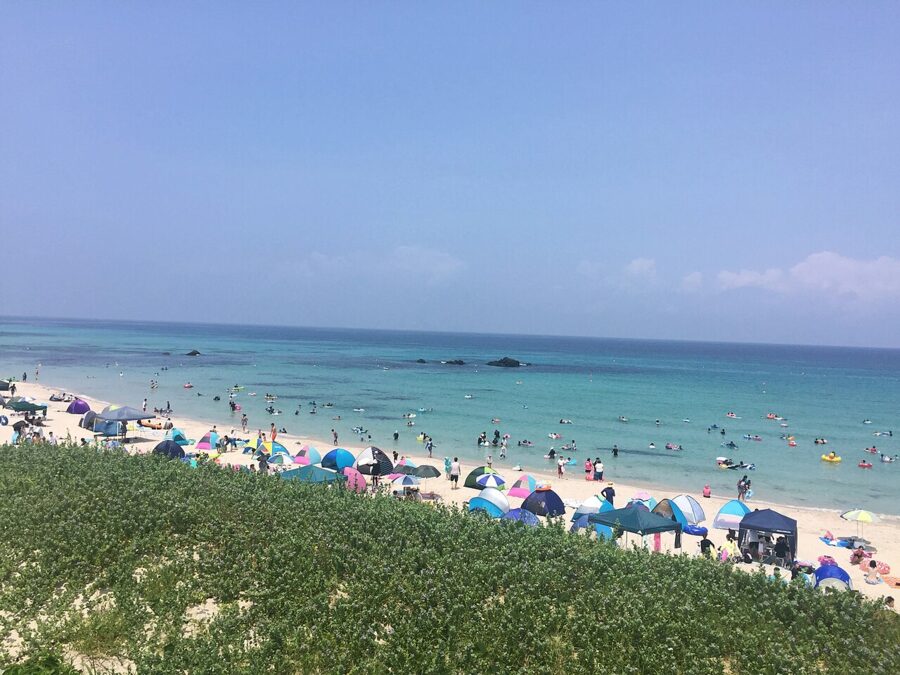
In summer, Cobalt Blue Beach turns the island into a swimming spot, and there are bikes and tuk-tuks to hire for getting around. Out of season it is quiet, with two headland parks at Makizaki and Yumezaki for a walk.

Senzaki, Ōmijima and Yumoto Onsen
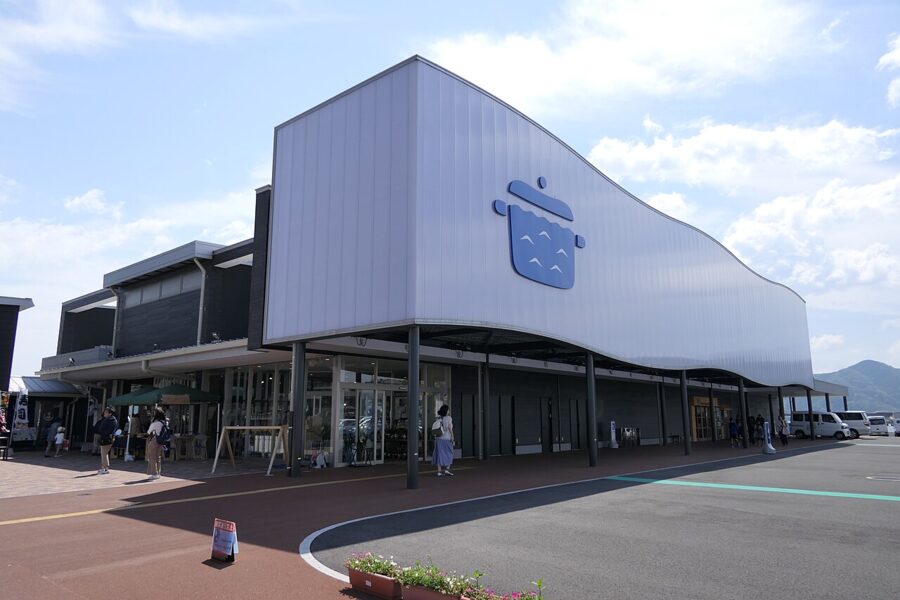
Motonosumi sits on the edge of Nagato, and the rest of the city is worth a night. Senzaki (仙崎) is the fishing port where the poet Kaneko Misuzu was born. The Kaneko Misuzu Memorial Museum, built around her family’s old bookshop, charges ¥500 (about US$3) and opens 09:00–17:00 as of late 2026. Senzaki is known for squid and kamaboko (fish cake), and the Senzakitchen roadside station has a market for local fish and produce, places to eat and the city’s tourist information desk.

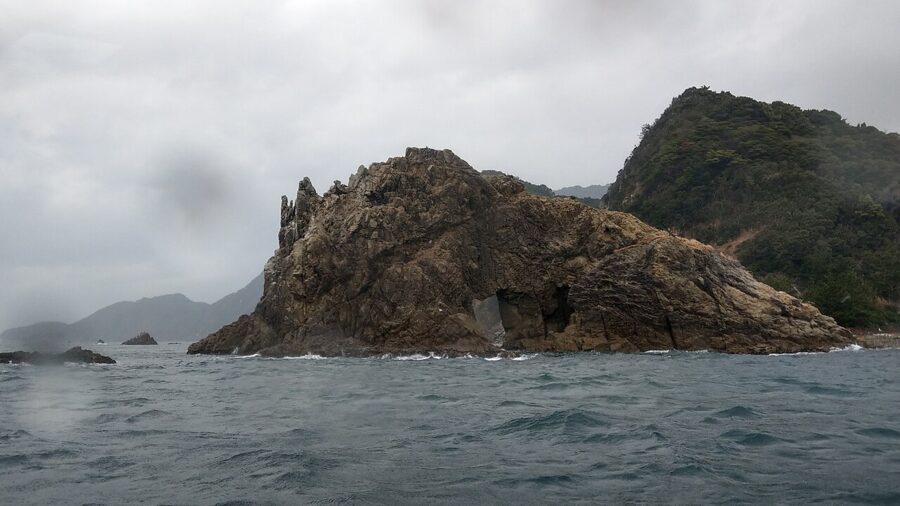
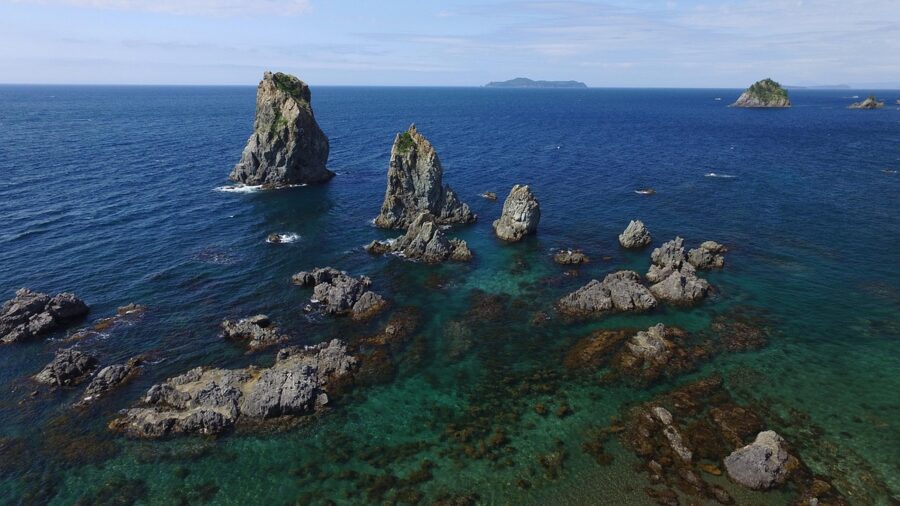
A bridge from Senzaki crosses to Ōmijima (青海島), an island of sea stacks, arches and caves that locals call the “Alps of the sea”. You see it best from the water. Ōmijima Kankō Kisen’s boats do a full loop in about 1 hour 20 minutes for ¥2,800 (about US$19), with no booking needed. From December to February there are only three sailings, at about 10:40, 13:40 and 14:40, and rough seas cancel them or switch the boat to a shorter course.

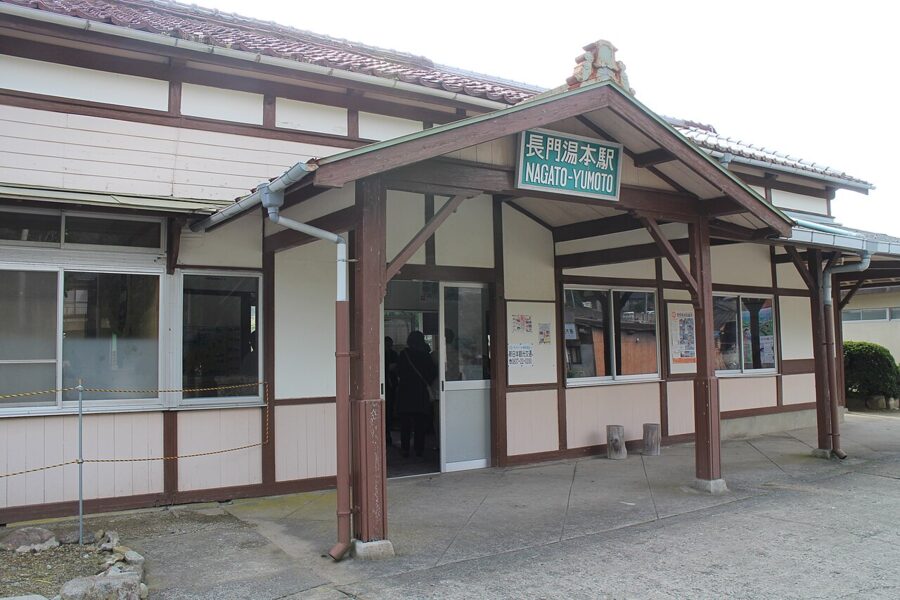
Inland, Nagato Yumoto Onsen (長門湯本温泉) is the oldest hot-spring town in Yamaguchi, about 600 years old by its own count. The public bath at its heart, Onto (恩湯), sits right on the spring, and you can watch the water rise out of the rock while you soak. It is open 10:00–22:00, with occasional closures, and a bath at Onto costs ¥990 (about US$7) as of 2026. This is the town to sleep in if you want an early start at the shrine.

Getting there without a car
The tourism association is blunt: there is no bus from any station to the shrine, and it is hard to reach by public transport. Its shrine page points you to a car, a rental car or a taxi. Here is how to make the taxi work, and the two alternatives.
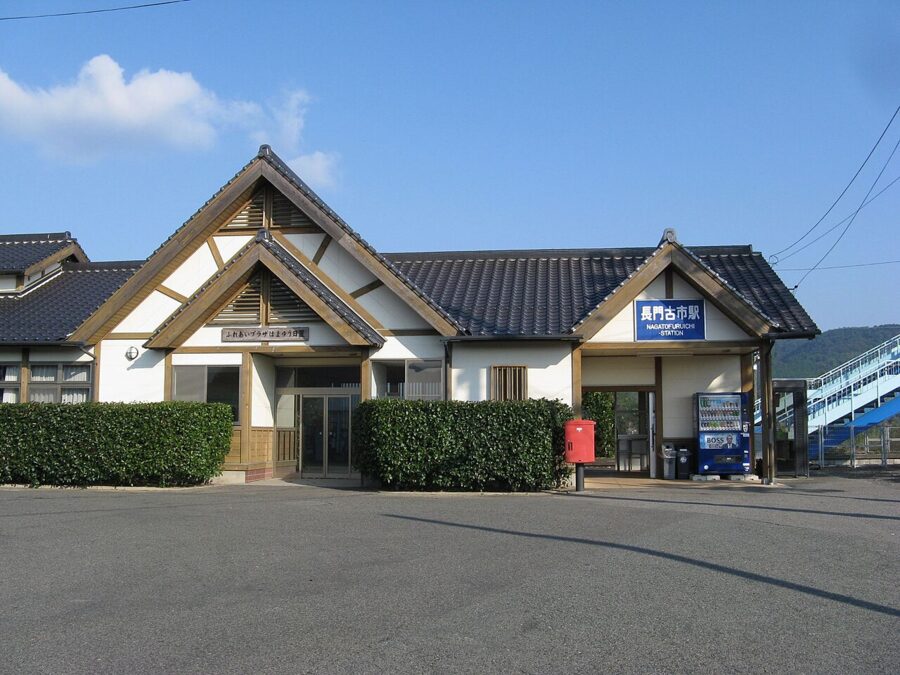
Train to Nagato-Furuichi or Hitomaru, then a taxi
The nearest stations are Nagato-Furuichi (長門古市) if you are coming from Nagatoshi, and Hitomaru (人丸) if you are coming from the Shimonoseki side. Both are on the JR San’in Line, and both have a taxi office by the station. The ride takes about 20 minutes and costs around ¥3,000 (about US$20) each way, according to the tourism association. From Nagatoshi Station it is about 40 minutes.
Book the taxi before you travel and arrange your pick-up, because nothing waits at the shrine for a return fare. San’in Line trains through Nagato-Furuichi run roughly every one to two hours, so plan the return around a train, not the other way round. Nagatoshi to Nagato-Furuichi takes about 12 minutes. From Shimonoseki, trains north of Kogushi are sparse, so check the connection before you commit.

Reaching the San’in Line from the Shinkansen
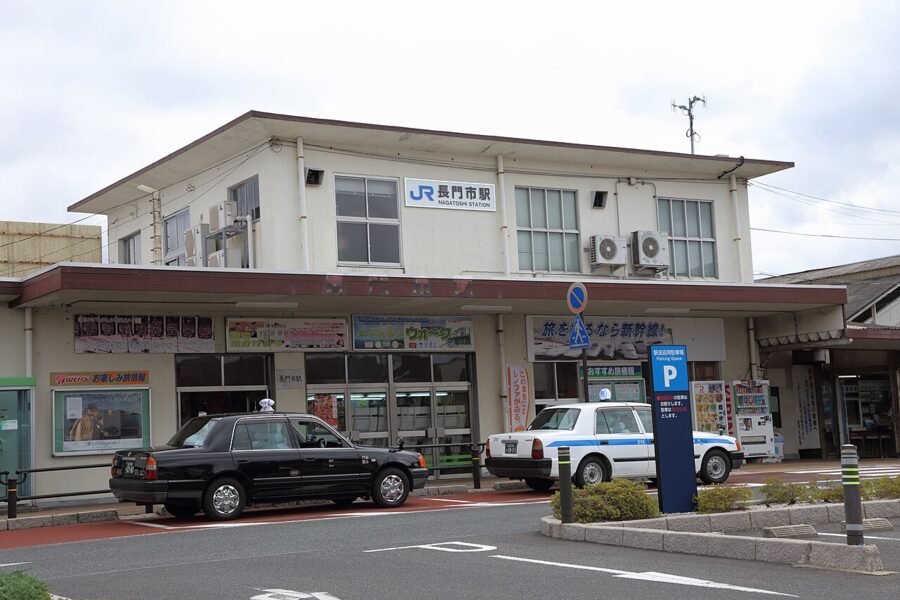
The closest Shinkansen stop is Asa. The JR Mine Line from Asa to Nagatoshi has been shut since heavy rain in summer 2023, and JR runs replacement buses instead, roughly hourly, taking about 50 to 75 minutes depending on the service. In October 2026 a regional council approved replacing the line permanently with a bus rapid transit route, targeted for March 2029.
Until the end of December 2026, three rapid replacement buses a day on Saturdays, Sundays and holidays run on to Senzakitchen in Senzaki, as part of the Yamaguchi tourism campaign, per Nagato City’s notice on the extended bus. If you are coming in from further east, the run from Osaka to Hiroshima is the first leg. Whether a pass pays off on a trip this far west is covered in JR West rail passes.

The Fuku no Tabi bus tour
The prefecture-backed day tour Fuku no Tabi, Yamaguchi-gō, run by JTB’s Yamaguchi branch, is the one ready-made answer to the transport problem. It leaves from Yuda Onsen and Shin-Yamaguchi Station and covers Tsunoshima Bridge, Motonosumi Shrine and Akiyoshidō cave under the Akiyoshidai plateau, with lunch included. It takes 9 hours 30 minutes from Yuda Onsen and back.
As of 2026 it costs ¥11,800 (about US$80) back to Shin-Yamaguchi or Yuda Onsen, or ¥10,800 (about US$72) if you get off at Nagatoshi Station or Nagato Yumoto Onsen, which suits a night in the onsen town or an onward train to Hagi. It runs on Fridays, weekends and holidays, though not from 26 December 2026 to 3 January 2027. It needs 15 people to go ahead. Book online by the day before and pay by card.
Two catches. The tour stops at Amagase Park for the view of Tsunoshima Bridge and does not cross it. And if weekend closures return for spring 2027, its Saturday and Sunday dates will land on days when you can only see the gates from outside. From December to February that problem goes away.
Tsunoshima by bus, and a route that links both
Tsunoshima does have buses. Blue Line Kōtsū runs to the island from JR Takibe and Kottoi (特牛) stations. The ride from Kottoi to the lighthouse stop takes about 25 minutes, but the operator’s Tsunoshima bus page warns that services are few and run late in holiday traffic.
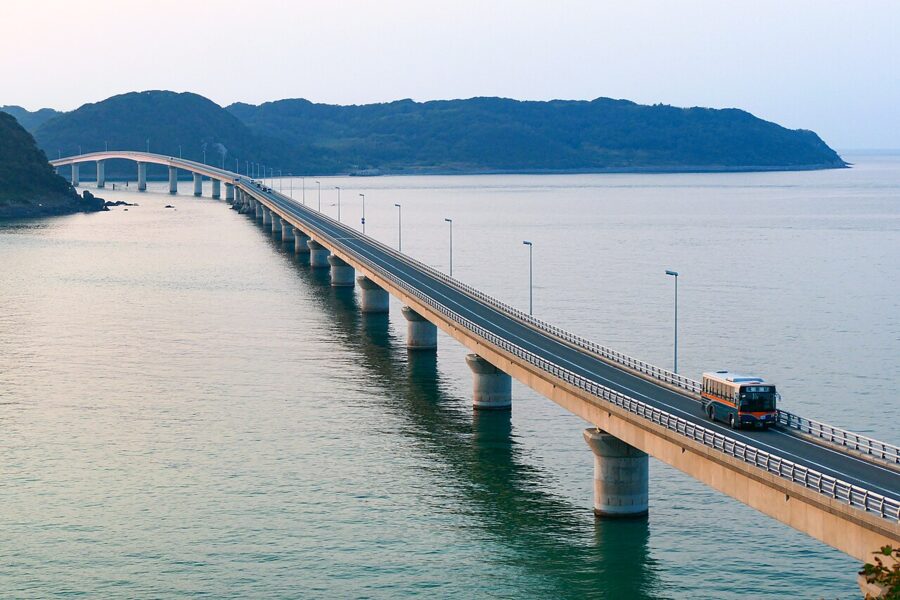

To see both without a car, the prefecture’s 2026 bridge-to-shrine test run suggests a taxi from the bridge to Agawa Station (about 10 minutes), the San’in Line to Hitomaru (about 20 minutes), then a taxi to the shrine (about 20 minutes). It works only if you match it to the few trains, so build the day around the timetable. If Shimonoseki is your base, this is the direction to do it in.
If you do drive
Parking at the shrine costs ¥300 (about US$2) for the first hour, then ¥100 for each further hour, up to a maximum of ¥500, as of 2026. The main car park, right in front of the shrine, holds 92 cars, with a second one about 200 metres away that opens when the first fills. If your satnav cannot find the shrine, try entering Ryūgū no Shiofuki instead. For more of this coast by rail, see Western Japan by train, and Yamaguchi city is the obvious base on the inland side.
Whatever you choose, look at the tourism association’s notice the evening before, go on a weekday or in the December to February window, and get there for 09:30. The gates will still be there, even if you cannot walk through them yet.