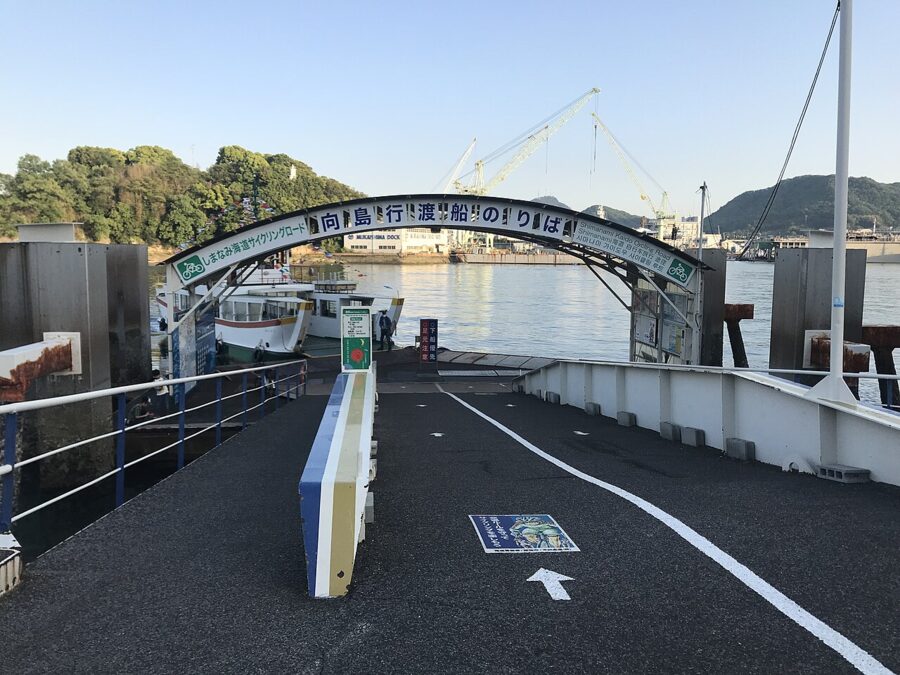
The boat to Mukaishima leaves from a pier a three-minute walk from Onomichi Station, and it takes about as long to cross the channel as it does to buy a ticket. You wheel the bike on beside the scooters, and five minutes later you are on the first of six islands with roughly 70 km of road between you and Imabari, on the far side of the Seto Inland Sea in Shikoku.
That road is the Shimanami Kaidō (しまなみ海道), the only one of the three Honshu to Shikoku crossings you can ride or walk. Six bridges carry the cycle route over the straits, from Innoshima to the Kurushima Strait, each with its own path for bikes and walkers (the seventh, between Onomichi and Mukaishima, has none, which is why the ride starts on a boat), and between them the route drops down onto the islands: lemon groves on Ikuchijima, a shrine full of samurai armour on Ōmishima, salt and ramen on Hakatajima, a lookout on Ōshima that puts the whole Kurushima Strait under your feet.
The bridges are free for bicycles until 31 March 2028, the rental bikes can be dropped off at any of ten terminals, and the blue line painted on the road does most of the navigating. What is left to decide is how fast you want to go, where you want to stop, and how you get yourself and your bag home again.



One day or two, and which way to ride
The rental operator, Shimanami Japan, puts the full ride at about 70 km and gives a realistic spread of times: four to five hours for fast riders, five to six for confident ones, and around ten hours for beginners who stop for photos and lunch. Its advice for people new to cycling is to think in terms of 10 km an hour and about 50 km a day. On those numbers the decision makes itself.
If you ride a bike at home and want the whole crossing in a day, one day works. Start by 08:00 or 09:00, keep stops short and you will be in Imabari by mid-afternoon. If you rarely ride, if it is midsummer, or if you want to see Kōsan-ji and the shrine on Ōmishima rather than just ride past them, take two days and sleep on Ikuchijima or Ōmishima, which sit almost exactly halfway.
There is also a good half version. Ride from Onomichi to Setoda on Ikuchijima, roughly 30 km and three to four hours by the operator’s estimate, and take the boat back to Onomichi from Setoda port. You get three bridges, the lemon groves and Kōsan-ji, and you are back in town for dinner.
Most people start in Onomichi, and I think that is the better way round. You get the short, easy islands first while your legs are fresh, the long Kurushima-Kaikyō Bridge becomes the finale, and you finish at Imabari Station with trains to Matsuyama and Okayama and the express bus back to Onomichi. Starting in Imabari makes sense mainly if you are already in Shikoku. If you would rather ride with someone who knows the islands, the full-day private cycling tour from Onomichi to Imabari includes the bike and a guide and finishes at Imabari Station (book it on Viator).
The route, island by island
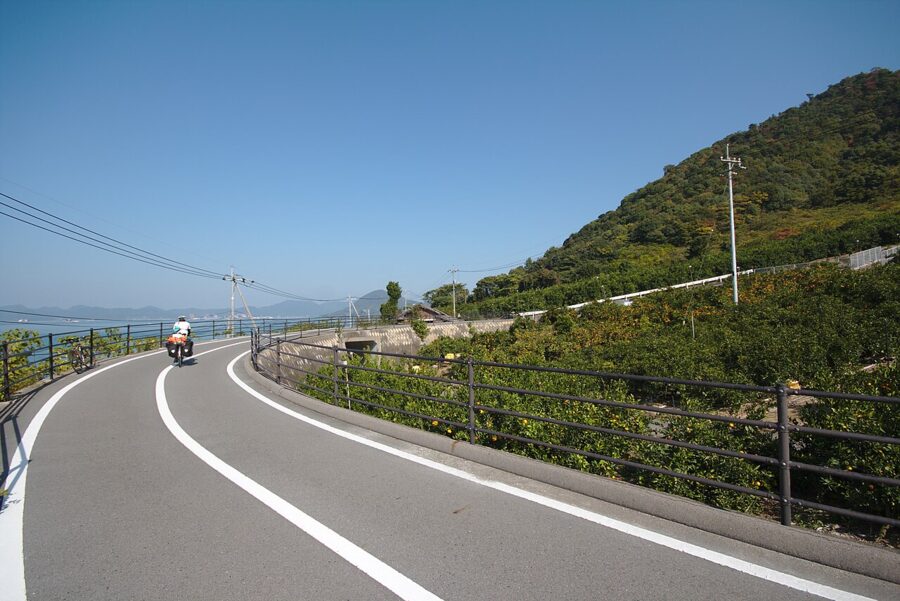
The cycle route and the expressway part company on every island: the motorway runs on viaducts through the hills, and the bike route follows quieter roads, usually along the coast, before climbing back up to the next bridge. The official length is about 70 km from the Imabari Itoyama terminal to the terminal by Onomichi Station. Roughly 30 km of that gets you to Setoda, about 9 km more takes you over Tatara Bridge to the roadside station on Ōmishima, and the last 30 km or so cross Hakatajima and Ōshima to Imabari.
Onomichi to Mukaishima: take the boat
The Shin-Onomichi Bridge, the first of the expressway bridges, has no cycle path at all, and the older Onomichi Bridge beside it has a narrow pavement and heavy traffic. The bridge company and the city both send cyclists to the ferries instead. Two crossings still run after the Fukumoto ferry closed at the end of March 2025: the Ekimae ferry from the pier by the station and the Kaneyoshi ferry from Tsuchido, a little further east, both about ¥110 (about US$0.70) for an adult with a bike.
Mukaishima is flat and residential, and the route crosses it in about half an hour. Start in Onomichi early if you can: the temples on the hill and the waterfront are worth a morning of their own on the day before.
Innoshima Bridge
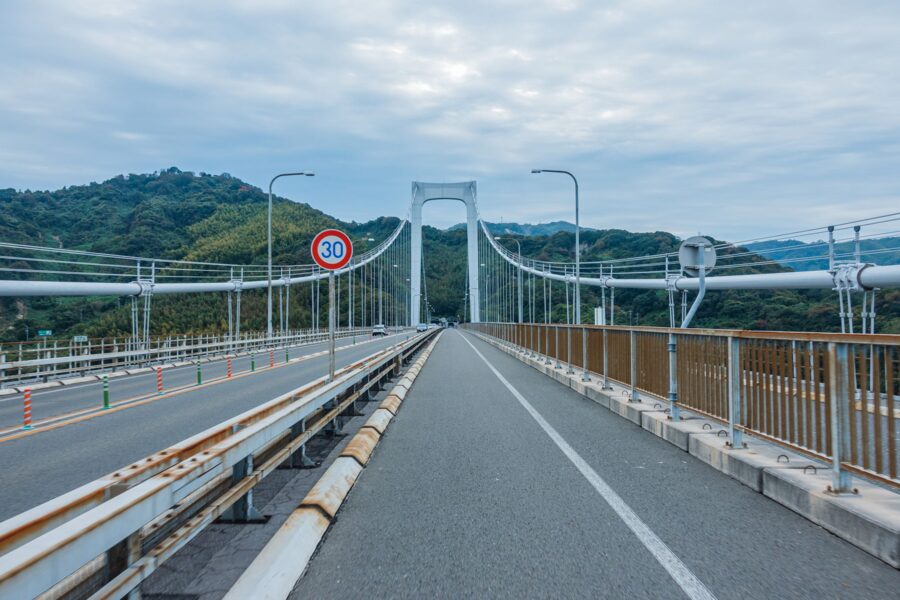
The first real bridge is a 1,270 m suspension bridge, and it is the odd one out. Cyclists ride inside the girder, on a deck slung beneath the expressway, sharing the lane with mopeds. It is noisy, slightly gloomy and oddly thrilling, with the sea flickering through the grille on both sides.
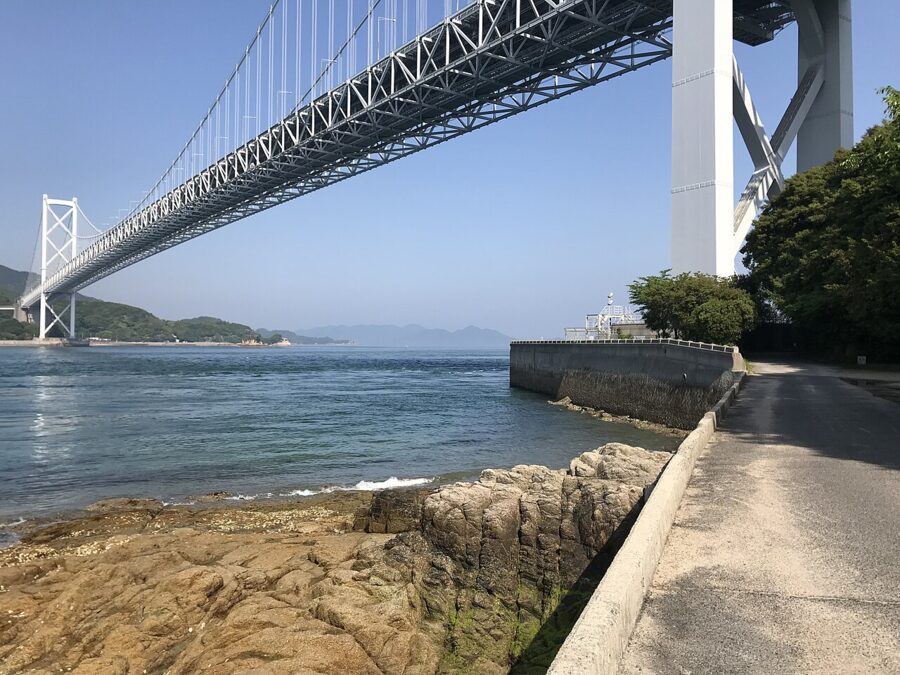

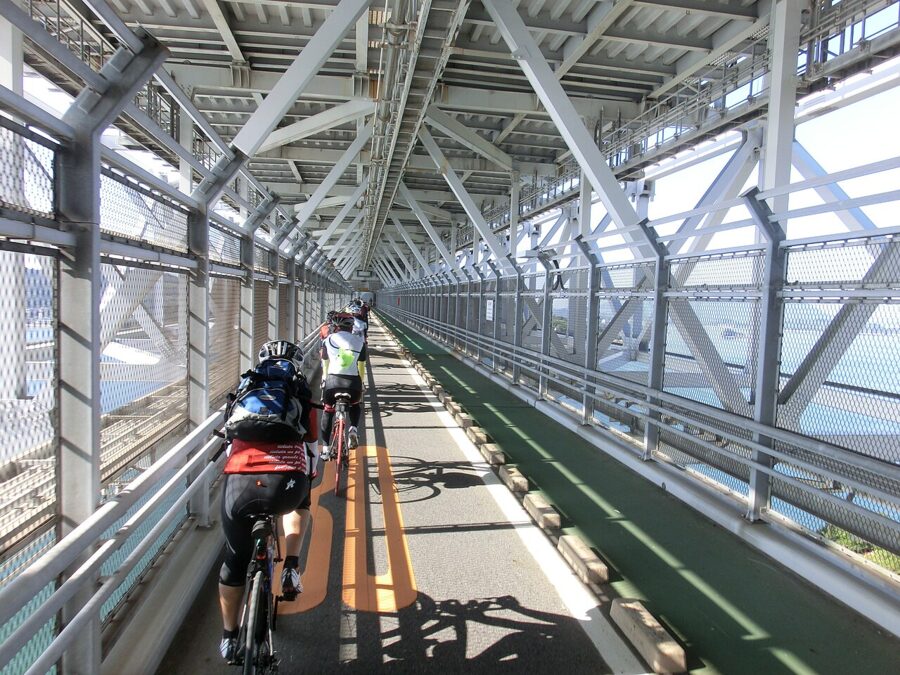

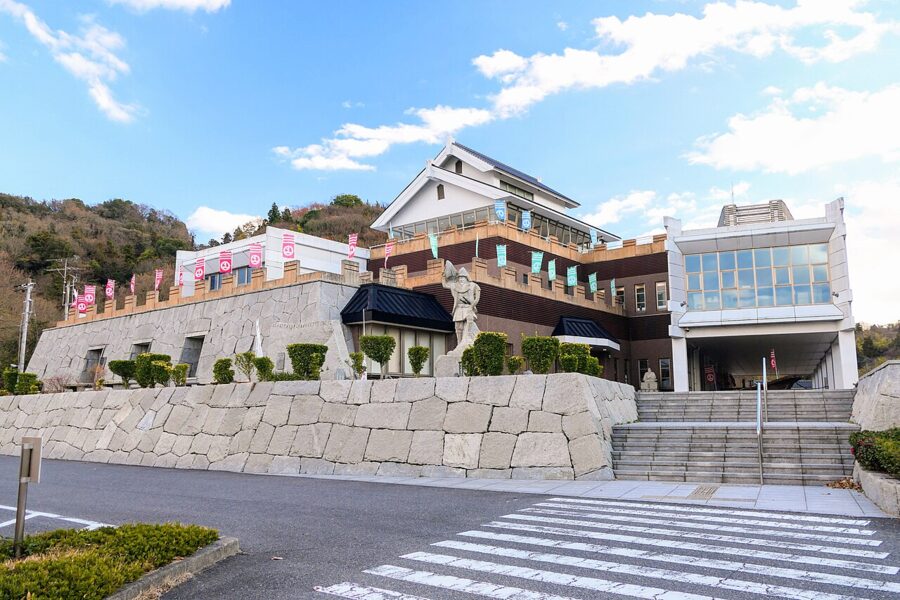
Innoshima itself is hillier than Mukaishima, and the route runs round its northern and western edges. The castle-style museum to the Murakami pirates, the clan who ran these straits in the 14th to 16th centuries, sits a short detour inland if you want history before lunch.
Ikuchi Bridge and Ikuchijima
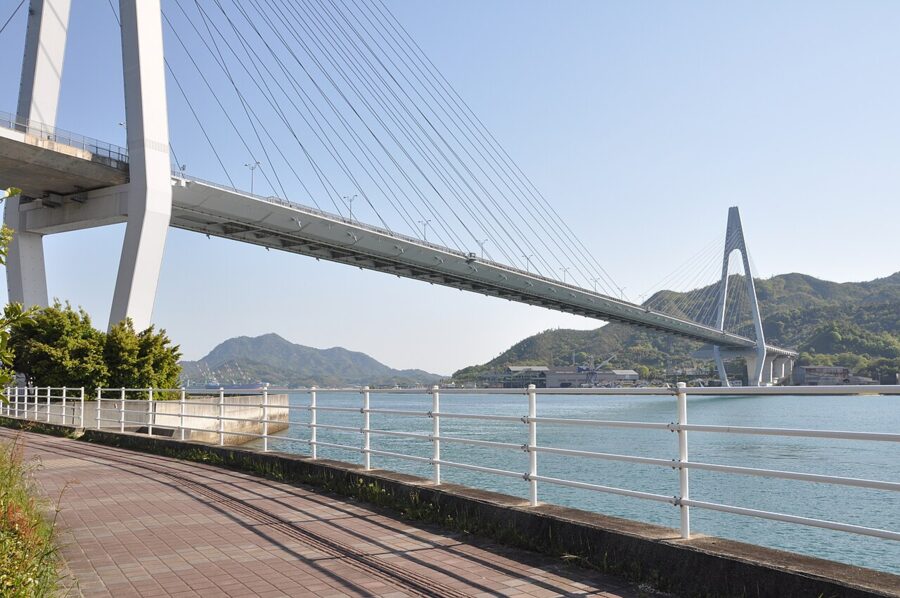
Ikuchi Bridge, 790 m and cable-stayed, was the largest bridge of its type in the world when it was finished in 1991. Here bikes share the path with pedestrians, who have priority. On the far side the route runs down to the west coast of Ikuchijima and into Setoda, the island’s harbour town and the most popular lunch stop on the whole crossing.

Tatara Bridge
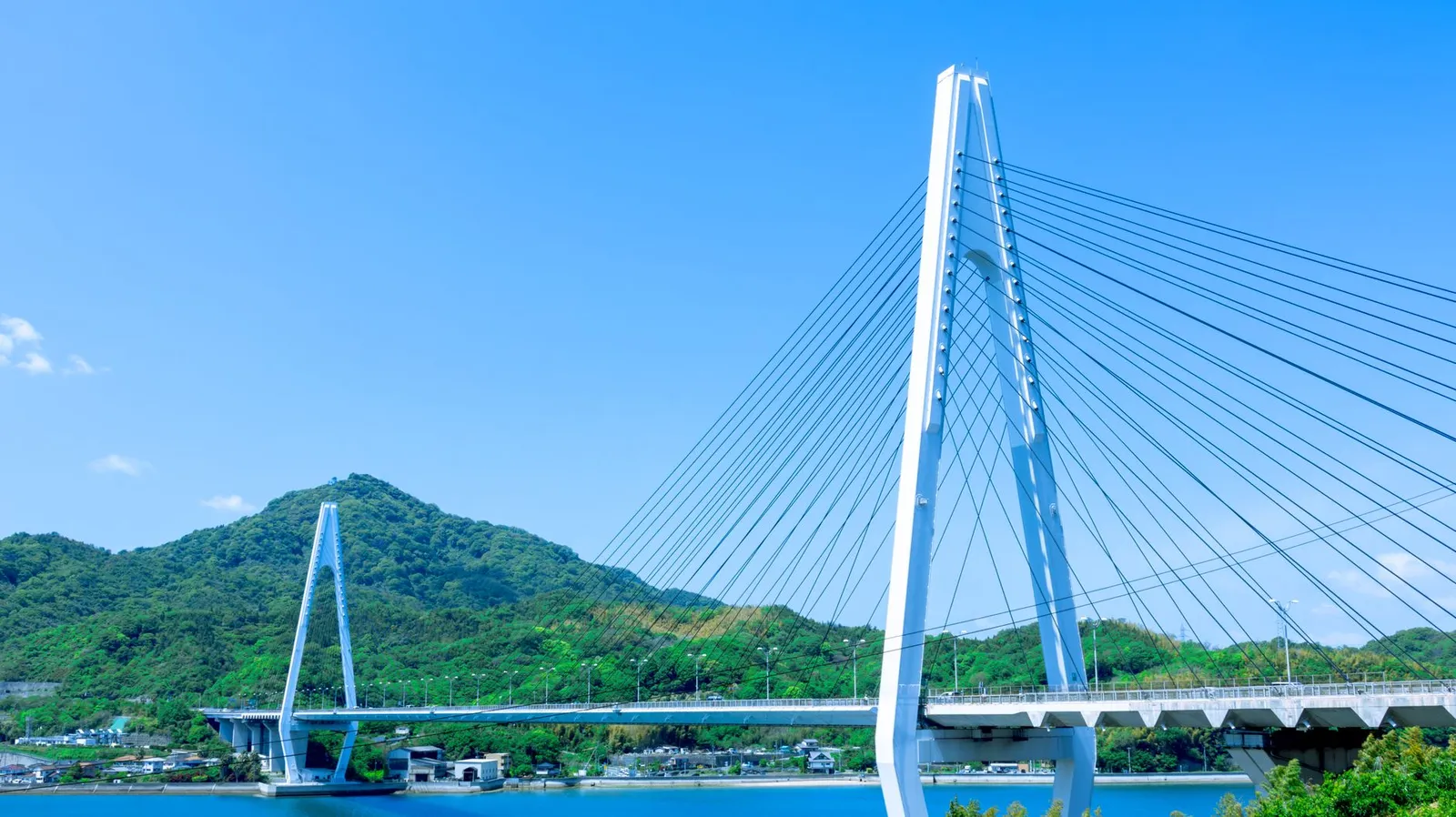
From Setoda the route follows the coast south past Setoda Sunset Beach and climbs to Tatara Bridge, 1,480 m long, opened in 1999 and the longest cable-stayed bridge in the world until 2008. A sign halfway across marks the line between Hiroshima and Ehime prefectures. Under the bridge tower, strike a pair of wooden clappers and the sound rings back off the tower: the bridge company calls it the “crying dragon”.
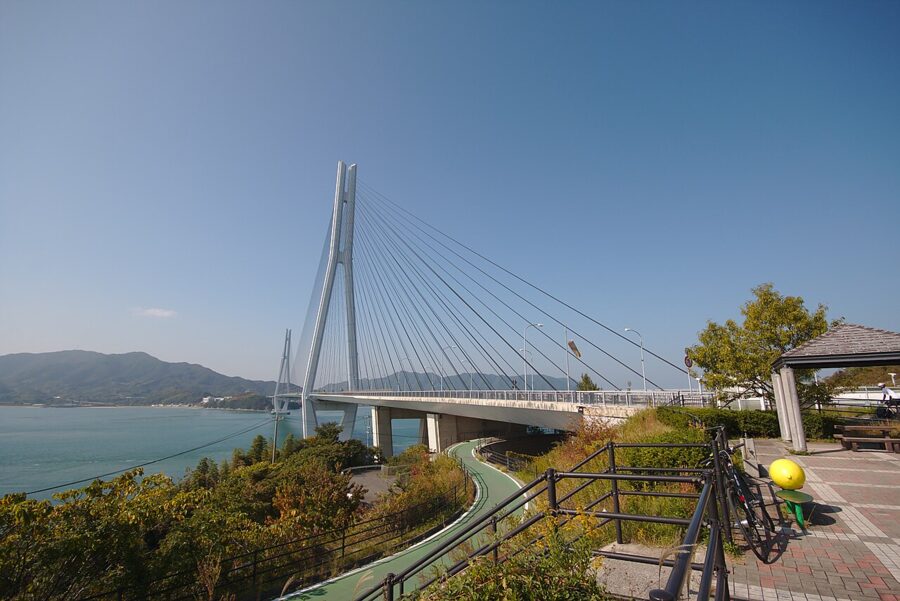

Most people rank Tatara as the best-looking bridge on the route, and I agree. If you only ride part of the Shimanami, the 9 km from Setoda over Tatara to Ōmishima is the stretch to pick.
Ōmishima Bridge and the Hakata-Ōshima Bridge
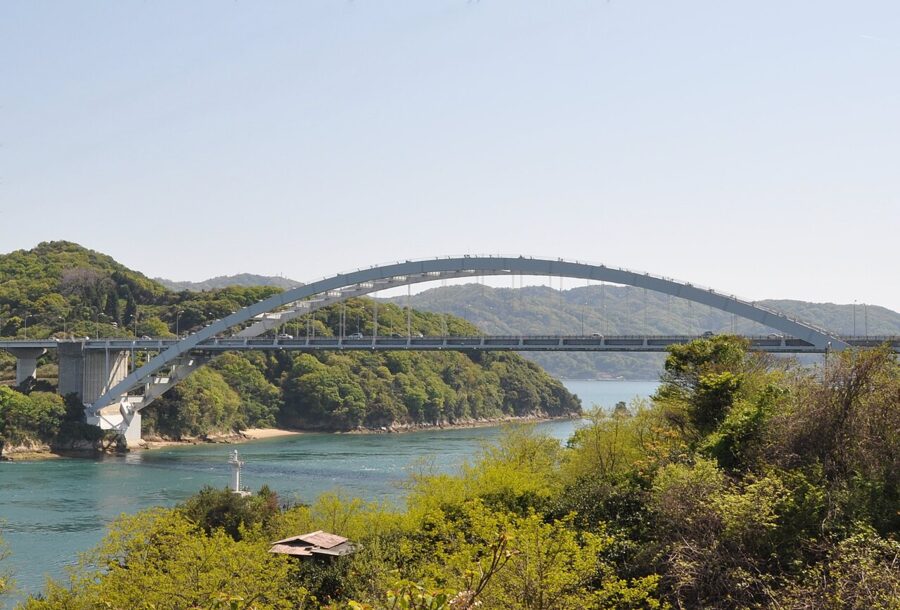
Ōmishima is the largest island on the route, but the cycle road only clips its eastern side before crossing Ōmishima Bridge, 328 m long and the only arch bridge among all the Honshu to Shikoku crossings. Look down from it: the narrow Hanaguri Strait below runs with fast tidal currents. Then comes Hakatajima, then the Hakata-Ōshima Bridge, which is really two bridges joined by a speck of island in mid-strait.

Kurushima-Kaikyō Bridge
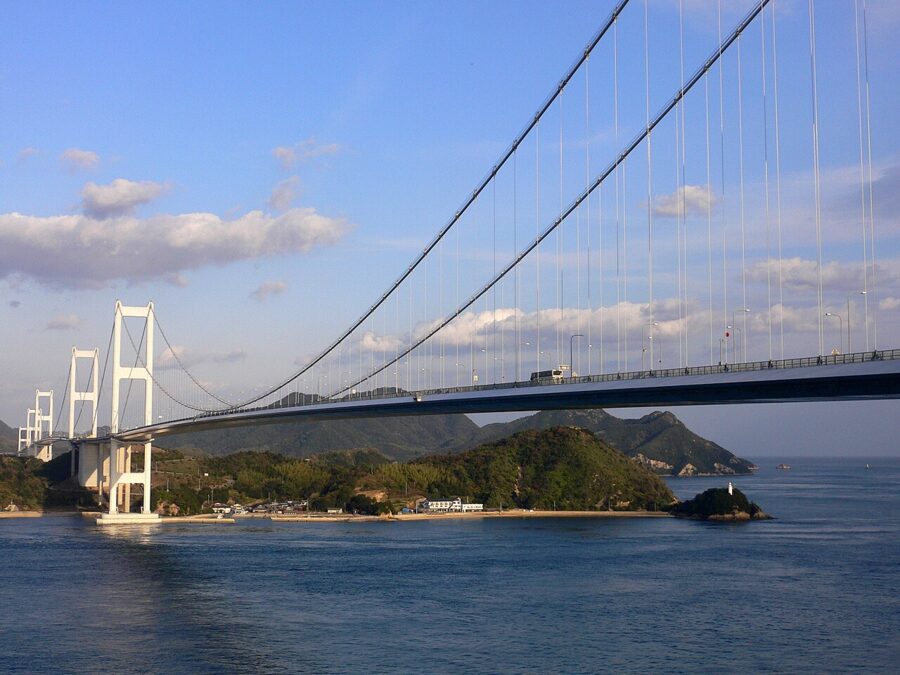
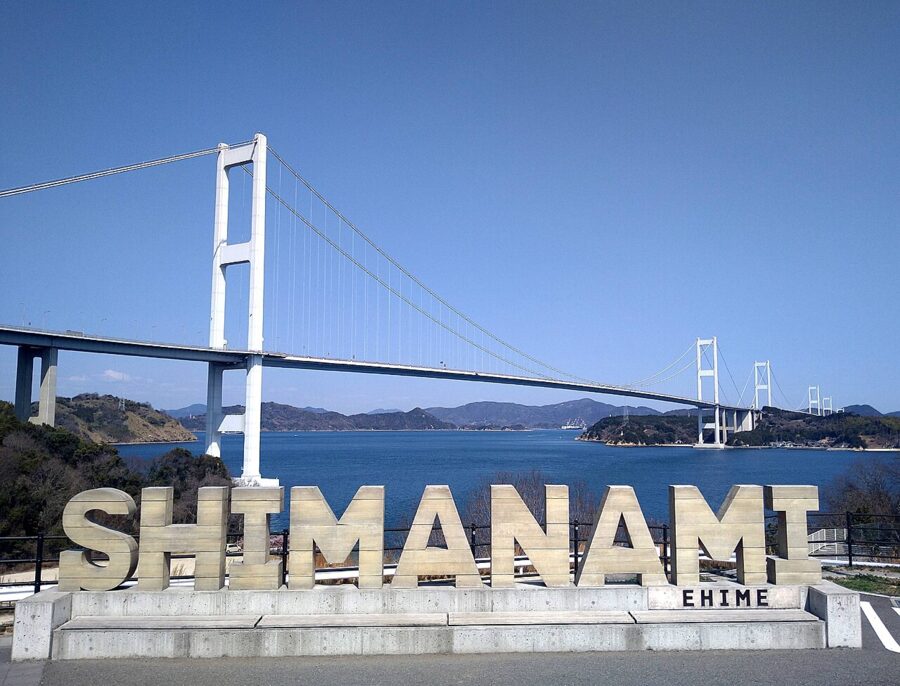
The finale is the Kurushima-Kaikyō Bridge, the world’s first triple suspension bridge, about 4 km of deck crossing three straits in one go. The road is 78 m above the sea on the two longer spans, and the path has two viewing bays that jut out over the water so you can see the bridge from the side. Below, the tide races through the strait hard enough to make whirlpools.
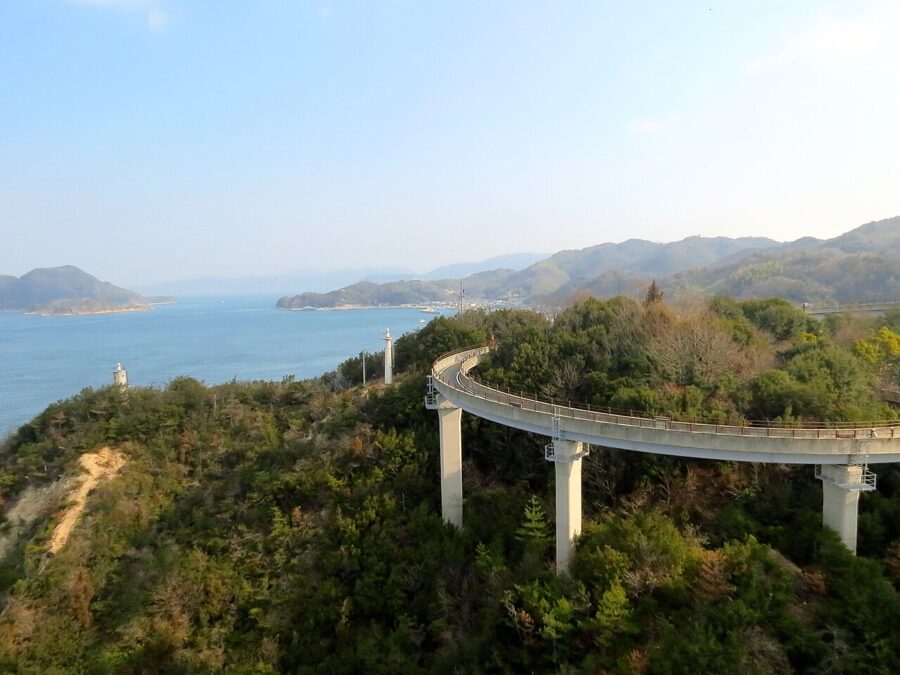
Partway across, a lift drops down to the small island of Umashima. On the Imabari end, the bike ramp spirals down the hillside in loops, the most fun descent of the day, then the route runs 7 km or so into town and the station.


Renting a bike
You do not need to bring your own bike, and most people do not. There are two rental systems, and they suit different riders.
Shimanami Japan rental cycles
The public scheme run by Shimanami Japan has ten terminals from Onomichi to Imabari and about 2,000 bikes. Standard bikes can be returned at any terminal, not just the one you hired from (the 2026 price list shows no drop-off charge for individual riders), and you can change your mind about where to finish halfway through the day. Helmets come free with every hire. Prices as of 2026, per calendar day:
| Bike | Price per day | Where to pick up | Return |
|---|---|---|---|
| Cross bike or city bike | ¥3,000 (about US$20); child ¥1,000 | All terminals | Any terminal, multi-day OK |
| Electric-assist bike | ¥4,000 (about US$26) | Onomichi Station, Setoda Tourist Information, Setoda Sunset Beach, Ōmishima, Imabari Itoyama, Imabari Station | Any terminal, multi-day OK |
| E-bike | ¥8,000 (about US$52) | Onomichi Station, Imabari Itoyama, Imabari Station | Any terminal, same day |
| Tandem | ¥4,000 | Imabari Itoyama, Setoda Sunset Beach, Ōmishima | Same terminal, same day |
Opening hours are the catch. The terminals at Onomichi Station, Imabari Itoyama and Imabari Station open 08:00 to 19:00 from March to November and close at 18:00 in winter; every island terminal keeps 09:00 to 17:00. Bikes must go back within opening hours, and there is no refund if you return one early. You can see the full price list and book online.
Book ahead for Golden Week, the Obon week in August and long weekends, when all 2,000 bikes can go out. On ordinary days some bikes are kept for walk-ins, but electric-assist bikes run out early even on weekdays, and on holiday weekends the operator says everything can be gone by about 10:00.
Giant Store
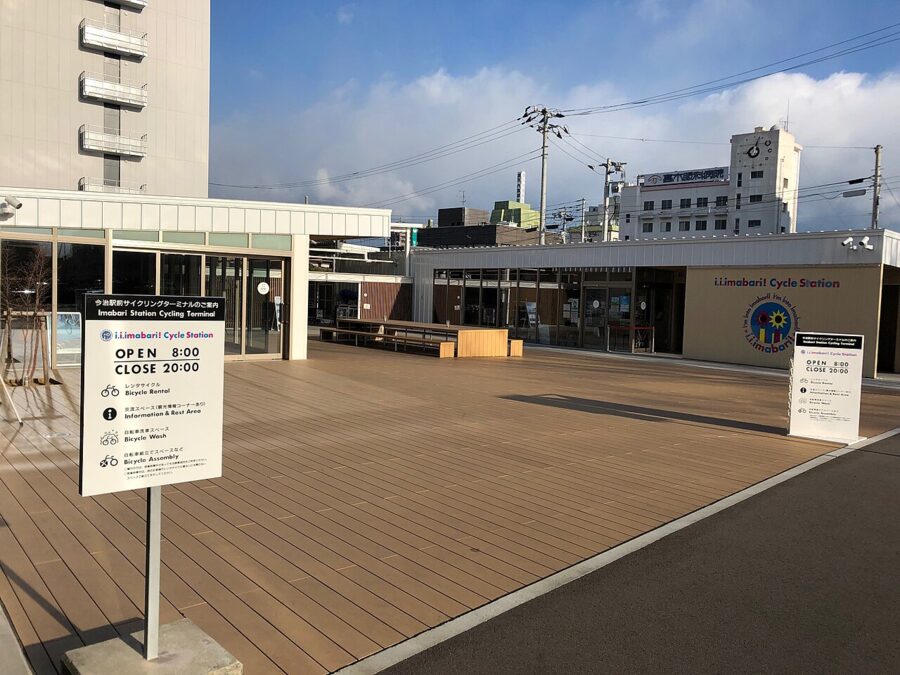
The bike maker Giant runs its own rental from two shops, one in the Onomichi U2 warehouse by the waterfront and one inside Imabari Station. The bikes are newer and lighter and come in proper sizes, which matters on a 70 km day. As of 2026 a cross bike costs ¥3,960 to ¥5,280 for a day and an aluminium road bike ¥4,950 to ¥6,600 (about US$32 to US$43), insurance included.
One-way hire is the limitation. Only road bikes can be dropped at the other shop, only between Onomichi and Imabari, in limited numbers, by reservation, for a one-way fee of ¥3,300 (about US$21). The Imabari shop closes on Tuesdays, so no one-way returns there that day. Giant’s rental line-up has the current prices and takes bookings 60 days ahead.
Electric or not
An electric-assist bike takes the sting out of the bridge ramps, and for a first-timer on a one-day crossing I would take one without a second thought. The ¥4,000 assist bikes can stay out overnight and be dropped anywhere, which makes them the obvious choice for a two-day ride; batteries can be swapped at Setoda and on Ōmishima. The ¥8,000 e-bikes are sportier but must be returned the same day. If you would rather ride an e-bike with someone local, the half-day private e-bike tour from Onomichi runs three shorter routes around Mukaishima and Ikuchijima, with ferries doing some of the work (on Viator).
Tolls, rules and the blue line
Bicycles ride free. Under a scheme called Shimanami Cycling Free, the bicycle tolls on all six charging bridges have been waived, and in March 2026 Hiroshima Prefecture announced the waiver had been extended to 31 March 2028. Mopeds still pay. If it ever lapses, the normal bike tolls are small: ¥50 each for Innoshima, Ikuchi, Ōmishima and Hakata-Ōshima, ¥100 for Tatara and ¥200 for Kurushima, ¥500 (about US$3) in all.
The bridge company’s rules for the cycle paths are short and sensible. On the three bridges shared with mopeds (Innoshima, Ōmishima and Hakata-Ōshima), ride single file within the speed limit. On the three shared with walkers (Ikuchi, Tatara and Kurushima), pedestrians come first. The ramps up to the cycle paths start at their own entrances, not at the expressway junctions, so follow the signs rather than the cars.
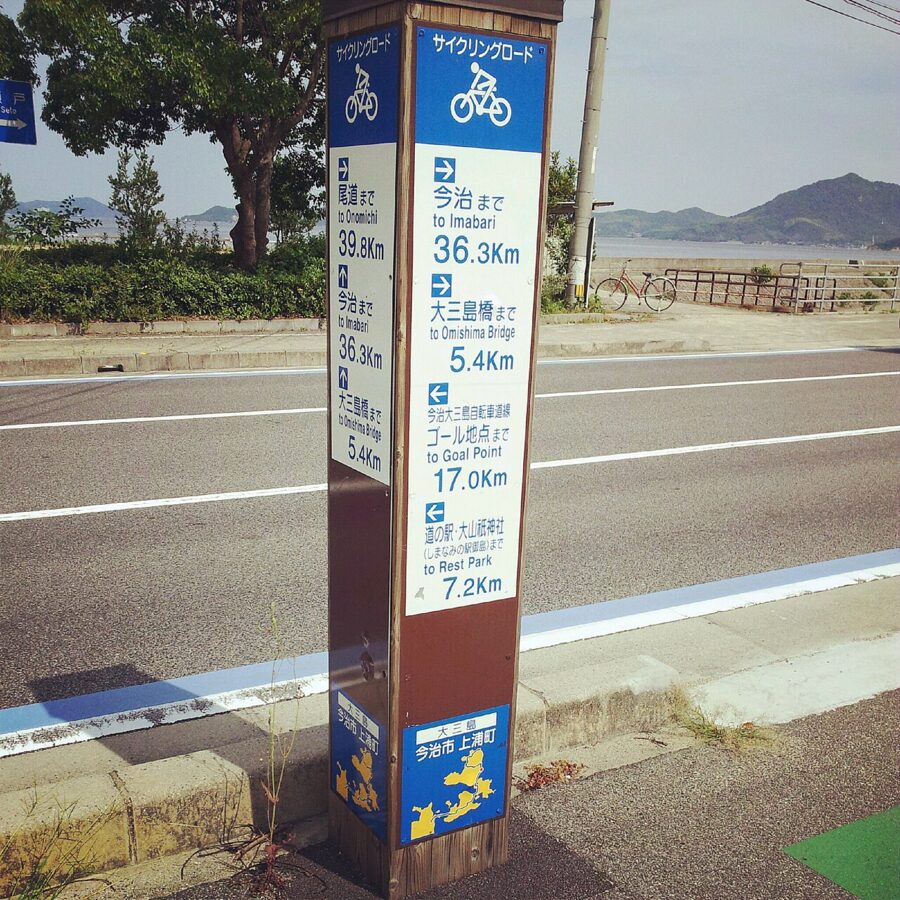
Off the bridges, a blue line painted along the edge of the road marks the whole route, with distances to Onomichi and Imabari printed on it. Bikes are vehicles under Japanese law: keep left, never ride two abreast, and leave the phone and the umbrella alone, both of which can get you fined. The rental terms ban riding after dark, and you would not want to anyway; the islands have few streetlights.
About 140 “cycle oasis” rest stops, many of them ordinary shops, petrol stations and guesthouses, will let you refill water, use the toilet or borrow a pump. There are no shops on the bridges, so fill your bottles on each island.
Where to stop
The islands are not a backdrop. Each has a reason to get off the bike, and a one-day rider has to choose.
Setoda: lemons, a marble hill and a painter
Setoda is the centre of Japan’s lemon country. Hiroshima Prefecture grows about half of all Japanese lemons, and the groves on Ikuchijima and the neighbouring islet of Kōneshima are a big part of that. You will see lemons in everything here: cakes, ice cream, sodas and the odd unmanned stall by the road.
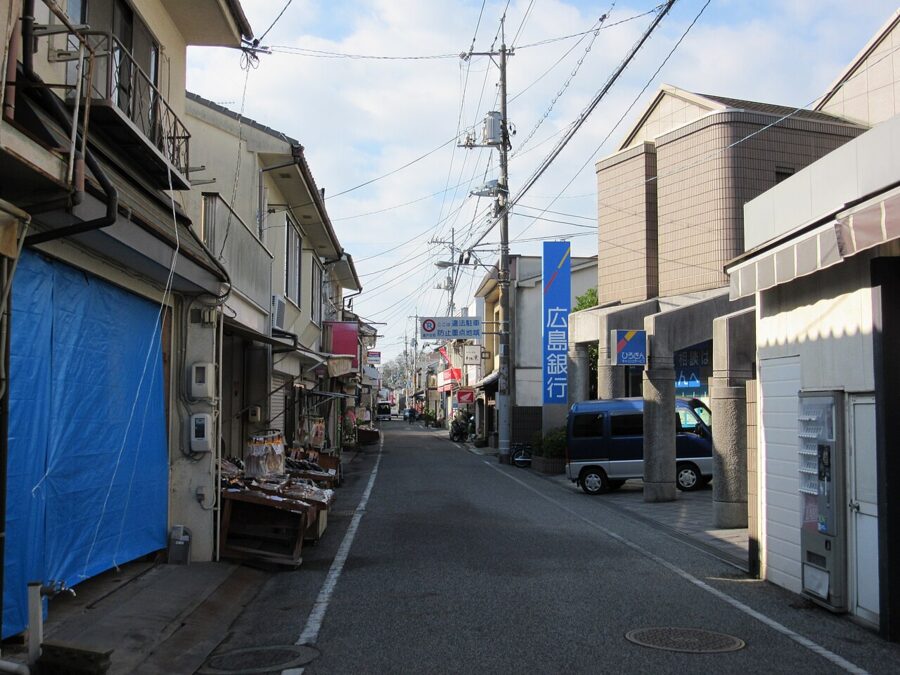

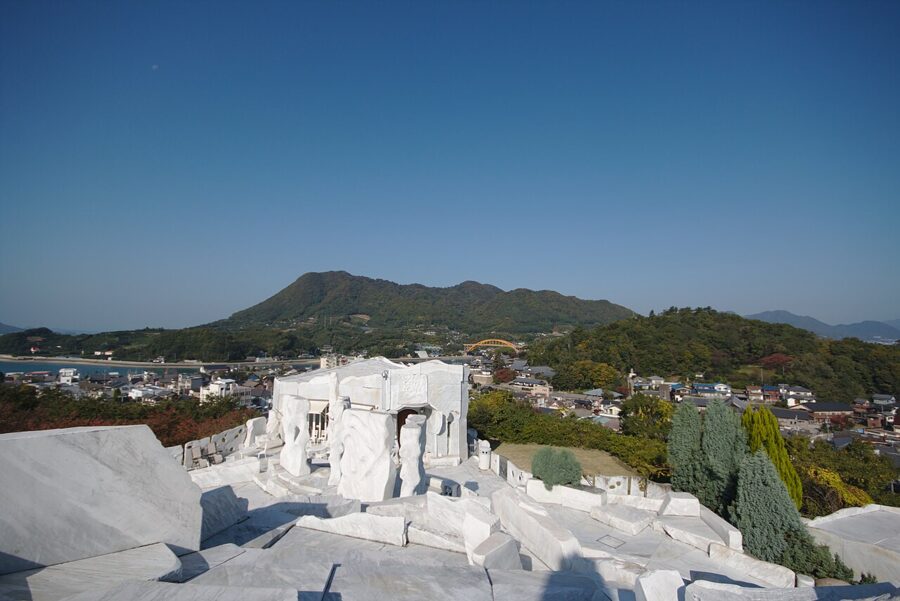
At the top of the street is Kōsan-ji, founded in 1935 by a businessman turned priest, Kanemoto Kōzō, in memory of his mother. He spent more than 30 years filling it with copies of famous temple buildings from around Japan, painted in the bright colours of Heian-era temples; fifteen of them are now registered cultural properties. Above it is the Hill of Hope (未来心の丘, Miraishin no Oka), a 5,000 m² garden of white Carrara marble by the sculptor Kazuto Kuetani.
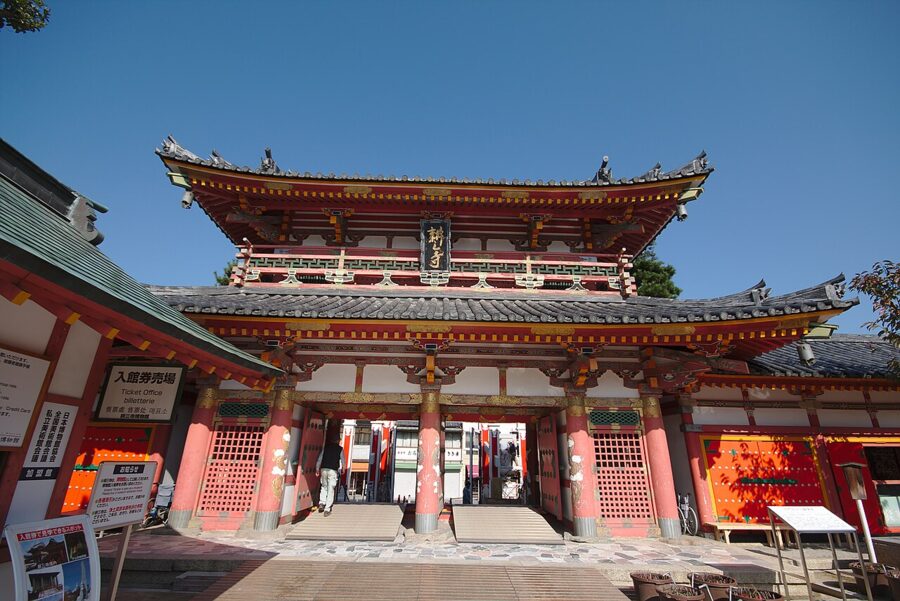


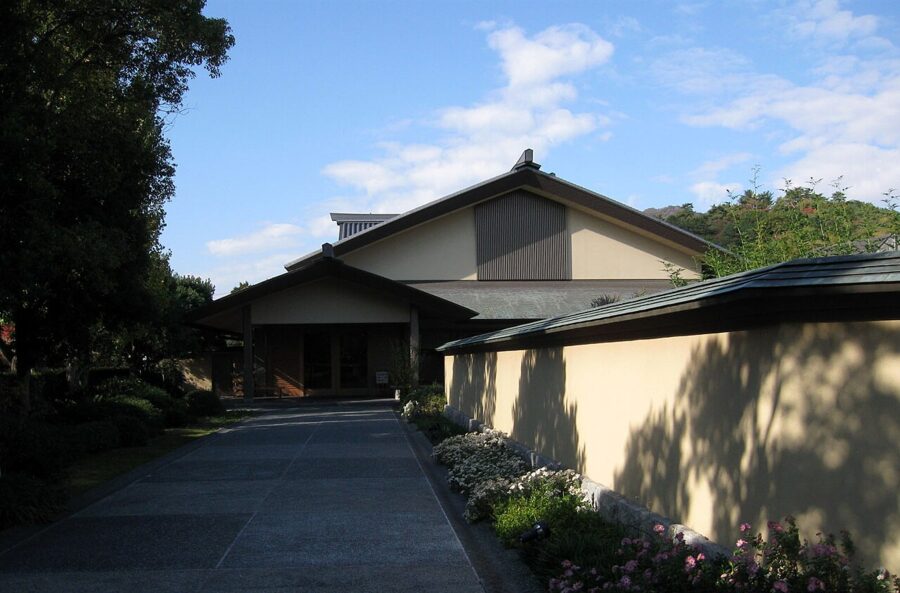
As of 2026 Kōsan-ji’s museum and garden are open daily 09:00 to 17:00, and admission is ¥1,800 (about US$12) for adults and ¥1,200 for high school and university students. A few minutes’ walk away, the Hirayama Ikuo Museum of Art is devoted to the painter born in Setoda, best known for his Silk Road pictures; it holds the 60 watercolours he painted for the opening of the Shimanami Kaidō, and opens 09:00 to 17:00 (last entry 16:30).

Ōmishima: the shrine and the cyclists’ monument
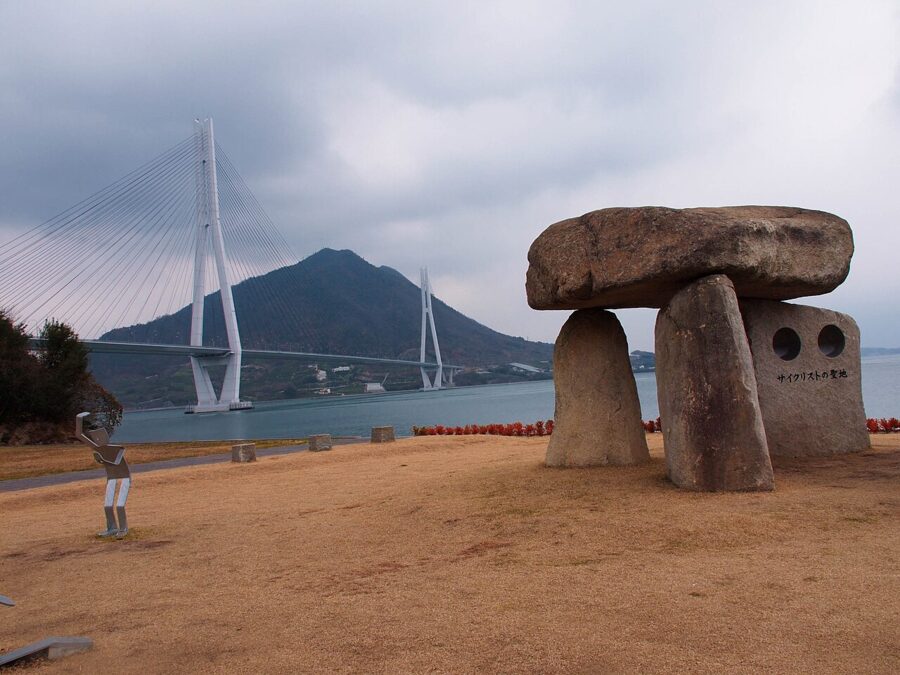
Just over Tatara Bridge is the Tatara Shimanami Park roadside station, which doubles as the Ōmishima rental terminal. In front of it stands a stone monument put up in 2014 to mark the route as a “cyclists’ sanctuary” and its sister agreement with the cycle route round Sun Moon Lake in Taiwan. It is carved from Ōshima stone, quarried in Imabari, and the operator describes the two holes as wheels and the stone on top as a saddle.

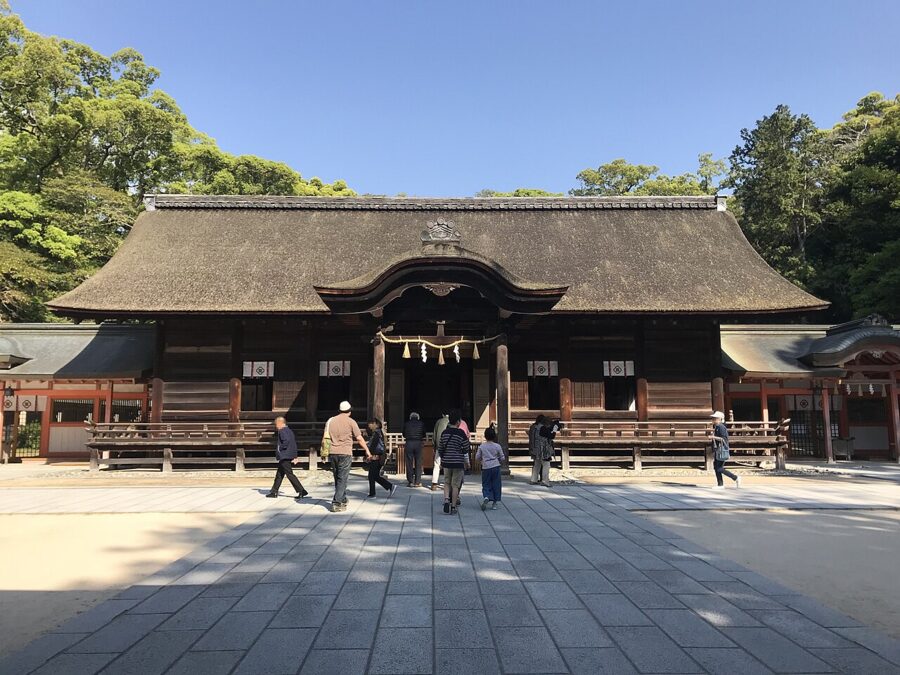
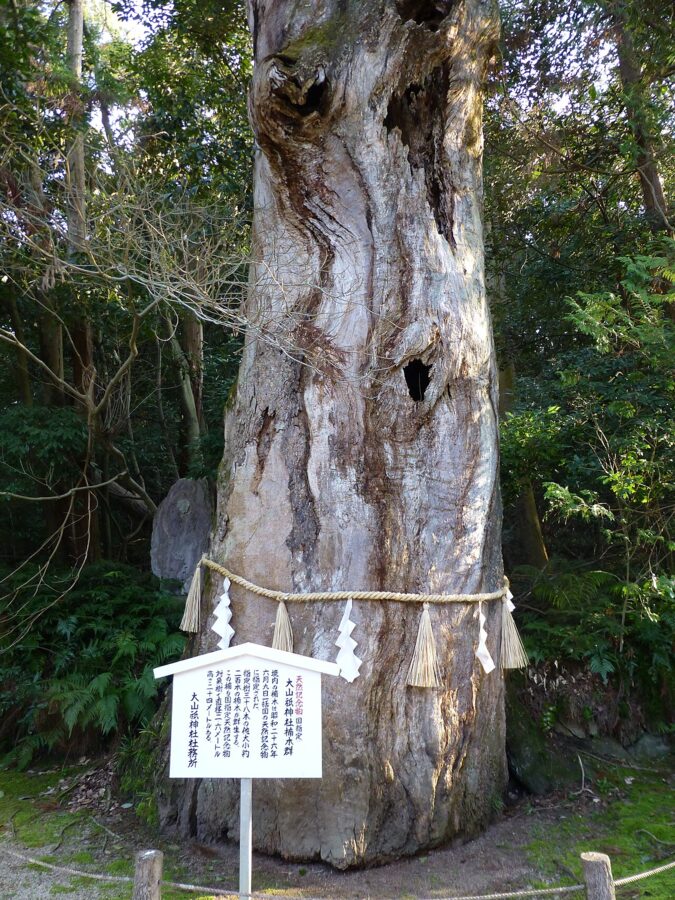
Ōyamazumi Shrine (大山祇神社) is the reason to give Ōmishima more time. It is the shrine of Ōyamazumi, god of mountains and the sea, and for centuries warriors left their armour and swords here as offerings. The shrine’s treasure hall holds about 80 percent of all the arms and armour in Japan designated as National Treasures or Important Cultural Properties, and as of 2026 it opens 09:00 to 16:30, last entry 16:00.


Hakatajima
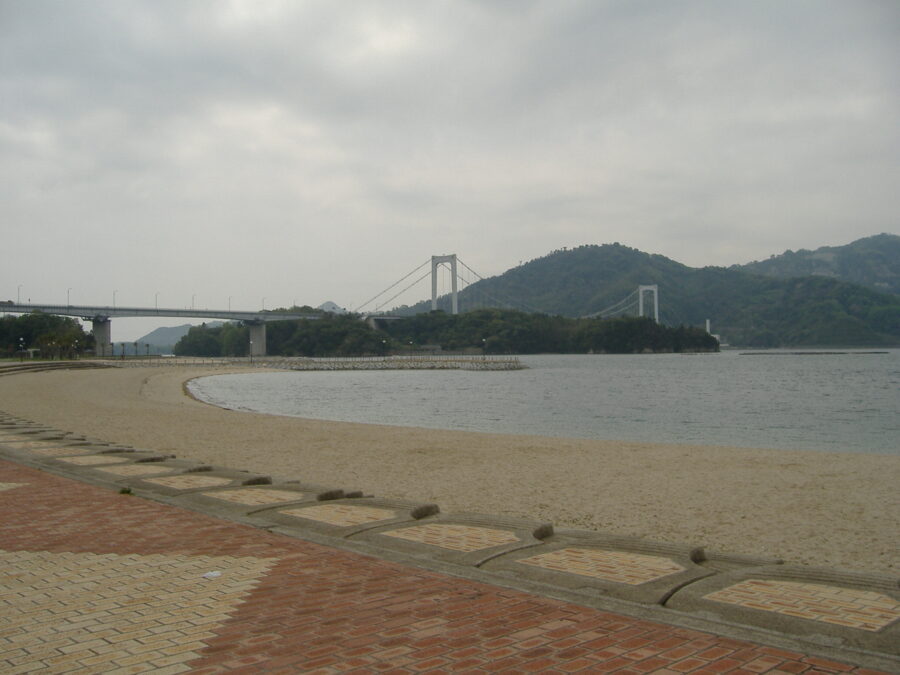
Hakatajima is small and quick to cross, and its name is on bags of salt in kitchens all over Japan. The Hakata S.C. Park roadside station, with the island’s rental terminal and a beach facing the Hakata-Ōshima Bridge, is the natural stop. Salt ramen is the island lunch; Giant’s own staff route around here is built on it.

Ōshima: Kirōsan and the strait
Ōshima is the last island and the biggest climb on the route, if you choose to make it. Kirōsan Observation Park sits on a summit a little over 300 m high at the island’s southern tip, and the road up is steep. From the top you look down on the whole Kurushima-Kaikyō Bridge and the islands scattered through the strait.
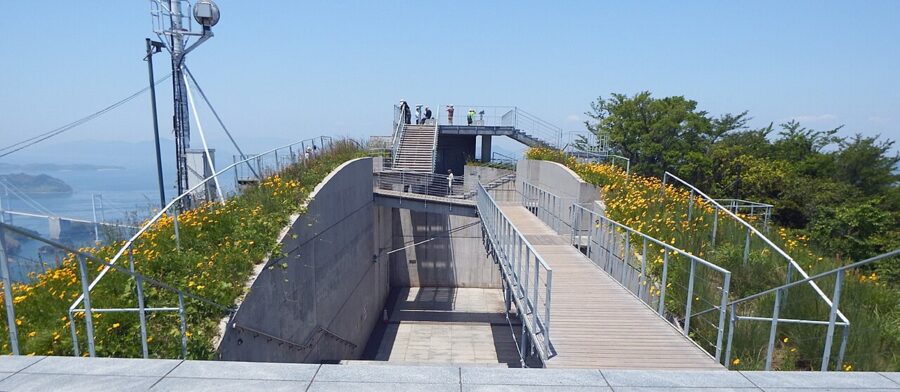
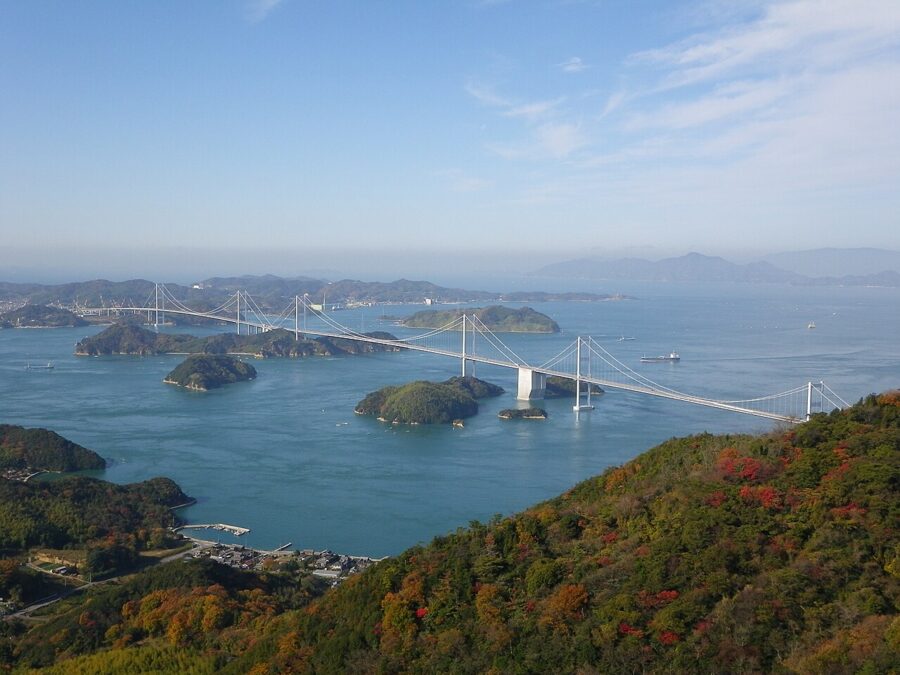

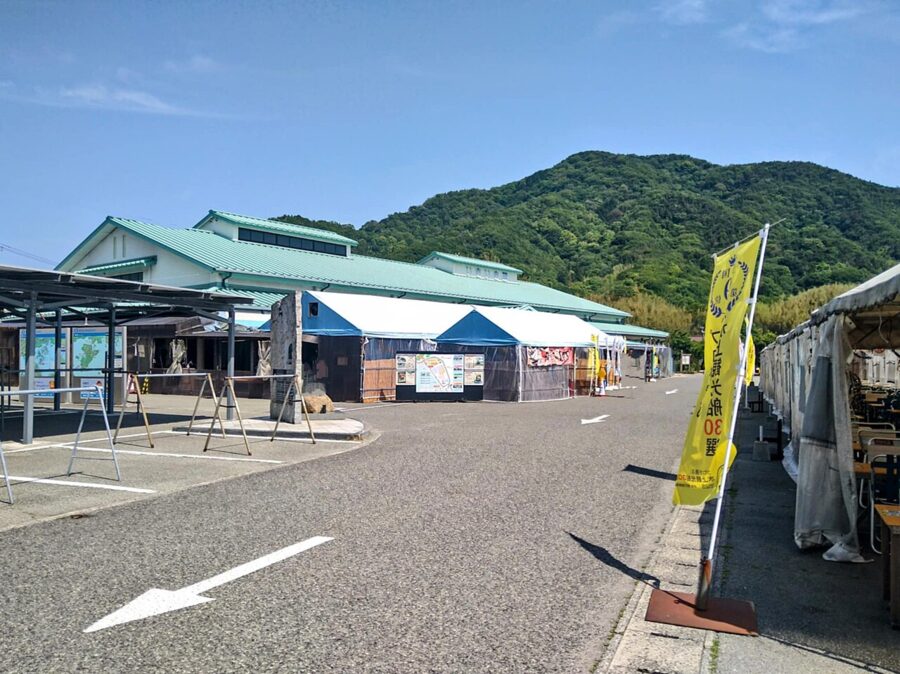
Down at the foot of the bridge, the Yoshiumi Ikiikikan roadside station has the Ōshima rental terminal, a market and places to eat. Across the island at Miyakubo, the Murakami Kaizoku Museum tells the story of the pirate clan who controlled these waters; it opens 09:00 to 17:00, costs ¥310 (about US$2) and closes on Mondays. It is well off the cycle route, so it suits a two-day ride better than a one-day one.
Where to sleep halfway, and what to do with your luggage
For a two-day ride, Setoda on Ikuchijima is the easiest place to stay: the most food, the most rooms and the temple on your doorstep. The town has everything from small guesthouses and old inns to the newer Azumi Setoda and yubune. Ōmishima is quieter and a few kilometres further on, with inns around Miyaura near the shrine and a cluster of small places at Inokuchi near Tatara Bridge, including WAKKA.
For bags, Sagawa Express runs a hands-free cycling service between partner hotels at both ends and on the islands: ¥2,200 (about US$14) per bag up to 160 cm in total dimensions and 30 kg, handed in by 09:00 (10:00 at the Ehime partners) and collected after 18:00 at the other end. The partner list includes most of the Setoda and Ōmishima places above, so you can ride two days with nothing but a day pack.
The other option is Onomichi Base’s Shimanami Teburabin, which carries bags between its Onomichi shop and lodgings on the islands and in Imabari the same day. Prices start at ¥1,500 per bag and run to ¥4,500 (about US$29) for Onomichi to Imabari; book by 16:00 the day before and hand the bag over by noon. In Imabari it only delivers to lodgings within 2 km of the station.
If you are riding one way in a day and carrying on by train, there are coin lockers at Onomichi Station, the island ports and Imabari Station. Showers cost ¥100 for five minutes beside Onomichi U2 and ¥500 at Imabari Station, and the Giant shop in Imabari lets its own renters shower free.
Getting back to Onomichi
Nothing links Imabari and Onomichi directly on a regular basis, so the usual way back is the bus, with one change. The Shimanami Liner runs between Imabari Station and Fukuyama Station about 17 times a day, and since 1 October 2026 every seat must be booked in advance. Take it as far as the Innoshima Ōhashi stop (about 50 minutes, ¥1,800 or about US$12) and change to the local bus into Onomichi Station (just under half an hour). Chugoku Bus’s Shimanami Liner page has the connection timetable.

Bringing your own bike back on the bus means packing it into a bike bag; the bus company only takes bagged bikes in the luggage hold, and only if there is room. That is the strongest argument for renting and dropping off at Imabari. The Shimanami Liner goes on to Fukuyama for the Shinkansen (¥3,300 from Imabari, about US$21), and from Imabari Station the JR limited express Shiokaze runs to Okayama.
From the halfway point, the boat is better. Setouchi Cruising sails between Setoda port and Onomichi Station pier in about 40 minutes, calling at a couple of small ports on Innoshima; as of 2026 the fare is ¥1,500 (about US$10) plus ¥500 for a bike, and bikes roll straight on. Check the current Onomichi to Setoda timetable before you plan around it, because sailings are spaced out and the last boat leaves Setoda in the late afternoon or early evening.
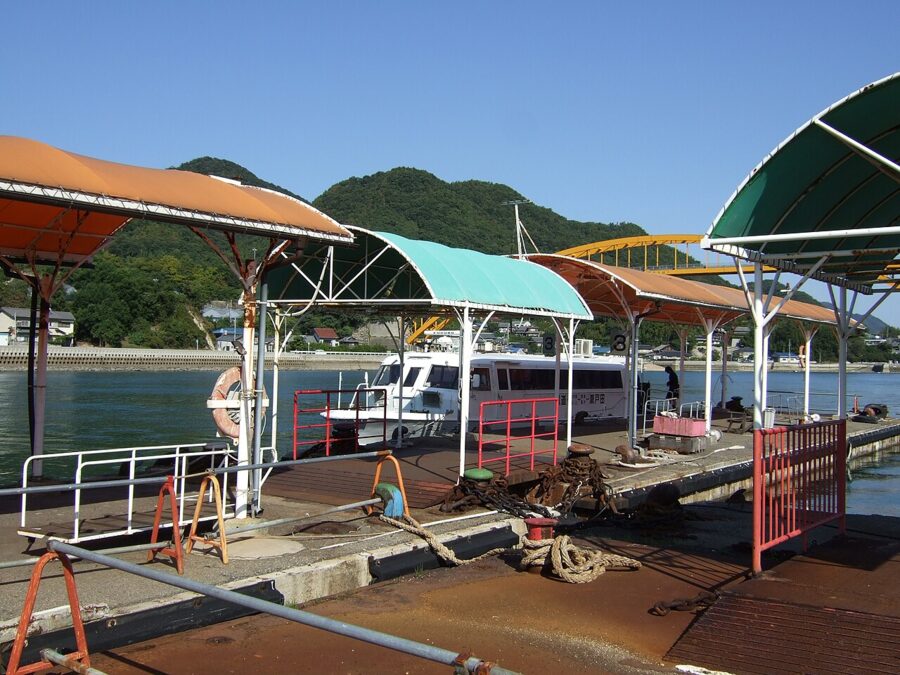

In autumn 2026 the cycle ships, boats you can wheel a bike straight onto, also ran special sailings around the islands on a one-day Shimanami Cruising Pass. They have run as seasonal trials rather than a year-round service, so check whether they are sailing when you go.
Without a bike: buses, boats and guided rides
You can see a lot of the Shimanami without pedalling at all. The Shimanami Liner stops at Setoda, Ōmishima, Hakatajima and Ōshima on its way between Imabari and Fukuyama, so a non-cyclist can hop between islands on the express bus, though the island stops are at the expressway, not in the towns. Combine it with the Setoda boat and you can do Onomichi, Setoda and Kōsan-ji in a day with no bike.
Families, or anyone who wants the islands with less riding, might look at the relaxed island-hopping day from Onomichi, which mixes short rides on Mukaishima, Innoshima and Ikuchijima with ferries and free time in Setoda (on Viator). It is a gentler way to get the feel of the route in summer heat.
If you are building the Shimanami into a longer trip, Onomichi is about an hour from Hiroshima by Shinkansen to Fukuyama and a short hop west on the JR Sanyo Line. It slots into a Hiroshima itinerary as a two-day side trip, and Mihara, a Shinkansen station a few stops west of Onomichi on the Sanyo Line, is the other way in. The rabbits of Okunoshima are a boat ride from the same coast, if you have a spare day.
Weather and when to go
The Inland Sea is one of the drier corners of Japan, but the weather still shapes the ride. Spring (late March to May) and autumn (October and November) are the best seasons: mild, clear and comfortable for a long day. They are also the busiest, so book the bikes.
June and early July bring the rainy season, and high summer is hot and humid, with almost no shade on the bridges. If you ride in July or August, start at 08:00, carry more water than seems sensible and plan a long lunch in Setoda. Late summer and early autumn are typhoon season; strong wind is the thing to watch, because the bridges are much windier than the islands. Winter is cold on the bridges but often clear, with empty roads; bring gloves and remember the island terminals still close at 17:00.
Check the date of Cycling Shimanami, the mass ride held on the route in autumn. In 2026 it fell on 25 October, with 7,000 riders and the expressway closed to traffic for the morning; that is a wonderful day to take part and a crowded one to ride on your own.
Whichever season you pick, the start is the same. Pick up the bike by Onomichi Station at 08:00, walk it three minutes to the pier, and be on Mukaishima before the first tour group has finished its coffee. The blue line takes it from there.