
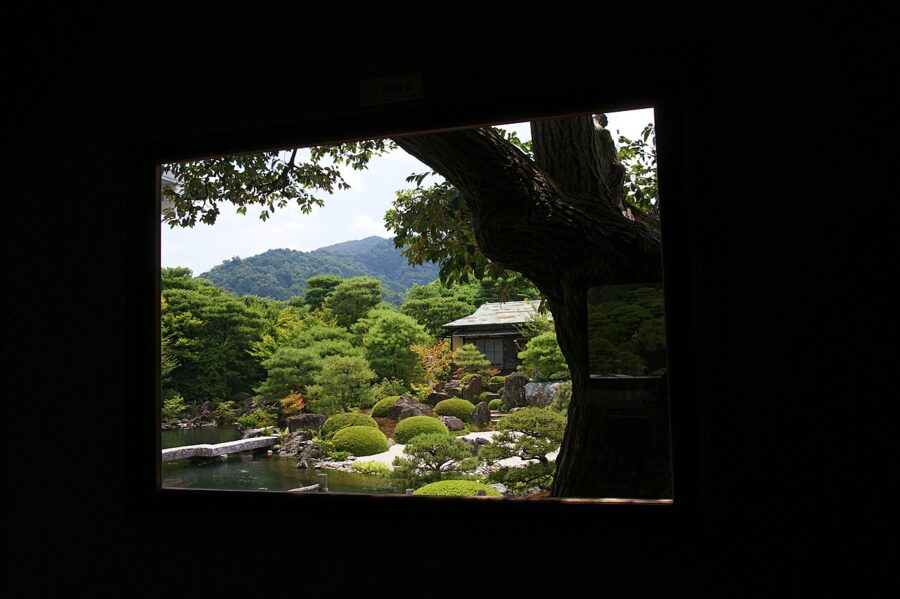
Somewhere in the main building of the Adachi Museum of Art there is a window with a thick black frame and nothing hanging in it. Through it you see pines, a curve of raked white gravel and a wooded hill, and the picture is never the same twice: cloud crosses the hill, a gardener steps out of shot, the light moves. The museum calls it a living framed painting (生の額絵, iki no gakue), and once you have seen one you start noticing how many other windows here have been placed to do the same job.
The garden behind those windows has been ranked the best in Japan every year since 2003 by an American journal that surveys around a thousand Japanese gardens, 23 times in a row as of the ranking published in August 2026. You are not allowed to set foot in it. You look at it from corridors, a café, a tea room and those framed windows, and then you go indoors to one of the country’s great collections of modern Japanese painting, built around Yokoyama Taikan.
It sits in the farmland outside Yasugi (安来), in the east of Shimane, a half day from Matsue or Yonago by train and a free shuttle bus. Give it two to three hours, come early, and if you can choose, come in late November for the maples or in a snowy week in January. Rain is fine too: you are under a roof the whole time.
On this page8 stops
- Is it worth the trip, and how long to give it
- How the garden works
- Inside: Yokoyama Taikan and the painters
- Tickets, hours and the photography rule (as of November 2026)
- Getting there: the free shuttle from Yasugi
- Eating at the museum
- After the museum: loach dancing, a castle mountain and a temple
- Fitting it in with Matsue and Yonago



Is it worth the trip, and how long to give it
If you like gardens, Japanese painting or simply looking at something beautiful in silence, yes, and I would plan a day around it. If what you want is to walk among ponds and stepping stones, it will frustrate you: this is a garden for viewing, not strolling, and the paths you see belong to the gardeners. For a garden you can wander, look at Yushien on Daikonshima instead (more on it below).
The museum suggests at least two hours, and that is the minimum. There is no last admission time, but every part of the building, the shops and cafés included, closes at closing time, and you cannot leave and come back in on the same ticket. Two and a half hours covers the garden windows, the main galleries and Rosanjin Hall at an easy pace; add an hour for lunch or the tea room.
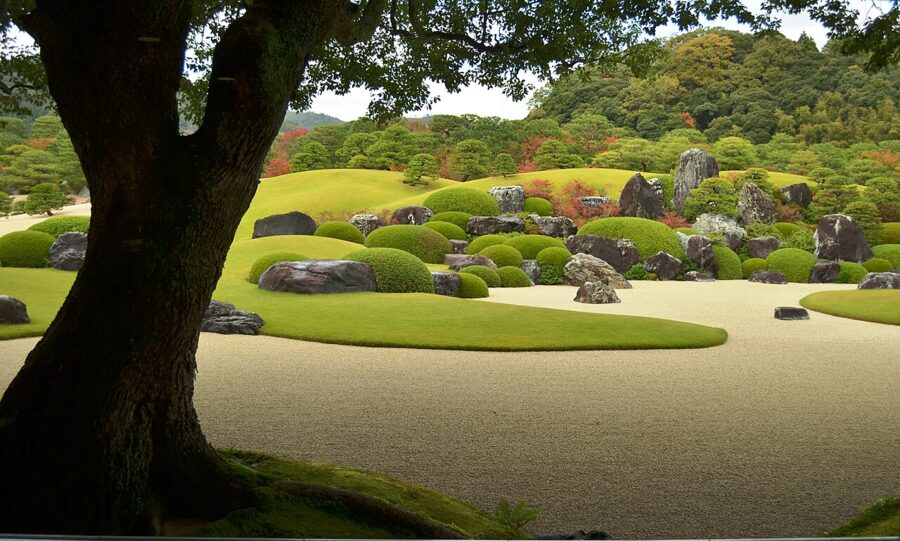
Every season has its look. Autumn is the most popular and the busiest, and in autumn the museum warns of queues at the ticket window. Snow on the pines is the other great sight, and summer gives the deepest greens. Whatever the month, I would take the first shuttle of the day and see the windows before the tour coaches start arriving.
How the garden works
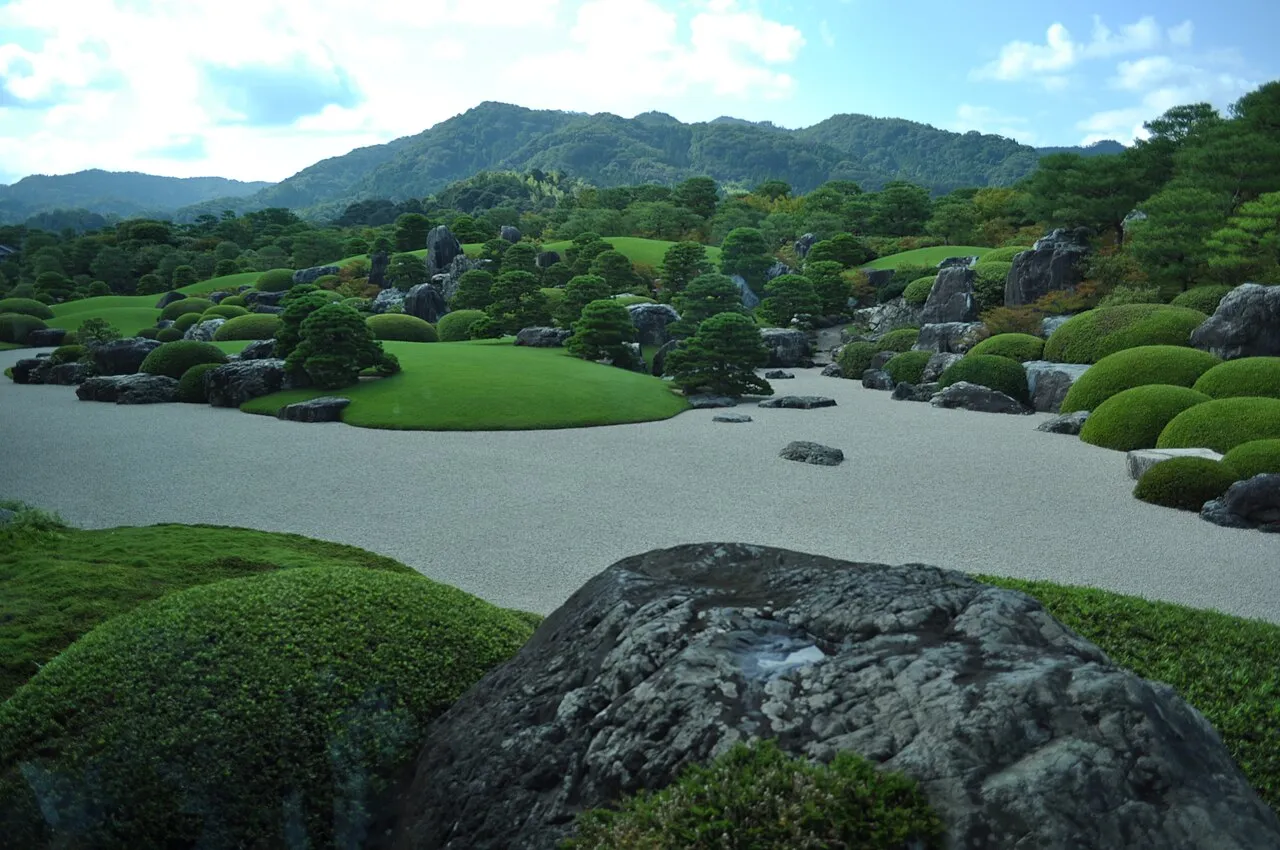
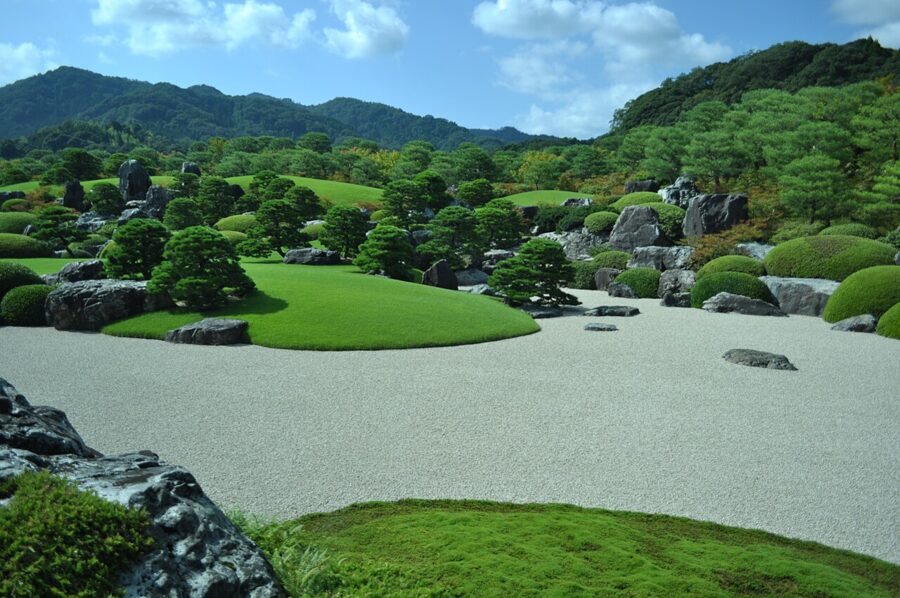
The founder, Adachi Zenkō, liked to say that a garden is also a painting, and he kept working on his until he died at 91. The gardens cover about 165,000 square metres, or 50,000 tsubo, and that figure includes the wooded hillside behind them. Using hills beyond a garden’s edge as part of the view is an old Japanese technique called shakkei (借景, borrowed scenery); here much of that hillside lies within the museum’s grounds, so nothing jars on the skyline.
There are several gardens, each seen from a different part of the building. The museum’s own garden pages name six views worth finding, and it pays to go round slowly and look for each one.
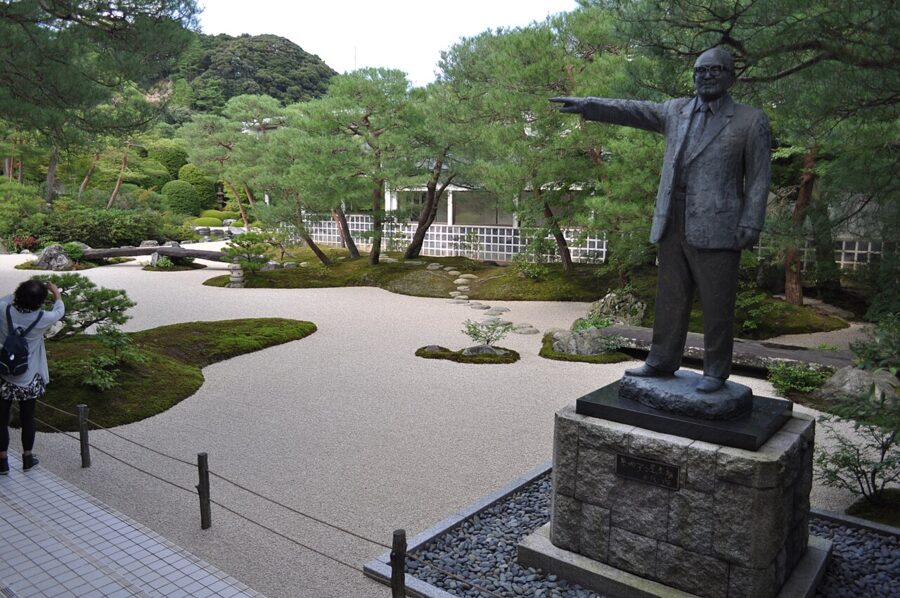

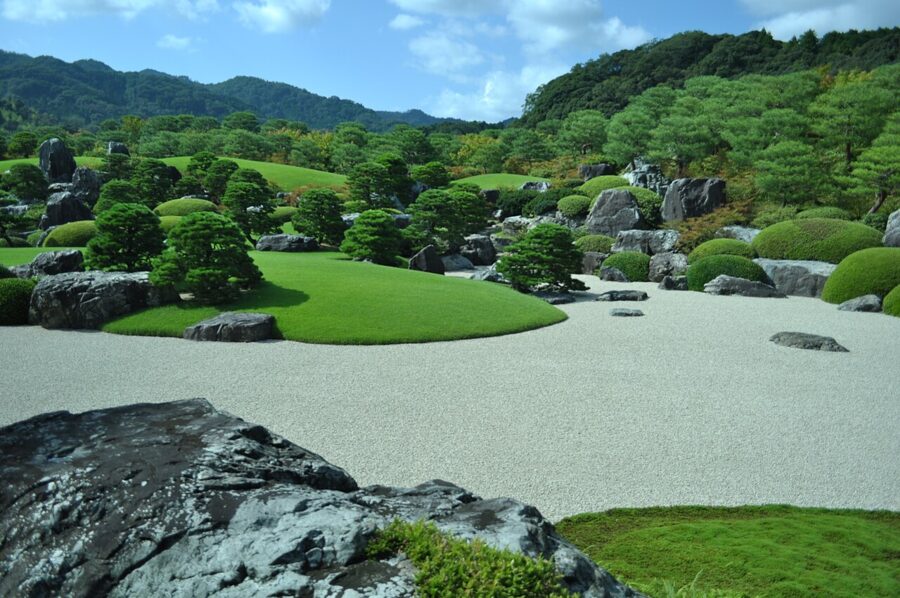
The dry garden and the borrowed hills
The main garden is the karesansui (枯山水, dry garden) that fills the posters: white gravel, low clipped mounds, rocks and pines, running back to the hills. At its heart three upright stones stand for steep mountains, and an imagined waterfall drops from them into the gravel, which plays the part of water. The best place to take it in with a cup of coffee is Café Midori, which looks straight out over it.

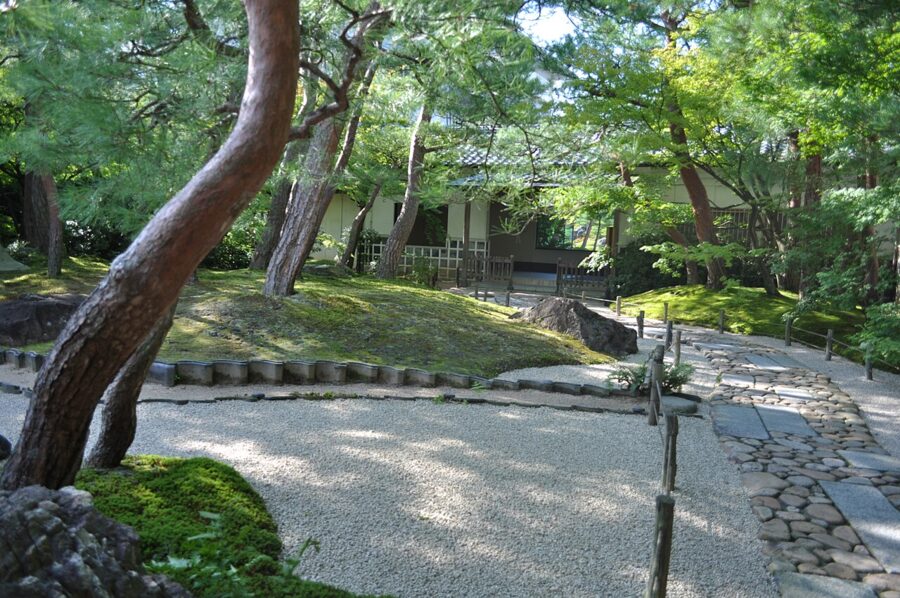
Moss, pines and white gravel
The Moss Garden (苔庭) is Kyoto in mood, with soft curves of haircap moss. Its red pines all lean. The designer reasoned that a tree which grew on a mountain slope should not be forced upright on flat ground, so every one was planted at an angle.

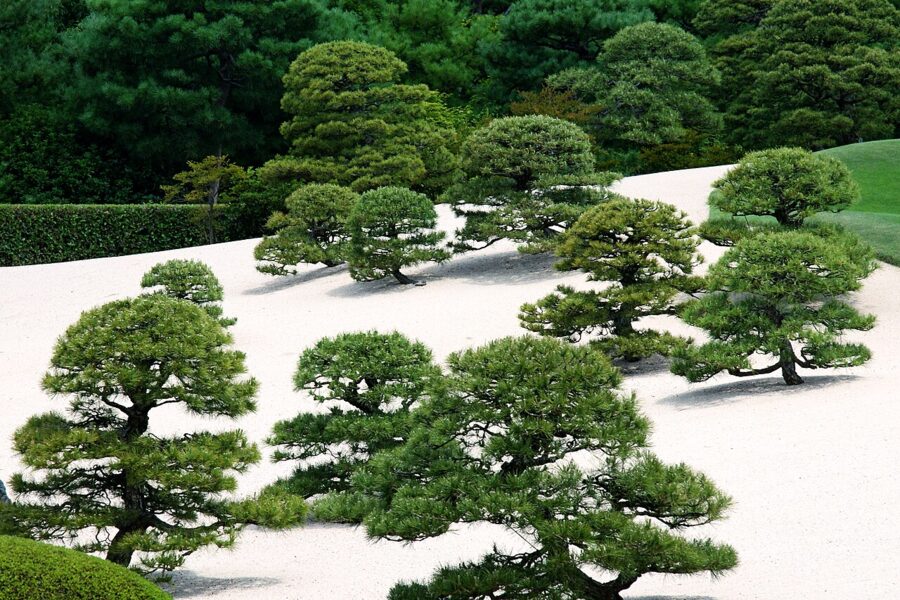
The White Gravel and Pine Garden (白砂青松庭) is Taikan in three dimensions. Adachi built it after Taikan’s painting Hakusa Seishō (白沙青松, white sand and green pines), setting pines of different sizes on soft mounds of white gravel so they read like brushstrokes. You see it best through the cut-out windows of the tea room.

The Pond Garden and the Kikaku waterfall
The Pond Garden (池庭) is fed by springs, and because the water stays at a steady temperature the carp keep swimming right through winter. Facing it is Seifū (清風), a room for sencha (煎茶, leaf green tea), and the stones of the pond are Saji stones from Tottori.
On the hill behind the gardens, Mount Kikaku, a 15-metre waterfall drops down the rock. It is artificial: the Kikaku waterfall (亀鶴の滝) was opened in 1978 for the museum’s eighth anniversary and was modelled on Taikan’s Nachi Falls, which hangs in the collection. It is part of the borrowed view, so look for the white thread of water on the hillside.
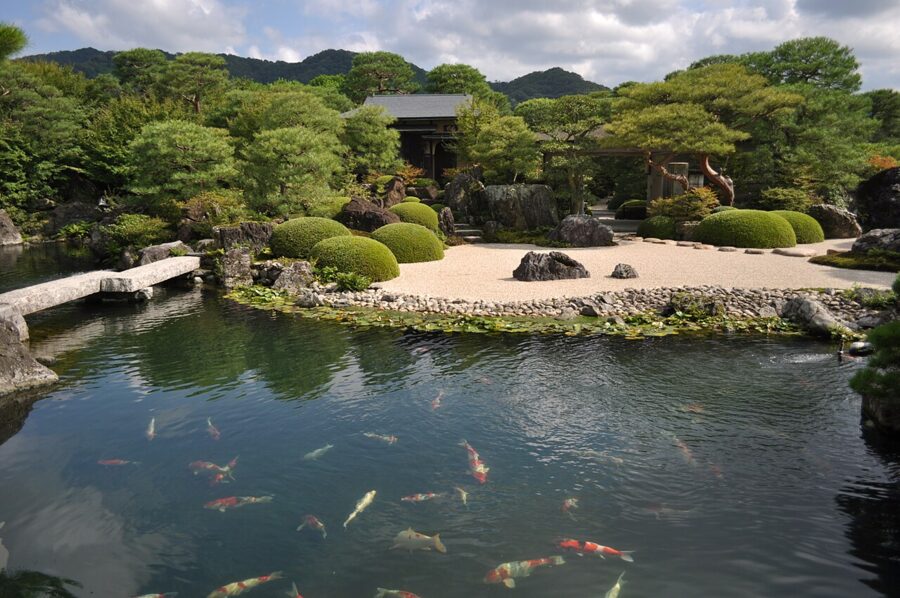

Living frames and the living scroll
Two devices turn the building into a picture frame. The living framed paintings are windows treated as frames, and the living hanging scroll (生の掛軸, iki no kakejiku) is a narrow opening cut through a wall where a scroll would normally hang, so the “painting” is whatever the garden is doing that day. Nobody needs to change it for the season. Stand a pace or two back from each opening; up close it is just a window.
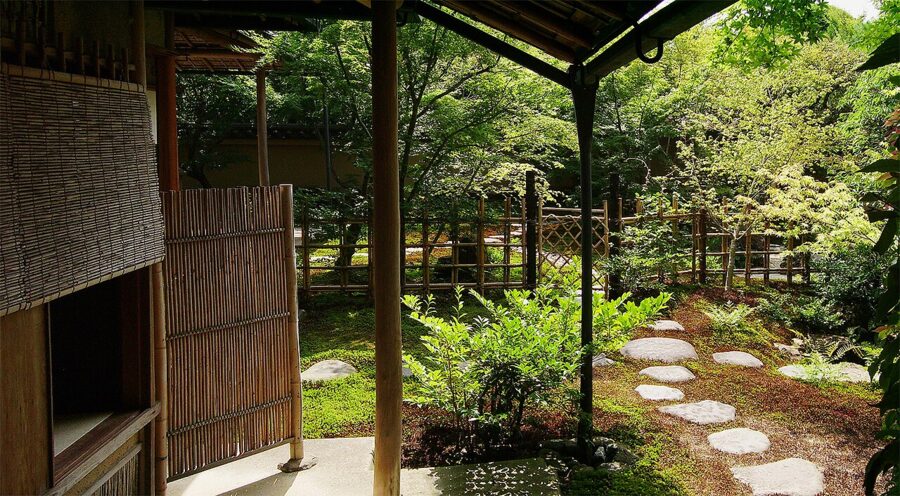

The ranking, and why it keeps winning
The ranking comes from Sukiya Living: The Journal of Japanese Gardening, a bimonthly started in 1998 by Douglas Roth in the United States. It looks at around a thousand gardens and judges them on what you can see today (the quality of the garden, how it sits with its buildings, how it treats the people who come to look) rather than on age or fame. In the 2025 ranking, announced in August 2026, Adachi was first for the 23rd year running, ahead of Katsura Imperial Villa in Kyoto.
Two of that year’s top five are in this region: the Matsudaya Hotel in Yamaguchi was fourth, and Minami-kan in Matsue fifth. The museum also has three stars in the Michelin Green Guide Japan. The secret, as far as anyone can see, is maintenance: the museum employs its own gardeners, publishes their weekly work list, and in the third week of November 2026 they cleaned the Kikaku waterfall and pruned the woods around the edge.

Inside: Yokoyama Taikan and the painters
The collection runs to about 2,000 works, and nothing is on permanent display; the paintings rotate with the seasons so that what is on the walls matches what is outside. About 70 works hang in the main building at any one time, in the Taikan room, a large gallery and a small one. The core is nihonga (日本画), modern Japanese painting in mineral pigments and ink on silk and paper.
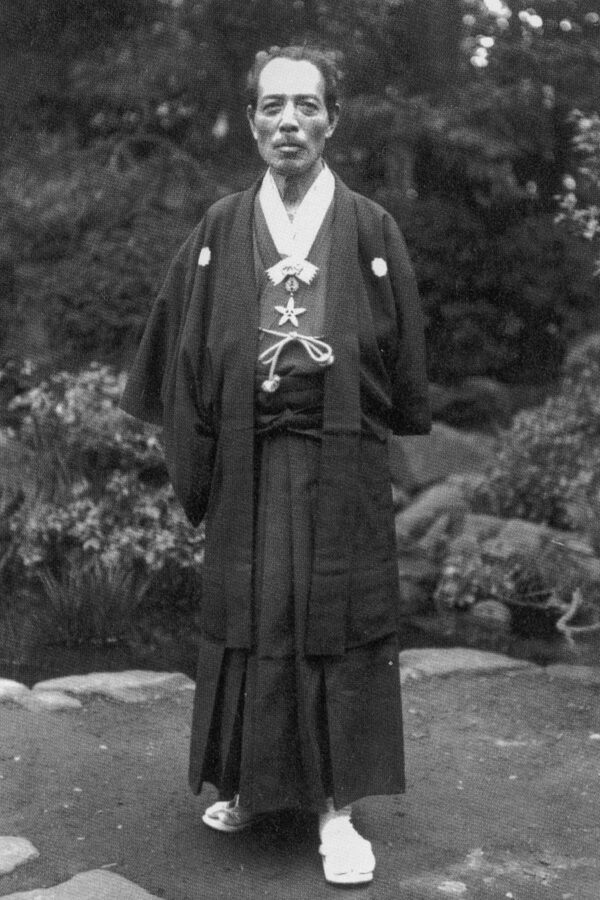
Yokoyama Taikan (1868 to 1958) studied in the first class of the Tokyo Fine Arts School, helped found the Japan Art Institute, revived it in 1914 and was among the first recipients of the Order of Culture in 1937. The museum owns more than 120 of his works, from his twenties to the end of his life, and Adachi wrote, with obvious pleasure, that people sometimes called his museum “the Taikan museum”.
The prize is Kōyō (紅葉, Autumn Leaves), a pair of six-panel screens from 1931, each 3.6 metres wide, with red maples over ultramarine water and ripples in platinum. Adachi saw it at an exhibition in Nagoya in 1978 and spent two years negotiating for it; in 1979 he bought it with a group of about twenty Taikan works from the Kitazawa collection. It comes out every autumn, from 31 August to 30 November.
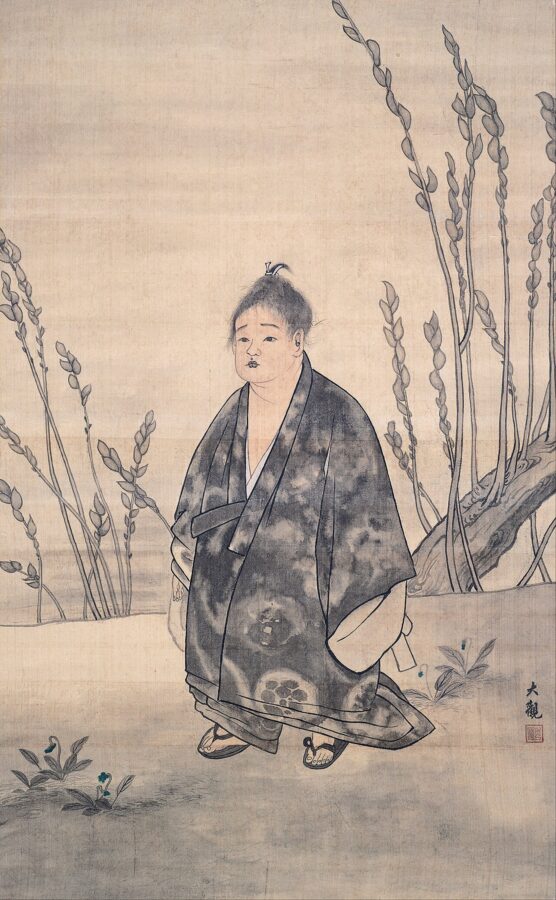
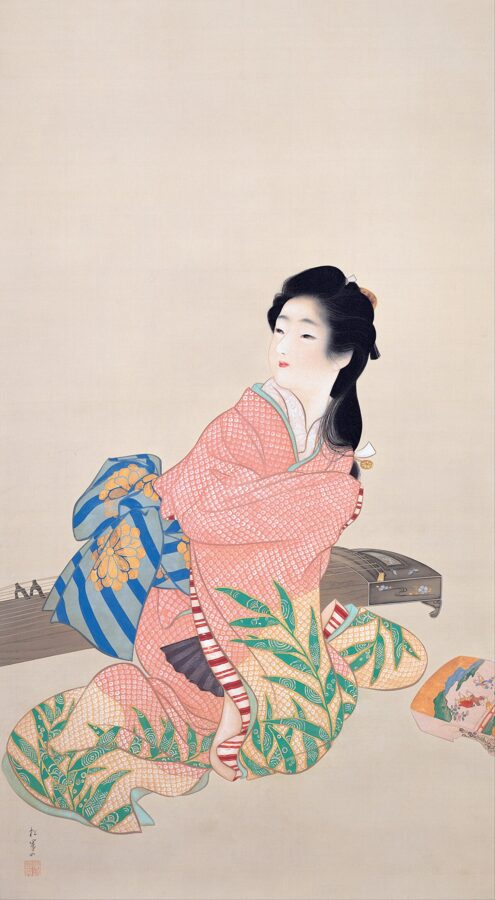
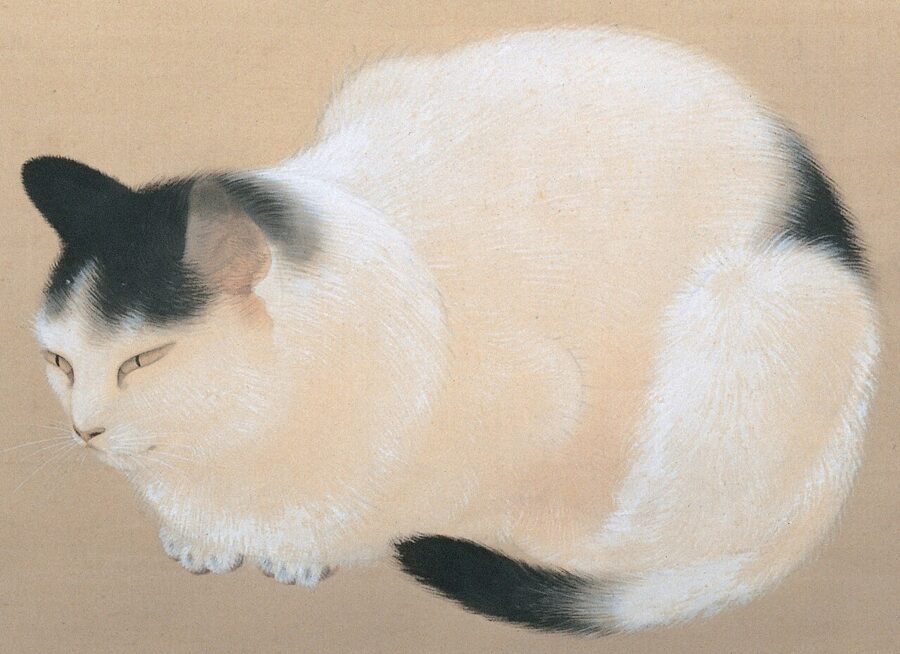
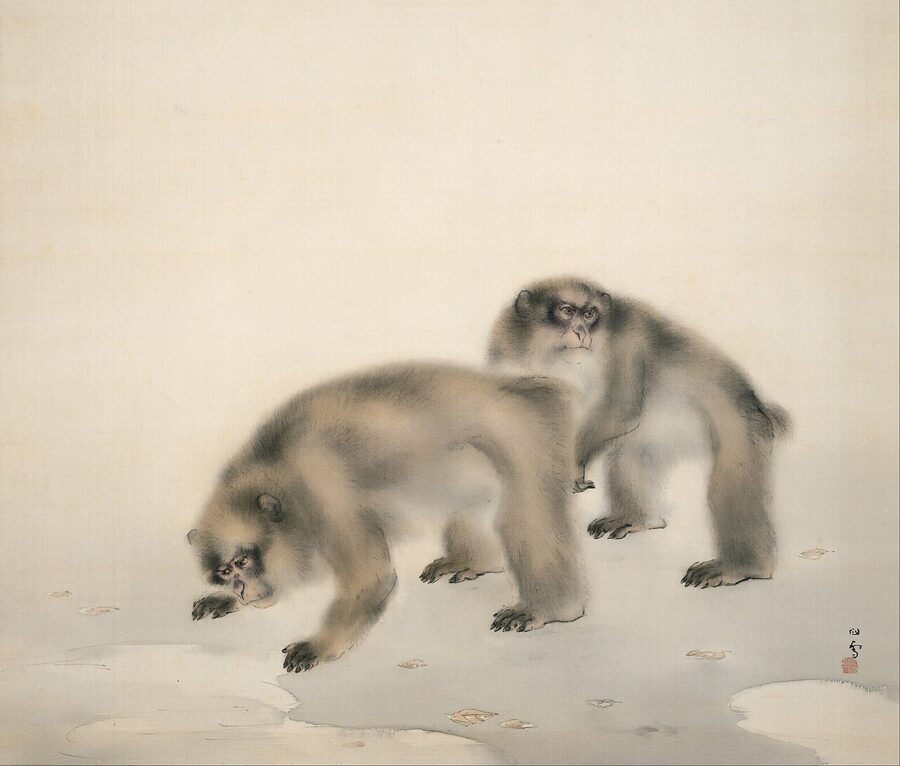
Around Taikan hang the painters who made modern nihonga: Takeuchi Seihō, Hishida Shunsō, Kawai Gyokudō, Hashimoto Kansetsu, Kawabata Ryūshi and Uemura Shōen, whose Daughter Miyuki (1914) is one of the most loved works in the building. Adachi bought across schools rather than following one, from about 1957 until his death in 1990, and the museum has kept adding to it.
The autumn 2026 exhibition, Samurai (侍), runs until 30 November and puts seven of those innovators side by side. From 1 December 2026 to 28 February 2027 the main gallery shows Vertical and Horizontal, pairing upright and wide works on the same subject, and the winter Taikan room includes Fuji (不二), his last painting, newly acquired and shown last winter for the first time in 47 years.
Rosanjin Hall
Kitaōji Rosanjin (1883 to 1959) was a gourmet and restaurateur who turned to making the dishes his food was served on, and became one of the great potters of the century. Adachi bought about 200 of his pieces and the present director has taken the collection to about 500. Rosanjin Hall opened in 2020 with around 120 works on show, lit by light bounced off the ceiling so you can study the glazes up close. Even if ceramics leave you cold, look for the pieces the museum singles out, such as the camellia bowl and the crab-shaped plates.
The Annex, children’s pictures and wood carvings
The Annex is for contemporary nihonga, around 350 works, many of them winners of the Adachi Museum of Art Prize that the museum has given at the Japan Art Institute’s exhibition since 1995. Every autumn it hosts that exhibition (the Inten) itself. It is the one part of the museum with closing days; in 2027 they are 10 and 11 March, 7 to 10 June, 21 and 22 June, 26 to 29 October and 18 and 19 November, and the garden and main building stay open on all of them.
Tucked into the main building are a corner of dōga (童画), the illustrations from Japanese children’s magazines of the Taishō and early Shōwa years by Takei Takeo, Hayashi Yoshio and others, and wood carvings by Hirakushi Denchū. Both are small and easy to skip, and both are charming.
Tickets, hours and the photography rule (as of November 2026)
The museum is open every day of the year, New Year included, and you do not need to book. One ticket covers the gardens, the main building, Rosanjin Hall and the Annex. Prices were last revised on 1 April 2025, and the museum takes the major credit cards.
| Ticket | Price |
|---|---|
| Adult | ¥2,500 (about US$17) |
| Adult showing a foreign passport | ¥2,400 |
| University student | ¥2,000 |
| High school student | ¥1,000 |
| Elementary and junior high school | ¥500 |
| Audio guide (Japanese or English) | ¥600 (about US$4) |
Hours are 09:00 to 17:30 from April to September and 09:00 to 17:00 from October to March (hours and admission). The passport discount is ¥100 off the adult price, and the museum says it may end without notice. Tickets are sold at the door, and for the autumn crowds there is also a web ticket that gets you past most of the queue at the window; it is not tied to a time slot.
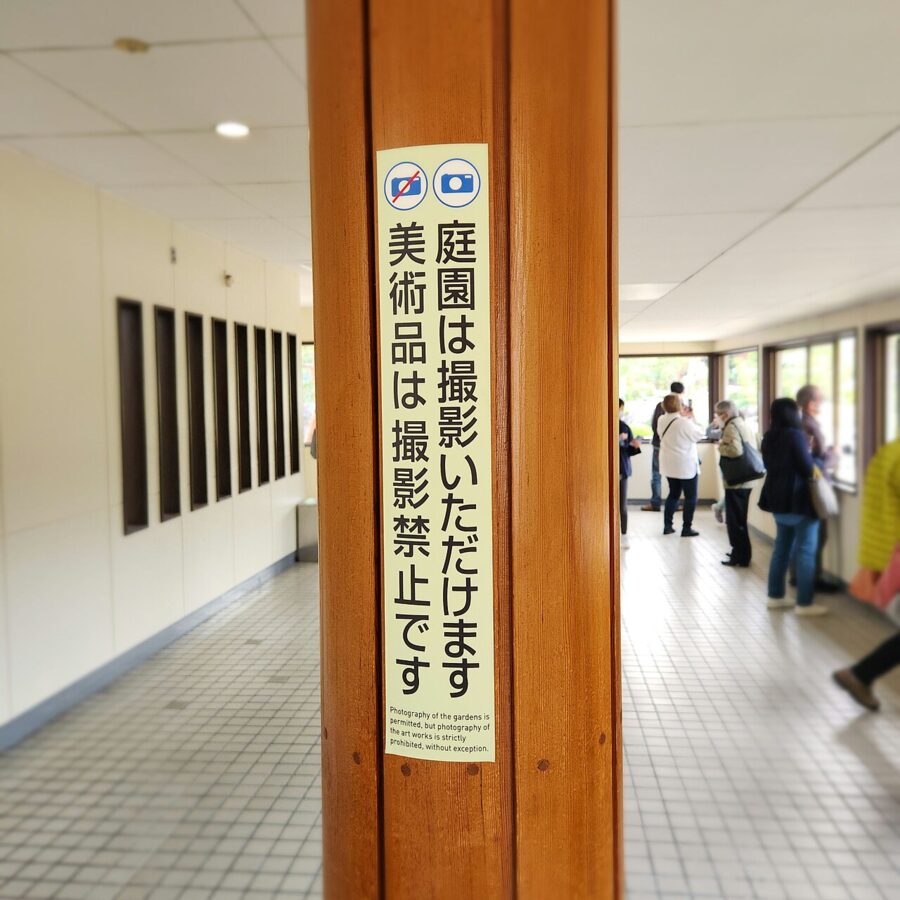
The rule that matters: you may photograph the gardens, but not a single artwork, and tripods and drones are banned everywhere on the site. No food or drink comes in, sweets and gum included. Large bags go in free lockers by the entrance (you put in a ¥100 coin and get it back), and the staff will take a big suitcase if it does not fit.

Getting there: the free shuttle from Yasugi
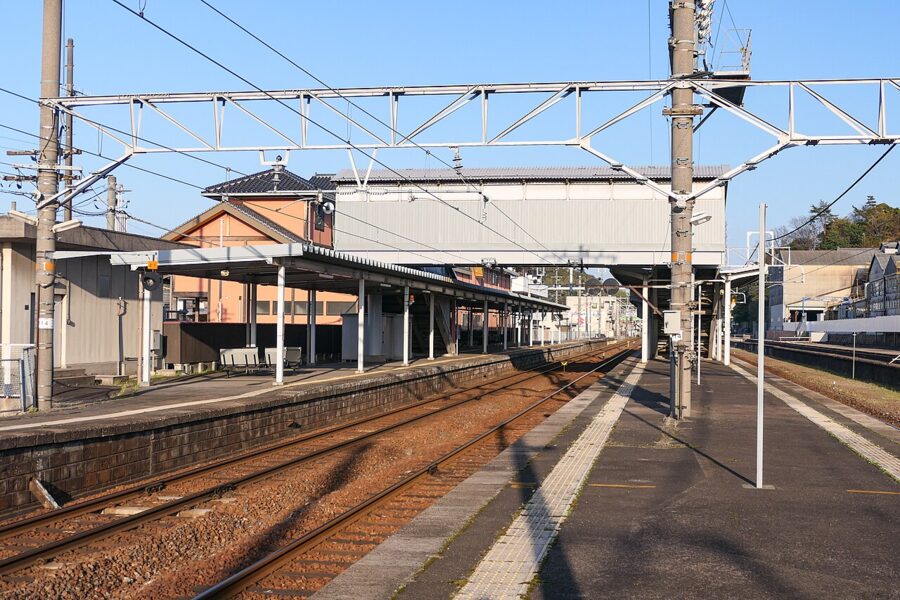
The museum is about 20 minutes by road from Yasugi Station on the JR San’in Line. Yasugi is the next station west of Yonago, about nine minutes by train, and about 25 minutes east of Matsue. Yakumo limited expresses from Okayama stop there too, about two hours twenty minutes from Okayama. The trains are JR, so the Japan Rail Pass covers them.
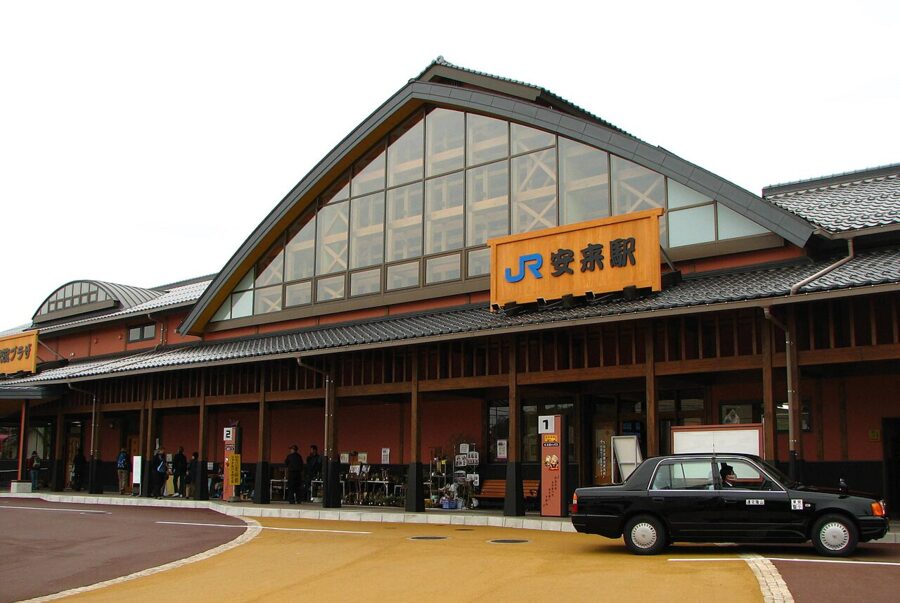

The free shuttle bus runs every day, non-stop, and takes about 20 minutes. It has 25 seats, first come first served, no bookings, and no luggage hold, so on a busy day the driver can refuse large suitcases. Leave them in a coin locker at Yasugi Station or with the bag service at the tourist information centre in the Araessa Yasugi plaza next to the station, open 08:30 to 18:00.
For the ride back, take a numbered ticket for the departure you want from the counter at the museum entrance as soon as you arrive. The current timetable runs until the JR timetable change in March 2027:
| Yasugi Station to museum | Museum to Yasugi Station |
|---|---|
| 08:50, 09:20, 09:50, 10:15, 10:45, 11:05 | 09:15, 09:50, 10:15, 10:35, 11:05, 11:30 |
| 11:30, 11:55, 12:30, 13:00, 13:30, 14:00 | 12:00, 12:30, 12:55, 13:30, 14:00, 14:30 |
| 14:30, 15:05, 15:30, 15:55, 16:25 | 15:00, 15:30, 15:55, 16:30, 17:10 |
Note the last bus back leaves at 17:10, which in winter is only ten minutes after the museum closes. Traffic can delay any of them.
The Yellow Bus, a taxi or a car
If the shuttle is full, Yasugi’s own route bus, the Yellow Bus, stops at Saginoyu Onsen / Adachi Bijutsukan-mae, two minutes’ walk from the entrance, for a flat ¥200 (about US$1). Under the timetable revised on 14 March 2026 it leaves Yasugi Station eight times a day between 09:12 and 15:34, and some runs start at Yonago Station, the first at 08:34 (not on Sundays or holidays). Return runs leave the museum stop between 10:04 and 17:11.
A taxi from Yasugi Station costs about ¥3,500 (about US$23) by the museum’s own estimate, and no taxis wait at the museum, so book one for the return. By car, the museum is about ten minutes from Yasugi IC on the San’in Expressway, with free parking for 400 cars, and about 35 minutes from central Matsue.
With a guide from Matsue
If you would rather not juggle trains and shuttles, the private full-day trip with a licensed guide from Matsue lets you pick three or four stops, the Adachi Museum among them. It is not a car tour: the guide meets you at your hotel, transport fares and admissions are extra, and the museum stop is scheduled for about an hour, so it suits someone combining the museum with Matsue Castle or Izumo Taisha more than a garden lover (my review of it).
Eating at the museum
You need a ticket to use any of the cafés, none of them take bookings, and since there is no re-entry you are best off eating inside. Café Taikan sits beside the Pond Garden and serves the only real meals, from 11:00 to 15:00 last order: Shimane wagyu beef curry at ¥1,800 (about US$12), a vegetable curry with no animal ingredients at ¥1,600, and, in limited numbers, sasamaki okowa (笹巻きおこわ, sticky rice steamed in bamboo leaves) with wagyu, eel and clams at ¥2,000. Cakes are ¥600.
Café Midori looks straight out over the dry garden, and that view is what you are paying for: coffee is ¥1,000 (about US$7), the premium Adachi blend ¥1,500, and a matcha sorbet with Jersey milk ice cream ¥1,300. Go when the coaches arrive and let them have the windows.
The tea room Juraku-an charges ¥1,500 (about US$10) for matcha made with water boiled in a pure gold kettle, served in bowls from Shimane kilns with Hinode-mae, a sweet from the local confectioner San’eidō. You sit on chairs, and the wall in front of you is cut into a pair of living scrolls looking onto the White Gravel and Pine Garden. Of the three, this is the one I would not skip. If you would rather eat outside the museum, Saginoyu-sō, an inn a minute’s walk away in the little Saginoyu hot spring, serves lunch by reservation.
After the museum: loach dancing, a castle mountain and a temple
Yasugi-bushi and the loach dance
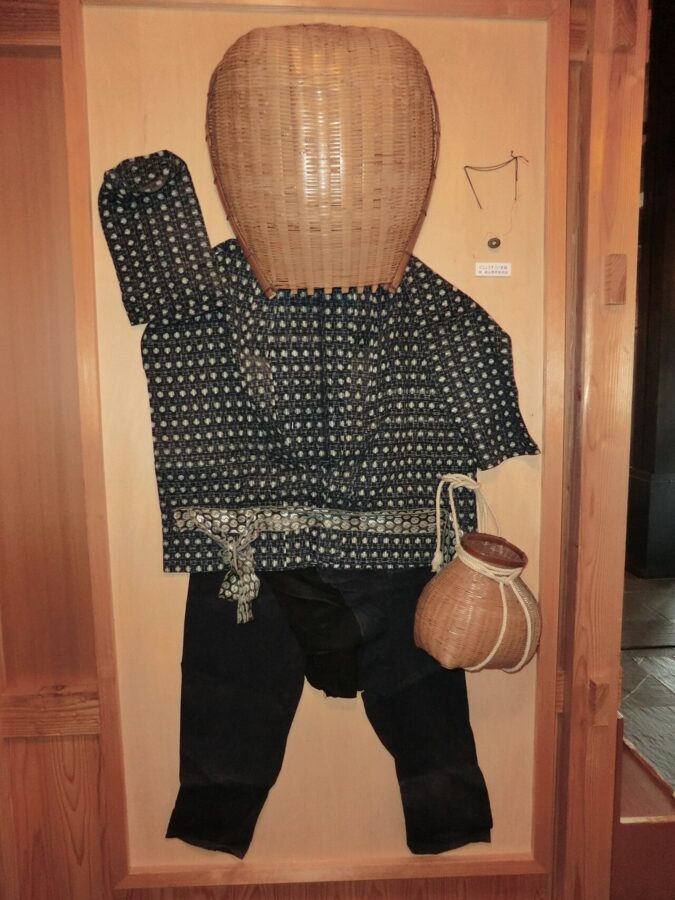
Next door to the museum is the Yasugi-bushi Engeikan (安来節演芸館), a theatre with box seating and a hanamichi walkway, built for Yasugi’s own folk song. Yasugi-bushi grew out of the songs of sailors who called at Yasugi port, and its dance, dojō-sukui (どじょうすくい), mimes a farmer scooping loaches out of a paddy with a bamboo basket, and it is played for laughs. The song is part of the Japan Heritage story of the region’s tatara iron making, and the hall marks its 20th year in 2026.
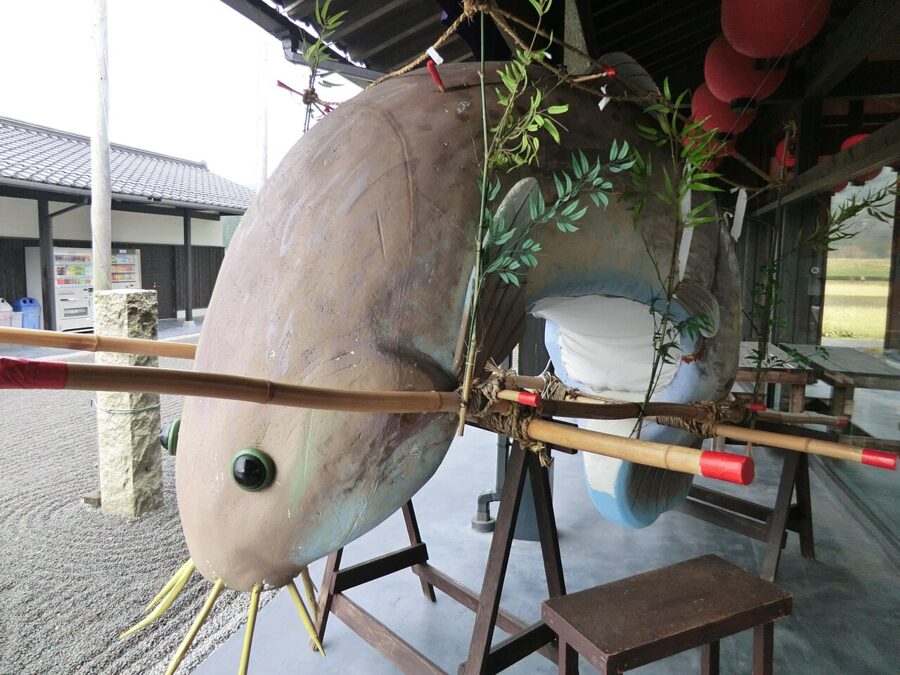

Live shows run on Saturdays, Sundays and holidays at 11:20 and 13:20, about 40 minutes each, for ¥1,000; the first five people at each show get a dancing lesson. On most weekdays the hall screens a 4K film of the dance instead. The 13:20 show fits neatly after a morning in the museum and lunch.

Gassan-Toda Castle
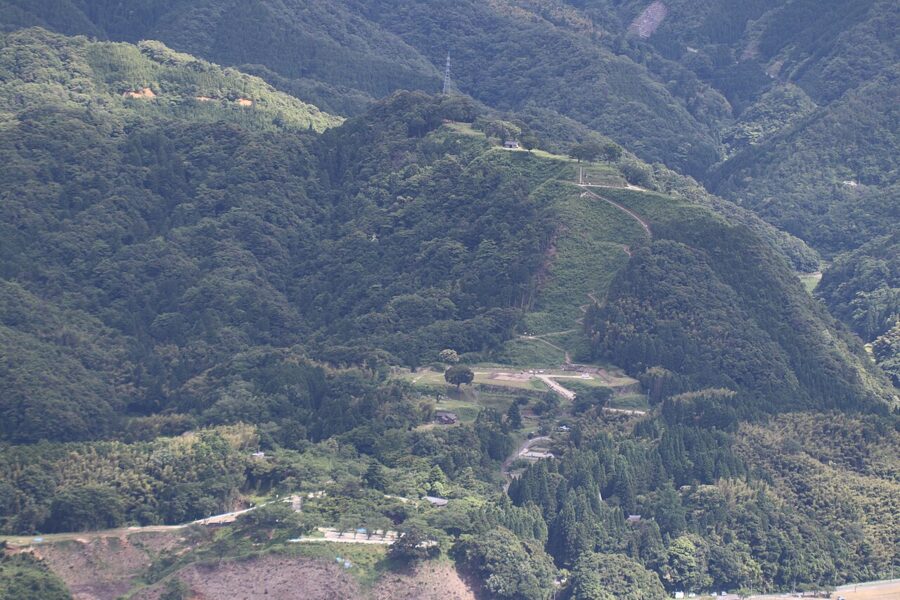
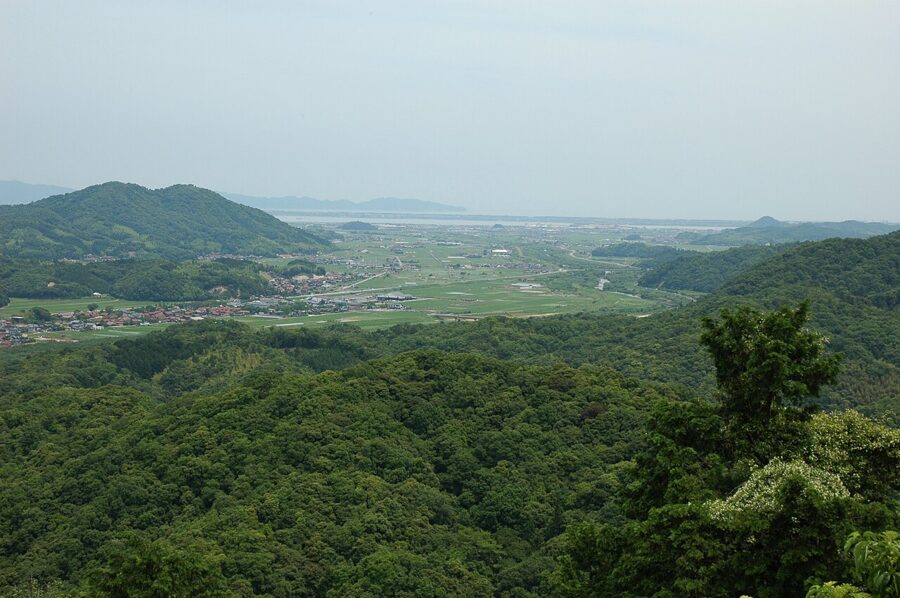
A few kilometres up the valley at Hirose, the 190-metre hill of Gassan carries the ruins of Gassan-Toda Castle (月山富田城), seat of the Amago clan who ruled much of the San’in in the warring-states era. After the Amago it passed to the Mōri, the Kikkawa and finally the Horio, who left it to build Matsue Castle, and it is now a national historic site and one of Japan’s 100 Fine Castles. The path to the summit climbs the steep “seven bends” (七曲り), and the stone walls and the view over the Nakaumi are the reward.

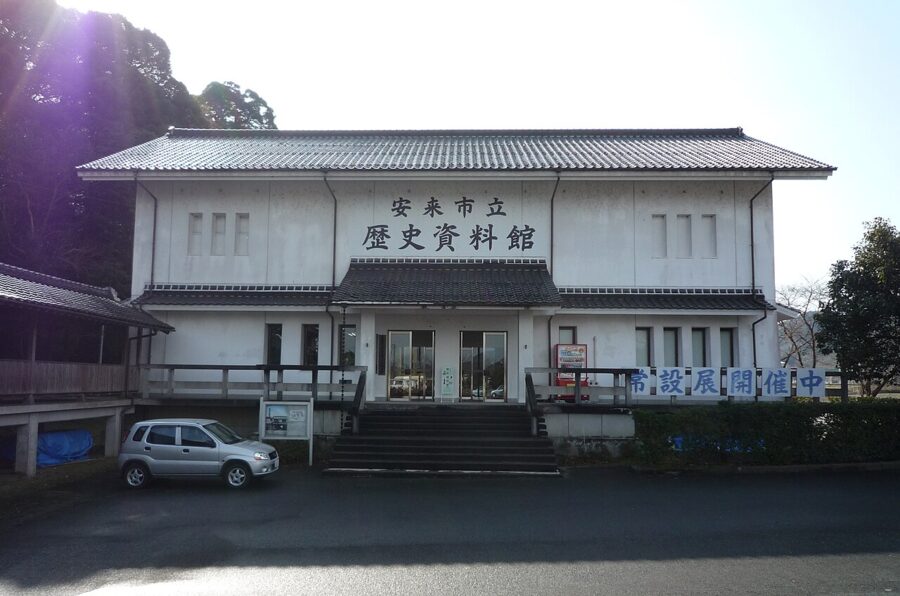
The city history museum at the foot opens 09:30 to 17:00 and closes on Tuesdays (Wednesday when Tuesday is a holiday); it keeps the 100 Castles stamp. The Yellow Bus on its Hirose and Yonago line stops at Gassan-iriguchi, a minute’s walk from the start of the path, or it is a short taxi ride from the museum.


Kiyomizu-dera
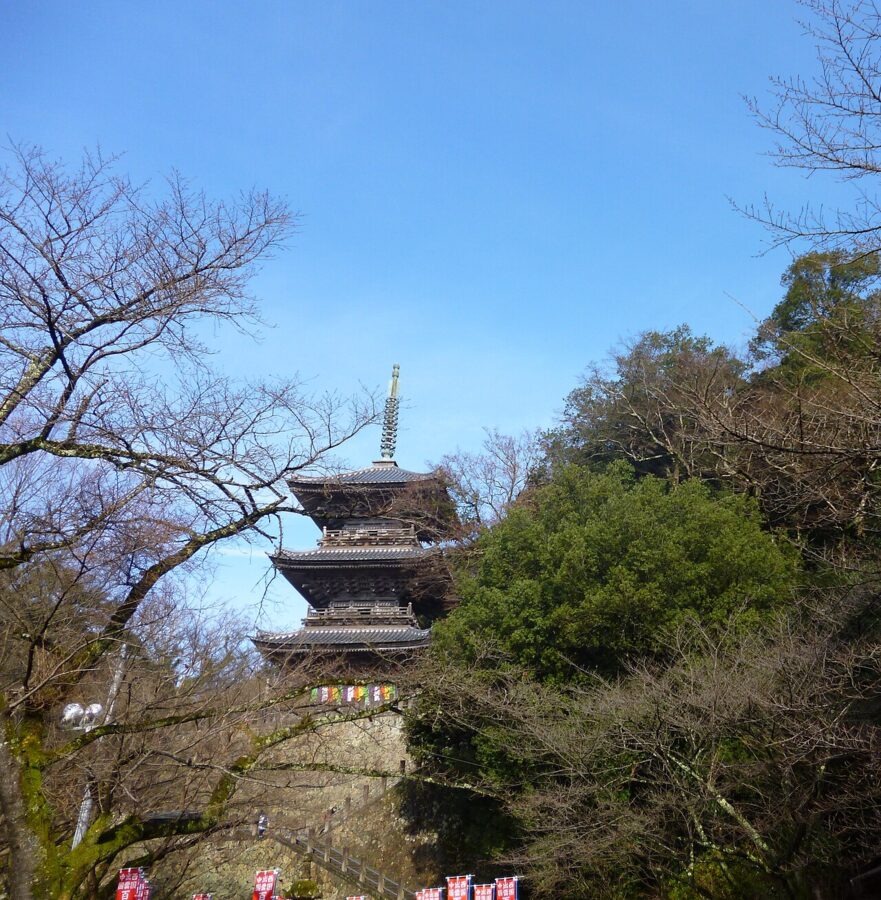
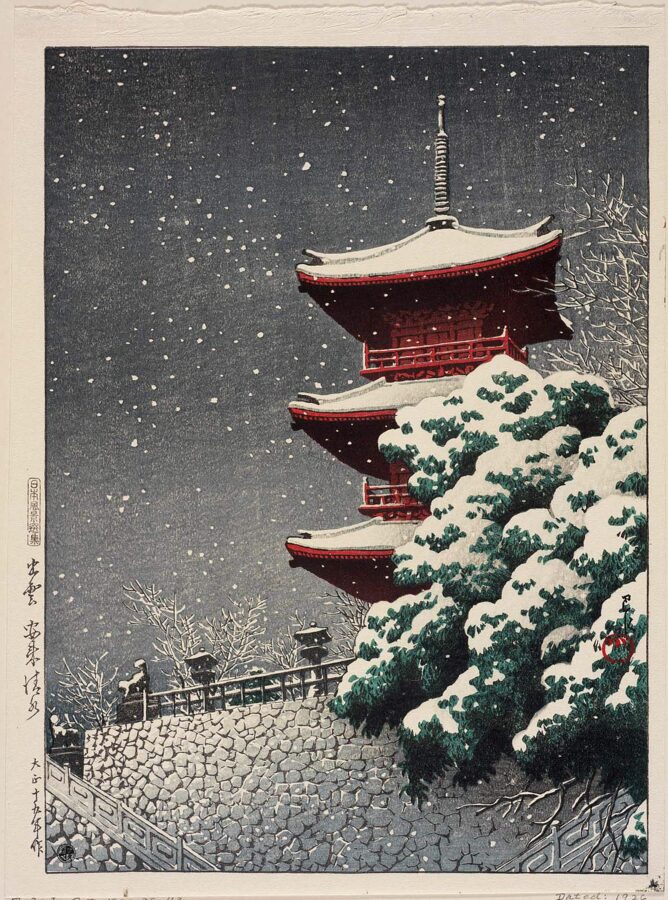
Yasugi has its own Kiyomizu-dera (清水寺), a Tendai mountain temple said to have been founded in 587, about 15 minutes by car from the station. Its three-storey pagoda is a rarity in the San’in, and you can climb it, by reservation and for a fee, and the temple is known for cherry blossom and autumn leaves. The grounds are free, and the city’s temple page lists the current opening hours.

Fitting it in with Matsue and Yonago
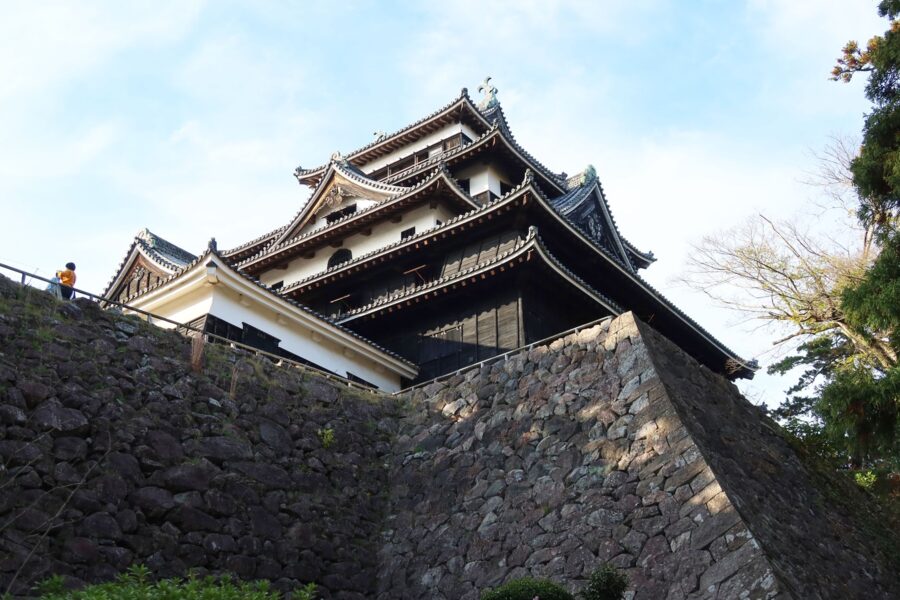
From Matsue, the museum is an easy morning. Take a train that gets you to Yasugi for the 08:50 shuttle, spend 09:10 to midday in the museum, eat at Café Taikan, catch the Engeikan show if it is a weekend, and be back in Matsue for the sunset over Lake Shinji. The castle, the moat boats and the samurai houses can have the next day.
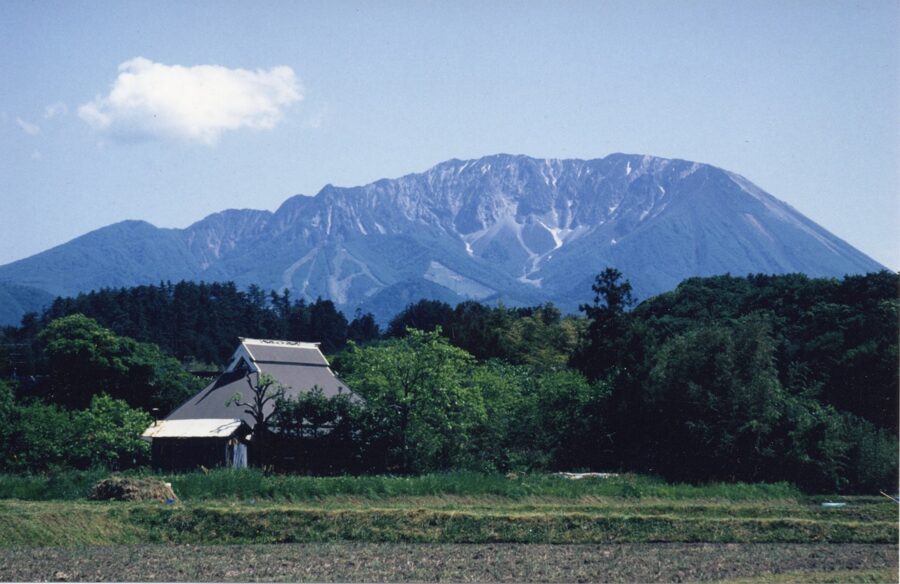
From Yonago it is even easier, one stop on the train, and Yonago’s hotels sit within reach of Kaike Onsen and the trails on Daisen. On a wet day, swap the mountain for the museum. If you are also heading for Izumo, do not try to fit Izumo Taisha into the same day without a car: by road it is about an hour and twenty minutes from the museum, and far longer by train and bus.
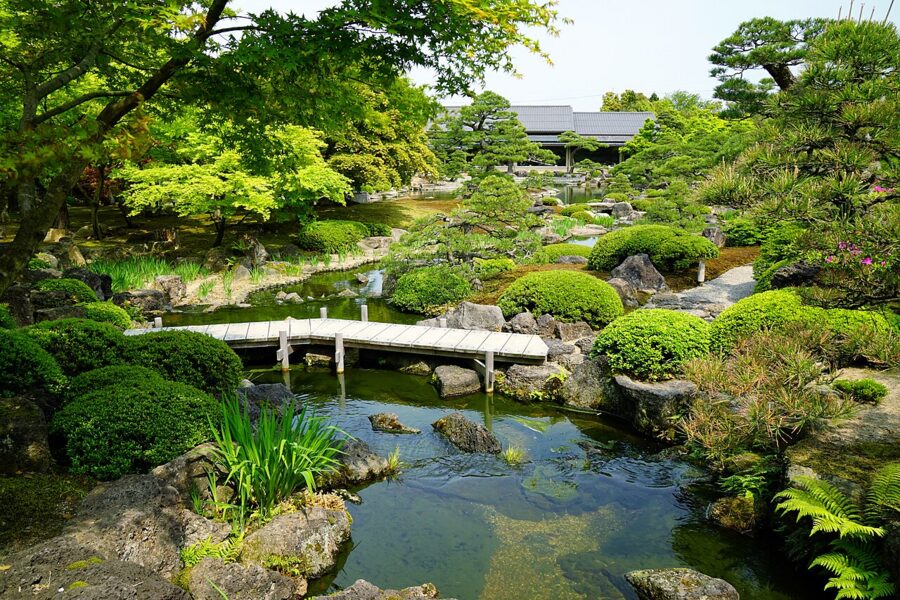
The garden people most often compare with Adachi is Yushien (由志園) on Daikonshima, an island in the Nakaumi about 40 minutes away by car by the museum’s reckoning. It is a stroll garden famous for its peonies, and you walk through it rather than look at it, so the two complement each other. With a car you can do both in one day.

Further afield, Iwami Ginzan is about an hour and forty minutes west by car, a separate day. For Adachi itself, keep it simple: take the 08:50 shuttle from Yasugi, go straight to the first black-framed window, and leave the café for when the coaches pull in.