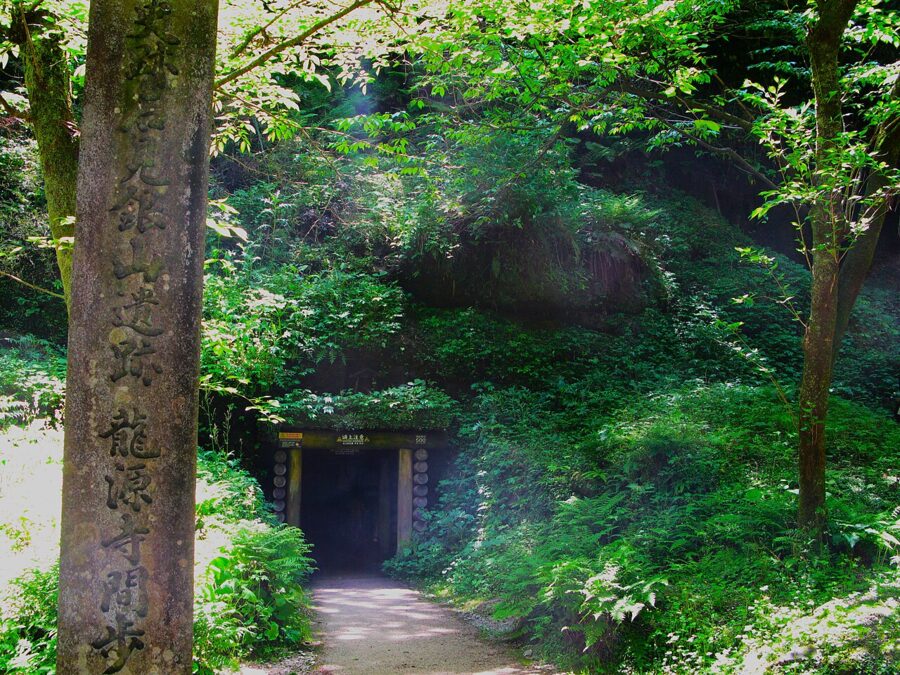
The walk from the end of Ōmori’s main street to the mouth of the Ryūgenji shaft takes about 45 minutes, and for most of it you would struggle to guess you were in a mining district at all. The path follows a stream up a narrow valley under cedar and bamboo, past moss on every stone. Then the woods open on a small clearing, a stone marker, and a doorway cut into the hill no wider than a garden shed.
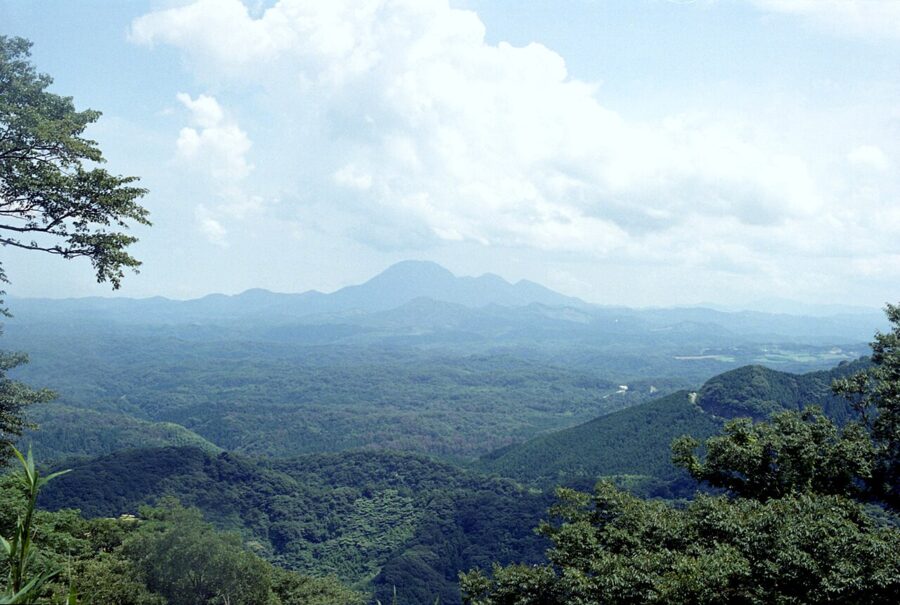
That doorway leads into Iwami Ginzan (石見銀山), the silver mine in the hills of Ōda, in Shimane, that sixteenth-century warlords fought over and that fed the silver trade with China and Europe. Miners worked these valleys for about four hundred years and left almost a thousand tunnels behind. The forest grew back over all of it, and that is a large part of why UNESCO listed the site in 2007, two months after its own advisers had told it to wait.
The question for most people is how much of it to see. The Ryūgenji shaft is open every day and takes half a day with the walk and the old town. The far larger Ōkubo shaft opens only to booked tours, and only from March to November. Add the old silver port of Yunotsu, where the hot springs still run, and Iwami Ginzan fills a day and a night without trying.


Half a day or a whole one
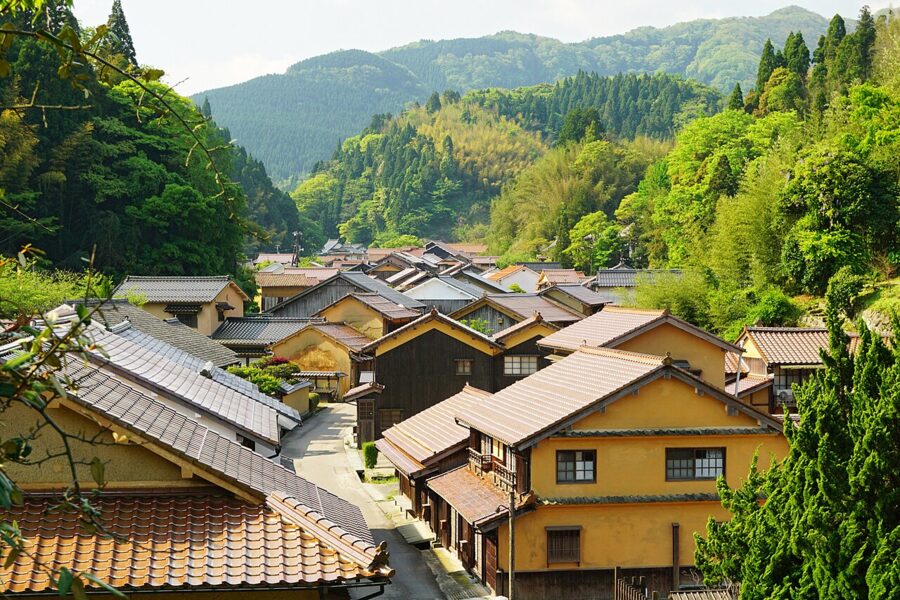
Iwami Ginzan sits in two valleys, and the geography decides the day. Ōmori (大森), the old town, runs for about 800 metres along the lower valley. The mine area, with the Ryūgenji shaft, the refinery ruins and the miners’ shrine, lies roughly two kilometres further up. Cars stop well short of both, so you see it on foot, by rental bike or by a small electric cart.
For a half day, the Ōda tourism association’s own advice is sound: Ryūgenji first, then the town on the way back down. On foot from the Iwami Ginzan Park car park and information office, the shaft is about 45 minutes away and the round trip with the visit takes around two hours. An electric bike cuts the ride up to about half an hour, and the town adds another hour and a half if you go into one or two houses. A half day works best with the 10:30 guided walk to the shaft, which costs ¥500 (about US$3).
A full day lets you add the Ōkubo tour (two hours, booked ahead), the Rakan-ji grottoes and a proper look at the museum in the old magistrate’s office. Better still is a night at Yunotsu, 25 to 30 minutes away by car, where you can soak in the evening and the town stays quiet after dark. The ports, the roads and the town are all part of the same listed site, and the Ōda tourism association suggests the overnight for exactly that reason.
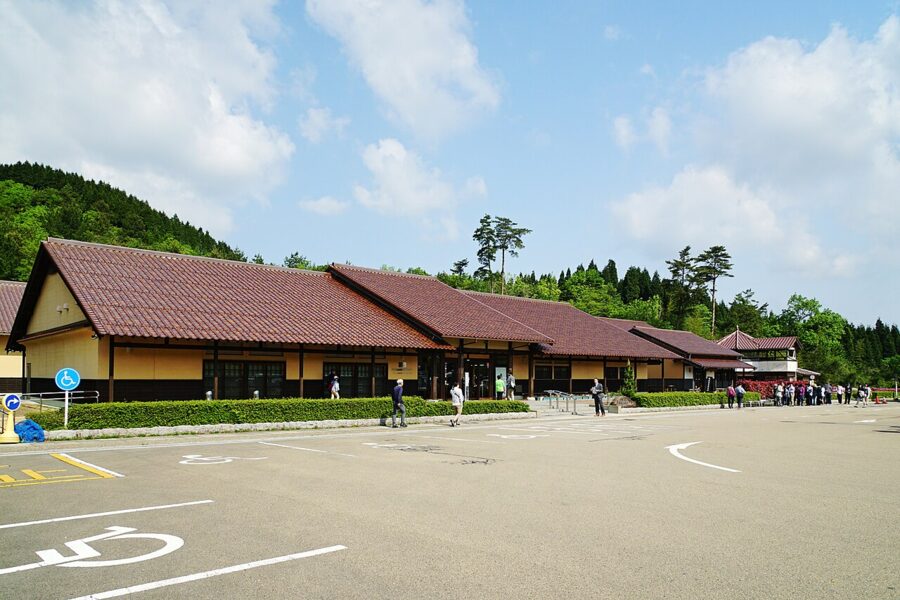

Seasons matter more than usual. The Ōkubo tours stop between December and February, Ryūgenji closes an hour early in those months, and the rental bikes are not lent out on wet roads. In return winter brings the valley’s emptiest days. Golden Week (29 April to 6 May) and Obon (mid-August) are when the World Heritage Center car parks can fill, so arrive early then.
The silver that went round the world
The mine’s own story begins with a merchant from Hakata, Kamiya Jutei, who is said to have seen the mountain glow from the sea and, with backing from the Ōuchi clan, dug out silver ore on its slopes in 1526 or 1527. Sources give both years, and Ōda counts its five-hundredth anniversary in 2027. The real turn came in 1533, when Kamiya brought two technicians from Hakata who refined the ore on site using haifuki-hō (灰吹法), the cupellation method that had come to Japan from China by way of Korea.
Refining at the mine meant Iwami could turn out large amounts of pure silver, and the technique spread from here to mines across Japan. The Ōuchi, then the Amago and the Mōri fought over the valleys for decades, and Yamabuki Castle, on the peak above the mine, changed hands with them. After the Battle of Sekigahara in 1600, Tokugawa Ieyasu took the mine for the shogunate and sent Ōkubo Nagayasu to run it, and the surrounding district became a directly governed domain run from Ōmori.

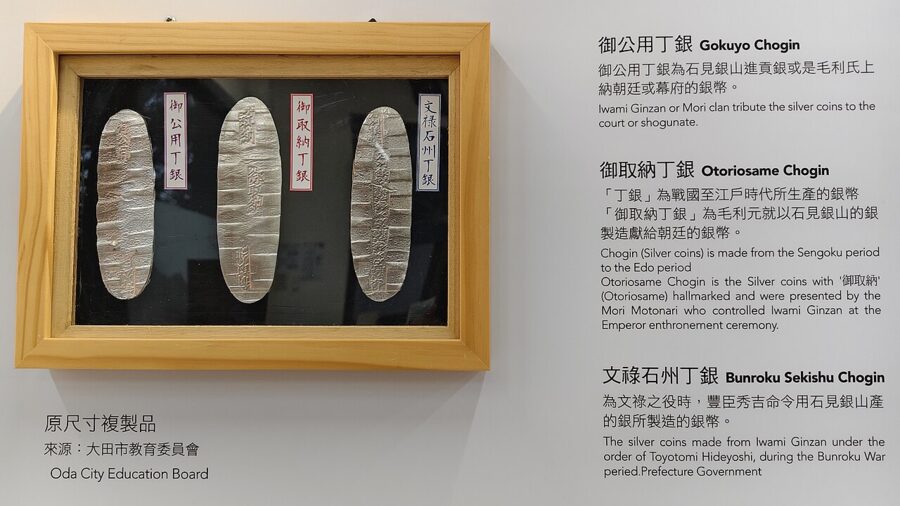
The famous figure needs care. In the late sixteenth and early seventeenth centuries Japan as a whole is thought to have produced around a third of the world’s silver, and the operator of the Ryūgenji shaft puts it this way: a considerable part of that Japanese silver came from Iwami. Traders knew it as Sōma silver, after the old name of the district, and its purity made it trusted from Ming China to the Portuguese and Dutch ships that came for it. European maps of the period mark a silver mine on this coast.
Output fell away from the eighteenth century as the rich ore ran out. A modern company, Fujita-gumi, tried again in the late nineteenth century, built the Shimizudani refinery in 1895 and later switched to copper, but the mine shut in 1923. A last wartime attempt ended when floods drowned the tunnels in 1943.
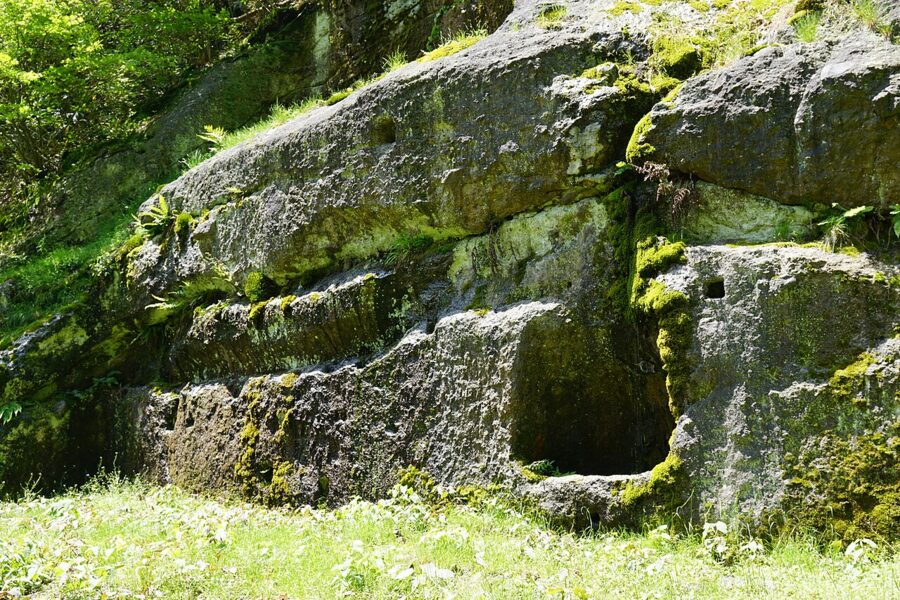

What survived is the reason for the listing. Because the old hand methods lasted until the ore ran out, the mine was never reshaped by heavy machinery, and the forests were managed rather than stripped. In May 2007 ICOMOS, UNESCO’s advisory body, recommended deferring the nomination; Japan’s diplomats argued that the regrown forest was itself the point, and in July 2007 the World Heritage Committee inscribed it as a cultural landscape. It was the first mining site in Asia on the list.
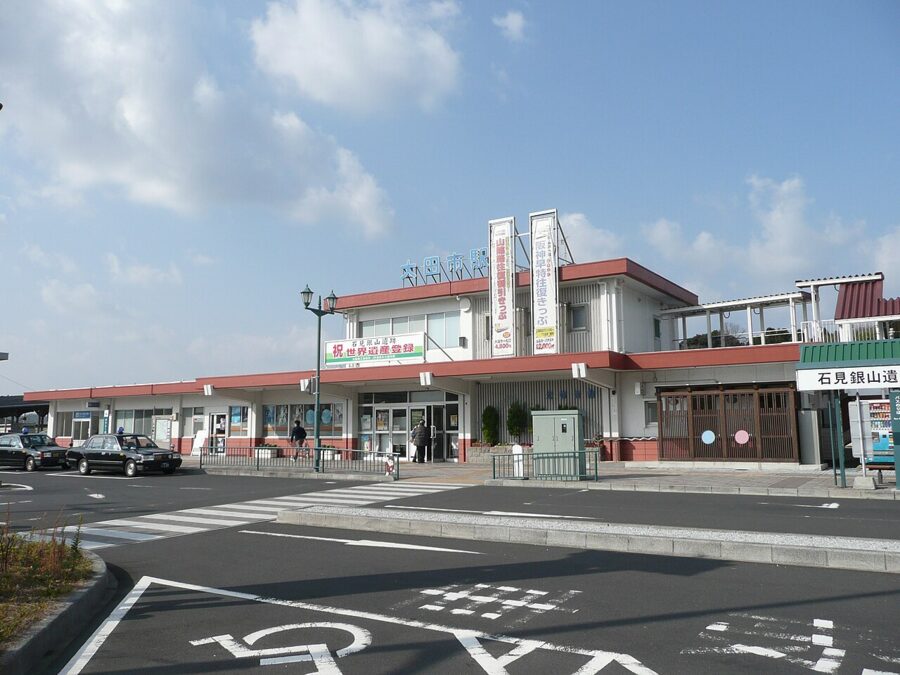
The listed area takes in the mine valleys and castle sites, Ōmori, two roads to the coast and three ports: Tomogaura, Okidomari and Yunotsu. You can read UNESCO’s statement of value for Iwami Ginzan before you go; it explains the forest argument better than any panel on site.
Getting around the valley
The rule here is called park and ride. Visitors’ cars go to the World Heritage Center, about five minutes’ drive from the town, and a local bus runs from there to the Ōmori stop by Iwami Ginzan Park and on to the Ōmori Daikansho-ato stop at the far, northern end of the street, where the bikes and carts start. The ride costs ¥200 to Ōmori or ¥240 to the Daikansho-ato stop. The small car parks at Iwami Ginzan Park and by the old magistrate’s office are usually full at weekends.

On foot
The walk to the shaft is gently uphill all the way and easy for anyone used to a few kilometres. Count 45 minutes each way from Iwami Ginzan Park. Wheelchairs and pushchairs are better on the paved road than on the footpaths, which have steps, and the city’s accessibility notes say cars carrying disabled visitors can get a permit at the Iwami Ginzan Park information office to drive as far as the Shimizu-dera rest area, leaving about 1.2 kilometres to the shaft.
Rental bikes
Rent Cycle Kawamura is beside the Ōmori Daikansho-ato bus stop. Since April 2025 the rental bike prices are ¥1,000 (about US$6) for an electric bike for two hours, with ¥200 for each extra half hour, or ¥800 for an ordinary bike for three hours. Take the electric one: the road climbs the whole way. It opens 08:30 to 17:00 (to 16:30 from December to February) and does not lend bikes in rain or on wet roads, and you cannot ride with an umbrella.
The Ginzan Cart
The Ginzan Cart is a six-seat electric golf cart that runs between the Daikansho-ato stop and the Ryūgenji entrance, picking up at brown stops along the way. It does not run on Wednesdays and cannot be booked on normal service days, and if it fills at the start you cannot board further up. Fares depend on distance; the Ōda tourism association listed ¥200 to ¥700 in late 2026. From October 2026 to January 2027 it is running on a trial timetable: more trips on autumn weekends, and four bookable runs a day (09:00, 11:00, 13:00, 15:00) on other days, so check its site before you plan around it.
Walking with a guide
The Iwami Ginzan Guide Association runs walk-up “one-coin” tours for ¥500 a head, free for junior-high pupils and younger. The Ryūgenji walk leaves at 10:30 and 13:00 from March to November and 10:30 in winter, and a town walk leaves at 10:30. Groups are capped at ten, so come early. They also offer longer private walks, including an English-speaking guide, booked ahead.
Ōmori: the street and the houses you can enter
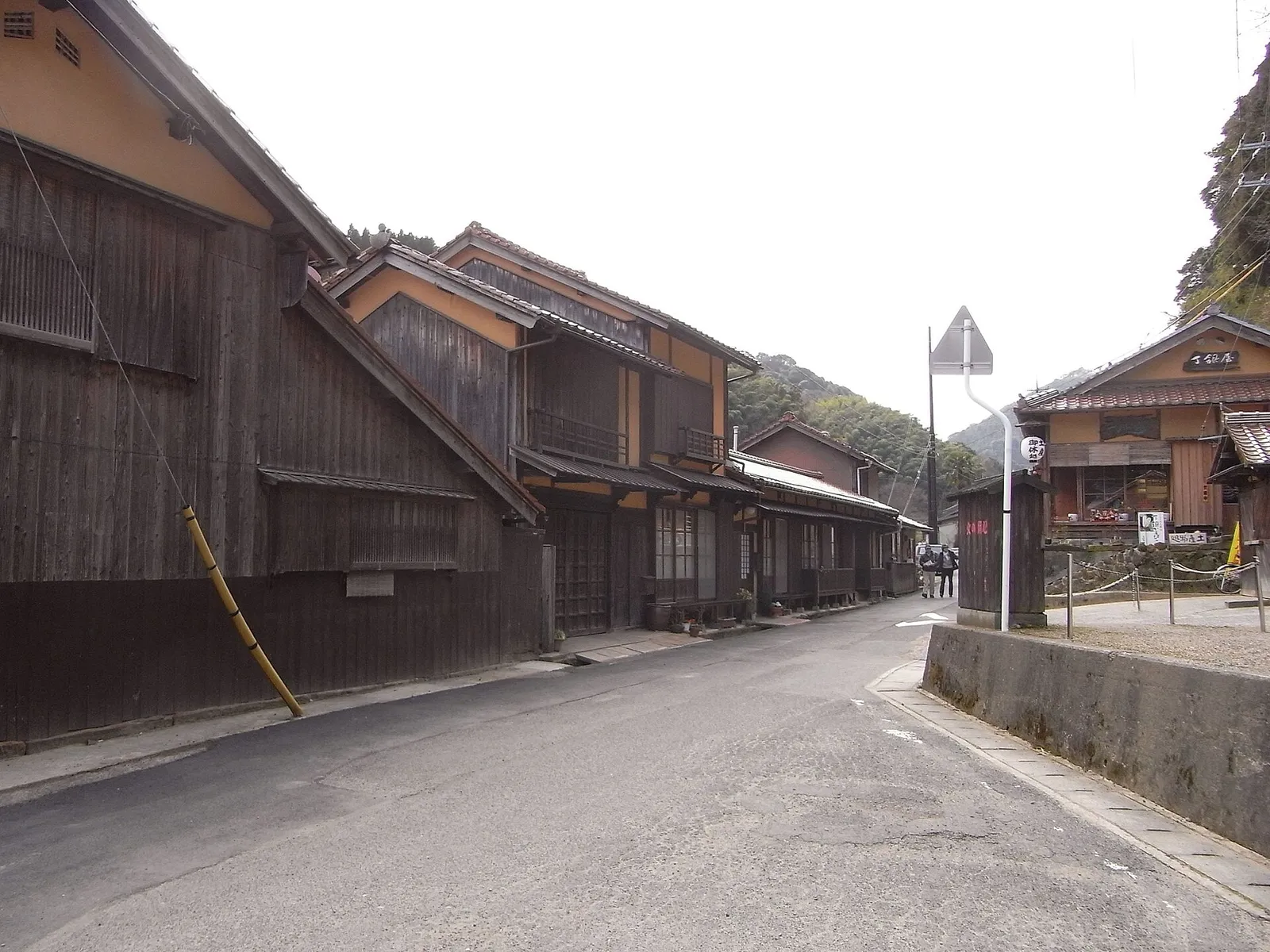
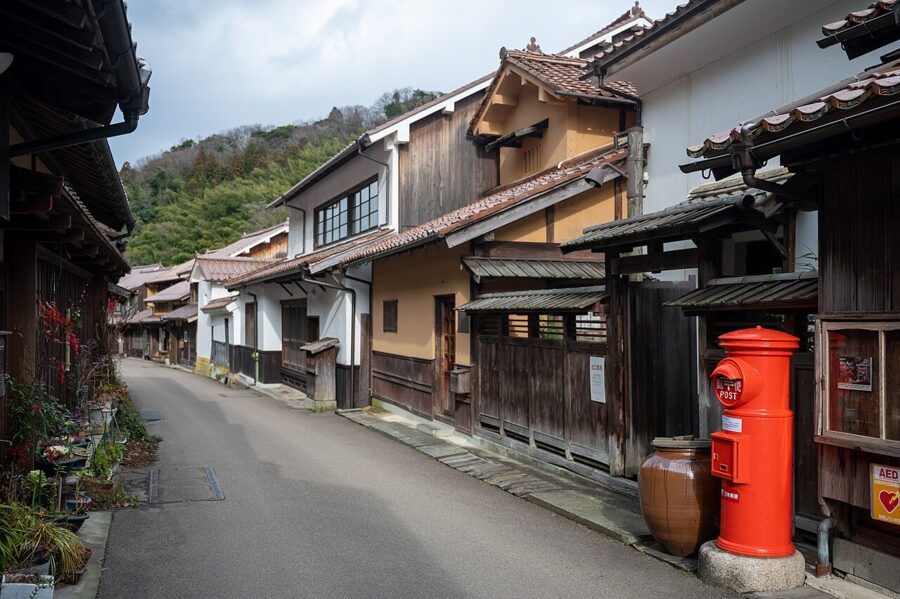
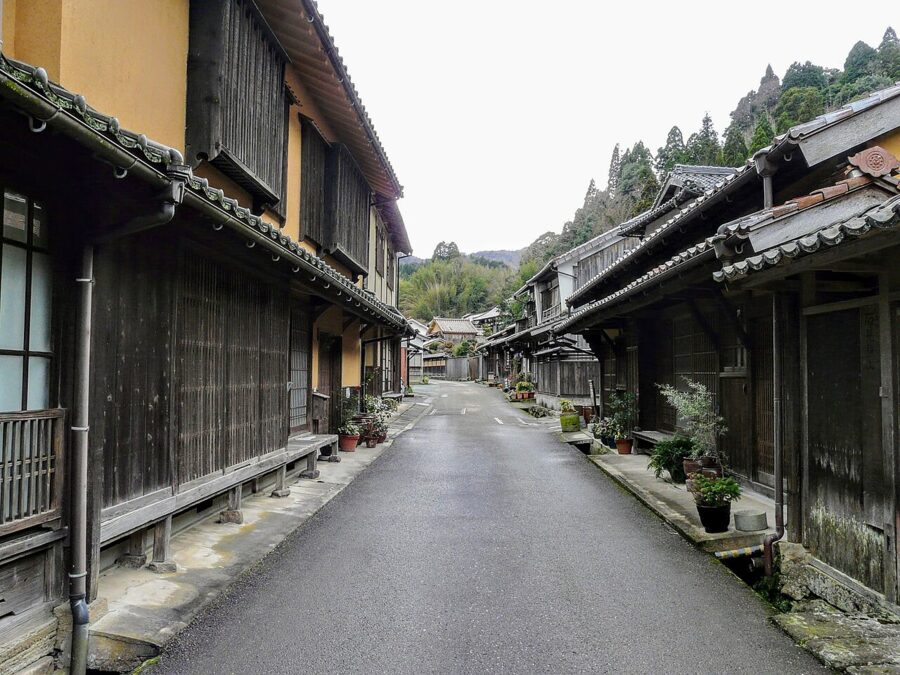
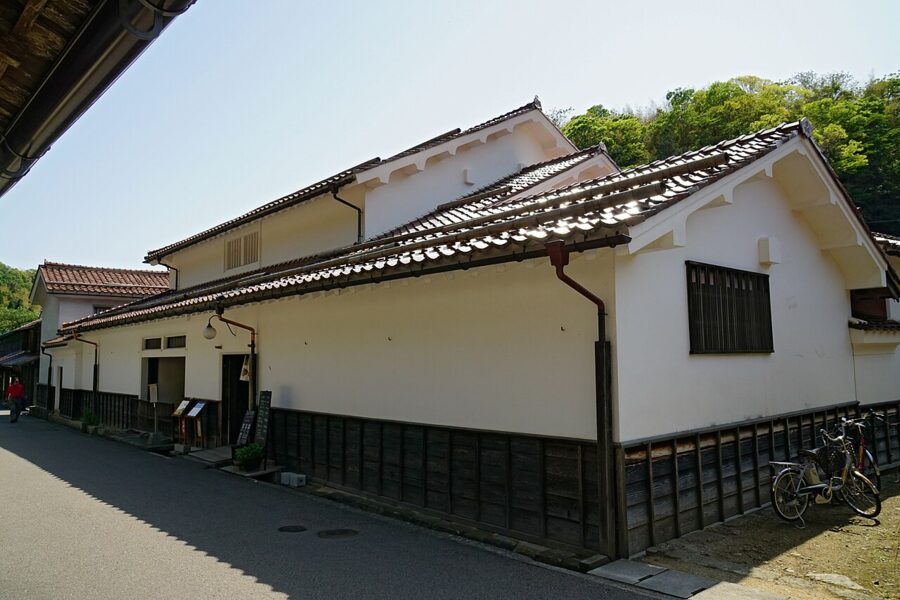
Ōmori was the administrative town of the silver district, home to samurai officials, merchants and craftsmen, and it still has people living in it. That is the first thing you notice: washing, bicycles, a post office, a bank branch in a wooden front. The town was made a national preservation district in 1987, and its shops trade behind sliding lattices without much fuss.

The Imo Daikan Museum
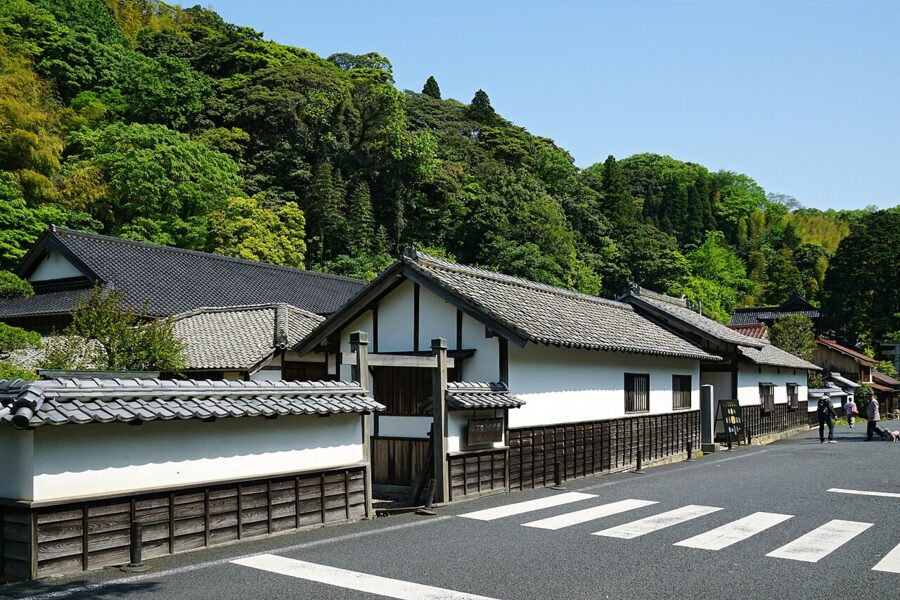
At the northern end of the street, the old magistrate’s office (代官所跡) now holds the town’s museum, the Imo Daikan Museum (いも代官ミュージアム), also signed as the Iwami Ginzan Museum. The name honours Ido Heizaemon, the magistrate appointed in 1731 who brought in sweet potatoes to see the district through the famine of the 1730s. The gate and its long row building date from 1815 and the main hall is a district office built in 1902.
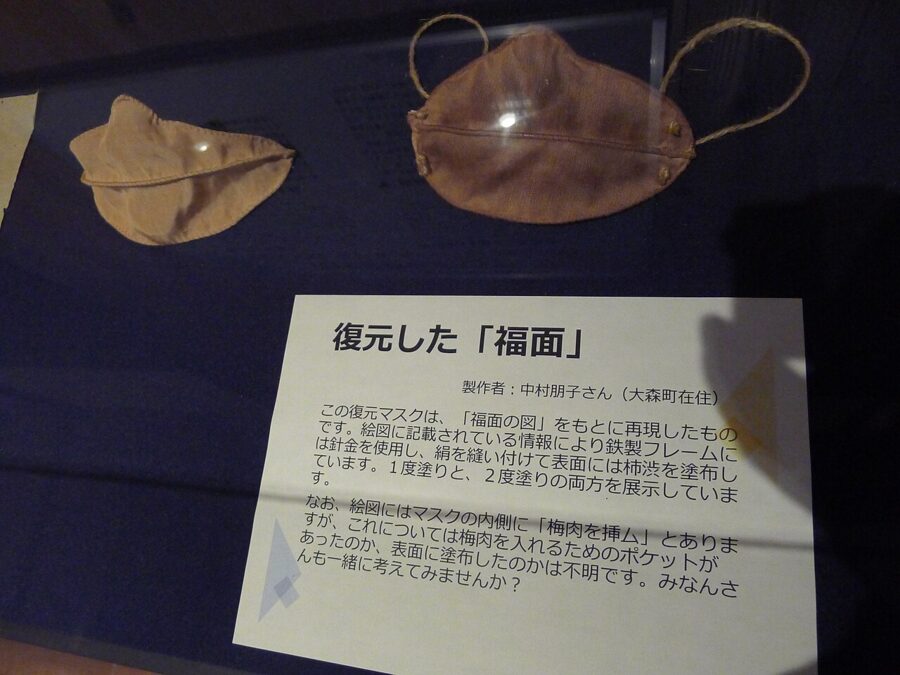
Inside are mining tools, ore samples, documents and painted scrolls of the mine at work. One case shows a reconstruction of the fukumen, a cloth mask miners wore against the dust, which the museum presents as Japan’s first. Entry is ¥600 (about US$4), it opens 09:30 to 17:00, and it is closed on Tuesdays (the next day when Tuesday is a holiday).


Kumagai House
Fifty metres down the street is the house I would choose if you only have time for one. The Kumagai family were the richest merchants in Ōmori, dealing in finance and sake brewing and serving as purveyors to the magistrate. Their house (熊谷家住宅), rebuilt after a great fire in 1800, has around thirty rooms and five storehouses and is a national Important Cultural Property.
Walking through it you see how the household and its buildings grew over the following century. Entry is ¥600 for adults and ¥200 for children, hours are 09:30 to 17:00, and it is closed on Tuesdays and over New Year. Its own website was being rebuilt when I checked, so ask in town about irregular closures.

Kawashima House
The former Kawashima House (旧河島家) is the only samurai residence in Ōmori open to visitors. The Kawashima family were local officials of the magistrate’s office who rose to lead its staff, and their early nineteenth-century house, restored in 1990, keeps the samurai layout of gate, front garden and main house set back from the road. It costs ¥300, opens 09:30 to 16:30 and closes on Tuesdays.
Rakan-ji and the five hundred rakan
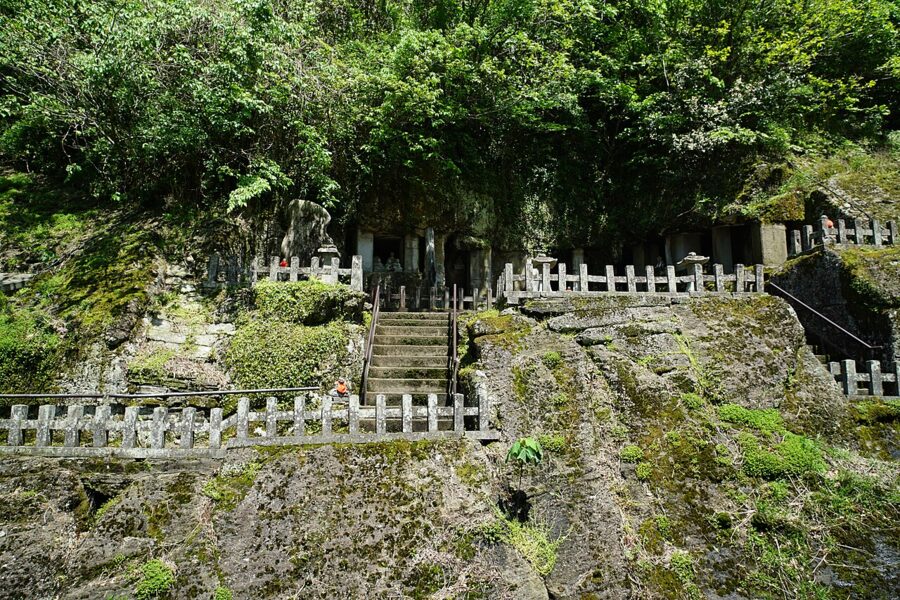
Just up the road from Iwami Ginzan Park, at the mine end of town, Rakan-ji (羅漢寺) is the stop most people remember. Over 25 years in the mid-eighteenth century, magistrates, officials and local people paid for three grottoes in the rock, finished in 1766 as a memorial to the miners who had died in the tunnels and to their own ancestors. The centre grotto holds a Buddha triad; the two others hold 501 seated stone figures of the Buddha’s disciples between them.
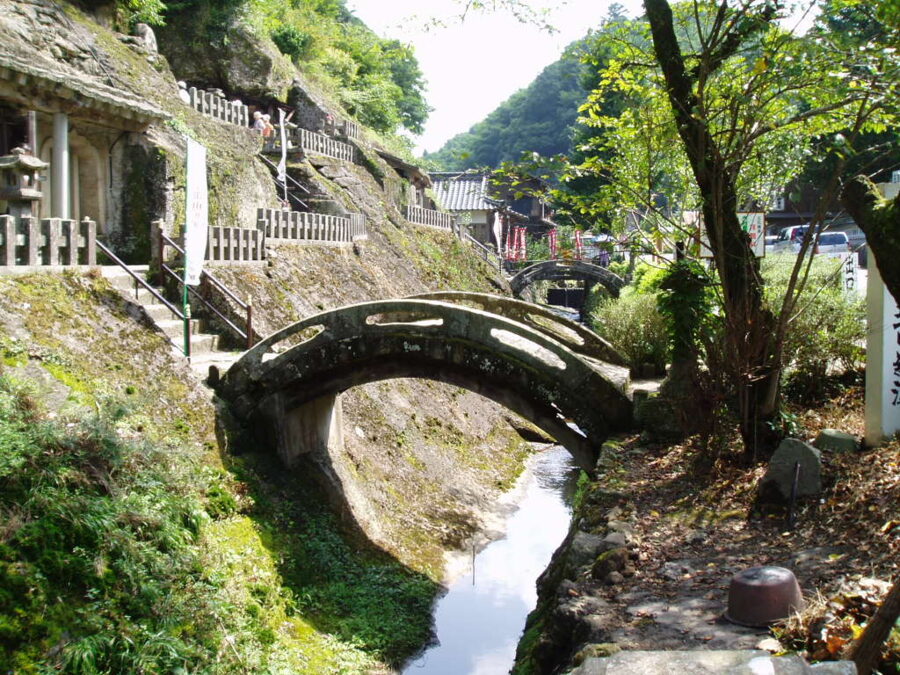

The figures are carved from Fukumitsu stone, quarried near Yunotsu and still worked today. Entry is ¥500 for adults and ¥300 for children, from 09:00 to 17:00, and the temple is open daily apart from its own ceremonies. The grottoes are dim, so let your eyes adjust before you decide you have seen them.

Between visits, the street has cafés, sweet shops and the flagship store of Gungendō (群言堂), the Ōmori-based clothing and lifestyle company, which closes on Wednesdays. The Kigami shrine and Kanzeon-ji temple are both short detours up steps off the street.
The mine shafts
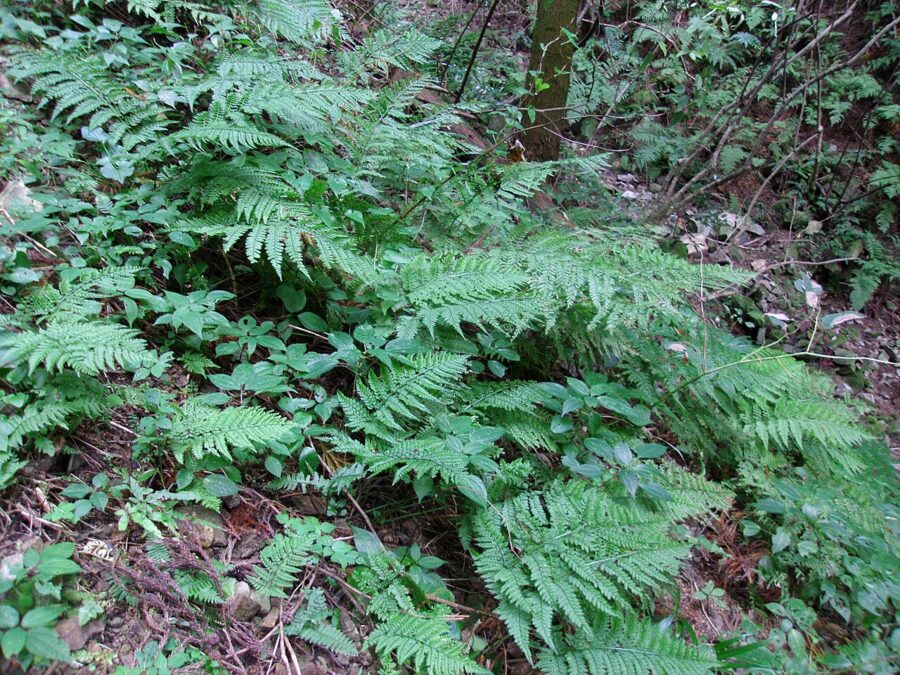
Miners called their tunnels mabu (間歩), and surveys have found nearly a thousand of them in these hills. Seven are listed national historic sites. Only one, Ryūgenji, is open every day; Ōkubo opens to guided tours in season, and the rest you see from the paths, as dark slots in the rock.
Ryūgenji Mabu: open daily
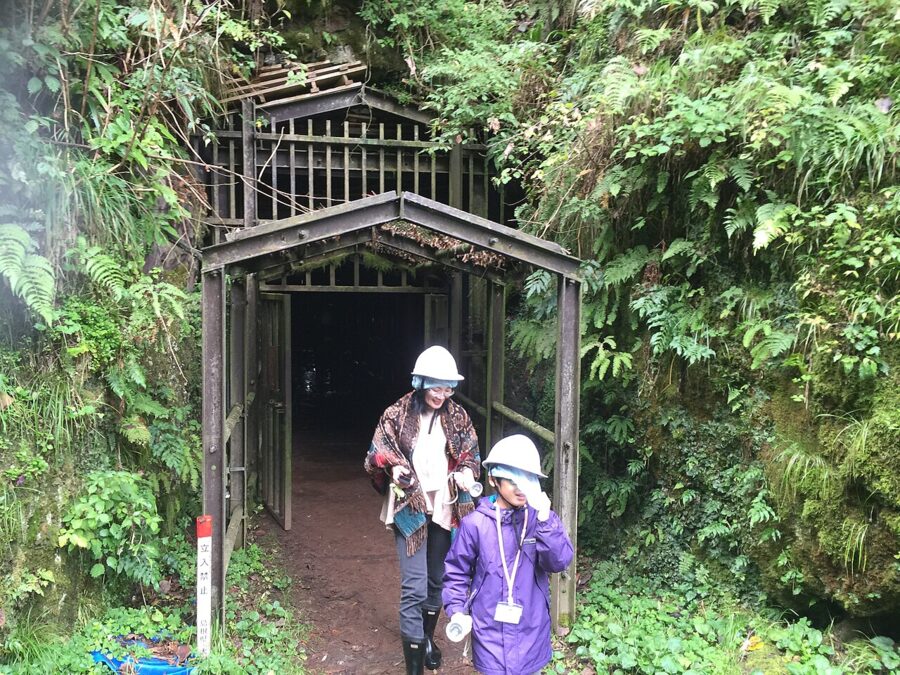
Ryūgenji Mabu (龍源寺間歩) was dug in the middle of the Edo period as one of the shogunate’s directly run mines and runs about 600 metres into the hill, the second longest after Ōkubo. The first 157 metres are open, and you leave by a newer 116-metre exit tunnel that brings the walk underground to 273 metres. That is why older guides quote 273 metres for the original shaft; the old part you can see is shorter.
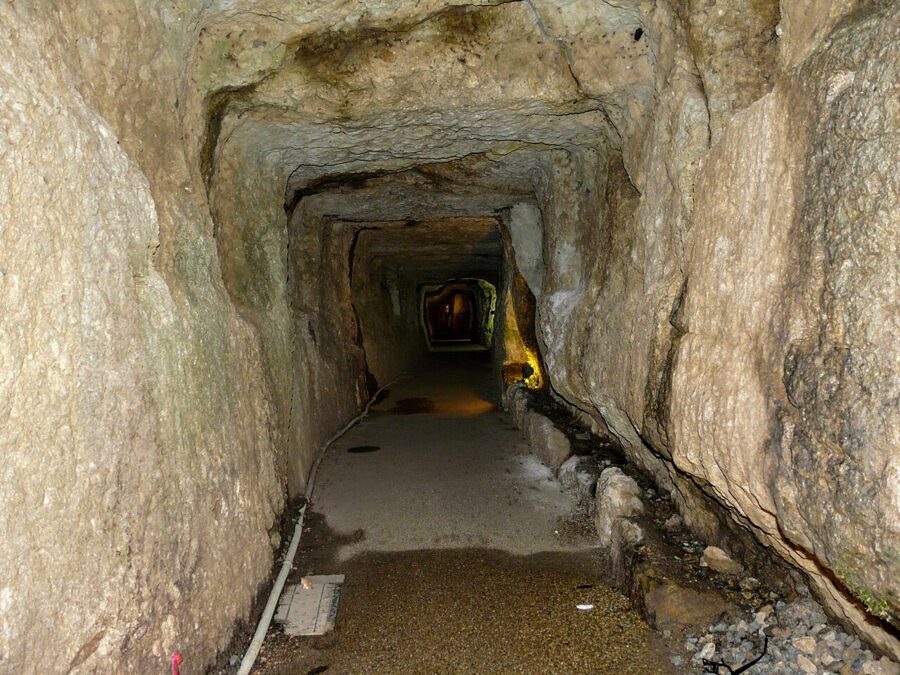
On the way through you see the chisel-marked walls, side tunnels that followed thin veins (hioi-kō), and a vertical shaft about 100 metres deep that drained water to a tunnel far below. The exit tunnel is lined with illuminated panels from the Iwami Ginzan picture scrolls, showing the mine at work. At an easy pace the walk through takes about a quarter of an hour, and it is cool inside all year.
Entry is ¥500 for high-school age and above and ¥250 for children, as of 2026. Hours are 09:00 to 17:00 (16:00 from December to February), last entry ten minutes before closing, and the only closed day is 1 January. One change catches people out: since December 2025 the Ryūgenji tickets are no longer sold at the hut by the entrance. Buy them at the new ticket office by the Ginzan Cart stop, below the Takahashi house, before you walk the last stretch to the shaft.

On a handful of weekend dates through March 2027, the shaft’s operator runs a 50-minute guided loop with a local guide that takes in the Takahashi house, two refinery sites and the shrine as well as the tunnel. It costs ¥1,500 (about US$10) including entry, takes eight people at a time and cannot be booked.
On the way up: refineries and the miners’ shrine
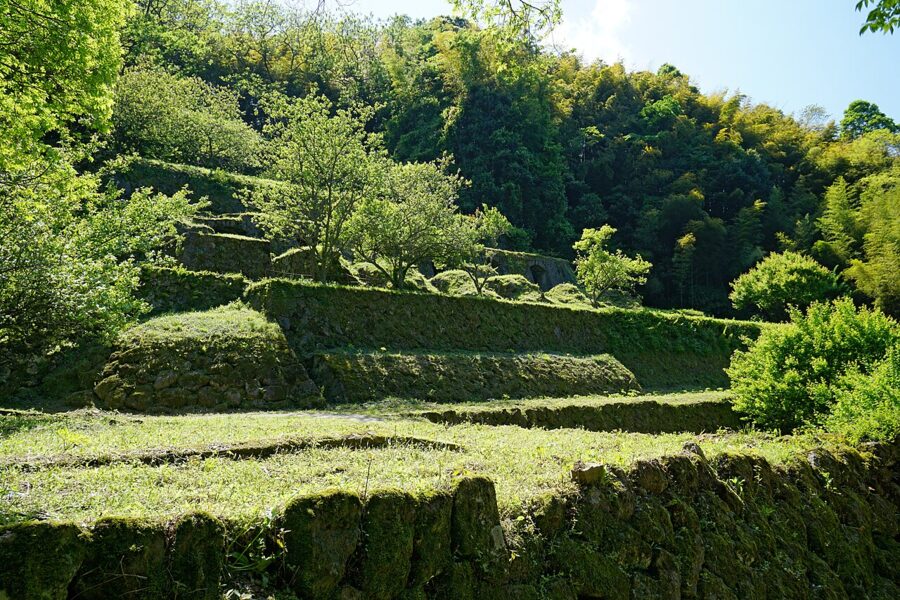
The path to Ryūgenji passes the remains of the mine’s working life. The Shimogawara refinery site, found by excavation, is where silver was separated using the lead cupellation method in the early 1600s. Further up, the Shimizudani refinery is a flight of stone terraces built into the slope in the 1890s with the newest technology of the day; it ran for only about a year and a half.

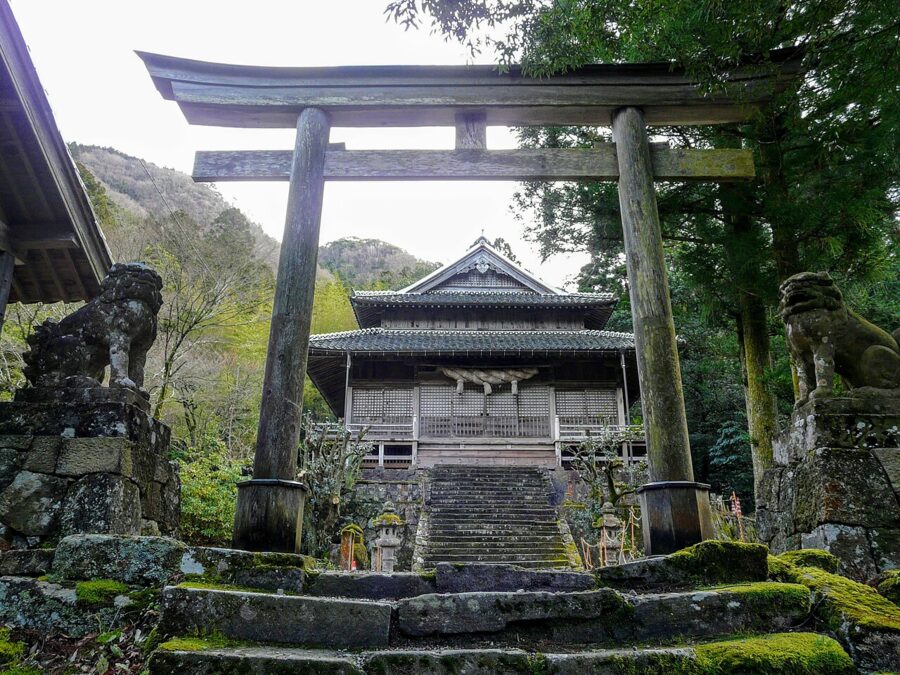
About 200 metres beyond the Ryūgenji exit, a steep stone stair climbs to Sahimeyama Shrine (佐毘売山神社), the mine’s guardian shrine, founded in the fifteenth century and rebuilt in 1819. Locals call it Yamagami-san, the mountain god. It is said to be the largest mountain shrine of its kind in Japan, and the climb is worth the five minutes.

Ōkubo Mabu: guided tours, booked ahead
Ōkubo Mabu (大久保間歩) is the largest tunnel at Iwami Ginzan, worked from the late 1500s until 1896. It takes its name from Ōkubo Nagayasu, the first Tokugawa commissioner, who is said to have ridden into it on horseback with a spear. Inside you see the smooth chisel-cut walls of the early workings next to the rougher sections widened in the late nineteenth century for mine carts.

Some of the sleepers from those cart rails are still on the floor, and one still holds a pair of nineteenth-century rail spikes called inukugi, “dog nails”, for their dog-head shape. The World Heritage Center says they are the only ones in Japan to have survived in place in a mine for over a century. The water seeping through the rock keeps the wood from rotting and the iron from rusting.
The Ōkubo Mabu tour is run by Iwami Kankō. In 2026 it ran from 1 March to 30 November on Fridays, weekends, public holidays, Golden Week and Obon, with four departures a day from the World Heritage Center at 09:45, 11:00, 12:30 and 13:45, each capped at 20 people. The price is ¥4,500 (about US$29) for adults and ¥3,500 for primary and junior-high pupils, including the bus, the guide and entry; children below primary-school age are not allowed in.
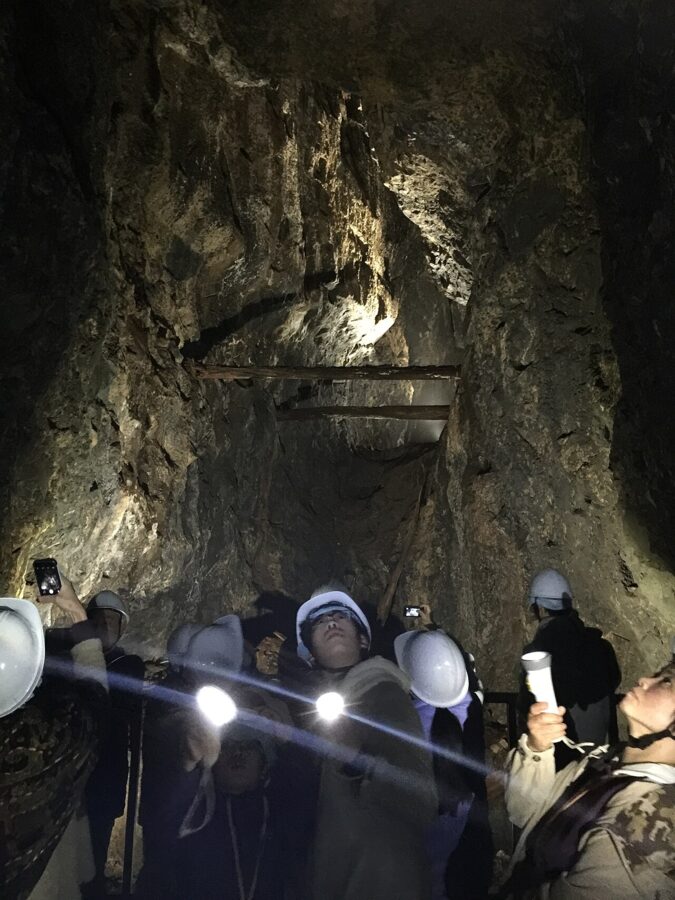

Plan on two hours. The bus drops you at a car park, and from there it is about 750 metres of gravel mountain path each way, more hike than stroll, with about 35 minutes inside the tunnel at around 10°C. Wear long sleeves, long trousers and shoes you can walk a muddy trail in, and bring rain gear; the tour runs in rain and stops only for storms. Pay on the day at the tour desk in the World Heritage Center.
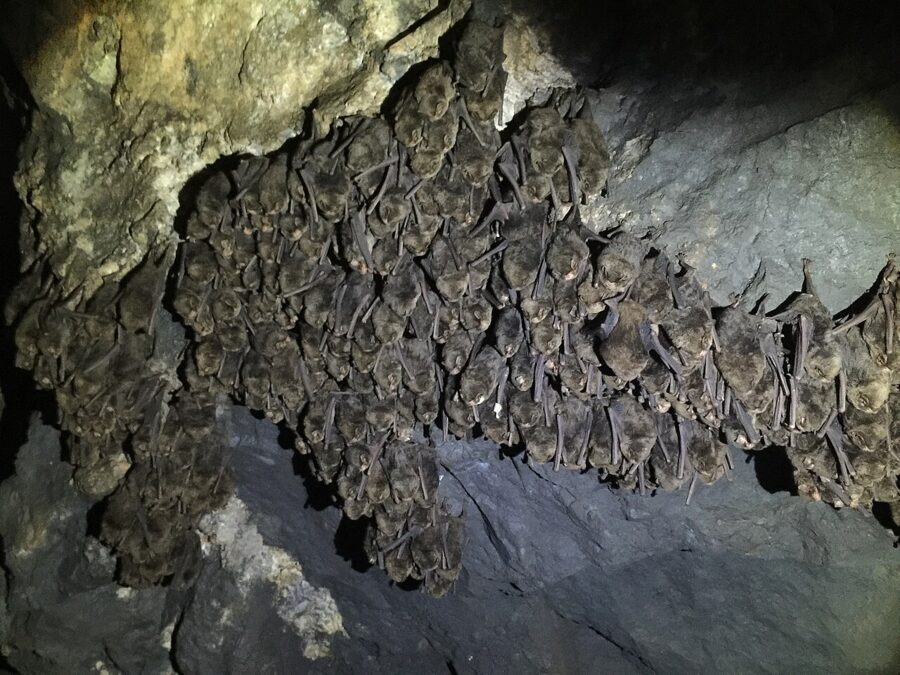
Booking is the catch. For the 2026 season, reservations for every date opened online and by fax on 13 January, first come, first served, and closed five days before each tour, though spare seats on a confirmed departure can be taken up to the day. A departure with fewer than five bookings five days out may be cancelled. The tour stops from December to February while the tunnel is closed for the winter, when bats hibernate in the old workings; the 2027 dates had not been published when I checked in late November 2026.
One more Ōkubo detail: in the months before Christmas, a local bakery ages its stollen in the tunnel. It has become one of the town’s specialities.

The World Heritage Center
The Iwami Ginzan World Heritage Center (石見銀山世界遺産センター) is where the Ōkubo tours start and where the cars stop, and in a normal year its exhibition rooms are the best introduction to the site, with a 30-kilogram silver ingot you could touch and feel the weight of, and a model of the whole mine area. Entry is ¥400, or ¥300 for foreign visitors showing a passport.
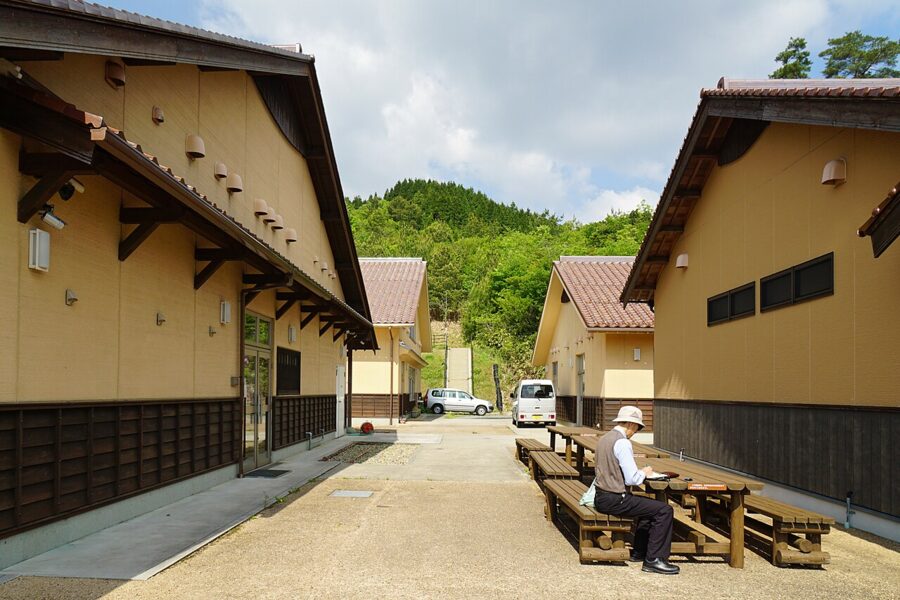

For now, plan around the building works. From October 2026 to the end of March 2027 the paid exhibition rooms, the information corner and the guidance corner are closed while the displays are renewed for the 2027 anniversaries. During that time the center is open 08:30 to 17:30 for site guidance, toilets, the Ōkubo tour desk, hands-on activities and the shop, and it closes on the last Tuesday of each month and over New Year. The World Heritage Center’s hours and fees page will show when the rooms reopen.
The 2027 programme marks twenty years since the listing and five hundred since the discovery of the mine, and the renewed exhibitions are its centrepiece. If you can choose, a visit after April 2027 gets you the new rooms.
The silver road to Yunotsu
Silver did not stay in the valley. Two roads carried it to the Sea of Japan: one north to Tomogaura, and one west over the hills to Okidomari and Yunotsu. Under the Tokugawa, Ōkubo Nagayasu sent much of the silver south over the mountains to Onomichi on the Inland Sea instead, because winter storms made the Sea of Japan crossing unreliable.

The Yunotsu–Okidomari road
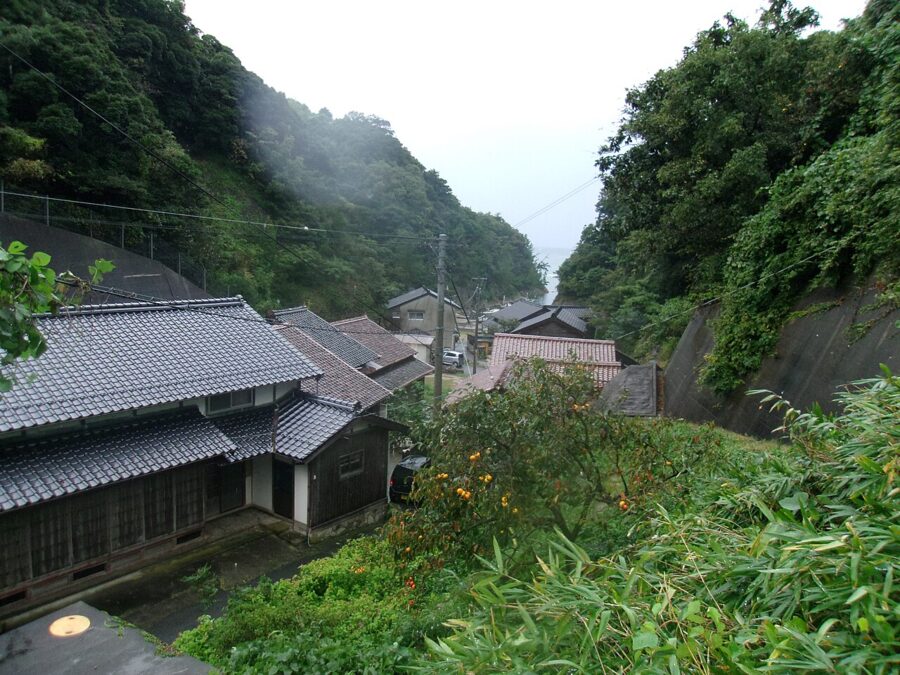
The Yunotsu–Okidomari road (温泉津沖泊道) is about 12 to 15 kilometres from the old Sakaneguchi checkpoint above Ōmori, over the Gōrozaka pass at 429 metres, through the terraced fields of Nishida and down to Okidomari. One way takes about four hours, and the climbs are steady rather than steep.
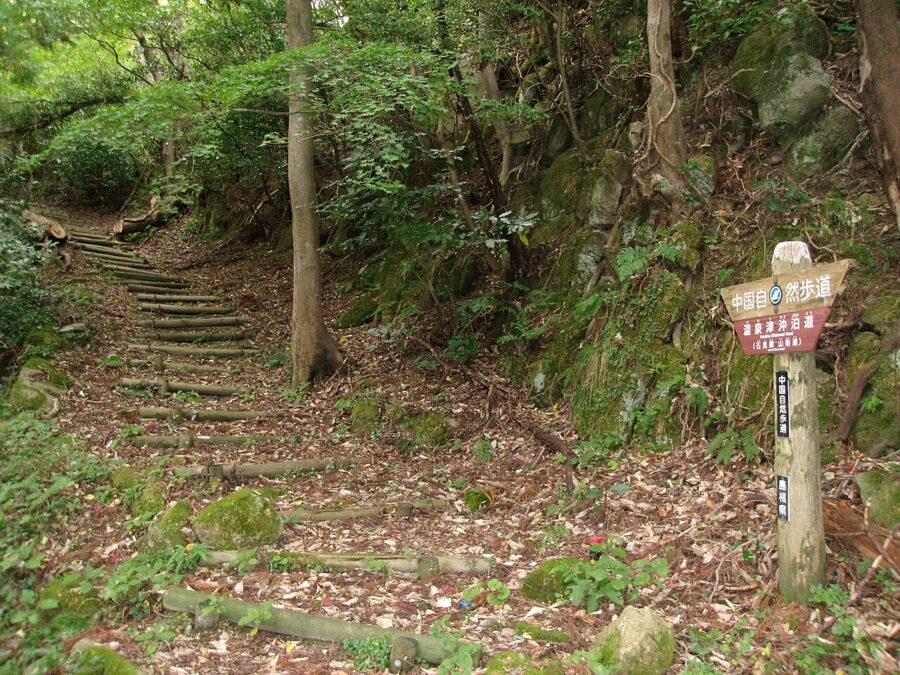

The hitch is the pass. Since 20 February 2025, the section between Gorō bridge and the Sakaneguchi checkpoint has been closed after slips, rockfall and damage to the path, and Ōda City’s notice on the silver road closure gives no date for reopening. The guide association has stopped leading the walk until repairs are done. The closure notice covers only that stretch, so if you want a taste, drive or take a taxi to Nishida and walk the lower half to the sea.
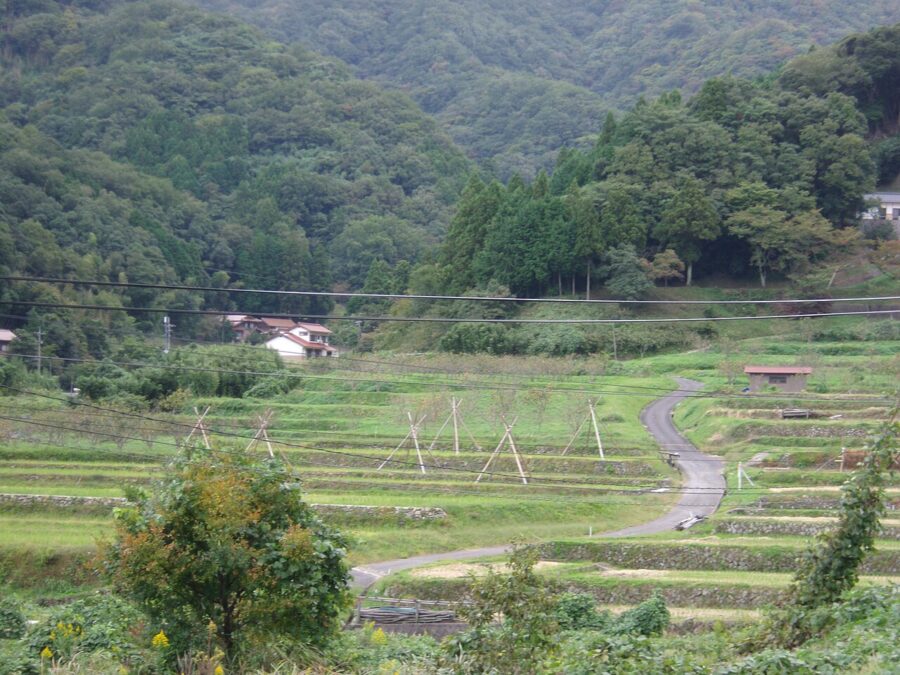

Okidomari
Okidomari (沖泊) is a narrow inlet a short way north of Yunotsu, sheltered enough for sixteenth-century ships to ride out the weather. Its rocks still carry hanaguri-iwa, holes cut through outcrops at the water’s edge to tie mooring lines. A handful of houses line a single lane down to the water, and it is part of the listed site.
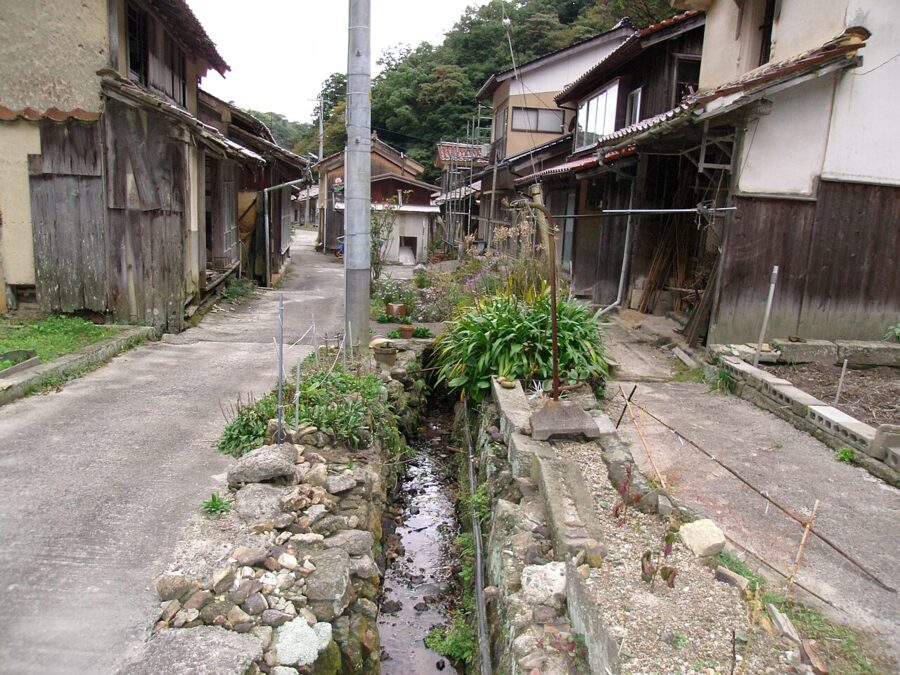

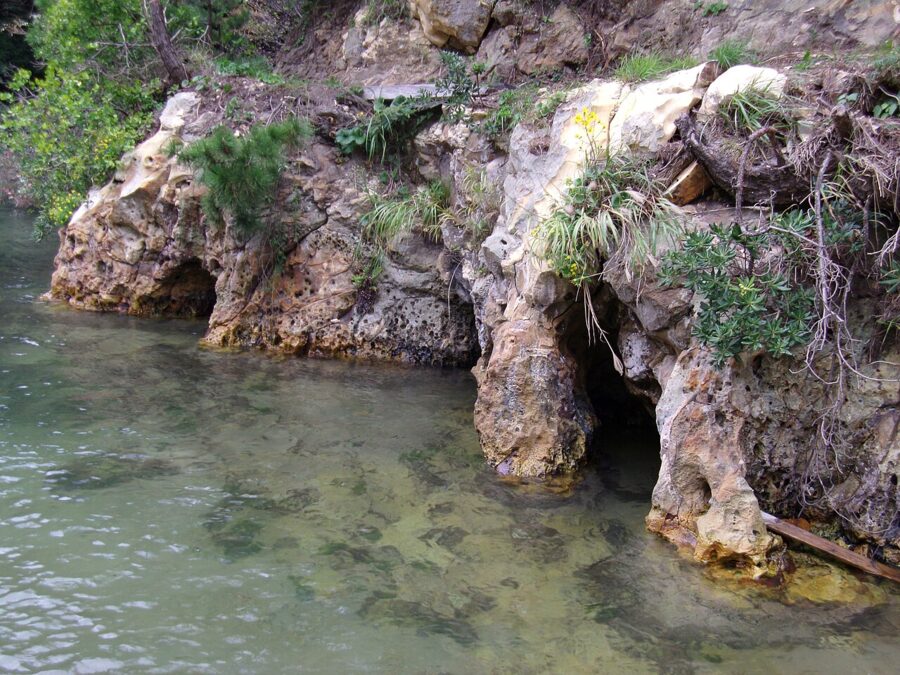

Yunotsu Onsen
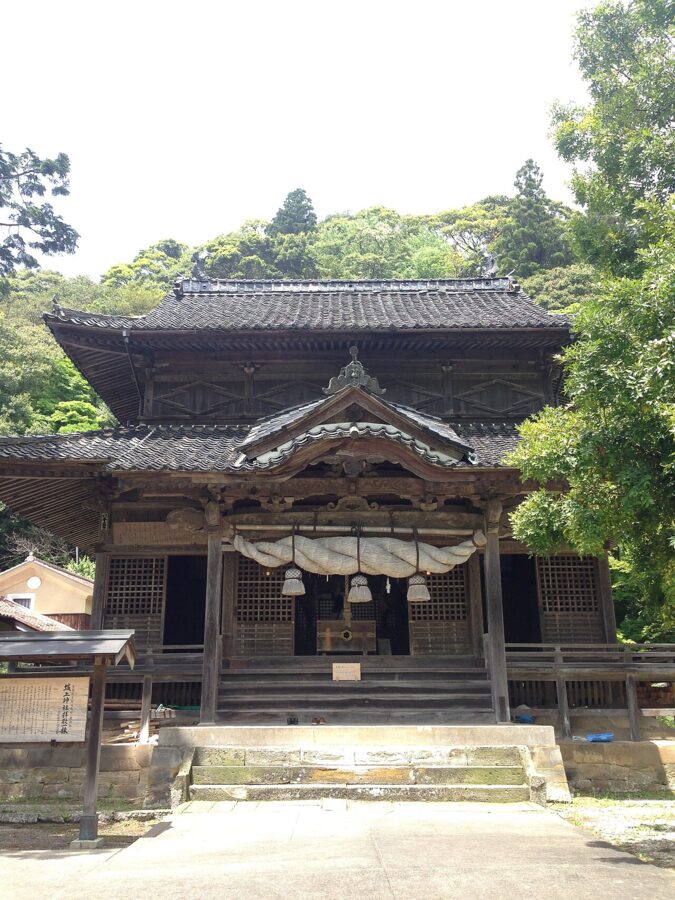
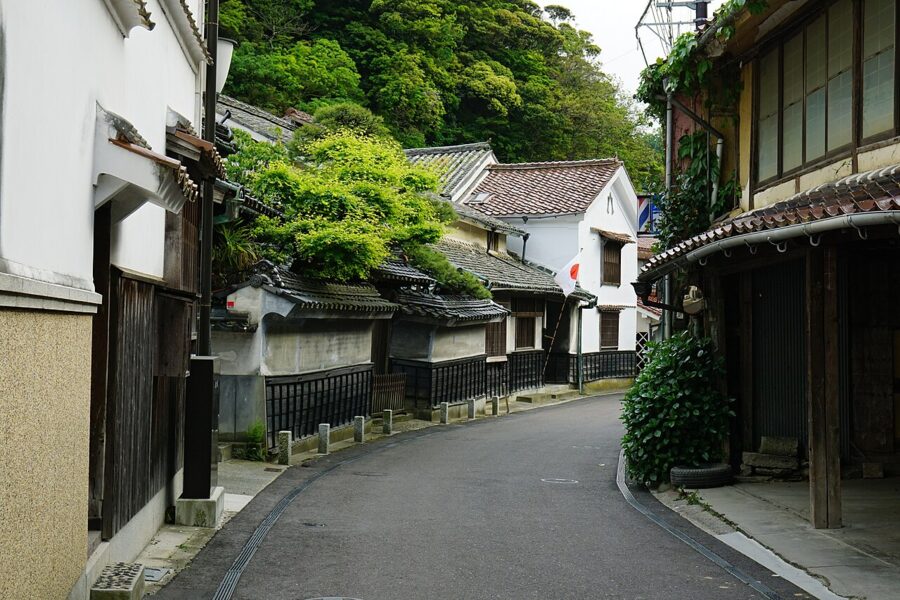
Yunotsu (温泉津) is the port that grew rich on silver and kept its hot springs. Its name means “hot spring harbour”, and it is the only onsen town in Japan that is also a national preservation district for historic buildings. One street of old inns, red Sekishū roof tiles and wooden fronts runs up from the harbour, with two public baths on it.
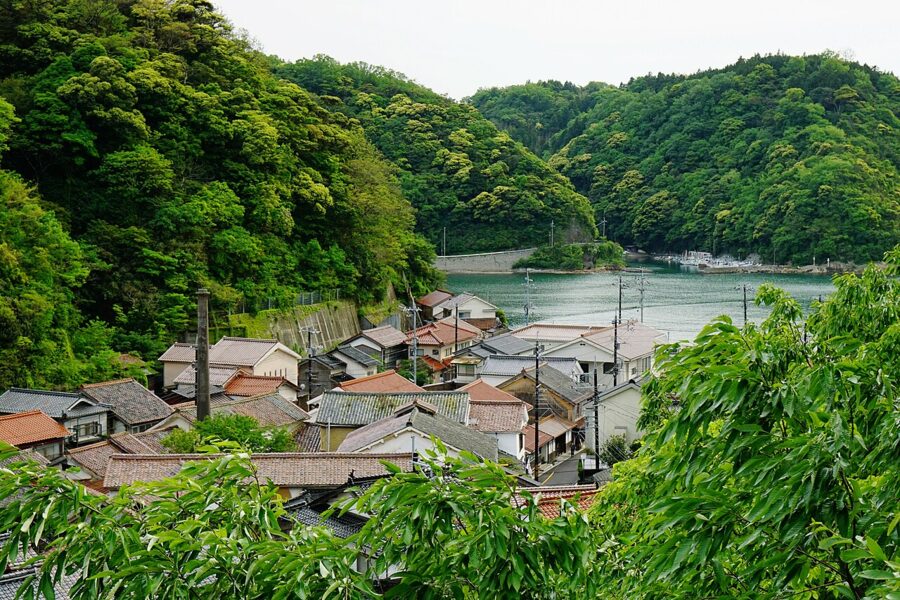

Motoyu (元湯), also called Senyakutō, is the older of the two, the source said to have been found 1,300 years ago by a tanuki. It is a plain local bathhouse with a loyal crowd of regulars.
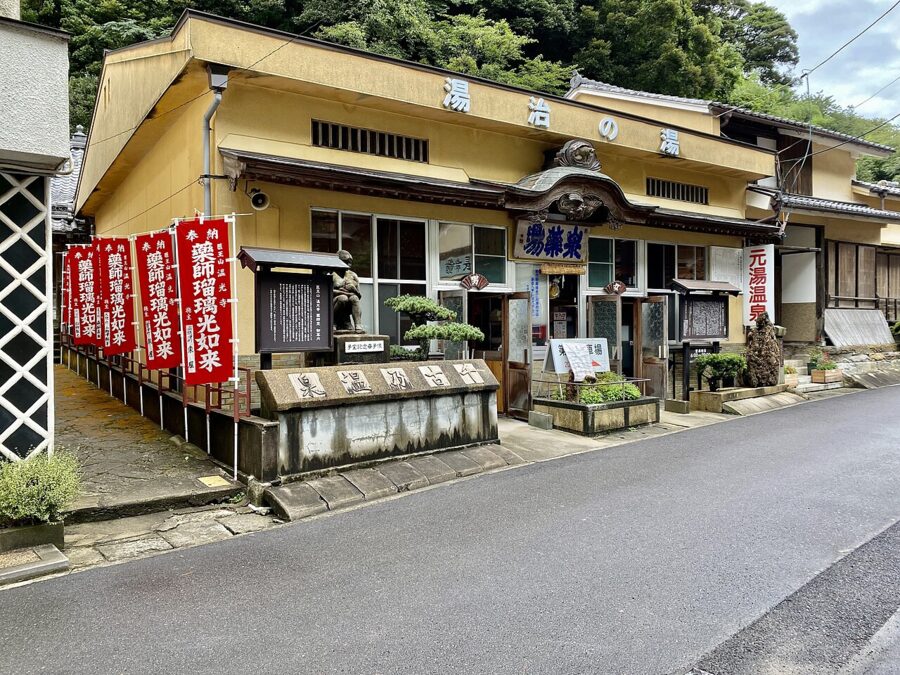

Yakushiyu (薬師湯), up the street, draws its water from a spring directly behind the building at about 46°C, and the bath is famous for the crust of mineral deposits built up around it.
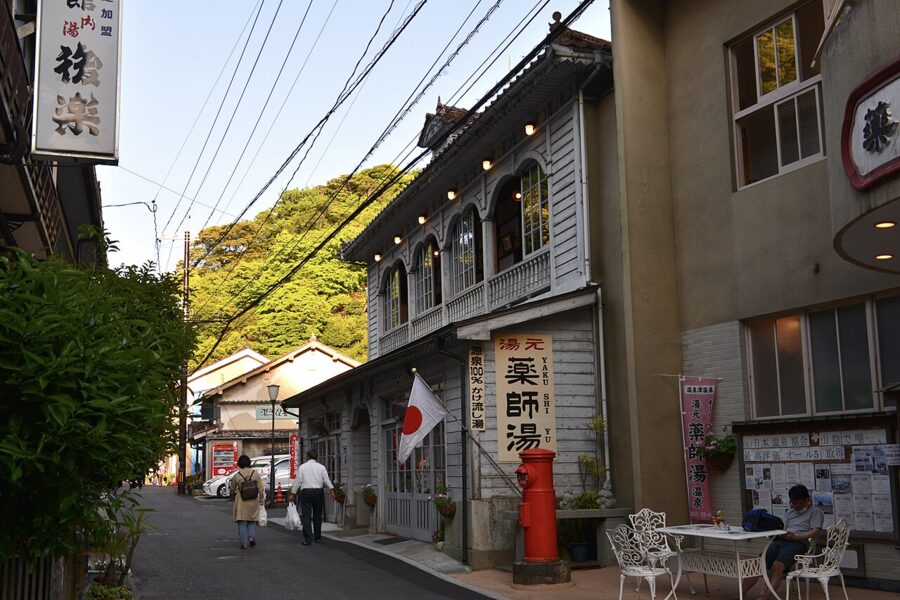

The Yakushiyu bathhouse also runs a private family bath, and its old building next door now houses the Shinyu Café Kuranojō, which serves lunch from 11:00. I could not confirm current bath prices for either bath from their own sources, so take some yen in coins and expect to pay a few hundred.

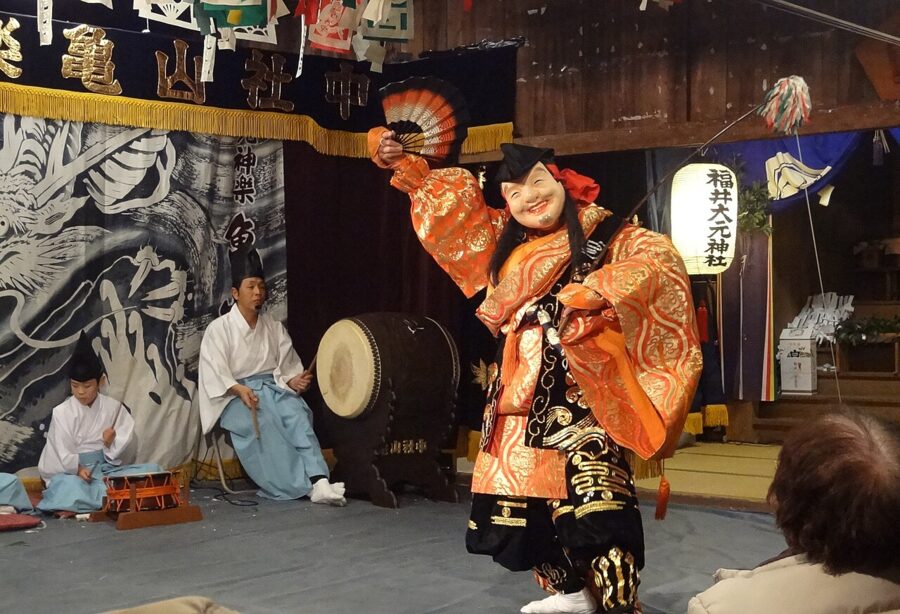
On Saturday nights, the Tatsunogozen Shrine stages Yunotsu’s night kagura, the regional masked dance-drama called Iwami kagura, from 20:00 to 21:30 in a hall that seats about 65. Seats cost ¥2,000 (about US$13), paid in cash at the shrine, and must be reserved ahead by phone or email; check-in opens at 19:30. The regular programme ends with Orochi, the eight-headed serpent, and it is the best reason to stay over.

Between Ōmori and Yunotsu
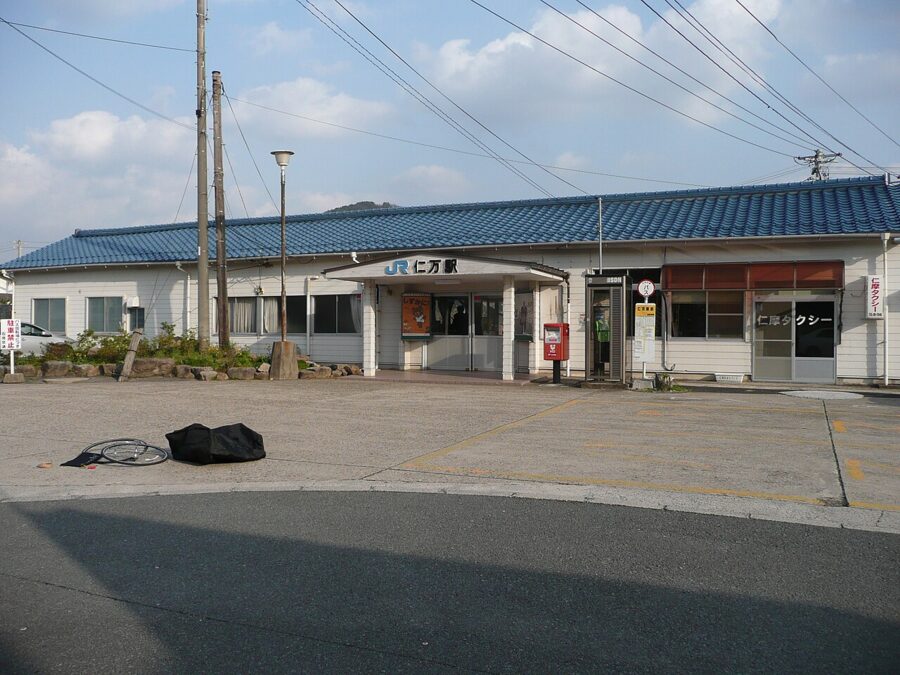
By car it is 25 to 30 minutes by the San’in Expressway or Route 9. By public transport you combine a bus to Nima station with a short hop west on the San’in line to Yunotsu, or travel via Ōdashi. Guests staying at a Yunotsu inn can use a shared taxi from Iwami Ginzan Park at 16:30, booked in person at the Ōmori tourist information office by 16:00 the same day, costing ¥1,400 to ¥4,200 a head depending on how many share; the Yunotsu shared taxi also runs the other way at 08:30.
Getting there
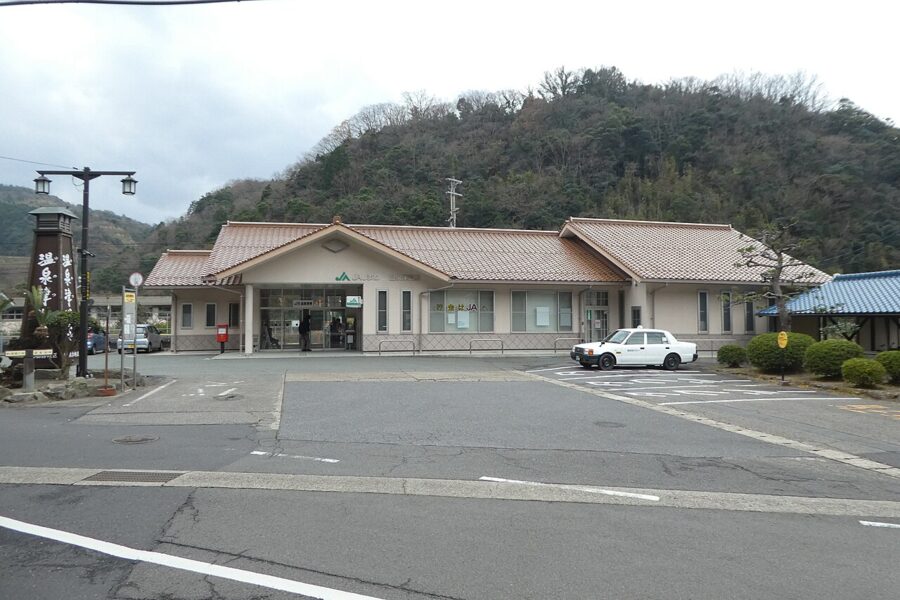
The nearest JR station is Ōdashi (大田市), on the San’in main line, and the bus from there into the valley is the backbone of a day trip. A car gives you more freedom, especially for Yunotsu and Okidomari, but you still park at the World Heritage Center and ride in.
From Izumo and Matsue by train
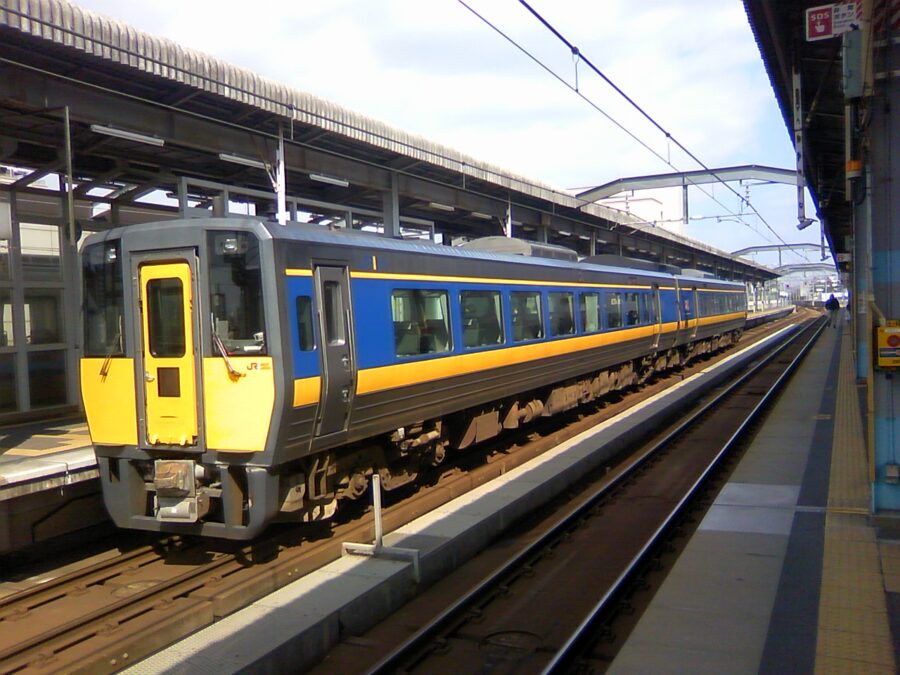
From Izumo, the Super Matsukaze and Super Oki limited expresses reach Ōdashi in a little over 20 minutes. The Super Matsukaze 1, for example, leaves Izumoshi at 09:08 and arrives at 09:30. Local trains take around 40 minutes, and from Matsue you add roughly half an hour to Izumoshi. A JR pass covering the San’in line, such as the Sanyo-San’in Area Pass, covers the limited express.

From Ōdashi, Iwami Kōtsū buses run to Ōmori Daikansho-ato in about 26 minutes for ¥640, to the Ōmori stop for ¥680 and on to the World Heritage Center for ¥760. On the timetable in force from 2 May 2026 there are one or two buses an hour from early morning to early evening, with a few runs dropped at weekends; the Iwami Ginzan bus map and timetable has the times. Note your return bus before you set off up the valley.
The train between Izumo and Ōdashi is the start of the finest stretch of the San’in coast. West of Ōdashi the line runs close to the sea past Nima and Yunotsu, and the San’in line coast ride is one to keep for daylight, sitting on the right going west.

From Hiroshima by bus
The Iwami Ginzan-gō express bus links Hiroshima directly with the valley twice a day. On the current timetable it leaves the Shinkansen exit of Hiroshima station at 10:00 and 14:55 and reaches the World Heritage Center about two hours and 40 minutes later, then Ōmori and Ōdashi. Going back, it leaves Ōmori Daikansho-ato at 07:50 and 16:20. Seats are unreserved, and the fare is ¥3,500 (about US$22) from Hiroshima to the World Heritage Center.
By car
The San’in Expressway now runs most of the way along the coast, and the Ōda tourism association puts Ōda about 50 minutes from Izumo, 70 from Matsue and two hours from Hiroshima. From the Nima-Iwami Ginzan interchange it is about 15 minutes’ drive. In winter, carry snow tyres or chains if you are coming over the mountains from the Hiroshima side.
So leave the car at the World Heritage Center, take the bus to Ōmori, and walk up the valley to that small door in the hill before the tour groups arrive. Then come back down for the town, and if there is a bed free in Yunotsu, take it.