At eight o’clock on a Saturday morning the fishmongers of Karato Market stop selling fish. The ice beds of whole fish give way to trays of nigiri priced by the piece, and by nine the aisles are packed with people pointing at pufferfish, tuna belly and sea urchin, then carrying their little plastic boxes out to the boardwalk. Just beyond the railings the Kanmon Strait runs past like a salt-water river, with Kyushu on the far bank.
Shimonoseki (下関) sits at the very western tip of Honshu, and nearly everything worth your day here is about that strait. The Genji wiped out the Heike in its currents in 1185, Chōshū gunners fired on Western ships from its shore in 1863, and Japan and Qing China signed the treaty that ended their war on the slope above it in 1895. You can walk under it in fifteen minutes, sail across it in five and eat its fish from breakfast until dinner.
It is also the home of fugu, the pufferfish that can kill you if the wrong person prepares it, and which Shimonoseki calls fuku, a homophone of the word for good fortune. Come between autumn and spring, on a Friday, Saturday or Sunday, and you get the market at full tilt and the fish at its best.
On this page10 stops
- Day trip, overnight, or both sides of the strait
- Karato Market and the weekend sushi stalls
- Fugu: the season, the plate and the rules that keep it safe
- The Kanmon Strait: under it, over it, across it
- Akama Shrine and the end of the Heike
- Shunpanrō and the Treaty of Shimonoseki
- Ganryūjima, the duelling island
- Chōfu, the samurai town inland
- Views and other stops along the water
- Getting to Shimonoseki and around

The city is bigger than its sights suggest. Since the 2005 mergers it runs all the way up the Sea of Japan coast, but the part you want is compact: the Karato waterfront, Akama Shrine and Shunpanrō within a short walk of each other, the tunnel entrance a few bus stops east, and the old castle town of Chōfu half an hour beyond.

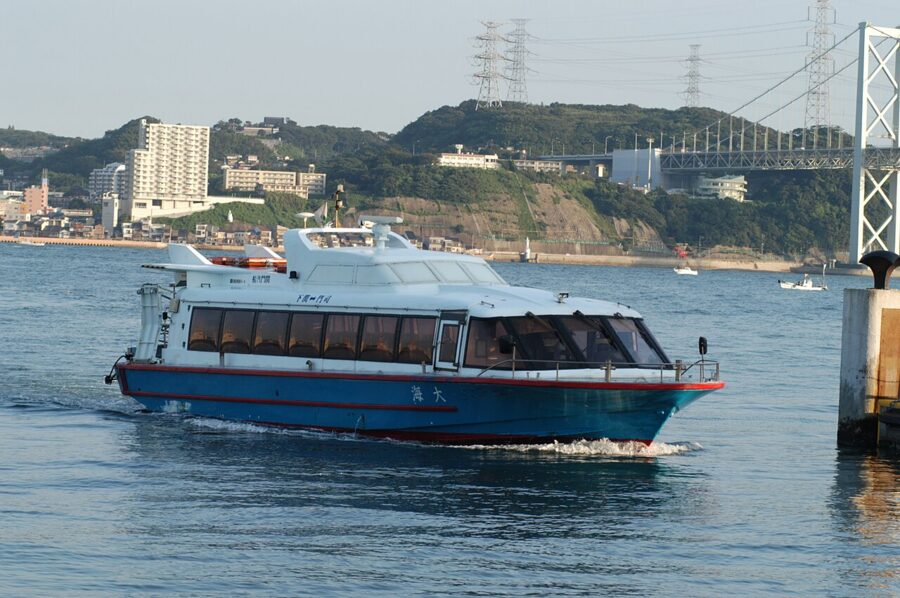
None of it needs a car. Buses run along the waterfront every few minutes, a ferry crosses to Mojikō on the Kyushu side three times an hour, and the most memorable crossing of all is on foot, under the seabed.
Day trip, overnight, or both sides of the strait
Shimonoseki works as a day trip from either direction. From Hakata in Fukuoka a Kodama reaches Shin-Shimonoseki in about 26 minutes; from Hiroshima the Kodama takes about an hour. Either way you can be at Karato Market by mid-morning and back in your hotel for dinner.
My pick for a single day is the waterfront loop: Karato Market for a late breakfast, Akama Shrine and Shunpanrō next door, a bus to the tunnel at Mimosusogawa, a walk under the strait to Moji, then the ferry back from Mojikō to Karato. It is roughly five hours at an easy pace, and it gives you both shores of the strait without a single train.
Stay a night if you want Chōfu or Ganryūjima as well, or a proper fugu dinner. The full fugu courses at the best-known restaurant in town must be booked four days ahead, and a slow evening meal is the point of them.
Timing matters more than usual. The weekend stalls at Karato run only on Fridays, Saturdays, Sundays and public holidays, and on weekdays the market is a working wholesale floor that winds down by early afternoon. Wild fugu is a winter fish, and early May brings the Sentei-sai festival at Akama Shrine, when the town fills up.
If you would rather have someone else handle the ferries, a private full-day trip with a nationally licensed guide covers Shimonoseki and Moji Port on foot and by public transport, choosing three or four stops from a list. It runs about six hours, and fares and admissions are extra (my review has the details).
Karato Market and the weekend sushi stalls
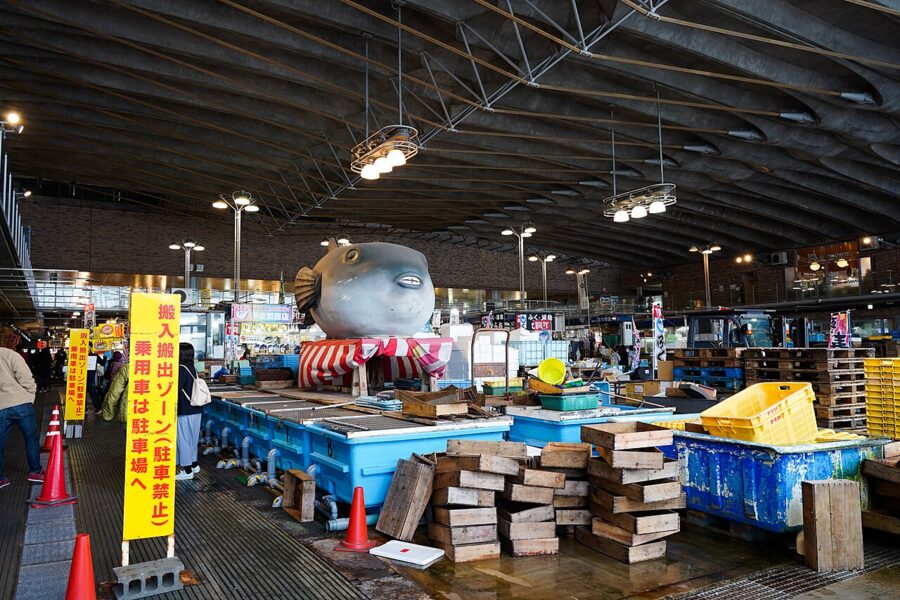
Karato Market (唐戸市場) is a working wholesale fish market, famous for fugu but just as busy with sea bream and yellowtail, and unusually for a Japanese wholesale market it lets local fishermen and farmers sell directly to the public. Fish has been traded on this spot since 1924, when the market moved here from the Amidaji district, and the current hall with its long curved roof opened in April 2001.

When to go
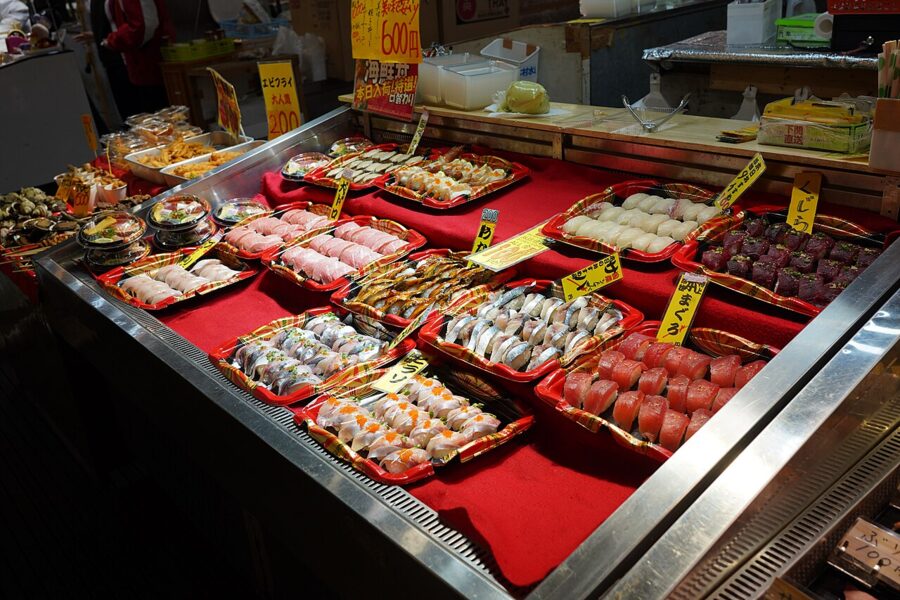
The event that draws the crowds is Ikiiki Bakangai (活きいき馬関街), named after Bakan, the old name for the town. The fishmongers sell ready-made sushi and seafood instead of raw fish, on Fridays and Saturdays from 08:00 to 15:00 and on Sundays and public holidays from 07:00 to 15:00, as of November 2026. Some listings still give a 10:00 start; the one to trust is the market’s own calendar.
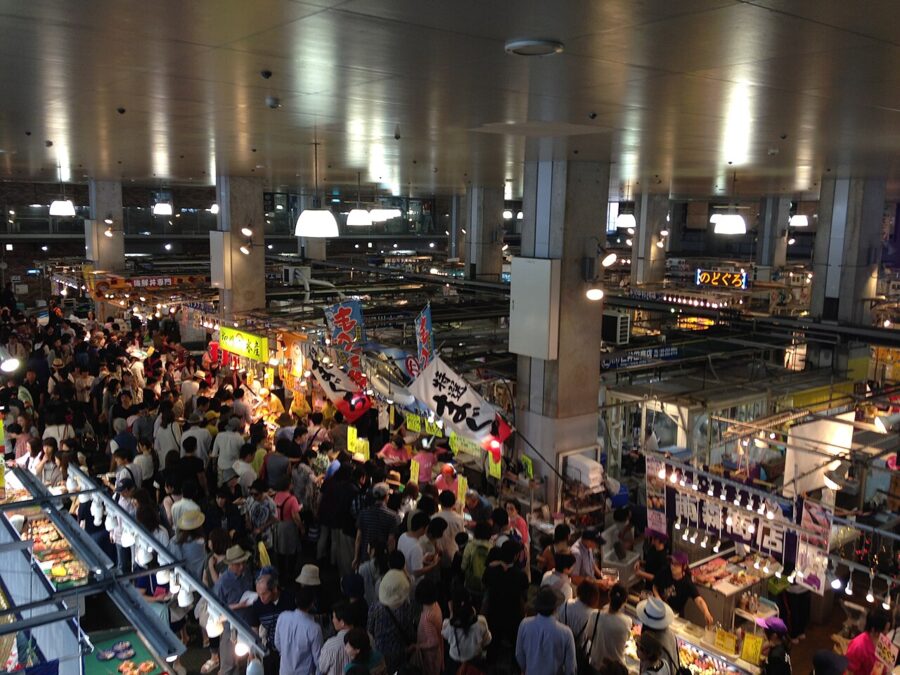
Stalls open and close according to what they bought that morning, and the popular ones can sell out before 15:00. Arrive in the first hour and you get the full spread with room to move; by late morning on a Saturday the aisles are crowded and the queues long.

On weekdays the stalls are gone and the hall belongs to the trade. The wholesale side starts at 04:00, and the market itself suggests 07:00 to 09:00 as the best window for a browse, after the professionals have left and before the shoppers arrive. It closes on some Wednesdays, over the Obon holiday in August and at New Year, and there is a fresh-fish morning market on the second and fourth Thursdays from 07:00 to 10:00.
What to eat
Sushi pieces start at a little over ¥100 (about US$0.70) each, with fugu, tuna and sea urchin costing more. Look for fugu nigiri and fugu karaage (fried pufferfish), whale, and fuku-jiru, a miso soup with chunks of fugu that warms you up on a cold morning outside. Keep a hand free: you will be juggling a tray, chopsticks and a cup.

Upstairs there are sit-down options. Ichiba Shokudō Yoshi serves fish set meals to market workers from 06:00 (08:00 on Sundays and holidays) until 14:00, with a seafood bowl at ¥1,800 (about US$12) and the Yoshi set of fried prawns, fugu karaage and sashimi at ¥2,000 (about US$13); it closes on Tuesdays and Wednesdays. Kaiten Karato Ichiba Sushi, a conveyor-belt counter on the same floor, opens 11:00 to 15:00 except on Wednesdays.
Fugu: the season, the plate and the rules that keep it safe
Shimonoseki has been eating fugu since prehistory; Jōmon-era shell mounds in the area are full of pufferfish bones. Toyotomi Hideyoshi is said to have banned it in the 1590s after his soldiers kept poisoning themselves, and selling it stayed illegal into the Meiji era. Locals ate it anyway.
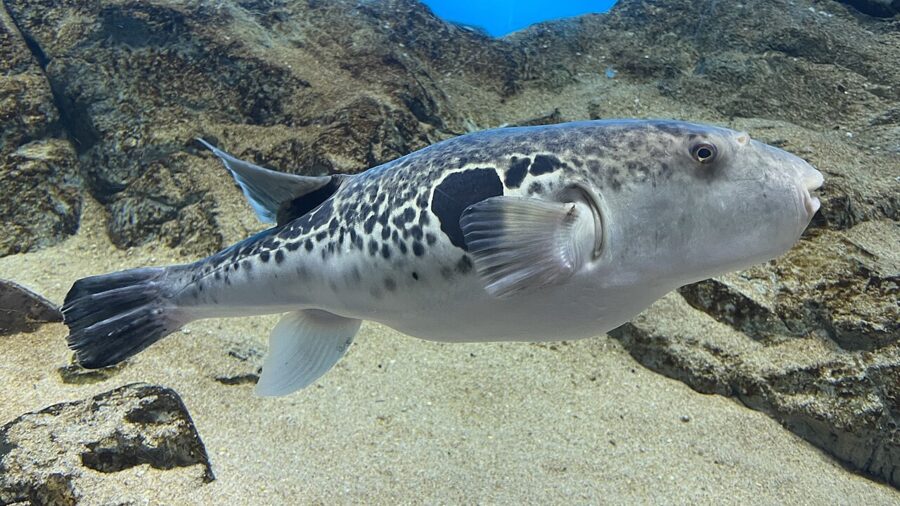

The change came at the end of 1887. Itō Hirobumi, Japan’s first prime minister and a Chōshū man who knew the taste from his youth, stayed at the Shunpanrō inn during a storm that kept the fishing boats in, and the landlady served him the forbidden fish rather than nothing. In 1888 he had the governor of Yamaguchi lift the ban, and Shunpanrō became the first licensed fugu restaurant in Japan.
How it is served
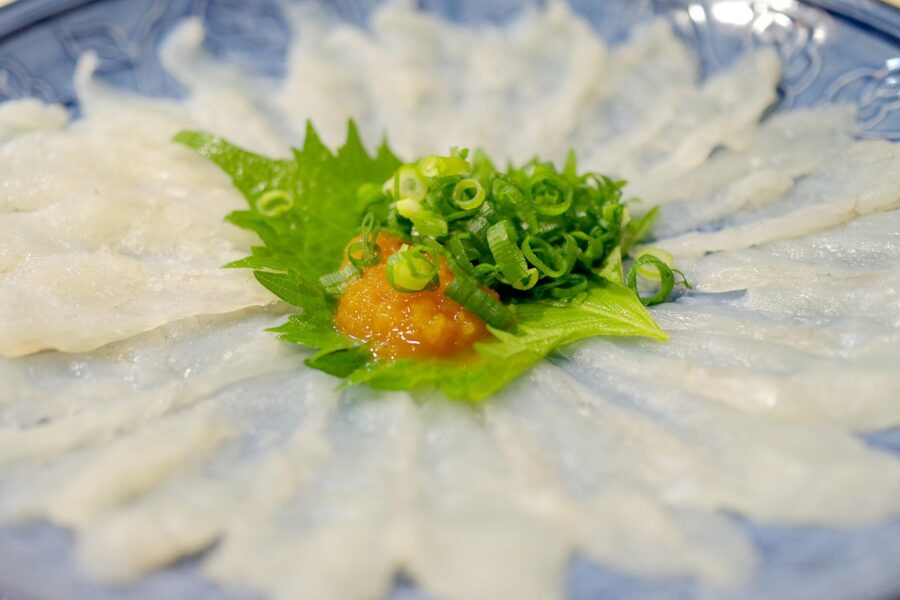
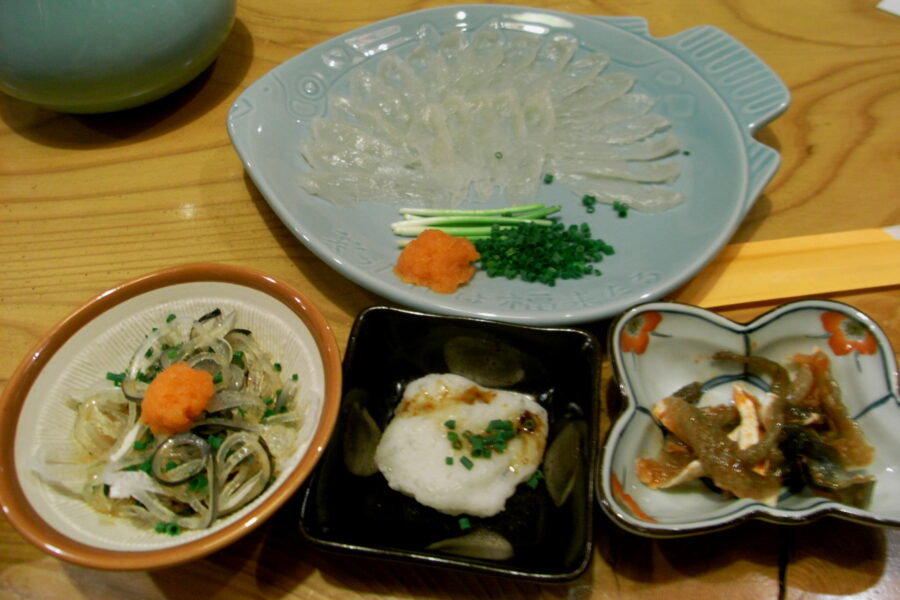
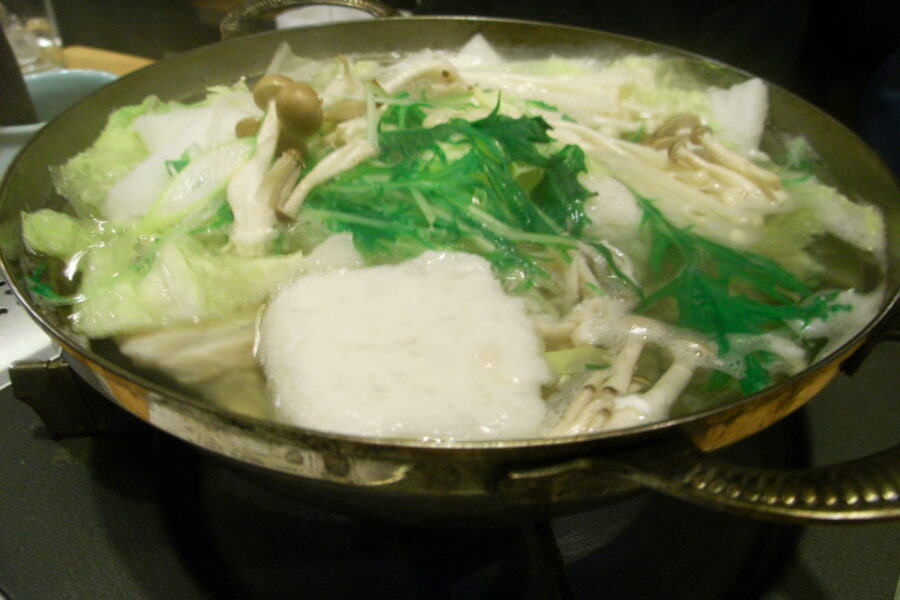
The season runs, as the local saying has it, from the autumn equinox to the spring equinox, and it is best in the coldest months. A full course follows a set order: fuku-sashi (called tessa in Osaka), sashimi sliced almost transparent and laid out like a chrysanthemum; karaage, fried pieces on the bone; grilled or steamed shirako, the milt, in winter; then fuku-chiri, a hot pot, finished with zōsui, rice simmered in the leftover broth.

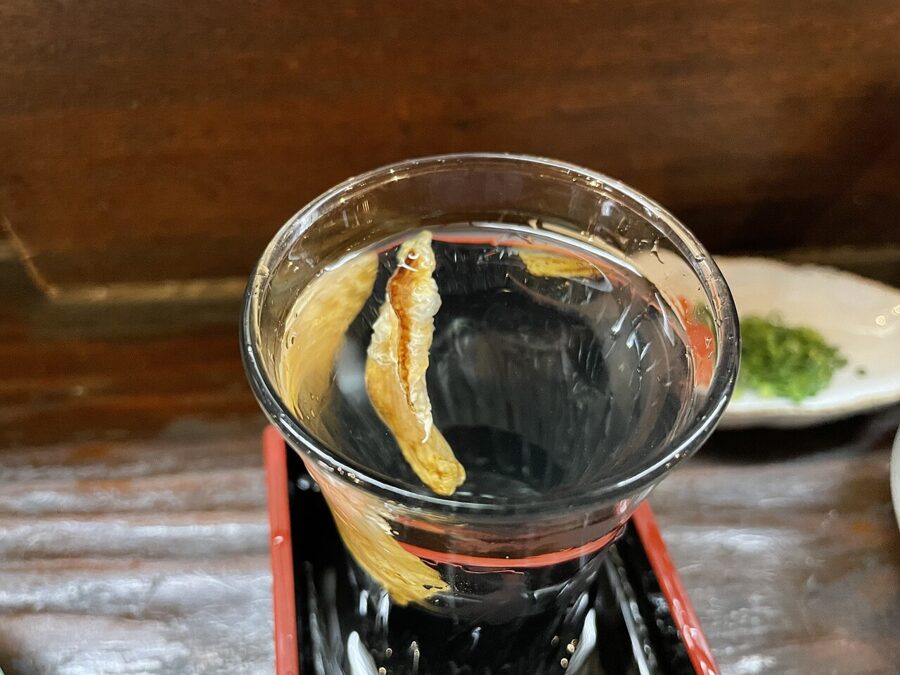
To drink, order hirezake: a fugu fin toasted until it smells smoky and dropped into a cup of very hot sake. It is an acquired taste and a cold-weather one.

Why it is safe
Fugu carries tetrodotoxin, concentrated in organs such as the liver and ovaries, and amateur cooks still poison themselves every year. Japan’s Food Sanitation Act deals with it bluntly: selling or serving the liver, of any species, wild or farmed, is banned outright, and only cooks who have passed a prefectural exam may prepare the fish.
In Yamaguchi that licence is the fugu shorishi (ふぐ処理師). Candidates sit a written paper, identify species and organs from real specimens, then gut and divide a fish against the clock. Shimonoseki’s processors perfected the technique of removing the toxic parts, which is why the trade says a fugu only becomes a fugu once it lands here. Eat at a licensed restaurant or a market stall and the risk is negligible; never buy whole fish to prepare yourself.

Where to eat it
Shunpanrō, beside Akama Shrine, is the grand choice, and still an inn as well as a restaurant. Its fugu full course starts at ¥24,200 (about US$156) per person, with a fugu kaiseki at ¥8,800 (about US$57); both need booking at least four days ahead, for two or more, plus a 10% service charge, as of 2026. The course with wild tiger fugu, bought at the specialist Haedomari fish market on Hikoshima, is not served from May to September or over New Year, while the courses made with farmed fugu run all year.
For a cheaper taste, the Karato stalls and the market canteen upstairs serve fugu sashimi, karaage and soup by the portion, and the restaurants of the Karato district and Kamon Wharf next door offer lunch sets. Whatever you choose, ask for tora-fuku if you want the real thing.
The Kanmon Strait: under it, over it, across it
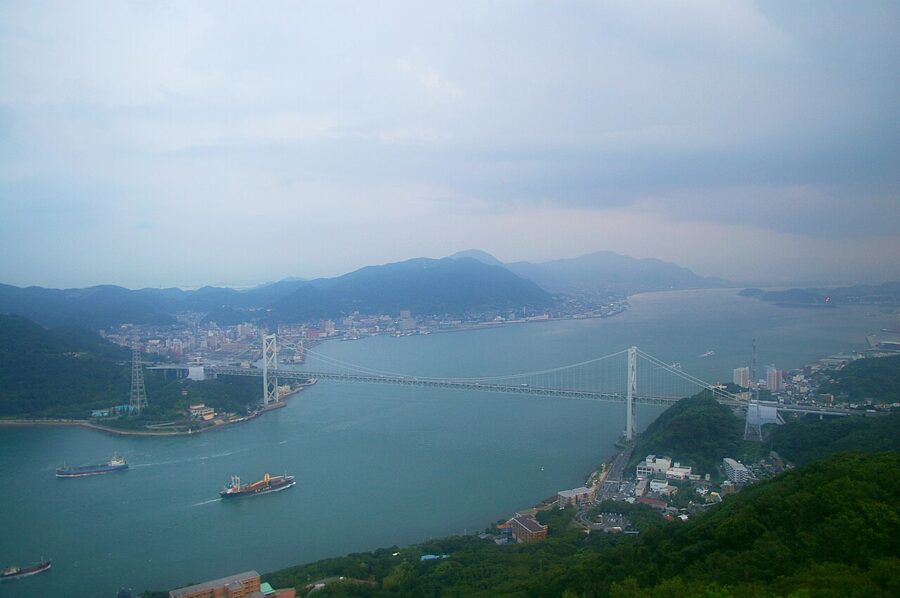
The Kanmon Strait (関門海峡) separates Honshu from Kyushu and is less than a kilometre wide at its narrowest point, the Hayatomo channel below Mount Hinoyama. The tide pushes water through in both directions, and boats are a constant: container ships, pilot launches, fishing boats and the little ferries.
Walking the Kanmon pedestrian tunnel
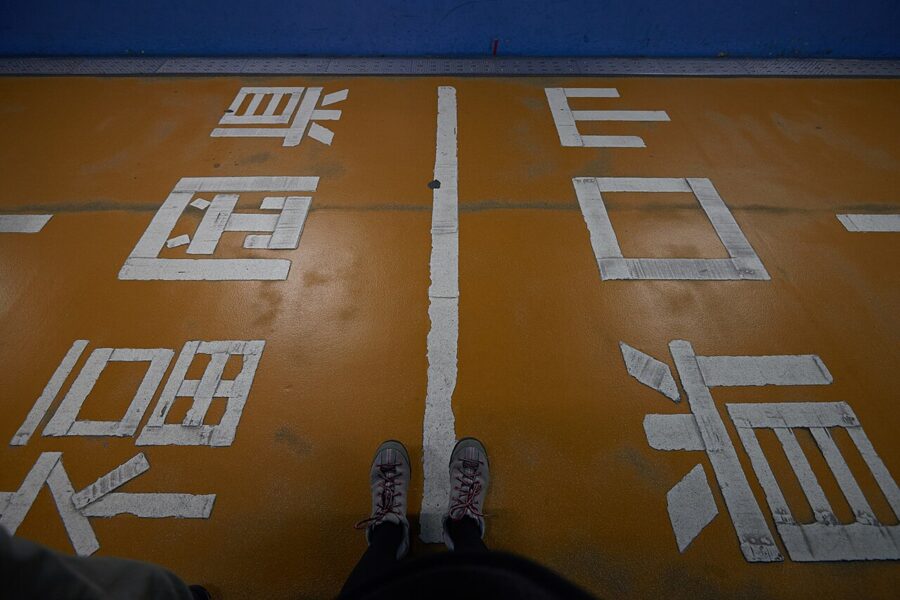
The Kanmon road tunnel opened in March 1958, and beneath the road deck runs a separate passage for people. Lifts take you down from the entrance building at Mimosusogawa, and from the bottom it is 780 metres to Moji, about fifteen minutes on foot. Halfway along, a line painted on the floor marks the border between Yamaguchi and Fukuoka prefectures, roughly 58 metres below the surface of the sea, and everyone stops to stand with one foot in each.
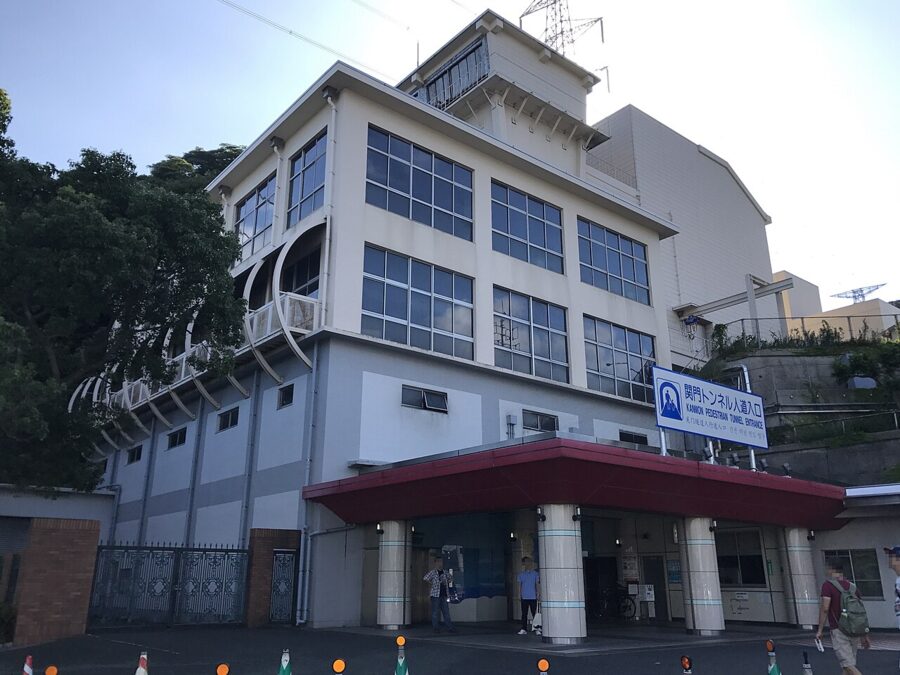

The tunnel is open from 06:00 to 22:00 and free for pedestrians; bicycles and mopeds pay ¥20 (about US$0.15). It is humid and still inside, so carry water in summer. Stamp the cards at the lift halls on both sides and show them at a tourist office, including the ones at Shimonoseki and Shin-Shimonoseki stations, for a free Kanmon TOPPA certificate saying you crossed the strait on foot.

Mimosusogawa Park and the Kanmon Bridge
Across the road from the tunnel entrance, Mimosusogawa Park sits directly under the Kanmon Bridge. The suspension bridge opened on 14 November 1973, is 1,068 metres long with a central span of 712 metres, and carries only the expressway, so the tunnel is the way to cross on foot.
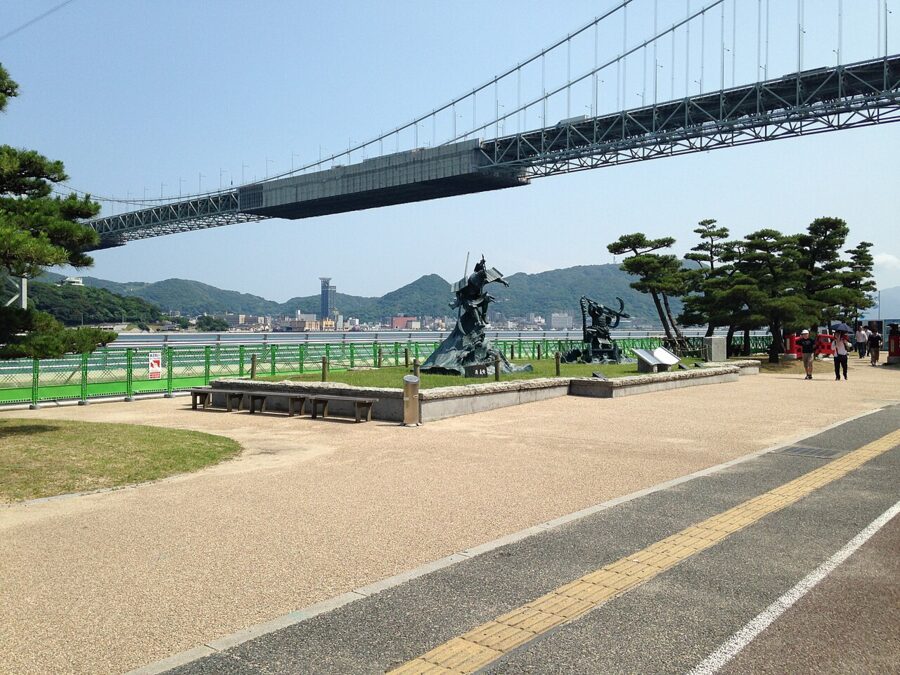

The park marks the site of the Battle of Dan-no-ura. Bronze statues show Minamoto no Yoshitsune in his famous leap across eight boats and Taira no Tomomori shouldering an anchor, and a stone marks the spot from which the child emperor Antoku is said to have been taken into the sea.
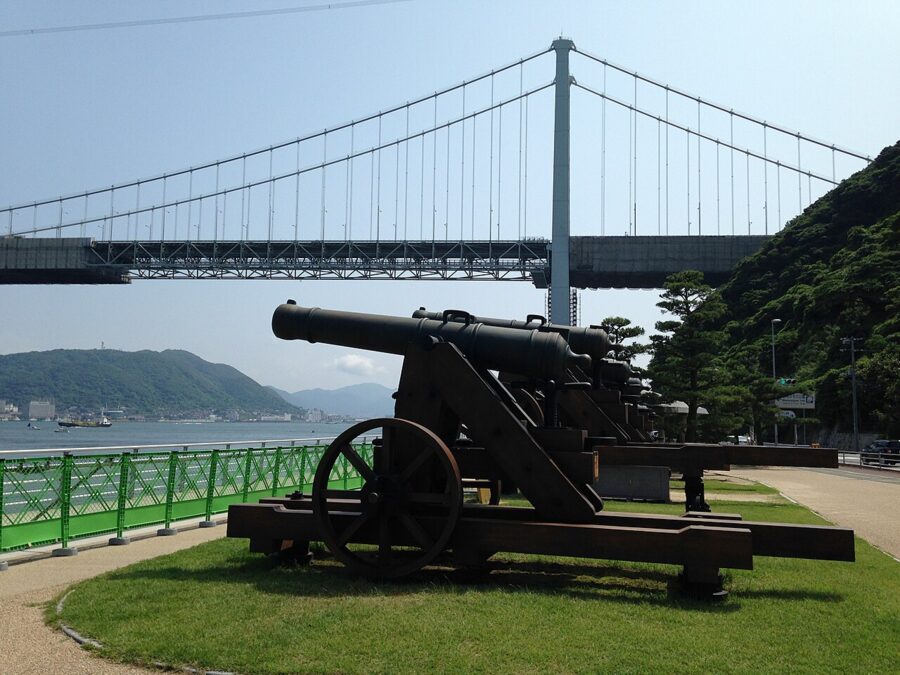
Along the railing stands a row of replica Chōshū cannons, pointing at the water as the originals did in 1863 and 1864, when the domain fired on foreign ships and Western fleets shelled the batteries in return. One of the replicas lets out a bang and a puff of smoke for a coin, to the delight of every child in the park.

The ferry to Mojikō, and a loop for ¥1,000
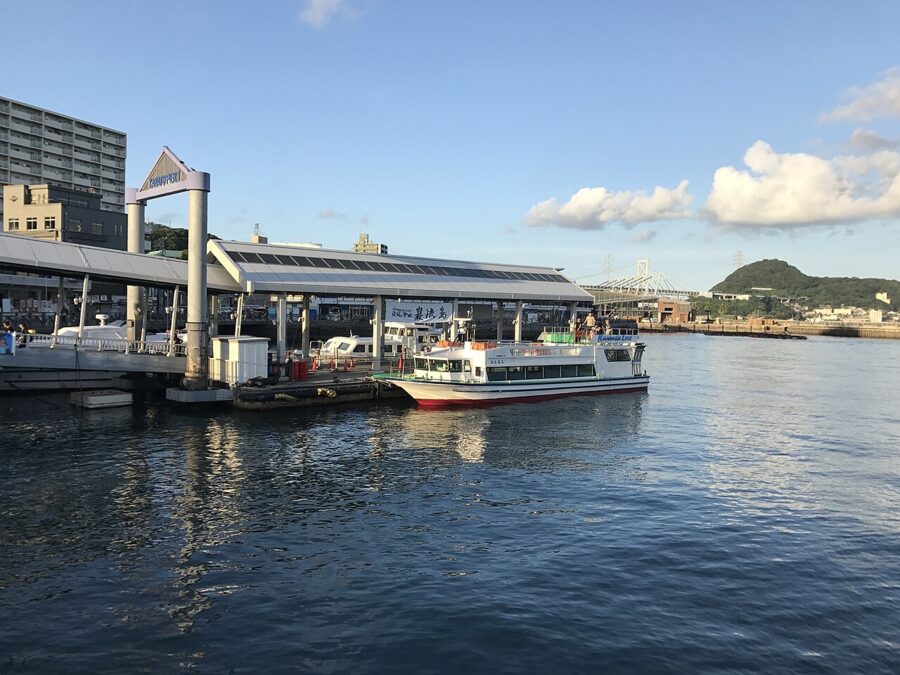
The Kanmon Kisen ferry links Karato pier, beside the Shimonoseki Grand Hotel, with the Mojikō Retro pier, three minutes’ walk from JR Mojikō Station. The crossing takes five minutes and costs ¥400 (about US$2.60) one way. Boats leave Karato every 20 minutes from 07:00 to 18:40, then every half hour until the last at 21:30, as of November 2026; the two 06:00-hour sailings do not run on Sundays and holidays.
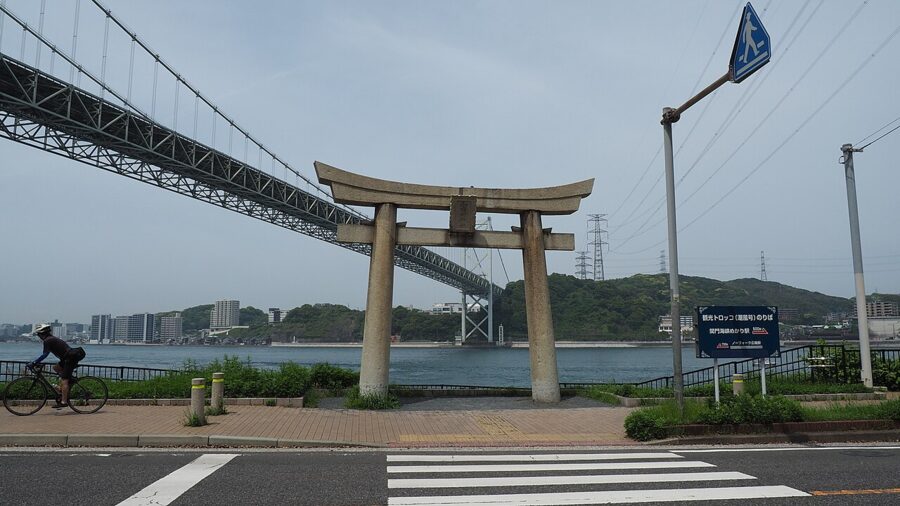

The best value is the Kanmon Kaikyō Clover Kippu, ¥1,000 (about US$6.50), on sale until 30 June 2027. It covers one ride each on the Kanmon Kisen ferry, the Sanden bus between Karato and Mimosusogawa, and the Shiokaze trolley between the Kyushu Railway History Museum by Mojikō Station and Kanmonkaikyō Mekari, which with the tunnel makes a full circle of the strait. The trolley runs on Saturdays, Sundays and holidays (check its calendar), so on a weekday the ticket is not worth buying.
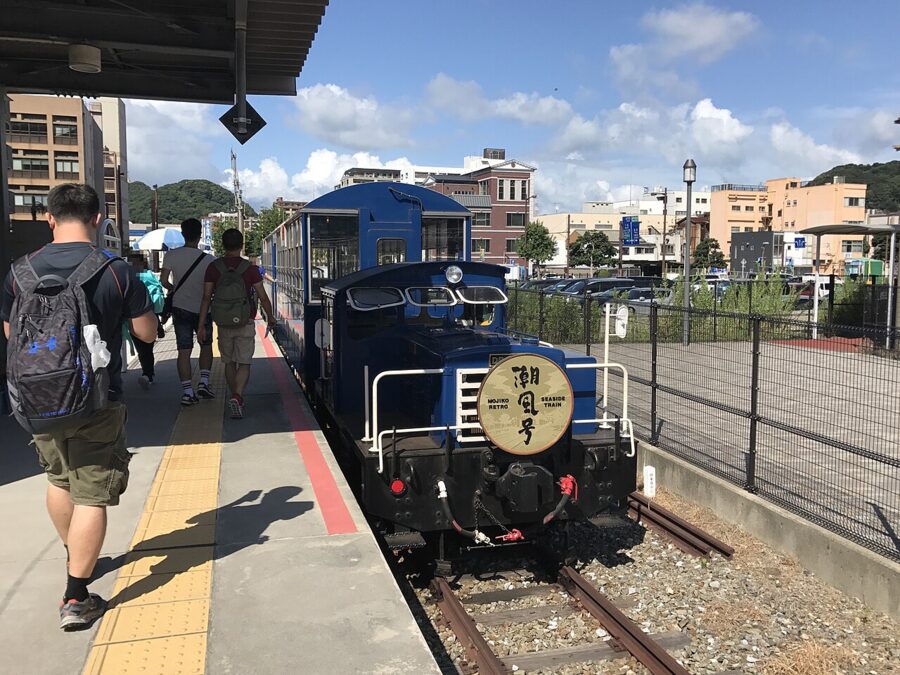

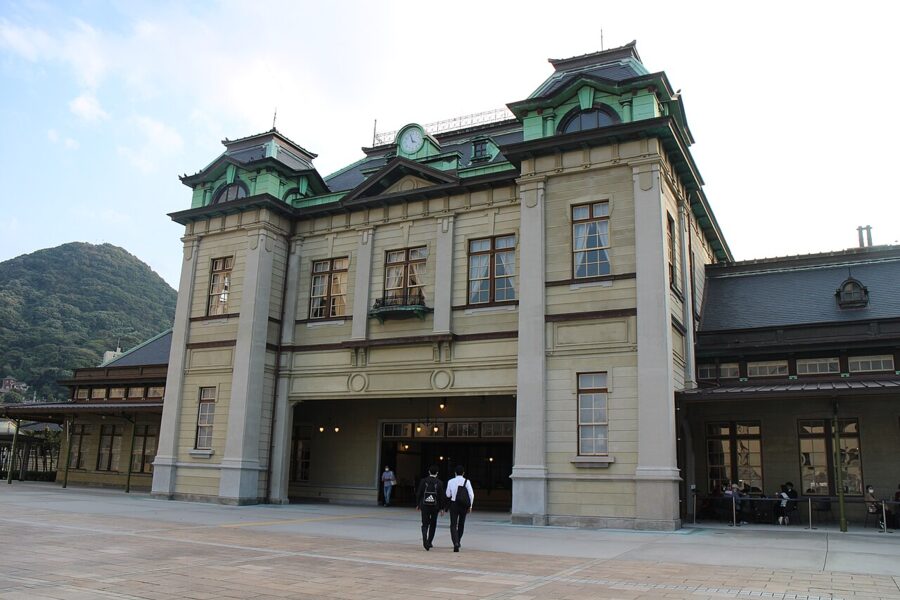
Mojikō deserves an hour or two: the station, the old customs house and the Mitsui company’s former club house recall the decades when Moji was one of the busiest trading ports in Japan. Then ride the ferry back to Karato as the lights come on along both shores.

Akama Shrine and the end of the Heike
On the 24th day of the third month of 1185, the Genji fleet met the Heike off Dan-no-ura. As the battle turned, the Heike nobles and court ladies threw themselves into the sea. Taira no Tokiko, widow of Taira no Kiyomori, took her eight-year-old grandson, the emperor Antoku, in her arms and went over the side, telling him there was a capital beneath the waves too.
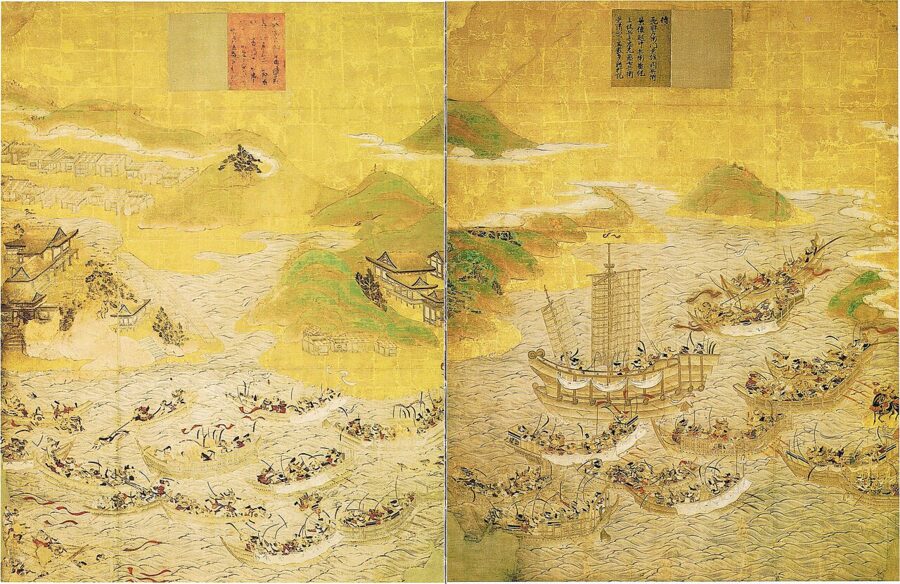
Akama Shrine (赤間神宮) grew from the memorial hall the court built over the boy’s tomb in 1191, which became the temple of Amidaji. It was turned into a shrine in 1875, renamed Akama Jingū in 1940, and burned to the ground in an air raid in July 1945. The rebuilt shrine is the vermilion and white one you see now.
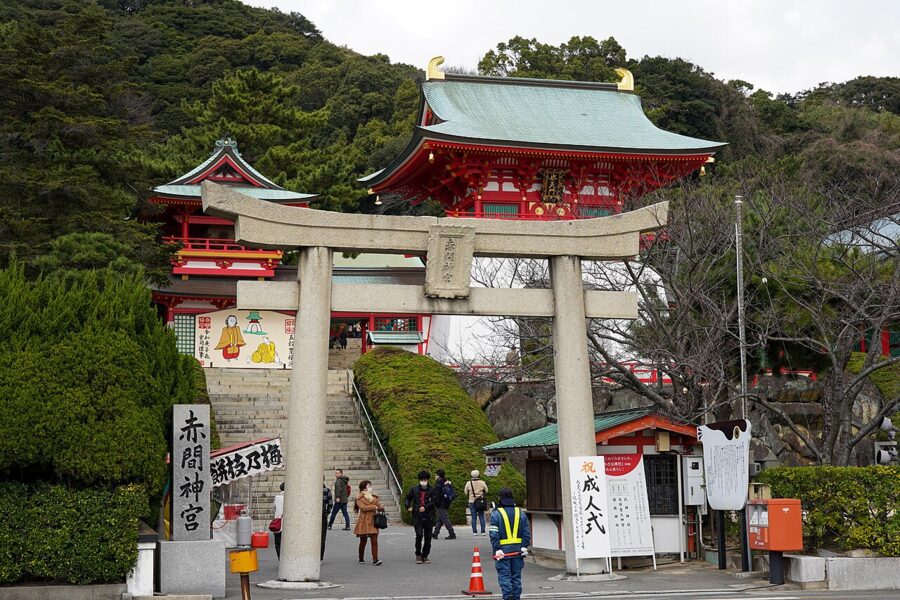

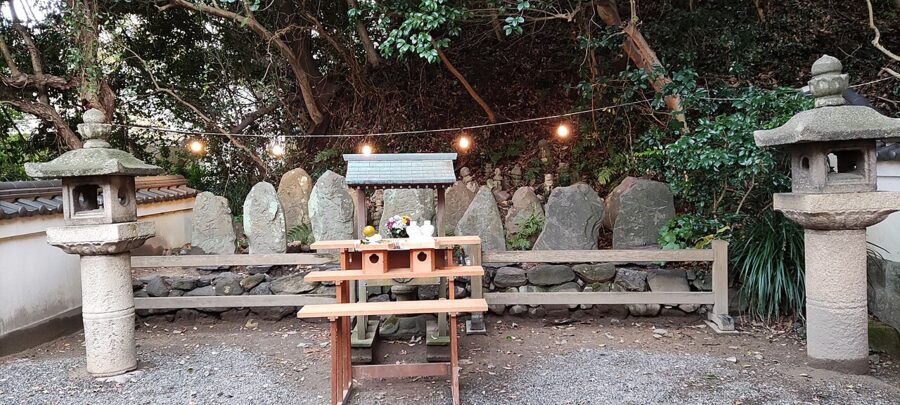
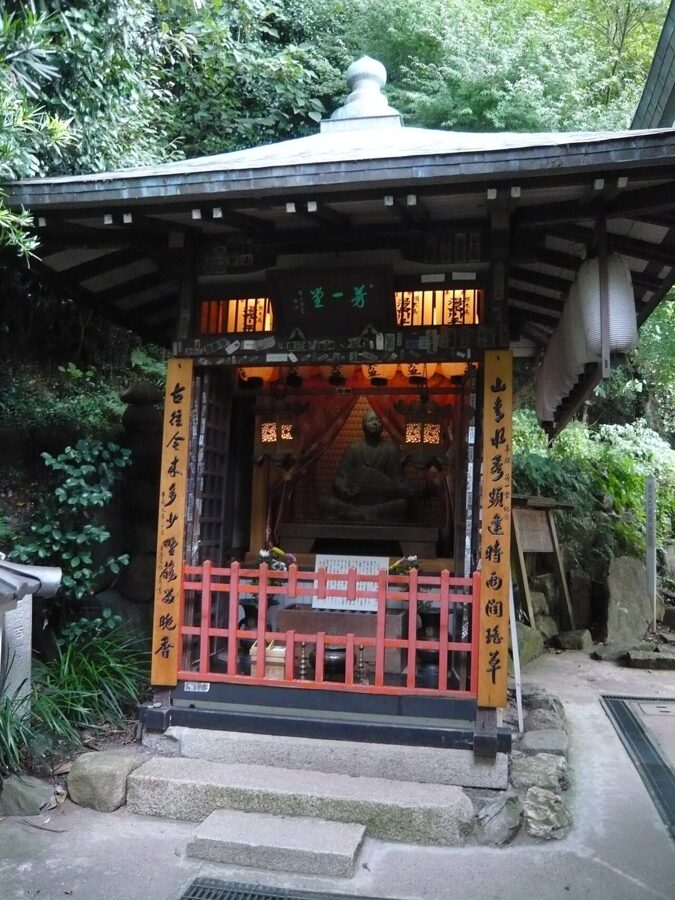
Look for two smaller corners of the grounds. Shichimori-zuka is a row of grave stones for the drowned Heike commanders, and next to it Hōichi-dō holds a wooden statue of Hōichi the Earless, the blind biwa player of the ghost story. The tale belonged to Amidaji before Lafcadio Hearn put it in his Kwaidan: spirits of the Heike summon Hōichi to sing of their defeat, and a priest writes protective sutras over his whole body but forgets his ears.

The grounds are free; the small treasure hall, with the Nagato manuscript of the Tale of the Heike (an Important Cultural Property), illustrated scrolls of Antoku’s story and portraits of the clan, charges ¥100 (about US$0.65). The big day is the Sentei-sai festival from 2 to 4 May, when women dressed as court ladies of the Heike parade through town and cross a special bridge into the shrine on 3 May, remembering the women who survived the battle.
Shunpanrō and the Treaty of Shimonoseki
Right next to the shrine, on the site of the old Amidaji temple grounds, stands Shunpanrō (春帆楼), the inn whose landlady served Itō his fugu. Its name, “spring sails”, was Itō’s own idea: he liked the view of sailing boats on the strait below in spring.
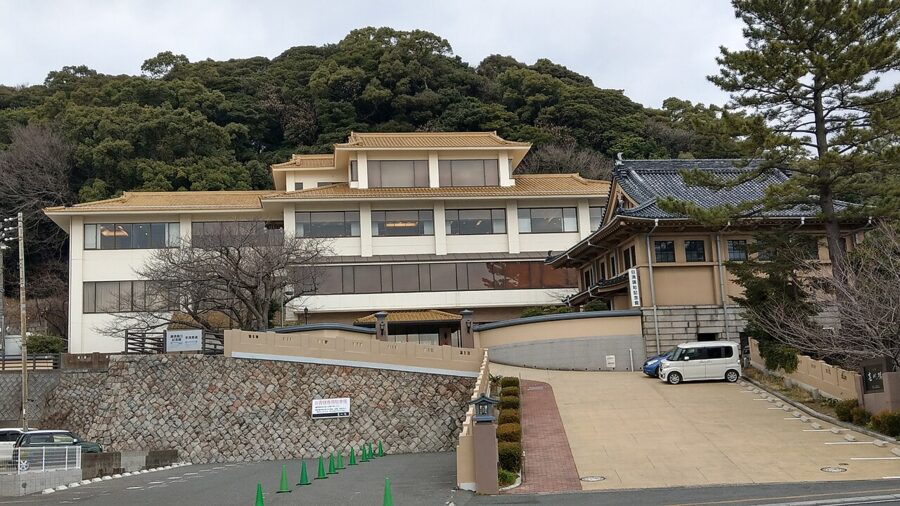

In March 1895, with the Sino-Japanese War all but won, a Qing delegation led by Li Hongzhang came to Shimonoseki to sue for peace, meeting Itō and his foreign minister Mutsu Munemitsu in Shunpanrō’s upstairs hall. The treaty signed there on 17 April 1895 forced China to recognise Korea’s independence and cede Taiwan to Japan.
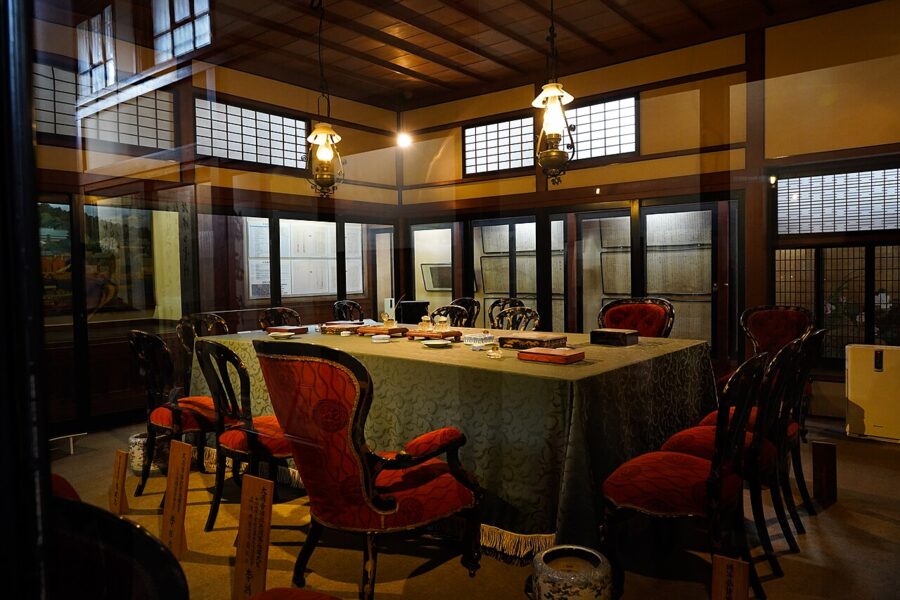

The Nisshin Kōwa Kinenkan (日清講和記念館), the treaty memorial hall, opened beside the inn in 1937 and recreates the conference room with the original chairs. It is free and open daily from 09:00 to 17:00, and fifteen minutes is enough.
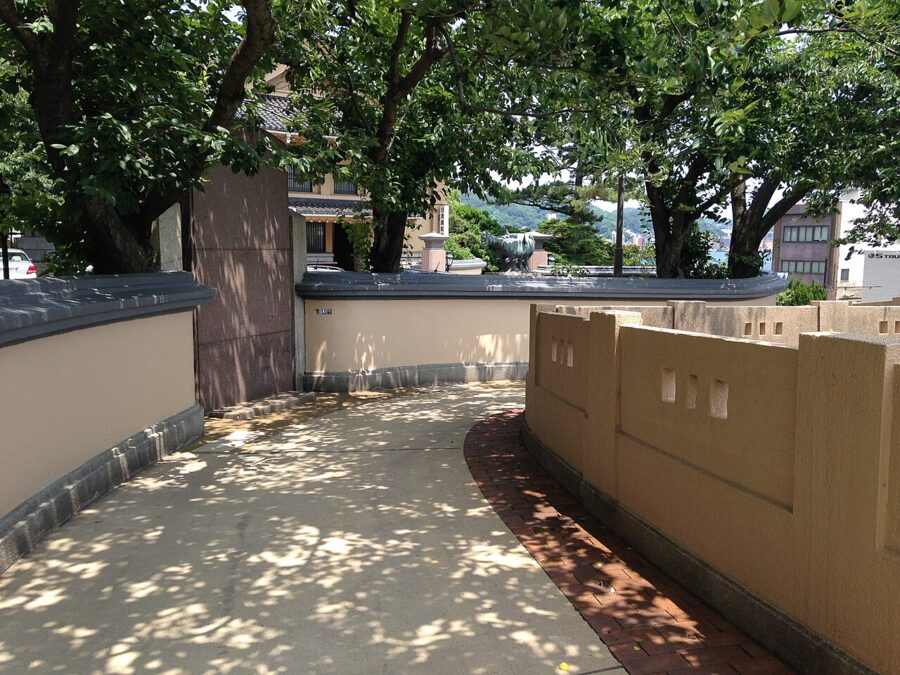
Look, too, for the lane called Li Hongzhang Road (李鴻章道). After the third session a young Japanese opponent of the peace shot and wounded Li on his way back to his lodgings at Injōji temple; he survived, and for the rest of the talks he used this quieter back path up the hillside instead of the main street.

Ganryūjima, the duelling island
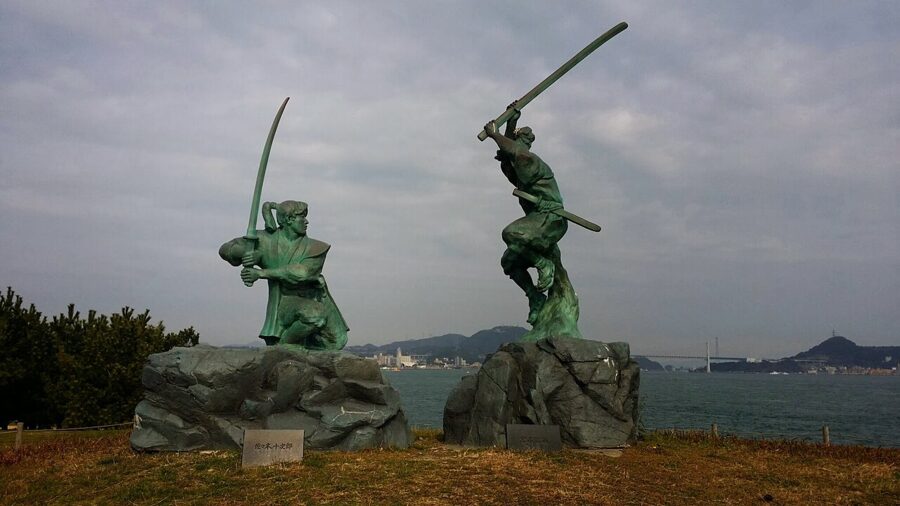
Officially it is Funashima, a low, flat island off Hikoshima at the western end of the strait. Everyone knows it as Ganryūjima (巌流島), after the sword school of Sasaki Kojirō, who lost a duel here to Miyamoto Musashi. The traditional date, from a biography written in 1776, is 13 April 1612, though earlier accounts disagree and the details of the fight are as much legend as record.
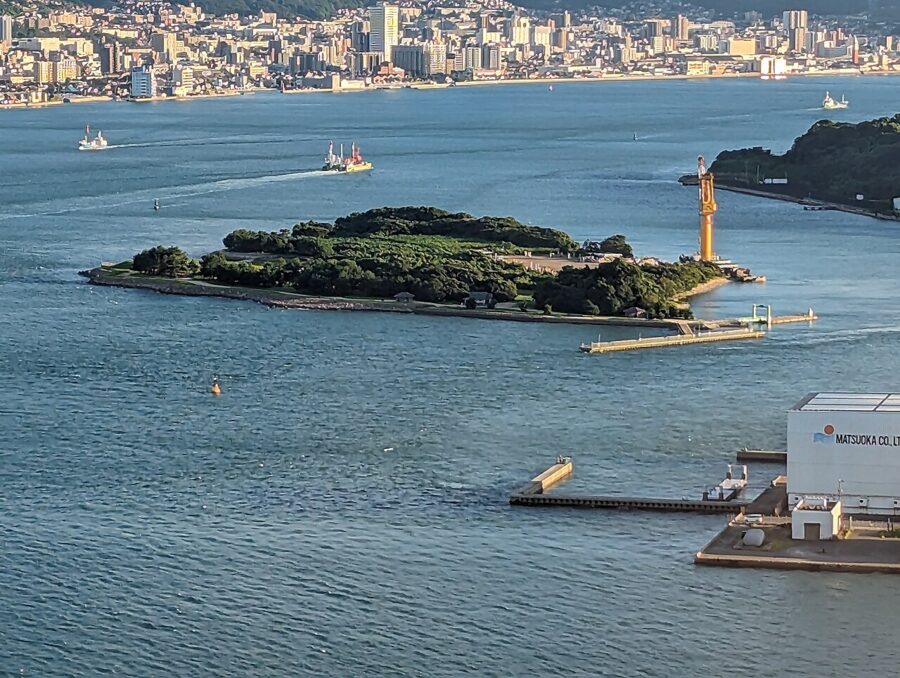

There is not much on the island beyond a lawn, a small beach, barbecue sites and bronze statues of the two swordsmen, but the ride is fun and the view back to both cities is good. The Kanmon Kisen boat from Karato takes about ten minutes, leaving roughly every 40 minutes from 09:05 to 16:25, and the return fare is ¥900 (about US$6) as of 2026. The last sailing is dropped from December to February, and on weekdays the boats from Mojikō are suspended, so start from Karato.

If you plan to do both Ganryūjima and Mojikō, the ferry company’s Triangle Free Pass gives a day of unlimited rides on both routes for ¥1,000.
Chōfu, the samurai town inland
Chōfu (長府), about eight kilometres east of the centre, was the seat of a branch of the Mōri family, the lords of Chōshū, and it still has the quiet lanes, earthen walls and old gateways of a castle town. The castle itself went in 1615, when the shogunate allowed each domain only one, which leaves the streets and temples as the attraction.
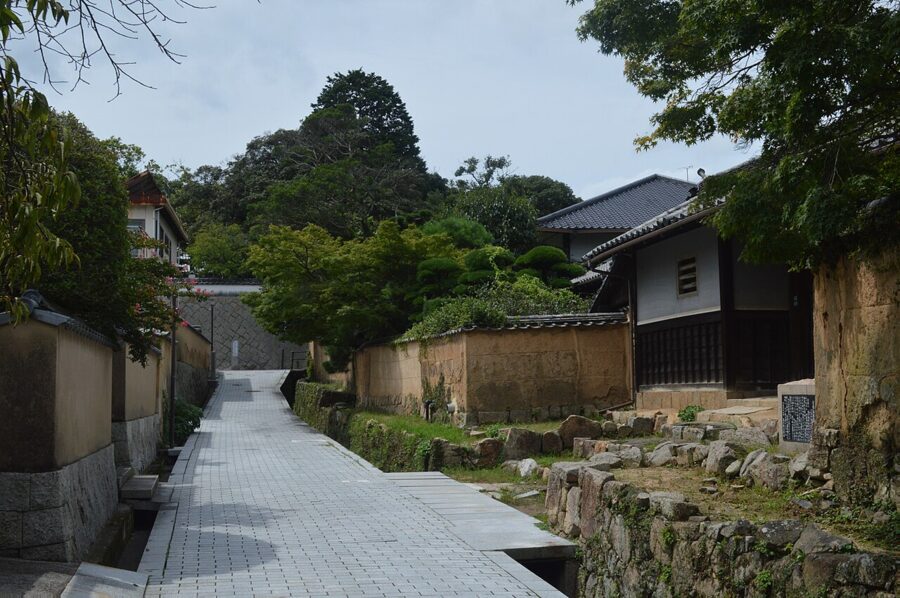

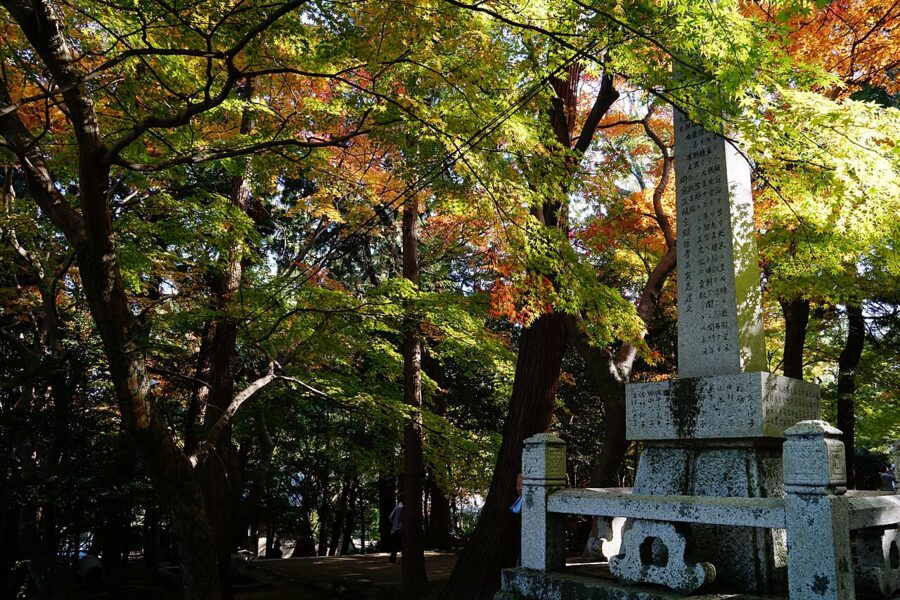
Start at Kōzan-ji, founded in 1327. Its Buddha hall, built in the Zen style and dated by an inscription to 1320, is a National Treasure, the oldest Zen-style building in Japan whose date is known for certain. The temple also has a more recent claim: in the winter of 1864, Takasugi Shinsaku raised his revolt here with about 80 men, the uprising that put Chōshū on the road to overthrowing the shogunate. The grounds are free to wander, and the maples make it one of the best autumn colour spots in the city.

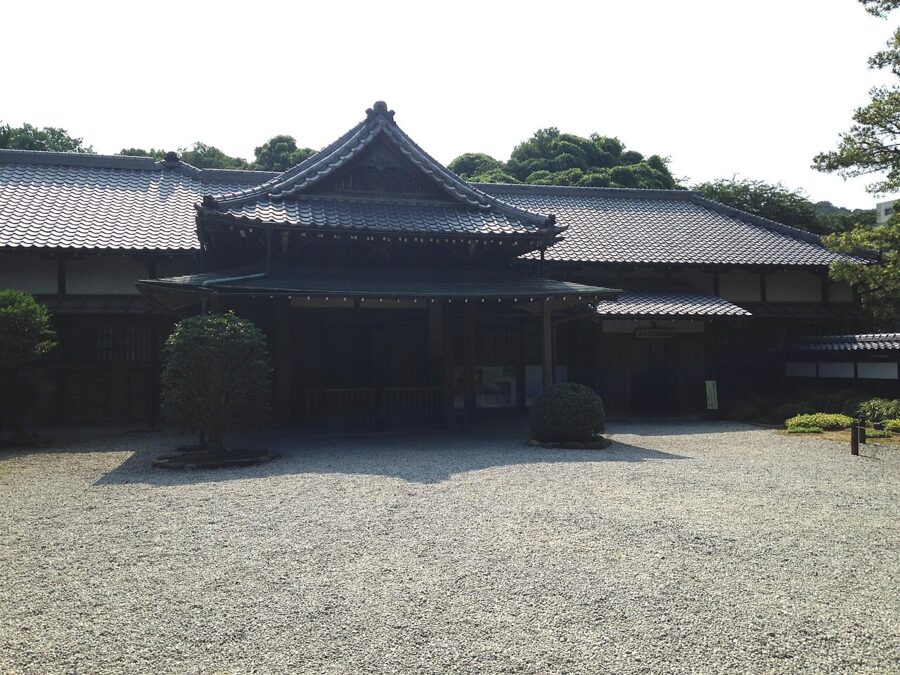
A short walk away, the Chōfu Mōri Residence (長府毛利邸) was finished in 1903 for the last lord’s family. Emperor Meiji stayed there in 1902, before it was even complete, and the rooms open onto a pond garden where you can sit on the veranda. It opens 09:00 to 17:00 (last entry 16:40) and costs ¥210 (about US$1.40).

Take a Sanden bus from Shimonoseki Station to the Jōkamachi Chōfu stop, about 29 minutes and ¥430 (about US$2.80); JR Chōfu Station is a long way from the old town. Give Chōfu a relaxed half day, and add the Dangu River, Furue-kōji and Nogi Shrine to the temple and the residence.

Views and other stops along the water
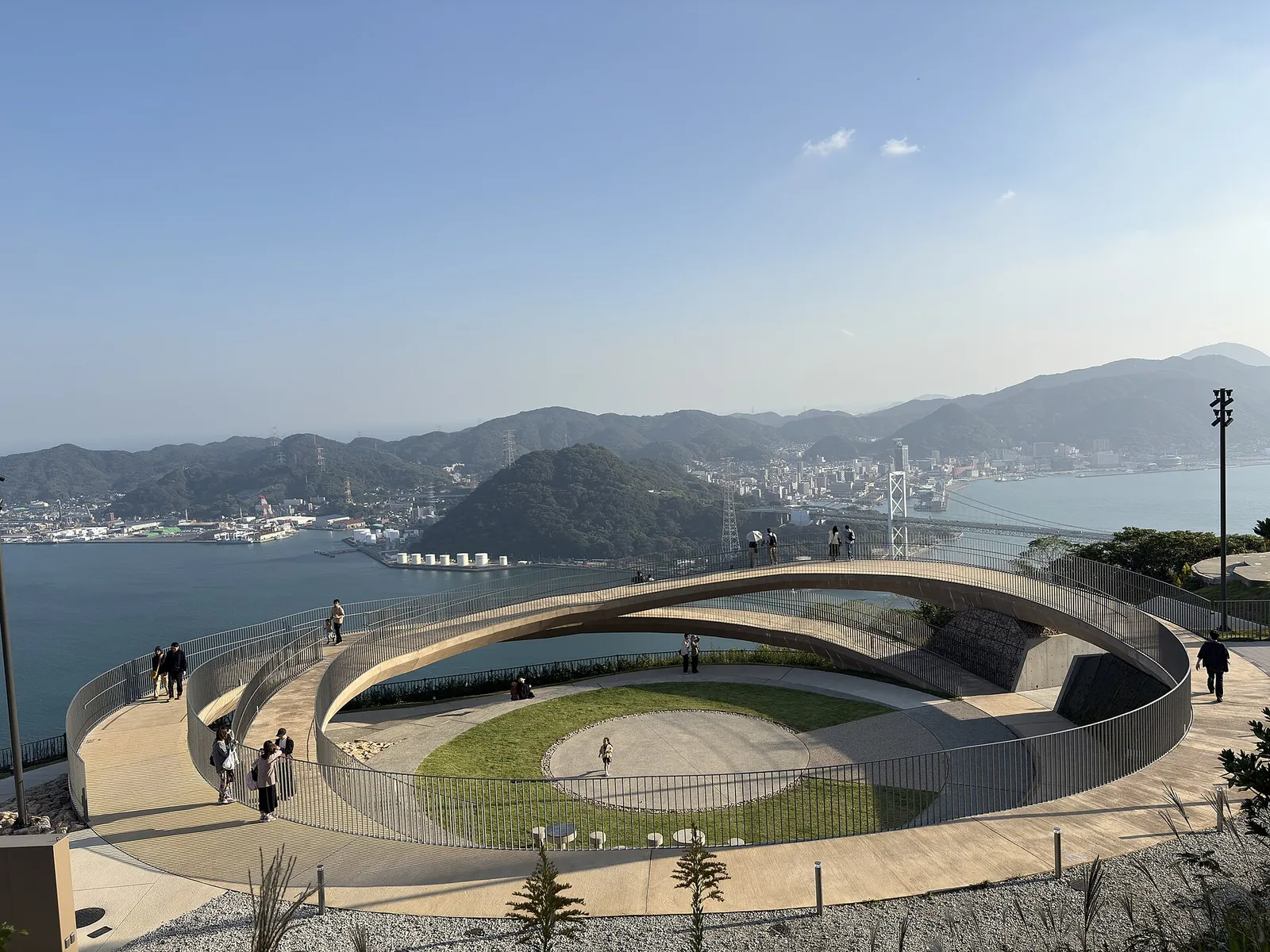
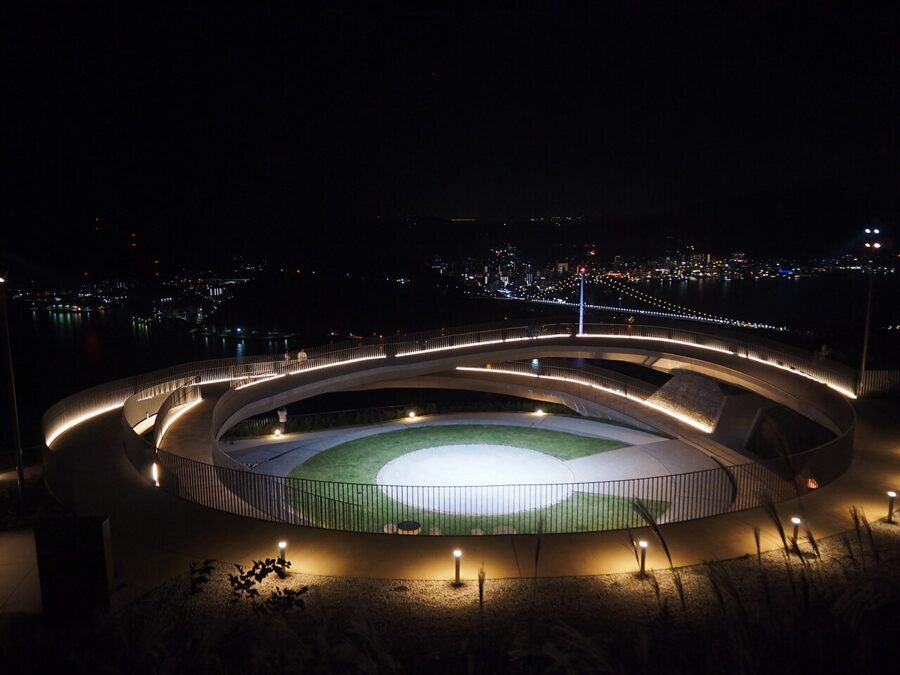
Mount Hinoyama gives the classic view straight down onto the bridge, but its ropeway closed in November 2024 after 66 years. A new gondola and an indoor viewing building are under construction, due in fiscal 2027 or later, while the new Hinoyama Ring observation deck has been open since April 2026. For now you get up by taxi or car on the Hinoyama Parkway, open 08:00 to 23:30.
Closer to Shimonoseki Station, Kaikyō Yume Tower is 153 metres tall, with a viewing floor at 143 metres that takes in the strait, Ganryūjima and the Kyushu mountains. Entry rose to ¥750 (about US$5) in April 2026, and the tower closes only on the fourth Saturday of January.
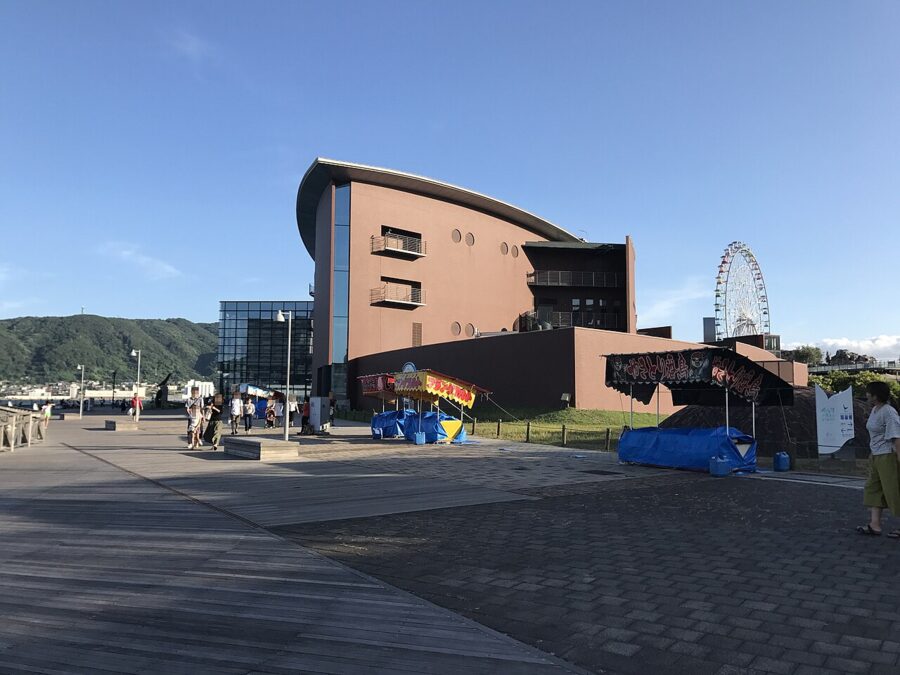

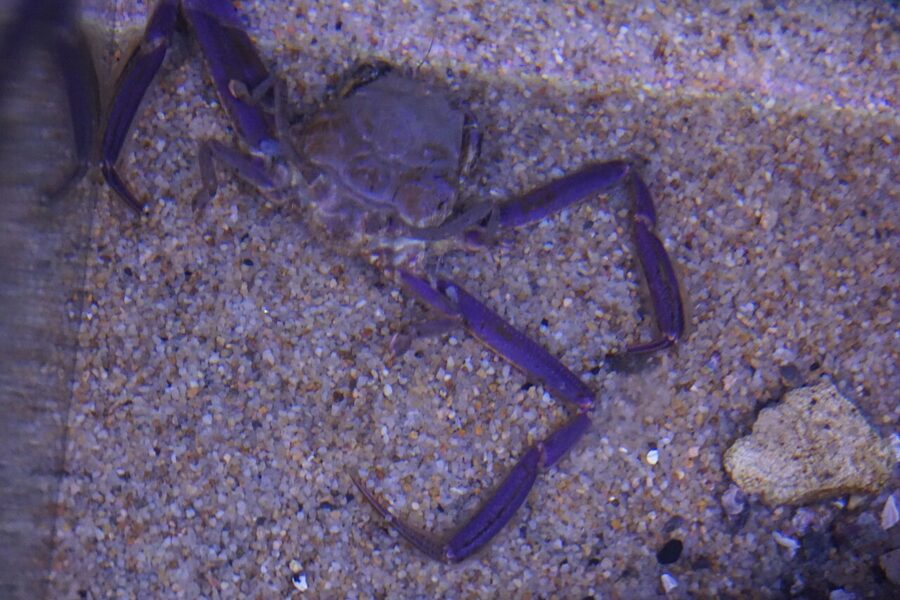
The Kaikyōkan aquarium next to Karato is the one to choose on a wet day, with its pufferfish halls and a large penguin enclosure. It opens daily 09:30 to 17:30 (last entry 17:00), and adult tickets cost ¥2,500 (about US$16) as of 2026.
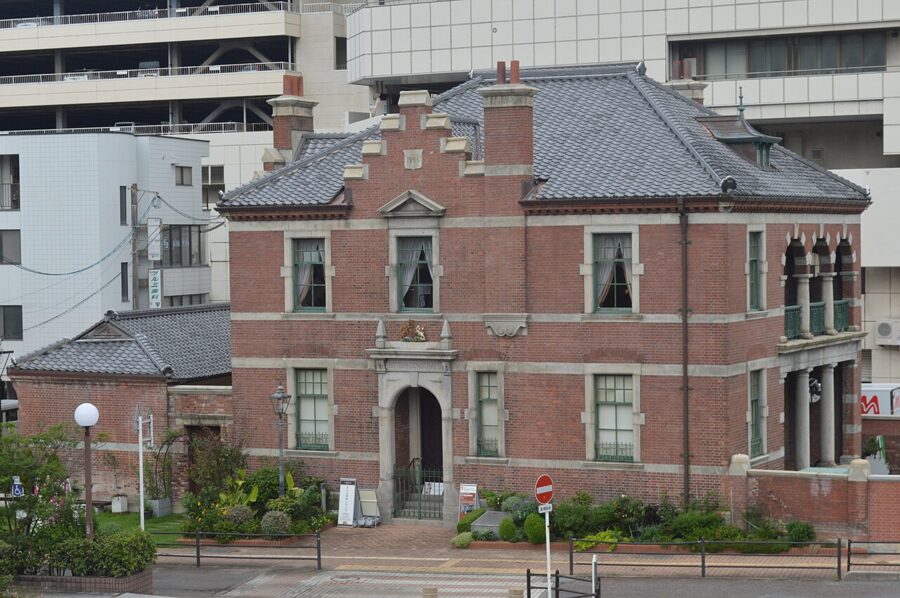
Around Karato, look out for the red-brick Former British Consulate and, up a flight of steps above the market, Kameyama Hachimangū, said to date from 859, with a big bronze fugu in its grounds and a fine view over the strait.

Getting to Shimonoseki and around
Shinkansen trains stop at Shin-Shimonoseki (新下関), the westernmost Shinkansen station on Honshu, which is served mainly by Kodama with some Hikari and Sakura. From Hiroshima the Kodama takes about an hour and an unreserved seat costs ¥5,940 (about US$38); from Hakata it is about 26 minutes and ¥3,280 (about US$21), as of November 2026. Coming from Osaka, you usually change at Hiroshima, Shin-Yamaguchi or Tokuyama.
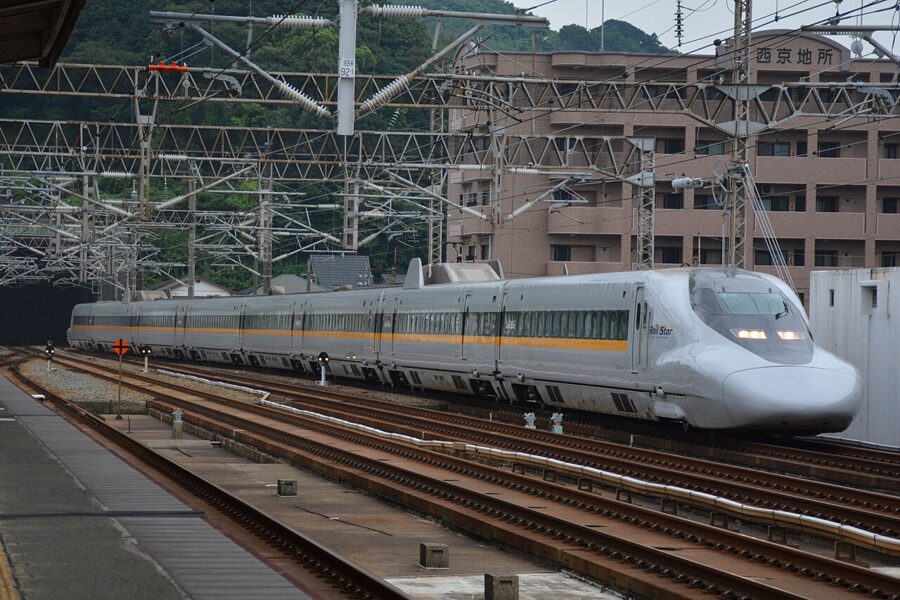

Shin-Shimonoseki is out in the suburbs. Either take a JR Sanyō Line train to Shimonoseki Station, about ten minutes, and a bus from there, or ride a Sanden bus straight from Shin-Shimonoseki to Karato in about 27 minutes for ¥400. From Shimonoseki Station, buses to Karato take seven to ten minutes and cost ¥220 (about US$1.40), and continue to the Akama Jingū-mae and Mimosusogawa stops for the shrine and the tunnel. Sanden Kōtsū also sells a one-day bus pass through the Jorudan app.
From Fukuoka there is a second route that suits Nozomi passengers and rail pass holders alike: a Shinkansen from Hakata to Kokura, then a JR local train through the undersea rail tunnel to Shimonoseki Station, about 15 minutes for ¥340 (about US$2.20). The Japan Rail Pass covers Kodama, Hikari and Sakura and all the local JR lines here, but not the ferry, the trolley or the Sanden buses. Whether one of JR West’s rail passes pays depends on what else you are doing that week.
Shimonoseki also makes a sensible link in a longer trip through Yamaguchi. Shin-Yamaguchi, for Yamaguchi city, the buses to Hagi and the karst plateau of Akiyoshidai, is one or two Shinkansen stops east. If you stay overnight, the Karato waterfront is the place: Risonare Shimonoseki, which Hoshino Resorts opened beside the aquarium in December 2025, and Shunpanrō both look over the strait, with plainer business hotels around Shimonoseki Station.
So take the Kodama to Shin-Shimonoseki on a Friday, be at Karato for eight, and keep the afternoon for the walk under the sea. The last ferry back from Mojikō leaves at 21:50, long after the stalls have sold out.