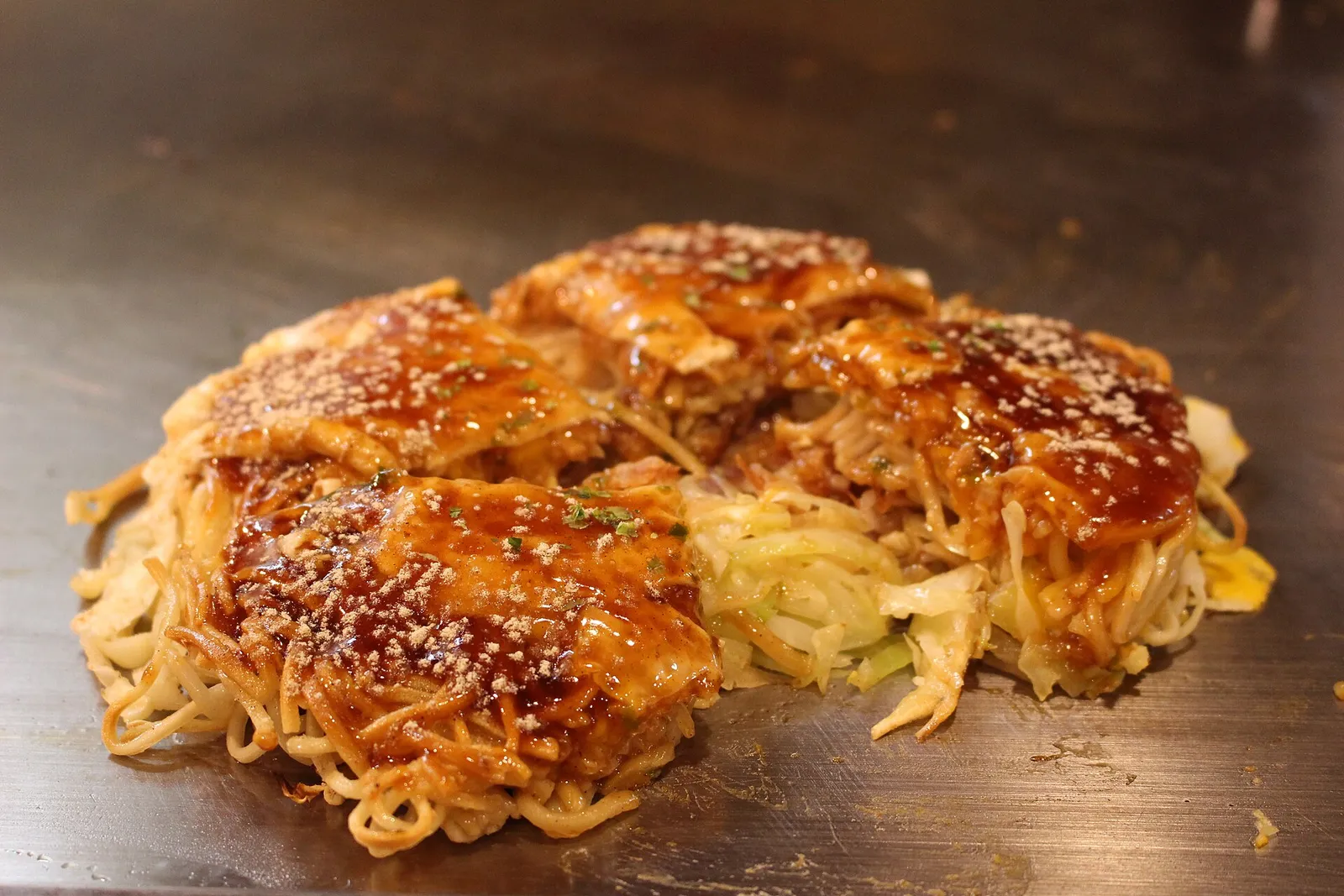

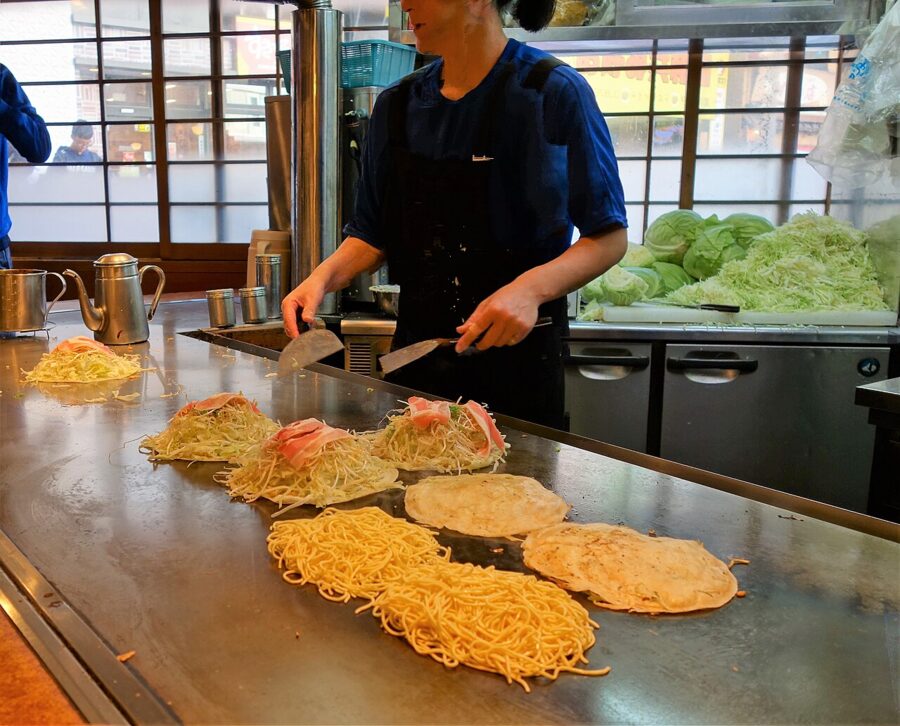
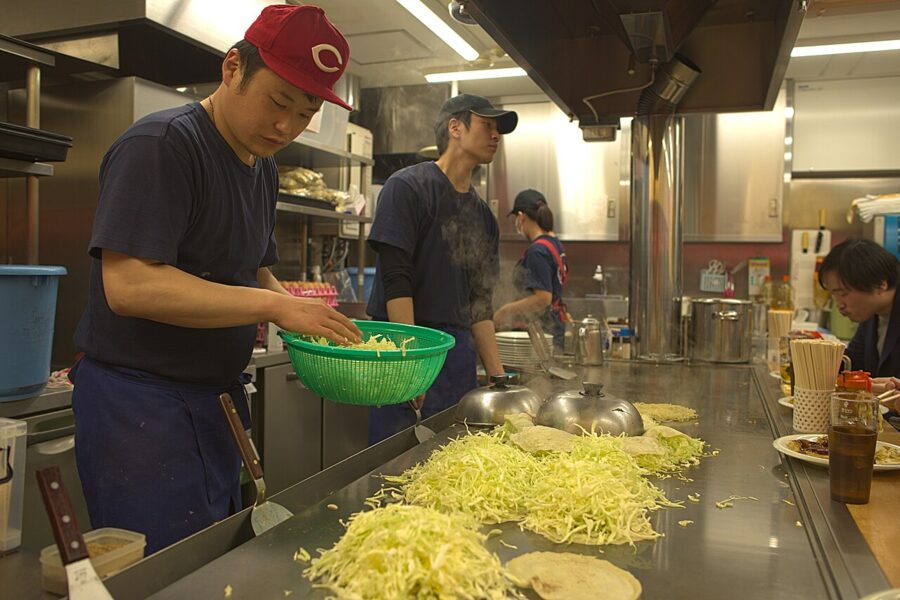
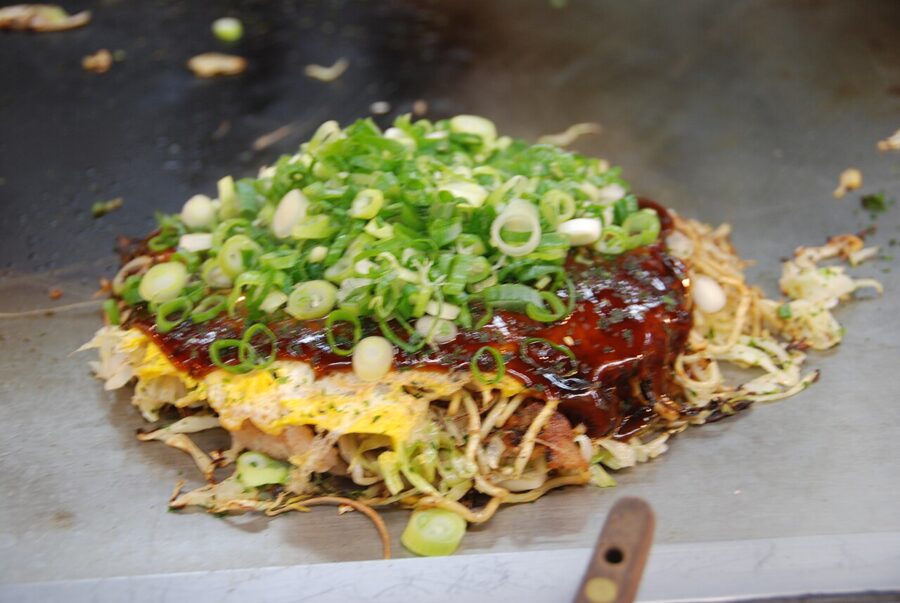
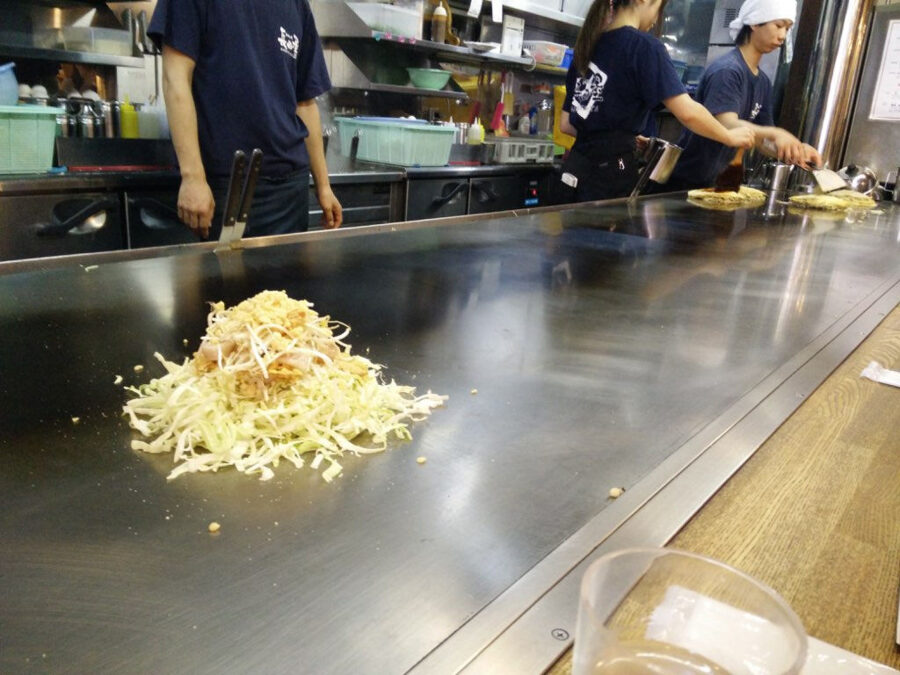
The cook ladles a circle of batter onto the steel, spreads it as thin as a crêpe with the back of the ladle, and then builds a hill of shredded cabbage on it so tall it looks like a mistake. Bean sprouts go on top, then a scatter of fried batter bits, then three strips of pork belly laid edge to edge. Two flat spatulas slide underneath, and the whole hill turns over in one move.
That flip is the point where Hiroshima okonomiyaki stops resembling anything you ate in Osaka. Nothing here was stirred together in a bowl. The batter has become a lid, the cabbage is steaming under it, and a nest of noodles is already frying on the next patch of griddle, waiting for the stack to be lowered onto it. An egg comes last, cracked and spread into a disc the same size, and the finished thing arrives in front of you on the hot plate, glossy with sauce, about the height of a paperback.
If you have one meal to spend on it, sit at a counter rather than a table and order niku-tama soba (肉玉そば), pork and egg with noodles, the standard against which every shop in the city is judged. Go to Okonomimura in the evening if you want choice, or to Ekimae Hiroba opposite Hiroshima Station if you are arriving by train. Expect to pay around ¥900 to ¥1,000 (about US$6 to US$7) for the basic version, as of 2026.
On this page9 stops
- Layered, not mixed: how it differs from Osaka's
- From one-coin snack to post-war staple
- How it is built on the teppan
- Eating it at the counter with a hera
- The sauce: Otafuku and the others
- Where to eat it in Hiroshima
- Toppings, noodles and the regional versions
- Cooking classes and food tours
- Ordering: a short phrasebook



Layered, not mixed: how it differs from Osaka’s
In Osaka, and in most of Japan, okonomiyaki starts in a bowl. Flour, water or stock, egg and chopped cabbage are stirred into a thick batter with the meat or seafood, poured onto the griddle and cooked as one fat pancake. Noodles are an optional extra, and the batter is the star.
Hiroshima turns that upside down. The batter is unseasoned and spread so thin that it does two jobs only: it is the base, and once the stack is flipped it becomes the lid that traps the steam and cooks the cabbage through. The local name for the method is kasane-yaki (重ね焼き), layered grilling. Cabbage is the bulk of the dish, far more of it than an Osaka cook would use, and it goes in raw, in long fine shreds, so it ends up sweet and soft rather than bound into dough.
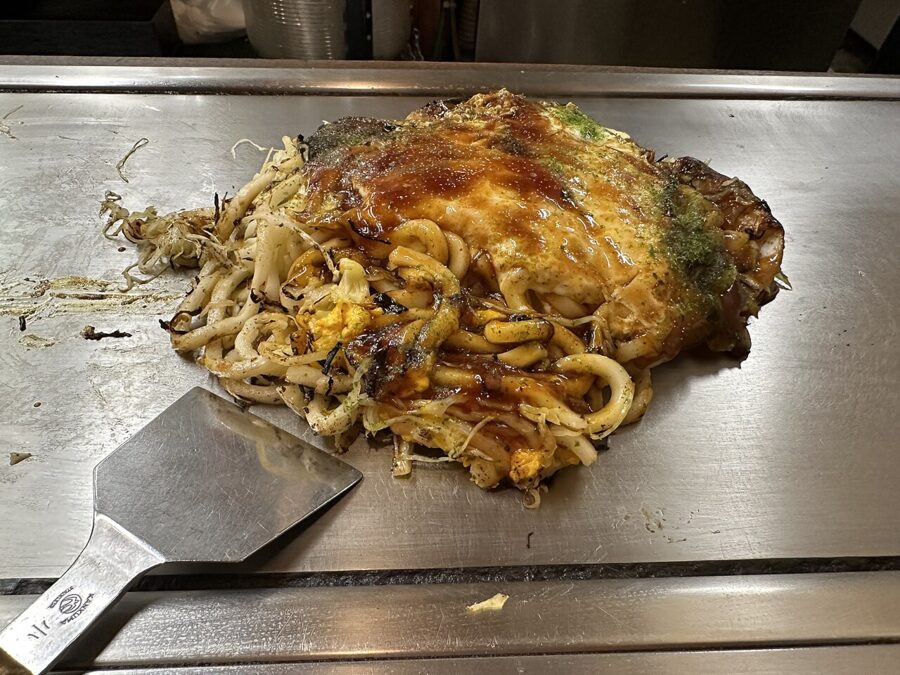
Then there are the noodles. A Hiroshima okonomiyaki without them is a curiosity; a plain order comes with fried Chinese-style wheat noodles, called soba here even though they contain no buckwheat. Udon is the alternative. When the Chugoku Shimbun counted preferences for the city’s Okonomiyaki Day in 2023, soba won with 79 per cent.
| Hiroshima | Osaka | |
|---|---|---|
| Method | Layered on the griddle | Mixed in a bowl, then cooked |
| Batter | Thin crêpe, plain, acts as a lid | Thick, seasoned, holds everything |
| Cabbage | A tall heap of fine shreds, steamed | Chopped and folded into the batter |
| Noodles | Standard (soba or udon) | Optional (sold as modan-yaki) |
| Egg | Fried flat as its own layer | Mixed into the batter |
| Who cooks | Almost always the shop | Often you, at your table |
| Mayonnaise | Traditionally none | Standard |
The last two rows matter more than they look. Osaka shops often hand you a bowl of mixed batter and leave you to it. In Hiroshima the cooking takes real technique, so the shop does it, and you watch. Locals rarely make it at home for the same reason.
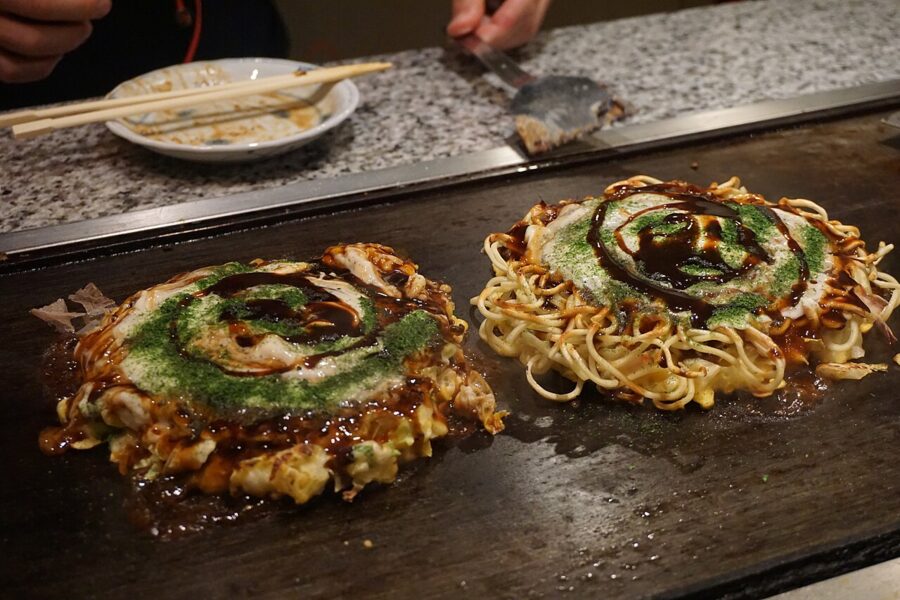

A word on the name. People in Hiroshima call their dish okonomiyaki, or simply okonomi. “Hiroshima-yaki”, which you will see on menus in Tokyo, gets a polite wince from some older residents: partly because it implies the local version is the variant, partly because to some ears it sounds like “Hiroshima burned”. Say okonomiyaki and nobody will misunderstand you.
From one-coin snack to post-war staple
The dish began as a children’s treat. Before the war, snack stalls and sweet shops across Japan sold issen yōshoku (一銭洋食), “one-sen Western food”: a thin wheat crêpe cooked on a griddle with chopped green onion and a brush of Worcestershire sauce, the “Western” part. Adults, according to Otafuku’s own history of okonomiyaki, saw it as a snack for kids and paid it no attention.
Then came August 1945. In the hungry years after the atomic bombing, Hiroshima people stretched small rations of American-supplied flour with water and cooked it with green onion, cabbage and bean sprouts. The city had a head start on equipment: as a military and industrial town it had many ironworks, and a sheet of steel was easier to come by here than in most places. Stalls selling something like issen yōshoku appeared, first on Chūō-dōri and then in the open squares of Shintenchi, where about fifty of them crowded together by the mid-1950s.
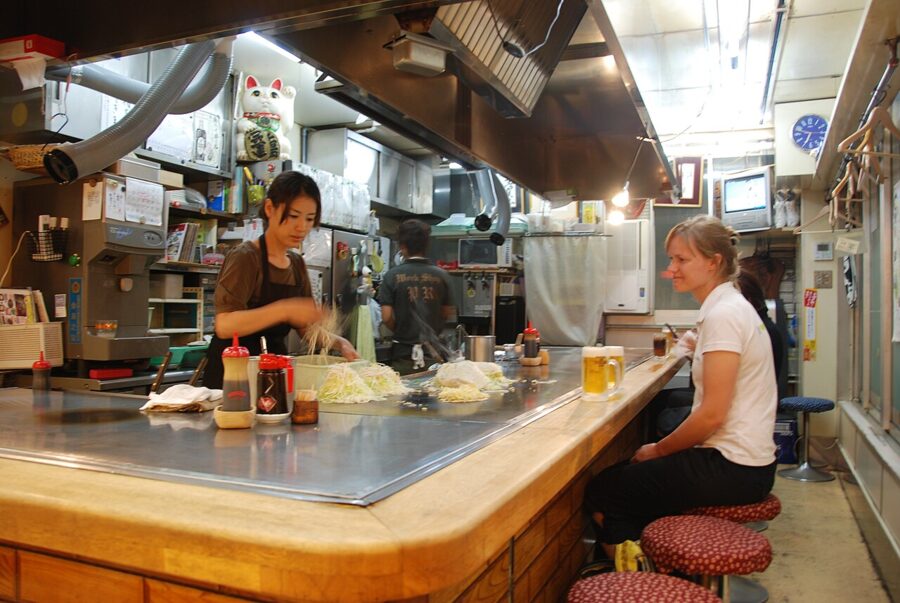

Mitchan, the best-known name from those stalls, tells its own version of what happened next in its shop history. The father of the founder opened a stall on Chūō-dōri in 1950; his teenage son, nicknamed Mitchan, ran it in the evenings after working on the rebuilding by day, and gave the stall his own name in 1953 so friends could find it among the others. The shop credits him with swapping expensive green onion for cheap cabbage, adding bean sprouts when cabbage prices rose, and putting the okonomiyaki on top of a pile of fried noodles to make it filling. By about 1955 the noodle version had become the standard, and the food had grown too thick to fold, so it was served flat and round.
Several things came together. Propane gas and heavier griddles made the slow layered method practical. Local sauce makers worked with the stall-keepers on a thicker, sweeter sauce.
And across the city, women opened tiny okonomiyaki shops in the front rooms of their houses, which is the usual explanation for the many shop names ending in -chan. The often-repeated story that most of them were war widows is disputed, but the home-front-room shop is real, and a few still trade in the residential streets.
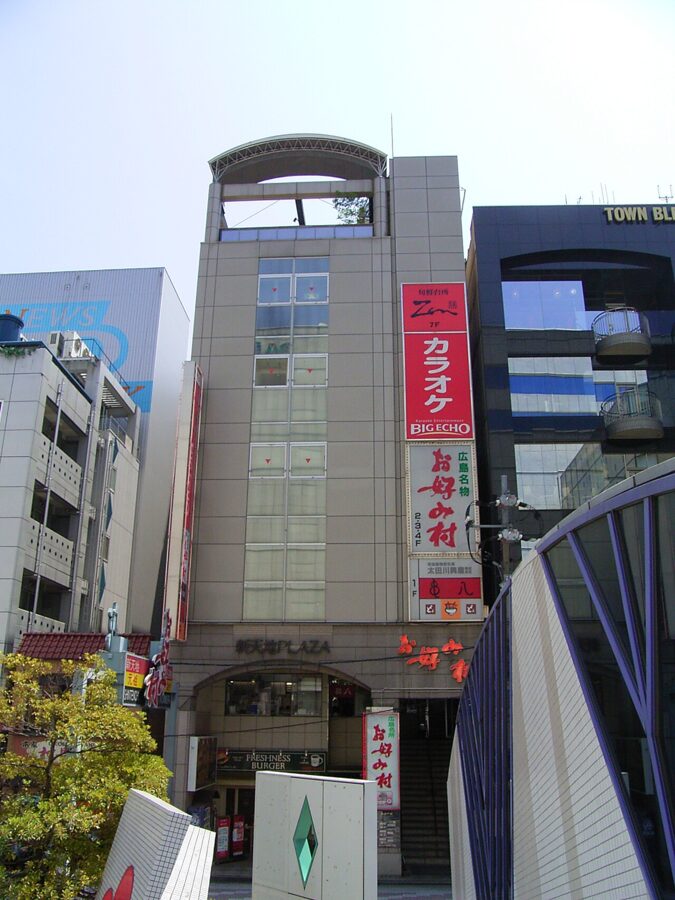

In the 1960s the city cleared the square for a park and the stalls had to go. The traders regrouped in a two-storey prefab building beside it and kept the name the writer Kida Minoru had given the scene: Okonomimura, “okonomiyaki village”. The present high-rise replaced it in 1992.
The dish went national in 1975, when the Hiroshima Carp won their first Central League pennant and television coverage of the celebrations showed the city’s okonomiyaki shops to the whole country. The guidebooks came after.
How it is built on the teppan
Watching the build is half the meal, and once you know the order you can follow every move. Recipes and shops vary in the details, but a standard niku-tama soba goes roughly like this:
- A ladle of thin batter is spread into a circle about the size of a dinner plate.
- Fish powder (katsuobushi ground fine) is dusted over it.
- Cabbage goes on in a high heap, then bean sprouts, then tenkasu (fried batter bits) or ika-ten (squid tempura bits), and often a pinch of green onion or shaved kelp.
- Thin slices of pork belly are laid across the top in a single layer.
- A little more batter is drizzled on as glue, and the whole stack is flipped with two spatulas, pork side down. It is left to steam while the cook presses it gently now and then.
- Noodles are fried on the side, often loosened with stock and seasoned with sauce, and shaped into a disc. The stack is lifted onto them.
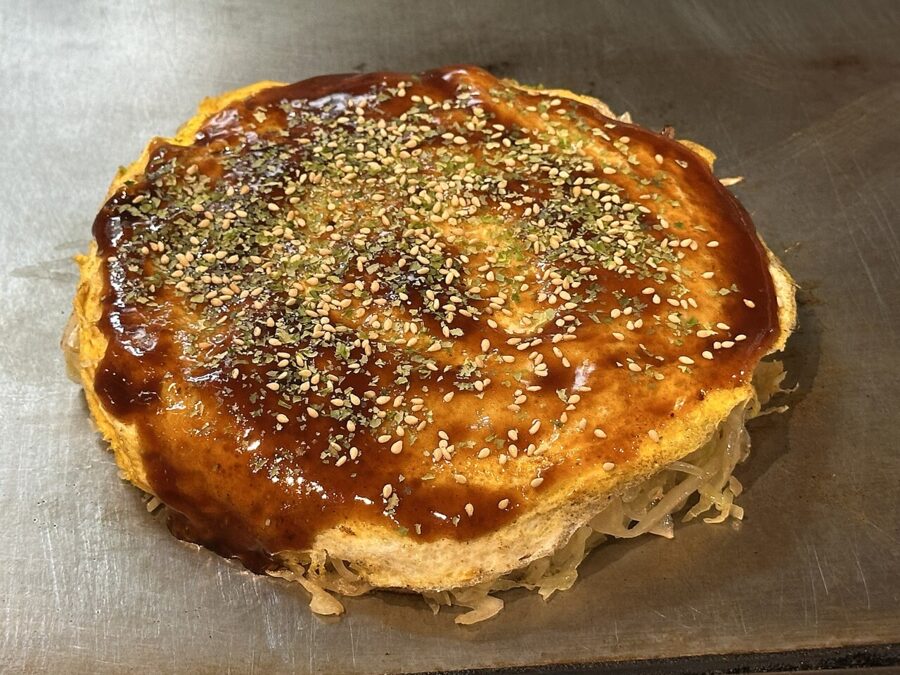
- An egg is cracked onto the steel, its yolk broken and spread into a circle; the stack goes on top while the egg is still soft, and the whole thing is flipped one last time so the egg faces up.
- Sauce is brushed over the top, followed by green laver (aonori) and sometimes sesame.
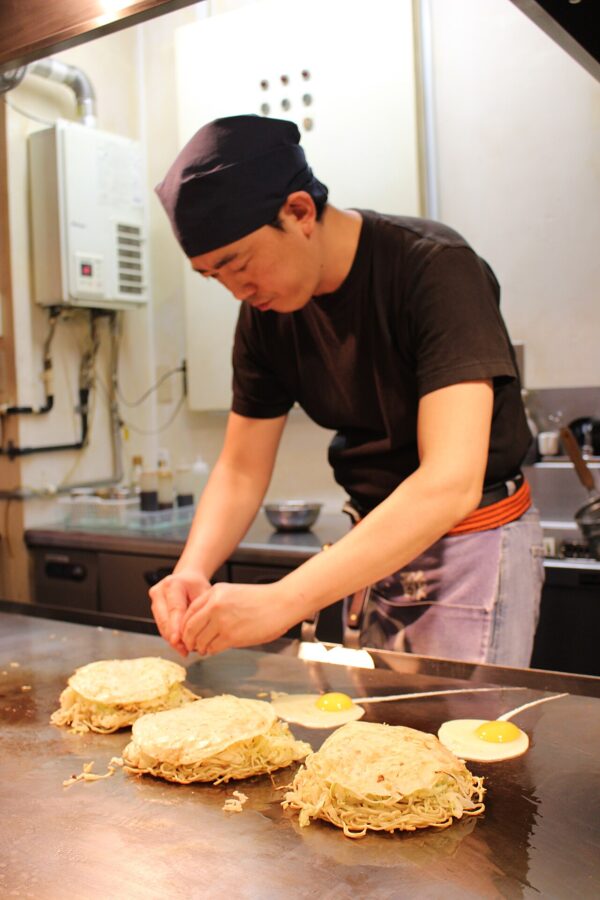

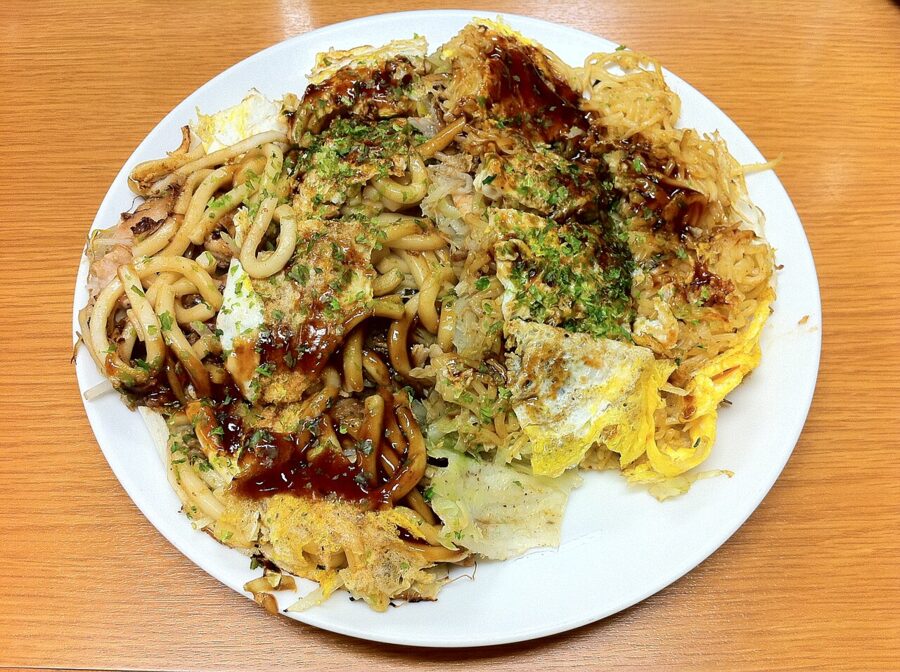
The noodles are where shops differ most. Some boil fresh raw noodles in a pot and then fry them; others use pre-boiled or steamed noodles, which are quicker. The fresh-boiled kind is the one most of the well-known counters use, and it gives the crisp, slightly charred edge that regulars argue about. Ask for men daburu and you get a double portion.

A good shop takes its time over this. From order to plate is often fifteen to twenty minutes at a busy counter, and nobody minds, because the show is in front of you.

Eating it at the counter with a hera
The cook slides the finished okonomiyaki along the griddle until it sits in front of you, and hands you a hera (へら), a small flat metal spatula with a wooden handle. (In Osaka the same tool is a kote or teko.) This is how it is meant to be eaten, straight off the hot steel.
Cut it in a grid, not in pizza wedges: press the edge of the hera down through the layers to make a bite-sized square, slide the blade under it, and eat from the spatula. Lay the hera down at the cooler edge of the griddle between bites, because the blade heats up fast. If the noodles stick, a firm push with the edge frees them. Nobody will judge you for asking for a plate and chopsticks instead, and most shops offer them without a second thought, but you lose the crust that keeps forming underneath as you eat.
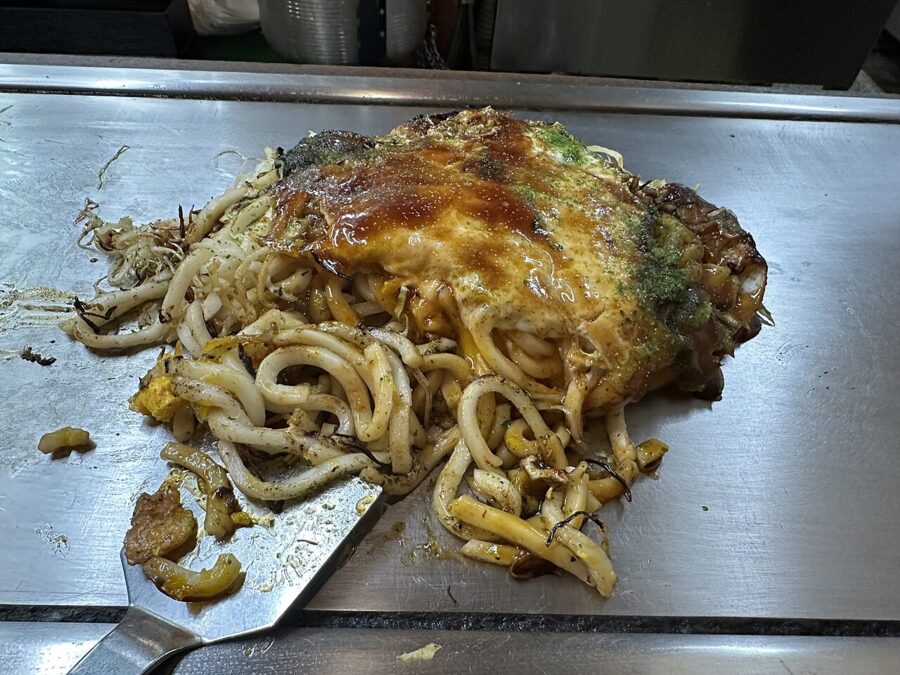

The habit started for practical reasons. At the post-war stalls there was no running water to wash plates, and disposable chopsticks cost money, so eating off the griddle with the cooking spatula saved both. Mitchan claims the idea, and also the wooden handle: the founder got tired of wrapping cloth round the hot metal grip and fixed a strip of wood to it, first for a fellow stall-keeper, and soon everyone wanted one.
Two practical warnings. Sauce spits, so a white shirt is a gamble. And the counter is shared space, so keep bags off the steel and on the hooks or the floor.
The sauce: Otafuku and the others
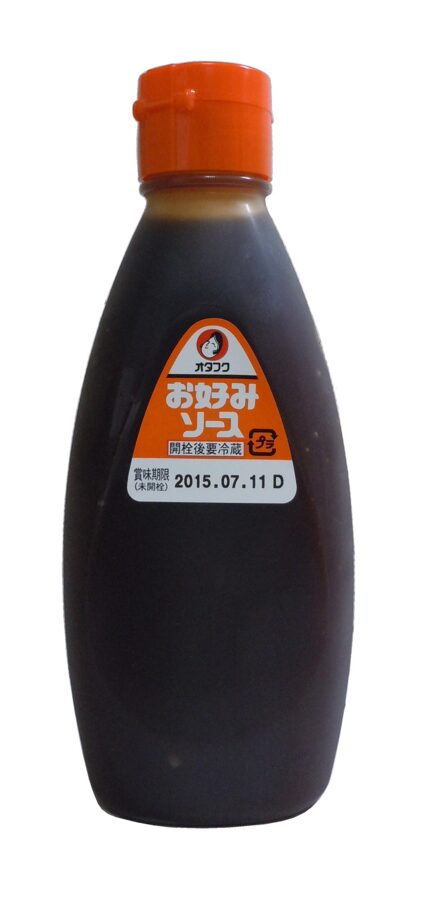
The thick, sweet, dark sauce is as much a part of Hiroshima okonomiyaki as the noodles, and it was invented for it. Otafuku, the company whose bottle you will see everywhere, started in 1922 as a soy and sake shop in Yokogawa and began brewing vinegar in 1938. The bombing burned its shop and home to the ground. It went back to vinegar in a borrowed brewery, launched a Worcestershire sauce in 1950, and took it round the okonomiyaki stalls to find customers.
The stall-keepers had a complaint: thin Worcestershire ran off the food and onto the griddle. According to Otafuku’s account of its okonomi sauce, the answer lay in the sediment left at the bottom of the vats, full of fruit and vegetable pulp, which gave the sauce body; the first okonomi sauce went on sale in 1952.
Mitchan’s history tells it from the counter side, with the founder asking a supplier to thicken the sauce with potato starch. Both are probably true. Either way, thick okonomi sauce and layered okonomiyaki grew up together on the same few streets.
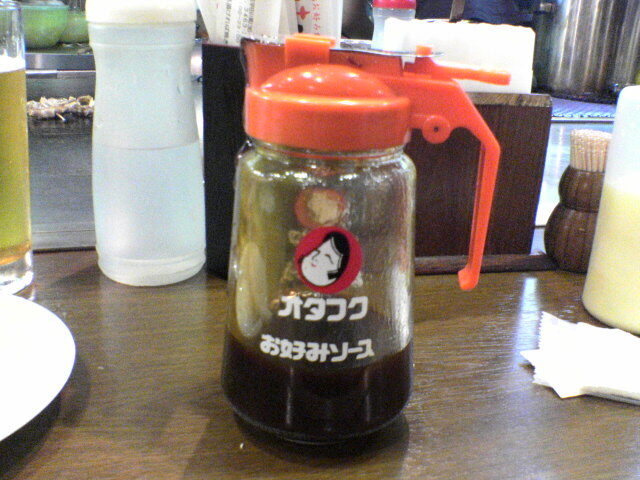

Otafuku is not the only one. Carp Sauce, from Mōri Jōzō, is sold as a professional sauce for okonomiyaki shops, a little less sweet and more spicy, and its maker tells a similar origin story: stall-keepers on Shintenchi asking suppliers for something that would cling. Sun Foods’ Mitsuwa sauce is the certified house sauce of Okonomimura. Smaller makers fill the gaps, and some shops have their own sauce made to order; Nagataya, below, sells a blend developed with Otafuku.
Mayonnaise is the touchy subject. It came from the Osaka style, and traditional Hiroshima shops did not use it. Many now keep a bottle for visitors and younger customers, or add it if asked. Try the first few bites without it.

Where to eat it in Hiroshima
There is an okonomiyaki counter within a short walk of almost anywhere in central Hiroshima, and a neighbourhood shop you stumble into can be as good as any famous name. For a first visit, though, the two multi-shop buildings make choosing easy, and a handful of long-running shops are worth crossing town for.
Okonomimura
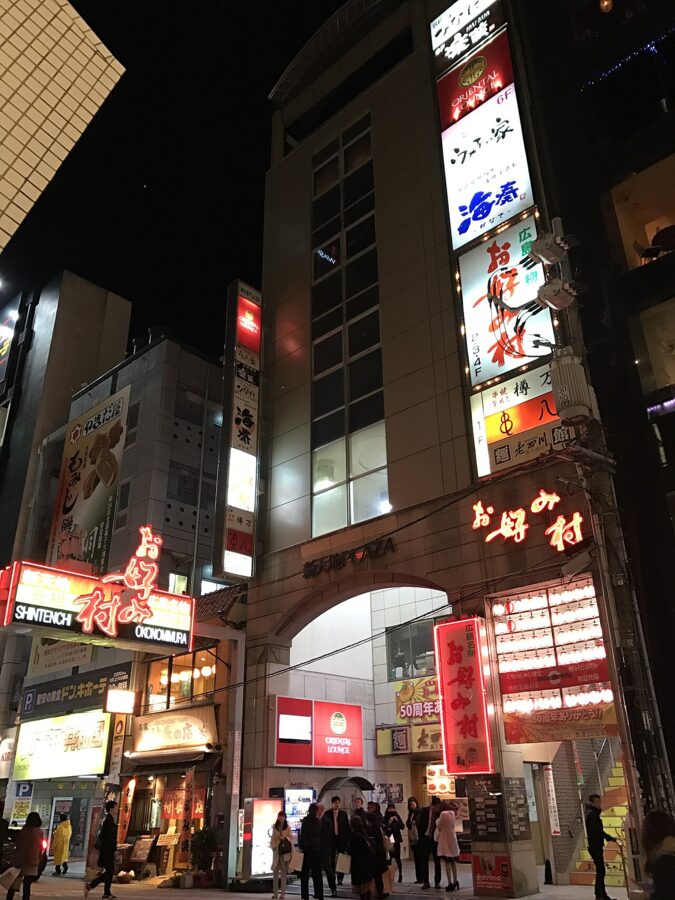
Okonomimura (お好み村) fills the second to fourth floors of Shintenchi Plaza, in the middle of the Hatchōbori and Shintenchi entertainment district. The prefecture’s tourism site lists 25 counters, each a separate shop with its own cook, batter recipe and opening days. Most open at 11:00; some only open in the evening, and a few stay open past midnight, as of 2026. Hours and days off are set shop by shop, so if you have a particular counter in mind, check it before you go.
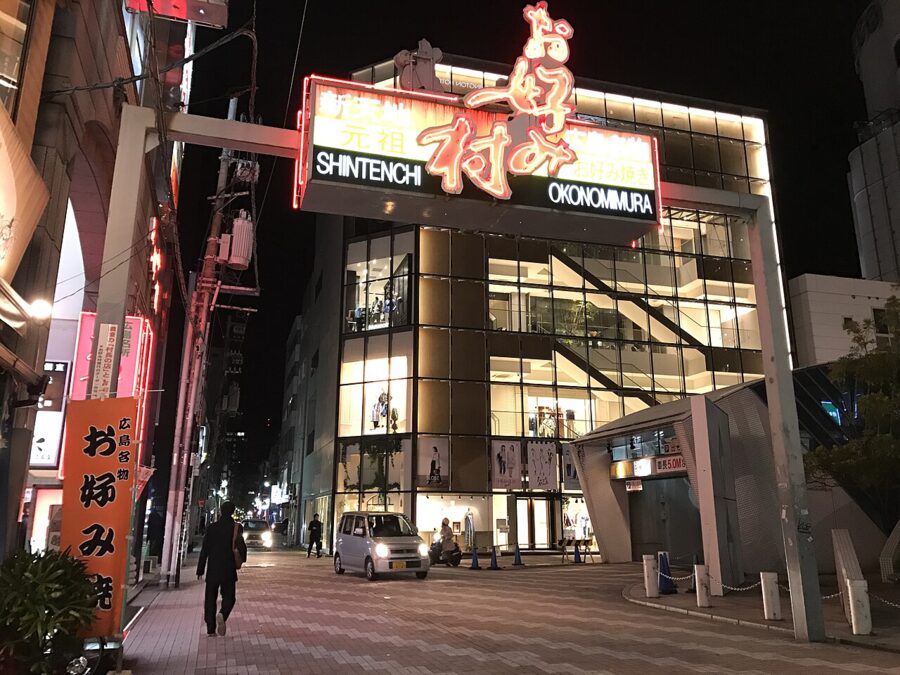

How to pick? Walk a floor before you sit down. The counters open straight onto the corridors, so you can see who is busy, who has a menu in English and which cook you would like to watch. Each shop has its own batter, noodle technique and sauce, and there is no wrong answer.
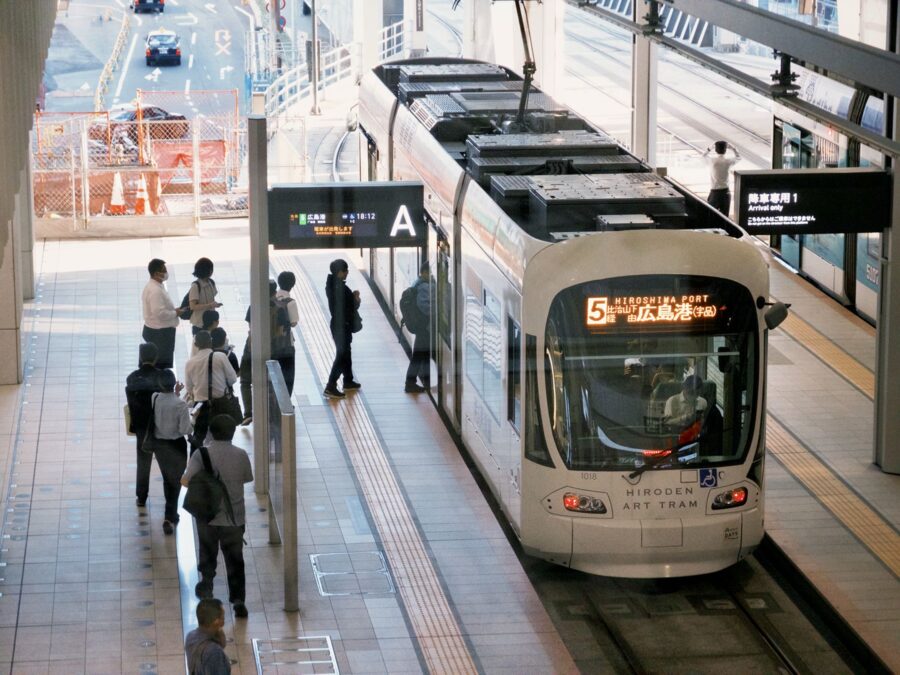
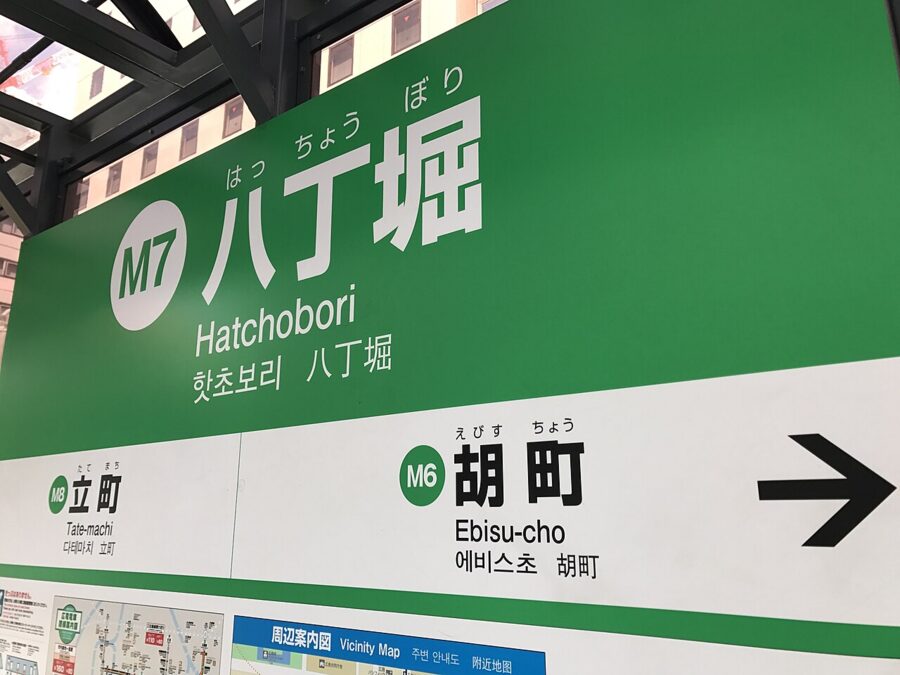
Getting there is simple. From Hiroshima Station, a tram bound for Miyajima, Eba, Nishi-Hiroshima or Ujina reaches Hatchōbori in about ten minutes, and Okonomimura is a three-minute walk from the stop; the Shintenchi bus stop is three minutes away too. There is no car park of its own. Read more on the building and its history on the prefecture’s Okonomimura page.


Ekimae Hiroba, opposite the station
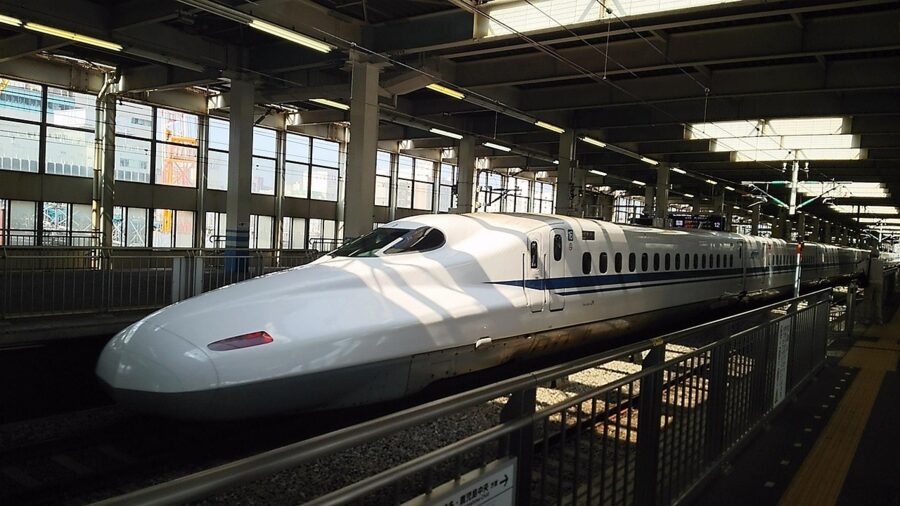
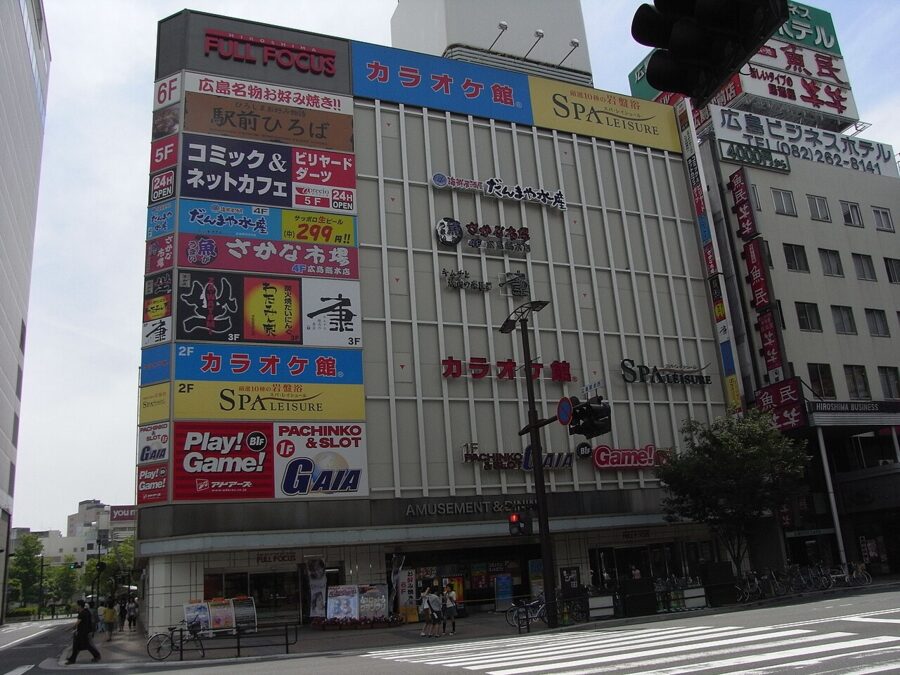
If you are coming off the Shinkansen hungry, Hiroshima Okonomi Monogatari Ekimae Hiroba (ひろしまお好み物語 駅前ひろば) is the easy answer. It is on the sixth floor of the Full Focus Building, three minutes on foot from the station’s south exit, and gathers 14 counters on a floor laid out like a street of stalls, open every day from 10:00 to 23:00 (a few counters open at 10:00, all of them by 11:00), as of 2026. The mix runs from traditional cooks to newer shops with odder toppings; one counter, Denkō Sekka, wraps its okonomiyaki in a dome of fluffy egg, which is a good second okonomiyaki if you are comparing.
One thing to know. Spring and autumn are school-trip season, and the operators post notices when tour groups have booked out the floor for an hour or two, at lunch on some days and in the evening on others. The news page on its site lists those slots by date. Ekimae Hiroba also says it caters for food allergies and for vegan, vegetarian and Muslim diners; individual counters vary, so ask before you order.

Inside the station: Reichan and Mitchan
Inside the station building itself, the ekie shopping and dining floors hold two of the oldest names. Reichan (麗ちゃん) dates from 1957 and has been on the first floor of ekie since March 2018; its listing describes a batter rested for four hours and each okonomiyaki finished by a single cook. It opens 11:00 to 22:00, with last food orders at 21:15, as of October 2026. Expect a queue at lunch and early evening.

Mitchan’s station branch is also in ekie, on the Shinkansen side, open 11:00 to 22:00. If you only have an hour between trains, it is the easiest way to try the shop that says it first put noodles on the menu.
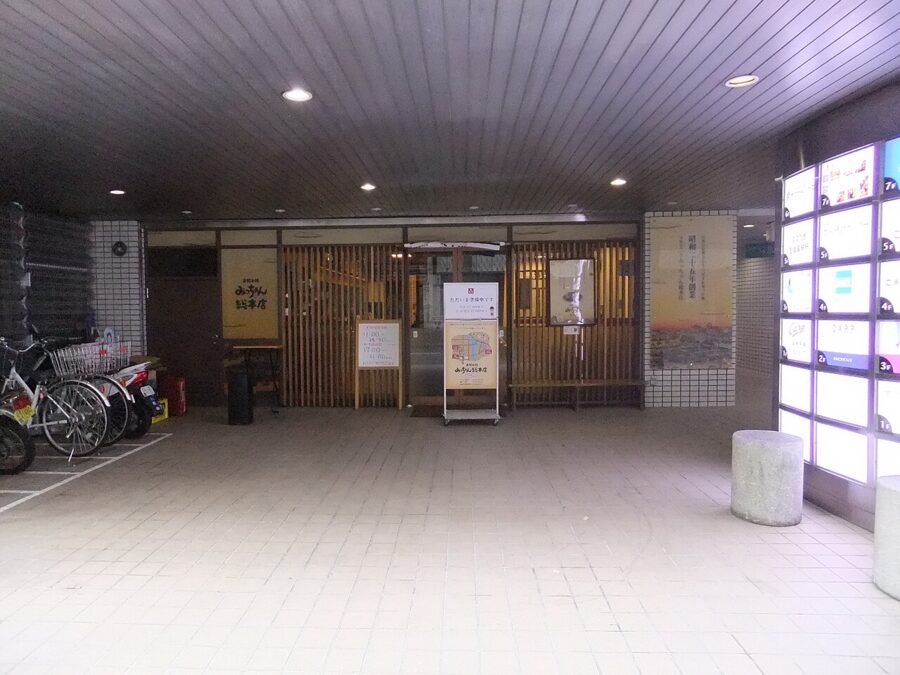
Mitchan Sohonten, Hatchōbori
The main Mitchan Sohonten shop (みっちゃん総本店) is five minutes’ walk from Hatchōbori tram stop, on the site it has occupied since 1987. On weekdays it opens 11:30 to 14:30 and 17:30 to 21:00; at weekends and on holidays 11:00 to 14:30 and 17:00 to 21:00, with last orders half an hour before closing and no fixed day off, as of 2026. It takes reservations for takeaway only, so at peak times you queue.
The menu on the shop’s website lists soba niku tamago at ¥960 and the oyster version at ¥1,840 (about US$12), with toppings from ¥200 for shiso leaf to ¥880 for extra oysters, as of 2026; it notes that prices vary by branch. Regulars describe Mitchan’s noodles as the soft kind rather than the crisp kind, which is a matter of taste. There is also a Mitchan on the ground floor of Orizuru Tower, by the Genbaku Dome-mae tram stop.

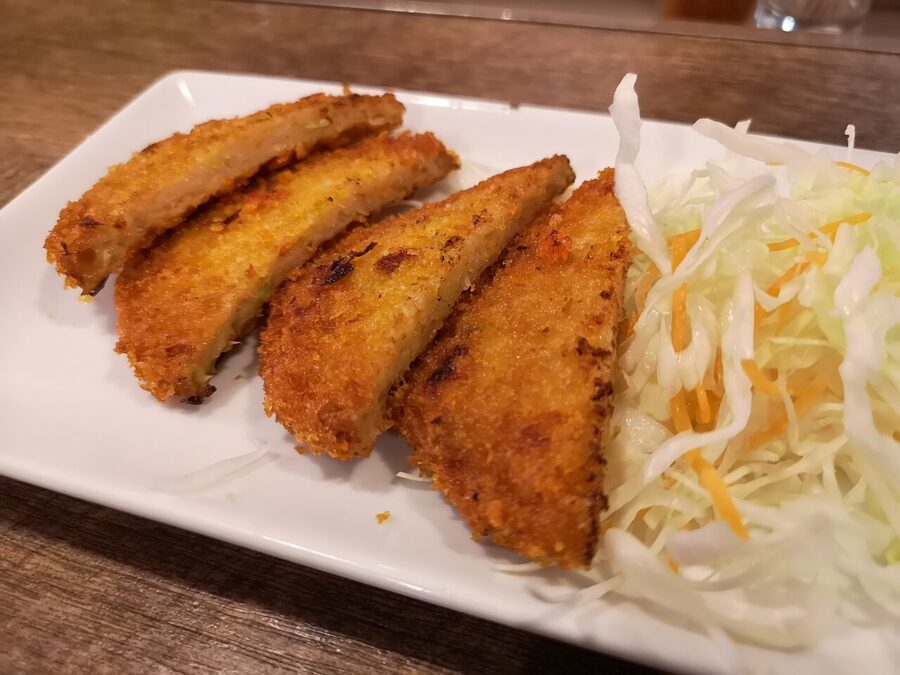
While you wait, order gansu (がんす), a Hiroshima speciality of fish paste pressed into a slab, breaded and fried. Both Mitchan and Nagataya list it on their side menus, and it goes well with a beer.

Nagataya, by the Peace Park
For lunch on a day at Hiroshima Peace Memorial Park, Nagataya (長田屋) is a few steps from the park, close to the Atomic Bomb Dome; Genbaku Dome-mae tram stop is two minutes away. The interior is built to look like a 1950s shop, every table has its own griddle, and there is counter seating too. The noodles are seasoned with pork-bone stock and the sauce is a custom Otafuku blend.
Its menu lists the basic niku-tama with soba or udon at ¥900, the house special at ¥1,550 and Hiroshima oyster at ¥1,850, as of 2026. Hours are listed as 11:00 to 20:00, closed on Tuesdays and on the second and fourth Wednesdays, with irregular days off in July and August; confirm before you go. It is popular with visitors and queues build at noon.

| Where | Nearest stop | Hours (as of 2026) | Basic order |
|---|---|---|---|
| Okonomimura (25 counters) | Hatchōbori tram, 3 min | Varies by counter, most from 11:00 | Varies |
| Ekimae Hiroba (14 counters) | Hiroshima Station south exit, 3 min | 10:00–23:00 daily | Varies |
| Reichan, ekie | Inside Hiroshima Station | 11:00–22:00 | Menu in shop |
| Mitchan Sohonten, Hatchōbori | Hatchōbori tram, 5 min | 11:30–14:30, 17:30–21:00 (weekdays) | ¥960 |
| Nagataya | Genbaku Dome-mae tram, 2 min | 11:00–20:00, closed Tue | ¥900 |
Planning a full day in the city? The Hiroshima itinerary fits okonomiyaki in at both ends.
Toppings, noodles and the regional versions
Once you have had the standard, start adding. Every menu has a toppings list, usually priced from about ¥150 to ¥350, with oysters dearer. The ones to know:
- Ika-ten (いか天): crunchy bits of battered, dried squid, sold in bags for exactly this purpose. For decades it was the only extra many neighbourhood shops kept, and plenty of out-of-centre places still stock nothing else.
- Negi-kake (ねぎかけ): a heap of chopped green onion on top.
- Kaki (カキ): Hiroshima oysters, grilled on the steel and laid on top or cooked into the stack. The local oyster farms are the reason it works; there is more about them in the oysters guide.
- Cheese, mochi and the two together, a combination many shops print on the menu as their own special.
- Raw squid and shrimp (nama-ika, nama-ebi), usually sold together as a “special”.
- Shiso, kimchi, corn, garlic chips, and at Nagataya, jalapeño.
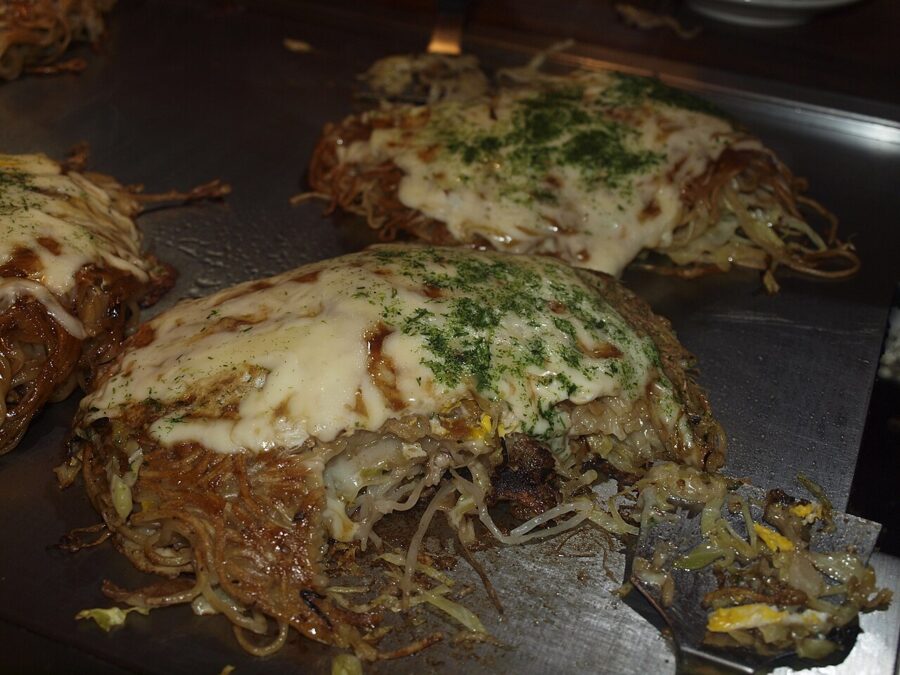

Soba or udon is your first choice at the counter. Soba gives the crisp, toasty edge; udon is softer and chewier and holds more heat, which makes eating it off the griddle a bit of an endurance test. If you are not that hungry, ask for no noodles at all; Mitchan, for one, takes ¥90 off.
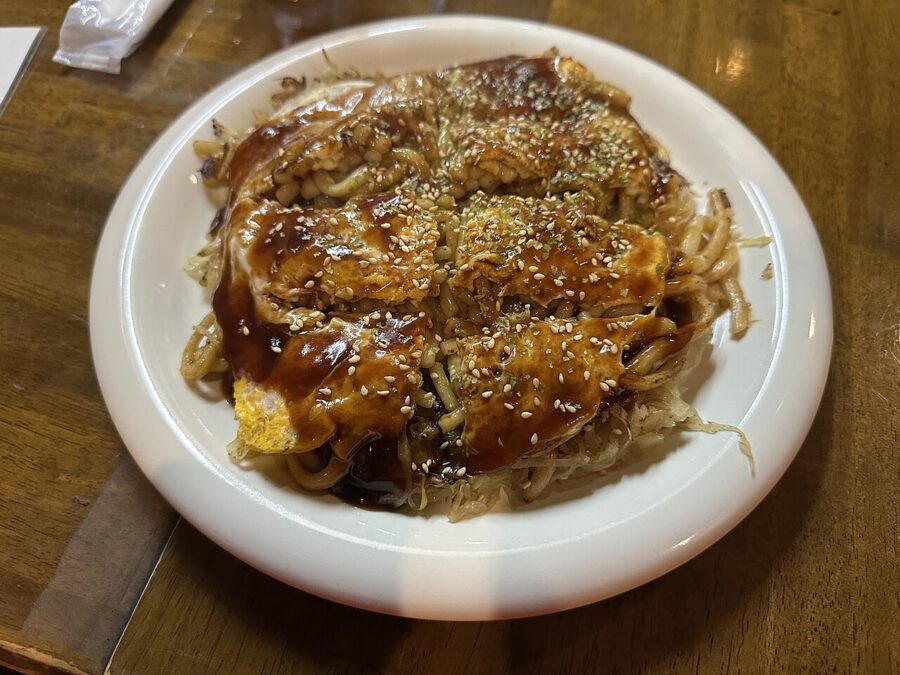

Outside the city, other towns have their own takes. Fuchū-yaki, from Fuchū in the east of the prefecture, swaps the pork belly for minced meat and leaves out the bean sprouts, so the fat from the mince fries the outside crisp while the cabbage stays soft. It won the first Hiroshima Teppan Grand Prix in 2010. In Onomichi the local version, Onomichi-yaki, adds chicken gizzard and ika-ten, a cheap, chewy, very good combination you can try between the temple walks.
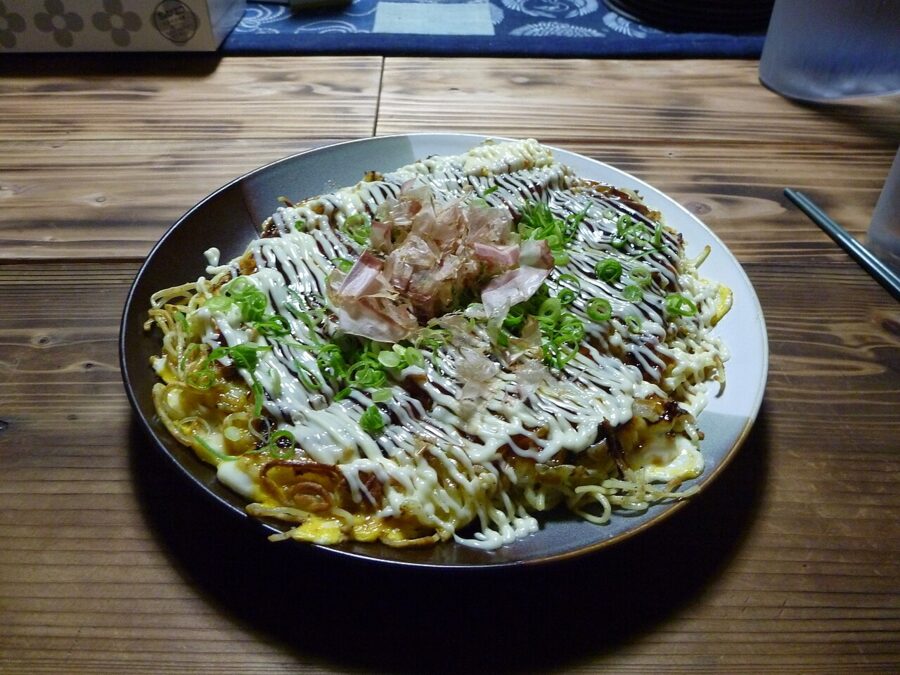

Across the border in Okayama Prefecture, the fishing port of Hinase has kaki-oko: okonomiyaki loaded with oysters, said to have started with fishermen’s wives cooking the small and damaged oysters that could not be sold. Okayama’s tourism site notes that some shops use frozen oysters, so ask if you want fresh ones.
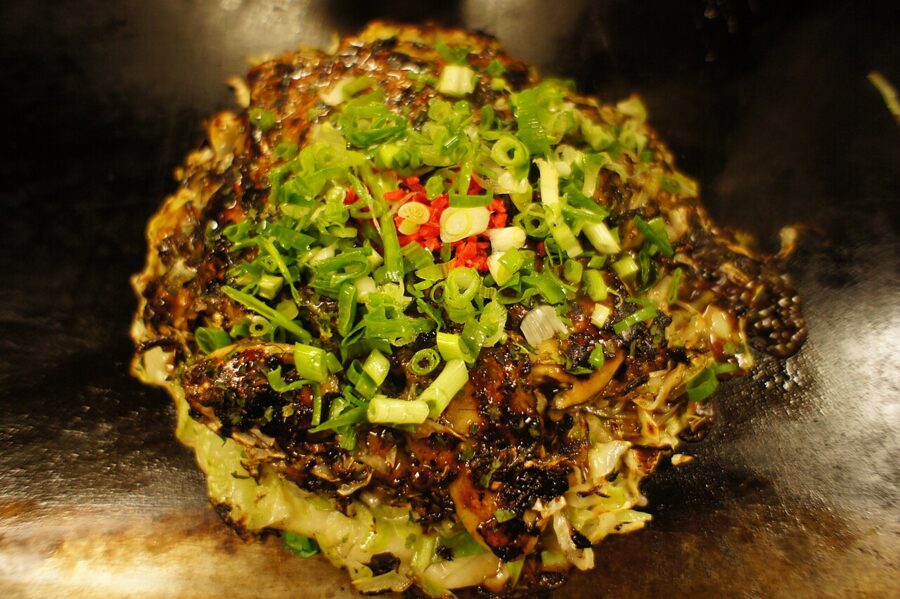

Cooking classes and food tours
Flipping a tower of cabbage with two spatulas looks easy until you try it, and a class is the best way to learn why the cooks are paid what they are. Otafuku runs the two most useful ones.
OKOSTA, Otafuku’s studio inside ekie at Hiroshima Station, is two minutes on foot from the station’s north (Shinkansen) exit. You cook on a real griddle with Otafuku staff guiding you, in sessions at 10:30, 13:00 and 18:30, and the standard Hiroshima okonomiyaki experience costs ¥2,500 (about US$17), with dinner plans at ¥3,300 and ¥5,500, as of 2026. Apron and paper hat are provided.
OKOSTA offers vegetarian, Muslim-friendly and gluten-free menus. Book at least three days ahead; English sessions are offered on the English page, but the general notes say guidance is in Japanese, so confirm the language when you book.
The Wood Egg Okonomiyakikan is Otafuku’s museum and cooking school at its head office in the Shōkō Center district of Nishi Ward. The museum on the second floor, which includes a recreated 1950s okonomiyaki shop, is free on weekdays from 9:00 to 17:00 (last entry 16:30), with no booking needed for groups of ten or fewer.
A hot-plate class costs ¥1,100 and a class on a professional griddle, run for groups, ¥1,980, and the 90-minute factory and museum tour is free but guided in Japanese, as of 2026. Everything is closed at weekends and on holidays, and over the New Year from 28 December 2026 to 4 January 2027. Getting there takes some effort: JR Sanyō Line to Shin-Inokuchi, about 15 minutes, then a five-minute taxi, or a Hiroshima Bus to Shōkō Center 7-chōme, about 50 minutes from the station.
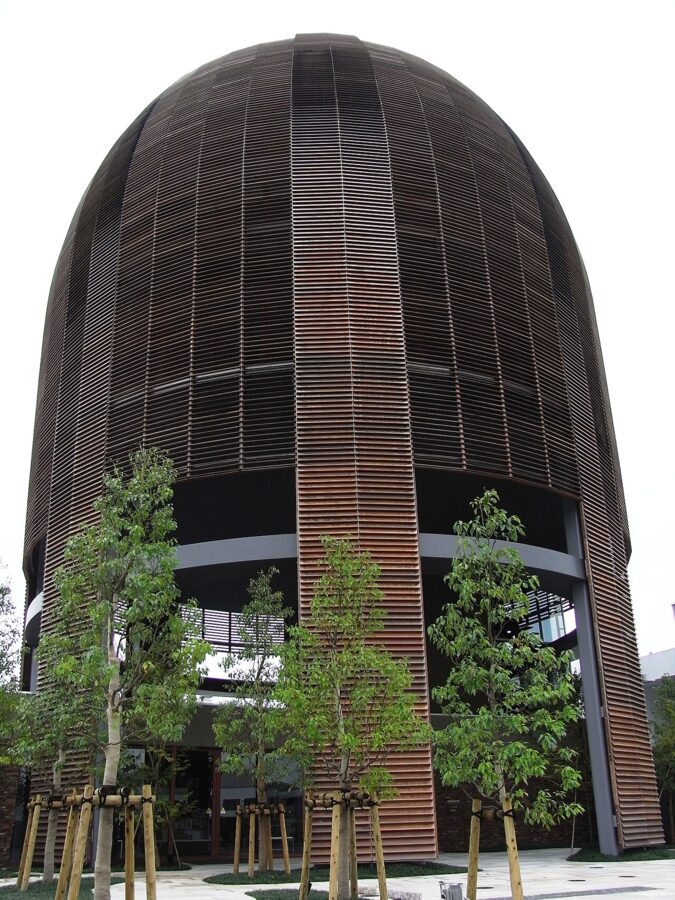

Ekimae Hiroba also has a rental space with large griddles where groups cook their own with an instructor helping. For a class in English with a guide, a cooking class with a local chef meets by the Atomic Bomb Dome, rides the tram to a working okonomiyaki restaurant and has you cook alongside the chef, with meat, seafood, vegetarian and gluten-free versions; read the review of the okonomiyaki cooking class before booking. If you would rather eat than cook, a one-hour guided okonomiyaki meal at Ekimae Hiroba pairs a guide’s background on the dish with a food and drink allowance at one of the counters; there is a review of the Ekimae Hiroba okonomiyaki hour too.
Ordering: a short phrasebook
Many counters in Okonomimura and Ekimae Hiroba have English menus, and pointing works everywhere. Menus often list the parts separately, as in “soba, niku, tama”, and you order them back as one phrase. If in doubt, niku-tama soba is never wrong.
| You say | Japanese | Meaning |
|---|---|---|
| Niku-tama soba, onegai shimasu | 肉玉そば、お願いします | Pork, egg and noodles, please |
| Udon de | うどんで | With udon instead |
| Men daburu | 麺ダブル | Double noodles |
| Ika-ten irete kudasai | いか天入れてください | Add squid tempura bits |
| Negi-kake de | ねぎかけで | With green onion on top |
| Kaki iri | カキ入り | With oysters |
| Mayonēzu nashi / ari | マヨネーズなし/あり | No mayonnaise / with mayonnaise |
| Hanbun ni kitte kudasai | 半分に切ってください | Please cut it in half (for sharing) |
| O-sara to o-hashi, kudasai | お皿とお箸、ください | A plate and chopsticks, please |
| Mochikaeri dekimasu ka? | 持ち帰りできますか? | Can I take it away? |
| Gochisōsama deshita | ごちそうさまでした | Thank you for the meal (on leaving) |
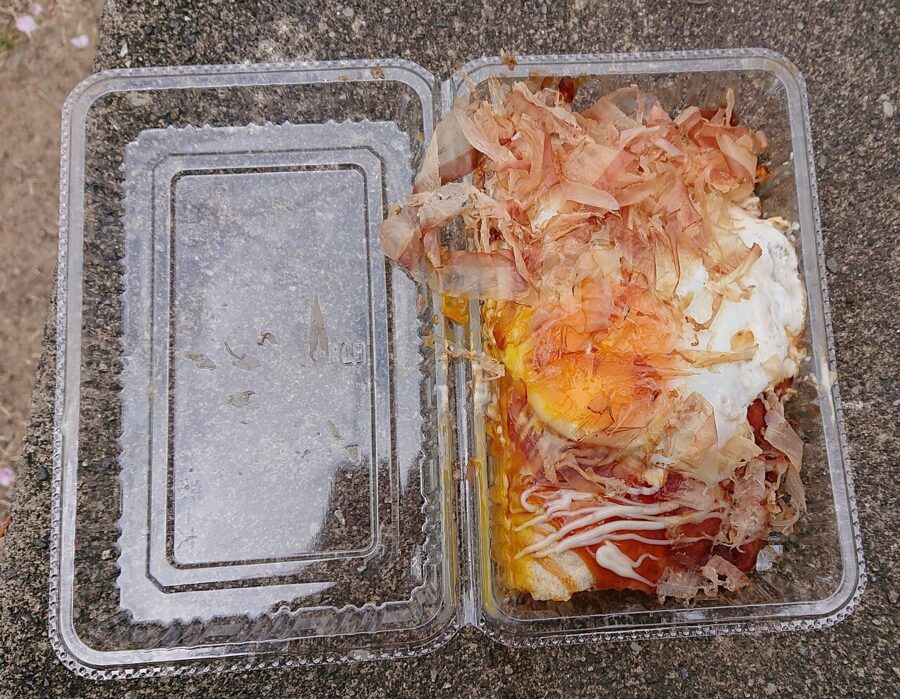
Takeaway is a long Hiroshima habit, going back to the 1950s, and many shops will box one up for a hotel-room dinner or the train. Sharing one between two is also fine, especially if you plan a second shop; ask and the cook will usually cut it in half on the griddle.


Take the tram to Hatchōbori, climb to Okonomimura’s top floor and walk down until a cook catches your eye. Sit at the counter, ask for niku-tama soba, and when that hill of cabbage goes over, you will know exactly what is happening.