
Reviewed · HIROSHIMA CITY TOURS
Hiroshima Experience: History, Culture & Nature Tour
Hiroshima’s past is not tucked away in a museum. It is under your feet, beside the river, and visible in the Atomic Bomb Dome. This two-hour guided walk begins at the Gates of Peace and follows a thoughtful route through memorial sites tied to August 6, 1945, before turning toward Hiroshima Castle and Shukkeien Garden.
I like the way the tour combines serious history with gardens and architecture, rather than treating Hiroshima as only a destination of sorrow. I also like having a named guide, Adina, who is a PhD researcher and passionate storyteller. The main caution is time: there are many stops, and one booking experience ended before the advertised two hours. A late 5:00 p.m. start may also leave poor light for photographs.
In This Review
- Key points to know
- Beginning at the Gates of Peace
- The Prayer Fountain and the human cost of August 6
- Hiroshima National Peace Memorial
- The Children’s Peace Monument
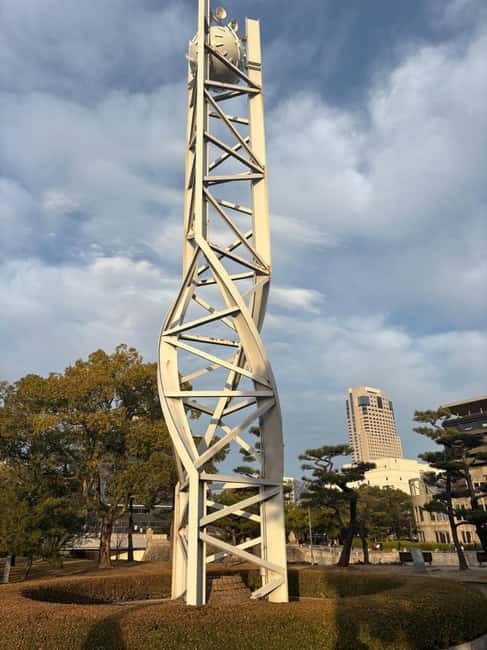
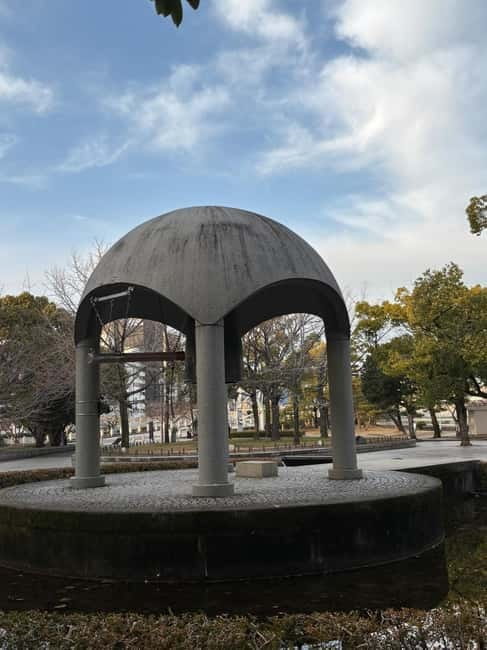
- Ringing the Bell of Peace
- The Atomic Bomb Dome and the hypocenter
- Hiroshima Castle and the turn toward earlier history
- Shukkeien Garden and a quieter finish
- What $19 buys you in Hiroshima
- Walking comfort, languages, and flexibility
- Who should choose this walk
- Should you book the Hiroshima Experience?
- FAQ
- How long does the Hiroshima Experience tour last?
- Where does the tour begin?
- Where does the tour finish?
- Which places are included?
- Which languages are available?
- Is the tour wheelchair accessible?
- What should I bring?
Key points to know
- The emotional center is Peace Memorial Park: Gates of Peace, the Prayer Fountain, the National Peace Memorial, the Children’s Peace Monument, and the Bell of Peace all appear before the Atomic Bomb Dome.
- Adina leads the walk: Her background as a PhD researcher shapes a tour focused on explanation, context, and respectful storytelling.
- The route mixes three sides of Hiroshima: wartime memory, samurai-era architecture at Hiroshima Castle, and quiet seasonal scenery at Shukkeien Garden.
- Two hours is a brisk schedule: You will cover a lot on foot, so comfortable shoes and water matter.
- The low price is a strong value: At $19 per person, the tour gives you a guided introduction to several major sights, though it is not designed for long visits at each stop.
- Timing affects the experience: A 5:00 p.m. departure can be interesting in the softer evening mood, but it may not suit anyone hoping for bright photos.
Beginning at the Gates of Peace
The Gates of Peace make a fitting starting point. They frame the visit with a message that is easy to understand before the details become heavier. Your guide begins here with a short explanation, helping you place Hiroshima’s memorial district in its larger story.
This opening lasts about 10 minutes. That is enough for orientation, but not enough for a long lecture. I see that as a benefit for most people. You get the essential setting quickly, then move through the park instead of remaining in one place while the guide talks at length.
Adina’s role matters here. A guide can simply point out monuments, or help you understand why they were built and how they are used. The experience is designed around the second approach. Her research background and interest in storytelling should appeal to you if you want more than a list of dates.
A few more Hiroshima tours and experiences worth a look

The Prayer Fountain and the human cost of August 6
The Prayer Fountain is the next pause. It gives the tour a quieter tone and brings the focus back to the people affected by the bombing. The story of Hiroshima is often told through buildings and statistics. Memorials such as this help keep the subject personal.
You receive about 10 minutes of guided explanation here. That short stop works best if you listen closely and resist trying to photograph everything at once. This is a place for a moment of attention, not a rushed checklist.
The guide also places August 6, 1945, at the center of the story. That date is not treated as a distant historical footnote. You learn about the events of that morning and the city’s later effort to become a global symbol of peace.
Hiroshima National Peace Memorial
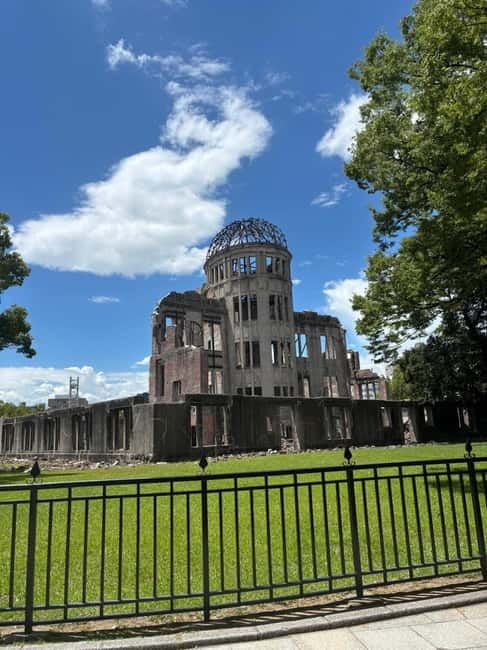
The Hiroshima National Peace Memorial adds another layer to the park’s message. It is tied to remembrance, mourning, and the long human effect of the bombing. Adina’s explanation is meant to connect the memorial to Hiroshima’s larger peace work, rather than leaving you with only a visual impression.
Again, the planned visit is around 10 minutes. If you want to read every inscription or visit every nearby memorial, you will need extra time on your own. The guided walk gives you a framework. It does not replace a full independent visit to the entire park.
That distinction is important when planning your day. If this is your only Hiroshima activity, I would allow additional time before or after the tour. The walk gives you a meaningful introduction, while a longer visit lets you slow down at the places that affect you most.
The Children’s Peace Monument
The Children’s Peace Monument is one of the most recognizable stops in the park. It connects the history of Hiroshima with the experiences of children, making the subject especially direct and difficult to keep at a safe emotional distance.
The 10-minute visit is short, but the monument gives the guide a clear way to explain how remembrance continues across generations. You may find this stop particularly moving if you are visiting with children, though the subject is serious for every age group.
I would not expect a light sightseeing mood here. The tour asks you to pay attention and show respect. That may sound obvious, but it is useful to know before booking. This is not a casual city walk with a few historical facts added on. Its first section is deliberately reflective.
Ringing the Bell of Peace
The Bell of Peace brings a physical action into the walk. Instead of only looking at memorials, you encounter a symbol connected with peace and public remembrance. The stop lasts about 10 minutes, giving Adina time to explain its meaning and place it within the park.
This part of the route helps vary the pace. You have moved from gates to a fountain, a memorial, and a monument, and now reach another important site with its own sound and presence. The sequence makes the park easier to understand as a collection of connected places rather than one large open area.
As with the other stops, the time limit means the guide must keep moving. You should expect a clear account rather than a long, detailed seminar. If you enjoy asking many questions, use the walking time between stops and be aware that the schedule is fairly tight.
Other historical tours in Hiroshima
The Atomic Bomb Dome and the hypocenter
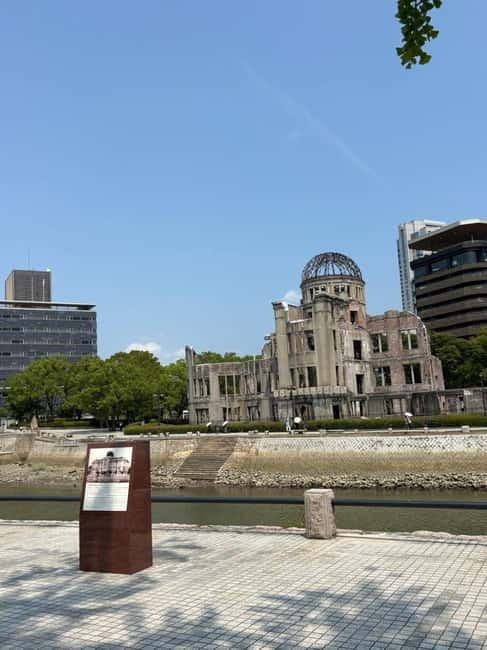
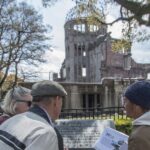
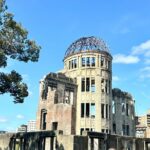
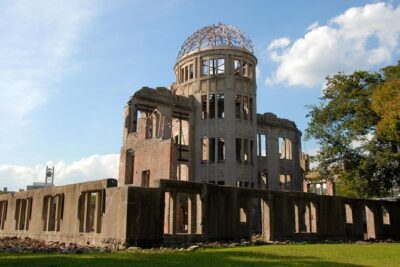
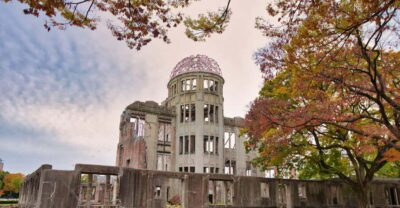
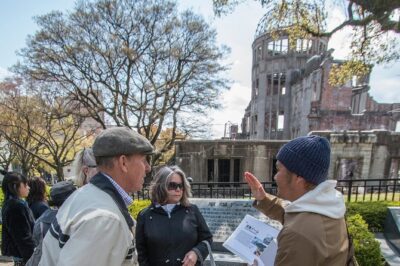
The Atomic Bomb Dome is the visual anchor of the tour. Its damaged structure makes the scale of the bombing easier to grasp than words alone can do. You do not need a dramatic presentation here. The building’s condition speaks plainly.
The guide explains what happened on August 6, 1945, and how Hiroshima moved from devastation toward peace. The point is not to turn the dome into a photo backdrop. It is to understand why this structure remains such a powerful symbol.
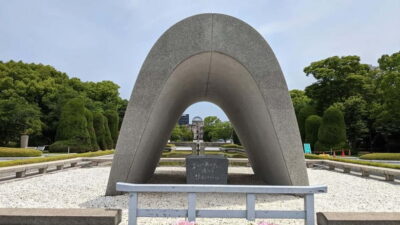
The walk finishes at the Hiroshima Atomic Bomb Hypocenter Monument. Ending there gives the route a direct connection to the event itself. It also means the emotional part of the tour remains concentrated through the final stop, rather than fading into general sightseeing.
I recommend taking photographs with care and allowing yourself time to look before reaching for your camera. One practical issue is the departure time. A 5:00 p.m. tour may make photography harder, particularly as daylight changes. If pictures are important to you, check the available starting times and choose the brightest option.
Hiroshima Castle and the turn toward earlier history
The experience also includes Hiroshima Castle, a major change in tone after the memorial park. The castle was once home to samurai lords, and its architecture provides a window into Hiroshima before the modern city and the events of 1945.
This contrast is one of the tour’s best ideas. You first consider the city’s wartime destruction, then look at an older chapter shaped by samurai rule, local power, and castle architecture. The shift keeps Hiroshima from being defined by one event alone.
The available timing details place the listed memorial stops at roughly 10 minutes each, so the schedule leaves little room for long interior visits. Think of the castle portion as an introduction and exterior experience unless your guide confirms more time inside. If you want a full castle visit, plan to return independently.
Shukkeien Garden and a quieter finish
Shukkeien Garden supplies the calmest part of the experience. This traditional Japanese garden includes seasonal beauty, koi ponds, and quiet paths. After the intensity of Peace Memorial Park, the change can feel welcome without being disconnected from the rest of the city.
I like this pairing because it lets you see Hiroshima through mood as well as history. The garden is not simply a pretty final stop. It gives you space to consider the city’s survival and renewal after learning about its destruction.
The season will affect what you see. The garden is described in terms of seasonal scenery, so its appearance can change during the year. Bring a camera if you enjoy details such as ponds, paths, and traditional garden design, but remember that the late afternoon start may limit light.
There is one point to clarify when planning. The detailed stop sequence supplied for the walk runs from the Gates of Peace through the Peace Memorial Park and ends at the Atomic Bomb Hypocenter Monument, while the overall experience also includes Hiroshima Castle and Shukkeien Garden. Ask for the exact route and order when you book, especially if those two locations are the main reason you are choosing this tour.
What $19 buys you in Hiroshima
At $19 per person, this is an inexpensive way to get an organized introduction to Hiroshima’s most important themes. You receive a live guide, a structured walking route, and access to explanations that can make the memorial park more meaningful than a solo stroll.
The value is strongest for first-time visitors who want orientation. Adina can connect the monuments, the bombing, the peace movement, the castle, and the garden into one story. That saves you the work of figuring out what you are looking at while you walk.
The price does not mean you should expect an unhurried private tour. The schedule is compact, and the tour involves several stops. You are paying for guidance and focus, not extensive time at every monument or a full guided visit inside each attraction.
The overall rating is 4 out of 5 from three bookings, which suggests a generally positive but not flawless experience. One booking praised Adina’s passion, politeness, and knowledge of Hiroshima’s atomic bomb history. Another found the tour interesting but said it ended before two hours and that a 5:00 p.m. start made good photographs difficult. Those are useful limits to keep in mind.
Walking comfort, languages, and flexibility
Wear comfortable shoes. The tour is on foot, and the number of stops means you will be moving regularly rather than sitting for long stretches. Bring water, especially if the weather is warm, and carry a camera only if it will not distract you from the memorial sites.
Live guiding is offered in English, Hindi, and Urdu. That makes the experience useful for a wider range of visitors, though you should select the language you need when checking availability.
The tour is wheelchair accessible. Since this is still a walking experience with multiple outdoor stops, it is sensible to confirm the practical route details for your preferred starting time. The supplied information does not give a group size or exact walking distance, so I would not assume a private or especially slow-paced outing.
You can cancel up to 24 hours before the start for a full refund, and you can reserve now while paying later. Those policies are helpful if your Hiroshima plans are still shifting.
Who should choose this walk
I would choose this tour if you want a short, guided introduction before exploring Hiroshima on your own. It suits first-time visitors, history-minded people, and anyone who prefers a local storyteller to a self-guided audio route.
It also works well if you want more variety than a memorial-only visit. The castle and Shukkeien Garden offer architecture and nature after the serious opening section. That balance may be especially useful if you are spending only a short time in the city.
I would be more cautious if you want long periods of quiet reflection, detailed museum time, or extensive photography. The two-hour schedule is busy, and the evening start can reduce the quality of your pictures. Visitors with a strong interest in the Peace Memorial Museum should treat this walk as a companion, not a replacement, since the museum is not listed among the stops.
Should you book the Hiroshima Experience?
Book it if you want clear historical context at a low price, a live guide, and a route that reaches beyond the Peace Memorial Park. Adina’s research background and respectful storytelling are central strengths, and the combination of memorials, Hiroshima Castle, and Shukkeien Garden gives the city a fuller shape.
Skip it if you need a slow, photography-first visit or if every minute must be guaranteed. Check the precise route, especially the timing of the castle and garden, and avoid the 5:00 p.m. departure if daylight photos matter to you.
For most first-time visitors, $19 is a fair price for a focused introduction. Just leave extra time in your day to revisit the places that deserve more than 10 minutes.
FAQ
How long does the Hiroshima Experience tour last?
The stated duration is two hours. The walk includes several short guided stops, so the pace is fairly active.
Where does the tour begin?
The starting point is the Gates of Peace in Hiroshima’s Peace Memorial Park.
Where does the tour finish?
The stated finishing point is the Hiroshima Atomic Bomb Hypocenter Monument.
Which places are included?
The experience includes Peace Memorial Park, the Atomic Bomb Dome, Hiroshima Castle, and Shukkeien Garden. The guided route also includes the Prayer Fountain, Hiroshima National Peace Memorial, Children’s Peace Monument, and Bell of Peace.
Which languages are available?
Live guiding is available in English, Hindi, and Urdu.
Is the tour wheelchair accessible?
Yes, the activity is listed as wheelchair accessible.
What should I bring?
Bring comfortable shoes, water, and a camera. Comfortable footwear is especially important because the experience involves walking.
More Historical Tours in Hiroshima
More Hiroshima City Tours in Hiroshima
More tours in Hiroshima we've reviewed



Hiroshima City Tours, compared.
 ★ 5.0Peaceful Hiroshima & Miyajima UNESCO 1 Day Bus TourFrom $129
 ★ 4.9Hiroshima: Hiroshima and Miyajima UNESCO Sites 1-Day TourFrom $1228 hours
 ★ 5.0Hiroshima / Miyajima Full-day Private Tour with Government Licensed GuideFrom $202
 ★ 4.7Osaka/Kyoto: Hiroshima Miyajima Bus Tour & Shinkansen TicketFrom $27712 hours
 ★ 4.8Hiroshima Historical Walking Tour – Why A-Bomb was DroppedFrom $352h 30m
 ★ 5.0Hiroshima Peace (Heiwa) Walking Tour at World Heritage SitesFrom $94
