
Reviewed · PEACE MEMORIAL TOURS
Hiroshima:Guided Virtual Tour/PEACE PARK TOUR VR
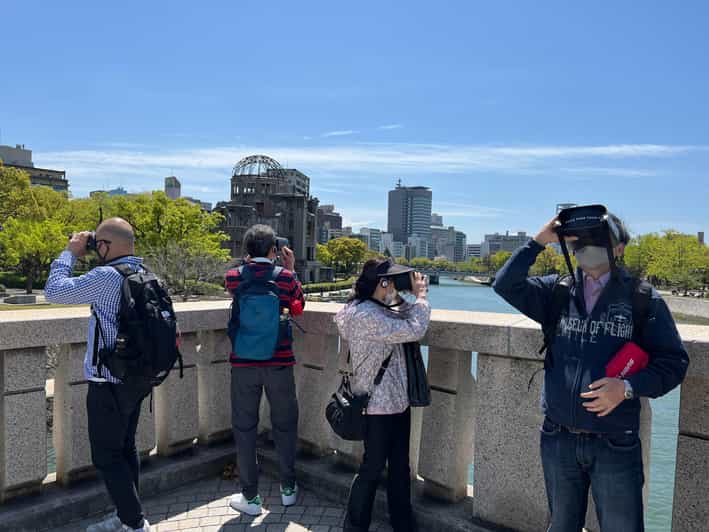
The most striking part of this Hiroshima tour is the way it connects today’s peaceful park with the city that existed before August 6, 1945. At several stops, you put on a VR headset and see the pre-bombing streets, the burned city after the blast, and Hiroshima’s long recovery. The story is personal, built around A-bomb survivor testimony rather than a list of dates.
I like the small group, limited to six people, and the chance to ask questions as you walk. I also like the local guides, including Yoko, Kazuko, and Hiroshi, who bring family and community connections into the conversation. The main drawback is that this is a serious subject, and the VR scenes may feel upsetting. Rain can also shorten the outdoor portion.
In This Review
- Key points to know before booking
- Seeing Hiroshima through time, not just space
- Meeting at the Peace Park Rest House
- First stop: the Peace Park Rest House
- The Atomic Bomb Dome and the city before August 6
- Aioi Bridge and the center of the blast
- Motoyasu Bridge and Hiroshima’s recovery
- The closing discussion gives the tour a human finish
- What the $32 price includes
- Weather, walking, and practical limits
- Who will get the most from this experience
- Should you book the Peace Park VR tour?
- FAQ
- Where does the Hiroshima VR tour begin?
- How long does the tour last?
- What language is the tour conducted in?
- Which places does the tour visit?
- What does the $32 price include?
- Is the tour private?
- What happens if it rains heavily?
- Can I cancel for a full refund?
Key points to know before booking
- VR based on survivor testimony: Historic photographs and Hibakusha accounts shape the virtual scenes.
- Four meaningful locations: The route links the Peace Park Rest House, Atomic Bomb Dome, Aioi Bridge, and Motoyasu Bridge.
- Small English-speaking group: The tour is limited to six participants, giving you room for questions.
- An 80-minute walking experience: The route includes about 70 minutes of guided stops and walking, followed by discussion.
- A local point of view: Guides such as Yoko, Kazuko, and Hiroshi add family and community context.
- Rain or shine, with a weather backup: Heavy rain may lead to a shorter VR session inside the Rest House.
Seeing Hiroshima through time, not just space
Hiroshima Peace Park can be quiet and carefully ordered today. That calm is important, but it can also make the events of 1945 hard to picture. This tour uses VR to bridge that gap.
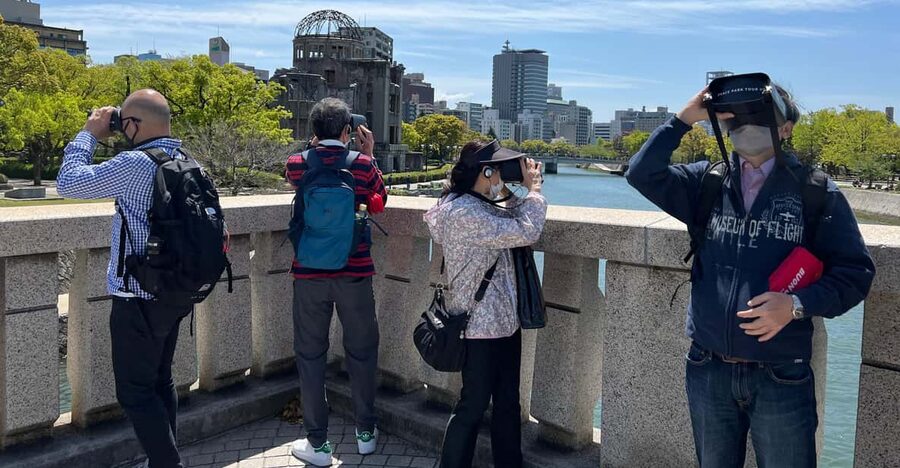
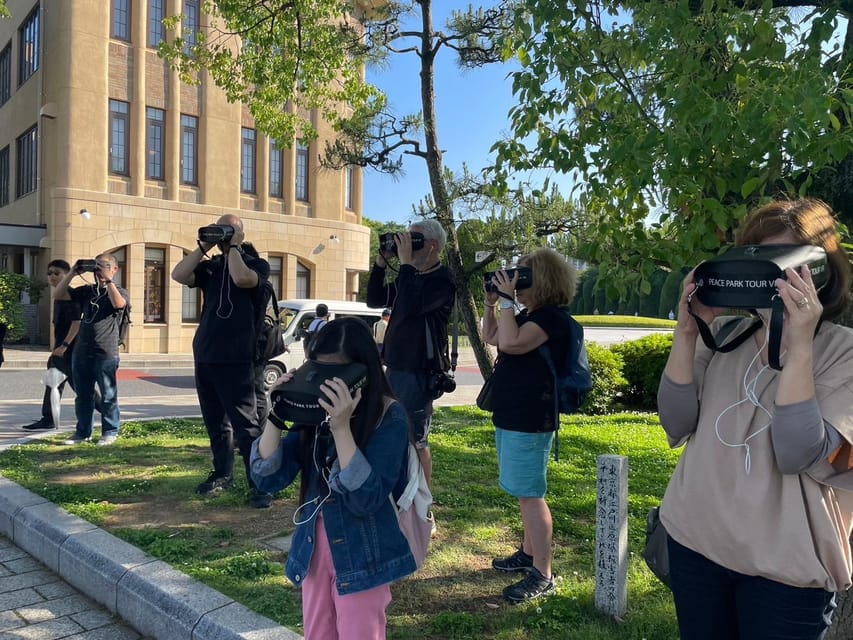
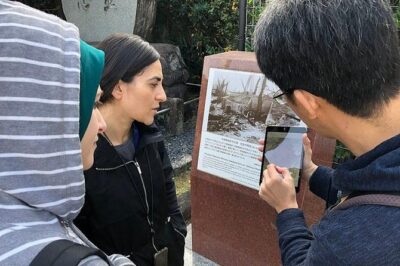
You walk through the real park with a guide, then stop at selected points to view another version of the same place. The headset shows Hiroshima before the atomic bombing, the immediate destruction of August 6, and the city’s recovery. The result is not a museum display you simply watch from a distance. You are standing in the place while the guide explains what you are seeing.
That combination matters. A virtual image on its own can feel like a film. A walking tour on its own can leave you relying on imagination. Here, the physical setting and the reconstructed scenes work together.
The material comes from A-bomb survivors, known in Japan as Hibakusha, along with photographs from the period. As the number of surviving witnesses declines nearly 80 years after the war, preserving those accounts has become increasingly important. The tour gives the testimony a physical setting and keeps the focus on people who experienced the bombing.
This is not a light sightseeing activity. You should expect a sober mood. The guide makes space for questions and conversation, but the subject remains painful. That seriousness is part of the point.
A few more Hiroshima tours and experiences worth a look
Meeting at the Peace Park Rest House
You meet at the tourist information counter on the first floor of the Hiroshima City Peace Memorial Park Rest House. The building is also the starting and finishing point, so the route is easy to follow.
Arrive at least five minutes before your reserved time. The instructions are strict about lateness: if you have not arrived within 10 minutes of the start, you may not be allowed to join. If you are delayed, contact the tour provider as soon as possible. A late arrival may also mean a shortened tour.
The Rest House is a practical meeting point because you do not need to search for a street corner in the park. Look for the guide at the tourist information counter. You should also handle your own luggage, since storage is not available inside the building.
The tour is shared rather than private. With a maximum of six participants, it remains small enough for direct conversation, but you should not expect a one-on-one experience.
First stop: the Peace Park Rest House
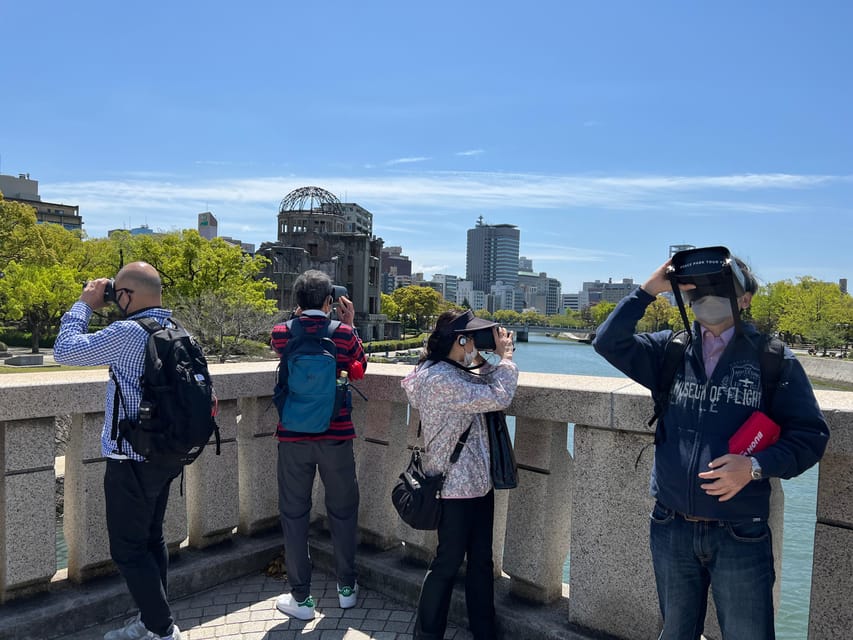
The first guided portion takes about 20 minutes around the Peace Park Rest House. This is where the tour begins to build its human story before moving toward the major memorial sites.
One particularly effective approach used by guide Kazuko is to begin with the story of Eizo Nomura, an A-bomb survivor who was inside a building only 170 meters from the hypocenter. The VR material then continues the experience connected to his account.
That kind of introduction gives the technology a clear purpose. You are not simply looking at a computer-generated city. You are following the viewpoint of a person who lived through the blast and its effects.
The exact guide may vary, but the experience is designed around an English-speaking local guide who can answer questions as the group moves. Yoko has been singled out for her warm manner and willingness to address every question. Hiroshi has also brought historical information together with stories from his family and local surroundings.
The stop is a good place to settle into the tone of the tour. If you are expecting fast sightseeing, it may feel slow. If you want time to think and ask questions, the pace works well.
The Atomic Bomb Dome and the city before August 6
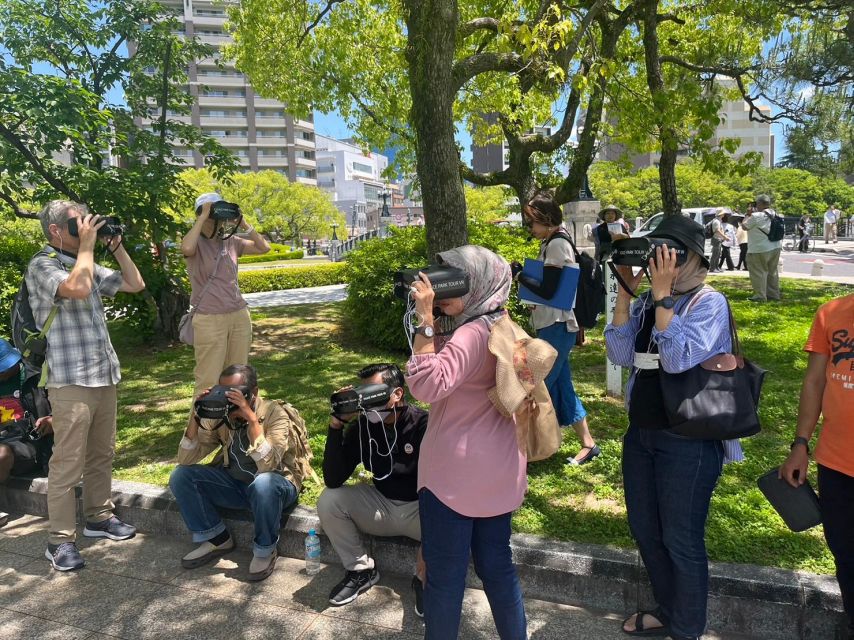
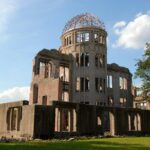
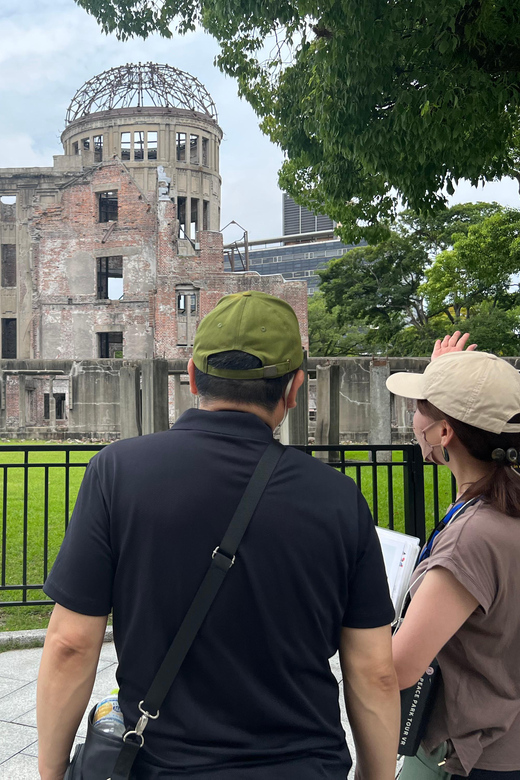
The walk to the Atomic Bomb Dome takes about 20 minutes, including guided sightseeing. This is the most recognizable structure in the Peace Park and one of the places where the contrast between old Hiroshima and present-day Hiroshima is especially powerful.
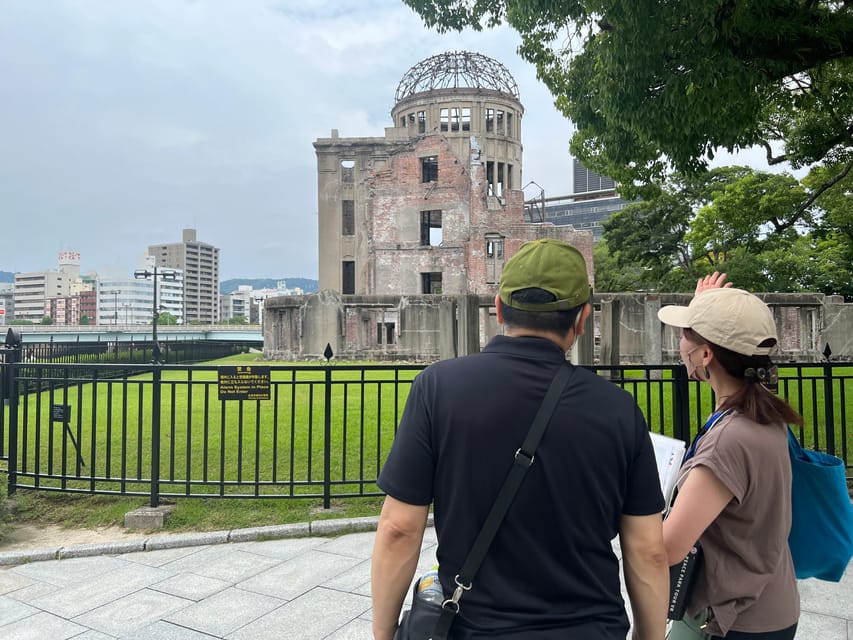
The Dome’s damaged frame is familiar from photographs, but the VR element adds a different view. Instead of seeing only what survived, you get a sense of the city that was here before the bombing and the sudden change that followed.
The experience uses reconstructed images rather than claiming to show a live recording of the past. That distinction is worth keeping in mind. The VR scenes are a visual aid based on testimony and period photographs, while the guide provides the human and historical context.
You may find the headset slightly distracting at first, especially when you are also trying to pay attention to the actual park around you. The value comes from taking your time at each point, looking, listening, then asking questions.
The Atomic Bomb Dome is also a place where you may want a quiet moment. The tour does not treat it as a quick photo stop. Its role is to help you grasp the scale of the destruction and the fact that the city around it was once a normal urban community.
Aioi Bridge and the center of the blast
The walk to Aioi Bridge, also called T-Bridge, takes about 15 minutes. The bridge is significant to the story of the bombing and helps explain how the locations in the park relate to one another.
Here, the guide can connect the built environment to the bombing’s impact. The VR scenes help you compare the bridge and surrounding area before the attack with the burned plain afterward.
This is where the outdoor format earns its keep. You are not moving from one unrelated exhibit to another. You are following a route through the real setting, then using the headset to revisit that setting at another point in time.
The bridge stop may be especially useful if you have read about Hiroshima but still find the geography confusing. The guide can point out how the locations fit together, and the small group makes it easier to ask for clarification.
The subject matter can be intense. If you are traveling with children or anyone sensitive to war-related imagery, consider explaining the focus before booking. The supplied information does not set a minimum age, so you should use your own judgment.
A few more Hiroshima tours and experiences worth a look
Motoyasu Bridge and Hiroshima’s recovery
The next 15-minute section leads to Motoyasu Bridge. This stop continues the connection between the park’s present appearance and the scenes of destruction shown through VR.
The tour does not stop at the moment of the bombing. It also shows Hiroshima’s recovery. That wider timeline matters because the city’s story is not only one of destruction. It includes the difficult return of daily life and the development of the Peace Park as a place for remembrance.
The contrast may be emotionally complicated. Seeing a city before the bombing, then seeing the immediate aftermath, can be hard. Seeing recovery afterward adds another layer, not a simple happy ending. It helps you understand why the park exists as it does today.
At Motoyasu Bridge, the guide remains central. The headset can show reconstructed scenes, but it cannot answer your follow-up questions or adjust the discussion to your interests. A guide such as Hiroshi, who has shared family and local experiences, can help connect the broad historical event with the community around it.
The route then returns to the Peace Park Rest House. You finish close to where you began, without needing a separate transfer.
The closing discussion gives the tour a human finish
At the end, the group talks about what each person thought of the experience. This is a useful feature, especially because the VR scenes can leave you with more questions than answers.
The discussion is not just a formal goodbye. It gives you a chance to reflect on the survivor accounts, ask about details you missed, and hear how the others responded. Since the group is limited to six, the exchange should feel more manageable than a large guided walk.
The quality of this final conversation depends partly on the guide and the group. Yoko, Kazuko, and Hiroshi have each been praised for friendliness, patience, and their ability to respond to questions. Still, a shared tour means you will not control every part of the conversation.
I would allow a little mental space after the tour. Do not schedule it immediately before a rushed lunch or another major attraction if you prefer time to process what you have seen.
What the $32 price includes
The price is $32 per person. That includes the English-speaking guide and rental of the VR goggles.
For value, compare this with what you would pay for a standard guided walk plus a separate virtual exhibit. This tour combines the guide, equipment, and walking route in one 80-minute experience. The small group is another part of the value, since you have a better chance to ask questions than on a large coach-style tour.
The price is less compelling if you want a long, traditional museum visit. The tour does not include food, drinks, transportation to the meeting place, or a full day of sightseeing. It is a focused add-on for your Hiroshima schedule, not a replacement for every memorial site.
You also need to be comfortable paying for a technology-assisted experience. The strongest reason to book is not the headset alone. It is the pairing of the VR scenes with a local English-speaking guide and the actual locations in the park.
Free cancellation is available up to 24 hours before the start time, and you can reserve now and pay later. Those terms help if your Hiroshima plans are still changing.
Weather, walking, and practical limits
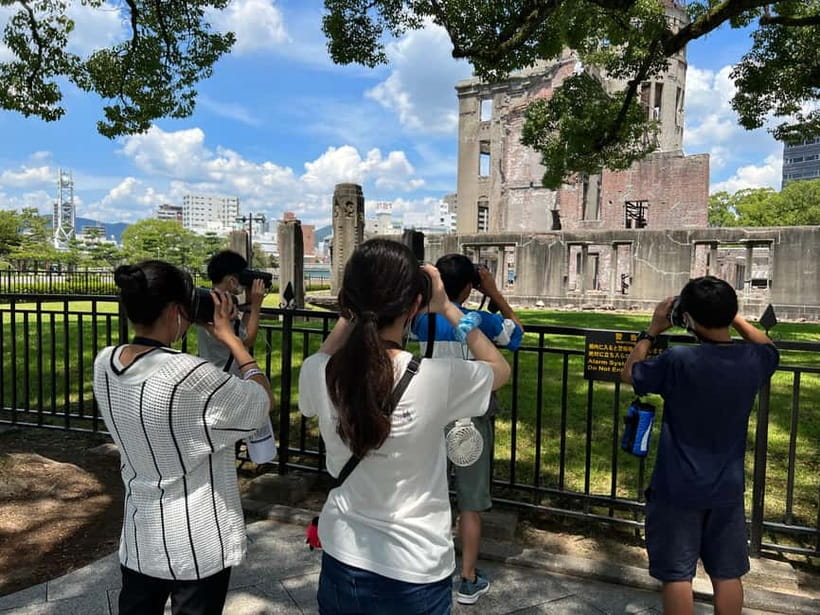
The tour runs in rain or shine. Hiroshima’s Peace Park route is outdoors, so bring suitable clothing and shoes for walking.
In heavy rain, the outdoor fieldwork may be shortened. Instead, you may watch a brief five-minute VR version at the Rest House after the fieldwork. That is a useful backup, but it is not equal to the full route. If seeing every stop is essential to you, check the forecast and keep your expectations realistic.
The scheduled route includes roughly 20 minutes at the Rest House area, 20 minutes around the Atomic Bomb Dome, 15 minutes at Aioi Bridge, and 15 minutes at Motoyasu Bridge. The total duration is 80 minutes, which leaves time for transitions, explanations, headset use, and the closing discussion.
The information provided does not describe accessibility arrangements, luggage storage, or transport from hotels. You should contact the provider if you need specific mobility advice. Do not bring luggage expecting the Rest House to hold it.
The audio guide is included in English, and the live tour guide also speaks English. This makes the activity suitable for you if you want more than written signs but do not speak Japanese.
Who will get the most from this experience
I would choose this tour if you want a clear introduction to Hiroshima’s Peace Park and prefer learning through place, story, and images together.
It suits first-time visitors who want help understanding the geography. It also works well for people who have already read about Hiroshima but want to see how the key sites connect.
The tour is a strong match for you if:
- You value personal accounts over a purely academic presentation.
- You want to ask questions in English.
- You prefer a small group to a large walking tour.
- You are open to difficult historical material.
- You want an 80-minute activity that fits around other Hiroshima plans.
It may not suit you if you dislike VR headsets, want a private guide, need a very relaxed pace, or prefer to avoid emotionally heavy subjects. It is also not the best choice if bad weather would seriously affect your plans and you cannot accept the shortened indoor version.
Should you book the Peace Park VR tour?
Book it if you want the Peace Park to feel connected to the city that existed before the bombing and to the survivor accounts that explain what followed. The local guide is the real heart of the experience, while the VR gives you a visual way to understand the changes.
The tour offers good value at $32, especially with equipment rental, English guidance, a six-person limit, and a route through four important locations. Just arrive early, keep your luggage with you, dress for the weather, and set aside time afterward to think.
If your priority is a full museum visit or a private, highly flexible tour, choose something else. If you want a focused, respectful, and place-based introduction to Hiroshima’s central memorial area, this is a thoughtful choice.
FAQ
Where does the Hiroshima VR tour begin?
It begins at the tourist information counter on the first floor of the Hiroshima City Peace Memorial Park Rest House.
How long does the tour last?
The experience lasts 80 minutes.
What language is the tour conducted in?
The live tour guide speaks English, and English audio guidance is included.
Which places does the tour visit?
The route includes the Peace Park Rest House, the Atomic Bomb Dome, Aioi Bridge, and Motoyasu Bridge before returning to the Rest House.
What does the $32 price include?
The price includes the VR goggles rental fee and an English-speaking guide.
Is the tour private?
No. It is a shared tour with a maximum of six participants.
What happens if it rains heavily?
The tour operates in rain or shine. In heavy rain, a shortened version may be provided, including a five-minute VR viewing at the Rest House after the fieldwork.
Can I cancel for a full refund?
Yes. You can cancel up to 24 hours in advance for a full refund. You can also reserve now and pay later.
More Guided Tours in Hiroshima

More Hiroshima City Tours in Hiroshima
More Peace Memorial Tours in Hiroshima

More tours in Hiroshima we've reviewed



Peace Memorial Tours, compared.
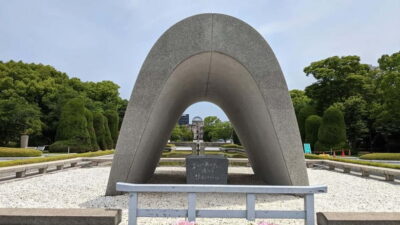 ★ 4.8Hiroshima Historical Walking Tour – Why A-Bomb was DroppedFrom $352h 30m
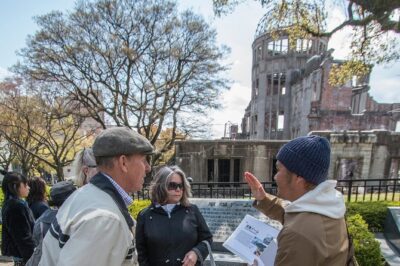 ★ 5.0Hiroshima Peace (Heiwa) Walking Tour at World Heritage SitesFrom $94
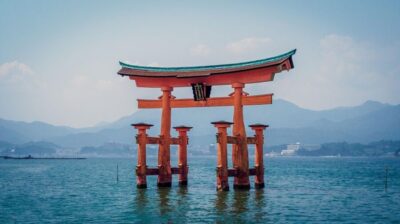 ★ 4.9Hiroshima: Miyajima Peace Memorial Icons of Peace and BeautyFrom $1638 hours
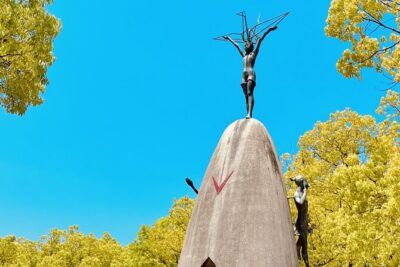 ★ 5.0Hiroshima Walking Tour Why A Bomb was dropped to HiroshimaFrom $28
 ★ 5.0Hiroshima 2hr Peace Cycling Tour with Local GuideFrom $59
 ★ 4.8Hiroshima: Peace Cycling Tour with Local GuideFrom $522 - 3 hours
