
Reviewed · PEACE MEMORIAL TOURS
Origami Peace Experience in Hiroshima: Fold and Dedicate a Crane
The most moving part of this Hiroshima activity comes at the end: you carry a paper crane you folded yourself to the Children’s Peace Monument and leave it there as a wish for peace. The crane is small, but the setting gives your simple craft a serious purpose.
I like the hands-on format, which starts with easy animal shapes before moving to the crane. I also like the 20-minute walk through local streets, since it connects the workshop with Hiroshima’s daily life instead of keeping you inside a classroom. The main drawback is the fourth-floor meeting room, which has no elevator, and the activity may feel too gentle if you want a long, detailed tour of the Peace Memorial Park.
In This Review
- Key points to know before booking
- Why this small Hiroshima activity carries real weight
- Starting with animal origami in Komachi
- Sadako Sasaki’s story gives the crane its meaning
- Folding your paper crane with a personal wish
- Walking 20 minutes from the workshop to Peace Memorial Park
- Dedicating the crane at the Children’s Peace Monument
- What the $52.02 price includes
- Who will enjoy this experience most
- Practical tips for making the most of the 90 minutes
- Should you book the Origami Peace Experience?
- FAQ
- How long does the Origami Peace Experience last?
- Where does the activity begin?
- Where does the activity finish?
- Is the origami paper included?
- Do I get anything to take home?
- Is the activity suitable for children?
- Is the activity private?
- Can I cancel for a full refund?
Key points to know before booking
- Fold a crane for the Children’s Peace Monument: Your finished paper crane carries a personal wish for peace and is dedicated at the monument.
- Start with simple animal origami: The early folds help children and beginners settle into the activity before the more meaningful crane.
- Learn Sadako Sasaki’s story: An illustrated manga introduces the young girl whose story became closely linked with Hiroshima’s paper cranes.
- Walk about 20 minutes with a local guide: The route includes local streets and shops on the way to Peace Memorial Park.
- Take home an origami set: You receive materials to keep folding after your time in Hiroshima.
- Plan for stairs: Nippon Journey is on the fourth floor of a building without an elevator.
Why this small Hiroshima activity carries real weight
Origami can be a light, playful pastime. In Hiroshima, the paper crane also carries a powerful message. This activity uses that contrast well. You begin by folding animals, learning the basic movements without pressure. Then the focus changes as you hear about Sadako Sasaki and fold a crane with peace in mind.
The experience does not ask you to sit through a long lecture. Instead, it gives you something to do with your hands while you think about the city’s past. That makes the subject easier to approach, especially for families with children or anyone who finds formal historical tours tiring.
The final dedication at the Children’s Peace Monument gives the activity a clear purpose. Your crane does not simply go into your luggage as a souvenir. You take it to a place where cranes arrive from around the world, carrying prayers and hopes for peace.
Guide Chihiro is named as the host, and the tone of the activity is meant to include both the history of peace and the peaceful moments people share today. That balance matters. Hiroshima’s memorial sites can feel heavy, and this experience offers a quieter way to engage with them without turning the subject into entertainment.
A few more Hiroshima tours and experiences worth a look


Starting with animal origami in Komachi
You meet at Nippon Journey, at Komachi 9-13, on the fourth floor. The activity includes all paper and other necessary materials, so you do not need to bring your own supplies. You receive a mobile ticket, and confirmation is provided when you book.
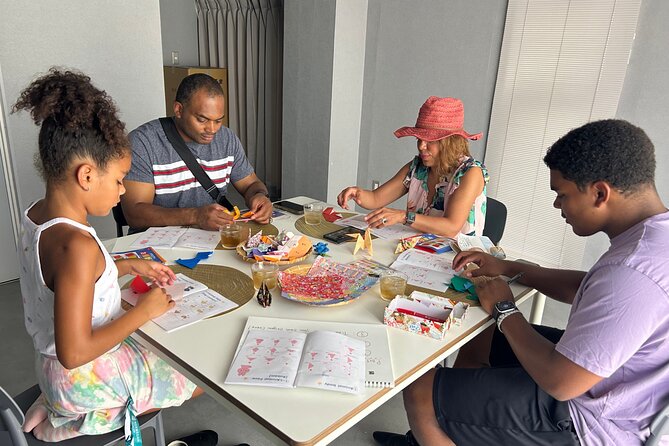
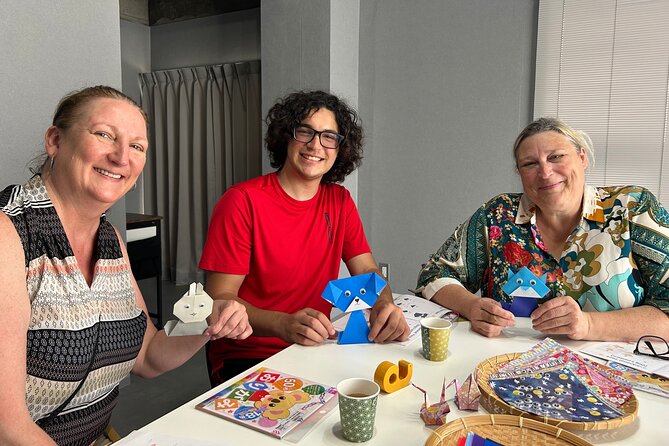
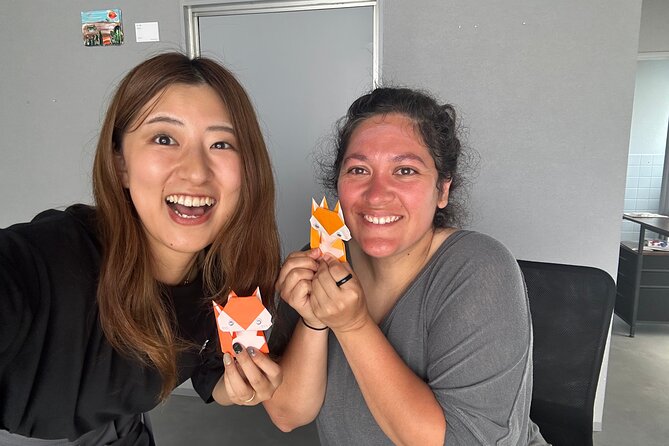
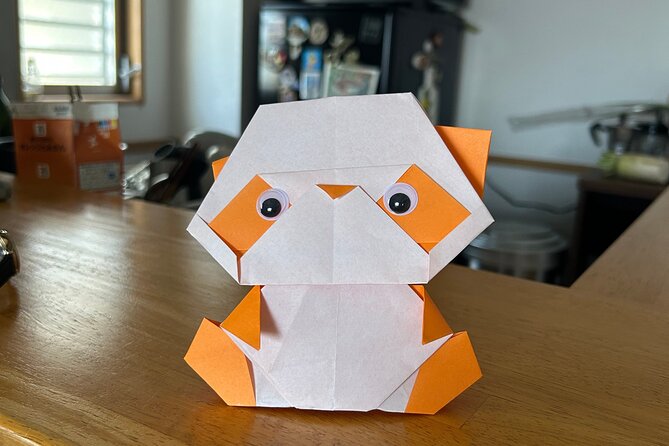
The first part uses simple animal shapes. This is a smart start because it lets you learn the basic folds before the paper crane becomes the focus. If you are new to origami, you can concentrate on following the instructions. If you already fold paper, the animal section still gives the group an easy, relaxed beginning.
The activity is private, so only your group participates. That can make a difference here. You can ask for help without feeling that you are slowing down a large class, and families or couples can keep the pace suited to their own group.
Children under six are not suitable for the activity, though they may accompany the group free of charge. Most people can participate, but remember the stairs. The fourth-floor room has no elevator, which is the clearest practical limitation for anyone with mobility concerns or a stroller.
Sadako Sasaki’s story gives the crane its meaning
After the introductory folds, you learn about Sadako Sasaki through an illustrated manga. This is a visual and accessible way to introduce her story, particularly for younger participants. It also gives the paper crane a stronger connection to Hiroshima before you begin the main fold.
The experience does not present origami as a random craft project. It explains why the crane became an international symbol of peace linked to Hiroshima. You get the context first, then make the object yourself.
That order is important. Without the story, folding a crane might feel like a standard Japanese craft lesson. With the story in mind, the action becomes more reflective. You place your own wish for peace into each fold, even though the finished crane remains a simple piece of colored paper.
I would treat this portion as a short introduction rather than a full history lesson. If you want extensive information about the bombing of Hiroshima, the museum, or the wider history of World War II, plan separate time at the Hiroshima Peace Memorial Museum and other memorial sites. This activity offers a personal entry point, not a substitute for the city’s major historical attractions.
Folding your paper crane with a personal wish
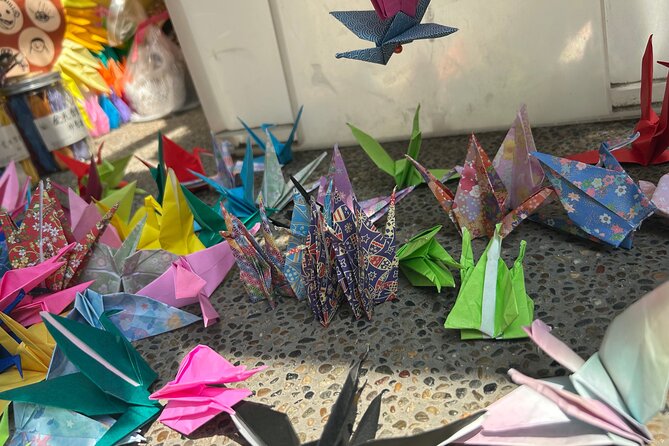
The central craft is the paper crane. You receive colorful origami paper and fold your own crane with guidance from the host. The point is not to produce a perfect piece of paper art. The value comes from making it yourself and attaching a thought or wish to the process.
That makes this activity different from simply buying a crane at a shop. You spend time with the paper, correct mistakes, and watch the shape take form. The object you dedicate has a direct connection to your visit.
The pace is likely to suit beginners, since the activity starts with easier figures and builds toward the crane. Still, origami requires attention. Younger children may need help with the folds, and anyone expecting a fast photo opportunity should know that the craft is the main event.
You also receive an origami set to take home. This is a useful extra rather than a throwaway souvenir. You can try the crane again, teach someone else, or continue with other shapes after leaving Hiroshima. For families, that gives the experience some life beyond the 90-minute meeting.
Walking 20 minutes from the workshop to Peace Memorial Park
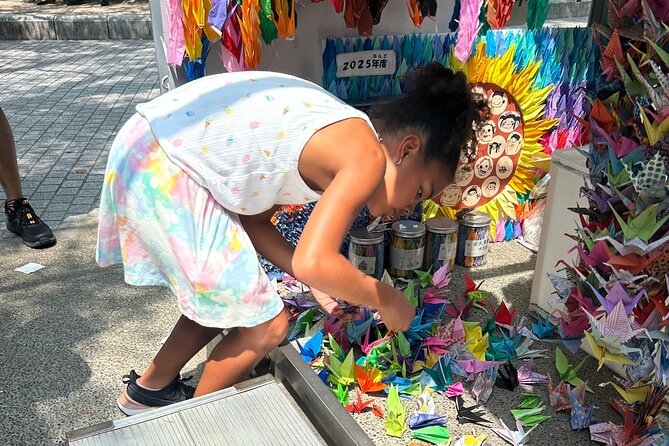
Once the crane is complete, you walk for about 20 minutes toward Peace Memorial Park. The guide introduces local shops and streets along the way, giving you a look at Hiroshima beyond the memorial grounds.
This walk is one of the best parts of the design. The transition from a quiet craft room to the city streets lets you shift from making the crane to thinking about where it will go. You are not simply transported from one attraction to another. You move through Hiroshima at street level.
The route is also a useful way to connect ordinary life with the memorial. Shops and streets continue their daily business, while the park nearby holds some of the city’s most serious sites. That contrast helps explain why Hiroshima is not only a place of remembrance. It is also a living city.
The supplied information does not specify the exact streets, shops, or route conditions. You should expect a guided stroll rather than a dedicated sightseeing walk with many formal stops. Wear comfortable shoes, especially if you plan to continue around Peace Memorial Park afterward.
A few more Hiroshima tours and experiences worth a look


Dedicating the crane at the Children’s Peace Monument
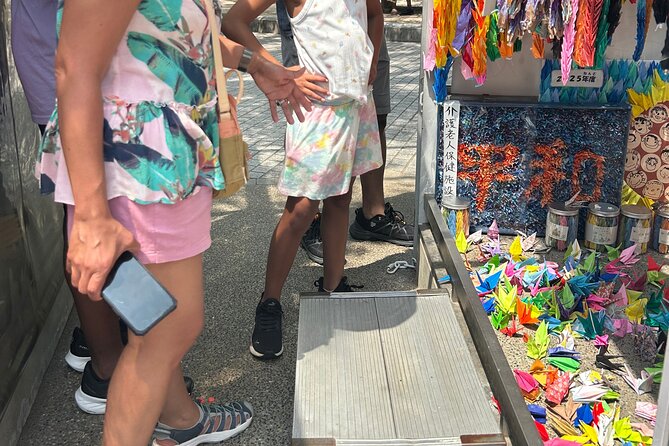
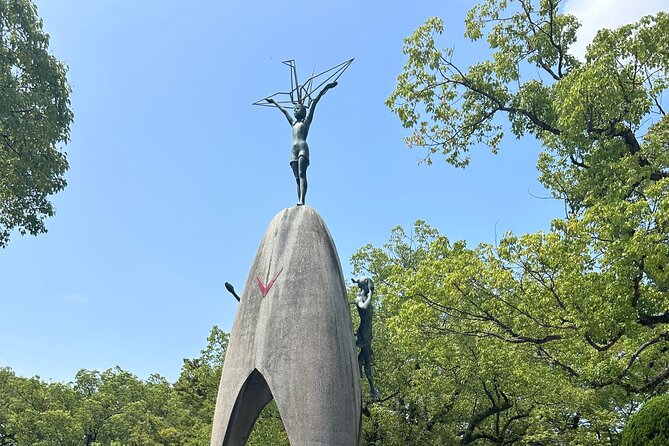
The walk ends at the Children’s Peace Monument, where you dedicate your handmade crane. This is the emotional center of the experience.
Cranes filled with prayers for peace arrive there from around the world. Adding your own crane gives you a direct role in that ongoing act of remembrance. You are not only looking at a monument or hearing about a symbol. You are contributing a small handmade object to the place where that symbol has meaning.
The dedication is likely to be quiet and personal. The activity is not built around a large ceremony or a theatrical presentation. That restraint suits the setting. You have already learned the story, made the crane, and walked through the city. The final step lets you pause and mark the moment.
The tour information identifies the Children’s Peace Monument as the formal stop. Afterward, you can continue exploring the Peace Memorial Park on your own. However, the practical details also state that the activity ends back at the meeting point, so check the current confirmation for the exact end arrangement. Either way, allow extra time for the park if you want to visit the museum, monuments, or riverside sites.
What the $52.02 price includes
The listed price is $52.02 per person for about 90 minutes. That is not a bargain basement craft class, but the fee covers more than paper folding.
You are paying for a private activity, a local guide, all materials, the walk to Peace Memorial Park, the historical introduction, and the dedication at the monument. The origami set to take home adds practical value, especially if you enjoy continuing the craft after the tour.
The price makes the most sense for people who want a focused cultural activity with a clear connection to Hiroshima. If you only want a quick lesson in folding paper, you can likely find cheaper options elsewhere. Here, the value lies in the combination of craft, story, walking, and memorial setting.
Because the experience is private, the cost may work best for couples, families, or small groups who value personal attention. Solo participants should consider the per-person price carefully, since the same private format may feel less economical when you are booking alone.
The activity is booked an average of 26 days in advance, which suggests you should reserve ahead if your Hiroshima dates are fixed. Free cancellation is available until 24 hours before the start time. Inside that window, the payment is not refunded and changes are not accepted.
Who will enjoy this experience most
I would recommend this activity to families with children aged six and older, couples looking for a thoughtful shared activity, and solo visitors who want a calm introduction to Hiroshima’s peace message.
It is also a good choice if you have already visited a museum and want something more personal, or if you prefer making and walking to sitting through a long talk. The private format gives your group room to ask questions and work at a comfortable speed.
You may want to skip it if you dislike crafts, have difficulty climbing to a fourth-floor room without an elevator, or want a full guided tour of Hiroshima’s memorial sites. The Peace Memorial Park portion is limited to the walk and crane dedication. Your independent sightseeing afterward will need its own time and planning.
The activity is suitable for most participants, but children under six should not take part. They may accompany the group free of charge, according to the conditions provided.
Practical tips for making the most of the 90 minutes
Arrive ready to use your hands. The paper and materials are supplied, but a relaxed attitude helps more than any previous origami skill.
Give yourself room in your Hiroshima schedule after the activity. The formal experience lasts about an hour and a half, but the park deserves more time if you want to explore it properly. Since the activity points you toward the Children’s Peace Monument, it is natural to continue to nearby memorial sites afterward.
Use the mobile ticket and keep the meeting address handy. The starting point is Nippon Journey in Komachi, on the fourth floor. Since there is no elevator, factor in the stairs before you book.
Do not expect food or drinks to be included. Hotel pickup and drop-off are also not part of the price. You make your own way to the meeting point, which is near public transportation.
The experience is often reserved well ahead, with an average booking time of 26 days in advance. If you are visiting during a tight schedule, book before your preferred day fills.
Should you book the Origami Peace Experience?
Book it if you want Hiroshima’s peace message to become something you can participate in, not just observe. Folding the crane, learning Sadako Sasaki’s story, walking through local streets, and dedicating the finished piece create a clear emotional arc in only 90 minutes.
I especially like the way the activity links a beginner-friendly craft with the Children’s Peace Monument. The private format, take-home origami set, and guided walk add value beyond the folding lesson.
Skip it if you want a detailed historical tour, a long visit inside the Peace Memorial Park, or an inexpensive craft class. For everyone else, this is a compact, thoughtful addition to a Hiroshima itinerary, with just two cautions: the fourth-floor stairs and the need to confirm the exact end point.
FAQ
How long does the Origami Peace Experience last?
The total activity lasts about 90 minutes, including the walk to the Children’s Peace Monument.
Where does the activity begin?
It begins at Nippon Journey, located at Komachi 9-13, Naka Ward, Hiroshima, on the fourth floor.
Where does the activity finish?
The schedule takes you to the Children’s Peace Monument and allows you to continue exploring Peace Memorial Park independently. The practical details also state that the activity ends back at the meeting point, so check your booking confirmation for the final end arrangement.
Is the origami paper included?
Yes. All necessary materials, including colorful origami paper, are included in the price.
Do I get anything to take home?
Yes. You receive an origami set so you can continue folding after the experience.
Is the activity suitable for children?
Children aged six and older can participate. Children under six are not suitable for the activity, but they may accompany the group free of charge.
Is the activity private?
Yes. Only your group participates in the activity.
Can I cancel for a full refund?
Yes, if you cancel at least 24 hours before the experience start time. Cancellations or changes made within 24 hours are not refunded or accepted.
More Hiroshima City Tours in Hiroshima
More Peace Memorial Tours in Hiroshima


More tours in Hiroshima we've reviewed



Peace Memorial Tours, compared.
 ★ 4.8Hiroshima Historical Walking Tour – Why A-Bomb was DroppedFrom $352h 30m
 ★ 5.0Hiroshima Peace (Heiwa) Walking Tour at World Heritage SitesFrom $94
 ★ 4.9Hiroshima: Miyajima Peace Memorial Icons of Peace and BeautyFrom $1638 hours
 ★ 5.0Hiroshima Walking Tour Why A Bomb was dropped to HiroshimaFrom $28
 ★ 5.0Hiroshima 2hr Peace Cycling Tour with Local GuideFrom $59
 ★ 4.8Hiroshima: Peace Cycling Tour with Local GuideFrom $522 - 3 hours
