
Reviewed · SAKE BREWERY TOURS
Hiroshima Saijo Sake Tasting Tour with visit to 7 Breweries
Saijo puts eight sake tastings from seven breweries into a compact two-hour walk, giving you a useful lesson in how much Japan’s national drink can vary. You move from polished Daiginjo to dry sake, pure-rice Junmai, seasonal blends, frozen unfiltered sake, and cloudy brews.
I like the range of styles, and I like the relaxed small-group format, capped at 10 people. Guides such as Ione have been praised for clear explanations and friendly energy. The main catch is that this is a tasting walk, not a brewery production tour, and arriving more than 15 minutes late means losing the booking.
In This Review
- Key points to know before you book
- Why Saijo makes a good sake base
- Kamotsuru begins with Saijo’s Ginjo tradition
- Fukubijin explains the appeal of Junmai sake
- Kamoizumi focuses on pure-rice brewing
- A practical pause at Sakaguradori
- Kirei brings a drier style to the table
- Saijotsuru presents a prize-winning style
- Hakubotan offers Saijo history in a glass
- Sanyotsuru finishes with cloudy sake
- What the $50.87 price really covers
- Timing, walking, and group size
- Who will get the most from this sake walk
- Should you book the Saijo sake tour?
- FAQ
- Where does the tour begin?
- What time does the tour start?
- How long does the experience last?
- How many breweries does the tour visit?
- How many sake samples are included?
- Is an English guide included?
- Will I see sake being brewed?
- How far do I walk?
- What happens if I arrive late?
- Can I cancel for a full refund?
Key points to know before you book
- Seven breweries in about 1.5 kilometers: You see a broad slice of Saijo’s sake district without spending all day on your feet.
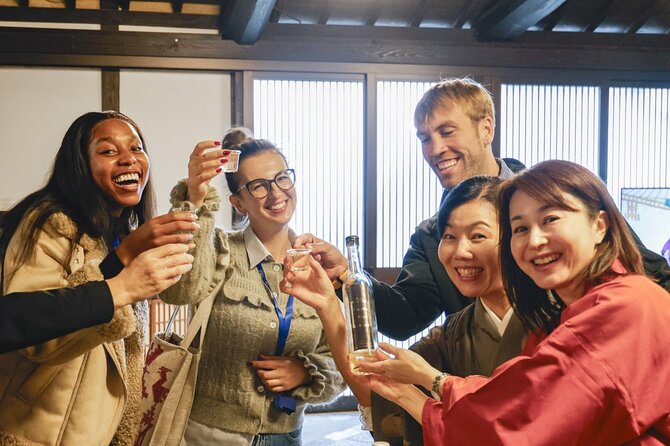
- Eight different samples: The tastings cover Daiginjo, Junmai, Junmai Ginjo, dry sake, cloudy Nigori, and other local styles.
- A small group capped at 10: The size suits questions and keeps the pace easy.
- Saijo’s brewing traditions: You visit makers tied to Ginjo brewing, pure-rice sake, traditional Hiroshima methods, and centuries of local production.
- English guidance with practical context: You learn how the styles differ and how to drink sake, rather than simply being handed a series of cups.
- A tasting only, not a production visit: A short sake-making film appears at Kamotsuru, but you will not watch active brewing.
Why Saijo makes a good sake base
Saijo is one of Japan’s three major sake brewing areas, and its brewery district is unusually easy to explore on foot. The tour begins outside the ticket gates at Saijo Station, at the Higashi Hiroshima City Information Centre, so you do not need to arrange a taxi or find a distant meeting point.
That simple start matters. You can arrive by train, meet the guide at 1:00 pm, and begin walking almost at once. The route covers roughly 1.5 kilometers, with short stops at each brewery and a few minutes at the local tourist information center.
I see the value in the route’s variety. A single brewery can teach you a lot, but seven makers let you compare flavor and style while the differences are still fresh in your mind. The walk also gives you a look at Saijo’s brewery street, rather than reducing the town to a tasting counter.
The pace is laidback, but the schedule is not loose enough to wander independently. Each stop lasts about 10 to 20 minutes, and the order can change according to the day’s groups. You should come ready to follow the guide and keep moving.
A few more Hiroshima tours and experiences worth a look
Kamotsuru begins with Saijo’s Ginjo tradition
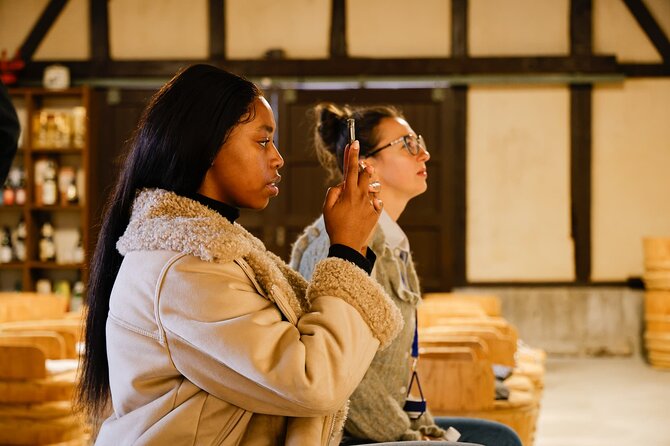
The first brewery stop is Kamotsuru, known for pioneering Ginjo sake brewing. Here, you watch a roughly 10-minute video introducing sake production before tasting Daiginjo Gold Kamotsuru.
This is a smart opening. The video gives you a basic picture of how sake is made before you begin comparing styles. You will not see the brewing floor in action, but you do get a short visual introduction to the process and a chance to connect that process with the drink in your glass.
Daiginjo is one of the more refined sake styles, so this first sample sets a high bar. Pay attention to how the guide explains its character and how it differs from the simpler styles later in the walk. If you are new to sake, do not worry about memorizing technical terms. The useful lesson is learning what changes from one bottle to another.
Fukubijin explains the appeal of Junmai sake
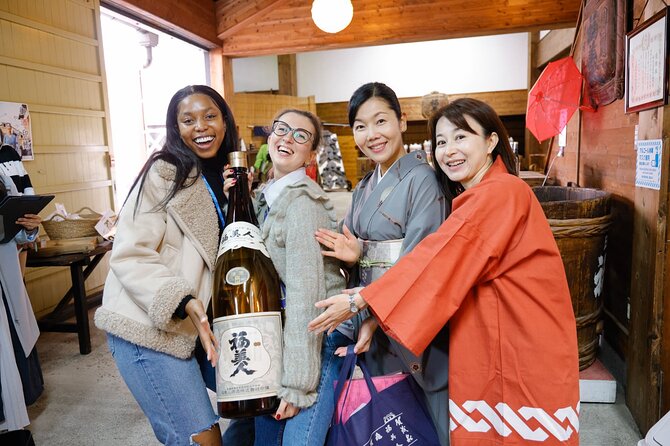
At Fukubijin, you taste Junmai-shu, a pure-rice sake. Fukubijin is also associated with Saijo’s brewing education and with the training of skilled brewers.
This stop gives the tour a needed contrast with the opening Daiginjo. Junmai sake is made from rice and koji mold without added distilled alcohol, and tasting it after the Daiginjo helps you notice that sake does not have one fixed flavor profile.
During winter, the sample may be served warm. That seasonal touch makes this stop different from a row of identical chilled tastings. It also gives you a chance to consider how serving temperature can affect your impression of sake.
Because the visit is brief, the guide’s explanation is especially useful. You get a clear comparison rather than a full technical class. If you prefer warm sake, ask about the seasonal option when you arrive.
Kamoizumi focuses on pure-rice brewing
Kamoizumi was among the first breweries in Japan to make Junmai-shu using only rice and koji mold as ingredients. Its featured tasting is Junmai Ginjoshu Shusen Honjikomi.
This is a more specific style lesson. You have already tasted Junmai-shu at Fukubijin, and Kamoizumi lets you consider how a Junmai Ginjo can differ from a standard Junmai. The name may be a mouthful, but the point is straightforward: rice polishing, brewing choices, and serving style all shape the final drink.
I like this part of the route because it turns a string of tastings into a progression. You are not just collecting samples. You are learning a few useful categories that will help you read a sake menu later in Hiroshima, Kyoto, or Tokyo.
The visit lasts about 15 minutes. That is enough for a tasting and explanation, but not enough for a long look around the brewery. Keep your expectations focused on comparison and local context.
A practical pause at Sakaguradori
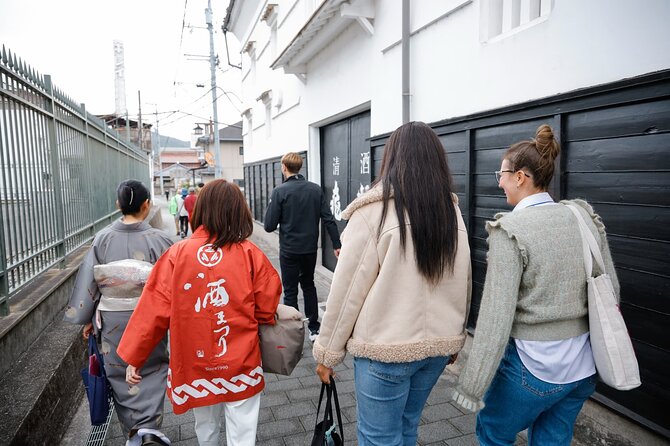
The Saijo Sakaguradori Tourist Information Center provides a short break in the middle of the route. You can use the restroom, pick up brochures, learn more about Sakagura-dori Street, and browse souvenirs.
This stop is not a tasting highlight, but it improves the rhythm of the tour. Seven breweries in two hours can feel like a lot of cups in a short period, so a pause is welcome. It is also the point where you can gather ideas for exploring Saijo after the tour ends.
One useful detail comes from the local setting: you may be able to arrange a local lunch at the information center. The tour information specifically notes that a participant was able to get lunch there, so it is worth asking about rather than assuming food is included.
Lunch is not part of the tour price. If you want a full meal, plan around the tasting schedule and do not treat the sake samples as a substitute for food.
Other sake brewery and tasting tours in Hiroshima
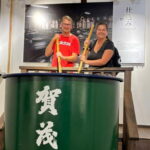
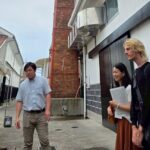
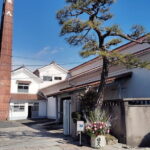

Kirei brings a drier style to the table
Kirei Shuzo is known for a drier taste than many other Saijo sakes. The sample is Yoshidaya’s Sake, a limited blend made by the brewery with sake ready to drink that month.
This may be one of the more interesting stops for regular sake drinkers. The monthly blend means the sample has a seasonal element, and the drier profile gives you another clear point of comparison after the softer or more polished examples earlier in the route.
For beginners, dry sake can be hard to identify at first. Listen for the guide’s explanation, then compare the finish with the previous samples. You do not need a trained palate. The value is in noticing that sake can be crisp, rounded, fragrant, dry, cloudy, or full-bodied.
The tasting lasts about 10 minutes, so the stop is brisk. If this style catches your attention, ask where you can buy it locally, though purchases are not listed as part of the tour.
Saijotsuru presents a prize-winning style
Saijotsuru uses traditional techniques passed down through Hiroshima’s brewers. Here, you taste Junmai Daiginjo Genshu Shinzui, a sake that has received repeated awards.
Genshu means undiluted sake, so this sample gives you another useful term to add to your growing vocabulary. Paired with Junmai Daiginjo, it should make for a fuller comparison with the Daiginjo you tasted at Kamotsuru, although the guide will explain the practical differences in clearer terms.
This is a good point to slow down and taste carefully. You will have already sampled several types, and the temptation is to treat the tour as a quick series of drinks. Instead, take small sips and note which styles you prefer. The guide can help connect those preferences with labels you may see in shops.
As with the other stops, the visit is short. The tour gives you an introduction to the brewery and its sake, not a long sit-down tasting with extensive food pairing.
Hakubotan offers Saijo history in a glass
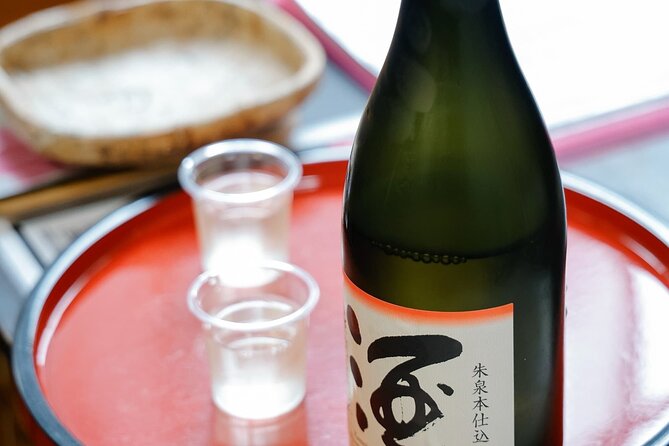
Hakubotan is one of Hiroshima Prefecture’s oldest breweries, founded in 1675. Its featured sample is Hyoka, an unfiltered sake that has been fresh frozen in a special way.
This is the tour’s more unusual tasting. Unfiltered sake already differs from the clearer styles, and the fresh-freezing method gives Hyoka a distinct talking point. It is the kind of local product that makes a brewery walk more memorable than a standard tasting flight.
The age of the brewery also adds useful context. Saijo’s sake culture is not a recent tourism project. Local makers have been producing sake for centuries, and the tour lets you connect that long tradition with modern tasting styles.
The stop lasts about 15 minutes. If you enjoy unusual sake, this is a sample to remember and a good candidate for asking follow-up questions about storage, texture, and serving.
Sanyotsuru finishes with cloudy sake
Sanyotsuru is the only brewery on the route located west of Saijo Station. The final stop gives you a chance to taste cloudy sake, and sake ware is available for sale.
Cloudy sake is commonly associated with Nigori style, where some rice solids remain in the drink. Its appearance and texture make it an easy final contrast after the clearer Daiginjo and Junmai samples.
Ending at Sanyotsuru also completes the walk geographically, though the exact order can change on the day. If you are interested in Japanese tableware, this is the stop where you may find sake ware for purchase. The tour price covers tastings and the English guide, not shopping.
The final tasting can be a useful reminder that sake is not simply a clear drink served in a small cup. The range you cover in two hours is the strongest reason to choose this tour over a shorter visit to one or two breweries.
What the $50.87 price really covers
At $50.87 per person, the tour is priced as a focused introduction rather than an all-day food and drink outing. The fee includes eight alcoholic sake samples from seven breweries and an English-speaking guide.
That is good value if you want structure, translation, and comparison. Visiting seven breweries on your own would require planning the route, identifying what each maker is known for, and working out how to taste responsibly while keeping to opening hours. Here, the stops are arranged for you and the guide supplies the connective tissue.
The price is less compelling if you only want one favorite bottle or a long brewery tour. You are paying for breadth, local interpretation, and the chance to taste several styles in one short session. Food, extra services, and purchases are not included.
If you do not drink alcohol, the fee remains the same. This is important: the tour is built around alcoholic tastings, so non-drinkers should book only if they are comfortable paying for an activity they will not fully use.
Timing, walking, and group size
The tour begins at 1:00 pm and lasts about two hours. It ends back at the meeting point near Saijo Station, making it easy to continue exploring or catch onward transport.
You walk around 1.5 kilometers, with stops rather than one continuous march. Comfortable walking shoes are still a good idea, especially since you will be on your feet while tasting and moving between breweries.
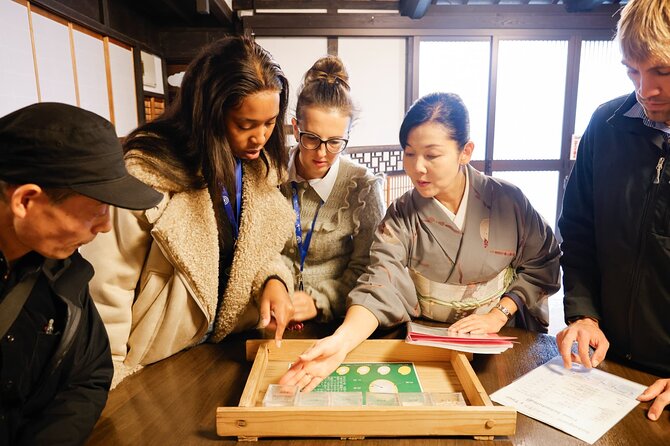
The maximum group size is 10. That is small enough for direct questions and easier conversation than a large coach outing. It also suits the relaxed pace described for the tour, though the exact feel will depend on the group on your date.
Arrive early. More than 15 minutes late is treated as a cancellation, with no refund. Weather can also affect the schedule. If the activity is canceled because of bad weather or another sudden problem, the operator says it will contact you by email by 5:00 pm the day before.
Free cancellation is available up to 24 hours before the start time. Cutoff times follow local Japan time, so check the clock carefully if you are booking from another country.
Who will get the most from this sake walk
I would recommend this tour to you if you want a friendly introduction to sake without committing to a full day of brewery visits. It works especially well for first-time sake drinkers, couples, small groups, and anyone staying in Hiroshima who wants a local outing beyond the city center.
It also suits people who already drink sake but want to compare Hiroshima producers. The lineup moves through enough styles to sharpen your preferences, and the limited monthly blend at Kirei plus the unusual frozen Hyoka at Hakubotan add variety.
I would hesitate if your main goal is to see brewing machinery, enter production rooms, or watch workers make sake. You will see a 10-minute introductory video at Kamotsuru, but the tour does not include a brewing demonstration.
You should also think carefully about the alcohol level. Eight samples in two hours is a substantial tasting, even if each pour is modest. Eat beforehand or arrange food afterward, and pace yourself. The tour is about learning how sake differs, not proving how fast you can drink it.
The operator can arrange a Spanish-speaking guide if you ask in advance. An English guide is included as standard.
Should you book the Saijo sake tour?
Book it if you want the widest possible introduction to Saijo in a short window. The strongest feature is the comparison: seven breweries, eight types of sake, and enough explanation to make the differences useful rather than random.
The compact route, small group, station meeting point, and restroom break keep the outing practical. Guides such as Ione have earned particular praise for making the history and brewing methods easy to follow, which matters when the subject includes unfamiliar terms.
Skip it if you want a production tour, a meal-centered pairing, or a quiet tasting at one brewery. For a focused look at Hiroshima’s sake culture, though, the $50.87 fee buys a well-organized afternoon and a much better sense of what to order next.
FAQ
Where does the tour begin?
It begins in front of the Higashi Hiroshima City Information Centre, outside the ticketing gates at Saijo Station, at 12-3 Saijōhonmachi, Higashihiroshima, Hiroshima 739-0011, Japan.
What time does the tour start?
The tour starts at 1:00 pm.
How long does the experience last?
The walking and tasting experience lasts approximately two hours.
How many breweries does the tour visit?
You visit seven sake breweries in Saijo.
How many sake samples are included?
Eight different types of sake are included in the tour.
Is an English guide included?
Yes. An English guide is included. Spanish-speaking guides can also be arranged if you ask in advance.
Will I see sake being brewed?
No. This is a tasting tour, not a brewery production visit. At Kamotsuru, you watch an approximately 10-minute video introducing sake making.
How far do I walk?
You walk approximately 1.5 kilometers between the breweries and other stops.
What happens if I arrive late?
Arriving more than 15 minutes after the start time is treated as a cancellation, and the amount paid is not refunded.
Can I cancel for a full refund?
Yes, if you cancel at least 24 hours before the experience start time. Cancellations or changes made less than 24 hours before the start time are not refundable.
More Sake Brewery Tours in Hiroshima
More Sake Brewery Tours in Hiroshima
More Hiroshima City Tours in Hiroshima
More tours in Hiroshima we've reviewed

Sake Brewery Tours, compared.
 ★ 4.8Hiroshima: Saijo Sake Tasting at 7 Breweries Guided TourFrom $902 hours
Hiroshima Saijo Sake Tasting Tour with visit to 3 BreweriesFrom $35
★ 4.8Hiroshima: Saijo Sake Tasting at 7 Breweries Guided TourFrom $902 hours
Hiroshima Saijo Sake Tasting Tour with visit to 3 BreweriesFrom $35
 ★ 5.0Visit behind the Scenes: Hiroshima Saijo Sake Brewery TourFrom $117
 ★ 5.0Sake Town Tour in Saijo HiroshimaFrom $209
 ★ 5.0Hiroshima Saijo Sake Tasting Guided Tour – 7 Breweries in 2 HoursFrom $73
 ★ 5.0Hiroshima Saijo Sake Tasting Calligraphy and Dinner Private TourFrom $286
