
Reviewed · SAKE BREWERY TOURS
Hiroshima Saijo Sake Tasting Guided Tour – 7 Breweries in 2 Hours
Saijo puts seven sake breweries along one walkable street, turning a tasting into a compact lesson in place, water, rice, and brewing style. You can compare dry and sweet pours while moving through a real brewing district, not a single tasting room. The small group, capped at six, helps keep the pace personal.
I like the easy route and the guide-led explanations, especially for first-time sake drinkers. I also like that the tour includes respected names such as Kamotsuru and the 1675-founded Hakubotan, while guides including Ram, Emoke, and Masa have been praised for their care and flexibility. The main consideration is simple: brewery openings can change, so seven stops are not guaranteed in exactly the same form each day.
In This Review
- Key points at a glance
- Why Saijo is one of Japan’s key sake towns
- Saijosakagura-dori, where the tour finds its rhythm
- Kamotsuru, a major name with an imperial connection
- Fukubijin and the making of master brewers
- Kamoizumi and Kirei, two brief brewery windows
- Saijotsuru, a smaller producer with a hands-on feel
- Hakubotan, a brewery dating to 1675
- Sanyotsuru and the value of small-batch brewing
- What two hours really gets you
- The guides are part of the value
- Is $73.30 a fair price?
- Who should book this experience?
- Practical details before you go
- Should you book the Saijo sake walk?
- FAQ
- Where does the tour start and end?
- How long does the sake tour last?
- How many breweries does the tour visit?
- Is the tour suitable for beginners?
- Can anyone taste the sake?
- What is the cancellation policy?
Key points at a glance
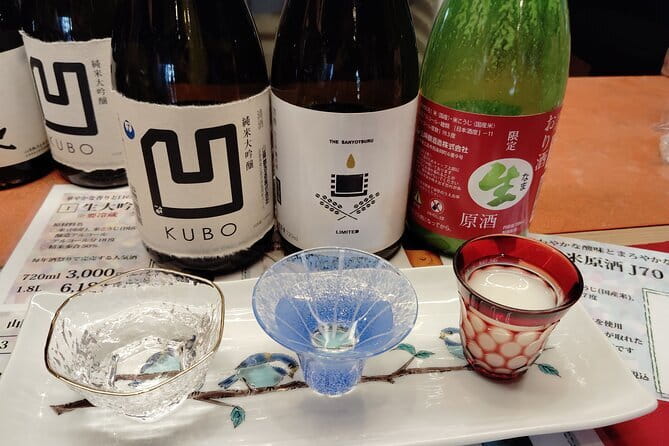
- Seven breweries on one historic street: Saijosakagura-dori makes it easy to compare local sake without long transfers.
- A true small-group format: The maximum group size is six, useful when you want answers rather than a lecture.
- Guides shape the experience: Ram, Emoke, and Masa have each been noted for clear explanations, friendliness, and personal attention.
- A good introduction for beginners: You taste different styles while learning how Saijo became a brewing town.
- Easy walking terrain: The breweries are close together, and the route was described as comfortable for an 87-year-old participant.
- Price and time: At $73.30 for about two hours, the value rests on the number of tastings, guide service, and access to several breweries.
Why Saijo is one of Japan’s key sake towns
Japan has three major sake brewing areas often linked with the drink’s national story: Nada in Hyogo, Fushimi in Kyoto, and Saijo in Hiroshima. Saijo earned its place through good water, a favorable position near the Sanyo Expressway, and the arrival of the railroad, which helped the town send sake across western Japan and beyond.
That setting matters because this is not simply a bar crawl. You are walking through a district shaped by brewing. The breweries sit close enough together for you to notice how one town can produce bottles with different personalities, even when the broad local style is often described as clean, gentle, and mildly sweet.
Your guide helps turn those differences into something you can understand. Instead of asking you to identify obscure tasting notes, the practical question is simpler: Which sake feels dry, which tastes softer, and which would work best with a meal? That approach suits beginners and keeps the tasting grounded.
A few more Hiroshima tours and experiences worth a look

Saijosakagura-dori, where the tour finds its rhythm
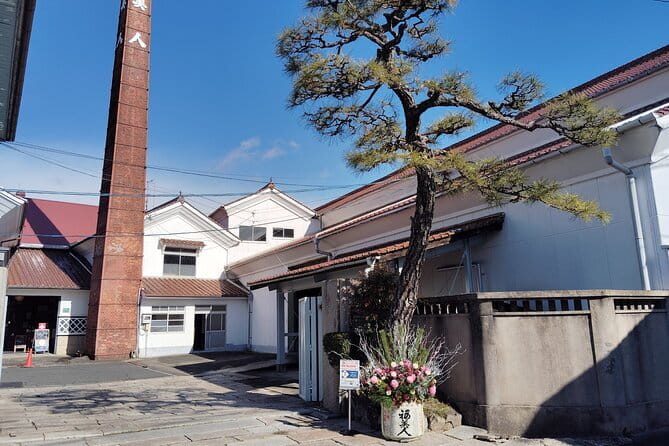
The opening stop is Saijosakagura-dori Street, where seven sake breweries line the road. About 15 minutes is allocated here, with tasting and an introduction to the district.
This is a useful beginning because you get the town’s basic layout before moving into individual brewery visits. You can start to see that each producer has its own approach, even though all are part of the same Saijo brewing community. The short time also keeps the tour moving, which matters when seven breweries must fit into roughly two hours.
The tradeoff is pace. This is a tasting walk, not a full production visit at every stop. If you want long explanations, extensive cellar access, or a detailed look at every brewing stage, two hours will feel tight. If you want a well-organized first look at Saijo, the compact format works better.
Kamotsuru, a major name with an imperial connection
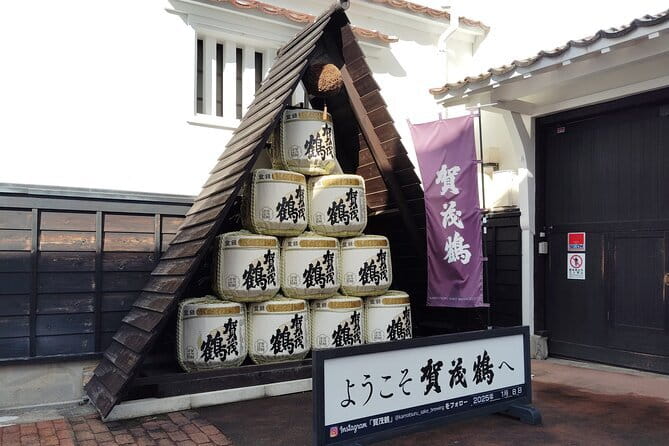
Kamotsuru Sake Brewery receives about 20 minutes and is one of the more substantial stops. Founded in 1873 in Higashihiroshima, it is known for sake presented to the Japanese Imperial Family.
That detail gives the stop extra context, but the useful part for you is the chance to taste a polished example from an established producer. Kamotsuru is associated with a refined, balanced style, making it a helpful reference point early in the tour.
I would pay close attention here to your own reaction rather than trying to judge the sake by its reputation. A smooth, balanced pour can be a good baseline before you compare it with smaller producers later. The visit also shows how Saijo combines long brewing traditions with newer methods, rather than treating tradition as a fixed formula.
Fukubijin and the making of master brewers
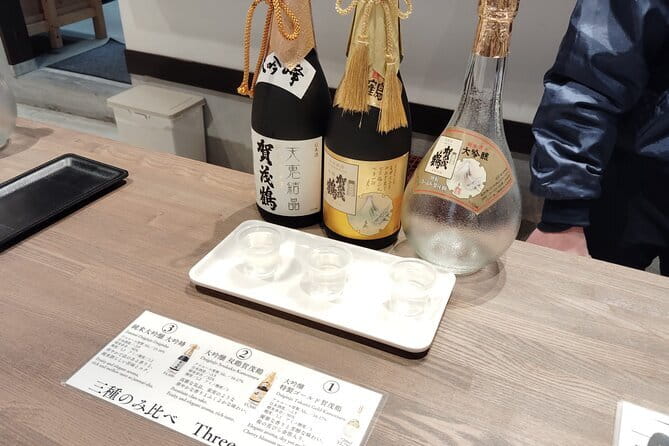
The Fukubijin stop lasts about 10 minutes. Founded in 1917, the brewery is linked to Saijo’s role as a training center for master brewers.
That connection adds an important layer to the tasting. You are not only sampling a bottle from one producer. You are seeing part of the network that helped shape brewing skills in the town. Fukubijin is known for smooth, approachable sake, so this can be an easy point of comparison if stronger or drier styles are less familiar to you.
Ten minutes is enough for a focused explanation and tasting, but not for a long visit. Listen for the guide’s comparisons here. The value of a short stop depends heavily on how well the guide connects the sake to what you already tasted.
Kamoizumi and Kirei, two brief brewery windows
Kamoizumi Sake Brewery receives about 10 minutes, with admission listed as free. It is associated with traditional brewing methods and premium sake, and the visit may include an explanation of the brewing process in a picturesque brewery setting.
Kirei Sake Brewery also receives about 10 minutes, with admission listed as free. Established in 1887, it is known for smooth, full-flavored sake made with local ingredients.
These shorter visits are best viewed as quick introductions rather than full tours. You may get a useful look at the character of each producer, but the exact experience depends on operating conditions and what tasting is available that day. This is one reason the guide matters. A good guide can make a ten-minute stop useful by pointing out one clear difference instead of trying to cover everything.
The pair also gives you a broader range of impressions. Kamoizumi represents a strong link to traditional methods, while Kirei brings attention to local ingredients and a fuller flavor. You do not need advanced sake knowledge to follow the comparison.
Other sake brewery and tasting tours in Hiroshima


Saijotsuru, a smaller producer with a hands-on feel
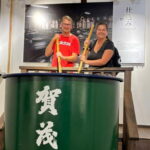
Saijotsuru Brewery receives about 20 minutes, making it one of the longer stops. This small brewery is known for traditional methods, soft water, and a hands-on approach.
The smaller scale is valuable because it gives the route some contrast. Kamotsuru introduces a major, established producer. Saijotsuru shows how a smaller operation can keep older methods and personal attention at the center of its work.
For you, this is a good point to slow down and ask questions. The tour is designed around tasting with a guide, so you can ask about flavor, brewing, or how one pour differs from another. The group limit of six should help here. You are less likely to lose your question in a crowd, and the guide can adjust the explanation to the group’s level.
Hakubotan, a brewery dating to 1675
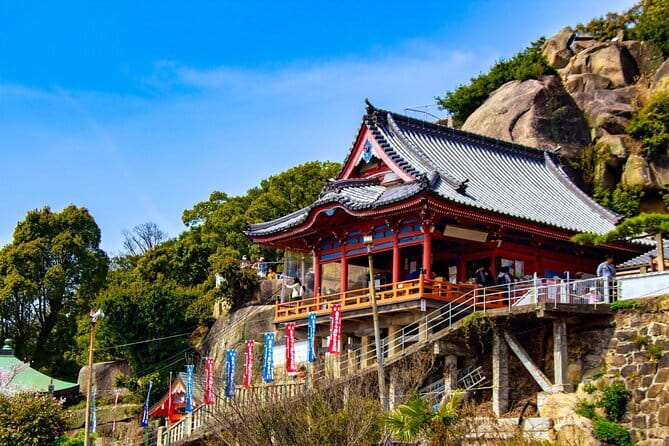
Hakubotan offers one of the strongest historical stops. Founded in 1675, it provides a look at centuries of brewing tradition and a calm, nostalgic setting. Its sake is described as mellow and easy to drink.
That combination makes Hakubotan especially friendly to newcomers. If you have worried that sake might be too sharp or too unfamiliar, a mellow style can reset those expectations. The age of the brewery also gives the walk a sense of continuity, connecting the present-day tasting to Saijo’s long brewing past.
The visit is scheduled for about 10 minutes, so do not expect a long historical presentation. Instead, treat it as a focused stop where the atmosphere and the taste work together. It is also a good place to think about how the same broad brewing town can produce a different expression from one brewery to the next.
Sanyotsuru and the value of small-batch brewing
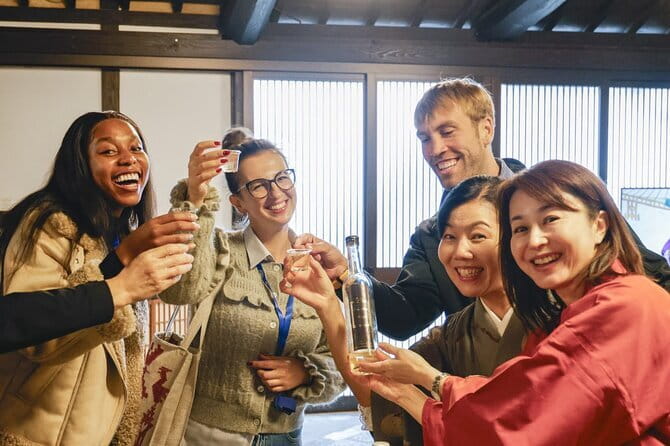
The final brewery stop is Sanyotsuru Brewery Inc., with about 20 minutes allocated. This family-owned producer focuses on small-batch, artisanal production and hands-on techniques passed down through the family.
That makes it a fitting finish. By this point, you have seen large and small operations, traditional and modern elements, and several different flavor profiles. Sanyotsuru brings the focus back to personal production and limited-scale brewing.
Small-batch does not automatically mean better, and you should not feel pushed toward one style because it sounds more artisanal. The benefit here is variety. You can decide if you prefer the clean balance of a larger producer, the mellow character of Hakubotan, or the more personal feel associated with a family brewery.
What two hours really gets you
The scheduled brewery portions total close to two hours, including the street introduction and the final return to the Saijo area. That makes this a compact afternoon activity rather than a half-day brewery tour.
The route’s efficiency is its main strength. You do not spend the afternoon waiting for coaches or traveling between distant sites. The breweries are close together, the terrain is easy, and the tour ends back at Saijo Station.
The exact number of open breweries and the time spent at each can change. Some visits may be shortened, and the tasting options can depend on the breweries’ operating conditions on the day. You should book this for the overall Saijo experience, not for a rigid promise that every stop will unfold identically.
The walking is also worth noting. One participant aged 87 was supported by the guide, and the route was described as easy. That does not remove the need to pace yourself, but it suggests the route is manageable for many people who prefer a gentle walk.
The guides are part of the value
A sake tour can easily become a sequence of small pours with little context. Here, the guide is central. Ram has been praised for history, careful answers, and attention to an older participant. Emoke is described as amiable and helpful, with clear support during the brewery visits. Masa has been noted for meeting at the station, offering a relaxed private experience when the group was small, and helping with return visits for gifts.
Those details tell you what to look for. The best use of the guide is not only asking what a sake tastes like. Ask why it tastes that way, what makes Saijo different, and which bottles might suit the food you plan to eat later.
The guide may also let you add tastings at extra cost if you want more. That flexibility is useful, but it means your final spending can rise above the $73.30 tour price. Decide before you start how much more tasting you want.
Is $73.30 a fair price?
At $73.30 per person, this is not the cheapest way to sample sake in Japan. The price makes more sense if you value a guide, several brewery visits, a small group, and a planned route that begins and ends at Saijo Station.
You are paying for structure and interpretation. Without a guide, you could walk the brewery street yourself, but you might miss the differences between producers or find that some locations are not open. The tour also saves you from planning the order of visits and gives you a person to answer questions.
The value is weaker if you want a long production tour, a large amount of sake, or guaranteed access to all seven breweries. The two-hour schedule is brisk, and extra tastings cost more. I see it as a fair price for a focused introduction, especially if Saijo is a priority during your Hiroshima visit.
Who should book this experience?
I would recommend it most strongly to first-time sake drinkers, people curious about regional food and drink, and visitors who want an activity beyond Hiroshima’s best-known memorial sites. It also suits couples, friends, and small family groups who prefer a quiet, guided walk to a large organized outing.
The maximum of six is a real advantage for anyone who wants conversation. The easy terrain helps if you do not want a demanding walking tour. The experience also works well for people who enjoy buying gifts, since the route can bring you back to breweries for purchases.
You must be at least 20 to taste alcohol under Japanese law. Anyone younger can join only if the activity provider permits participation without tasting, and the supplied tour details do not confirm that arrangement, so check before booking.
Practical details before you go
You meet at Saijo Station in Saijocho, Higashihiroshima, and the activity ends at the same meeting point. The area is near public transportation, which makes the station a sensible place to start and finish.
The tour accepts mobile tickets, and confirmation is issued at booking. Free cancellation is available if you cancel at least 24 hours before the start time. Changes or cancellations inside that window are not accepted for a refund.
The tour has received a 4.9 rating from eight reviews, which points to a strong record but is still a small sample. I would place the greatest weight on the repeated praise for guide service, easy walking, and useful explanations, since those are the parts most likely to shape your day.
Should you book the Saijo sake walk?
Book it if you want a guided introduction to one of Japan’s main sake towns and like the idea of comparing several breweries on foot. The small group, the easy route, and guides such as Ram, Emoke, and Masa add real value, especially if you are new to sake.
Skip it if you need a fixed schedule, a guaranteed seven-brewery circuit, or an in-depth production tour at each stop. For most visitors with two hours to spare near Hiroshima, though, this is a smart, focused way to taste Saijo and understand why its sake has such a firm place in Japanese brewing.
FAQ
Where does the tour start and end?
The tour starts at Saijo Station in Saijocho, Higashihiroshima, Hiroshima. It ends back at the meeting point.
How long does the sake tour last?
The activity lasts approximately two hours.
How many breweries does the tour visit?
The tour is planned around seven sake breweries. The exact number and the time at each location can change based on brewery operating conditions and the tastings available that day.
Is the tour suitable for beginners?
Yes. The guide explains the brewing area and helps you compare different sake styles, including dry and sweet examples. The experience is specifically well suited to people who are new to sake.
Can anyone taste the sake?
Under Japanese law, people under 20 years of age cannot taste alcohol.
What is the cancellation policy?
You can cancel for a full refund up to 24 hours before the experience begins. Cancellations or changes made less than 24 hours before the start time are not accepted for a refund.
More Sake Brewery Tours in Hiroshima
More Sake Brewery Tours in Hiroshima
More Hiroshima City Tours in Hiroshima
More tours in Hiroshima we've reviewed

Sake Brewery Tours, compared.
 ★ 5.0Hiroshima Saijo Sake Tasting Tour with visit to 7 BreweriesFrom $50
 ★ 4.8Hiroshima: Saijo Sake Tasting at 7 Breweries Guided TourFrom $902 hours
Hiroshima Saijo Sake Tasting Tour with visit to 3 BreweriesFrom $35
★ 4.8Hiroshima: Saijo Sake Tasting at 7 Breweries Guided TourFrom $902 hours
Hiroshima Saijo Sake Tasting Tour with visit to 3 BreweriesFrom $35
 ★ 5.0Visit behind the Scenes: Hiroshima Saijo Sake Brewery TourFrom $117
 ★ 5.0Sake Town Tour in Saijo HiroshimaFrom $209
 ★ 5.0Hiroshima Saijo Sake Tasting Calligraphy and Dinner Private TourFrom $286
