
Reviewed · MIYAJIMA TOURS
Hiroshima & Miyajima 1 Day Bus Tour with Bullet Train Tickets
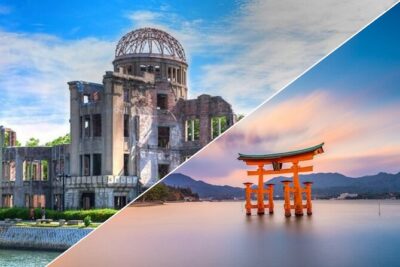
Hiroshima’s Peace Memorial sites and Miyajima’s floating torii gate make an unusually powerful pair. This 12-hour day trip handles the long-distance trains, local bus, ferry, admissions, lunch, and return journey, leaving you to focus on the places themselves.
I especially like the bullet train convenience and the included Hiroshima-style okonomiyaki, a local dish of cabbage, noodles, egg, and toppings cooked in layers. The ferry route also gives you a fine view of the Great Torii from the water. The trade-off is a packed day: the museum can feel rushed, and you will do a lot of walking.
In This Review
- Key points at a glance
- A long but practical route from Osaka, Kyoto, or Fukuoka
- Hiroshima by bus, with the Atomic Bomb Dome first
- Okonomiyaki gives the morning a local flavor
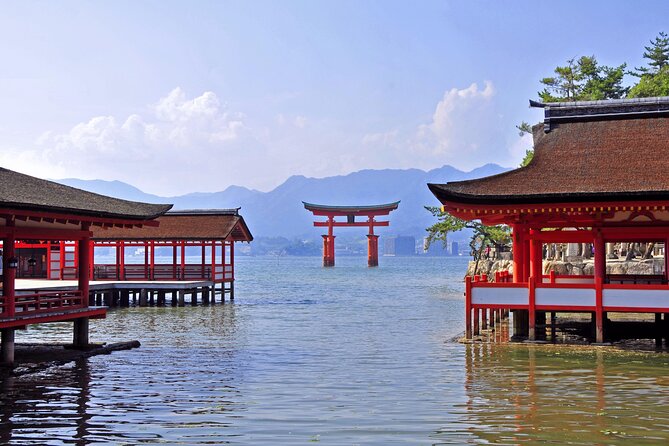
- Crossing to Miyajima on the Great Torii route
- Itsukushima Shrine in one focused hour
- Omotesandō Street and the pleasure of free time
- What the $270.88 price really covers
- Walking, heat, crowds, and the group pace
- Who should book this Hiroshima day trip
- Should you book it?
- FAQ
- Where does the tour depart from Osaka?
- Where does the tour depart from Kyoto?
- Where does the tour depart from Fukuoka?
- Is the bullet train ticket included?
- Is lunch included?
- Are the museum and shrine admission fees included?
- What happens if the Peace Memorial Museum is closed?
- Is the ferry to Miyajima included?
- Can I cancel for a refund?
Key points at a glance
- Bullet train from three cities: Start in Osaka, Kyoto, or Fukuoka with a reserved round-trip Shinkansen ticket.
- Two very different places in one day: Spend the morning with Hiroshima’s difficult wartime history and the afternoon on scenic Miyajima.
- Hiroshima-style okonomiyaki included: Choose a regular version or one of two no-pork options, with dietary needs declared in advance.
- Great Torii ferry route: The ferry is arranged to pass close to Miyajima’s famous gate for photographs from the sea.
- Guides who keep the day moving: Guides including Joe, Hiro, Kane, Tom, Miyuki, and Hiroguchi-san have led groups, with clear explanations and careful timing frequently praised.
- A full schedule at a high price: At $270.88 per person, much of the cost reflects the Shinkansen, admissions, transport, and the ease of covering Hiroshima and Miyajima in one day.
A long but practical route from Osaka, Kyoto, or Fukuoka
This is not a leisurely Hiroshima stay. It is a carefully packed introduction to two major sights, designed for you if your base is Osaka, Kyoto, or Fukuoka and you do not want to change hotels.
From Osaka, you meet at Shin-Osaka Station’s Central Gate on the third floor at 8:18 a.m. From Kyoto, the meeting time is 8:03 a.m. at the Shinkansen Central Gate on the second floor. From Fukuoka, you meet at Hakata Station’s Chikushi Gate, in front of three mailboxes, at 8:23 a.m.
The first station handoff matters. An assistant gives you your train tickets and helps you find the correct platform, but does not ride with you to Hiroshima. You must manage the train journey yourself, then meet the English-speaking guide at Hiroshima Station’s Shinkansen gate on the second-floor North Exit.
That arrangement is simple once you understand it, but do not arrive casually. Large Japanese stations have several gates and levels, and a few minutes spent finding the wrong entrance can cause needless stress. Keep your mobile ticket and meeting instructions easy to reach.
The return train listed for Osaka leaves Hiroshima at 6:43 p.m. and arrives at Shin-Osaka at 8:04 p.m. The Kyoto return arrives at 8:19 p.m. From Fukuoka, the Sakura 565 leaves at 6:52 p.m. and reaches Hakata at 7:59 p.m. These times make this a true full-day outing, not a quick side trip.
A few more Osaka tours and experiences worth a look
Hiroshima by bus, with the Atomic Bomb Dome first
Once you meet your guide in Hiroshima, the group transfers to an air-conditioned tour bus. That bus is a major help. Hiroshima’s sights are spread out, and arranging local transport on your own would take time away from the memorial sites and Miyajima.
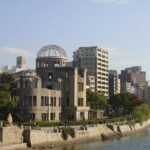
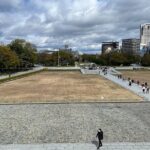
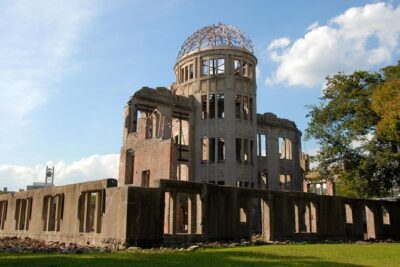
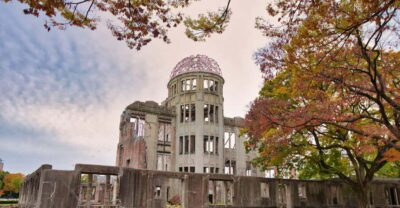
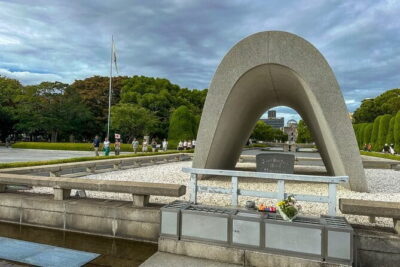
The first stop is the Atomic Bomb Dome, with about 30 minutes to see the preserved ruins and take in the setting beside the river. This is a short visit, but the building’s damaged frame gives the morning an immediate, physical focus. It is not just another historical monument. It is one of the few structures left standing near the bomb’s hypocenter.
Your guide provides context as the group moves through the area. Guides such as Kane, Tom, Hiro, and Miyuki have been praised for clear explanations and good control of the schedule. The quality of any group experience depends partly on the individual guide, but the tour uses English-speaking guides and gives you a structured way to approach a difficult subject.
Next comes the Hiroshima Peace Memorial Museum, with admission included and about 60 minutes inside. The museum presents personal belongings, photographs, accounts, and explanations of the bombing and its aftermath. It can be emotionally heavy, so plan for a quiet change of mood rather than a light sightseeing stop.
An hour gives you a meaningful introduction, but not enough time to examine every display. The museum may also be crowded, which can make the route through the exhibits feel compressed. If Hiroshima’s wartime history is your main reason for coming, you may wish you had more time here. The tour’s strength is that you see the essential sites; its weakness is that you cannot linger.
The museum is closed December 30 to 31 and February 16 to 21. On those dates, the itinerary substitutes the Hiroshima National Peace Memorial Hall for the Atomic Bomb Victims. Check the date before booking if the museum itself is important to you.
Okonomiyaki gives the morning a local flavor
Lunch is Hiroshima-style okonomiyaki, and it is included in the price. This is a useful part of the day because it gives you a taste of an everyday local specialty rather than a generic meal selected only for convenience.
Hiroshima-style okonomiyaki is built in layers, with cabbage, bean sprouts, noodles, egg, fish powder, and pork in the regular version. The noodles make it especially filling after a morning of walking and museum time.
Three choices are available:
- Regular okonomiyaki
- No pork, with eggs
- No pork, no fish powder, and no eggs
You must state allergies or dietary restrictions when booking. Changes cannot be made on the day, and you cannot bring your own food or drinks into the restaurant. If you need a special meal, treat that request as part of booking, not as something to sort out at lunch.
The meal has another advantage: you do not need to spend time choosing a restaurant during a tightly timed day. You can still buy extra food and drinks at your own expense, especially later on Miyajima.
Crossing to Miyajima on the Great Torii route
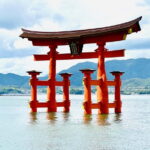
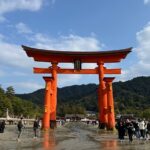
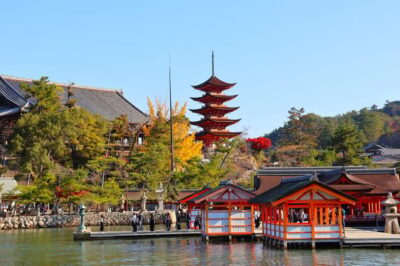
After Hiroshima, the bus takes you to Miyajimaguchi, where you board the ferry to Miyajima. The ferry ticket is included, and the route is selected to bring you especially close to the Great Torii from the sea.
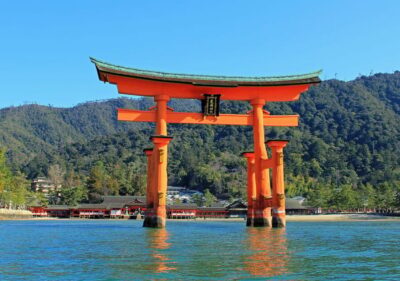
That crossing is one of the best transitions in the program. The morning is serious and urban. The ferry opens the view and gives you a fresh setting before you enter Itsukushima Shrine. Have your camera ready, but also pay attention to the changing angle of the gate as the boat approaches.
The Great Torii is associated with Itsukushima Shrine and is famous for its appearance in the water. Exact conditions can affect how much of the gate is surrounded by water, but the ferry still gives you a useful perspective that you would miss by simply arriving at the island’s pier.
Itsukushima Shrine in one focused hour
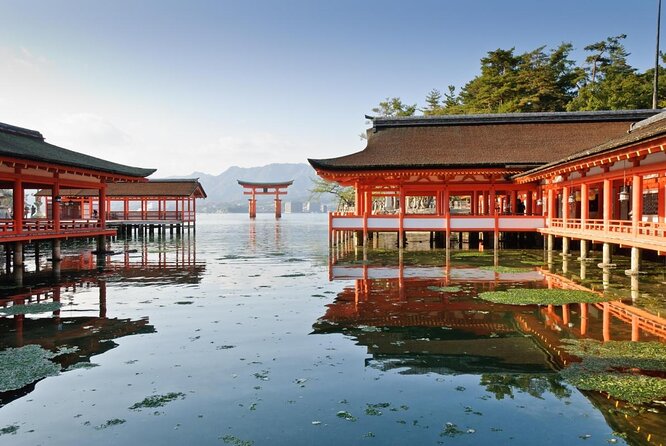
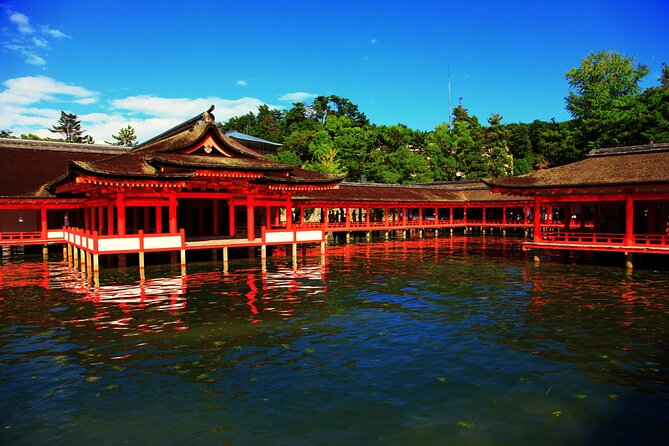
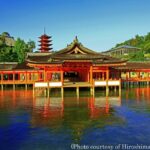
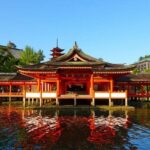
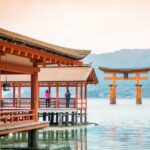
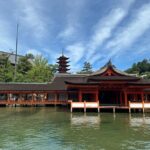
At Itsukushima Shrine, you have about 60 minutes. The shrine’s red buildings, coastal setting, and views toward the gate make this Miyajima’s main cultural stop.
The admission fee is included, so you do not need to queue and buy a separate ticket. Your guide can explain the shrine as you walk through, then you have some time to look at the structure and take photographs.
An hour is enough to see the central areas, but the schedule does not leave room for a slow exploration of every corner. You should stay aware of the meeting point and time. A few late people can hold up a large group, and the day has fixed train connections at the end.
Miyajima also has free-roaming deer, as many people discover during the visit. They are generally less aggressive than the deer in Nara, but they may still try to eat anything you are holding. Keep snacks, maps, and loose paper secure.
A few more Osaka tours and experiences worth a look
Omotesandō Street and the pleasure of free time
The final Miyajima stop is about 60 minutes on Omotesandō Shopping Street. This is where the trip becomes more relaxed. You can browse shops, pick up local snacks, and see the island beyond the shrine grounds.
The hour passes quickly, especially if you want to shop and eat. Miyajima has many things to sample, including oysters and other local treats, but these extras are not included. Decide in advance if you prefer shopping, food, or photographs, since you probably cannot do all three at a leisurely pace.
I like this balance of guided time and personal time. The morning needs explanation, while the shopping street is easier to enjoy at your own speed. Still, do not wander far. The group must return to the bus, then reach Hiroshima Station for the evening Shinkansen.
What the $270.88 price really covers
At $270.88 per person, this is an expensive day trip. The fare becomes easier to understand when you separate the costs: round-trip Shinkansen tickets, an air-conditioned bus, the ferry, Itsukushima Shrine admission, Peace Memorial Museum admission, a guide, and lunch are all included.
The bullet train alone accounts for a substantial part of the value, especially from Osaka or Kyoto. You are also paying for someone else to coordinate the station meeting, Hiroshima bus route, ferry connection, attraction tickets, and return train.
You can probably spend less by arranging Hiroshima independently, but independent planning takes more effort and gives you less protection against missed connections. You would need to organize the Shinkansen, local transport, ferry, museum entry, shrine admission, and food yourself.
The tour makes the most financial sense if you value time and certainty, or if you are nervous about navigating Japanese stations. It makes less sense if you already plan to spend several nights in Hiroshima, because then you can visit the sites at a slower pace and spread transport costs across a longer stay.
Walking, heat, crowds, and the group pace
The tour is physically manageable for most people, but it is not gentle. You walk around the Atomic Bomb Dome area, through the memorial sites, across Miyajima, through the shrine, and along Omotesandō Street. The program specifically warns against booking if you have difficulty walking for long periods.
The schedule can feel rushed, particularly inside the Peace Memorial Museum. There may not be many long toilet breaks, and hot weather makes the outdoor sections harder. Carry water, wear comfortable shoes, and use shade when you can. On one hot day, the bus’s air conditioning and bottled water were especially welcome, and guides such as Tom made a point of encouraging people to drink.
The group size also affects the pace. You are not booking a private tour, and a large group needs clear meeting times. A patient guide can keep things moving, but one or two late people may delay everyone. Guides including Hiro and Kane have been praised for handling this with patience while keeping the schedule on track.
The supplied earphone guides help you hear explanations during parts of the tour. Handle them carefully and return them at the end. Loss or damage can result in a replacement charge of up to 18,000 yen.
Who should book this Hiroshima day trip
I would choose this tour if you are staying in Osaka, Kyoto, or Fukuoka and Hiroshima is important to you but does not fit easily into your hotel plans. It is also a good choice for a first visit, since you get both the memorial district and Miyajima rather than seeing only one side of the region.
Families with older children and teenagers can get a lot from the day. The morning offers serious historical learning, while Miyajima brings scenery, shops, deer, and snacks to the afternoon. The change of mood gives the day useful balance.
You should think twice if you dislike fixed schedules, large groups, or long transport days. You should also consider an overnight stay in Hiroshima if you want extended museum time, a slower Miyajima visit, or more freedom to explore beyond the central sights.
The cancellation policy is straightforward: cancel at least 24 hours before the start time for a full refund. Changes made within 24 hours are not accepted, and poor weather or insufficient bookings can lead to a rescheduled experience or full refund.
Should you book it?
Book this tour if your priority is seeing Hiroshima and Miyajima in one day without handling a stack of train, ferry, bus, and admission details. The included okonomiyaki and Great Torii ferry route add real value, while guides such as Joe, Tom, Kane, Hiro, and Miyuki have helped make the day informative and orderly.
Do not book it expecting a slow, reflective visit at every stop. The Peace Memorial Museum deserves more than an hour, and Miyajima offers more than one hour of wandering. But if you accept the early start, walking, crowds, and high price, this is a strong way to fit two unforgettable places into a single day.
FAQ
Where does the tour depart from Osaka?
You meet at Shin-Osaka Station’s Central Gate on the third floor. The listed departure time is 8:18 a.m.
Where does the tour depart from Kyoto?
You meet at Kyoto Station’s Shinkansen Central Gate on the second floor. The listed departure time is 8:03 a.m.
Where does the tour depart from Fukuoka?
You meet at Hakata Station’s Chikushi Gate, in front of three mailboxes. The listed departure time is 8:23 a.m.
Is the bullet train ticket included?
Yes. The tour includes a round-trip Shinkansen ticket from Osaka, Kyoto, or Fukuoka to Hiroshima and back.
Is lunch included?
Yes. Lunch is Hiroshima-style okonomiyaki. You can select a regular option, a no-pork option with eggs, or a no-pork, no-fish-powder, no-egg option.
Are the museum and shrine admission fees included?
Yes. Admission to the Hiroshima Peace Memorial Museum and Itsukushima Shrine is included.
What happens if the Peace Memorial Museum is closed?
The tour visits Hiroshima National Peace Memorial Hall for the Atomic Bomb Victims instead. The museum is listed as closed December 30 to 31 and February 16 to 21.
Is the ferry to Miyajima included?
Yes. The Miyajima Ferry ticket is included, using the Great Torii Ferry Route.
Can I cancel for a refund?
You can cancel at least 24 hours before the experience starts for a full refund. Cancellations or changes made less than 24 hours before the start time are not accepted for a refund.
More Day Trips from Osaka & Kyoto in Osaka
More Hiroshima City Tours in Osaka
More Miyajima Tours in Osaka
More tours in Osaka we've reviewed
Miyajima Tours, compared.
 ★ 5.0Peaceful Hiroshima & Miyajima UNESCO 1 Day Bus TourFrom $129
 ★ 4.9Hiroshima: Hiroshima and Miyajima UNESCO Sites 1-Day TourFrom $1228 hours
 ★ 5.0Hiroshima / Miyajima Full-day Private Tour with Government Licensed GuideFrom $202
 ★ 4.7Osaka/Kyoto: Hiroshima Miyajima Bus Tour & Shinkansen TicketFrom $27712 hours
 ★ 4.7From Hiroshima: Hiroshima & Miyajima 1 Day Tour with LunchFrom $1168 hours
 ★ 5.0Hiroshima and Miyajima Day Trip with Itsukushima Shrine & FerryFrom $45
