
Reviewed · HIROSHIMA CITY TOURS
Full Day Tour Hiroshima Hidden Gems and Highlights
Hiroshima is more than its Peace Memorial Park, and this full-day tour makes that clear. You begin at Mitaki-dera, a mountain temple shaded by trees and far from the city center, then move through garden design, castle history, local shopping, and the sobering sites of the atomic bombing.
I like the strong mix of nature and culture, and I like that public transport and entry fees are covered rather than left for you to sort out. The main consideration is the pace: eight hours with about three hours at Mitaki-dera and two hours at the Peace Memorial Park means plenty of walking and a serious amount of history in one day.
In This Review
- Key points to know before booking
- Why this Hiroshima day works so well
- Mitaki-dera: a mountain temple before the city
- Hondori Shopping Street: your flexible midday break
- Shukkeien Garden: Japanese design in one focused hour
- Hiroshima Castle ruins and the city before 1945
- Peace Memorial Park and the Atomic Bomb Dome
- The guide makes the difference
- Is $148.93 a fair price?
- Who should book this full day?
- Should you book it?
- FAQ
- How long does the Hiroshima tour last?
- Where does the tour start?
- Where does the tour end?
- Is lunch included?
- Is transportation between the stops included?
- Are admission fees included?
- Is the tour conducted in English?
- What is the cancellation policy?
Key points to know before booking
- Mitaki-dera gives the day a quiet start: Walk through a mountain temple setting while learning about Buddhism in Japan.
- The tour covers several sides of Hiroshima: You see gardens, castle history, shopping streets, and Peace Memorial sites in one day.
- Peace Memorial Park receives about two hours: That allows time for the Atomic Bomb Dome and Peace Memorial Museum, though the subject matter is emotionally demanding.
- Hondori provides a useful lunch break: You get free time among shops and restaurants, but lunch is not included.
- The $148.93 price includes practical extras: Admissions, public transport between activities, an English-speaking guide, and origami paper are covered.
- The group is capped at 15 people: That is small enough for questions, though it is not a private tour.
Why this Hiroshima day works so well
Many Hiroshima outings focus almost entirely on the bombing. That is essential, but it can leave you with only one part of the city. This tour gives you a broader picture. You see Hiroshima as a place of Buddhist worship, garden aesthetics, castle-town beginnings, daily shopping, and peace education.
I especially like the order of the day. Mitaki-dera comes first, before the city’s heaviest subject matter. The temple offers a slower beginning, with natural scenery and an introduction to Buddhism. Later, the Peace Memorial Park carries more weight because you have already seen some of the city’s cultural character.
The day starts at 9:00 a.m. at the 7-Eleven near the ekie Hiroshima Shinkansen Exit. That location is useful if you arrive by train, but the cost of reaching the meeting point is yours to cover. The tour ends back at the same meeting point.
You travel between activities by public transport. I see that as a plus if you want a more local way to move around Hiroshima, though it also means this is not a coach tour where you simply sit back between stops. Wear comfortable shoes and keep your day bag light.
A few more Hiroshima tours and experiences worth a look

Mitaki-dera: a mountain temple before the city
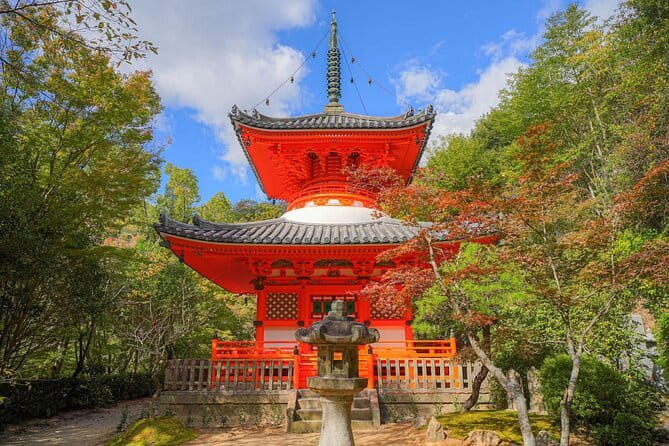
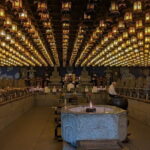
The first stop is Mitaki-dera, a Buddhist temple in the mountains away from central Hiroshima. You spend about three hours here, including a guided walk around the temple grounds.
This is the part of the day that gives the tour its quiet character. The focus is not only on buildings. Your guide explains Buddhism in Japan while you take in the temple’s natural setting. The combination matters because Japanese temples are often understood best through their relationship with the setting around them, not as isolated monuments.
The grounds are described as scenic and breathtaking, but you should read that with practical expectations. A temple in the mountains may involve walking on uneven or sloping paths, and three hours is a substantial visit. The information provided says most people can take part, but it does not promise a flat route or special mobility arrangements.
I would not book this day expecting a quick photo stop. Mitaki-dera takes up the largest single block of the morning. If you enjoy a slower visit, religious sites, and outdoor scenery, that time should feel worthwhile. If you prefer to cover many sights rapidly, the length may test your patience.
The temple also gives your guide room to explain ideas rather than simply point out objects. That is important on a tour like this. You are not only checking a famous place off a list. You are getting a basic framework for understanding Buddhism in Japan and the role of temple grounds as places of reflection.
Hondori Shopping Street: your flexible midday break
After returning to Hiroshima City, you get off near Hondori Shopping Street. You have about two hours of free time among shops and restaurants.
Lunch is not included, which is both a limitation and a benefit. You pay for your own meal, but you are not locked into a set menu or forced to eat at a particular hour. The guide can point you toward a place to eat, and a recommendation from the guide was specifically praised as useful. Take that offer if you want a quick local suggestion.
Two hours gives you enough breathing room after the long temple visit. You can eat, browse, and reset before the afternoon’s garden and Peace Memorial sites. Do keep an eye on the meeting time. Free time during a guided day is helpful only if you return promptly.
Hondori also changes the mood. Instead of moving straight from a religious site into memorial spaces, you get a glimpse of ordinary city life. Shops and restaurants show Hiroshima as a lived-in place, not only a destination defined by one historic event.
The exact shopping choices are not specified, so you should treat this as open time rather than a guided shopping experience. If you want a particular restaurant or store, the tour description does not guarantee it. The value here is flexibility.
Shukkeien Garden: Japanese design in one focused hour
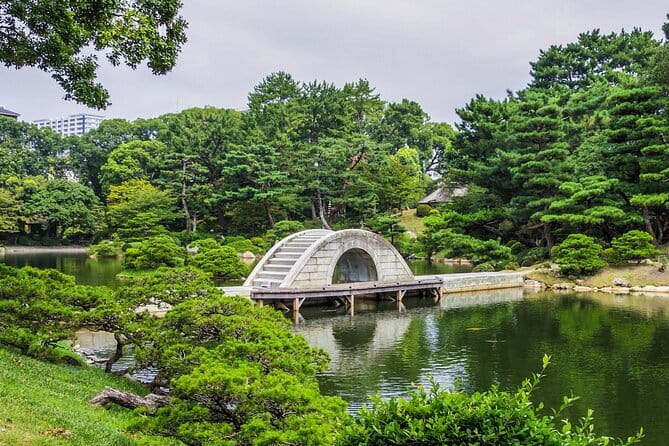
Shukkeien Garden receives about one hour, with admission included. Your guide takes you around the main pond, pointing out tea houses, bridges, hills, and good photo spots.
The guide also explains the main principles of Japanese garden design. That makes this more than a pleasant walk. You learn how the garden arranges water, structures, paths, and raised features to create changing views as you move.
One hour is a compact visit. You will not have the time to linger at every corner, but the focused walk may suit you after lunch. The garden is also a good place for photographs, especially if you enjoy details such as bridges and tea houses rather than only large monuments.
I like the contrast with Mitaki-dera. The temple presents nature as a mountain setting around a place of worship. Shukkeien shows nature shaped into a carefully planned garden. Seeing both in one day helps you notice two different approaches to Japanese scenery.
The short duration is the main drawback. If gardens are your main interest, you may wish for more time. On the other hand, the tour has a lot to cover, and a one-hour stop keeps the overall day moving.
Hiroshima Castle ruins and the city before 1945
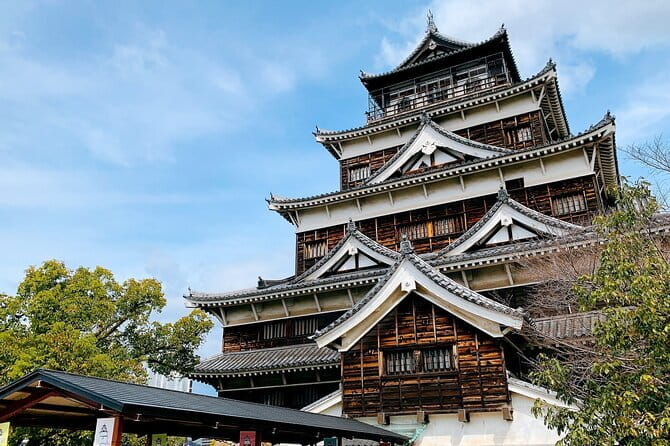
The experience also includes Hiroshima Castle ruins and an explanation of Hiroshima’s origins as a castle town during the Sengoku Period. This section connects the modern city to an earlier chapter, before the Peace Memorial sites take over the afternoon.
The castle story matters because Hiroshima was not created as a postwar city. Its identity reaches back to its role as a castle town, and the Sengoku Period provides the historical setting for that beginning. The tour lets you place Hiroshima’s later growth against that earlier foundation.
The supplied timing does not give a separate duration for the castle ruins, so you should not plan on a long independent castle visit. Treat it as part of the broader historical route rather than a full museum-style stop with extensive free time.
That limitation is worth knowing if the castle is your top priority. The tour’s strength is range. You get a meaningful introduction to the castle-town past, but the full day is not devoted to castle architecture or military history.
A few more Hiroshima tours and experiences worth a look

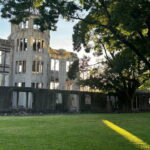
Peace Memorial Park and the Atomic Bomb Dome
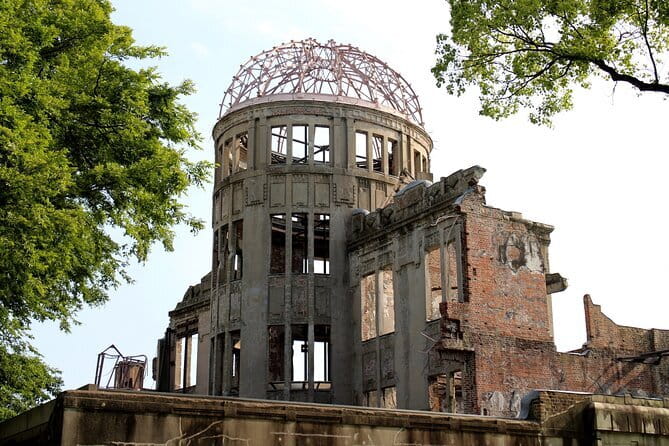
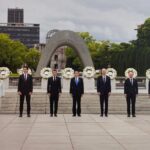
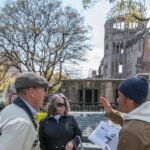
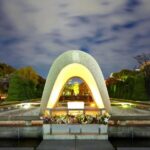
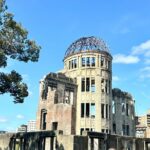
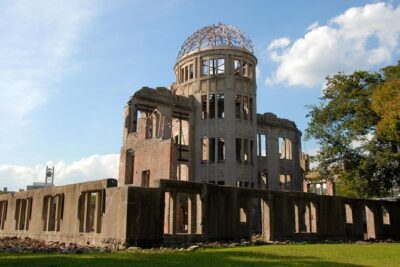
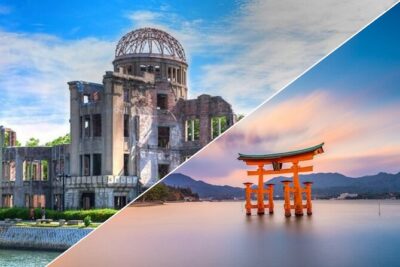
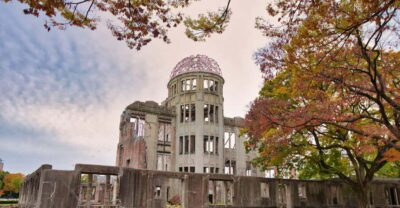
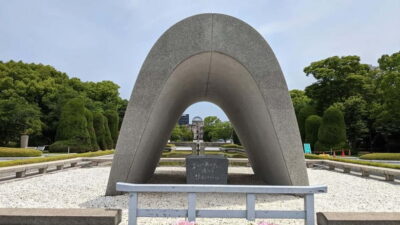
The final major section is the Peace Memorial Park, with about two hours allocated. You visit the Atomic Bomb Dome and the Peace Memorial Museum, while also seeing monuments built to honor the victims.
The Atomic Bomb Dome was inaugurated in 1915 as a building for exhibiting and selling products from Hiroshima Prefecture. Its preserved remains later became one of the clearest physical traces of the atomic bombing. The building’s earlier civic purpose adds another layer to what you see: it was part of ordinary city life before becoming a symbol of destruction and remembrance.
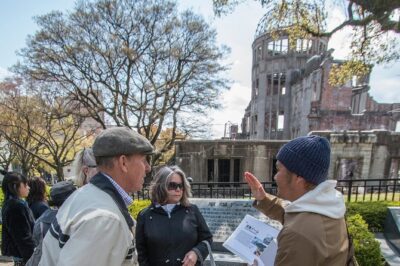
Your guide frames the visit through Hiroshima’s Peace Tourism and encourages reflection on the idea of peace. This is not light sightseeing. The museum and memorials deal with death, suffering, and the consequences of nuclear war. You should allow yourself a quieter pace here and avoid treating the park as just another stop for photographs.
Two hours is useful, but the museum can hold more material than you can absorb in one visit. You may need to make choices about how closely you read displays and how long you pause at each monument. The tour provides structure, yet it cannot remove the emotional weight of the subject.
The park is also where the earlier parts of the day come together. After seeing a temple, a traditional garden, a castle site, and a modern shopping street, you encounter the event that reshaped Hiroshima. That wider context helps you understand the city as both a historic Japanese place and a center of peace education.
Origami paper for making paper cranes is included. This small hands-on element fits the memorial setting and gives you a simple way to take part rather than only observe. It is a modest inclusion, but a thoughtful one.
The guide makes the difference
This tour depends heavily on the English-speaking guide. The route crosses several subjects that are easy to flatten into a few facts: Buddhism, garden design, castle-town origins, the atomic bombing, and peace memorials.
One guide associated with the experience is Isabella. If she leads your day, you can expect an enthusiastic approach and strong grounding in Hiroshima’s history and culture. The exact guide is not guaranteed, so consider the named guide an example rather than a promise.
A good guide also helps with the transitions. Public transport, city streets, temple paths, shopping time, and museum visits can feel disconnected without explanation. The guide’s role is to show how the pieces relate and to help you use your time well.
The group maximum is 15 people. That is a reasonable middle ground. You are not paying for a private guide, but the group should be more manageable than a large bus outing. Ask questions as you go, especially at Mitaki-dera and the castle ruins, where context adds much of the value.
Is $148.93 a fair price?
At $148.93 per person, this is not a bargain-priced walk. Still, the comparison should include what is covered: an eight-hour guided day, admissions at the included sites, public transport between activities, origami paper, and an English-speaking guide.
Lunch and transport to the meeting point are not included. You should budget separately for food and your arrival at the 7-Eleven near the Shinkansen station. The tour also does not include accommodation, which is obvious but useful to note if you are building a larger Hiroshima budget.
I consider the price fair for someone who wants one organized day covering several different parts of the city. The value is strongest if you would otherwise need to research transport, admission fees, temple background, garden design, and the Peace Memorial Park on your own.
The value is weaker if you prefer to visit museums and memorials at your own pace, or if you already know Hiroshima well. You are paying for structure and interpretation, not simply entry tickets.
The fact that it is commonly booked well ahead suggests you should not leave planning until the last moment. It averages about 66 days of advance booking, though availability can change by date. The maximum group size is 15, and any activity remains subject to confirmation and possible adjustment.
Who should book this full day?
I would recommend it to a first-time visitor who wants a broad introduction to Hiroshima in one day. It suits you if you want a guide to explain cultural sites, prefer having transport organized, and are comfortable spending a full day on foot and public transit.
It is also a good fit if you want the Peace Memorial Park but do not want your entire Hiroshima experience to focus on the bombing. Mitaki-dera and Shukkeien give the day space, while the castle ruins add a longer historical view.
Families and mixed-interest groups may find the variety useful because the day does not stay in one type of place. Still, the emotional content at the Peace Memorial Museum should be considered carefully, especially for younger children. The provided information says most people can participate, but it does not give a detailed accessibility profile.
You may want to skip it if you dislike fixed schedules, need long unplanned breaks, or want a private experience. The free time at Hondori helps, but this remains a structured eight-hour program.
Free cancellation is available if you cancel at least 24 hours before the 9:00 a.m. start time. Changes or cancellations inside that window are not accepted for a refund.
Should you book it?
Book this tour if you want Hiroshima explained as a whole city, not only as the site of the atomic bombing. The best reasons are the rare combination of Mitaki-dera’s mountain calm, Shukkeien’s design, castle-town history, and two focused hours at the Peace Memorial Park.
Skip it if you want to linger for half a day at the museum, eat without a schedule, or explore each site independently. For a first visit, though, the range is impressive and the included transport and admissions make the $148.93 easier to justify. Bring good walking shoes, reserve enough emotional space for the museum, and arrive ready for a full but well-shaped day.
FAQ
How long does the Hiroshima tour last?
The experience lasts approximately eight hours, beginning at 9:00 a.m. and ending back at the meeting point.
Where does the tour start?
The meeting point is the 7-Eleven at the ekie Hiroshima Shinkansen Exit, on the second floor at 1-2 Matsubara-cho, Minami Ward, Hiroshima, 732-0822.
Where does the tour end?
The tour ends back at the same meeting point where it begins.
Is lunch included?
No. Lunch is not included, but you receive free time near Hondori Shopping Street, where shops and restaurants are available.
Is transportation between the stops included?
Yes. Transportation between activities by public transport is included. Transportation to the starting meeting point is not included.
Are admission fees included?
Yes. Entry fees at all tour locations are included, including the listed garden and Peace Memorial sites.
Is the tour conducted in English?
Yes. An English-speaking guide leads the experience.
What is the cancellation policy?
You can cancel for a full refund up to 24 hours before the experience start time. Cancellations or changes made less than 24 hours before the start are not accepted for a refund.
More Full-Day in Hiroshima
More Hiroshima City Tours in Hiroshima
More tours in Hiroshima we've reviewed



Hiroshima City Tours, compared.
 ★ 5.0Peaceful Hiroshima & Miyajima UNESCO 1 Day Bus TourFrom $129
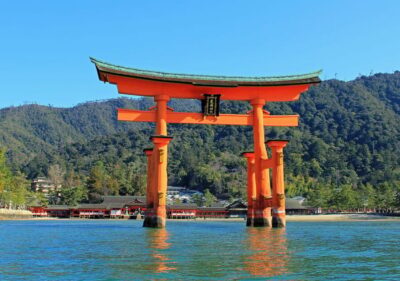 ★ 4.9Hiroshima: Hiroshima and Miyajima UNESCO Sites 1-Day TourFrom $1228 hours
 ★ 5.0Hiroshima / Miyajima Full-day Private Tour with Government Licensed GuideFrom $202
 ★ 4.7Osaka/Kyoto: Hiroshima Miyajima Bus Tour & Shinkansen TicketFrom $27712 hours
 ★ 4.8Hiroshima Historical Walking Tour – Why A-Bomb was DroppedFrom $352h 30m
 ★ 5.0Hiroshima Peace (Heiwa) Walking Tour at World Heritage SitesFrom $94
