
Reviewed · HIROSHIMA FOOD TOURS
Hiroshima: 1-Hour Okonomiyaki Experience at Ekimae-Hiroba
Hiroshima-style okonomiyaki is not just a pancake. It is a layered meal of cabbage, batter, pork, seafood, noodles, and sauce, cooked together but kept distinct enough to give you a busy mix of textures. This one-hour tour puts that local specialty at the center, with a guide explaining why it matters to Hiroshima.
I like the small time commitment and the fact that you eat in Ekimae-Hiroba, where several okonomiyaki restaurants gather under one roof. I also like the ¥2,000 food and drink allowance, which turns the tour into a guided meal rather than a talk followed by an extra restaurant bill. The main drawback is simple: one hour passes quickly, so this is an introduction, not a long food crawl or cooking lesson.
In This Review
- Key points
- Why Hiroshima-style okonomiyaki deserves an hour
- Meeting your guide at Ekimae-Hiroba
- The story behind a plate of noodles and cabbage
- Seeing how Hiroshima and Osaka styles differ
- Walking through the market before the meal
- What the included ¥2,000 covers
- A closer look at the one-hour schedule
- The guide can shape the experience
- Who will get the most from this experience
- Booking flexibility and practical details
- Should you book the Ekimae-Hiroba okonomiyaki tour?
- FAQ
- How long does the okonomiyaki experience last?
- Where does the tour begin?
- Where does the tour end?
- How do I find the guide?
- What languages are available?
- Is the group private?
- Is the experience wheelchair accessible?
- What food and drinks are included?
- Does the tour include a cooking class?
- Can I cancel the booking?
Key points
- Hiroshima-style layers: Expect cabbage, batter, pork, seafood, savory sauce, and rice noodles in a more complex stack than Osaka-style okonomiyaki.
- A postwar story: Your guide explains how the dish is linked to Hiroshima’s rebuilding after World War II.
- Ekimae-Hiroba setting: Several okonomiyaki restaurants share the food market, giving you a useful look at the city’s dining culture.
- A guided meal: The experience includes a restaurant recommendation and ¥2,000 worth of food and drinks.
- Private and accessible: The tour is offered for private groups and is wheelchair accessible.
- English or Japanese: You can choose a live guide in either language, with the meeting point marked by a yellow DeepExperience sign.
Why Hiroshima-style okonomiyaki deserves an hour
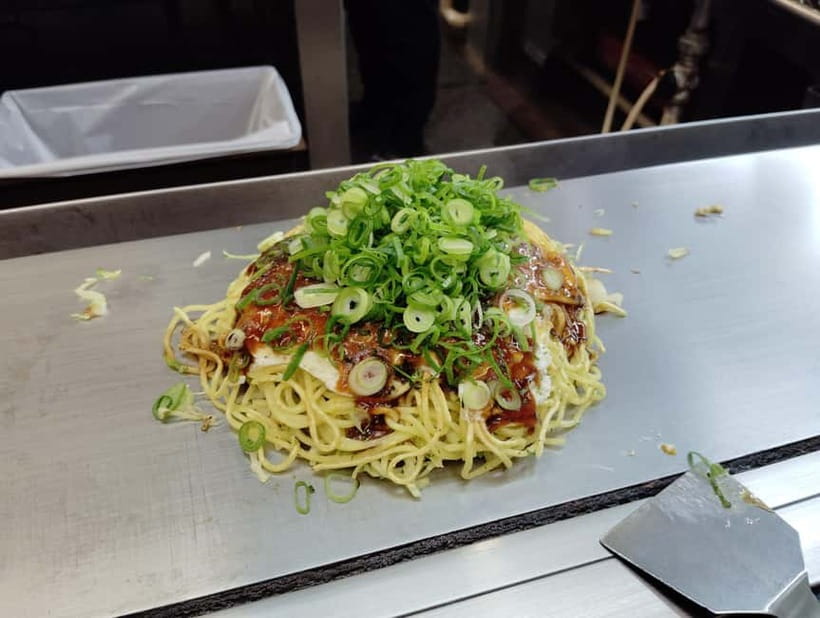
If you have eaten Osaka-style okonomiyaki, Hiroshima’s version gives you something new to compare. Both dishes are cooked on a hot griddle and finished with a savory sauce, but Hiroshima-style okonomiyaki is built in layers rather than mixed into one batter.
Cabbage forms a major part of the dish. Pork and seafood may join the stack, and rice noodles add a chewy middle layer. The result has more going on with each bite: soft cabbage, noodles, crisp edges, sauce, and the other selected ingredients.
The name okonomiyaki is commonly explained as meaning grilled as you like it. That idea matters here because the dish welcomes a range of ingredients. It is not one rigid recipe. The basic form gives you a framework, then the toppings and additions shape the final meal.
I find that a guide helps most with dishes like this. Without context, you might simply see a large savory pancake and wonder what separates one style from another. With an explanation, the noodles, layering, and choice of ingredients become part of the story.
A few more Hiroshima tours and experiences worth a look

Meeting your guide at Ekimae-Hiroba
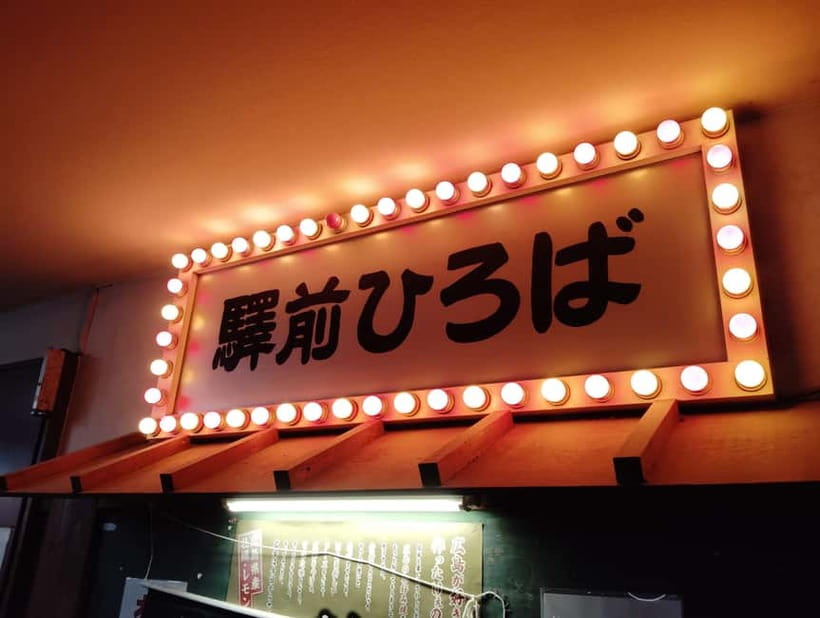
The tour begins at the entrance to Hiroshima Okonomi Monogatari Ekimae-Hiroba. Look for the guide holding a yellow sign with the DeepExperience logo. The activity begins and ends at this same location, so you do not have to work out a second meeting place after the meal.
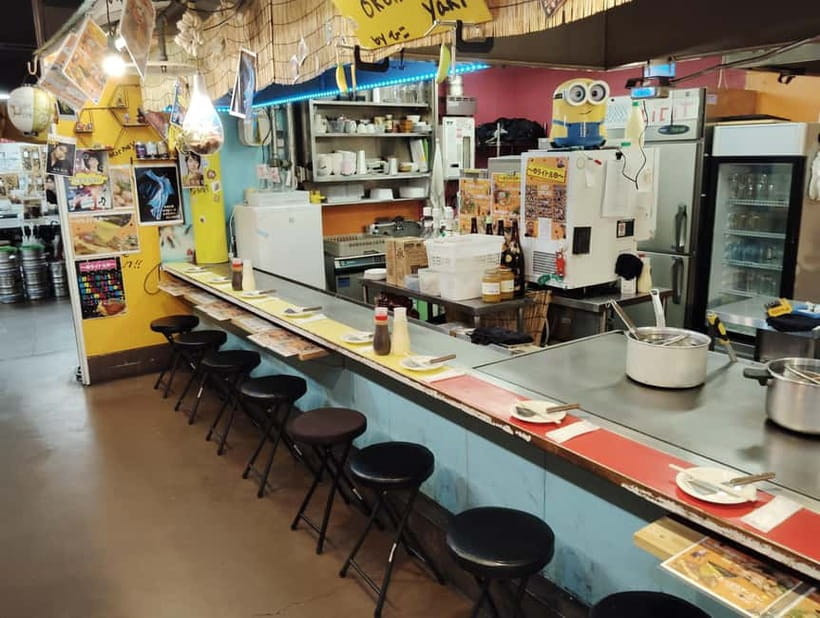
Ekimae-Hiroba is a food market with several okonomiyaki restaurants gathered together. That setting is useful for a first taste because okonomiyaki is not presented as an isolated tourist attraction. You see it in the kind of shared food setting where the dish makes sense as a local meal.
The tour is private, which changes the feel of the hour. You are not being added to a large public group, and your guide can focus on your questions and pace. The available languages are English and Japanese. A private format is especially handy if one person in your party already knows the dish while another is trying it for the first time.
The supplied meeting information does not give a restaurant name or a precise seat location in the market. That is worth remembering if you like to plan every detail in advance. Your practical task is to reach the entrance and find the yellow sign.
The story behind a plate of noodles and cabbage
A key part of the tour is the history of okonomiyaki and its connection to Hiroshima. You hear several theories about the dish’s roots rather than being given one neat, unquestioned origin story. That is a good approach for a short cultural tour. Food traditions often develop over time, and the guide can show you how different explanations fit into the larger picture.
The strongest local connection is to Hiroshima’s rebuilding after World War II. The city suffered severe damage, and okonomiyaki is said to have developed during the reconstruction period. A dish made from accessible ingredients could provide a filling meal, while its flexible nature allowed cooks to work with what they had.
That link gives the food more weight than a simple menu description. You are not only tasting cabbage, pork, seafood, noodles, and sauce. You are tasting a dish tied to recovery and daily life in a city that had to rebuild.
The information provided does not claim that this tour visits wartime memorial sites or explains the atomic bombing in detail. Do not book it expecting a full Hiroshima history lesson. Its focus is narrower and more personal: the story of a local food and its place in the city’s postwar life.
Seeing how Hiroshima and Osaka styles differ
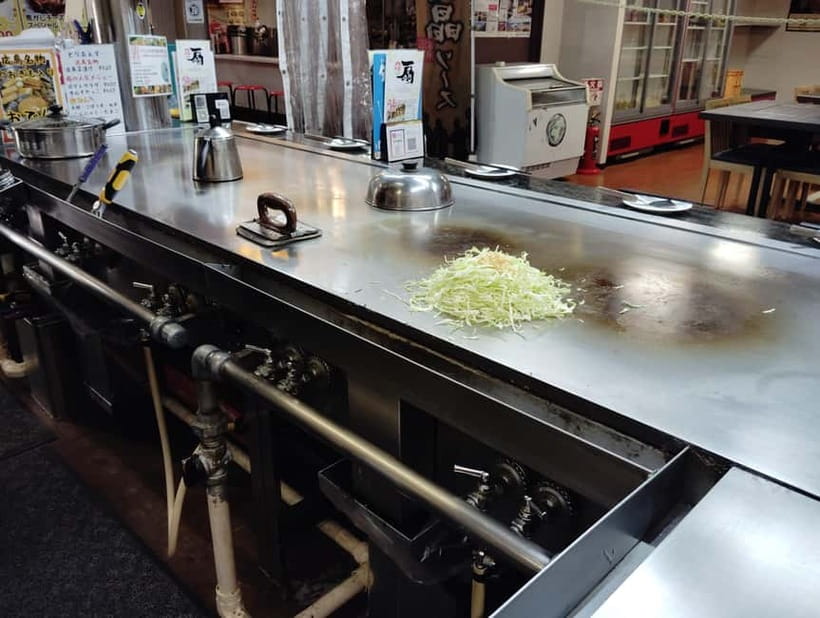
The comparison with Osaka-style okonomiyaki is one of the most useful parts of the experience. Osaka-style okonomiyaki is generally associated with ingredients mixed into the batter before cooking. Hiroshima-style okonomiyaki is built in layers, with rice noodles adding another part to the structure.
That difference affects both texture and eating style. The Hiroshima version can feel less like one blended pancake and more like several ingredients arranged into a single meal. Cabbage, noodles, meat, seafood, batter, and sauce each make their presence known.
I would pay close attention when your guide explains this distinction, especially if you plan to eat okonomiyaki in both cities. The comparison gives you a simple way to remember what you tasted. It also helps you order with more confidence later, since you will understand why a Hiroshima plate looks and feels different.
The tour information does not promise a cooking demonstration or hands-on preparation. You should expect to learn about the dish, walk through the food market, and eat at a recommended restaurant. If you want to flip your own pancake, this is not described as that kind of class.
Walking through the market before the meal
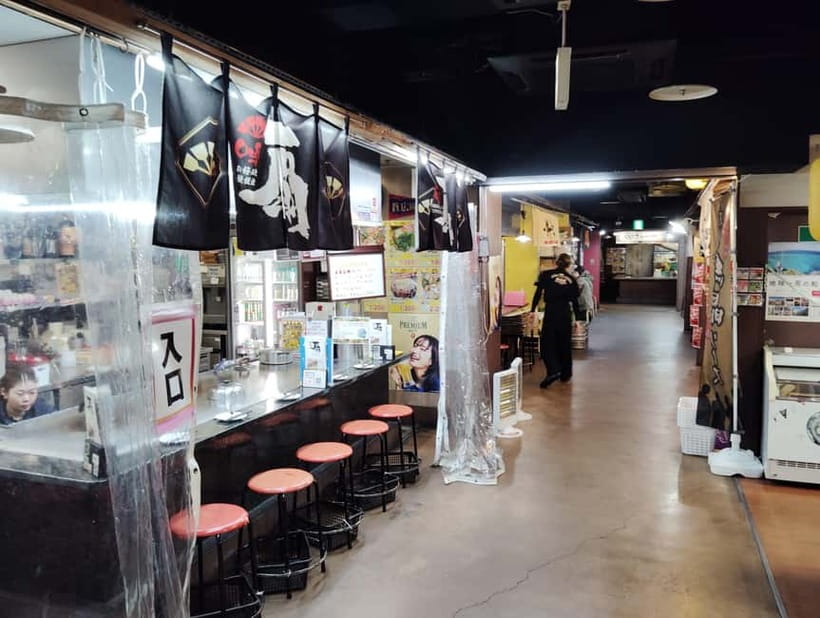
The guided walk around Ekimae-Hiroba is short but useful. Several restaurants are gathered in the same food market, so the guide can point out how the area is organized and direct you toward a recommended place for the included meal.
That recommendation has real value in a market with multiple similar-looking choices. You do not have to spend your limited dinner time comparing menus or guessing which restaurant fits the tour. The guide provides a starting point, then you sit down for the tasting.
The market setting also gives you a feel for the range of okonomiyaki dining in one place. You can look around before settling into the meal, though the one-hour duration limits how long you can browse. Think of the walk as orientation rather than a full market tour.
You finish back at Ekimae-Hiroba. That makes the tour easy to fit around other plans, but it also means the experience does not take you through a wider section of Hiroshima. If your goal is to see neighborhoods or major sights, you will need a separate outing.
A few more Hiroshima tours and experiences worth a look

What the included ¥2,000 covers
The price is $74 per person, and the experience includes ¥2,000 worth of food and drinks at a recommended okonomiyaki restaurant. That allowance is important when judging value. You are paying for a guide-led food experience, not simply buying a plate of okonomiyaki.
The meal allowance covers the food and drinks stated in the activity details. The information does not specify the exact dish size, drink selection, toppings, or any extra charge if you order beyond the allowance. If you want more than the included amount, ask your guide or restaurant staff about additional costs before ordering.
At one hour, the price will feel most reasonable if you value the explanation and local orientation. A self-guided meal would cost less, but it would not give you the same background on Hiroshima-style preparation, the dish’s postwar connection, or the Osaka comparison.
The price may feel high if you want a long evening of eating. This is a compact cultural tasting. You receive a private guide, a market walk, and an included meal, but not a succession of restaurant stops.
A closer look at the one-hour schedule
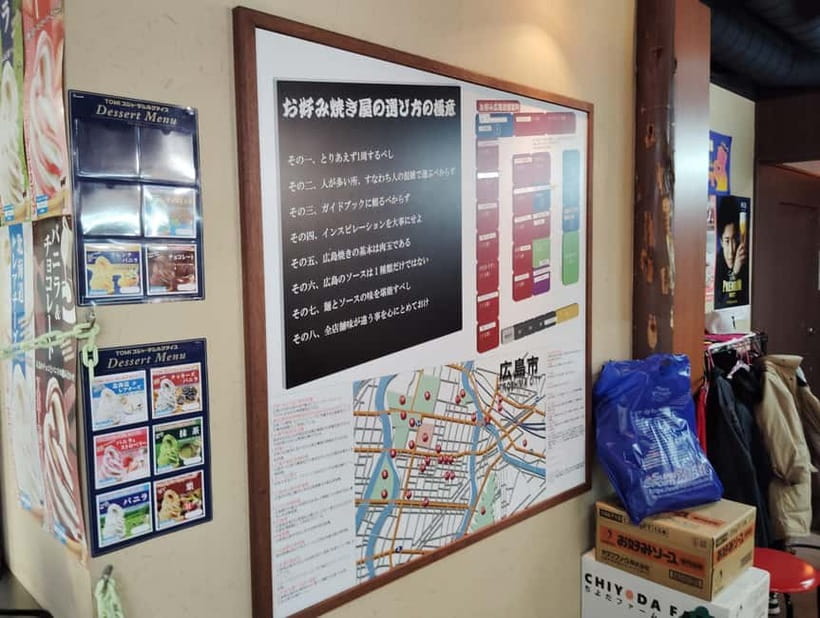
The full activity lasts one hour, starting and ending at Ekimae-Hiroba. The exact starting times vary, so you need to check availability when choosing a date.
The hour is likely to follow a straightforward pattern:
- Meet the guide at the entrance.
- Walk around Ekimae-Hiroba and hear about okonomiyaki.
- Learn about the ingredients, the dish’s possible roots, and its place in Hiroshima’s rebuilding.
- Compare Hiroshima-style and Osaka-style okonomiyaki.
- Eat at a recommended restaurant, with ¥2,000 of food and drinks included.
- Return to the starting point.
The order of the talk and meal may vary, since the provided schedule only describes a one-hour guided visit. Do not plan a tight connection immediately afterward if you need extra time to find another place or finish eating. The listed activity ends back at the same market, but the dining pace is not specified.
The short format works well for a first meal in the city. You get enough time to understand what makes the local version different, then you can decide if you want to order it again during your stay.
The guide can shape the experience
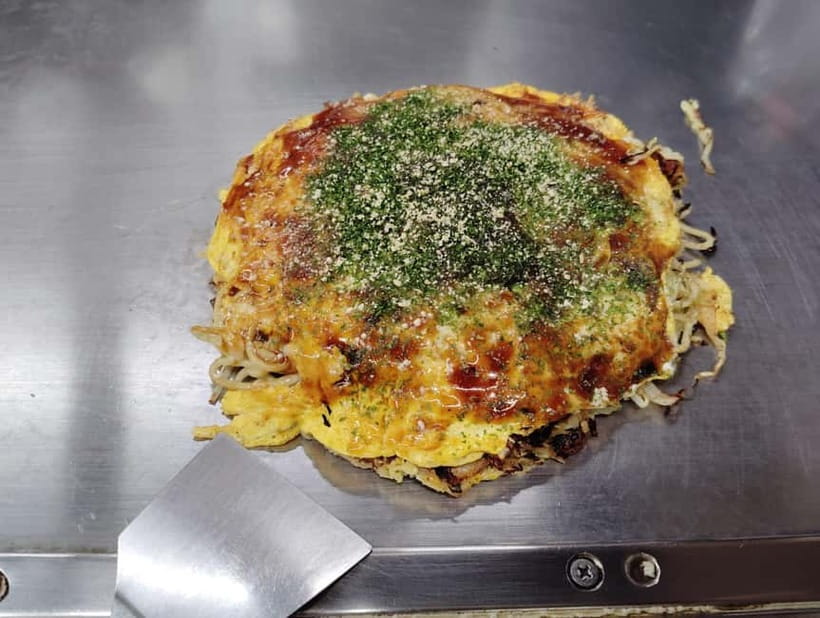
The experience is offered with a live guide in English or Japanese. That matters because the most valuable part is not only identifying the ingredients. It is asking why the dish is built this way and how it connects to Hiroshima.
One guide named in the booking information is Sada. A verified booking described Sada as offering a thoughtful introduction to Hiroshima’s soul food and its history. That detail suggests the guide may give the meal a personal sense of place, but guide availability can vary, so you should not assume Sada will lead every departure.
Because the group is private, you can ask for clarification without holding up a large party. You might ask how the noodles change the dish, why Hiroshima and Osaka developed different styles, or how the food relates to reconstruction. The supplied details do not promise that every question will be covered, so use the hour well and raise the topics that interest you most.
Who will get the most from this experience
I would recommend this tour to first-time visitors who want an easy introduction to Hiroshima food. It suits you especially well if you like to understand what you are eating instead of simply pointing at a menu item.
It is also a good fit for families or mixed groups. A private tour lets the guide adjust the conversation, and the dish allows people to encounter several ingredients in one meal. Still, the activity is only one hour, so it will not satisfy someone looking for an all-evening food event.
Food-focused visitors may appreciate the Hiroshima and Osaka comparison. If you are visiting both cities, this tour gives you a useful reference point for two regional versions of the same broad dish.
I would be more cautious about booking it if you want a hands-on cooking lesson, several tastings, or a long explanation of Hiroshima’s wartime history. None of those are promised. The focus stays on okonomiyaki, the market, and the meal.
The activity is wheelchair accessible, which makes it a practical option for many people with mobility needs. Pets are not allowed. The provided details do not explain restroom access, table layout, or assistance procedures, so contact the operator if you need those specifics.
Booking flexibility and practical details
You can cancel up to 24 hours in advance for a full refund, and the reserve-now-pay-later option lets you keep your plans open without paying at the time of booking. Those terms are useful if your Hiroshima schedule may change.
The meeting point is specific, but the English spelling can vary: Hiroshima Okonomi Monogatari Ekimae-Hiroba. Save the Japanese name, ひろしまお好み物語 駅前ひろば, on your phone so you can show it if needed.
Arrive with the yellow DeepExperience sign in mind. Since the guide holds that sign at the entrance, it is the clearest way to identify the meeting point.
The activity returns to the same place where it begins. That makes it easy to continue eating, shopping, or exploring afterward, though no further stops are included in the tour.
Should you book the Ekimae-Hiroba okonomiyaki tour?
Book it if you want a short, private introduction to Hiroshima’s signature dish, with a guide who can explain the noodles, layers, Osaka comparison, and postwar connection. The included ¥2,000 meal and central market setting make the $74 price easier to justify for someone who values context along with lunch or dinner.
Skip it if you want to cook your own food, visit several restaurants, or spend hours on a food crawl. You will get one recommended meal and one hour of guided explanation.
For many visitors, this is a smart first okonomiyaki stop. It gives you the vocabulary and background to enjoy the dish on your own later. The strongest reason to book is the combination of a real local meal and a clear explanation of why Hiroshima-style okonomiyaki is its own thing.
FAQ
How long does the okonomiyaki experience last?
The experience lasts one hour, including the guided visit to Ekimae-Hiroba and the meal at a recommended okonomiyaki restaurant.
Where does the tour begin?
It begins at the entrance to Hiroshima Okonomi Monogatari Ekimae-Hiroba, also written as ひろしまお好み物語 駅前ひろば.
Where does the tour end?
The experience ends back at Hiroshima Okonomi Monogatari Ekimae-Hiroba.
How do I find the guide?
The guide will be holding a yellow sign with the DeepExperience logo at the entrance.
What languages are available?
The live tour guide service is available in English and Japanese.
Is the group private?
Yes. The activity is offered as a private group experience.
Is the experience wheelchair accessible?
Yes. The activity is listed as wheelchair accessible.
What food and drinks are included?
The experience includes ¥2,000 worth of food and drinks at a recommended okonomiyaki restaurant.
Does the tour include a cooking class?
The activity details describe a guided walk, an explanation of okonomiyaki, and a restaurant meal. They do not state that you prepare or cook the dish yourself.
Can I cancel the booking?
You can cancel up to 24 hours in advance for a full refund. You can also reserve now and pay later, according to the stated booking terms.
More 1-Hour Experiences in Hiroshima
More Hiroshima Food Tours in Hiroshima
More Hiroshima City Tours in Hiroshima

More tours in Hiroshima we've reviewed


Hiroshima Food Tours, compared.
 ★ 5.0Hiroshima Izakaya Food and Drink Night TourFrom $110
 ★ 4.9Hiroshima: Food and Culture Guided Walking Tour with DinnerFrom $943 hours
 ★ 4.5All-inclusive Hiroshima Nighttime Food and Cultural ImmersionFrom $119
 ★ 5.0Private Japanese Cooking Class in Hiroshima with Machiko’s FamilyFrom $108
 ★ 5.0Best of Hiroshima Food TourFrom $221
 ★ 5.0Dinner Cruise on HANAIKADA (Raft-Type Boat) with Scenic View of MiyajimaFrom $95
