
Reviewed · HIROSHIMA CITY TOURS
Half Day Hiroshima Highlight Tour with Story Telling
Hiroshima’s story is told most powerfully through ordinary places: a museum filled with personal evidence, a surviving dome, a tree that endured the blast, and a garden where the city finds a little calm. This tour connects those places with Miyu, a local guide who worked for 12 years in Hiroshima’s Hibakusha Support Division.
I like the route for two clear reasons. First, it gives you both the hard facts of August 6, 1945, and the human story of rebuilding afterward. Second, it ends at Shukkeien Garden, a quiet change of pace after the emotional weight of the Peace Memorial sites. The main consideration is cost: the $294.67 group price covers the guide, but admission fees and public transport are extra.
In This Review
- Key points to know before booking
- A personal guide for Hiroshima’s most important places
- Hiroshima Peace Memorial Museum: begin with evidence
- Peace Memorial Park: monuments with meaning
- Atomic Bomb Dome: a surviving structure by the river
- Hiroshima Castle: war history beyond the atomic bombing
- Shukkeien Garden: a calm final hour
- What Miyu adds to the experience
- Is the $294.67 group price good value?
- Who will get the most from this tour?
- Timing, transport, and the small details
- Should you book the Half Day Hiroshima Highlight Tour?
- FAQ
- How long does the Hiroshima Highlight Tour last?
- How many people can join the tour?
- Who is the guide?
- What places are visited?
- Are entrance fees included?
- Is public transportation included?
- Can I cancel for a full refund?
Key points to know before booking
- Miyu’s background is unusually relevant: She worked for 12 years in Hiroshima’s government division supporting Hibakusha, or atomic-bomb survivors.
- The four-and-a-half-hour route covers five major stops: You visit the museum, memorial park, Atomic Bomb Dome, Hiroshima Castle, and Shukkeien Garden.
- The tour balances grief with renewal: The first half focuses on the bombing and its victims, while the castle and garden show Hiroshima’s culture and rebuilding.
- The group limit is eight people: The format should feel more personal than a large coach tour, especially during storytelling at the memorial sites.
- Extra costs add up: Museum admission is ¥200, Hiroshima Castle is ¥370, Shukkeien is ¥350, and public transportation is ¥720 per person.
- The tour ends where it begins: It is designed as a focused Hiroshima outing rather than a transfer to another part of the city.
A personal guide for Hiroshima’s most important places
This is not a tour built around ticking off monuments. Its main purpose is to help you understand what happened to people who were living normal lives, then had their plans and futures destroyed in an instant.
That focus matters in Hiroshima. You can visit the Peace Memorial Park on your own, but the grounds contain many monuments, names, and stories. Without context, it is easy to move from one site to the next without understanding why each one matters. Miyu’s professional connection to Hibakusha support gives the tour a clear human center.
The experience lasts about 4 hours and 30 minutes. The listed stops account for about 3 hours and 45 minutes, leaving roughly 45 minutes for movement between sites and the natural pauses that come with a thoughtful walking tour. The exact flow may vary, but you should expect a full morning or afternoon rather than a quick photo stop.
The tour is capped at eight people. That is a useful middle ground. You are not paying for a private tour, but you are also not being carried through Hiroshima in a large group. A small group makes it easier to ask questions, hear personal explanations, and keep the pace manageable.
A few more Hiroshima tours and experiences worth a look

Hiroshima Peace Memorial Museum: begin with evidence
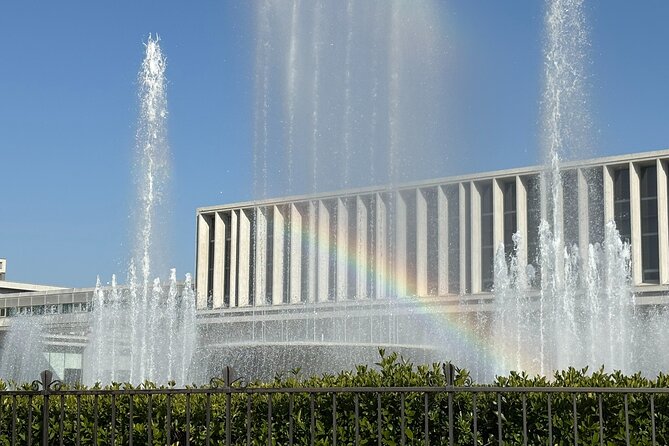
The Peace Memorial Museum is the emotional core of the experience. You have about one hour here, and that is enough time for a serious introduction, though you may want longer if you prefer to read every display carefully.
The museum explains what happened to Hiroshima on August 6, 1945, what happened to the people in the city, and how the bombing affected lives afterward. Its stated purpose is direct: to show the horror of nuclear weapons and support the goal of peace.
You should prepare yourself for difficult material. This is not a light sightseeing stop, and the museum does not treat the bombing as an abstract military event. It focuses on the city and its people. The value of having Miyu with you is that the museum becomes part of a larger story about survivors, radiation, and reconstruction rather than an isolated collection of exhibits.
Admission is not included. The fee is ¥200 per person, a modest extra cost compared with the tour price. If you are sensitive to traumatic material, the one-hour visit may feel intense. The schedule gives you a defined amount of time, which can help, but you should not expect the subject to be handled casually.
Peace Memorial Park: monuments with meaning
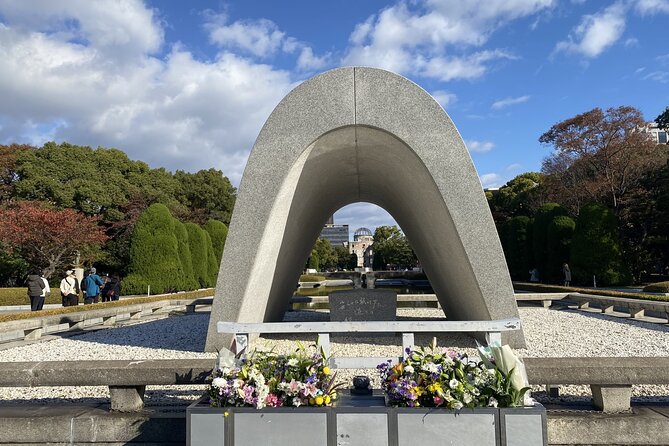
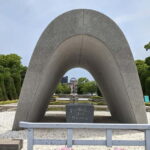
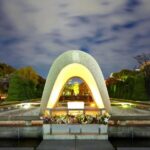
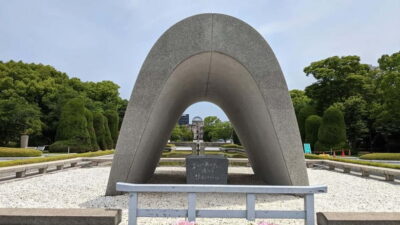
After the museum, you spend about 30 minutes in Peace Memorial Park. The park contains several of Hiroshima’s best-known memorials, including the Cenotaph for the A-bomb Victims, the Children’s Peace Monument, and the A-bomb Memorial Mound.
The important point is not just seeing each structure. It is understanding the stories attached to them. The Cenotaph honors the victims, the Children’s Peace Monument connects the bombing to the children who died or suffered afterward, and the Memorial Mound relates to the many unidentified remains gathered after the attack.
Thirty minutes is a concise visit. You will get an introduction to the principal monuments, but you will not have unlimited time to linger at each one. That makes the guide especially useful here. Miyu can direct your attention to the details that would be easy to miss and explain how the individual memorials fit into Hiroshima’s wider message of peace.
The park is free to enter. It also gives you a little breathing room after the museum. The experience remains serious, but you are now outside, walking among the memorials instead of moving through indoor displays.
Atomic Bomb Dome: a surviving structure by the river
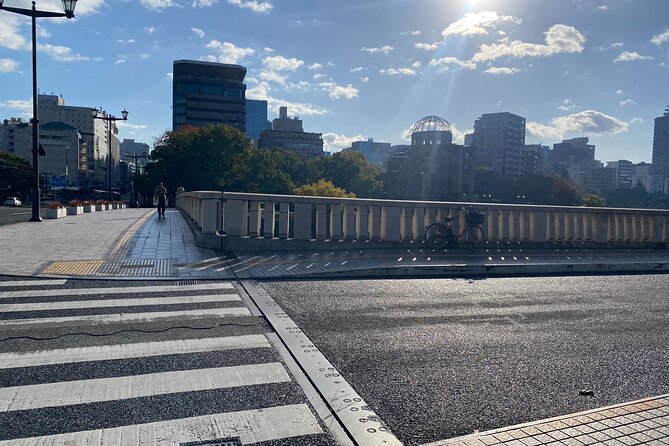
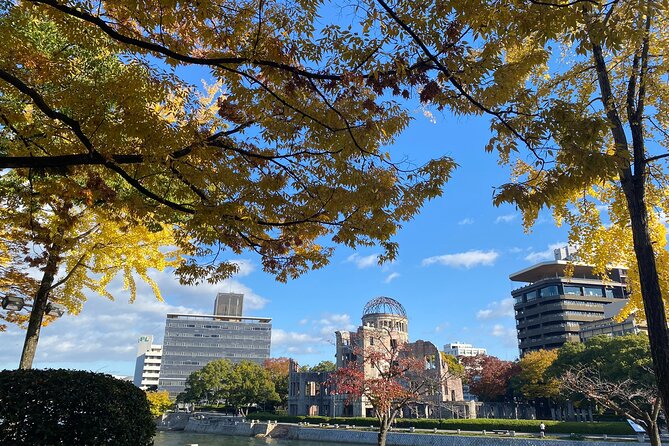
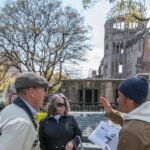
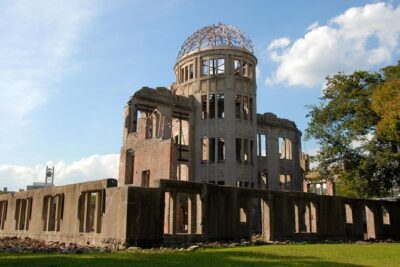
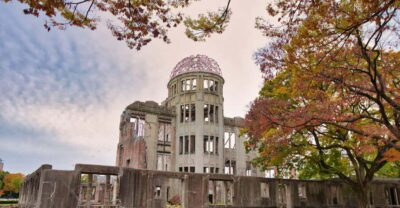
The Atomic Bomb Dome receives about 15 minutes, enough for a focused stop. This building, preserved in its damaged condition, is one of Hiroshima’s World Heritage Sites and one of the city’s most recognizable symbols.
The dome survived the blast and heat rays of the atomic bomb, although the surrounding area was devastated. Its presence makes the scale of the destruction easier to grasp. You are looking at an actual structure connected to that day, not only at photographs or written accounts.
Fifteen minutes may sound brief, but this stop works best as a moment of observation and explanation. The building is not an indoor museum visit, so you do not need a long scheduled block to understand its role. You will have time to see the remains, hear why the site matters, and reflect before moving on.
The Dome is free to view. Since it is one of Hiroshima’s defining landmarks, including it in the route saves you from having to fit it into your schedule separately.
Hiroshima Castle: war history beyond the atomic bombing
The move to Hiroshima Castle changes the subject. After focusing on the 1945 bombing, the tour turns to the city’s older history and culture.
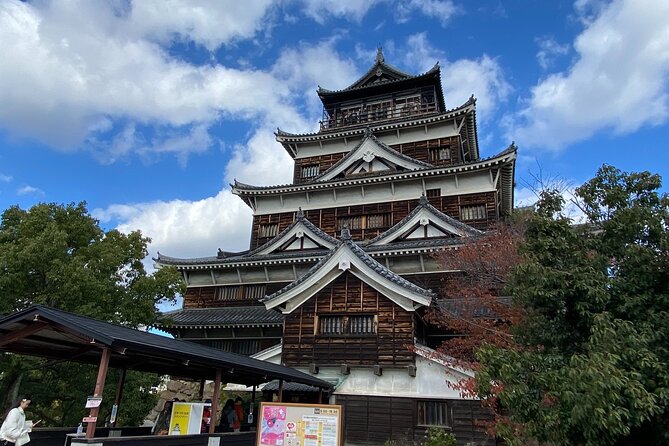
The castle tower contains historic artifacts, and its fifth floor serves as an observation platform. The visit lasts about 50 minutes, giving you time to explore the exhibits and reach the lookout. The tower is not included in the tour price, with admission listed at ¥370 per person.
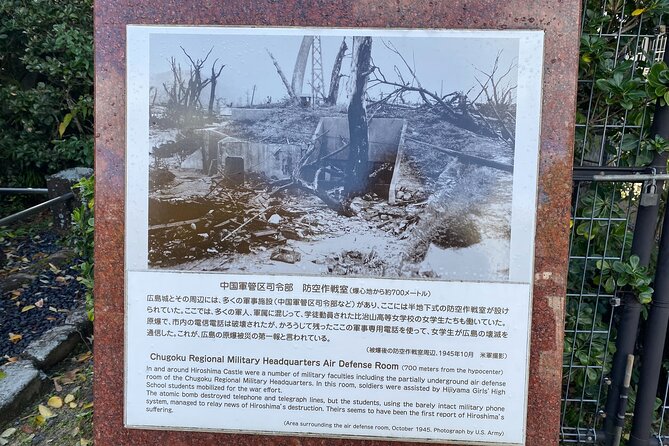
Two details make this stop more than a standard castle visit. Near the castle, you can see an A-bombed tree and the remains of the Military Air Defense Room, also described as the communications room where the first news of the atomic bombing was transmitted.
The tree gives the story a living element. It shows that the bombing’s evidence is not limited to ruined buildings and museum objects. The communications-room remains connect Hiroshima to the first moments after the attack, when information began to move through the city and beyond.
This stop also helps you remember that Hiroshima existed long before 1945. The city was not created by its tragedy. It had a castle, a political and cultural identity, and a long story that continued after the destruction.
Shukkeien Garden: a calm final hour
Ending at Shukkeien Garden is one of the smartest choices in the itinerary. You spend about 50 minutes here, with admission of ¥350 per person.
The garden is designed as a collection of scenic spots inspired by places around Japan. Paths and views give you a slower, quieter setting after the museum, memorials, and castle. The tour description specifically presents the garden as a way to ease the fatigue of the day, and that is exactly the role it plays.
This is not filler at the end of a history tour. The contrast matters. Hiroshima is a peaceful, beautiful city today, and Shukkeien gives you time to experience that present-day calm. You are still thinking about what you have seen, but the setting allows the tour to close with restoration rather than leaving you at the heaviest point of the story.
The 50-minute visit is long enough to appreciate the garden without turning the tour into a full botanical outing. If you enjoy Japanese gardens, you may wish you had more time. Still, as the final stop in a half-day route, it provides a welcome pause.
What Miyu adds to the experience
Miyu’s background is the strongest reason to choose this particular tour instead of simply visiting the main sights independently. She worked as a local government official in the Hibakusha Support Division for 12 years and continues to interact with atomic-bomb survivors.
That does not mean every part of the tour is presented as a personal survivor account. Rather, Miyu can explain the subject from a close professional and local perspective. Her stated areas include the lives of Hibakusha, Hiroshima’s reconstruction, and the effects of radiation on the human body.
For you, that can make a difference in three ways. First, it helps connect the museum displays with the people behind them. Second, it gives the reconstruction of Hiroshima a clear place in the story. Third, it allows you to ask questions about radiation and its effects within the scope of her experience.
One recent booking described Miyu as accommodating and informative, and specifically praised her for including the essential sights. That matches the structure of the route: it covers the places most first-time visitors need to see, while adding details that are difficult to gather from signs alone.
Is the $294.67 group price good value?
The advertised price is $294.67 per group of up to eight people. The guide fee is included, but you pay separately for admission and transport.
For a full group of eight, the guide portion works out to about $36.83 per person. For four people, it is about $73.67 each. For one or two people, the group price becomes much harder to justify purely on cost, although the specialist background of the guide may still make it worthwhile.
The listed additional costs are:
- Peace Memorial Museum: ¥200 per person
- Hiroshima Castle: ¥370 per person
- Shukkeien Garden: ¥350 per person
- Public transportation: ¥720 per person
That is ¥920 per person for the three admissions, plus ¥720 for transport. You should budget for ¥1,640 per person beyond the guide price if you plan to enter all three paid sites and use the listed public transportation.
The value improves if you are sharing the tour with family or friends. You are paying for a focused route, a guide with a rare connection to Hiroshima’s survivor-support work, and help interpreting emotionally difficult places. If you are comfortable planning transport and reading museum material independently, a self-guided visit will cost less. If you want the meaning of each location explained as you go, the price is easier to defend.
Who will get the most from this tour?
This experience suits a first visit to Hiroshima, especially if you want the essential sites arranged in a sensible order. The route moves from the bombing and its victims to the city’s older culture and its peaceful present.
It is also a good fit for anyone who wants more than dates and labels. Miyu’s background makes the human consequences of the bombing a central part of the day, not a side note.
The tour should work for most people, and it is near public transportation. The group maximum is eight, which helps keep the outing personal. Still, you should be ready for several hours focused on serious subjects, walking between sites, and moving through museum and garden spaces.
This may not suit you if you want a relaxed sightseeing tour with only brief historical commentary. The museum and memorial park are emotionally demanding, and the guide’s focus is clearly on survivors, radiation, reconstruction, and peace.
Timing, transport, and the small details
The experience is offered Monday through Sunday, with operating hours listed from 8:00 AM to 7:00 PM for the stated booking period. Your confirmation arrives when you book, and the activity returns to the meeting point at the end.
Public transportation costs ¥720 per person and is not included. The route covers several locations, so this is an important part of the budget rather than a minor footnote.
You should also remember that museum, castle, and garden admission are separate. The total can still be reasonable for a shared group, but the headline price does not represent the final cost for each person.
Free cancellation is available if you cancel at least 24 hours before the start time. Changes or cancellations made inside that window are not accepted for a refund.
Should you book the Half Day Hiroshima Highlight Tour?
Book it if you want Hiroshima explained through both its tragedy and its recovery, and if you value a guide with direct professional experience supporting Hibakusha. The combination of the Peace Memorial Museum, memorial park, Atomic Bomb Dome, Hiroshima Castle, and Shukkeien Garden gives you a strong four-and-a-half-hour introduction.
I especially like the ending at Shukkeien. It gives the day emotional balance and lets you leave with a sense of Hiroshima as a living city, not only as the site of a catastrophe.
The decision is less clear for one or two people watching every yen. The fixed group price is much better when shared, and you must add admission and transport. For a larger group that wants clear explanations, a carefully chosen route, and Miyu’s unusually relevant background, this is a thoughtful and efficient way to spend half a day in Hiroshima.
FAQ
How long does the Hiroshima Highlight Tour last?
The tour lasts approximately 4 hours and 30 minutes.
How many people can join the tour?
The tour has a maximum of eight participants.
Who is the guide?
The experience provider is Miyu. She worked for 12 years as a local government official in Hiroshima’s Hibakusha Support Division and continues to interact with atomic-bomb survivors.
What places are visited?
The route includes the Hiroshima Peace Memorial Museum, Hiroshima Peace Memorial Park, the Atomic Bomb Dome, Hiroshima Castle, and Shukkeien Garden.
Are entrance fees included?
No. The Peace Memorial Museum costs ¥200 per person, Hiroshima Castle costs ¥370 per person, and Shukkeien Garden costs ¥350 per person.
Is public transportation included?
No. Public transportation is listed as an additional ¥720 per person.
Can I cancel for a full refund?
Yes, if you cancel at least 24 hours before the experience start time. Cancellations or changes made less than 24 hours before the start time are not accepted for a refund.
More Hiroshima City Tours in Hiroshima
More tours in Hiroshima we've reviewed


Hiroshima City Tours, compared.
 ★ 5.0Peaceful Hiroshima & Miyajima UNESCO 1 Day Bus TourFrom $129
 ★ 4.9Hiroshima: Hiroshima and Miyajima UNESCO Sites 1-Day TourFrom $1228 hours
 ★ 5.0Hiroshima / Miyajima Full-day Private Tour with Government Licensed GuideFrom $202
 ★ 4.7Osaka/Kyoto: Hiroshima Miyajima Bus Tour & Shinkansen TicketFrom $27712 hours
 ★ 4.8Hiroshima Historical Walking Tour – Why A-Bomb was DroppedFrom $352h 30m
 ★ 5.0Hiroshima Peace (Heiwa) Walking Tour at World Heritage SitesFrom $94
