Reviewed · YAMAGUCHI TOURS
Shimonoseki & Moji Port Full-Day Private Trip with Government-Licensed Guide
The best part of this tour is its focus on the Kanmon Strait, the narrow waterway separating Honshu from Kyushu. In one day, you can move from blowfish stalls at Karato Market to restored Western buildings in Mojiko, then walk through an undersea tunnel between Japan’s main islands.
I like the private format and the freedom to choose three or four sites instead of racing through all nine options. I also like the chance to adjust the day around weather and interests, as guide Rei did for a rainy outing by adding a ferry, cabs, shrines, and tea with a garden view. The main catch is price: $172.33 per person covers the guide, not transportation, admission, lunch, or personal costs.
In This Review
- Key points to know before booking
- Why Shimonoseki and Moji make a strong one-day pairing
- Karato Market, where Shimonoseki eats from the sea
- Mojiko Retro and the port’s Western face
- The Kanmon Tunnel, a walk beneath the water
- Kaikyo Yume Tower and Mount Hinoyama views
- Ganryujima Island and the Musashi-Kojiro duel
- Jokamachi Chofu, old streets away from the port
- Akama Shrine and the story of Emperor Antoku
- The Former British Consulate and Shimonoseki’s international role
- What the $172.33 price really covers
- How to shape your six-hour route
- Who should book this private Shimonoseki tour?
- Should you book it?
- FAQ
- How long does the tour last?
- How many sites can I visit?
- Is transportation included?
- Is hotel pickup included?
- Is the tour private?
- Is lunch included?
- Is an English-speaking guide provided?
- Can I cancel for a full refund?
Key points to know before booking
- Three or four stops are the realistic plan: You choose from nine locations, so this is a focused outing rather than a checklist tour.
- Karato Market brings local flavor: Shimonoseki is famous for blowfish, and the market gives you a direct look at the city’s seafood culture.
- The private guide can adapt the route: Weather and personal interests can shape the day, with Rei’s rainy-day changes offering a useful example.
- The Kanmon Tunnel is a rare walk: You can cross beneath the strait on foot from the Shimonoseki side.
- Moji adds a different feel: Mojiko Retro centers on preserved Western-influenced port buildings from an earlier age of trade and modernization.
- Budget for extras: The tour price excludes transportation, entrance fees, lunch, and other personal expenses.
Why Shimonoseki and Moji make a strong one-day pairing
Shimonoseki sits at the western tip of Honshu, directly across the Kanmon Strait from Moji on Kyushu. The waterway is narrow, but the two ports feel distinct. Shimonoseki offers imperial legend, seafood, shrines, and views from Mount Hinoyama. Moji gives you old port architecture and the atmosphere of a city shaped by contact with the wider world.
That contrast gives this private tour its purpose. You are not simply looking at monuments. You are following the story of a maritime crossroads, from food and ferries to trade, warfare, religion, and modern transportation.
The tour lasts about six hours. Since you select only three or four sights from a longer list, the guide can spend useful time at each stop rather than shuffling you through every location. I would treat that choice as the key booking decision. If you want a broad introduction, choose Karato Market, Mojiko Retro, the Kanmon Tunnel, and one major viewpoint or shrine. If history matters more than scenery, swap in Akama Shrine or Jokamachi Chofu.
The meeting arrangement needs careful attention. Although hotel pickup is presented as a convenience, the included service says you meet the guide on foot within a designated area of Shimonoseki. This is not a private car tour. You pay your own public transportation, ferry, taxi, and other travel costs.
Karato Market, where Shimonoseki eats from the sea
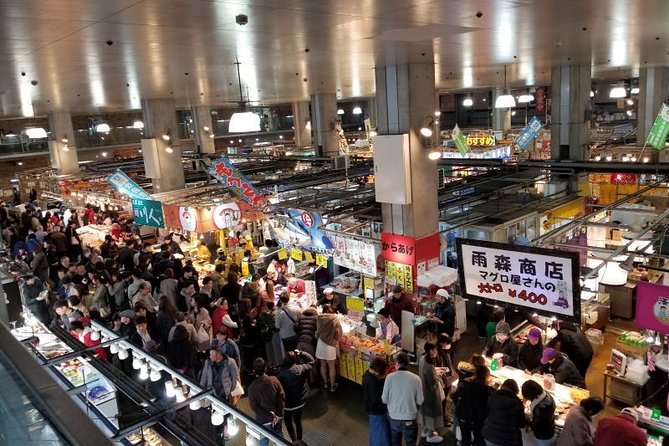
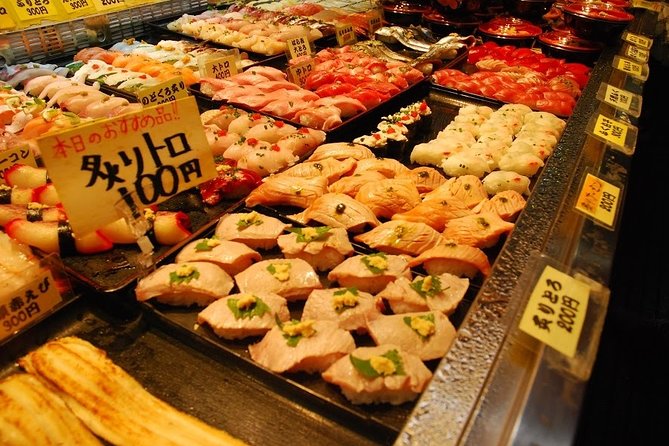
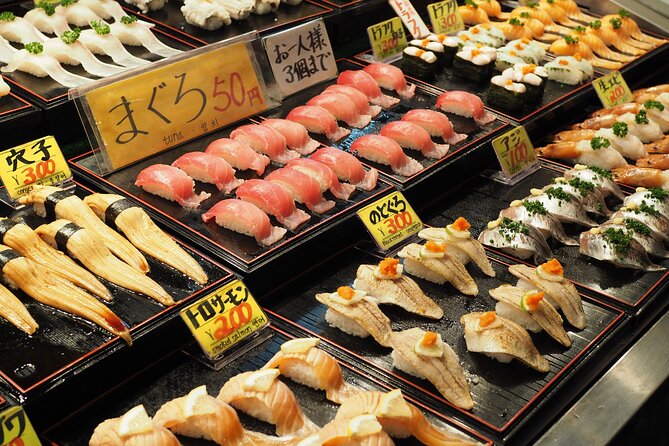
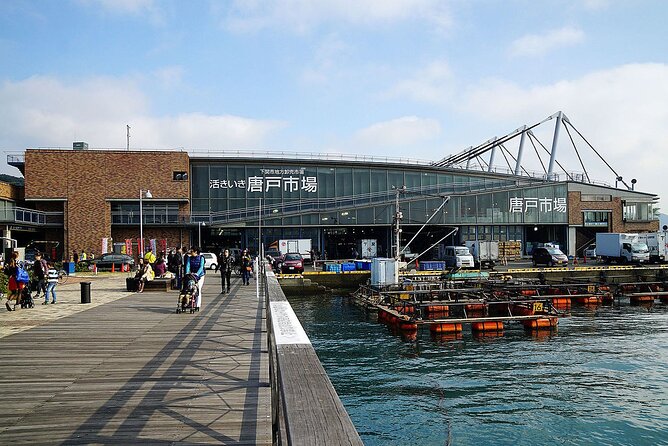
Karato Market is the most natural opening stop for many people. Shimonoseki is famous for blowfish, and the market offers a close look at the fish, vegetables, and local food trade that shape the port’s identity.
Plan on about an hour here. The market is less about a formal historical display and more about seeing food as part of daily life. The supplied description points to auctioneers calling out prices, which gives the place an energetic, working-market feel rather than a quiet museum atmosphere.
Admission is not included, and lunch is also separate. That is worth remembering when you compare the tour price with a standard sightseeing walk. You may want to use the market as your meal stop, but the exact food arrangements are not included in the tour details.
I would ask the guide how much time to reserve for eating before the day begins. A quick market visit and a full seafood lunch are two different plans. The private setup makes that conversation possible, while a fixed group tour would usually give you less control.
Mojiko Retro and the port’s Western face
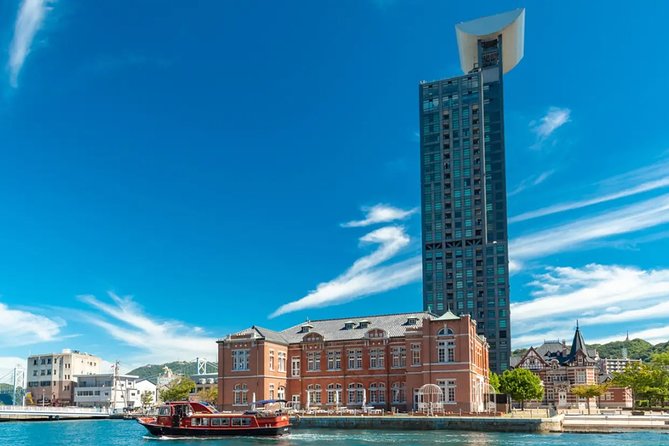
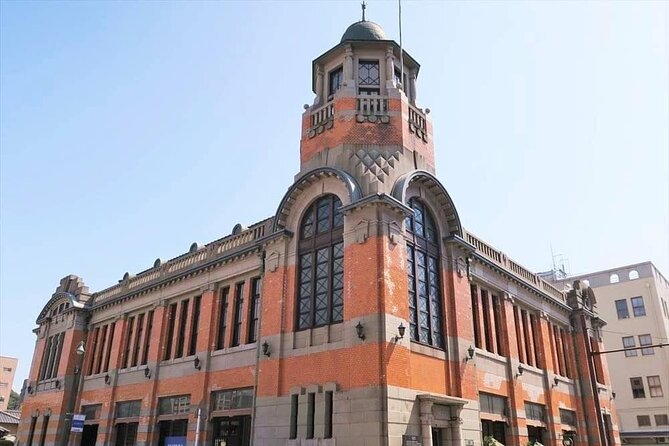
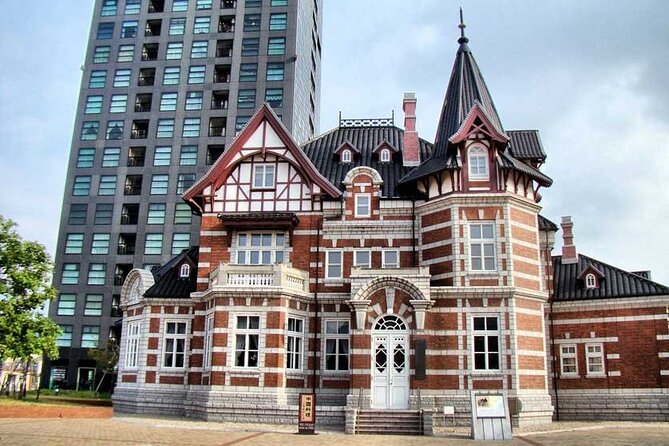
Mojiko Retro takes you across the strait to a port district shaped by international trade. Its historic buildings have been preserved, and the architecture reflects the period when Japan was modernizing and port cities were opening more directly to the outside world.
This stop works well after Karato Market because the two places show different sides of port life. Karato is about the sea’s daily harvest. Mojiko is about shipping, commerce, and the built environment left behind by earlier prosperity.
You should allow about an hour. Admission fees are not included, and the crossing itself is not covered. The tour information does not promise a private vehicle, so your guide will help coordinate the route, but you should expect to pay transportation costs yourself.
The private format matters here. You can ask for more time with the architecture, move on sooner if the buildings are not your priority, or pair Mojiko with the Kanmon Tunnel for a day built around the strait itself.
The Kanmon Tunnel, a walk beneath the water
The Kanmon Tunnel for Humans is one of the tour’s most unusual choices. From the Shimonoseki side, you can walk through a passage beneath the Kanmon Strait, the water separating Yamaguchi Prefecture on Honshu from Fukuoka Prefecture on Kyushu.
The stop is scheduled for about an hour, though the actual walking portion is only one part of the visit. The value comes from the sense of crossing between two major Japanese islands without a bridge, ship, or train. Your guide can provide the geographic and historical context as you make the passage.
This is a practical choice for visitors who like doing something active rather than only looking at buildings. It also pairs nicely with Mojiko Retro, since the two stops let you experience both sides of the strait.
Do not assume the tunnel replaces transportation for the rest of the day. The tour excludes transportation fees, and this is still a walking tour with an on-foot meeting arrangement. Ask the guide how the tunnel fits into your selected route and what additional fares you should expect.
Kaikyo Yume Tower and Mount Hinoyama views
You have two strong options for seeing Shimonoseki from above: Kaikyo Yume Tower and Hinoyama Park.
Kaikyo Yume Tower was built in 1996 as a landmark of the Kanmon Strait. Its observation area offers a 360-degree view of Shimonoseki and the surrounding waterway. This is the simpler urban viewpoint, especially if you want a clear sense of how the port, strait, and city fit together.
Hinoyama Park sits on the summit of Mount Hinoyama, a 268-meter hill near the Kanmon Bridge. It also offers a 360-degree panorama. The appeal here is the hilltop setting and the chance to see the bridge and strait from a higher natural viewpoint.
You probably do not need both on a six-hour tour unless views are your main reason for booking. I would choose Kaikyo Yume Tower for a city landmark and Hinoyama Park for a hilltop outlook. Entrance costs are not included, so selecting one viewpoint can also help control extra spending.
Weather matters. On a clear day, either viewpoint can give the tour a strong finish. In poor weather, the private guide can adjust the plan. The rainy outing with Rei shows the benefit of having someone who can replace or rearrange stops rather than forcing a fixed route.
Ganryujima Island and the Musashi-Kojiro duel
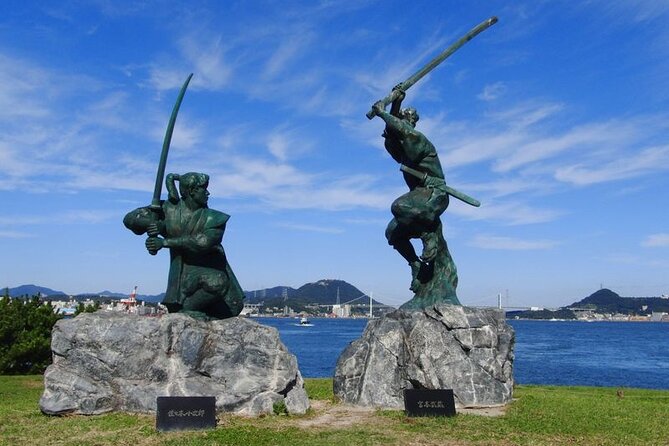
Ganryujima Island is linked to the famous 1612 duel between the swordsmen Miyamoto Musashi and Sasaki Kojiro. The battle is known as the Battle of Ganryujima, giving the island a clear connection to Japanese sword lore.
This stop suits visitors who enjoy legends and military history more than conventional sightseeing. It is also the option most likely to need careful timing, since an island visit involves transport planning and the tour price does not include transportation.
The supplied experience of a rainy day with Rei included a ferry and cabs after the itinerary was amended. That is a useful practical clue, not a promise that every tour includes the same route. If Ganryujima interests you, confirm the ferry plan, fares, and time required before settling on your final three or four stops.
Jokamachi Chofu, old streets away from the port
Jokamachi Chofu offers a change of pace from the waterfront. The Chofu area is about 20 minutes from Shimonoseki Station by bus and is known for old Japanese-style streets and a river running through the district. You can walk along the river and visit the area’s traditional sights.
This is a good pick if you want a calmer, more local-feeling walk. It has less of the port drama found at Karato Market or Mojiko, but that is exactly why it can balance a busy day.
Because the tour is only six hours and transportation is not included, adding Chofu to a route that already crosses the strait may leave less time at the other stops. I would choose it when old streets and river scenery matter more to you than the Kanmon Tunnel or Moji architecture.
Akama Shrine and the story of Emperor Antoku
Akama Shrine carries one of Shimonoseki’s strongest historical and legendary associations. It is tied to the 1185 Battle of Dan-no-Ura, when Emperor Antoku, only seven years old, was drowned in the Kanmon Strait by his grandmother to prevent his capture.
The shrine gives you a place to connect the waterway with the political struggles of medieval Japan. It is not just another religious site on a sightseeing list. Its importance comes from the story attached to the strait itself.
Choose Akama Shrine if you want a guide to explain the historical setting and legends. Pairing it with Karato Market makes sense because both are in Shimonoseki and present different sides of the city. If you also want Moji, a tower, and the tunnel, the day will become tight.
The Former British Consulate and Shimonoseki’s international role
The Shimonoseki Former British Consulate reflects the city’s long role as a gateway between Honshu and the rest of Asia. The consulate was built in 1906, when foreign trade and port connections were helping reshape Japan.
This stop is best for visitors interested in modern Japanese history, diplomacy, and architecture. It also helps explain why Western-influenced buildings appear in port districts such as Mojiko Retro.
Like several other stops, it is scheduled for about an hour, with entrance fees separate. Since you can choose only three or four sites, I would not add both this consulate and Mojiko unless architectural history is your main interest. Mojiko gives you a wider port district, while the consulate offers a more focused look at Shimonoseki’s international past.
What the $172.33 price really covers
At $172.33 per person, this is not the cheapest way to move around Shimonoseki and Moji. The price becomes easier to justify if you value a private English-speaking guide, route planning, interpretation, and the ability to adjust the day for weather and interests.
The guide is government-licensed and local, and only your group participates. That means you can ask questions freely and avoid being tied to another group’s pace. For a couple or small group, that personal attention may be more useful than a lower-priced shared tour.
The price does not include:
- Transportation fees
- Entrance fees
- Lunch
- Personal expenses
- Private transportation
You also cannot combine multiple tour groups. Group discounts are offered, but each booking remains its own private group.
This is why I would calculate the total before booking. Add likely rail, bus, ferry, taxi, admission, and meal costs. If you already have several people sharing the guide cost, the value improves. If you want a vehicle and an all-inclusive day, this is not the right product.
How to shape your six-hour route
You should choose your priorities before meeting the guide. The tour allows three or four sites from the nine listed options, not all nine in one day.
Here are sensible combinations:
- Food and port history: Karato Market, Mojiko Retro, Former British Consulate, Akama Shrine
- The strait itself: Karato Market, Kanmon Tunnel, Mojiko Retro, Kaikyo Yume Tower
- Views and legends: Hinoyama Park, Akama Shrine, Ganryujima Island, Karato Market
- Traditional streets and culture: Jokamachi Chofu, Akama Shrine, Karato Market, one viewpoint
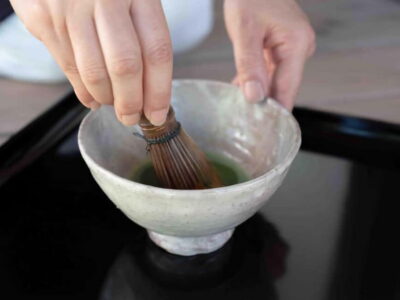
I would leave room for the guide to adjust the order. Rain changed Rei’s route, with a ferry, cabs, shrines, and private tea overlooking a garden becoming part of the day. That kind of flexibility is one of the strongest reasons to choose a private tour.
Still, flexibility does not mean unlimited time. Nine one-hour stops would require far more than six hours, especially with crossings and local transport. Pick a theme, then let the guide refine it.
Who should book this private Shimonoseki tour?
I would recommend it to first-time visitors who want context without spending days learning the area’s complicated geography. It also suits cruise passengers or short-stay visitors who need a practical plan around the Kanmon Strait.
History fans have plenty to work with: the Battle of Dan-no-Ura, Emperor Antoku, the Musashi and Kojiro duel, the British Consulate, and port modernization. Food-focused visitors can make Karato Market the centerpiece. Architecture fans should prioritize Mojiko Retro and the Former British Consulate.
You should think twice if you dislike walking, want every cost bundled into one payment, or prefer a vehicle waiting at every stop. Most people can participate, service animals are allowed, and the tour is near public transportation, but the experience is specifically described as a walking tour with an on-foot meeting.
Free cancellation is available until 24 hours before the start time. Changes or cancellations made inside that window are not accepted for a refund.
Should you book it?
Book this tour if you want a flexible, private introduction to two port cities and are willing to handle transportation and admission costs separately. Its strongest features are the licensed guide, the choice of three or four sights, and the ability to change plans when rain or personal interests get in the way.
I would book early if your schedule is fixed, since it is commonly reserved well ahead of time. Before paying, decide whether Karato Market, Mojiko Retro, the Kanmon Tunnel, or the history sites matter most to you, then ask the guide to build the route around those priorities.
If your ideal day is a fixed sightseeing circuit with private transportation and no extra fares, choose another format. If you want a human guide who can connect seafood, port architecture, legends, and the strait itself, this is a useful way to see Shimonoseki and Moji in one compact day.
FAQ
How long does the tour last?
The tour lasts approximately six hours.
How many sites can I visit?
The tour includes a customizable itinerary of three or four sites from the listed attractions.
Is transportation included?
No. Transportation fees and private transportation are not included. The tour is described as a walking tour, with an on-foot meeting within a designated area of Shimonoseki.
Is hotel pickup included?
Pickup is offered, but the included details specify that you meet the guide on foot within the designated Shimonoseki area.
Is the tour private?
Yes. Only your group participates, and multiple tour groups cannot be combined.
Is lunch included?
No. Lunch and other personal expenses are separate.
Is an English-speaking guide provided?
Yes. The tour includes a licensed local English-speaking guide.
Can I cancel for a full refund?
Yes, if you cancel at least 24 hours before the experience start time. Cancellations or changes made less than 24 hours before the start time are not refunded or accepted.