
Reviewed · KURASHIKI
Special Ikebana Experience Guided by an Ikebana Master, Mrs. Inao
Ikebana is not simply putting flowers in a vase. It is the Japanese art of giving a second life to cut branches and blossoms through restraint, balance, and careful space. This two-hour experience begins at Sumire Florist, a local shop loved for 70 years, then leads you through Kurashiki’s Bikan Historical Quarter to a private lesson with Mrs. Inao, an Ikenobo teacher with 65 years of practice.
I like two things right away: you choose your own flower instead of receiving a ready-made kit, and the walk from the shop to the classroom connects the lesson with ordinary Kurashiki life. Interpreter Misa has also been praised for making the teacher’s explanations easy to follow. The main drawback is value. At $82.42 per person, this costs more than a casual craft class, and one participant felt the cultural explanation did not go far enough.
In This Review
- Key points
- Starting at Sumire Florist in Achi
- The Walk Through Kurashiki’s Historic Quarter
- Meeting Mrs. Inao, an Ikenobo Teacher
- What You Actually Do During the Arrangement
- Tea, Sweets, and a Glimpse Beyond the Flowers
- How the $82.42 Price Measures Up
- Who Will Get the Most From This Experience
- Timing, Meeting Point, and Group Details
- What the Mixed Feedback Tells You
- Should You Book the Ikebana Lesson?
- FAQ
- Where does the ikebana experience begin?
- Where does the experience end?
- How long does the experience last?
- How much does the experience cost?
- Is this a private activity?
- Who teaches the ikebana lesson?
- Do I choose the flowers myself?
- Do I need to remove my shoes?
- Can I cancel for a full refund?
Key points
- Choose your own flower at Sumire Florist, a Kurashiki shop serving local customers for about 70 years.
- Walk through the Bikan Historical Quarter between the flower shop and classroom with an interpreter.
- Learn from Mrs. Inao, an Ikenobo teacher who has arranged flowers for 65 years.
- Study more than technique, including ikebana spirit, manners, and proper etiquette.
- Enjoy a private activity, with only your own group taking part.
- Plan for bare feet, since shoes must be removed. Wear socks or bring a pair.
Starting at Sumire Florist in Achi
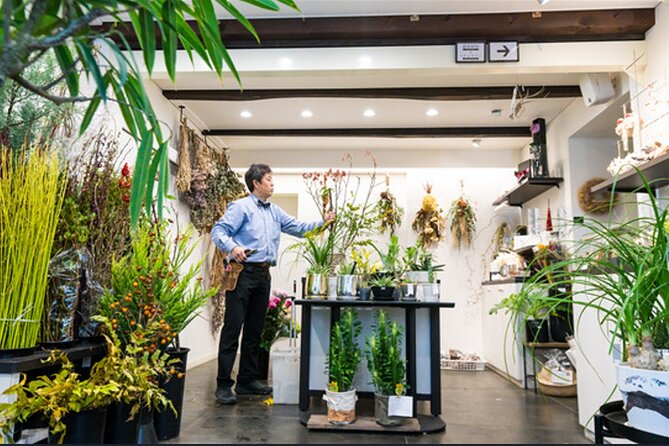
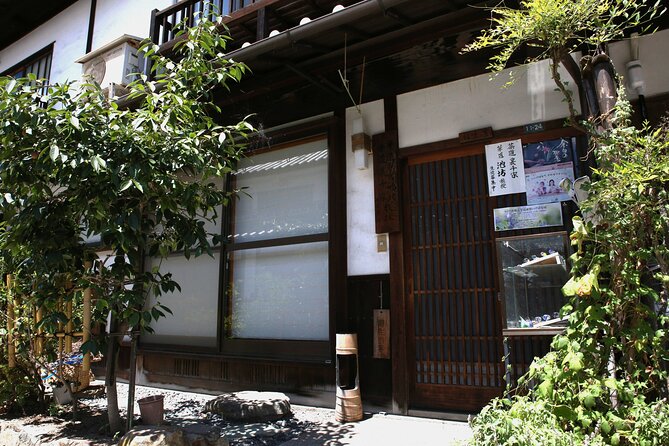
Your meeting point is Sumire Florist at 3-chōme-8-8 Achi, Kurashiki. This is not an anonymous meeting spot beside a station or a large hotel. You begin inside a flower shop with a long local connection, which gives the first part of the experience a useful sense of place.
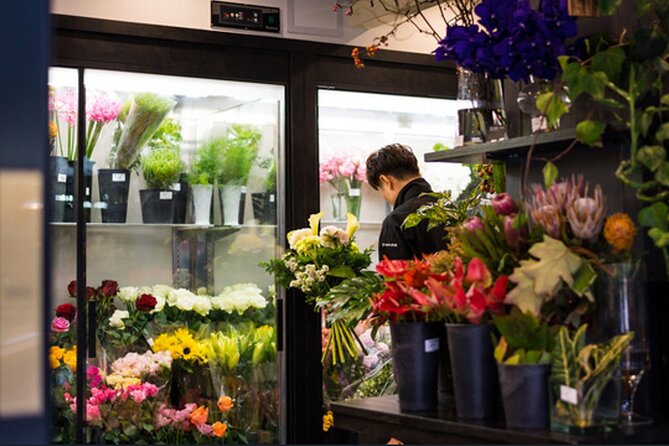
An interpreter introduces the basic story of ikebana and explains its spirit before you choose a flower. That order matters. You are not just selecting something because it has a pretty color. You first hear why flowers, branches, line, and empty space matter in the art, then make a choice that becomes part of your arrangement.
The shop itself is one of the pleasant details. It has served local people for about 70 years and specializes in flowers used for ikebana. You can expect a more traditional setting than a standard tourist craft workshop, though the available flower selection will naturally depend on the season and the shop’s stock.
The choice of one type of flower also keeps the exercise focused. You are not handed a large collection of stems and asked to copy a finished design. Instead, you work with a limited material and learn how arrangement can come from placement, angle, trimming, and empty space.
Other guided tours in Kurashiki

The Walk Through Kurashiki’s Historic Quarter
After selecting your flower, you travel from the shop to the classroom through the Kurashiki Bikan Historical Quarter. The route is part of the experience, not just a transfer between two addresses.
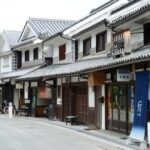
Kurashiki is known for its preserved townscape and quieter mood. The walk lets you see the old quarter at street level while your interpreter explains the next stage of the activity. This makes a good change from a packed sightseeing schedule. You have time to slow down, notice the buildings, and shift your attention from shopping and photographs to a more thoughtful Japanese art.
The walk is also practical. If you arrive in Kurashiki planning only to visit the main sights, the route gives you a reason to move through the district at a calmer pace. You will not spend the full two hours sitting in one room, and the old quarter helps connect the activity to the town around it.
Still, you should not book this expecting a full walking tour of Kurashiki. The route exists to link the flower shop and classroom. The supplied details do not promise a long guided history tour, a series of major sights, or extensive sightseeing commentary. If you want a detailed introduction to every lane and building in the Bikan district, arrange that separately.
Meeting Mrs. Inao, an Ikenobo Teacher
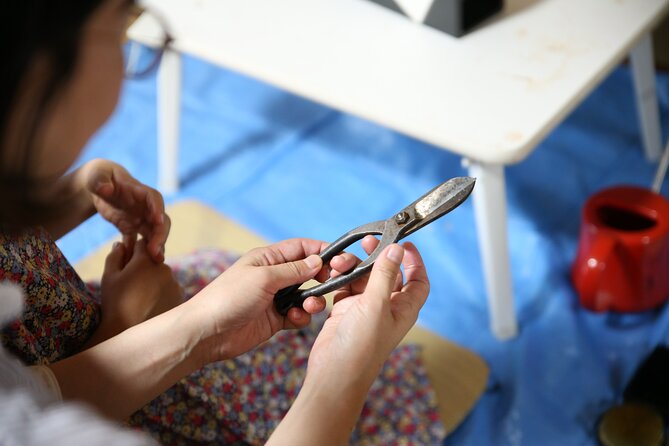
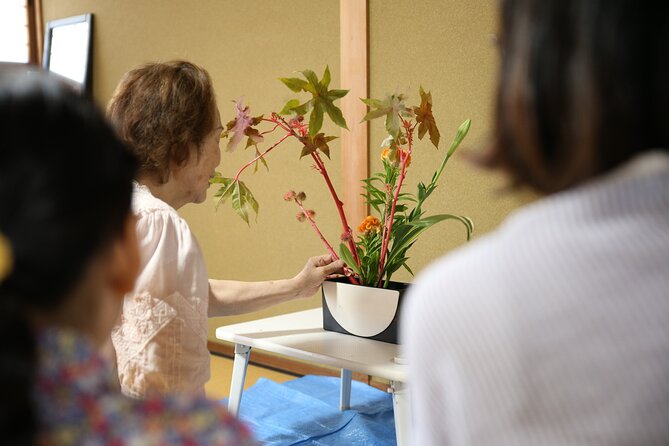
The central lesson is taught by Mrs. Inao, a teacher from Ikenobo, Japan’s oldest school of ikebana. She has been arranging flowers for 65 years, so the value here comes from direct instruction by an experienced practitioner rather than a guide who has learned a short demonstration for visitors.
Ikenobo is especially important for anyone who wants context. Ikebana has several schools and approaches, and this activity introduces you to the Ikenobo tradition. You learn how the school approaches arranging flowers, along with the practical manners used during the lesson.
The experience is intended to cover both technique and etiquette. That can include how to handle the materials, how to approach the arrangement, and how to behave in a traditional setting. The aim is not simply to produce something attractive in a vase. You are given a glimpse of the discipline behind the finished form.
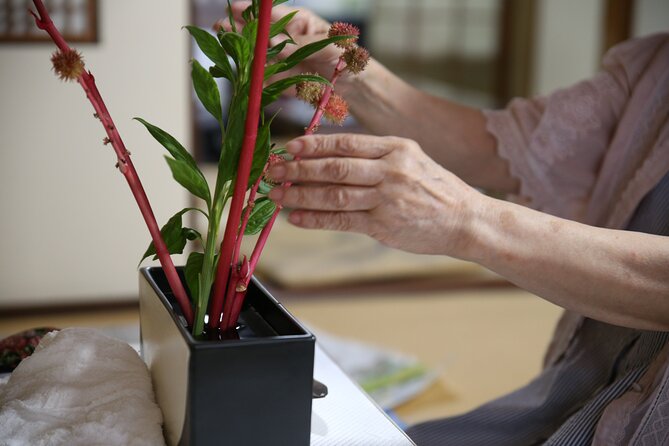
The central idea is especially memorable: ikebana gives life back to flowers that have been cut. A normal floral display can be an art of adding more color, more stems, and more decoration. Ikebana often works in the opposite direction. You remove what is unnecessary and let a few lines or blossoms carry the design.
That idea explains why the finished arrangement may look spare compared with a Western bouquet. The empty spaces are deliberate. The angle of a branch may matter as much as the bloom itself. You are learning to see shape, direction, proportion, and pause.
What You Actually Do During the Arrangement
You select one type of flower at the shop, then bring that choice to the classroom. Mrs. Inao teaches you how to arrange it, with the interpreter helping you follow the explanation.
Because this is a hands-on lesson, you should expect to work rather than sit back and watch a performance. The instructor’s role is to show you how the arrangement takes shape and guide you through the process. The interpreter helps translate both the practical instructions and the ideas behind them.
Interpreter Misa has been singled out for being kind, attentive, and careful about making sure participants understood Mrs. Inao. That kind of support matters here. Ikebana instruction can be difficult to follow if you only receive a literal translation of technical terms. The best part of the interpreter’s job is helping you understand why you are placing a stem in a certain direction, not just telling you where to put it.
The lesson also gives you a chance to ask questions within a small setting. Since this is a private activity, only your group participates. That makes it a better fit for families, couples, and friends who prefer a personal pace over a class filled with strangers.
The private format does not mean the teacher will build the entire lesson around your individual background or artistic level. The information provided does not promise a long private consultation or an advanced course. Think of it as an introductory cultural lesson with real instruction, not a professional certification class.
Tea, Sweets, and a Glimpse Beyond the Flowers
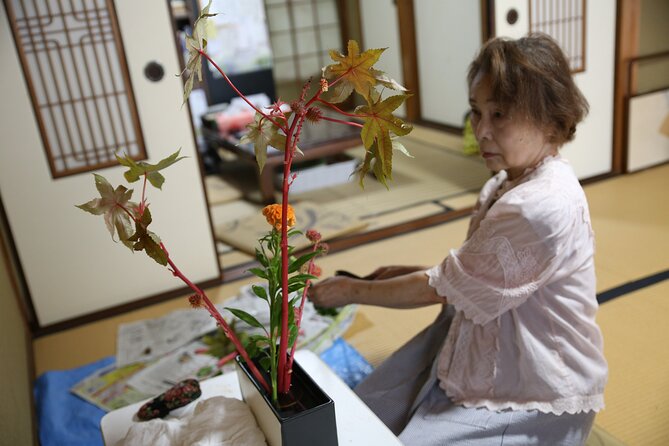
One participant described an afternoon that included green tea and sweets, along with a chance to see artwork made by Mrs. Inao’s husband. These additions make the visit feel more like an introduction to a household and its creative life than a quick commercial workshop.
Because these details are not listed as formal features, I would treat them as possible parts of the welcome rather than guaranteed inclusions. The core activity is the flower selection, walk, and ikebana lesson. If tea, sweets, or artwork are important to your decision, confirm them when booking.
Even when they are included, they are not the main reason to pay for this experience. Their value is in the pause they create after the arrangement. Green tea and a small sweet give you time to look at what you made and consider the calm pace of the lesson.
This slower rhythm is one of the strongest reasons to schedule the activity. Japan can be tiring when every hour is filled with temples, trains, department stores, and crowded viewpoints. Ikebana asks you to stop fussing with your itinerary for a while and pay attention to one flower.

How the $82.42 Price Measures Up
At $82.42 per person, this is not a bargain-priced craft activity. You are paying for a private two-hour experience, an interpreter, materials, a walk through the historic quarter, and access to a teacher with decades of practice.
The price makes more sense if you value personal instruction and cultural context. A basic flower-arranging class might cost less, but it may not include an Ikenobo teacher, translation, a local flower shop, or a private group format. You are also paying for the setting and for a lesson connected to Kurashiki rather than a generic activity that could happen anywhere.
The price makes less sense if you mainly want a souvenir arrangement or a short demonstration. One participant felt the experience was expensive for what was received and did not provide enough background on ikebana culture or the history of the style. That is a fair warning. The depth you receive may depend on how much explanation is provided during your particular session and how actively you ask questions.
I would book it for someone who wants to understand why ikebana looks the way it does. I would hesitate for someone who only wants to make a colorful bouquet quickly. The art’s appeal is subtle, and the value rises when you are interested in its ideas as well as its finished product.
Who Will Get the Most From This Experience
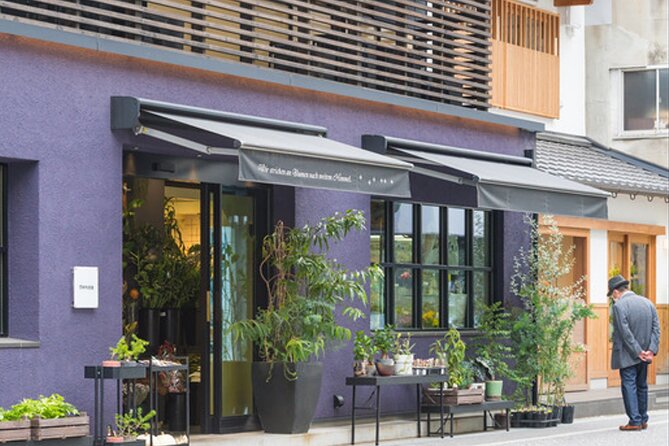
This activity suits you if you enjoy quiet, hands-on experiences with a strong local connection. It works particularly well for people who have already seen major Japanese sights and want an afternoon with a slower pace.
It is also a good choice for parents and adult children. One mother and daughter had a positive time with the help of interpreter Misa, and the private setting allows your group to share the lesson without competing with a large class.
You do not need to be an artist. The activity is designed for people who want an introduction to ikebana, and most participants can take part. You do need enough comfort with listening, following instructions, and working carefully with flowers.
I would not make this your first choice if you want a high-energy activity, a long sightseeing walk, or a detailed lecture on Japanese cultural history. The lesson is quiet and focused. Its rewards come from concentration, not spectacle.
You also need to be comfortable removing your shoes. The activity requires bare feet or socks, so wear clean socks or bring a pair in your day bag. This is an easy detail to overlook, especially if you have been sightseeing in sandals.
Timing, Meeting Point, and Group Details
The activity lasts about two hours and begins at Sumire Florist in Kurashiki. It ends back at the meeting point, so you do not need to arrange a separate ride from the classroom afterward.
The meeting point is near public transportation, which helps if you are fitting the activity into a day in Kurashiki. The experience is booked, on average, 42 days ahead, so it is sensible to reserve early if your schedule is fixed. Confirmation is sent within 48 hours of booking, subject to availability.
Only your group takes part. The private format is useful if someone in your party needs a little extra help with translation or wants to ask questions without holding up a larger class.
The activity can be canceled for a full refund up to 24 hours before the local start time. Changes or cancellations made inside that window are not accepted for a refund. A minimum number of participants is required, and if the operator cancels because that minimum is not reached, you are offered another date or experience, or a full refund.
What the Mixed Feedback Tells You
The strongest praise centers on the complete afternoon rather than on one isolated step. The local flower shop, friendly interpreter, teacher, arranging lesson, tea, sweets, and artwork can combine into a gentle introduction to Japanese culture.
That combination is important. If all you wanted was flower arranging, you could probably find a simpler class. Here, the best experience comes from the sequence: choose a flower, walk through Kurashiki, enter a traditional learning setting, then make something under the direction of a long-practiced teacher.
The main caution is the level of cultural explanation. The activity promises history and the spirit of ikebana, but one participant found the explanation too limited. To get more from the session, ask direct questions about Ikenobo, the meaning of the arrangement, and why certain stems or spaces are used.
Do not assume the lesson will feel like an academic seminar. It is a practical introduction. You will learn through the flower in front of you, through the teacher’s corrections, and through the manners of the setting.
The 4.7 rating from six ratings suggests a strong overall response, but the small number of ratings means you should read the experience for what it is: a focused cultural activity with a few variable details, not a guaranteed masterclass in every aspect of Japanese floral tradition.
Should You Book the Ikebana Lesson?
Book this experience if you want a private, unhurried activity that connects a local flower shop, Kurashiki’s old quarter, and the Ikenobo school of ikebana. The chance to learn from Mrs. Inao, who has 65 years of practice, is the key reason to choose it.
I would also book it if you enjoy thoughtful souvenirs. Your arrangement gives the lesson a physical result, but the more lasting souvenir may be a new way of looking at a single branch or blossom.
Think twice if $82.42 feels high for a two-hour activity or if you expect a detailed lecture on Japanese art history. Ask questions during the lesson, wear socks, and allow yourself to enjoy the quiet pace. For the right person, this is a small but meaningful window into Japanese culture, not just a flower craft.
FAQ
Where does the ikebana experience begin?
It begins at Sumire Florist, located at 3-chōme-8-8 Achi, Kurashiki, Okayama 710-0055, Japan.
Where does the experience end?
The activity ends back at the meeting point.
How long does the experience last?
The experience lasts approximately two hours.
How much does the experience cost?
The listed price is $82.42 per person.
Is this a private activity?
Yes. Only your group participates in the activity.
Who teaches the ikebana lesson?
Mrs. Inao teaches the lesson. She is an Ikenobo teacher and has been arranging flowers for 65 years.
Do I choose the flowers myself?
Yes. You select one type of flower at the ikebana flower shop before walking to the classroom.
Do I need to remove my shoes?
Yes. Shoes must be removed during the activity. You should wear socks or bring a pair with you.
Can I cancel for a full refund?
Yes. You can cancel at least 24 hours before the local start time for a full refund. Cancellations or changes made less than 24 hours before the start time are not accepted for a refund.
More Guided Tours in Kurashiki
More tours in Kurashiki we've reviewed

Kurashiki, compared.
 ★ 4.5Kurashiki Private Romantic Night in the Observatory ReclinersFrom $29
 ★ 5.0Kurashiki Half-Day Private Tour with Government-Licensed GuideFrom $107
 ★ 5.0Half-Day Shared Tour at Kurashiki with Local GuideFrom $86
 ★ 5.0Kurashiki History and Culture Guided Cycling TourFrom $53
 ★ 5.0Japanese Tea Ceremony Private ExperienceFrom $50
 ★ 5.03 Hours Temari Workshop in KurashikiFrom $85
