
Reviewed · MIYAJIMA TOURS
From Osaka: Hiroshima and Miyajima Day Trip by Bullet Train
Hiroshima and Miyajima make a powerful pair: one place asks you to remember the worst of war, while the other offers sea views, shrine architecture, deer, oysters, and maple-leaf sweets. This tour links both by Shinkansen and ferry, saving you the trouble of piecing together a complicated day on your own.
I like the efficient route, with Miyajima first and Hiroshima later, and I like having guides such as Angeles, Cesar, Caesar, and Alex explain the sites in Spanish or English. The main drawback is time. You can see both places in one day, but the Peace Memorial Museum and Miyajima each deserve longer than this schedule allows.
In This Review
- Key points to know before booking
- Why this Hiroshima day trip works
- The Shinkansen from Shin-Osaka to Hiroshima
- Crossing to Miyajima by ferry
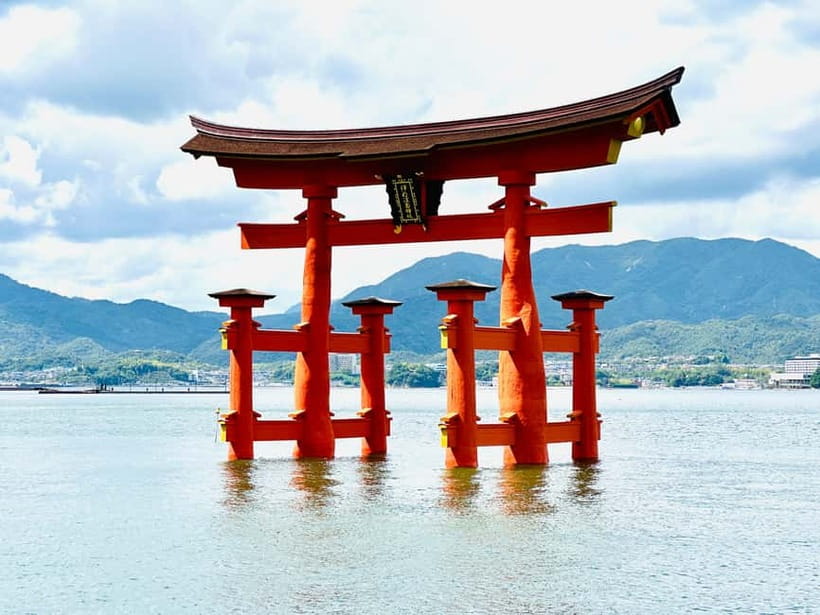
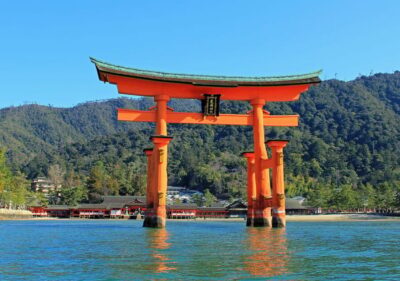
- Itsukushima Shrine and the floating torii gate
- One hundred minutes to eat and wander
- Hiroshima Peace Memorial Park after Miyajima
- Guides, language, and group experience
- Timing, walking, and the real pace of the day
- Who should book this experience
- Is the $104 price worth it?
- Should you book this Hiroshima and Miyajima tour?
- FAQ
- Does the tour include the Shinkansen from Osaka?
- What languages are available?
- Is lunch included?
- Is admission to Itsukushima Shrine included?
- How much free time do I get on Miyajima?
- How long is the visit to Hiroshima Peace Memorial Park?
- Is the tour suitable for wheelchair users?
Key points to know before booking
- Bullet train convenience: The Osaka option includes round-trip Shinkansen tickets between Shin-Osaka and Hiroshima, with each train journey taking about 105 minutes.
- Miyajima before Hiroshima: You visit Itsukushima Shrine, see the famous torii gate, and have about 100 minutes of free time before the more solemn part of the day.
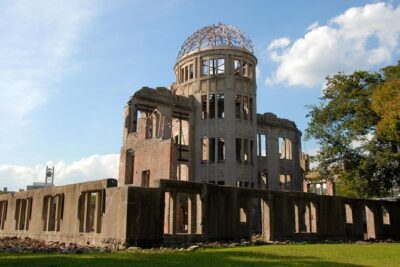
- A serious history lesson: Hiroshima Peace Memorial Park, the Atomic Bomb Dome, and the Peace Memorial Museum put the events of 1945 into human terms.
- Local food time: You can buy Miyajima oysters and momiji manju, a sweet maple-leaf-shaped cake, during your free time.
- English and Spanish guidance: Recent guides named Angeles, Cesar, Caesar, and Alex received especially strong praise for clear explanations and helpful support.
- Expect a long walking day: Comfortable shoes, water, sunscreen, and a hat are practical basics. This tour is not suitable for wheelchair users.
Why this Hiroshima day trip works
The great strength of this experience is its range. In one outing, you get a fast ride through western Japan, a ferry crossing, a major Shinto shrine, a small island with roaming deer, and one of the world’s most important memorial sites.
That variety keeps the day from feeling one-note. Miyajima gives you room to enjoy scenery and food. Hiroshima asks for quiet attention. The contrast is useful because you can appreciate the island’s beauty without treating the city’s past as just another sightseeing stop.
I also like the convenience. Hiroshima and Miyajima are easy to visit independently, but the connections take planning. The tour handles the long-distance train, local bus or coach transfers, ferry ride, and return to Osaka. That matters when you have only one free day and do not want to spend it studying departure boards.
The price is listed at $104 per person when the Osaka Shinkansen option is selected. That is a fair package price for round-trip bullet train travel, local transport, the ferry, a bilingual guide, and Itsukushima Shrine admission. Your value depends on whether you want freedom or simplicity. Independent visitors may prefer setting their own pace, while this tour makes more sense if you want the main transport links arranged for you.
A few more Osaka tours and experiences worth a look
The Shinkansen from Shin-Osaka to Hiroshima
If you choose the Osaka departure, the day begins at Shin-Osaka Station. The bullet train takes about 105 minutes each way, making Hiroshima practical as a day trip rather than an exhausting overnight detour.
The train is one of the pleasures of the outing. You move quickly from Osaka toward the Chugoku Region, and the ride gives you a comfortable break before the walking begins. Keep your personal items close, especially in busy stations and on crowded trains.
One practical point deserves attention: the booking voucher and the Shinkansen tickets may arrive separately in the app or by email. Check for the actual train ticket information before departure instead of assuming the first voucher contains everything.
You can also start at Hiroshima Station rather than Osaka, depending on the option you book. In that case, the long-distance train portion is not part of your experience, so check the starting point carefully before paying.
Crossing to Miyajima by ferry
After arriving in Hiroshima, the group takes a bus or coach for about 50 minutes, followed by a ferry ride to Miyajima. The ferry crossing lasts about 30 minutes in the schedule and gives you a welcome change from trains and roads.
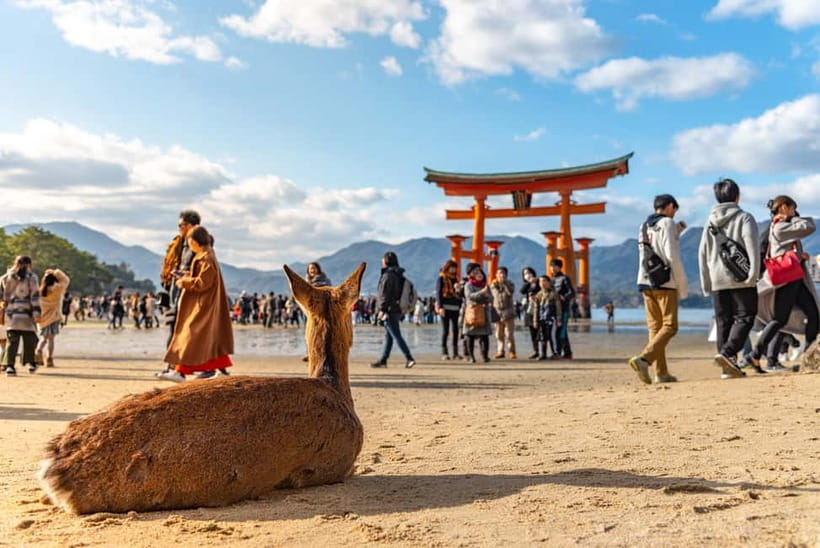
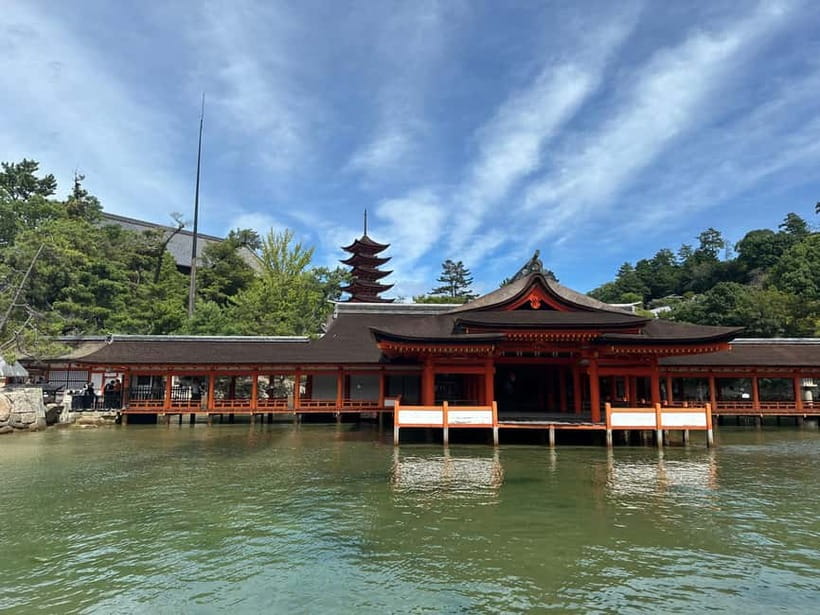
Miyajima is officially called Itsukushima, though Miyajima, meaning Shrine Island, is the name most people use. The island’s appeal comes from the meeting of sea, forested hills, old religious buildings, narrow lanes, and wildlife that wanders close to people.
You may see deer along the way. They are a charming part of the visit, but they are still animals, so keep food and personal belongings secure. The island can also become crowded, especially on public holidays. One New Year’s Day outing took place during a particularly busy period, a useful warning if you are visiting during a major Japanese holiday.
Itsukushima Shrine and the floating torii gate
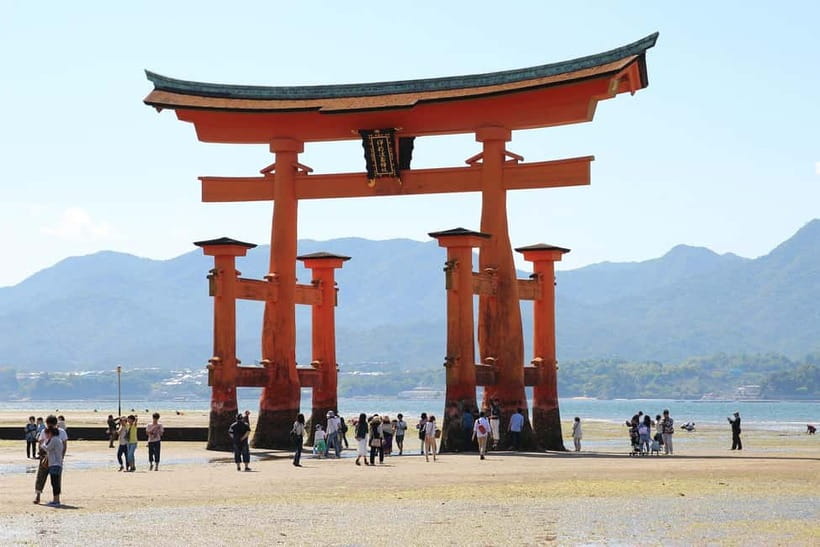
The guided visit to Itsukushima Shrine lasts about 30 minutes, with admission included. This is the visual centerpiece of Miyajima, especially when the large torii gate appears to float offshore at high tide.
The gate is one of Japan’s most recognizable sights, but the experience is more than a photo stop. The shrine’s position over the water gives it a calm, theatrical quality, and the changing tide can alter the view during the day. The exact appearance of the gate depends on conditions, so do not expect one fixed scene every time you look.
Your guide provides cultural context, which helps you notice why the shrine was built this way and how the water shapes the visit. The pace is brisk, though. Thirty minutes is enough for an introduction and photographs, but not for a slow study of every building.
One hundred minutes to eat and wander
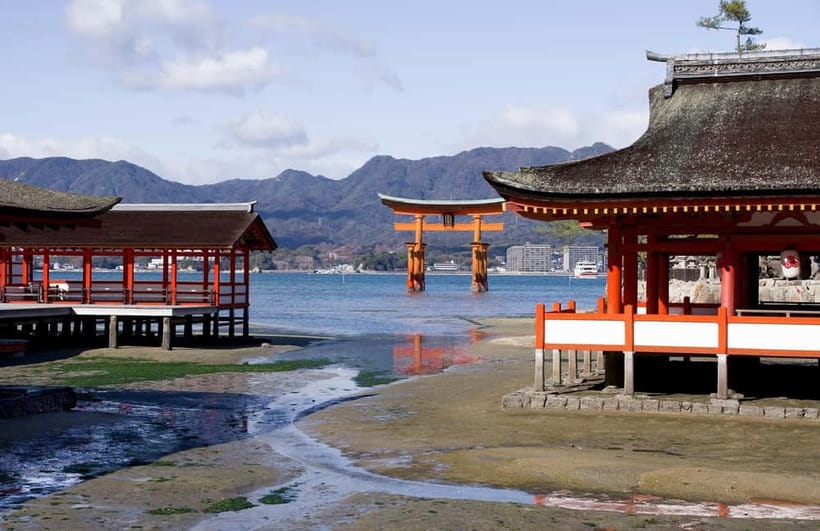
After the shrine, you have about 100 minutes of free time on Miyajima. This is where you can choose your own priorities.
You might walk the historic streets, browse for snacks, take more photographs of the torii gate, or stop for local food. Fresh oysters are one of the island’s best-known specialties. Momiji manju, a sweet pastry shaped like a maple leaf, makes an easy snack or souvenir.
This free period is useful, but it is not generous if you want a full meal, shopping, shrine photography, and a longer walk. I would decide in advance what matters most. If food is your priority, eat early rather than waiting until the final minutes. If photographs matter more, check the tide and head toward the waterfront before the shops.
You will return by ferry, with the scheduled ride taking about 10 minutes. From there, the group travels by bus or coach toward Hiroshima. The exact order is a smart choice: the lighter, scenic portion comes first, then the day turns toward the city’s memorial sites.
A few more Osaka tours and experiences worth a look

Hiroshima Peace Memorial Park after Miyajima
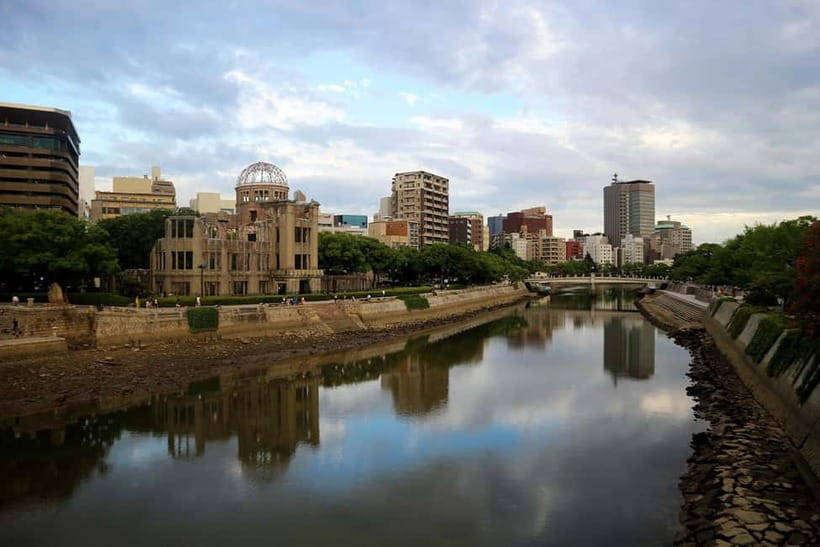
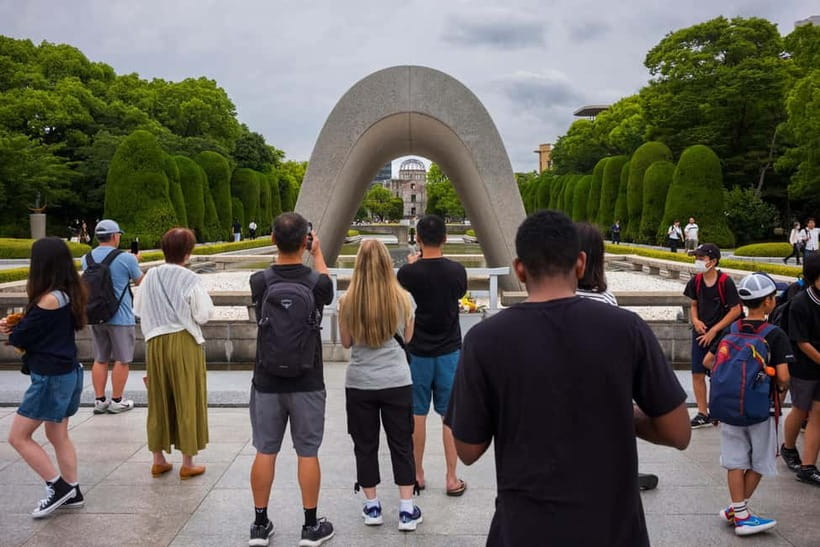
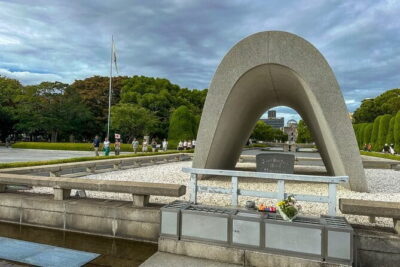
The Hiroshima portion is the emotional center of the tour. You spend about two hours at Hiroshima Peace Memorial Park, combining guided explanation with free time.
The park is not simply a collection of monuments. It is a place where the scale of the 1945 atomic bombing becomes easier to grasp through individual names, memorials, buildings, and personal stories. Your guide can help connect the sites, which is particularly valuable if you have not studied Hiroshima’s history before.
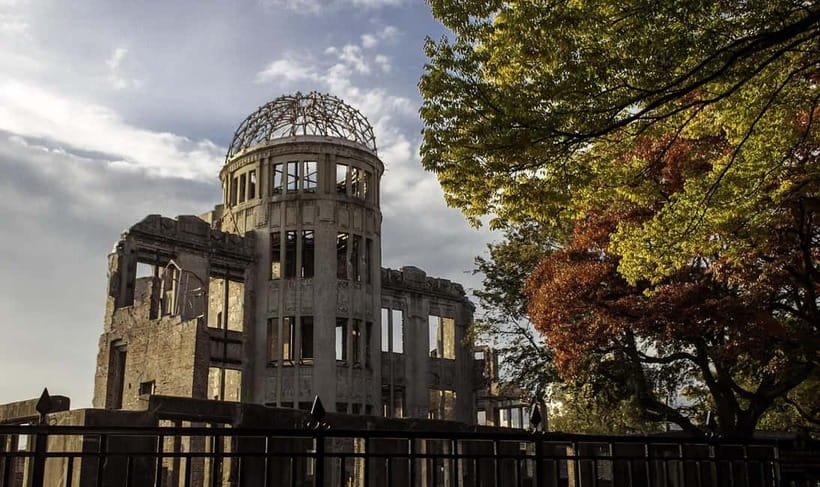
The Atomic Bomb Dome is the most recognizable structure in the park. Its damaged frame has been preserved as a reminder of the blast and its aftermath. Seeing it in person is different from seeing a photograph because it sits within the modern city, surrounded by ordinary life.
The Peace Memorial Museum adds more detail and human weight. The schedule allows time for a guided introduction and personal exploration, but the available time may feel short. One useful criticism of the itinerary is that some people would prefer less time on Miyajima and more time inside the museum.
That is a fair concern. The museum can be difficult to absorb quickly, and many visitors will want time to read displays carefully. If you already know the basic story and mainly want a first visit, two hours may work. If the museum is your main reason for coming to Hiroshima, an overnight stay or separate museum visit would give you more control.
Please treat this section of the day with respect. Keep your voice low, listen closely, and avoid treating the memorials as ordinary photo backdrops. The tour specifically asks you to recognize the solemn nature of the sites, and that is good advice.
Guides, language, and group experience
The tour offers live guidance in English and Spanish. Recent guide names connected with the experience include Angeles, Cesar, Caesar, and Alex. Angeles received repeated praise for thoughtful explanations and practical help, while Cesar and Caesar were noted for friendly, clear guidance. Alex was appreciated for connecting Miyajima’s beauty with Hiroshima’s painful modern history.
A good guide matters here because the two destinations need different kinds of explanation. On Miyajima, you want cultural background without losing the pleasure of wandering. In Hiroshima, you need facts presented with care and enough context to understand why the memorials matter.
The group format also keeps the day moving. Transport is organized, and the schedule has been described as smooth and well timed. The tradeoff is that you follow the group’s departures. If you linger over one exhibit or want to stop for a second plate of oysters, you cannot simply change the return train.
The transport received a very high score, with 96 percent of ratings giving it a perfect mark. That matches what this kind of day trip needs most: reliable movement between distant stops.
Timing, walking, and the real pace of the day
The experience is advertised as eight hours, but the detailed schedule also lists 690 minutes, which is 11.5 hours. That is a significant difference. Check the exact start and finish times for your date, and plan for a full day rather than a short outing.
The timetable includes:
- About 105 minutes by train from Shin-Osaka to Hiroshima
- About 50 minutes by bus or coach
- About 30 minutes by ferry to Miyajima
- About 30 minutes at Itsukushima Shrine
- About 100 minutes of free time on Miyajima
- About 10 minutes by ferry back
- About one hour by bus or coach
- About two hours at Peace Memorial Park
- About 40 minutes by bus or coach
- About 105 minutes by train back to Osaka
That adds up to a demanding day. You will walk on station platforms, ferry piers, shrine grounds, streets, and the memorial park. Wear shoes that can handle several hours on your feet, and carry water. A hat and sunscreen help in warm weather, while a jacket is sensible in cooler conditions.
Lunch is not included. The simplest plan is to use your Miyajima free time for lunch, since the island is specifically known for oysters and momiji manju. You can also bring a small snack for the train, but do not count on having a long, relaxed restaurant meal.
Who should book this experience
I would choose this tour if you are staying in Osaka and want to see both Hiroshima and Miyajima without arranging several separate tickets. It suits first-time visitors who value a guide, fixed transport, and a clear route.
It is also a strong choice for anyone who wants historical explanation in Spanish or English. The guide can help you understand the memorial sites without forcing you to manage every transfer yourself.
You should think twice if you prefer slow travel. Miyajima offers only a limited free period, and Hiroshima’s museum may leave you wanting more time. The tour is also not suitable for wheelchair users, and moderate walking is required.
Families with older children, couples, solo visitors, and active adults can all fit the pace, provided everyone is ready for a long day. People with limited stamina may prefer staying overnight in Hiroshima or choosing one destination instead of both.
Is the $104 price worth it?
For the Osaka option, I think the price is reasonable. The Shinkansen alone makes the trip much easier than combining ordinary trains and local connections, and the tour also covers the ferry, local transport, guide, and Itsukushima Shrine admission.
The value is strongest when you care about convenience. You are paying to remove uncertainty from a complicated day and to gain historical interpretation at Hiroshima’s memorial sites.
The value is weaker if you already understand the transport system, want a long museum visit, or plan to spend hours hiking or exploring Miyajima independently. In that case, an overnight visit may give you more for your money, even if the total cost is higher.
Cancellation is flexible up to 24 hours before the activity for a full refund, and a reserve-now, pay-later option is available. Those terms help if your Japan schedule is still shifting, but always check the exact conditions shown for your selected departure.
Should you book this Hiroshima and Miyajima tour?
Book it if you have one open day from Osaka and want the major sights handled in a single, well-organized outing. The bullet train, ferry, guide support, floating torii gate, and Peace Memorial Park make a strong combination.
Do not book it expecting a slow, detailed study of Hiroshima or a leisurely island visit. You will cover a lot of ground, and the schedule asks you to keep moving.
My practical choice would be the tour for a first visit, especially with a guide such as Angeles, Cesar, Caesar, or Alex leading the day. If Hiroshima’s museum is your central purpose, stay overnight instead. If your goal is to see the two headline destinations efficiently, this is a sensible and moving day out.
FAQ
Does the tour include the Shinkansen from Osaka?
The Osaka option includes round-trip Shinkansen tickets from Shin-Osaka to Hiroshima. Each train journey is listed at about 105 minutes. Another option starts and ends at Hiroshima Station, so check the selected option carefully.
What languages are available?
The live guide service is available in English and Spanish.
Is lunch included?
No. Lunch is not included. You have free time on Miyajima, where you can buy local specialties such as oysters and momiji manju.
Is admission to Itsukushima Shrine included?
Yes. Admission to Itsukushima Shrine is included.
How much free time do I get on Miyajima?
The schedule provides about 100 minutes of free time on Miyajima after the guided visit to Itsukushima Shrine.
How long is the visit to Hiroshima Peace Memorial Park?
The schedule allows about two hours at Hiroshima Peace Memorial Park, including guided time and free time. This area includes the Atomic Bomb Dome and the Peace Memorial Museum.
Is the tour suitable for wheelchair users?
No. The experience is listed as unsuitable for wheelchair users. Moderate walking is expected, so comfortable shoes are recommended.
More Day Trips from Osaka & Kyoto in Osaka
More Hiroshima City Tours in Osaka
More Miyajima Tours in Osaka
More tours in Osaka we've reviewed
Miyajima Tours, compared.
 ★ 5.0Peaceful Hiroshima & Miyajima UNESCO 1 Day Bus TourFrom $129
 ★ 4.9Hiroshima: Hiroshima and Miyajima UNESCO Sites 1-Day TourFrom $1228 hours
 ★ 5.0Hiroshima / Miyajima Full-day Private Tour with Government Licensed GuideFrom $202
 ★ 4.7Osaka/Kyoto: Hiroshima Miyajima Bus Tour & Shinkansen TicketFrom $27712 hours
 ★ 4.7From Hiroshima: Hiroshima & Miyajima 1 Day Tour with LunchFrom $1168 hours
 ★ 5.0Hiroshima and Miyajima Day Trip with Itsukushima Shrine & FerryFrom $45
