
Reviewed · MIYAJIMA TOURS
Hiroshima and Miyajima Private Tour with English Speaking Driver
Hiroshima’s Atomic Bomb Dome and the red torii of Miyajima give this private day trip two very different faces of Japan: solemn remembrance in the morning, then island scenery, shrine architecture, and deer by the sea. It is an ambitious outing from Osaka, but a useful one if you want both places without changing trains or managing the day yourself.
I like the door-to-door transport and the chance to set your own pace with only your group in the vehicle. I also like the contrast between Peace Memorial Park and Miyajima, which gives the day real variety. The drawback is the long road journey, plus uneven driver experiences and extra costs for the ferry, meals, entrance fees, and a professional guide.
In This Review
- Key points to know before booking
- A very full day from Osaka
- The early drive and the importance of communication
- Meeting the Atomic Bomb Dome
- Walking through Peace Memorial Park
- Crossing to Miyajima Island
- Itsukushima Shrine and the famous torii
- What you can realistically see in three hours
- The private format: where it helps most
- Price, extra costs, and overall value
- Who should book this Hiroshima day trip
- Final decision: book it for convenience, not guaranteed guiding
- FAQ
- Where does this Hiroshima and Miyajima tour start?
- How long does the experience last?
- How many people can join the private tour?
- Is transportation included?
- Are ferry tickets included?
- Is a professional tour guide included?
- Can I cancel for a full refund?
Key points to know before booking
- Two major sights in one day: Pair Hiroshima’s Peace Memorial Park with Miyajima’s Itsukushima Shrine.
- Private vehicle for up to five: A car or minivan makes the long trip easier than handling several train and ferry connections.
- The 6:00 am start matters: You need an early departure to fit Hiroshima and Miyajima into roughly 12 hours.
- Driver does not automatically mean tour guide: An English-speaking driver may offer local insight, but a professional guide costs extra.
- Budget for add-ons: Ferry tickets, meals, and entrance fees are not included in the advertised group price of $852.28.
- Check the assigned driver: Mohamed and Asfand received specific praise, while other reports describe late pickup, little communication, or unsafe driving.
A very full day from Osaka
This is not a relaxed sightseeing day. It is a long-distance transfer with major stops attached, starting at 6:00 am and lasting about 12 hours. You get private transportation, round-trip transfers from Osaka, onboard WiFi, and an English-speaking driver, but the sheer distance means much of your day takes place on the road.
At the full group size of five, the listed price works out to about $171 per person before ferry tickets, food, and admission costs. For a family or small group, that can be reasonable for a private vehicle and direct pickup. For one or two people, the cost is much harder to justify, especially since a professional guide is not part of the standard package.
I see the main value in convenience. You do not need to find a station, change trains, carry luggage through a large terminal, or organize the ferry connection on your own. You can also ask the driver to adjust the pace, within the limits of a packed schedule.
The trade-off is that a private car cannot erase geography. Osaka and Hiroshima are far apart, and Miyajima adds another transfer by ferry. If you prefer a slow, thoughtful visit to the Peace Memorial Museum, this schedule may feel tight.
A few more Osaka tours and experiences worth a look
The early drive and the importance of communication
The 6:00 am departure is practical, not decorative. Leaving early gives you the best chance of reaching Hiroshima with enough time for Peace Memorial Park before continuing to Miyajima. Build in a rest stop on a journey of this length, but make sure the driver explains the plan clearly.
The driving standard is an important point to settle before departure. Some experiences connected with this tour were praised for safe driving, patience, and pleasant conversation. Asfand was singled out for driving safely through difficult traffic, and Mohamed was praised for kindness, patience, English, and useful stories about the area.
Other accounts describe a pickup that arrived 35 minutes late, very little conversation, and driving that felt too fast. One especially serious complaint describes speeds reaching 140 kilometers per hour and repeated requests to slow down. I would confirm the pickup time, driver name, vehicle details, and what English-speaking means in practice before you leave Osaka.
The driver may be a helpful local escort, but the standard service does not promise a trained history guide. If you want detailed explanation at the Peace Memorial Museum and Itsukushima Shrine, request a professional guide in advance and budget for the added fee.
Meeting the Atomic Bomb Dome
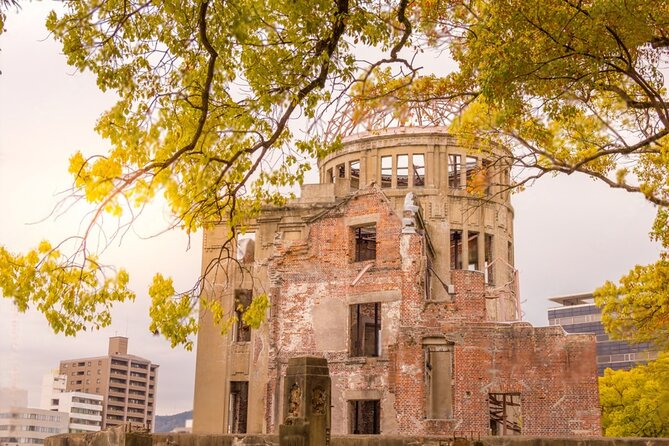
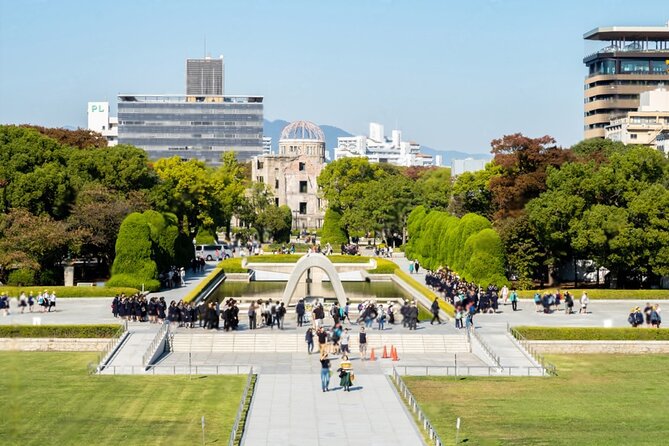
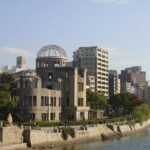
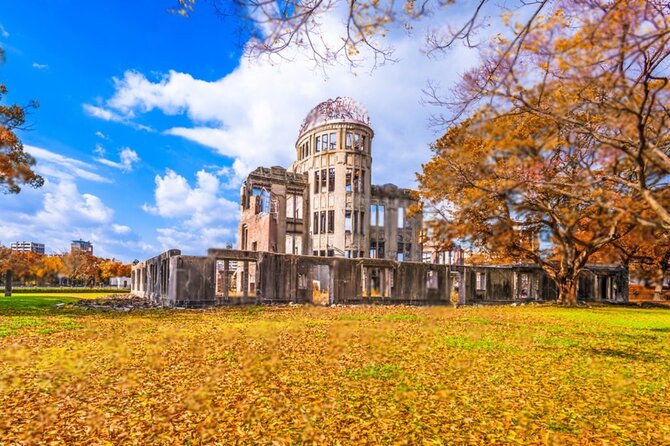
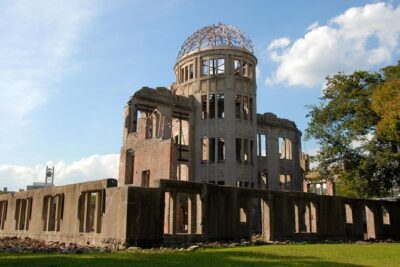
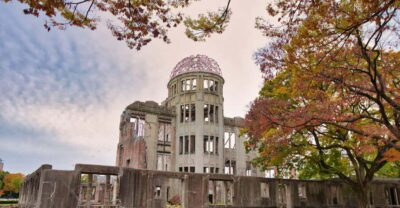
The Atomic Bomb Dome is the emotional starting point of the Hiroshima visit. Originally the Hiroshima Prefectural Industrial Promotion Hall, the building survived the atomic bombing on August 6, 1945, in a damaged form. Its exposed frame and ruined walls now mark the edge of the Peace Memorial Park.
You can view the Dome from the surrounding area and take time to consider the scene before moving through the park. The building is not a restored monument designed to look attractive. Its power comes from the fact that the remains were left as a direct reminder of the bombing and its human cost.
The stop is listed with free admission, but that does not mean every nearby attraction is free. Entrance fees are generally excluded from the tour price, so check the current cost of any museum or paid site you plan to enter.
I recommend treating this part of the day with patience. The Dome is easy to photograph, but a quick photo does not convey much. Give yourself time to read the memorial plaques and understand the setting before moving on.
Walking through Peace Memorial Park
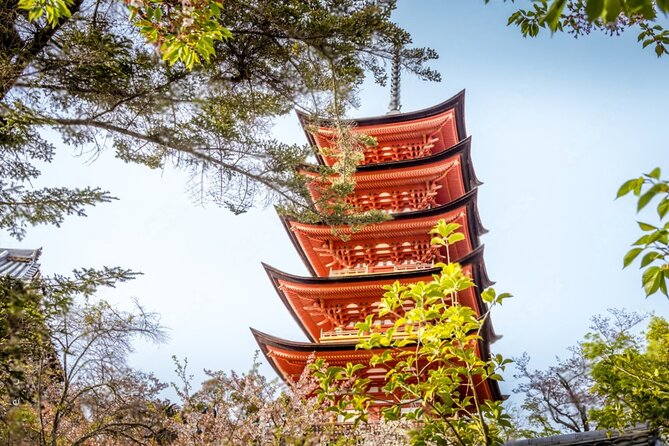
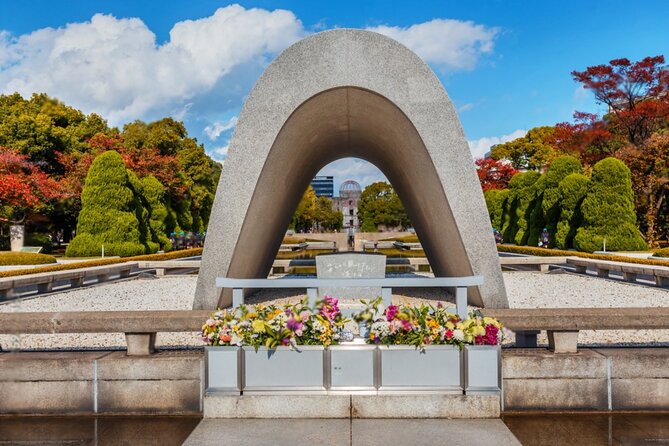
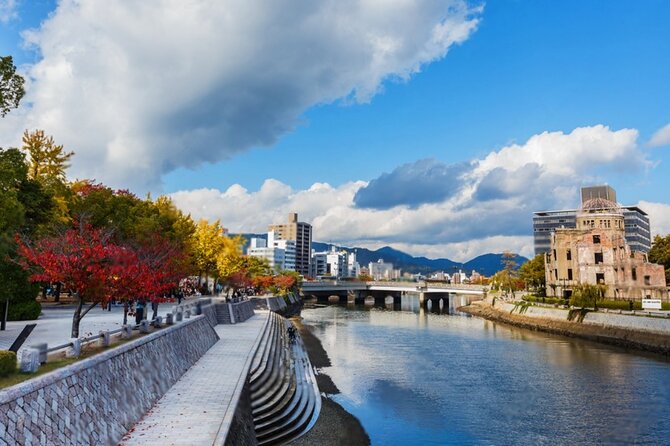
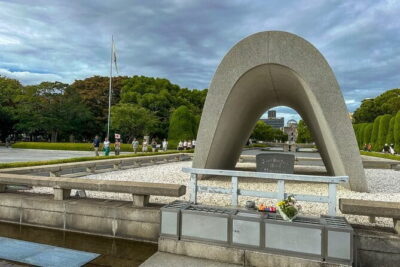
Peace Memorial Park gives the Hiroshima visit its wider context. The park includes the Atomic Bomb Dome, memorial spaces, and the Peace Memorial Museum, which presents the devastation caused by the atomic bombing and its effect on civilians.
The supplied schedule allows about three hours for the Atomic Bomb Dome and Peace Memorial Park. That sounds generous, but the Dome, outdoor memorials, museum, and movement between locations can use the time quickly. If you want to read museum displays carefully, tell the driver at the start of the day so expectations are clear.
This is also the part of the tour where a professional guide could make the biggest difference. An English-speaking driver may answer questions, but the standard price does not include a dedicated guide. A guide can help you understand the sequence of the visit and give context without requiring you to work through every detail alone.
I like the way the private format can give your group room to set its own emotional pace. Hiroshima is not a place to rush through because a timetable says so. At the same time, the trip must eventually continue to Miyajima, so you will need to balance reflection with the practical demands of the day.
Crossing to Miyajima Island
After Hiroshima, you return to the vehicle and travel to the ferry for Miyajima. Ferry tickets are not included, and the exact cost is not supplied, so include this in your planning before you book.
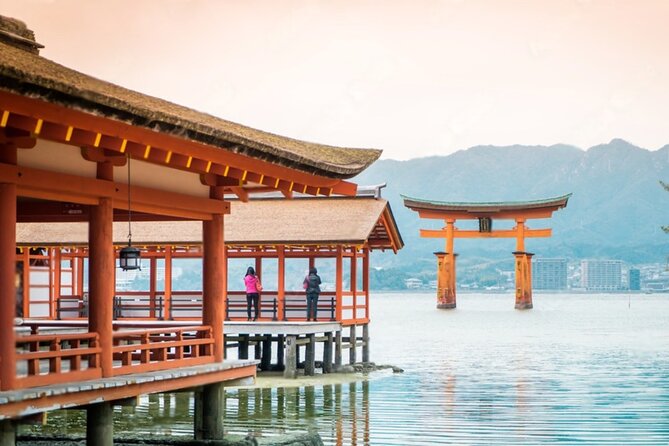
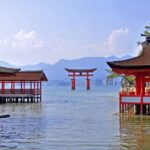
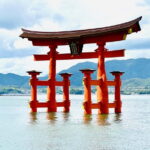
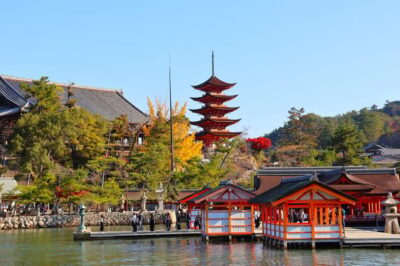
The ferry ride changes the mood of the day. After the solemn memorials, Miyajima offers water, island views, shrine buildings, hiking routes, and deer. The island is famous for the large torii gate associated with Itsukushima Shrine, which appears to rise from the sea at high tide.
Tide timing matters here. The gate’s appearance changes as the water moves, so the view may look very different depending on when you arrive. The tour information does not promise a particular tide, and you should not assume you will see the torii in its classic floating form at the exact moment you reach the shrine.
The island stop is scheduled for about three hours, with another three hours listed for Itsukushima Shrine. These time estimates overlap in a way that makes the full plan worth confirming. You cannot comfortably cover every island path, shrine area, and scenic viewpoint in a short visit, especially after the drive from Osaka.
A few more Osaka tours and experiences worth a look
Itsukushima Shrine and the famous torii
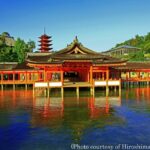
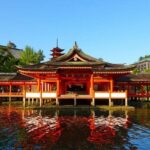
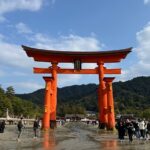
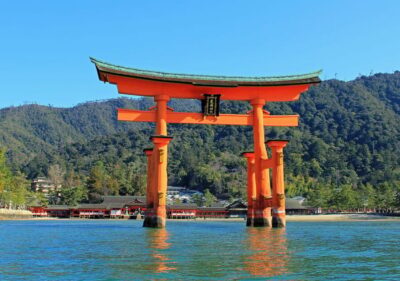
Itsukushima Shrine is a UNESCO World Heritage site built in harmony with the water around Miyajima. Its red shrine structures and large torii are the visual heart of the island visit.
At high tide, the torii can look as if it floats offshore. At lower water, the view changes and the gate may be more accessible from the shoreline. That changing relationship with the sea is part of what makes this shrine special, but it also means your photos depend on the tide and weather.
The shrine stop is listed as free in the schedule, while the general conditions say entrance fees are not included. I would confirm exactly what is covered before departure, especially if you plan to enter any paid section or additional attraction.
You may also see the island’s friendly deer. They are one of Miyajima’s familiar sights, adding a light touch after the serious morning in Hiroshima. Keep your attention on the group’s meeting time, though. It is easy to lose track of time around the shrine, waterfront, shops, and paths.
What you can realistically see in three hours
Miyajima offers more than the torii gate. You can visit Itsukushima Shrine, spend time near the waterfront, look for deer, and sample some of the island atmosphere. The island also has temples and hiking trails, but the available time may not allow a long walk or a broad exploration.
I would make the shrine and torii the priority. Add a short walk only if the group is moving well and the ferry schedule is settled. Do not plan a serious hike unless the driver and ferry timing leave clear room for it.
The same rule applies in Hiroshima. Choose the museum and memorial park first, then fit in extras. This is a day for the best-known sights, not a thorough survey of both destinations.
The private format: where it helps most
A private vehicle is particularly useful for a group of up to five people. You can travel together, keep bags with you, and avoid managing public transport across a long cross-city route. Pickup is offered, and the tour is limited to your own group.
That privacy can also make the day less tiring. Families do not need to split up, and a small group can discuss how long to spend at a memorial or shrine without negotiating with strangers. WiFi onboard is another practical touch during a long drive, though it should be viewed as a convenience rather than the main reason to book.
The private format does not guarantee a personal guide. The package includes an English-speaking driver, not a professional guide, although one can be arranged for an extra charge. This distinction is central. If you expect a flowing historical tour with detailed explanations at every stop, ask for the added guide before paying.
The quality of the day may depend heavily on the individual assigned. Mohamed and Asfand are names worth requesting if available, based on the specific praise they received. The company may not be able to guarantee a particular person, so ask rather than assume.
Price, extra costs, and overall value
The group price is $852.28 for up to five people. At five participants, it can compare well with the cost and effort of arranging private long-distance transport independently. At one or two participants, it becomes a premium way to reach Hiroshima and Miyajima.
Your final bill will be higher than the headline price because meals, drinks, ferry tickets, and entrance fees are excluded. A professional guide also costs extra. The schedule may include stops whose listed admission is free, but the general conditions still advise you to verify every entrance charge.
I would judge the value by your priorities. If you value direct pickup, a private vehicle, and the ability to spend the day with your own group, the price may be fair. If you mainly want speed and detailed historical interpretation, compare the cost with taking the train and hiring a guide locally.
The biggest value is time management, not luxury. You are paying to have the transport organized and the major sights combined. You are not paying for a slow, fully guided cultural program.
Who should book this Hiroshima day trip
I would consider this tour for a family or small group that has only one available day and wants Hiroshima and Miyajima together. It also suits people who dislike changing trains and ferries, or who want private round-trip pickup from Osaka.
It may work for first-time visitors who want the major landmarks without handling the route themselves. The English-speaking driver can make the trip more approachable, especially if you confirm the level of commentary before departure.
I would hesitate if you have limited stamina for a 12-hour day, want a long museum visit, or hope to hike on Miyajima. I would also think twice if you are booking for only one person, since the price is much easier to defend when shared.
Most important, I would not book without clarifying the driver arrangements. Ask about the driver’s English ability, pickup timing, planned rest stops, driving standards, and whether a professional guide can be added. Those questions directly affect the experience.
Final decision: book it for convenience, not guaranteed guiding
This is an appealing way to connect two unforgettable places, but it is not a simple sightseeing drive. Hiroshima asks for time and attention, while Miyajima rewards a flexible visit shaped by ferry schedules and tides.
I would book it for a group of up to five that values private transport and accepts the long day. I would add a professional guide if historical explanation matters to you. If cost is the main concern, or if you want complete control over the pace, compare the train with separate local arrangements.
The tour can be excellent with a patient, communicative driver such as Mohamed or Asfand. The uneven accounts of lateness, silence, and driving speed mean you should confirm the details before departure rather than treat the English-speaking driver label as a guarantee of a guided tour.
FAQ
Where does this Hiroshima and Miyajima tour start?
The tour starts in Osaka with pickup offered. The scheduled start time is 6:00 am.
How long does the experience last?
The tour lasts approximately 12 hours.
How many people can join the private tour?
The private vehicle accommodates up to five people per group.
Is transportation included?
Yes. Private transportation by car or minivan, round-trip transfers from Osaka, an English-speaking driver, and WiFi onboard are included.
Are ferry tickets included?
No. Ferry tickets for the journey to Miyajima are not included.
Is a professional tour guide included?
No. The standard experience includes an English-speaking driver. A professional guide can be requested for an additional cost.
Can I cancel for a full refund?
Yes. You can cancel at least 24 hours before the experience start time for a full refund. Changes or cancellations made less than 24 hours before the start time are not accepted for a refund.
More Private Tours in Osaka
More Hiroshima City Tours in Osaka
More Miyajima Tours in Osaka
More tours in Osaka we've reviewed
Miyajima Tours, compared.
 ★ 5.0Peaceful Hiroshima & Miyajima UNESCO 1 Day Bus TourFrom $129
 ★ 4.9Hiroshima: Hiroshima and Miyajima UNESCO Sites 1-Day TourFrom $1228 hours
 ★ 5.0Hiroshima / Miyajima Full-day Private Tour with Government Licensed GuideFrom $202
 ★ 4.7Osaka/Kyoto: Hiroshima Miyajima Bus Tour & Shinkansen TicketFrom $27712 hours
 ★ 4.7From Hiroshima: Hiroshima & Miyajima 1 Day Tour with LunchFrom $1168 hours
 ★ 5.0Hiroshima and Miyajima Day Trip with Itsukushima Shrine & FerryFrom $45
