
Reviewed · MIYAJIMA TOURS
Hiroshima and Miyajima 1 Day Tour for who own the JR Pass only
Hiroshima and Miyajima make a powerful pair: one gives you the beauty of an island shrine and floating torii gate, the other asks you to face the human cost of war. This full-day private tour links both places from Kyoto or Osaka, using your own JR Pass for the long bullet-train rides.
I like the efficient route and the personal help with trains, local transport, and the ferry. I also like that the day includes both Itsukushima Shrine and the Peace Memorial Museum, rather than reducing Hiroshima to a quick photo stop. The main drawback is cost: at $343.36 per person, you still pay separately for the JR Pass, ferry, lunch, and dinner.
- Two famous sights in one long day: Miyajima and Hiroshima are handled in a single, tightly timed outing.
- Private English-speaking guide: Only your group takes part, with guide support from Kyoto or Osaka.
- JR Pass required for best value: You use your own pass for the Kyoto or Shin-Osaka to Hiroshima bullet train.
- Itsukushima Shrine admission included: Plan about one hour at this major Miyajima sight.
- Peace Memorial Museum admission included: The museum visit also lasts about one hour.
- Flexible, but not free: You can request changes or skip stops, though unused fees are not refunded and added tickets or transport cost extra.
In This Review
- A Long but Well-Planned Day From Kyoto or Osaka
- Why Your JR Pass Changes the Value
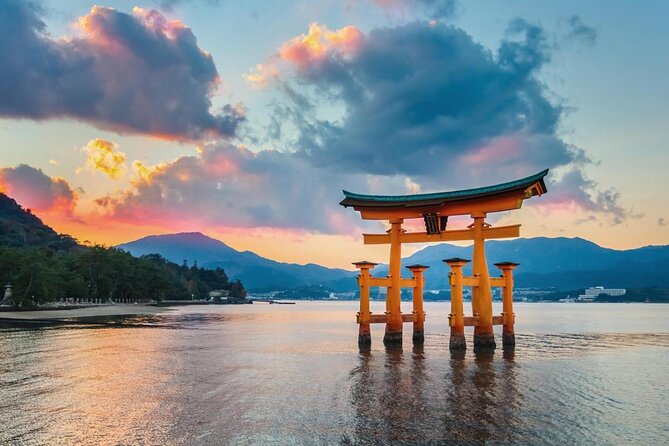
- Miyajima and the First Look at the Floating Torii
- Inside Itsukushima Shrine
- Lunch on Your Own in Miyajima
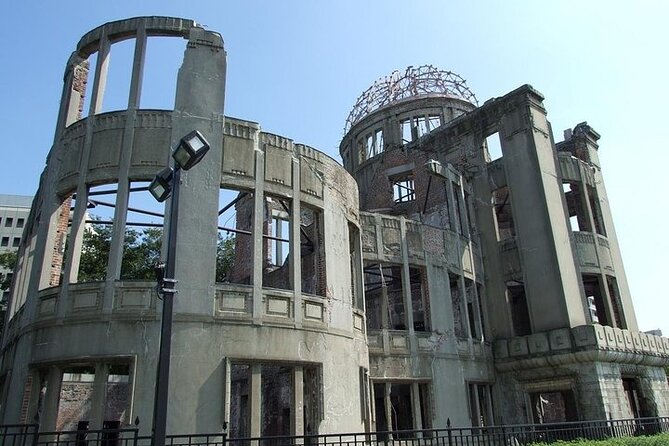
- Hiroshima Peace Memorial Park and the Atomic Bomb Dome
- One Hour at the Peace Memorial Museum
- Getting Back to Kyoto or Osaka
- How Much Flexibility Do You Really Have?
- Who Will Get the Most From This Tour?
- Final Call: A Strong Choice for a Focused Hiroshima Day
- FAQ
- Where does the tour start?
- Can I take this tour without a JR Pass?
- Are the bullet-train tickets included?
- Is the ferry to Miyajima included?
- Is lunch included?
- Is dinner included?
- What sights are included?
- Are admission tickets included?
- Is this a private tour?
- Can I change the itinerary?
A Long but Well-Planned Day From Kyoto or Osaka
This is not a casual half-day outing. It begins around 7:30 a.m. and gets you back to Kyoto at about 8:34 p.m., or to Shin-Osaka at about 7:21 p.m. That makes it a serious day of sightseeing, but the early start is what makes Hiroshima possible without changing hotels.
From Kyoto, you are scheduled to take the 8:00 a.m. Hikari 533 to Hiroshima, arriving at about 9:33 a.m. From Osaka, the plan uses the 8:04 a.m. Sakura 545 from Shin-Osaka. You handle the long-distance train with your own JR Pass, while the private guide helps with the rest of the day.
The meeting point is listed at the Shinkansen Central Gate at Kyoto Station or Shin-Osaka Station. Arrive early. Major Japanese stations are clean and well signed, but they can still feel like small cities before breakfast, especially when you are trying to find the correct gate with luggage, coffee, and a departure time to protect.
The schedule leaves little room for a missed train. If you are staying in Kyoto, allow extra time to reach the station. If you are staying in Osaka, use the Shin-Osaka meeting point rather than assuming the tour begins at Osaka Station.
Why Your JR Pass Changes the Value
The $343.36 price covers the private English guide, public transportation in Hiroshima, and admission to Itsukushima Shrine and the Peace Memorial Museum. It does not cover the Japan Rail Pass or the round-trip bullet-train fare from Kyoto or Osaka to Hiroshima.
That distinction matters. This experience is designed for people who already hold a valid JR Pass. If you need to buy the long-distance train tickets separately, the total cost rises sharply. You should compare the tour price and local fees with the cost of arranging the day independently before booking.
The private format gives the price more weight than a standard group excursion. Your guide can help with train connections, local transportation, and timing. Only your own group participates, so you are not waiting for a large bus to gather at every corner. The trade-off is that this is not a bargain tour. You are paying for structure and personal help on a complex day.
The booking page also says the experience is often reserved about 34 days ahead. That is a useful signal for planning, especially if your Japan schedule is fixed. Confirmation is sent within 48 hours, subject to availability, so do not build an entire tightly connected itinerary around it until your booking is confirmed.
A few more Kyoto tours and experiences worth a look

Miyajima and the First Look at the Floating Torii
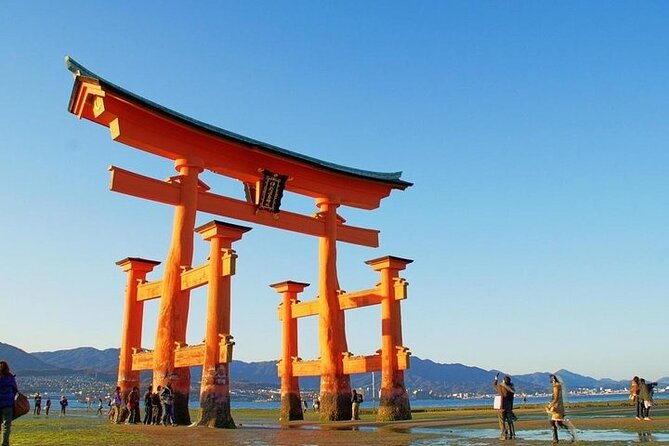
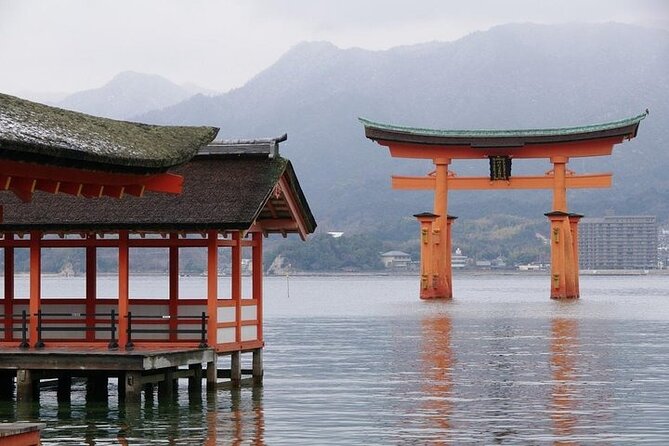
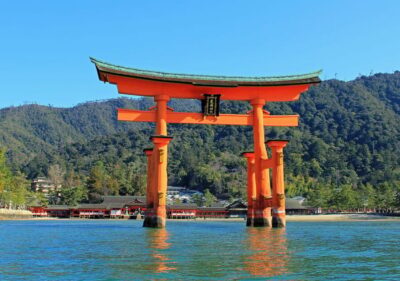
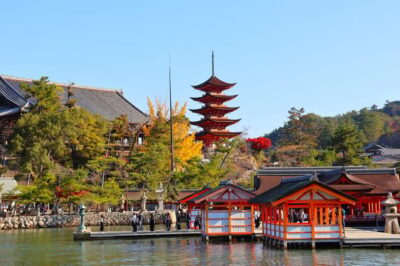
After reaching Hiroshima, the route heads toward Miyajima. The island is less than an hour from Hiroshima, and its signature sight is the large torii gate that appears to float in the water at high tide.
The approach itself is part of the appeal. You leave the city behind and reach an island known for Itsukushima Shrine, one of Japan’s most recognizable sacred sites. The shrine gives Miyajima its formal name, although most people use the island’s better-known nickname.
You should not expect a slow island day. The schedule allows about one hour for Itsukushima Shrine, followed by free time for lunch. That is enough for the main shrine visit, but it is not enough to explore every corner of Miyajima at an easy pace.
Tide conditions matter to the torii view, but no tide time is provided for this tour. The gate may look surrounded by water, or you may see more of the ground around it. Either way, the shrine remains the main reason for the stop. If the torii view is your top priority, check the tide separately before you book.
Inside Itsukushima Shrine
Itsukushima Shrine is the island’s central sight, and admission is included. You get about an hour here, which lets you focus on the shrine itself rather than trying to fit in every possible island activity.
The shrine’s setting is what makes the visit special. Its buildings and torii are tied to the water, giving the site a sense of movement that a landlocked shrine does not have. The famous gate is the image most people carry home, but the shrine complex gives you the fuller picture.
A guide can add useful context and keep the visit moving. The English guide is also there to help with the practical steps between Hiroshima Station, Miyajima, the ferry, and the city. That help is valuable on a day when every connection affects the next stop.
The ferry is not included in the price. Budget for the round-trip ferry fee from Hiroshima to Miyajima, and clarify with the operator how payment and meeting arrangements work before departure. The tour includes public transportation in Hiroshima, but the separate ferry exclusion is important.
Lunch on Your Own in Miyajima
Lunch is free time, and you pay for it yourself. This gives you some choice, but it also means the tour does not provide a fixed meal or a set restaurant.
The guide can point you toward a place, and one guide connected with this experience, Sachiko, has been praised for taking the group to a local spot on Miyajima that mainly serves local people. That kind of recommendation can make lunch more personal than simply grabbing the first convenient meal near the route.
Still, allow for the clock. The day moves from Miyajima to Hiroshima’s Peace Memorial Park at 1:00 p.m. A long meal could cut into your time at the museum, so treat lunch as a practical break rather than a leisurely feast.
You also need to pay for dinner. At Hiroshima Station around 5:00 p.m., you can buy a bento box for the return train. This is a sensible option because the return schedule is fixed and the Kyoto group does not reach Kyoto until about 8:34 p.m.
Hiroshima Peace Memorial Park and the Atomic Bomb Dome
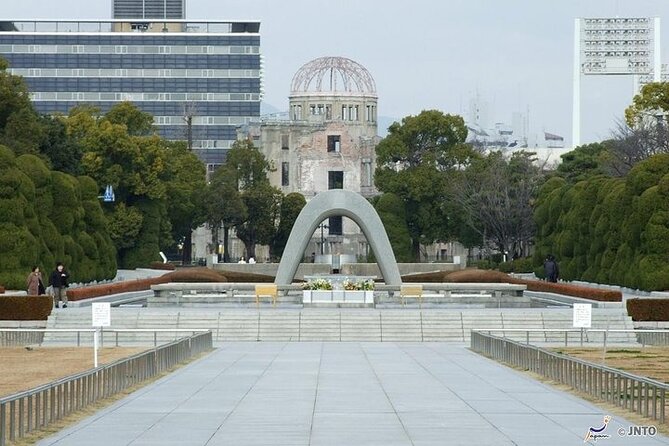
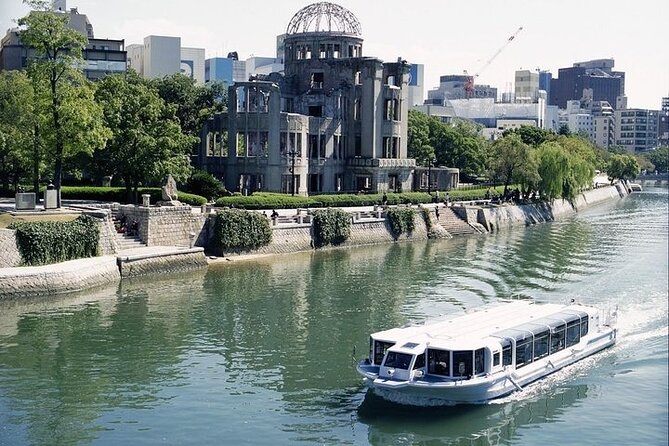
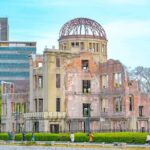
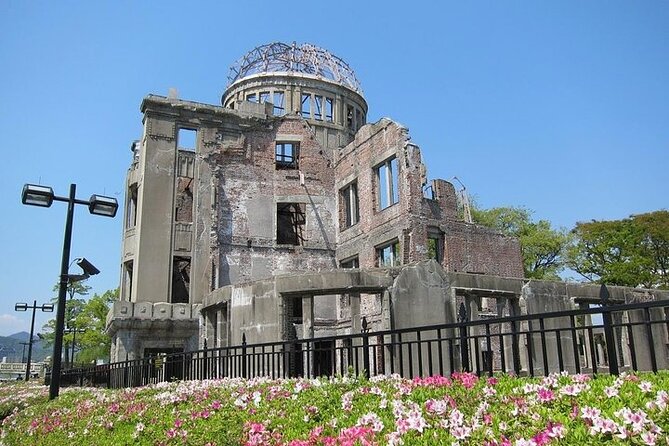
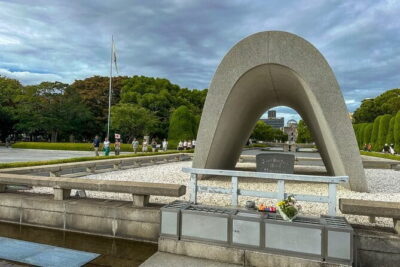
The afternoon changes tone completely. At 1:00 p.m., the route leaves Miyajima for Hiroshima’s Peace Memorial Park, a large park of more than 120,000 square meters in the heart of the city.
The park is not simply a green pause between attractions. It gathers Hiroshima’s main sites connected with the atomic bombing of August 6, 1945. The scale gives you room to think, while the monuments and preserved structures keep the history direct and visible.
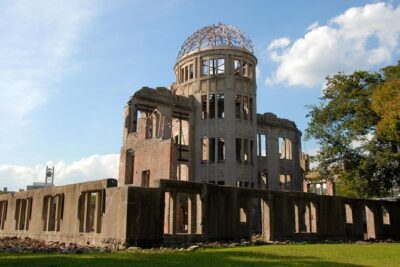
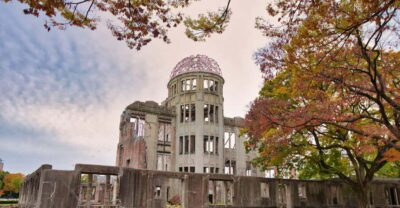
The Atomic Bomb Dome is especially hard to forget. It was almost directly beneath the bomb’s explosion at 8:15 a.m., yet part of the structure remained. Its damaged frame now serves as one of the city’s clearest reminders of what happened.
You will have limited time, so listen closely to the guide’s explanation and take a moment at each major site. The tour does not turn the park into a rushed checklist, but the schedule must still protect the museum visit and the evening train.
A few more Kyoto tours and experiences worth a look
One Hour at the Peace Memorial Museum
The Peace Memorial Museum is the largest of Hiroshima’s atomic bomb sites included in this route. Its main building opened in 1955 and was designed by architect Tange Kenzo. Admission is included, and the planned visit lasts about one hour.
This is the most emotionally demanding part of the day. The museum presents the bombing through objects, records, and personal accounts. You should expect a serious visit rather than a light cultural stop.
One hour gives you a useful introduction, but not unlimited time for every display. If you read every panel slowly, you may not see the whole museum. I suggest deciding in advance that the goal is to understand the main story, not to race through every room.
The guide’s role matters here. A fluent English-speaking guide can explain the setting and help connect the museum to the Atomic Bomb Dome and Peace Memorial Park. One guide associated with this experience is Sachiko, who has been described as speaking English fluently and arranging communication through WhatsApp. Guide assignments can vary, so confirm your guide after booking.
Getting Back to Kyoto or Osaka
At about 5:00 p.m., you return to Hiroshima Station. This is the point to buy a bento box if you want dinner on the train. The Osaka schedule uses the 5:52 p.m. Sakura 564, arriving at Shin-Osaka at about 7:21 p.m.
The Kyoto return is slightly more involved. You take the 6:33 p.m. Sakura 566 from Hiroshima, reach Shin-Osaka at about 7:59 p.m., transfer to the 8:21 p.m. Hikari 666, and arrive at Kyoto at about 8:34 p.m.
That transfer is one reason a private guide is useful, especially if you are not comfortable reading station signs or switching platforms under time pressure. You are still responsible for using your own JR Pass correctly, but the guide can help you keep the route organized.
Do not plan an important evening reservation after the tour. A full day, fixed train times, and a transfer mean delays or confusion could push you later. The sensible plan is to treat your return as the final activity of the day.
How Much Flexibility Do You Really Have?
The experience can be customized. You may request changes in advance, and the guide can also help adjust the schedule on the day. You can skip a place you do not want to visit, but there is no refund for a skipped included stop.
If you add a new attraction, you pay any admission fee on the spot. You may also need to cover extra transportation. This makes the flexibility useful, but not unlimited or free.
The schedule already contains two major destinations, so I would avoid adding another distant stop. A small adjustment in the order or time spent at a site is more realistic than trying to squeeze in several new attractions.
Because the tour is private, changes affect only your own group. That is a real advantage for families, couples, or friends with different interests. It also means you should communicate clearly before the day begins, especially about the balance between Miyajima and Hiroshima.
Who Will Get the Most From This Tour?
I would recommend this experience to someone staying in Kyoto or Osaka who has a JR Pass, wants to see Hiroshima, and does not want to plan the train, ferry, local transport, and sightseeing sequence alone.
It also suits first-time visitors who want an English-speaking guide to explain both the cultural setting of Miyajima and the difficult history of Hiroshima. The private format works well for a small family or group that prefers personal pacing over a large organized excursion.
You should think twice if you want a slow Miyajima visit, a long lunch, or extensive time in the Peace Memorial Museum. The route gives you the key sights, but it asks you to keep moving.
Most people can participate, and the meeting points are near public transportation. The tour requires good weather, and it can be canceled if the minimum number of participants is not reached. In either case, the stated alternatives are another date or experience, or a full refund.
The cancellation rule is strict: the experience is non-refundable and cannot be changed for any reason after booking. Check your train plans, date, meeting point, and JR Pass before paying.
Final Call: A Strong Choice for a Focused Hiroshima Day
Book this tour if you value a private guide and a clear plan more than the lowest possible price. It makes an ambitious day trip manageable, combines Miyajima with the Peace Memorial sites, and gives you help at the moments when Japanese rail travel can feel complicated.
Skip it if you do not already have a JR Pass, need a flexible cancellation policy, or want enough time to explore Miyajima and the museum at a relaxed pace. The price is fair only when the guide’s assistance and private format solve a real problem for you.
For the right visitor, this is an efficient and meaningful way to fit Hiroshima into a Kyoto or Osaka trip. Just treat it as a long day, budget for the excluded costs, and arrive at the correct Shinkansen gate early.
FAQ
Where does the tour start?
It starts at 7:30 a.m. at the Shinkansen Central Gate of Kyoto Station or Shin-Osaka Station, depending on your selected departure city.
Can I take this tour without a JR Pass?
The experience is intended for people who already have a JR Pass. The pass and the bullet-train tickets from Kyoto or Osaka to Hiroshima are not included.
Are the bullet-train tickets included?
No. You use your own JR Pass or pay separately for the round-trip Shinkansen tickets.
Is the ferry to Miyajima included?
No. The round-trip ferry fee from Hiroshima to Miyajima is excluded and must be paid separately.
Is lunch included?
No. Lunch is free time on Miyajima, and you pay for your own meal.
Is dinner included?
No. You can buy a bento box at Hiroshima Station before the return train, but dinner is not included.
What sights are included?
The route includes Miyajima, Itsukushima Shrine, Hiroshima Peace Memorial Park, the Atomic Bomb Dome area, and the Hiroshima Peace Memorial Museum.
Are admission tickets included?
Admission to Itsukushima Shrine and the Hiroshima Peace Memorial Museum is included.
Is this a private tour?
Yes. Only your group participates in the private activity, with a private English-speaking guide from Kyoto or Osaka.
Can I change the itinerary?
You can request changes in advance, and the guide may help adjust the schedule on the day. Skipped included stops are not refunded, and added attractions may require extra admission and transportation fees.
More 1-Day Tours in Kyoto
More Hiroshima City Tours in Kyoto
More Miyajima Tours in Kyoto
More tours in Kyoto we've reviewed
Miyajima Tours, compared.
 ★ 5.0Peaceful Hiroshima & Miyajima UNESCO 1 Day Bus TourFrom $129
 ★ 4.9Hiroshima: Hiroshima and Miyajima UNESCO Sites 1-Day TourFrom $1228 hours
 ★ 5.0Hiroshima / Miyajima Full-day Private Tour with Government Licensed GuideFrom $202
 ★ 4.7Osaka/Kyoto: Hiroshima Miyajima Bus Tour & Shinkansen TicketFrom $27712 hours
 ★ 4.7From Hiroshima: Hiroshima & Miyajima 1 Day Tour with LunchFrom $1168 hours
 ★ 5.0Hiroshima and Miyajima Day Trip with Itsukushima Shrine & FerryFrom $45
