
Reviewed · MIYAJIMA TOURS
From Tokyo: Hiroshima and Miyajima Day Trip by Bullet Train
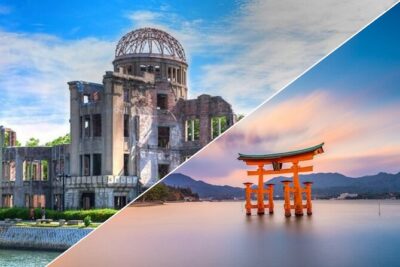
Hiroshima and Miyajima give you two very different windows into Japan in one long day. One asks you to pause at the Atomic Bomb Dome and Peace Memorial Park. The other leads you through island lanes, past freely roaming deer, and toward the famous torii gate of Itsukushima Shrine.
I like the smart pairing of these places, and I like that the trip handles the long Tokyo to Hiroshima journey by high-speed train when you choose the Shinkansen option. Guides such as Alex, also called Alejandro, can explain the story in both English and Spanish, which adds real value at the memorial sites. The main drawback is time: this is a packed day, with roughly four hours each way on the train and only about 100 minutes of free time on Miyajima.
In This Review
- Key points to know before booking
- Tokyo to Hiroshima by Shinkansen
- Crossing to Miyajima by ferry
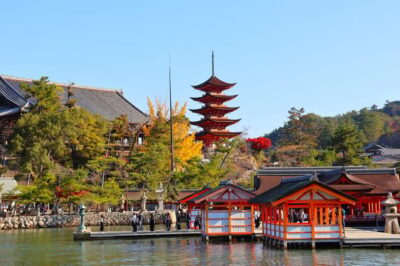
- Itsukushima Shrine and the famous torii gate
- One hundred minutes to explore Miyajima
- Returning to Hiroshima for the Peace Memorial Park
- The guide’s role in a fast-moving day
- Walking, weather, and comfort
- Who gets the most value from this trip
- Should you book the Hiroshima and Miyajima day trip?
- FAQ
- Where does the tour start?
- Is the bullet train included?
- How long is the activity?
- Which languages are available for the guide?
- Is the ferry to Miyajima included?
- Is admission to Itsukushima Shrine included?
- Are meals included?
- Is the tour suitable for wheelchair users?
Key points to know before booking
- Two major sights in one day: Visit Hiroshima’s Peace Memorial Park and Miyajima’s Itsukushima Shrine without arranging separate transport.
- The Shinkansen makes the distance possible: The train takes about four hours each way from Tokyo, so expect a very early start and a late finish.
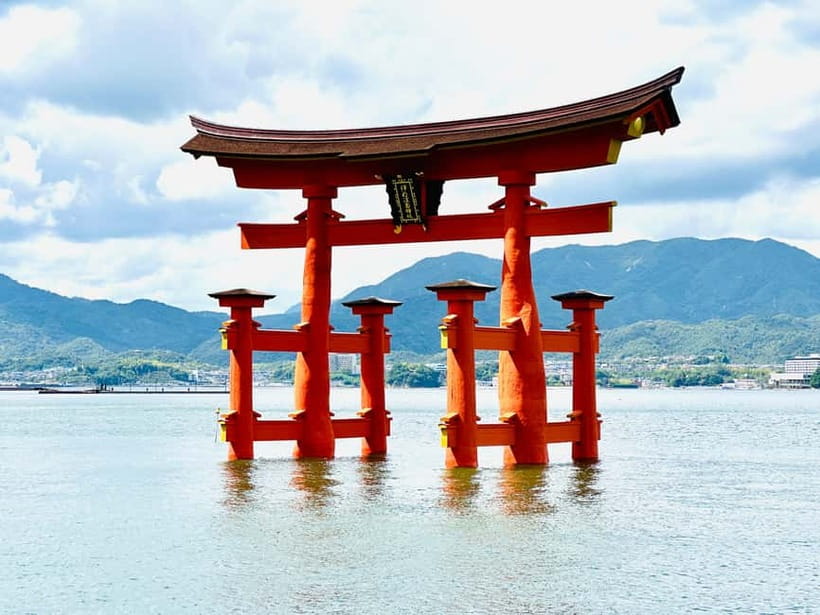
- The floating torii depends on the tide: The gate may appear to rise from the sea, but the view changes with water levels and weather.
- The memorial visit needs a respectful pace: Photography is allowed, but the park is a place for quiet reflection.
- The tour includes the key transport links: The selected option can include round-trip bullet train travel, while ferry transport and Itsukushima Shrine admission are included.
- Walking is part of the deal: Comfortable shoes, water, sun protection, and rain gear are practical necessities.
Tokyo to Hiroshima by Shinkansen
If you begin in Tokyo, the day starts at Shinagawa Station. The train ride to Hiroshima takes about four hours, followed by a coach transfer of around 50 minutes. That is a serious amount of sitting before the sightseeing begins, but the high-speed train is what makes this day trip possible at all.
I see this as a transport-heavy tour rather than a relaxed city visit. You spend about eight hours in total on the return train journey, so bring water, a hat, and something to occupy you during the ride. The reward is reaching Hiroshima without booking another hotel or changing your Japan itinerary.
The tour also lists Hiroshima Station as a possible starting and ending point. That option may suit you if you are already staying in Hiroshima or connecting from another part of Japan. Check the option you book carefully, because the meeting point and included transport can vary.
At about $104 per person, the value depends heavily on what is included in your chosen package. If it includes the round-trip Shinkansen, that price covers the most expensive and complicated part of the day, along with the coach transfers, ferries, guide service, and Itsukushima Shrine admission. If you are comparing options, confirm the train inclusion before paying.
Crossing to Miyajima by ferry
After the coach ride, you take a ferry toward Miyajima. The listed ferry crossing takes about 30 minutes on the outward journey, with a shorter 10-minute ferry ride shown later in the day. The exact timing may shift, especially in poor weather, so you should not treat every minute as fixed.
The ferry is more than a transfer. It gives you your first broad view of the island and its coastal setting, and it helps explain why Miyajima feels distinct from Hiroshima city. Bring your camera, but keep your attention on the changing view rather than turning the ride into a photo stop only.
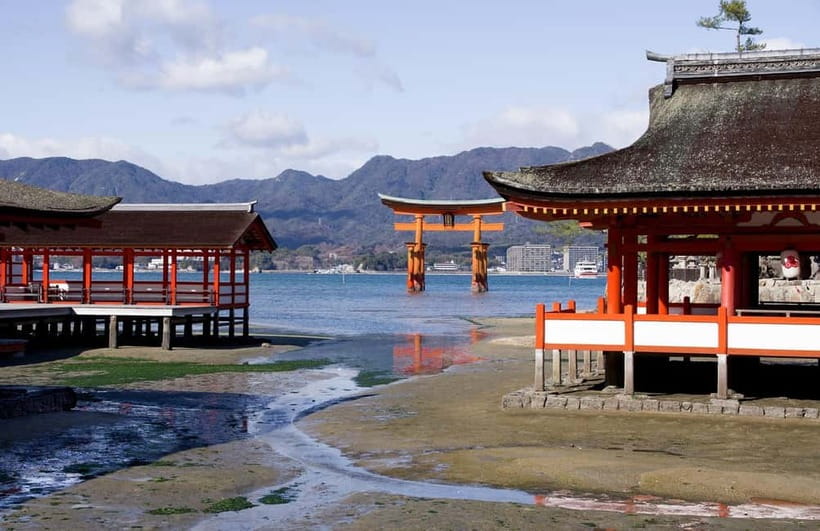
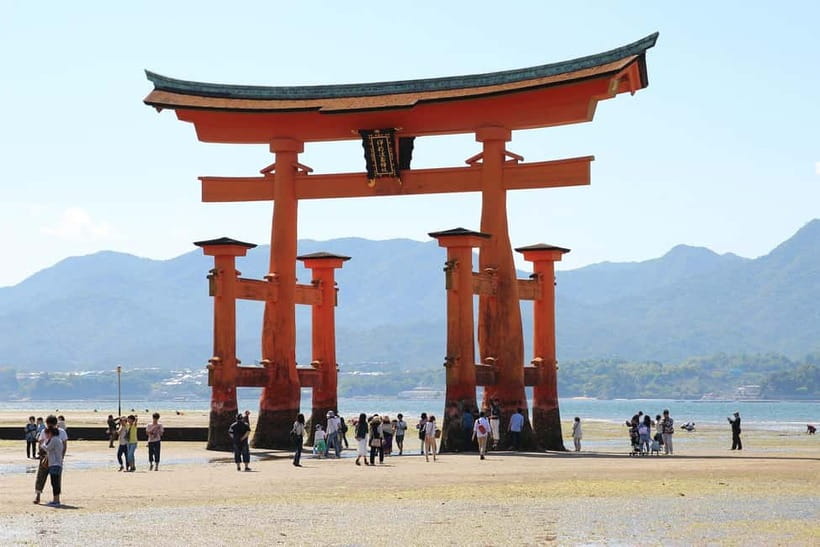
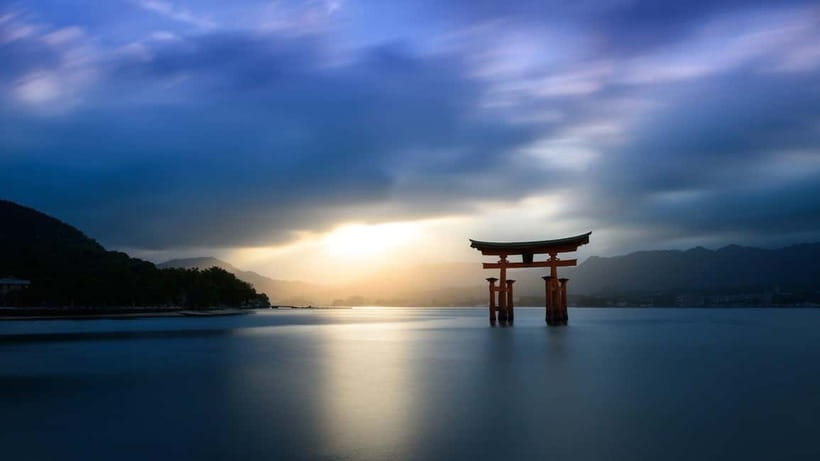
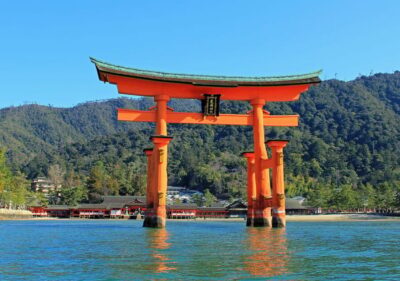
Weather matters here. Ferry schedules can change, and the torii gate will not look the same at every stage of the tide. If the water is high, the gate can appear to float offshore. At lower water, the shoreline view is different and you may see more of the structure’s base.
Itsukushima Shrine and the famous torii gate
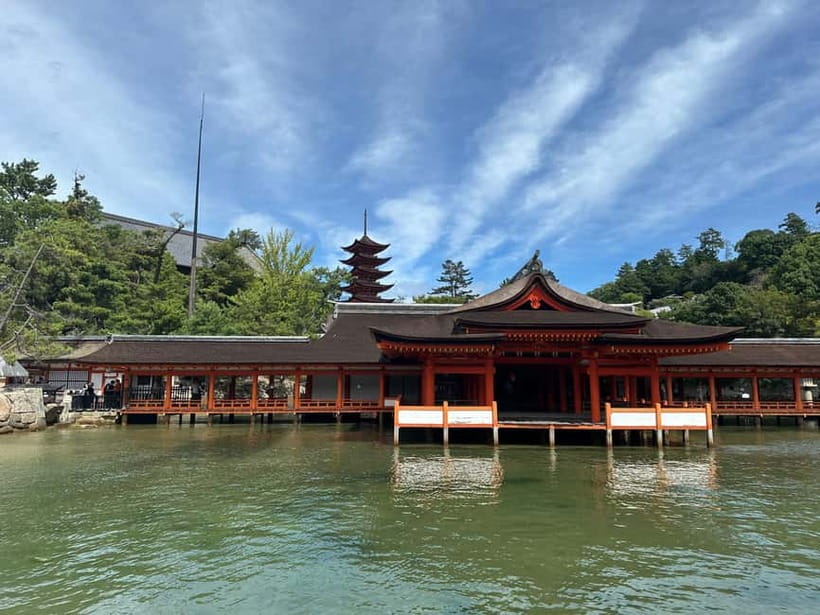
The guided visit to Itsukushima Shrine lasts about 30 minutes and admission is included. This is useful because you get an introduction to the shrine rather than simply arriving, taking a photograph, and moving on without context.
The red torii gate is Miyajima’s signature sight, but it is only one part of the visit. The shrine’s setting on the water gives the place its special character, and the changing tide affects the mood and appearance. Your guide can help you understand how the shrine and gate fit into the island’s religious and cultural identity.
Do not expect a long, unhurried shrine visit. Thirty minutes is enough for a guided look, but not enough for every corner or a slow photographic study. Keep your group together and listen for meeting instructions, since the schedule has several transport connections later.
One hundred minutes to explore Miyajima
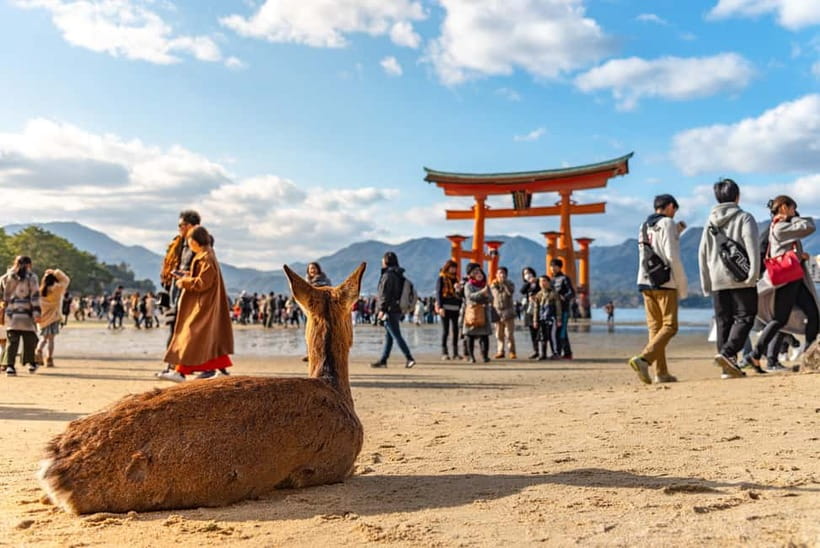
After the shrine, you have about 100 minutes of free time on Miyajima. This is the part of the day where you choose between food, shopping, side streets, photographs, and a closer look at the island’s temples.
You can stroll through the charming streets and sample local specialties. Miyajima oysters are a natural choice if you want something savory, while momiji manju gives you the sweet option in a maple-leaf shape. Meals are not included, so set aside money for food and avoid spending the entire free period in one place.
The island is also known for deer that roam freely. They are an enjoyable part of the setting, but you should still treat them with care and follow local guidance. Their presence adds a little lightness to a day that later turns solemn at the memorial park.
The short free period is both a strength and a limitation. You get enough time to sample the island’s atmosphere and food, but not enough to explore it fully. There is no long hike, extended temple visit, or leisurely island afternoon in this schedule. If Miyajima is your main reason for visiting Japan, an overnight stay would give you far more breathing room. If you want a first look while based in Tokyo, this tour makes the visit possible.
Returning to Hiroshima for the Peace Memorial Park
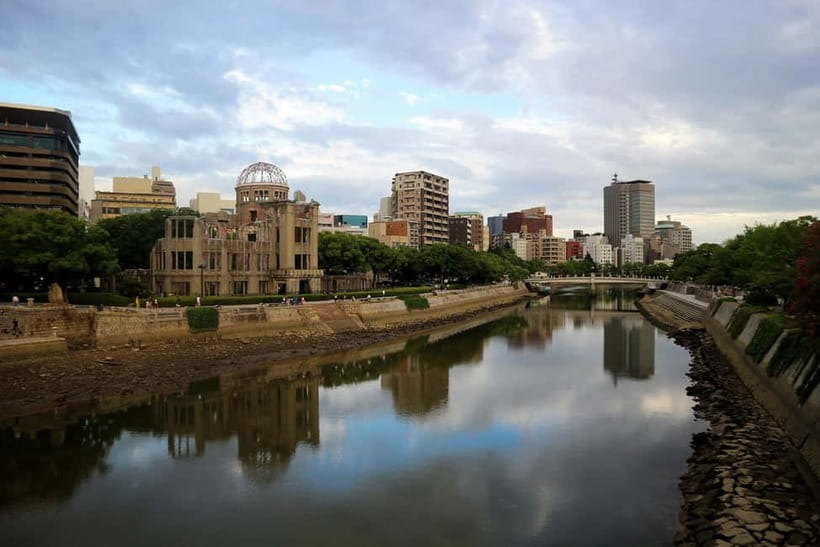
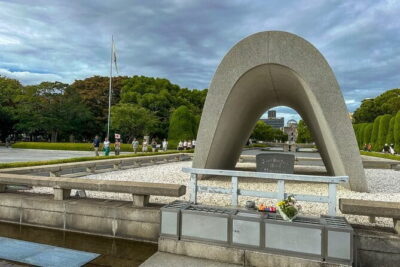
The ferry returns you to the mainland, followed by a coach ride of about an hour to Hiroshima Peace Memorial Park. The park visit lasts around two hours, including guided touring and free time. This longer stop gives the most serious part of the day the attention it deserves.
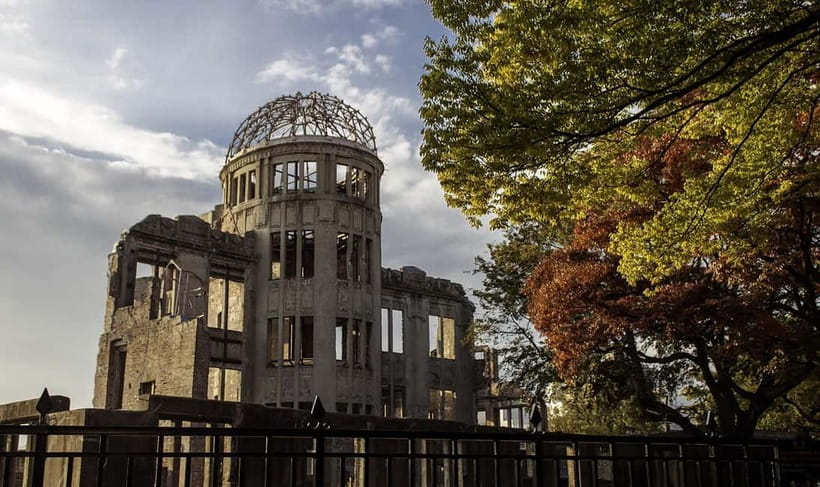
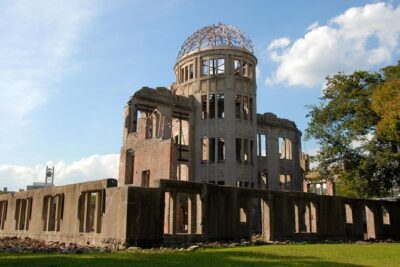
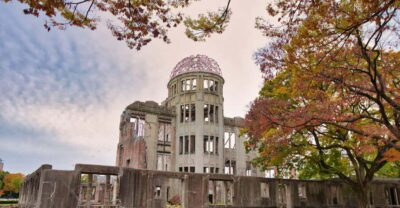
The Atomic Bomb Dome is a UNESCO World Heritage Site and one of the central sights. Its damaged structure remains as a physical reminder of the 1945 bombing. Seeing it in person can feel stark, especially after the lighter pace of Miyajima.
The park includes monuments dedicated to victims and places connected with remembrance and peace. Your guide provides historical context, but this is not a stop to rush through while treating every object as a photo opportunity. Photography is allowed, yet you should be considerate in memorial areas and keep your voice low.
I appreciate the order of this itinerary. Visiting Miyajima first gives you a beautiful and approachable start to the day, while the later park visit allows more time for reflection. Still, some people may prefer to visit the memorial before anything else. The tour’s fixed order may not suit every emotional response to Hiroshima.
The two-hour allocation is useful, though it does not promise a complete visit to every museum or monument in the park. The information provided specifically covers the Peace Memorial Park, the Atomic Bomb Dome, and related memorials. If you want an extensive museum visit, check whether it fits the group schedule before booking, since no separate museum admission is listed.
The guide’s role in a fast-moving day
A good guide matters here because the itinerary has several handoffs: train, coach, ferry, shrine, free time, another ferry, another coach, and the return train. You are not simply being dropped at Hiroshima and told to find your way back.
The available guiding languages are English and Spanish. Alex, also referred to as Alejandro, is described as moving comfortably between the two languages. That can be especially helpful in a mixed-language group, where explanations need to remain clear without slowing the day down.
The guide also helps connect the two places. Hiroshima is not just a sightseeing stop, and Miyajima is not only a backdrop for the torii gate. The value of the tour lies in understanding both places as parts of Japan’s wider story, then having someone keep the practical details moving.
The day is still dependent on your own alertness. Listen for meeting times, keep your belongings with you, and return promptly from free time. A late return from the island could affect the coach and train schedule.
Walking, weather, and comfort
This is not a good choice if you need step-free access. The experience is listed as unsuitable for wheelchair users, and it includes a moderate amount of walking across stations, streets, shrine grounds, ferry connections, and the memorial park.
Wear comfortable walking shoes. A hat, sunscreen, and water help on a sunny day, while an umbrella or raincoat is sensible when the forecast is uncertain. Weather can affect the ferry schedule, and it can also change how clearly you see the torii gate from the shore.
The long train ride creates a different comfort issue. You may spend the first and last portions of the day seated, but the middle includes repeated movement and transfers. Pack lightly enough to manage your belongings through stations and coaches.
Smoking is not allowed during the activity. Meals are also not included, so use your Miyajima free time to buy food, or bring something suitable for the train if needed.
Who gets the most value from this trip
I would recommend this tour to you if Tokyo is your base and you want to see Hiroshima without arranging hotels, train tickets, local buses, and the Miyajima ferry yourself. It also works well if you have only one available day and want a structured introduction to both destinations.
It suits first-time visitors who value explanation and guidance over a slow, independent schedule. The tour gives you the main sights, handles the complex transport, and lets you spend time in two places that would otherwise require careful planning.
You should think twice if you dislike early starts, long train rides, or fixed group timing. Miyajima receives only about 100 minutes of free time, and the full day can run from eight to 16 hours depending on the option and start time. This is not a gentle day in the countryside.
It may also be a poor fit if you want to explore Hiroshima’s museums at length or climb around Miyajima at your own pace. You will gain range, but you will give up depth.
Should you book the Hiroshima and Miyajima day trip?
Book it if your priority is seeing the essentials in one organized day. The combination of bullet train, ferry, Itsukushima Shrine, Miyajima streets, and Hiroshima’s memorial park offers strong value when the Shinkansen option is included in the $104 price.
Skip it if you can spare an overnight stay in Hiroshima or Miyajima. More time would let you slow down, eat without watching the clock, and give the Peace Memorial Park the attention it deserves.
For most Tokyo-based visitors with limited time, this is a practical and meaningful introduction. Go prepared for a very long day, pack for changing weather, and treat the memorial sites with care. The schedule is demanding, but it brings two important Japanese destinations within reach.
FAQ
Where does the tour start?
The experience may start at Shinagawa Station in Tokyo or at Hiroshima Station, depending on the option booked.
Is the bullet train included?
Round-trip high-speed bullet train travel from Tokyo is included if you select the relevant option. Check the exact package before booking.
How long is the activity?
The duration is listed as eight to 16 hours, depending on the selected option and starting time.
Which languages are available for the guide?
Guiding is available in English and Spanish.
Is the ferry to Miyajima included?
Yes, the ferry ride to Miyajima is included, along with the return ferry connection shown in the schedule.
Is admission to Itsukushima Shrine included?
Yes, admission to Itsukushima Shrine is included.
Are meals included?
No. Meals are not included, so you should budget for food on Miyajima or bring suitable snacks.
Is the tour suitable for wheelchair users?
No. The activity is listed as unsuitable for wheelchair users and includes a moderate amount of walking.
Miyajima Tours, compared.
 ★ 5.0Peaceful Hiroshima & Miyajima UNESCO 1 Day Bus TourFrom $129
 ★ 4.9Hiroshima: Hiroshima and Miyajima UNESCO Sites 1-Day TourFrom $1228 hours
 ★ 5.0Hiroshima / Miyajima Full-day Private Tour with Government Licensed GuideFrom $202
 ★ 4.7Osaka/Kyoto: Hiroshima Miyajima Bus Tour & Shinkansen TicketFrom $27712 hours
 ★ 4.7From Hiroshima: Hiroshima & Miyajima 1 Day Tour with LunchFrom $1168 hours
 ★ 5.0Hiroshima and Miyajima Day Trip with Itsukushima Shrine & FerryFrom $45
